Arkansas Amendment to Postnuptial Property Agreement
Understanding this form
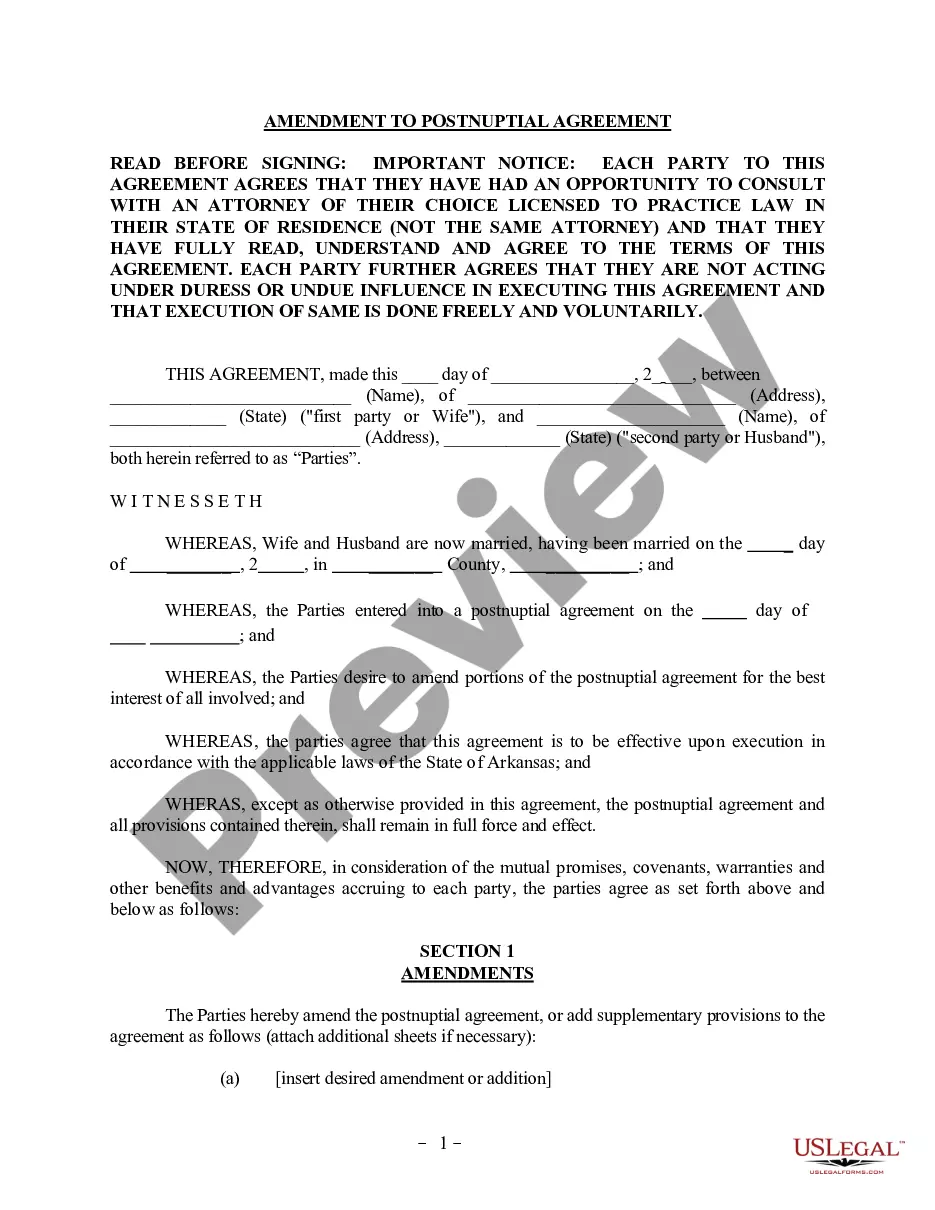
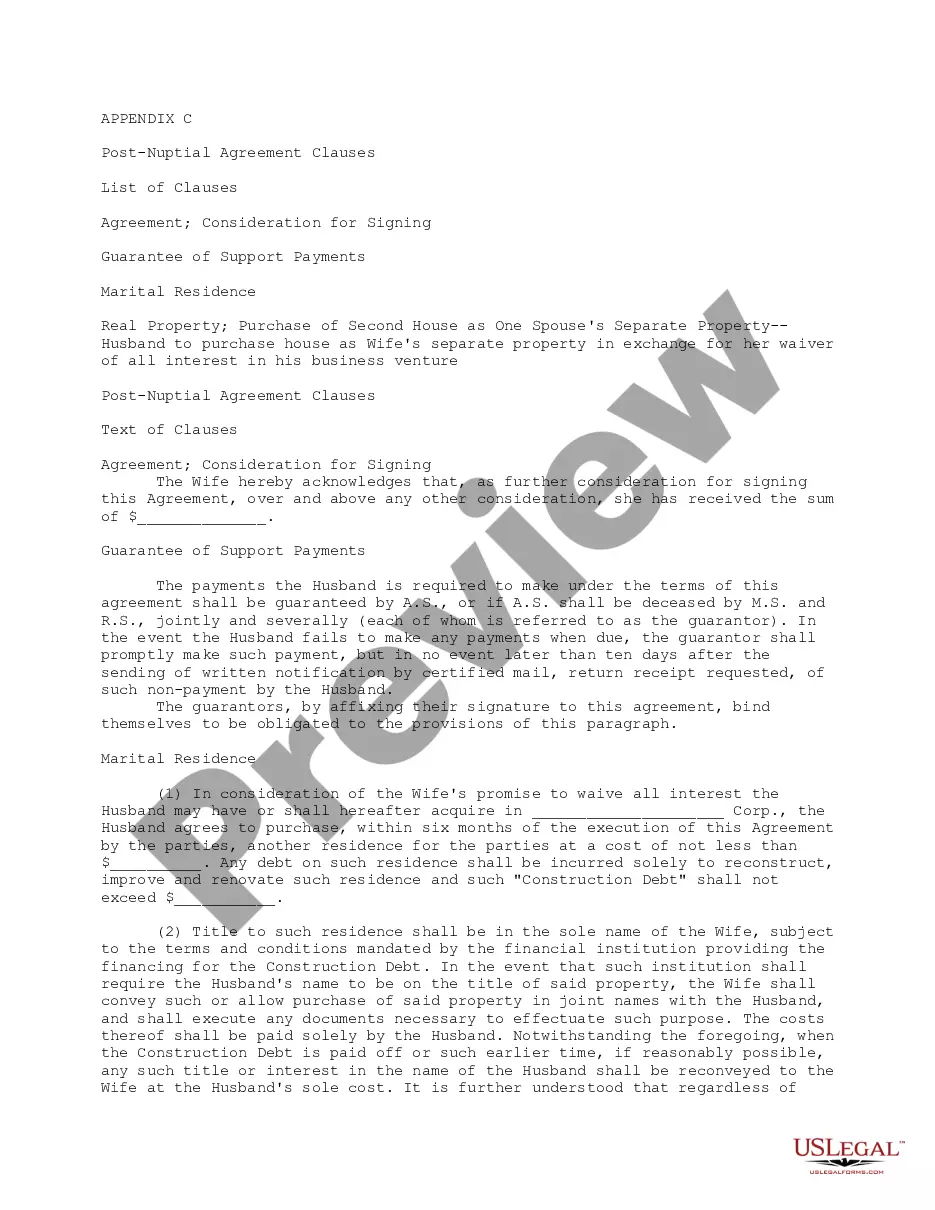
The Amendment to Postnuptial Property Agreement is a legal document used to modify or add provisions to an existing postnuptial agreement. Unlike a new postnuptial agreement, this amendment addresses specific changes while keeping the original agreement intact. It ensures both parties' intentions are documented and legally recognized, allowing for necessary updates as circumstances change.
What’s included in this form
- Details of the amendment or addition to the existing agreement.
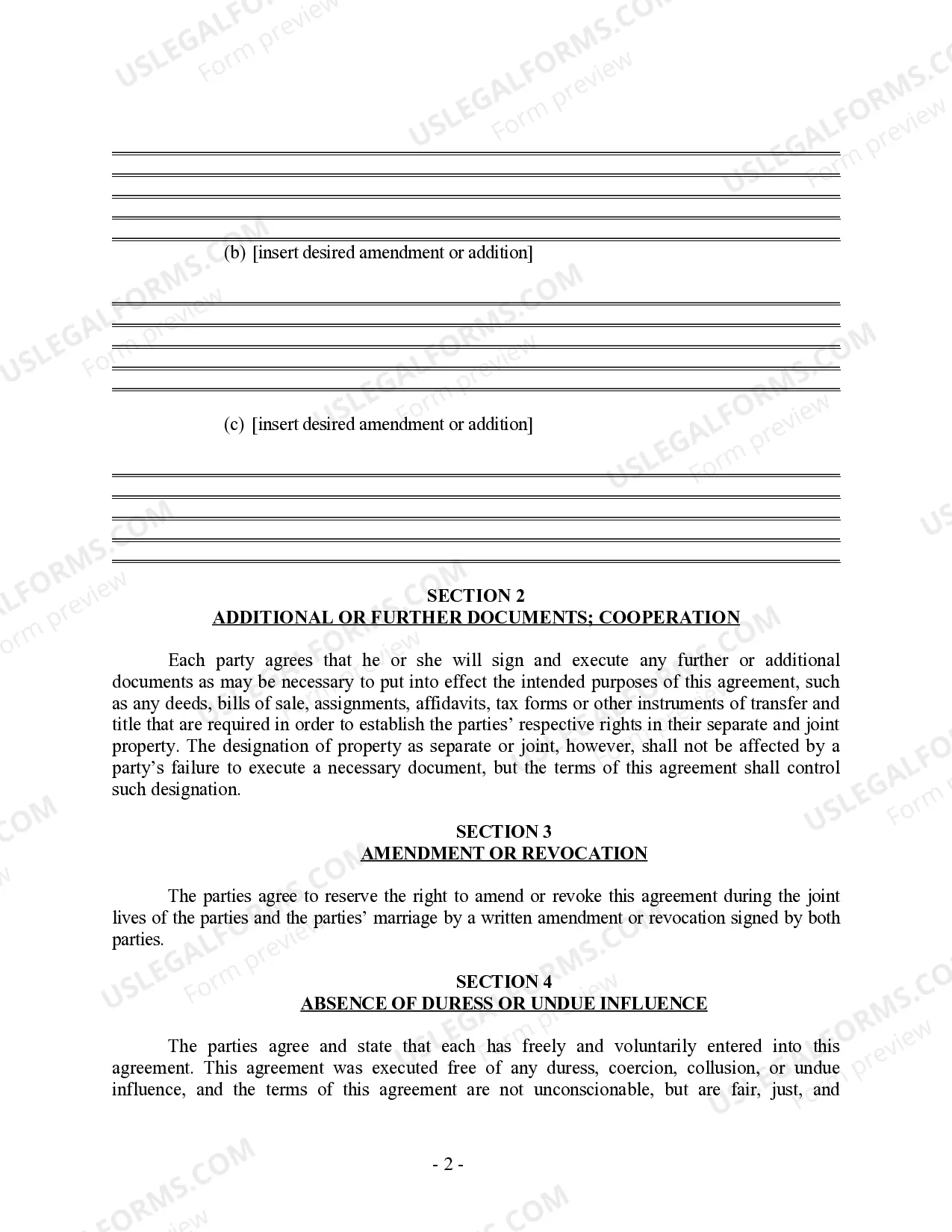
- Clauses regarding cooperation between parties for further documentation.
- Provisions outlining the right to amend or revoke the agreement.
- Assurances that the agreement is entered into freely, without pressure.
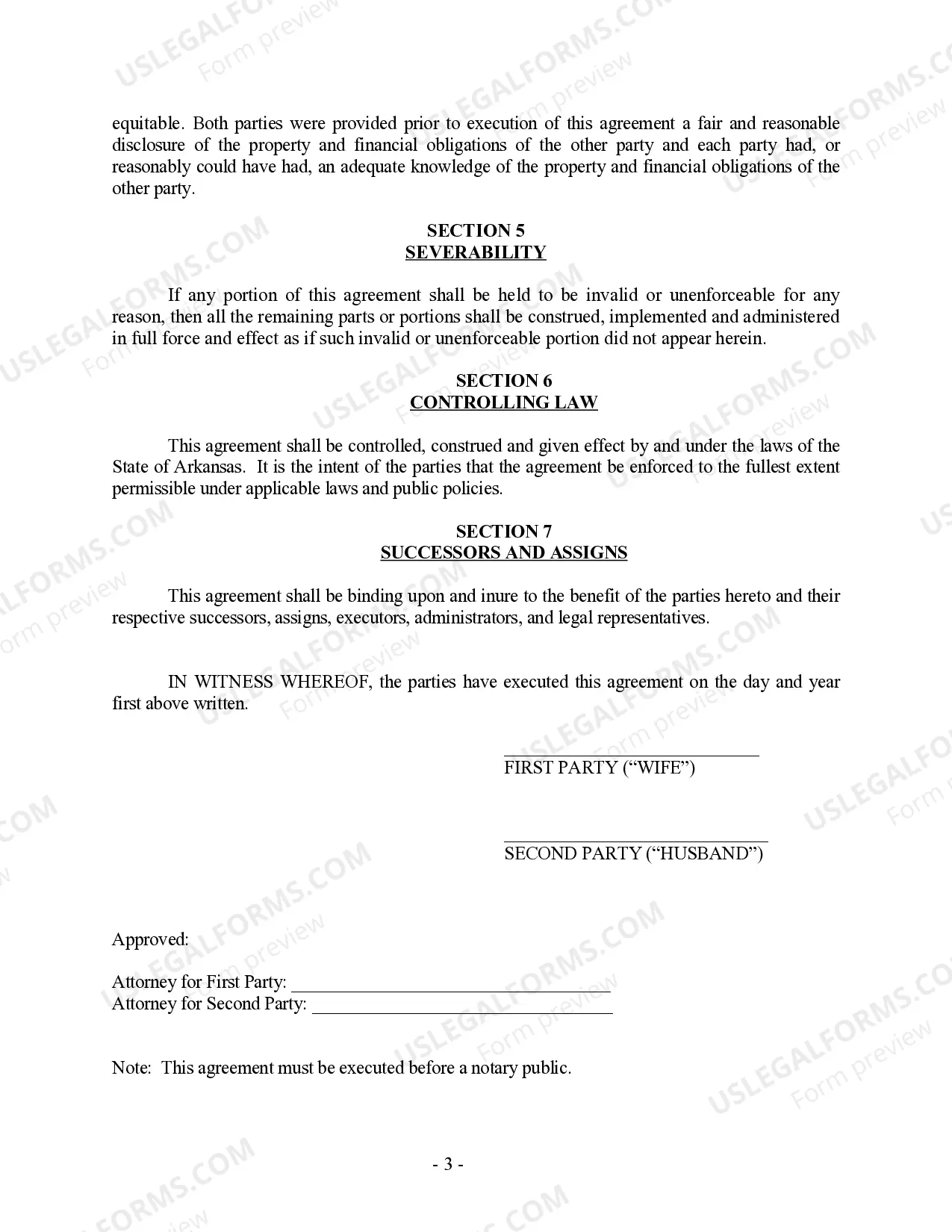
- Severability clause that maintains enforceability of the agreement.
- References the controlling law under which the agreement will operate.
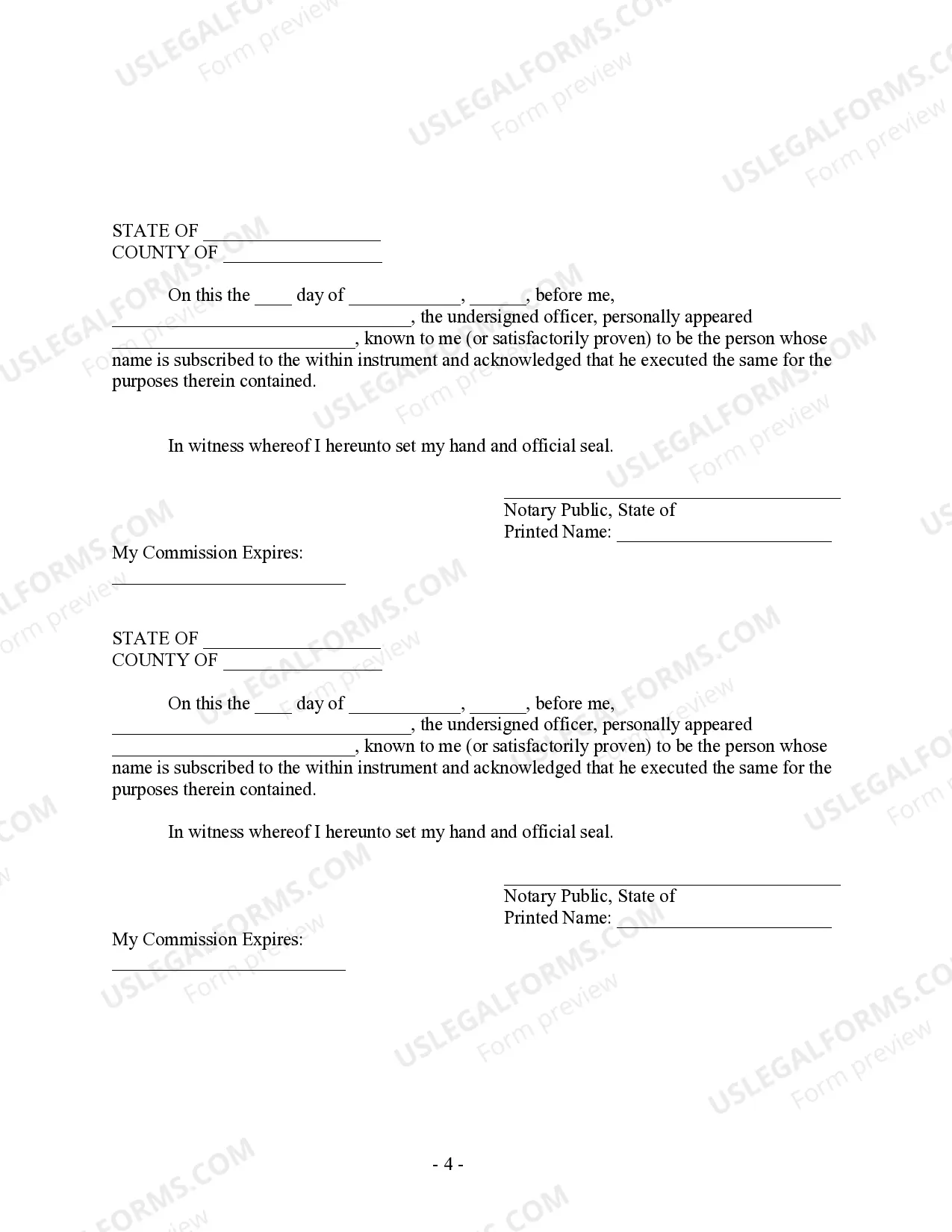
- Signature lines for both parties, and notarization details.
When this form is needed
This form is ideal when couples wish to update their postnuptial agreement due to changes in financial circumstances, property ownership, or personal preferences. For example, if a couple acquires new assets or decides to clarify the terms of their property division, this amendment provides a formal way to document those adjustments.
Who this form is for
This form is suitable for:
- Married couples who want to amend their existing postnuptial agreement.
- Individuals seeking to clarify or update property designations after marriage.
- Parties who have consulted with separate legal counsel and are informed of their rights.
Completing this form step by step
- Identify the parties involved in the postnuptial agreement.
- Clearly state the amendments or additions being made.
- Ensure both parties review and understand the agreement before signing.
- Sign the document in the presence of a notary public.
- Maintain a copy for personal records and update existing documents accordingly.
Is notarization required?
To make this form legally binding, it must be notarized. Our online notarization service, powered by Notarize, lets you verify and sign documents remotely through an encrypted video session.
Get your form ready online
Our built-in tools help you complete, sign, share, and store your documents in one place.
Make edits, fill in missing information, and update formatting in US Legal Forms—just like you would in MS Word.
Download a copy, print it, send it by email, or mail it via USPS—whatever works best for your next step.
Sign and collect signatures with our SignNow integration. Send to multiple recipients, set reminders, and more. Go Premium to unlock E-Sign.
If this form requires notarization, complete it online through a secure video call—no need to meet a notary in person or wait for an appointment.
We protect your documents and personal data by following strict security and privacy standards.

Make edits, fill in missing information, and update formatting in US Legal Forms—just like you would in MS Word.

Download a copy, print it, send it by email, or mail it via USPS—whatever works best for your next step.

Sign and collect signatures with our SignNow integration. Send to multiple recipients, set reminders, and more. Go Premium to unlock E-Sign.

If this form requires notarization, complete it online through a secure video call—no need to meet a notary in person or wait for an appointment.

We protect your documents and personal data by following strict security and privacy standards.
Avoid these common issues
- Failing to consult separate attorneys, which can lead to potential disputes.
- Not being specific about the amendments made, leading to confusion later.
- Skipping the notarization step, which is crucial for the legal validity of the amendment.
Why complete this form online
- Convenient access to legally vetted templates at any time.
- Editable formats that allow for specific tailoring to individual needs.
- Reliable guidance through the document completion process.
Key takeaways
- The Amendment to Postnuptial Property Agreement is essential for updating existing agreements.
- Both parties should consult independent legal professionals before signing.
- Notarization is required to ensure the amendment is enforceable.
- Clear documentation of property changes is critical to avoid future disputes.
Looking for another form?
Form popularity
FAQ
Several circumstances can render a postnuptial agreement void. These include issues like coercion, lack of legal capacity, and failure to meet statutory requirements. Moreover, if the terms of the agreement are found to be unconscionable or significantly unfair, a court may void it. Educating yourself about the Arkansas Amendment to Postnuptial Property Agreement can help you create a more resilient agreement.
Yes, you can challenge a postnuptial agreement in court. However, this process requires strong evidence to support your claim. Factors such as lack of voluntary consent, fraud, or undue influence may lead to a successful challenge. If you need assistance, consider the resources available through the Arkansas Amendment to Postnuptial Property Agreement options on the US Legal platform.
Postnuptial agreements, including the Arkansas Amendment to Postnuptial Property Agreement, can be enforceable if they meet certain legal requirements. It is essential for both parties to fully disclose their assets when creating the agreement. Additionally, the agreement should be fair and not signed under duress. To ensure your postnuptial agreement stands firm in court, consider using platforms like US Legal Forms for professional guidance.
Yes, a postnuptial agreement can be overturned, generally through legal proceedings. Valid reasons for overturning include misrepresentation, lack of agreement to essential terms, or violations of state law. If you find yourself in this position, consulting with a knowledgeable attorney can provide clarity on your options regarding an Arkansas Amendment to Postnuptial Property Agreement.
To void a postnuptial agreement, you must establish that it was signed under duress, based on false information, or not in compliance with legal requirements. In some cases, you may need to pursue legal action to have it declared void. Understanding the nuances of what constitutes an Arkansas Amendment to Postnuptial Property Agreement can help strengthen your case.
Yes, contesting a postnuptial agreement is possible, but it requires valid legal grounds. Whether you question its fairness or the circumstances surrounding its execution, the process involves presenting evidence to support your claims in court. Enlisting the help of a legal professional can guide you through the complexities of contesting an Arkansas Amendment to Postnuptial Property Agreement.
A postnuptial agreement can indeed be challenged in court. Common grounds for challenges include claims of coercion, fraud, or lack of understanding about the agreement's implications. It is advisable to draft an Arkansas Amendment to Postnuptial Property Agreement clearly, ensuring that both parties fully understand their rights and obligations.
To enforce a postnuptial agreement, including an Arkansas Amendment to Postnuptial Property Agreement, both parties must adhere to its terms. If one party fails to comply, the other can file a petition in court to enforce the agreement. Documentation and legal representation play crucial roles in successfully advocating for your rights under the agreement.
A postnuptial agreement can be deemed invalid for various reasons, such as lack of voluntary consent or when one party did not fully disclose their financial information. Additionally, if the agreement is found to be unconscionable or if it was signed under duress, it may be challenged. Understanding these factors can help in drafting a valid Arkansas Amendment to Postnuptial Property Agreement that protects both parties.
Yes, you can change a postnuptial agreement, including an Arkansas Amendment to Postnuptial Property Agreement. Both parties must agree to the changes, and it's essential to document them properly. Retaining a qualified attorney ensures that the modifications reflect your intentions and comply with state laws. This approach helps in maintaining the agreement's validity over time.