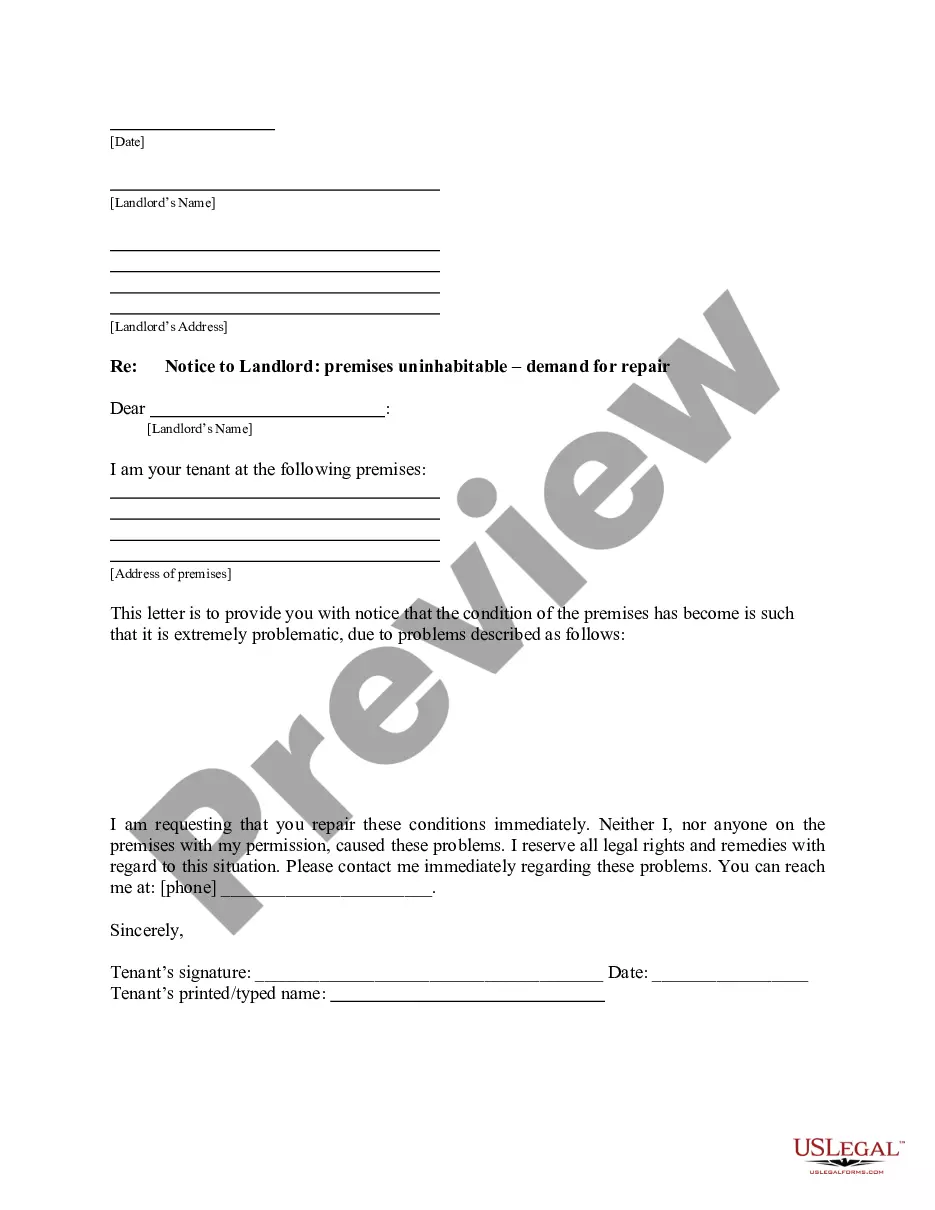
Alabama Last Will and Testament for Divorced and Remarried Person with Mine, Yours and Ours Children
What is this form?
This Last Will and Testament is specifically designed for a divorced and remarried individual who has children from multiple relationships. It serves to outline how your assets will be distributed upon your death, taking into account children from both current and previous marriages. This type of will includes provisions for appointing a personal representative, designating heirs, and establishing trusts for any minor children. By addressing the unique circumstances faced by divorced parents, this legal document ensures that your wishes are honored in a clear and legally binding manner.
Key components of this form
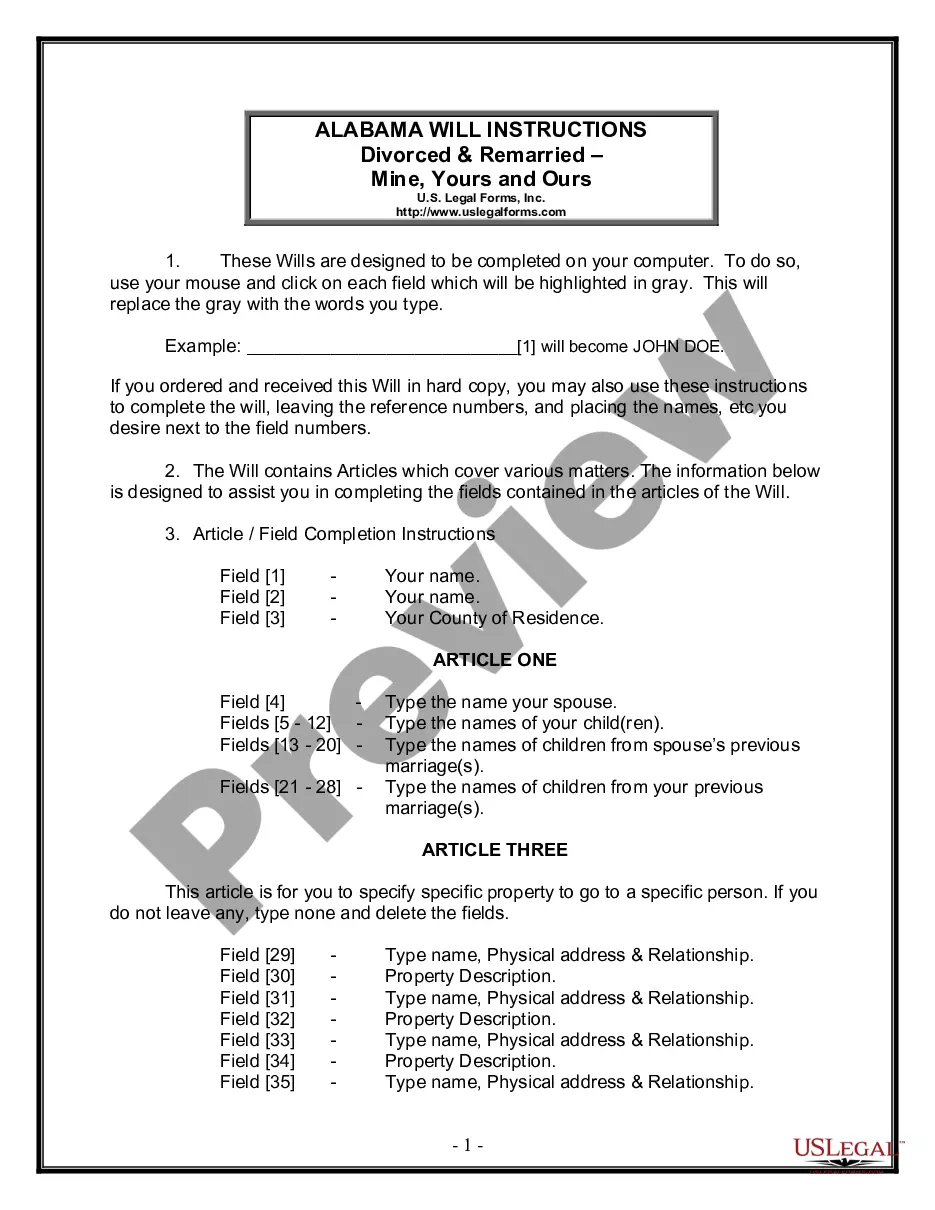
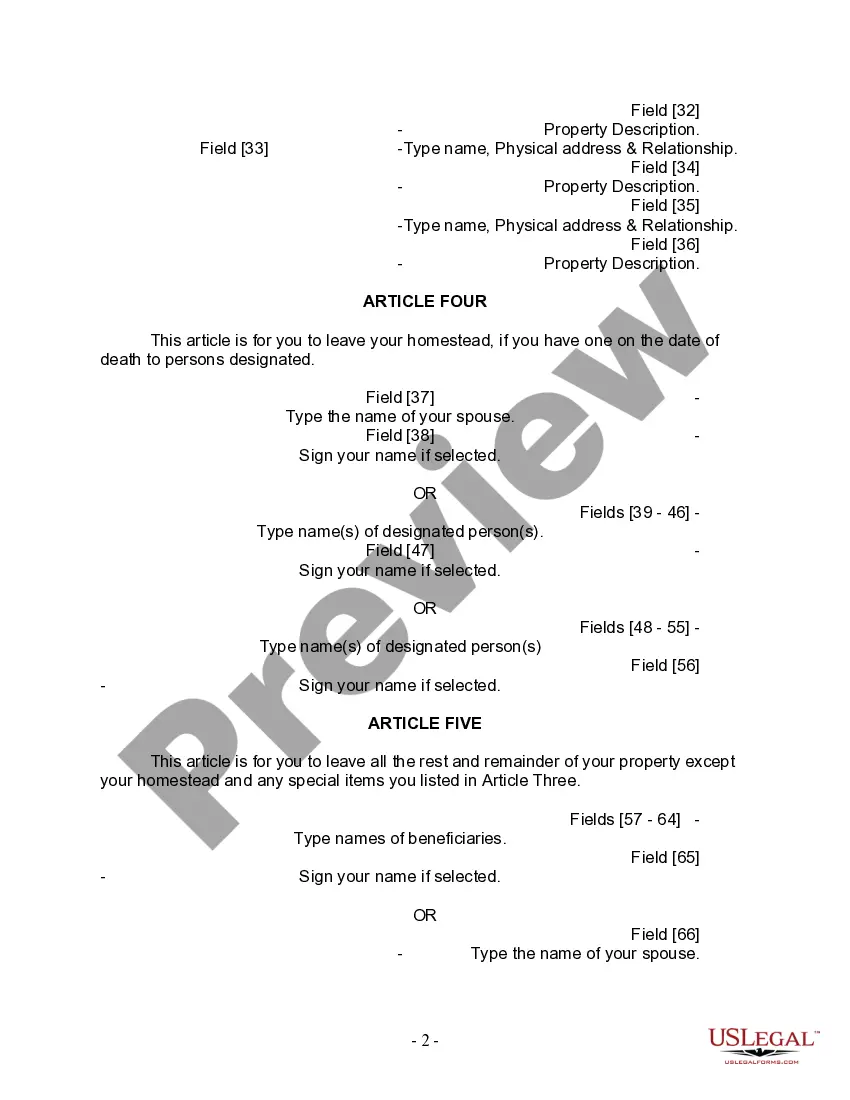
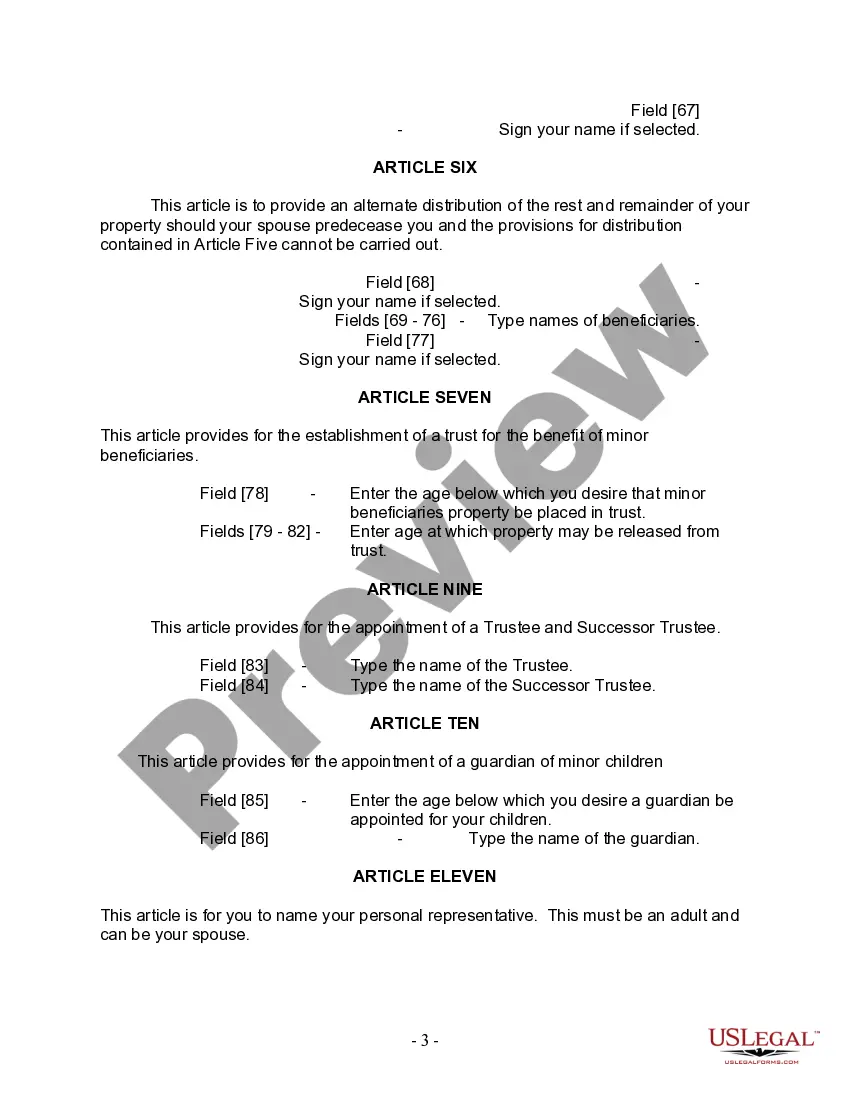
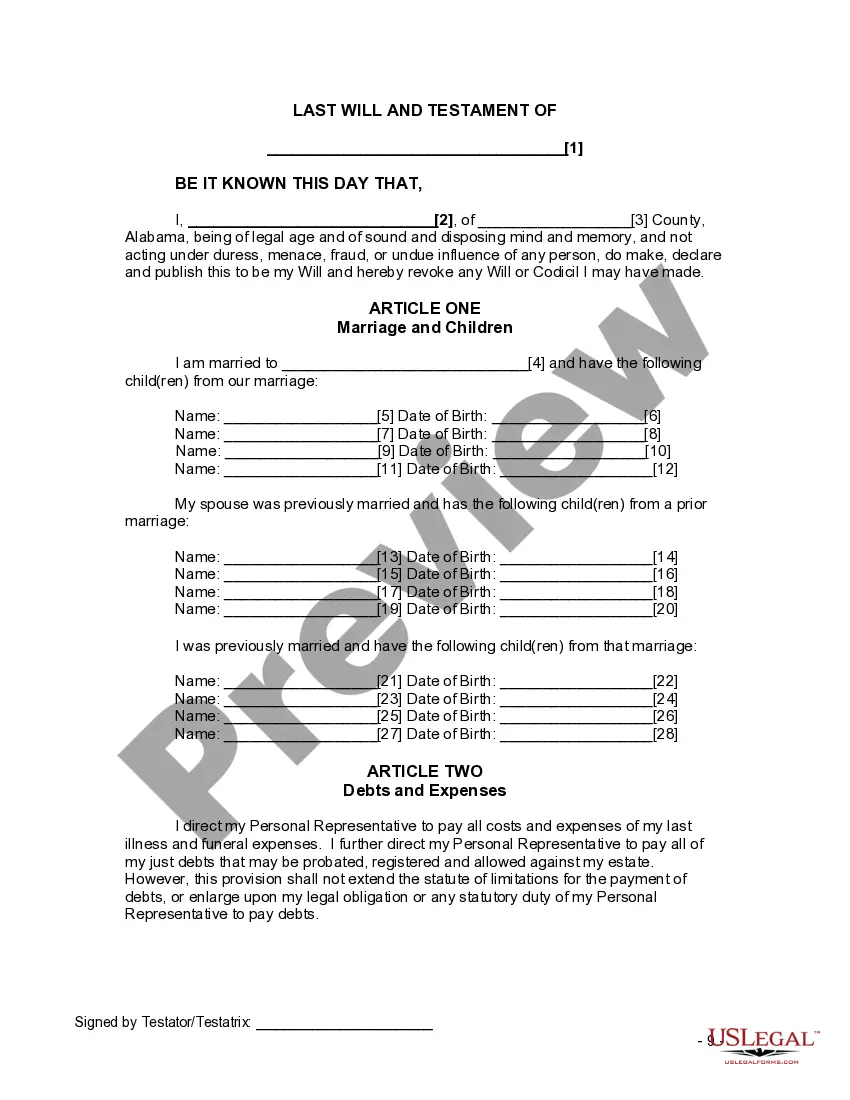
- Article One: Identifies your marriage and children, including those from previous relationships.
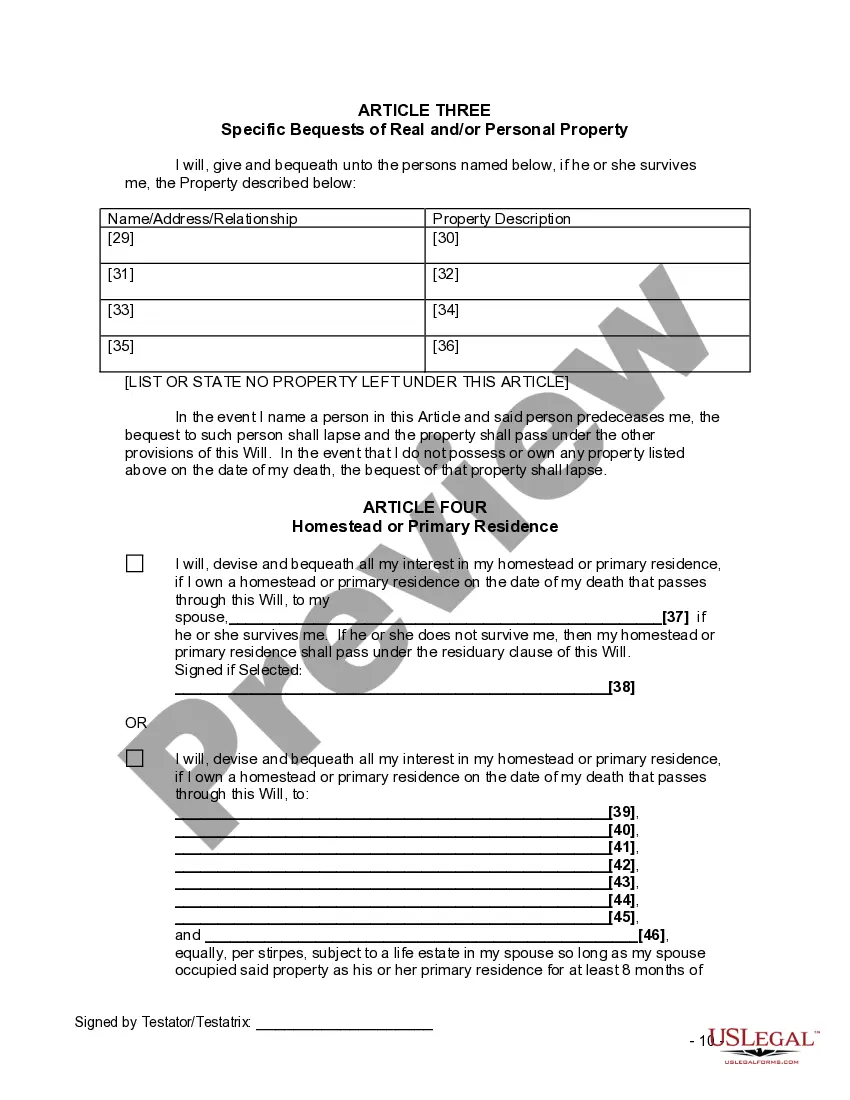
- Article Three: Allows for specific bequests of property to named individuals.
- Article Four: Addresses the distribution of your primary residence.
- Article Five: Details the distribution of all remaining property.
- Article Seven: Establishes trusts for minor beneficiaries.
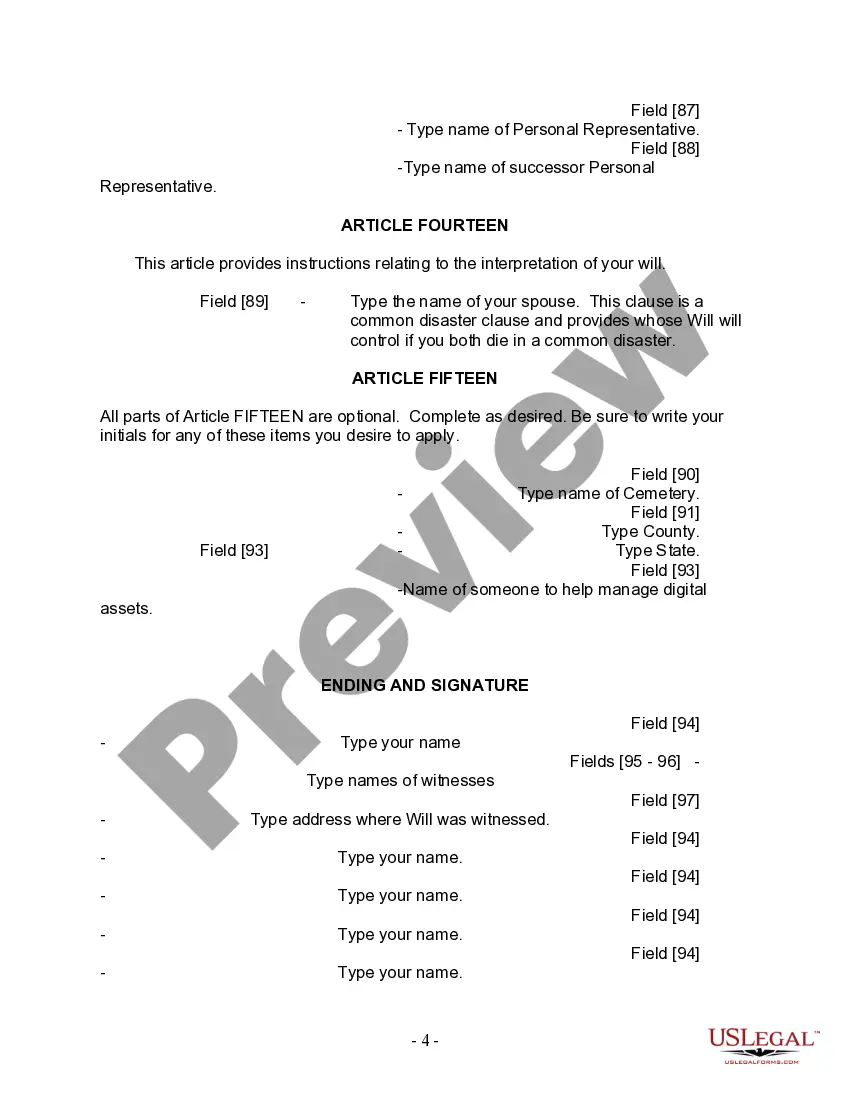
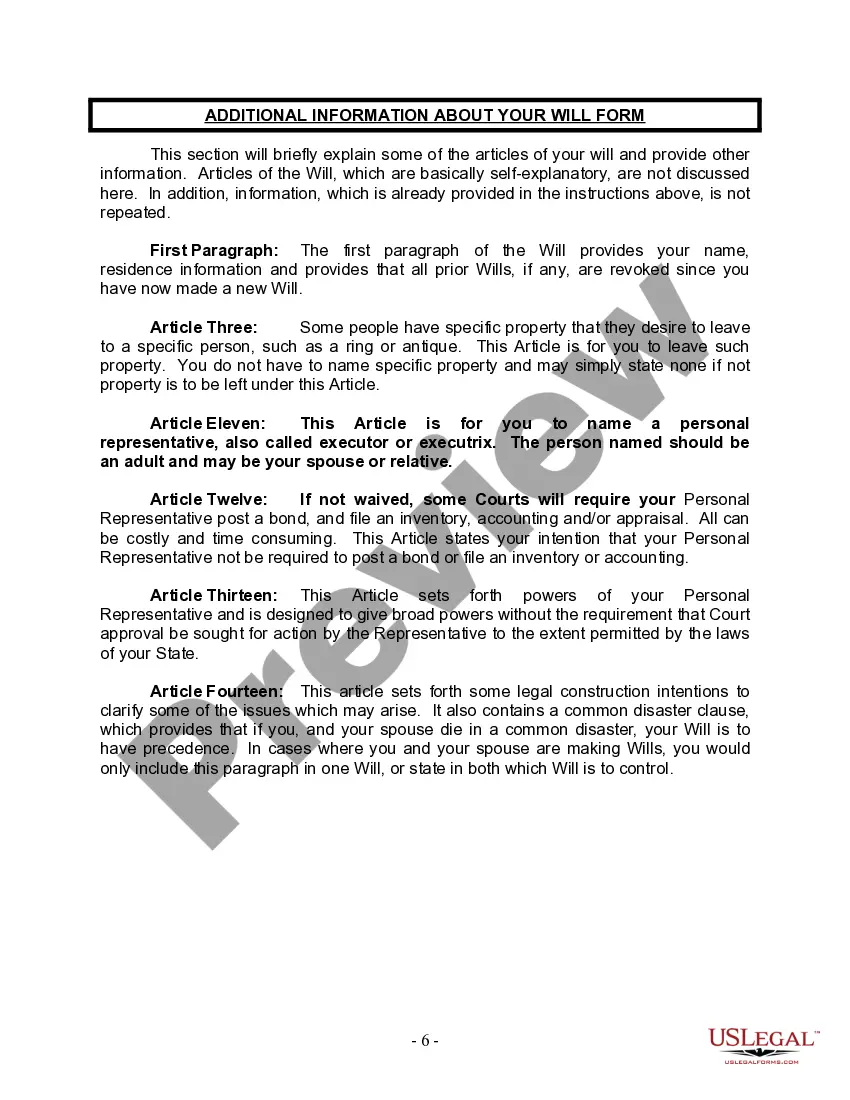
- Article Eleven: Appoints a personal representative to execute your will.





Situations where this form applies
This form is essential in situations where a divorced individual remarries and has children from multiple relationships. Use this will when you want to ensure that your estate is distributed according to your wishes, addressing any complexities related to your family dynamics. It is particularly important if you are concerned about the welfare of minor children and want to appoint guardians or set up trusts.
Who needs this form
This Last Will and Testament is intended for:
- Divorced individuals who have remarried.
- Parents with children from previous marriages.
- Individuals wanting to provide clear estate planning instructions for blended families.
- Those looking to designate guardians for minor children.
How to prepare this document
To complete this Last Will and Testament, follow these steps:
- Identify yourself by entering your full name and county of residence.
- List your current spouse and all children from the present and prior marriages.
- Specify any particular property you wish to bequeath to individual beneficiaries.
- Designate a personal representative who will oversee the execution of your will.
- If applicable, provide details for establishing trusts for minor beneficiaries.
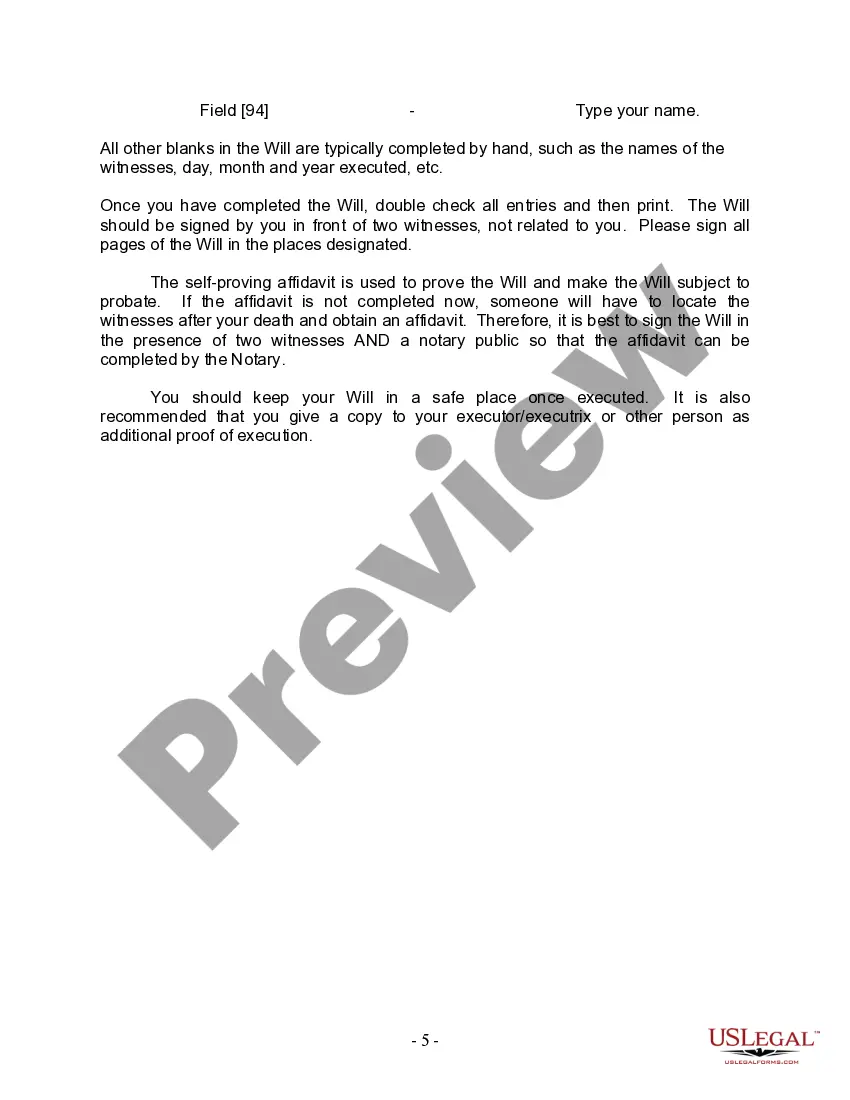
- Sign the document in front of two witnesses and, if required, a notary public.
Notarization guidance
Yes, this form must be notarized to be legally valid. You can use US Legal Formsâ integrated online notarization service, available 24/7, which allows you to securely meet with a notary public via video call. This process is designed to ensure legal equivalence without the need for travel.
Get your form ready online
Our built-in tools help you complete, sign, share, and store your documents in one place.
Make edits, fill in missing information, and update formatting in US Legal Forms—just like you would in MS Word.
Download a copy, print it, send it by email, or mail it via USPS—whatever works best for your next step.
Sign and collect signatures with our SignNow integration. Send to multiple recipients, set reminders, and more. Go Premium to unlock E-Sign.
If this form requires notarization, complete it online through a secure video call—no need to meet a notary in person or wait for an appointment.
We protect your documents and personal data by following strict security and privacy standards.

Make edits, fill in missing information, and update formatting in US Legal Forms—just like you would in MS Word.

Download a copy, print it, send it by email, or mail it via USPS—whatever works best for your next step.

Sign and collect signatures with our SignNow integration. Send to multiple recipients, set reminders, and more. Go Premium to unlock E-Sign.

If this form requires notarization, complete it online through a secure video call—no need to meet a notary in person or wait for an appointment.

We protect your documents and personal data by following strict security and privacy standards.
Avoid these common issues
- Not updating the will after significant life changes, such as a new marriage or the birth of a child.
- Failing to properly sign and witness the will, rendering it invalid.
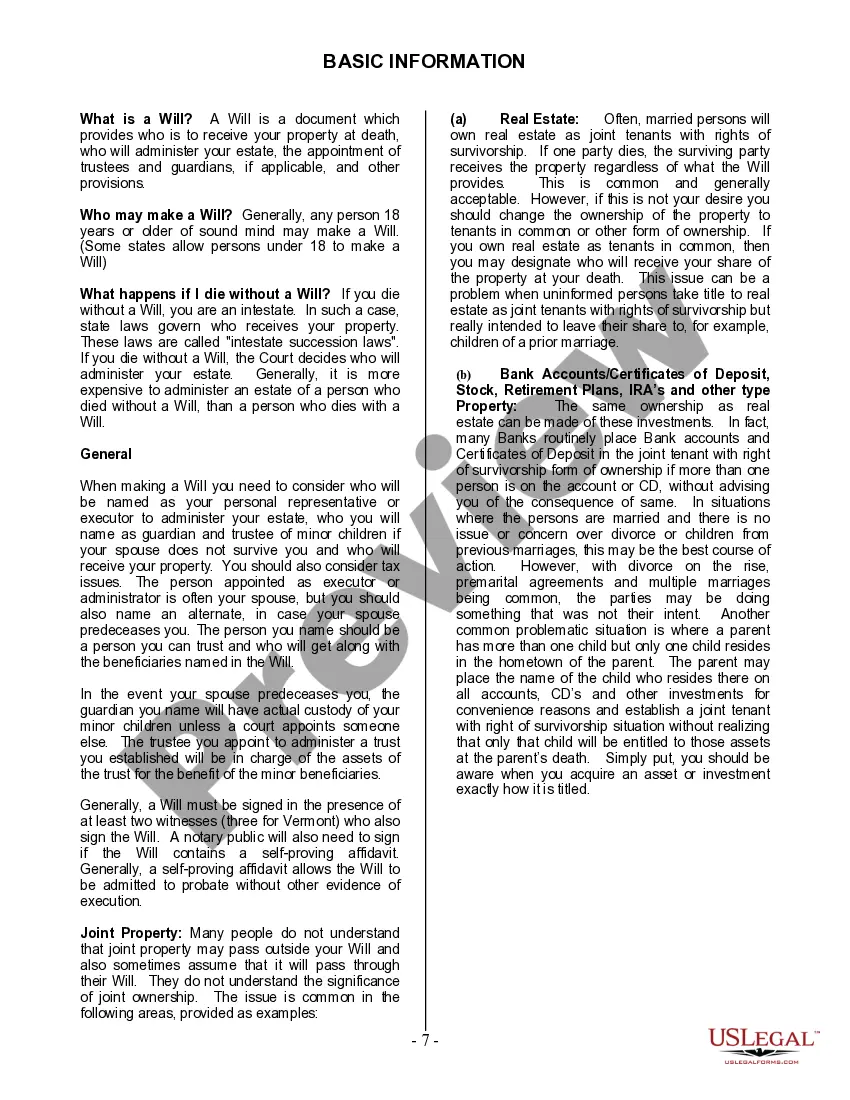
- Neglecting to address joint property or accounts that might bypass the will.
- Omitting to choose a guardian for minor children.
Why complete this form online
- Convenience of completing the form online from anywhere.
- Editability allows you to make adjustments without the need for a lawyer.
- Trusted templates drafted by licensed attorneys ensure legal compliance.
What to keep in mind
- This Last Will and Testament is specifically tailored for divorced and remarried individuals with children from multiple relationships.
- It is essential to clearly outline beneficiaries, guardians, and personal representatives to ensure your wishes are followed.
- Always have your will witnessed and consider notarization to enhance its legal standing.
Looking for another form?
Form popularity
FAQ
Marriage does not automatically invalidate a will in the USA, but it can change the distribution of your assets. In states like Alabama, a surviving spouse may have claims that affect how your assets are distributed, even if they are not named in the will. Regularly reviewing and updating your Alabama Last Will and Testament for Divorced and Remarried Person with Mine, Yours and Ours Children is essential to ensuring your wishes are respected.
Generally, a will does not supersede marriage law. When you marry, your spouse gains certain rights to your estate under Alabama law, which may override provisions in your will. Therefore, it’s important to update your Alabama Last Will and Testament for Divorced and Remarried Person with Mine, Yours and Ours Children anytime your marital status changes.
Yes, you can write a will without a lawyer in Alabama; however, it’s crucial to follow the state's legal requirements to ensure validity. Platforms like uslegalforms can provide templates and guidance for creating an Alabama Last Will and Testament for Divorced and Remarried Person with Mine, Yours and Ours Children. This can help prevent potential disputes and ensure that your wishes are honored.
In most cases, a will does not take precedence over marriage. If you marry after creating a will, your new spouse may have legal rights to inherit from your estate in Alabama. Therefore, it’s wise to review your Alabama Last Will and Testament for Divorced and Remarried Person with Mine, Yours and Ours Children after getting married to ensure it aligns with your current family situation.
A will can indeed supersede the effects of a divorce, especially when it comes to the distribution of assets. When you create an Alabama Last Will and Testament for Divorced and Remarried Person with Mine, Yours and Ours Children, you can clearly state your wishes regarding your property and beneficiaries. However, certain aspects of property division are still influenced by divorce laws, so it's essential to understand how these legal frameworks interact.
A spouse does not automatically inherit everything in Alabama unless there are no children or other relatives. In cases with children, the estate is divided between the spouse and children, often resulting in the spouse receiving a significant share but not all. It is essential for individuals with unique family situations, such as divorced and remarried persons with children from previous relationships, to establish a clear Alabama Last Will and Testament for Divorced and Remarried Person with Mine, Yours and Ours Children to reflect their desires.
In Alabama, property does not automatically transfer entirely to a spouse upon death without a will. The distribution depends on whether the deceased has surviving children and other relatives. If the deceased had children, the spouse would receive a portion of the estate, while the children would inherit the remaining assets. Creating an Alabama Last Will and Testament for Divorced and Remarried Person with Mine, Yours and Ours Children clarifies your wishes and avoids unnecessary disputes.
Alabama's order of inheritance is designed to facilitate the fair distribution of a deceased person's estate. Firstly, the surviving spouse and children have priority over the estate. If there is no spouse or children, parents inherit next, followed by siblings and their children. Understanding the order is crucial for those creating an Alabama Last Will and Testament for Divorced and Remarried Person with Mine, Yours and Ours Children to ensure all parties are considered.
In cases where there is no will, the state of Alabama follows intestacy laws to determine inheritance. Generally, the deceased's spouse and children inherit the estate. If the deceased had children from previous relationships, Alabama allocates the estate based on the relationship of the surviving family members. This situation emphasizes the importance of having an Alabama Last Will and Testament for Divorced and Remarried Person with Mine, Yours and Ours Children to ensure your wishes are honored.
In Alabama, there is no mandatory waiting period before you can remarry after a divorce is finalized. However, it's wise to take the time needed to address any necessary updates to your estate plans. If you have children from previous relationships, as in the case of an Alabama Last Will and Testament for Divorced and Remarried Persons with Mine, Yours and Ours Children, make sure your will reflects your current family situation. Also, reviewing your plans can help avoid potential disputes later.