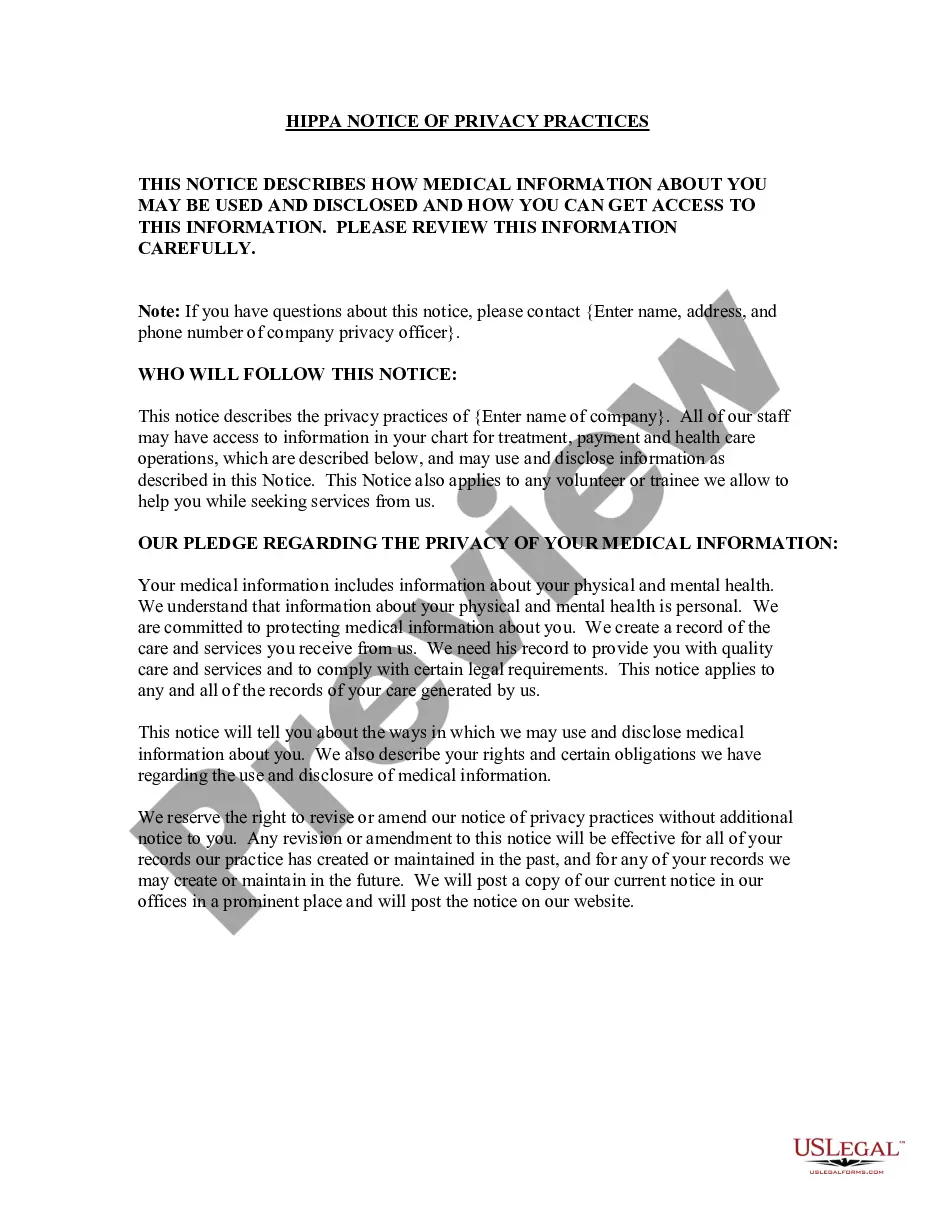
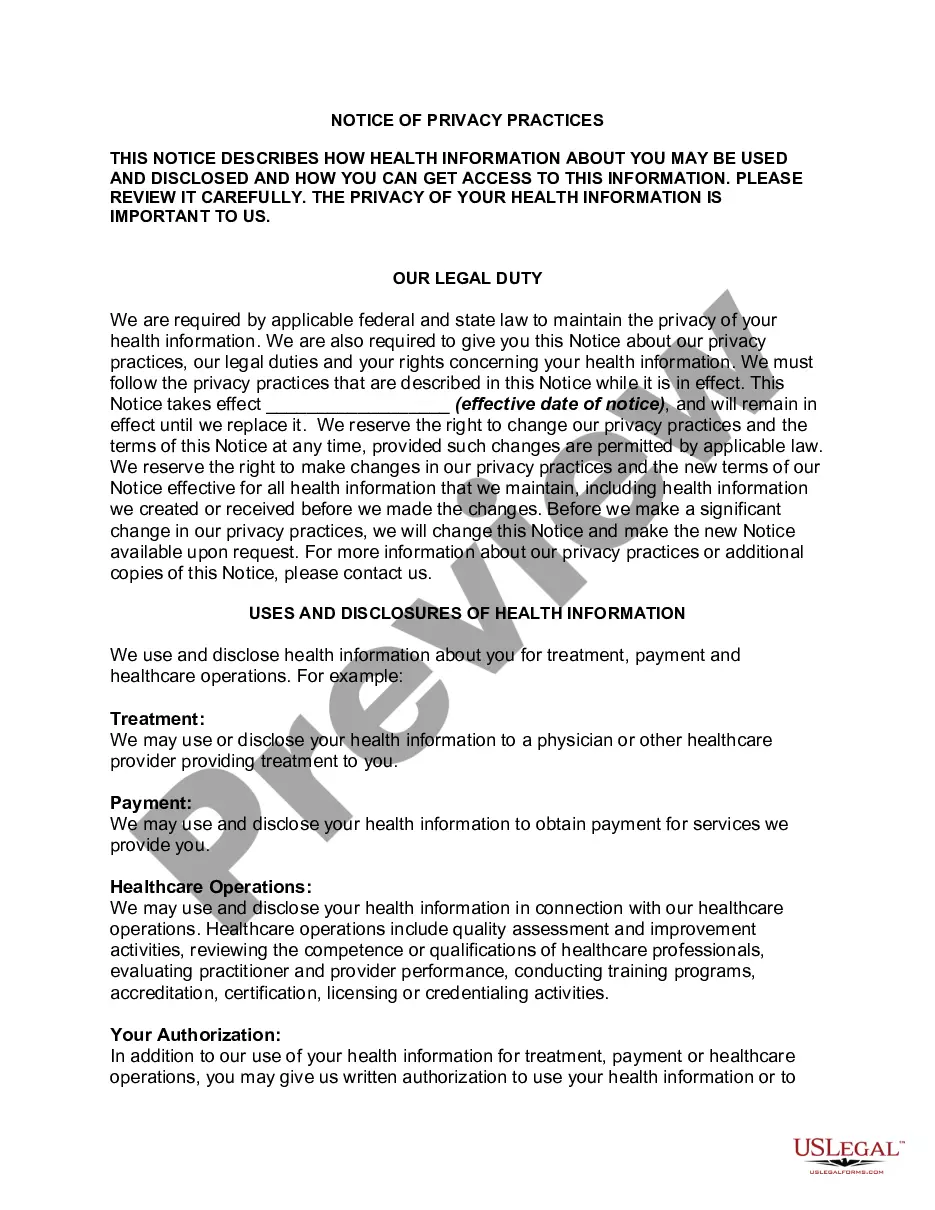
Alabama HIPAA Notice of Privacy Practices
Description
Get your form ready online
Our built-in tools help you complete, sign, share, and store your documents in one place.
Make edits, fill in missing information, and update formatting in US Legal Forms—just like you would in MS Word.
Download a copy, print it, send it by email, or mail it via USPS—whatever works best for your next step.
Sign and collect signatures with our SignNow integration. Send to multiple recipients, set reminders, and more. Go Premium to unlock E-Sign.
If this form requires notarization, complete it online through a secure video call—no need to meet a notary in person or wait for an appointment.
We protect your documents and personal data by following strict security and privacy standards.

Make edits, fill in missing information, and update formatting in US Legal Forms—just like you would in MS Word.

Download a copy, print it, send it by email, or mail it via USPS—whatever works best for your next step.

Sign and collect signatures with our SignNow integration. Send to multiple recipients, set reminders, and more. Go Premium to unlock E-Sign.

If this form requires notarization, complete it online through a secure video call—no need to meet a notary in person or wait for an appointment.

We protect your documents and personal data by following strict security and privacy standards.
Looking for another form?
How to fill out HIPAA Notice Of Privacy Practices?
You might spend numerous hours online attempting to locate the approved document template that meets the federal and state requirements you require.
US Legal Forms offers a multitude of legal forms that are examined by specialists.
You can download or print the Alabama HIPAA Notice of Privacy Practices from my service.
To locate another version of the document, utilize the Search feature to find the template that suits your needs and requirements.
- If you already possess a US Legal Forms account, you can Log In and select the Download option.
- After that, you can complete, modify, print, or sign the Alabama HIPAA Notice of Privacy Practices.
- Each legal document template you acquire is yours indefinitely.
- To obtain another copy of a purchased document, go to the My documents section and click on the relevant option.
- The first time you use the US Legal Forms website, follow the simple instructions below.
- First, make sure you have selected the correct document template for the area/city you choose.
- Review the document outline to ensure you have chosen the right template.
Form popularity
FAQ
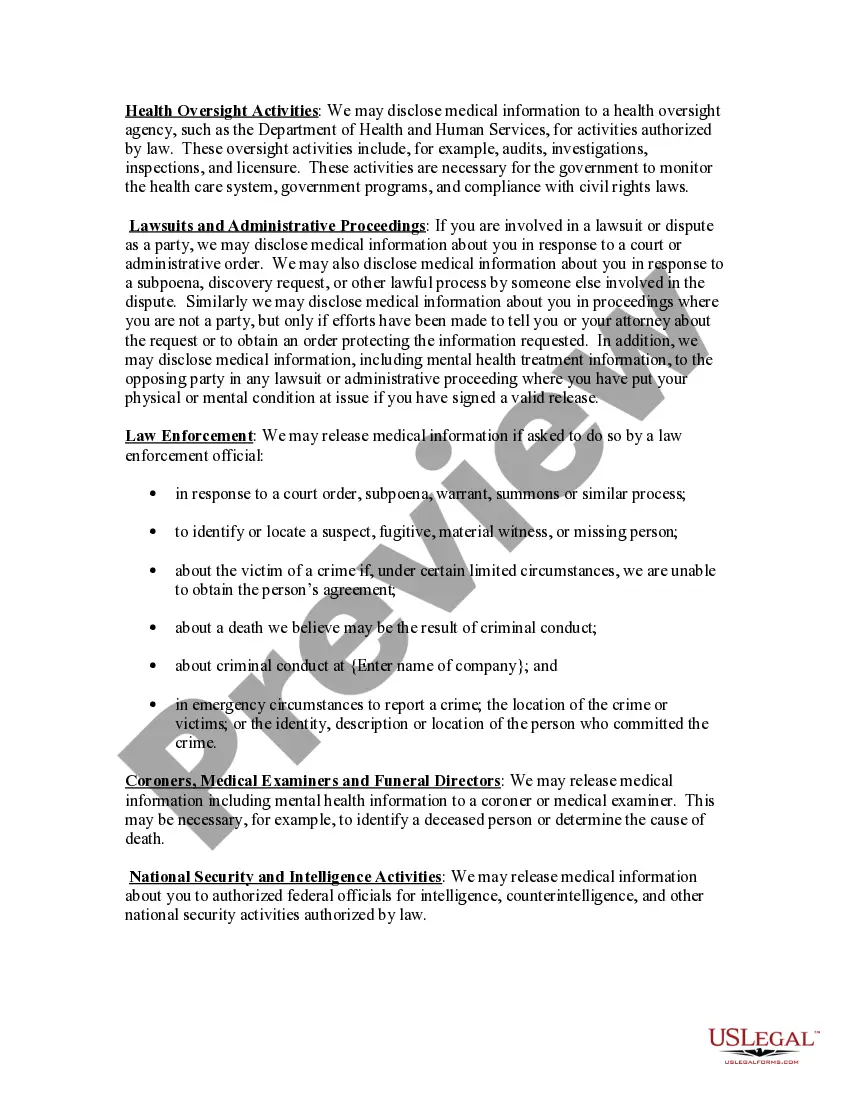
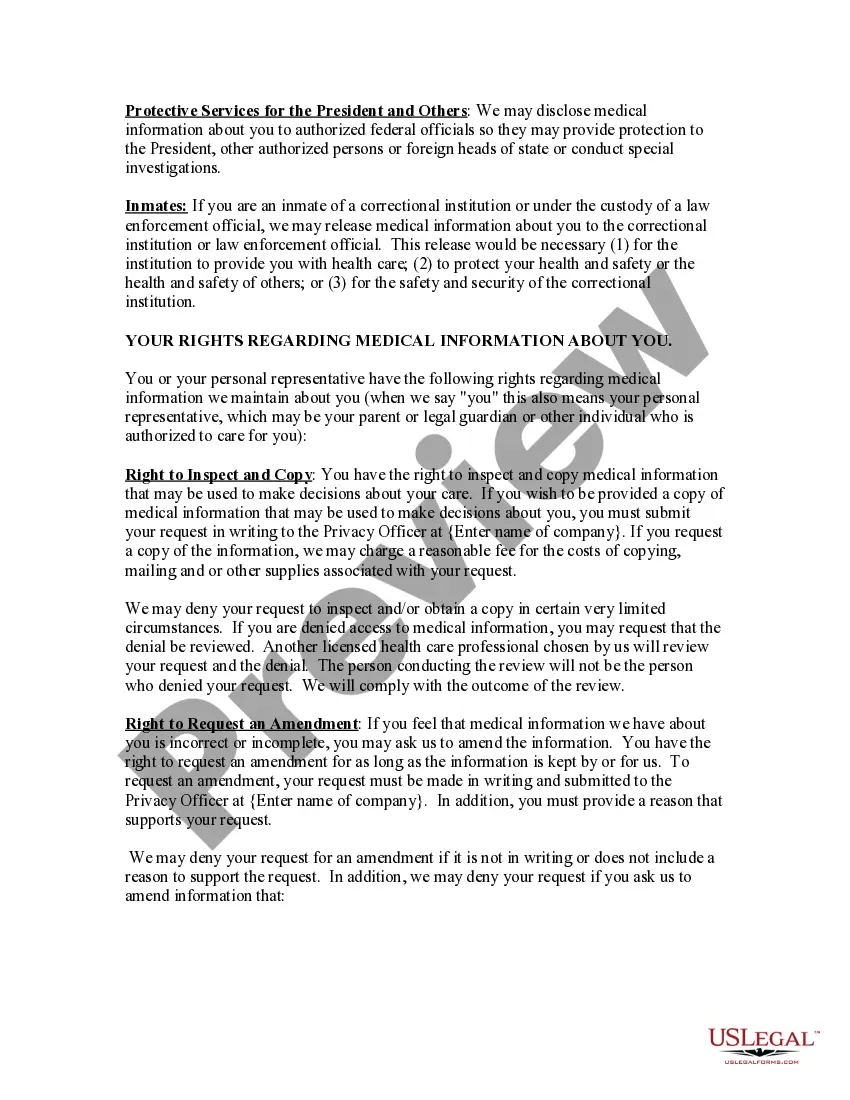
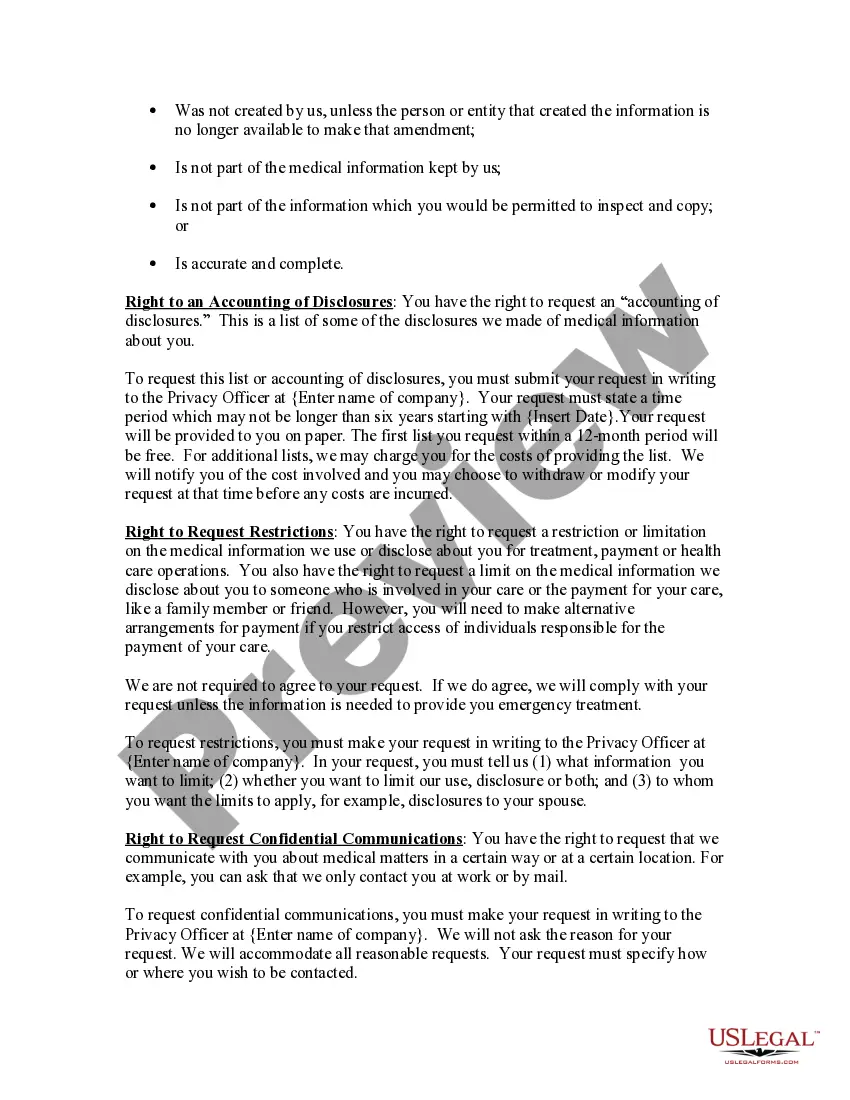
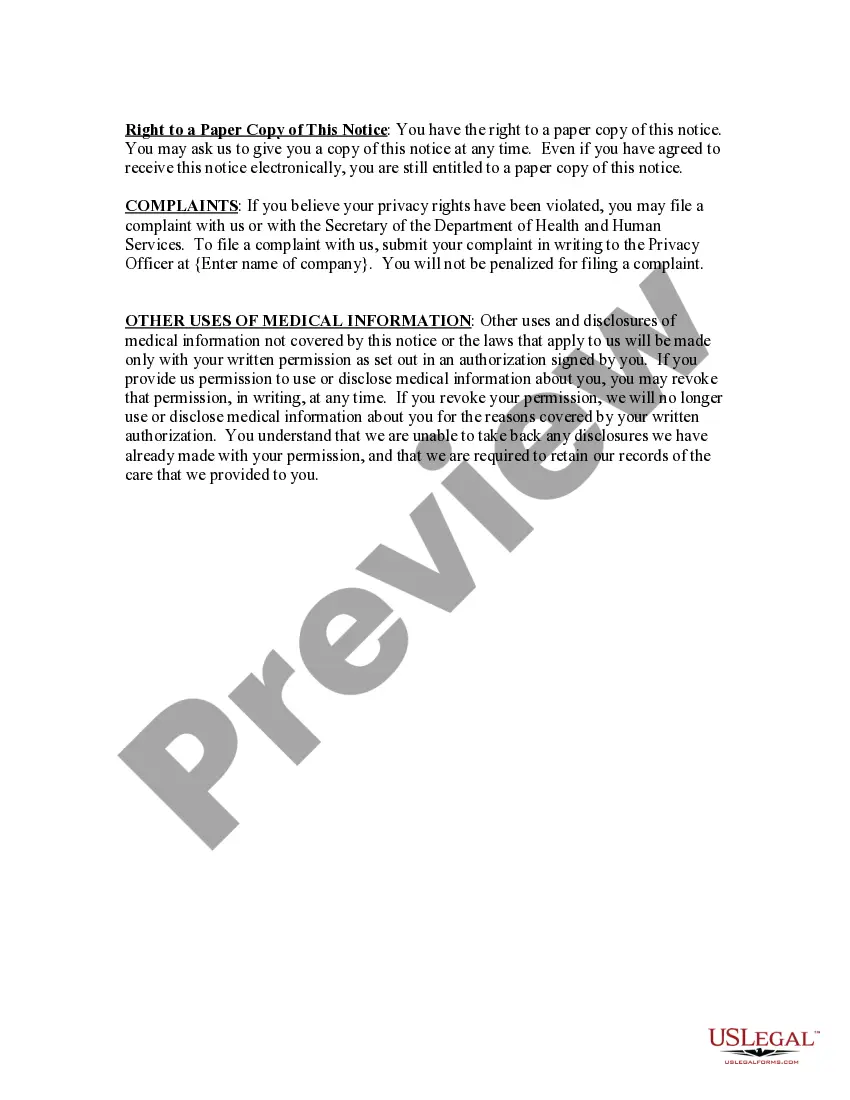
The NPP is a document that tells your patients, employees, or clients how their health information may be used and shared and lists their health privacy rights related to Protected Health Information (PHI). It's a part of the HIPAA Privacy Rule and a key requirement for your organization.
A Notice of Privacy Practices (NPP) is one of the requirements of HIPAA and helps patients understand their personal data rights. A Notice of Privacy Practices (NPP) is a document that explains to patients, employees, and clients how relevant health information will be collected, processed, stored, and used.
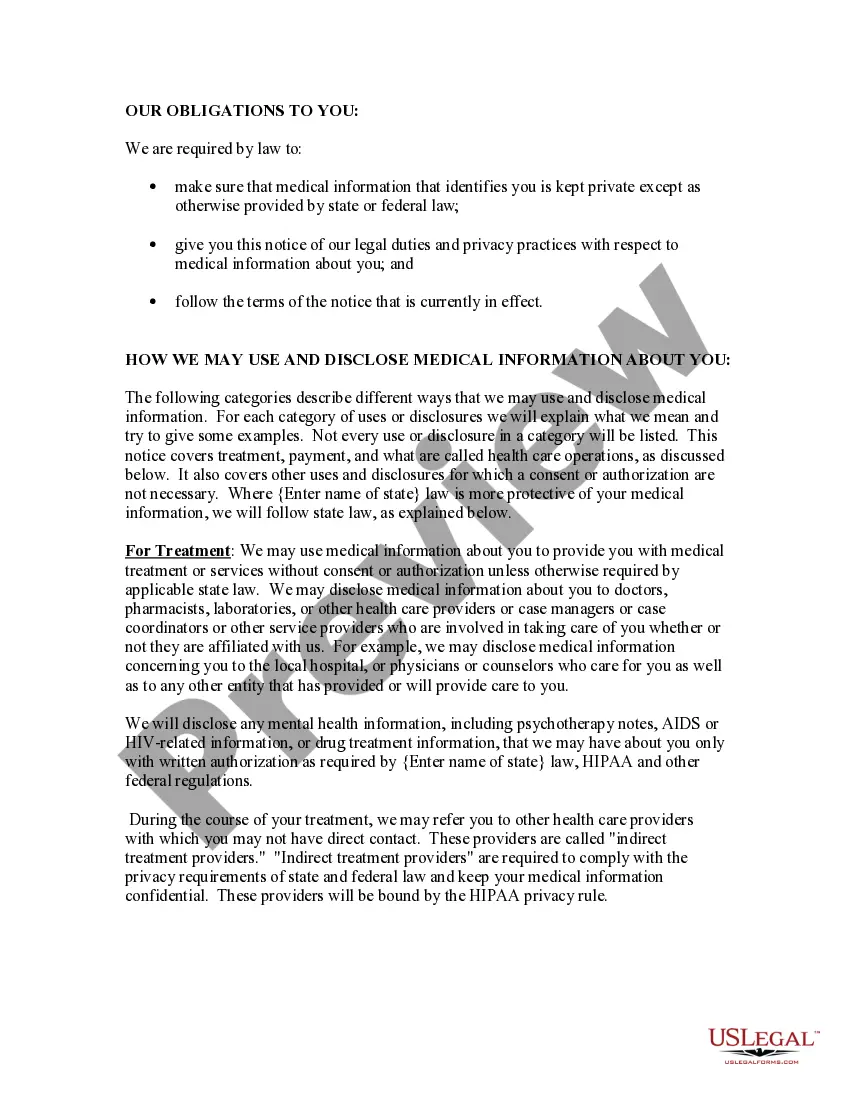
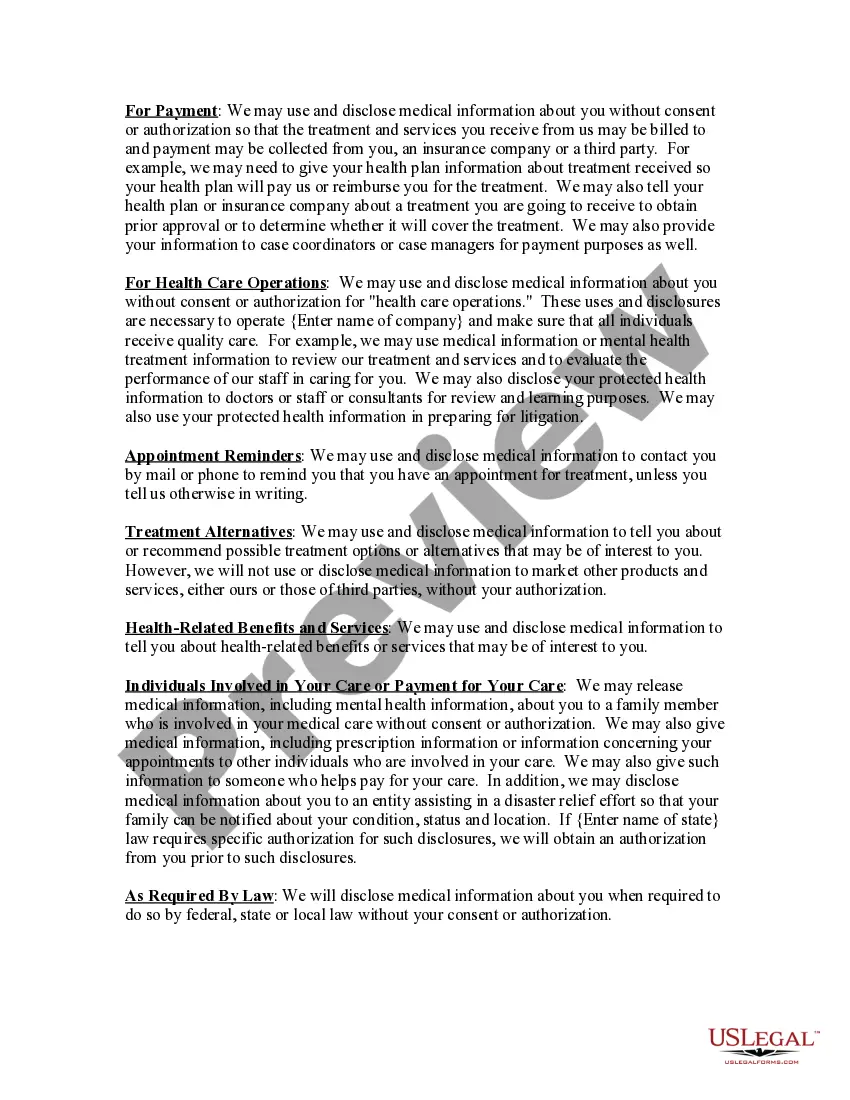
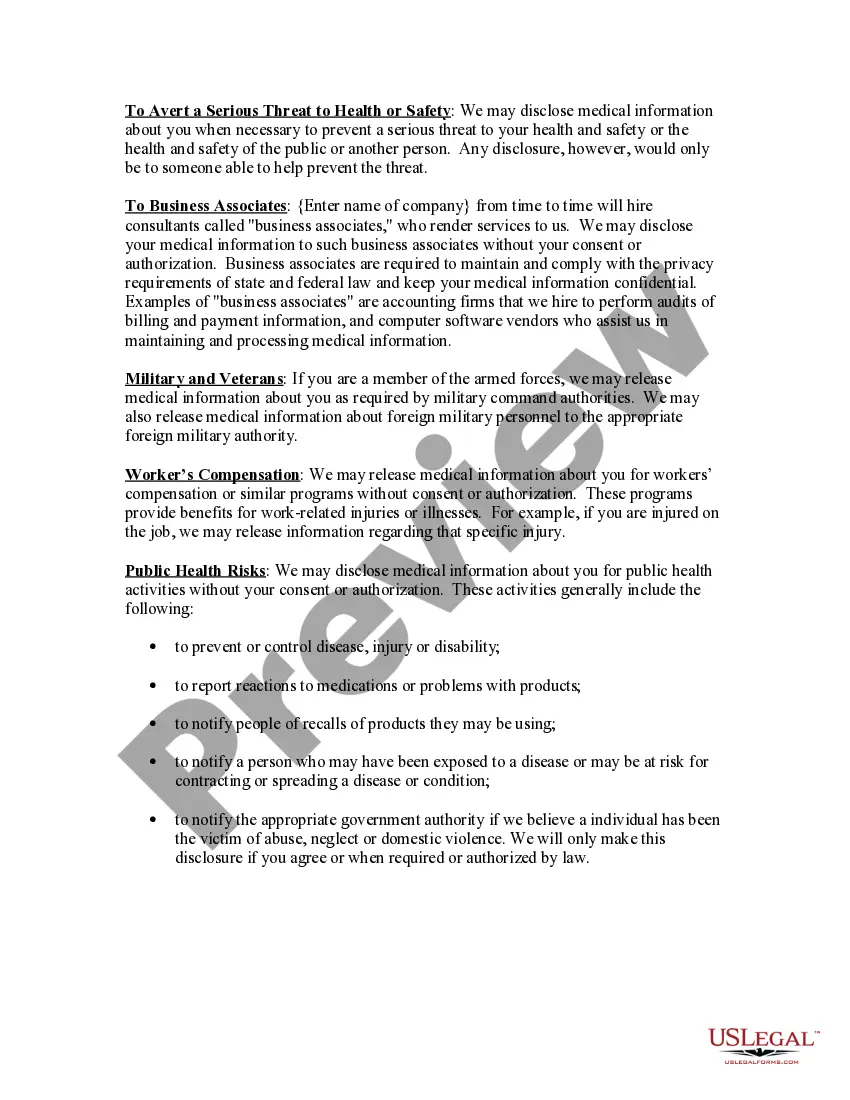
The required information includes: A statement that the covered entity is required by law to maintain the privacy of PHI. A statement that the covered entity must provide individuals with notice of its legal duties and privacy practices with respect to PHI.
The notice is intended to focus individuals on privacy issues and concerns, and to prompt them to have discussions with their health plans and health care providers and exercise their rights.
In most cases, you should receive the notice on your first visit to a provider or in the mail from your health plan. You can also ask for a copy at any time.
The three components of HIPAA security rule compliance. Keeping patient data safe requires healthcare organizations to exercise best practices in three areas: administrative, physical security, and technical security.
HIPAA-mandated notice that covered entities must give to patients and research subjects that describes how a covered entity may use and disclose their protected health information, and informs them of their legal rights regarding PHI.
The NPP is a document that tells your patients, employees, or clients how their health information may be used and shared and lists their health privacy rights related to Protected Health Information (PHI). It's a part of the HIPAA Privacy Rule and a key requirement for your organization.
We proposed to require the notice to be written in plain language and contain each of the following elements: a description of the uses and disclosures expected to be made without individual authorization; statements that other uses and disclosures would be made only with the individual's authorization and that the
HIPAA-mandated notice that covered entities must give to patients and research subjects that describes how a covered entity may use and disclose their protected health information, and informs them of their legal rights regarding PHI.