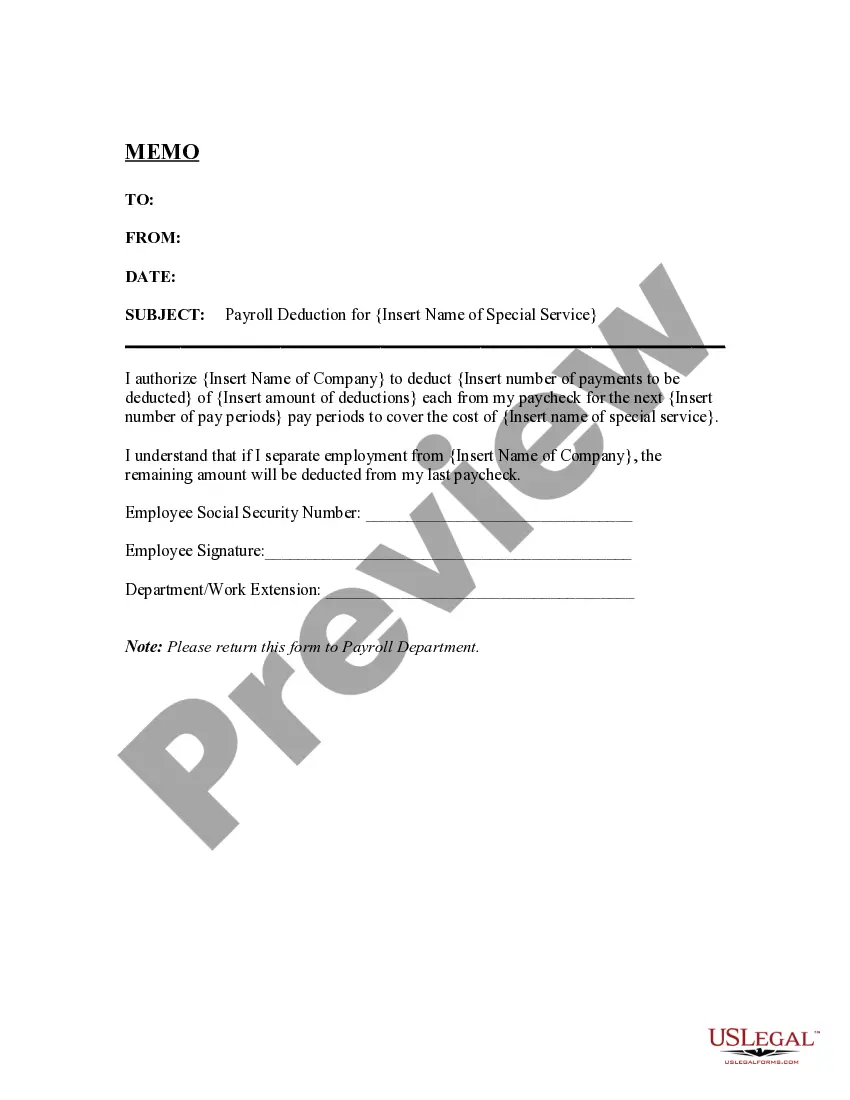
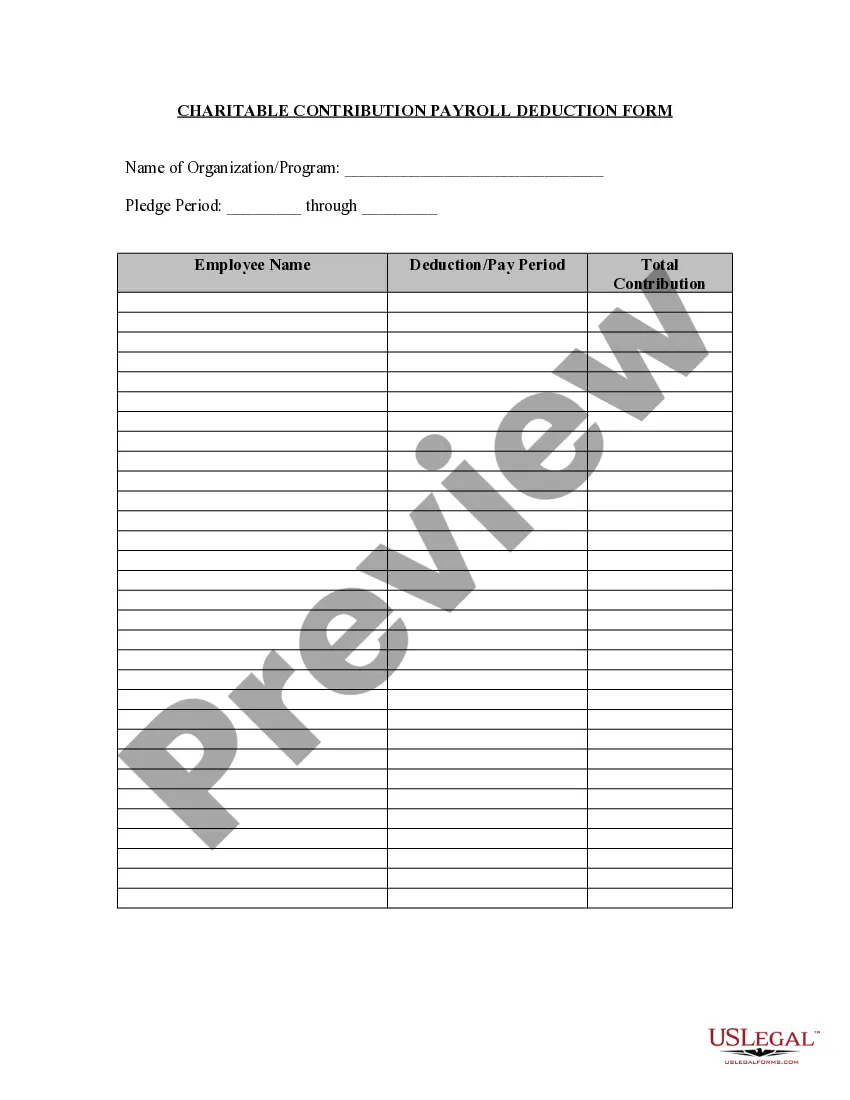
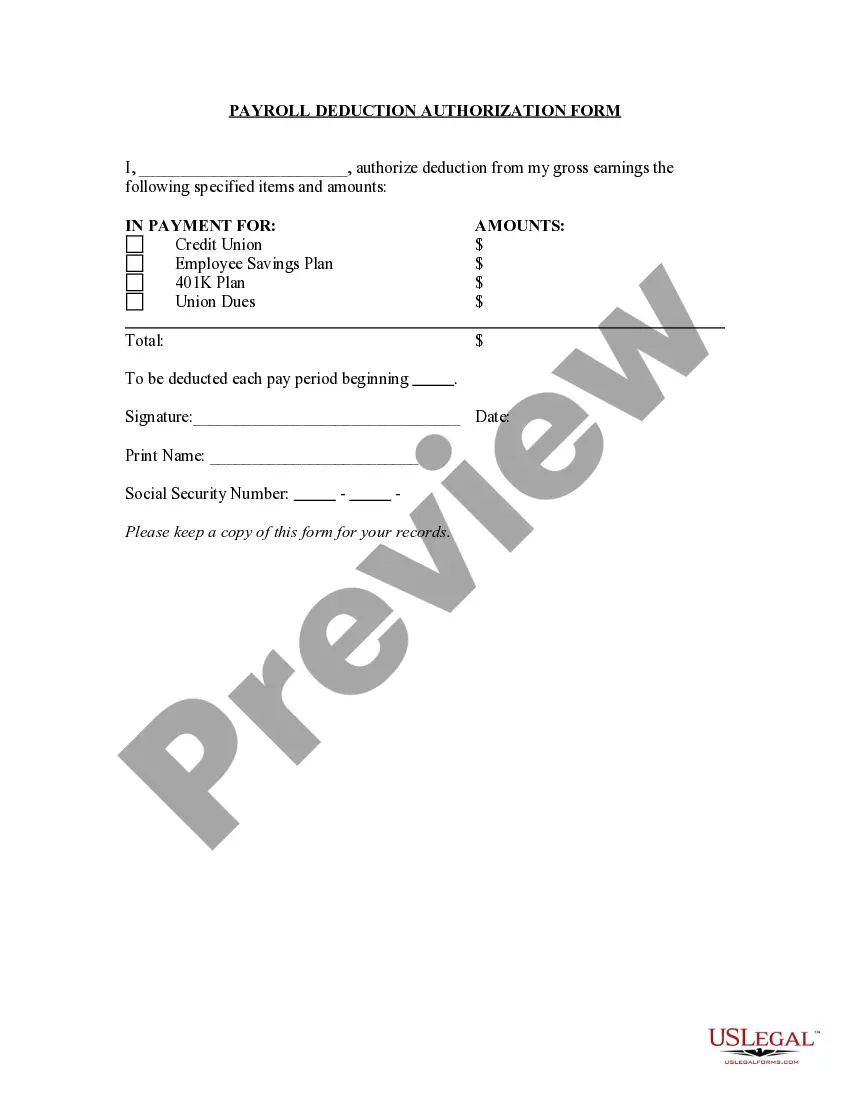
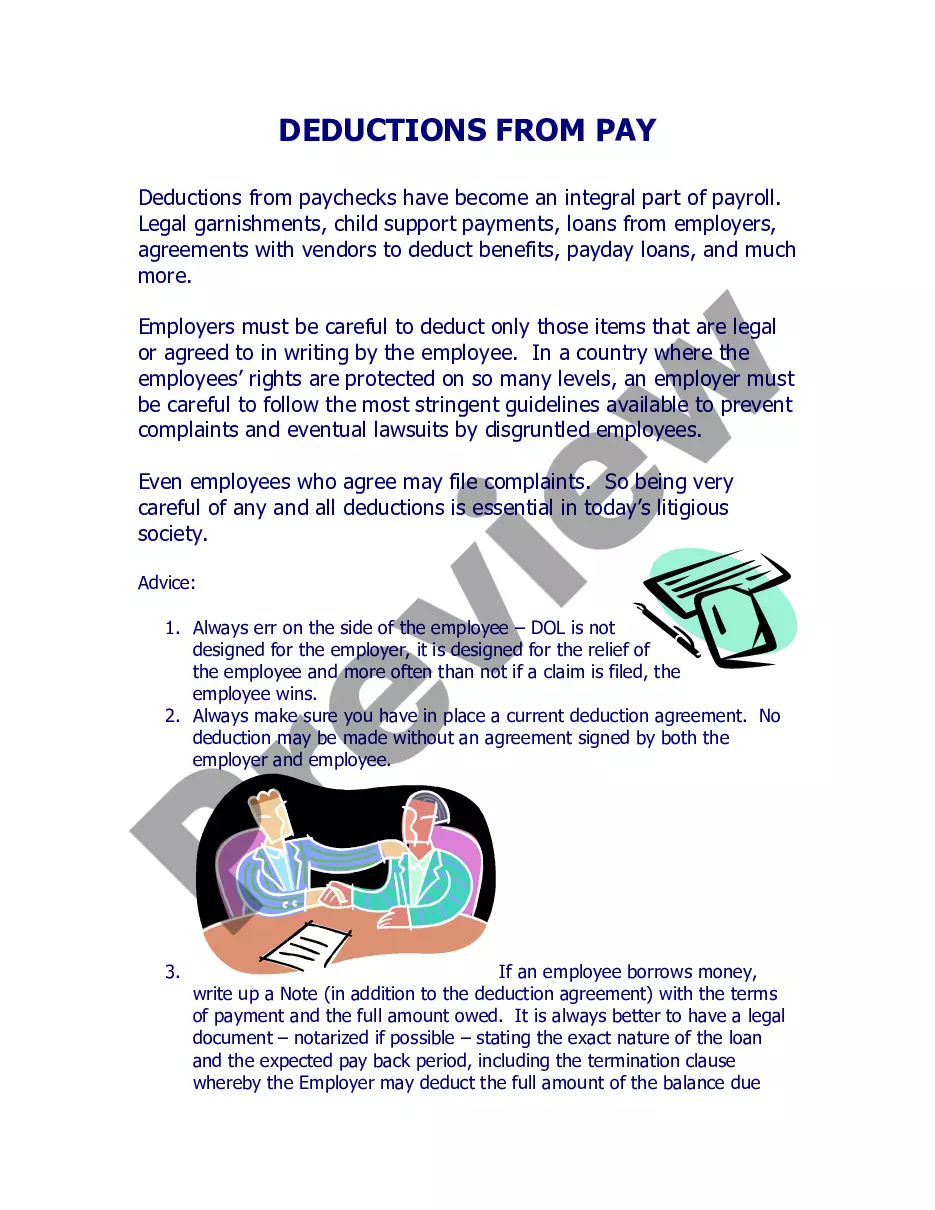
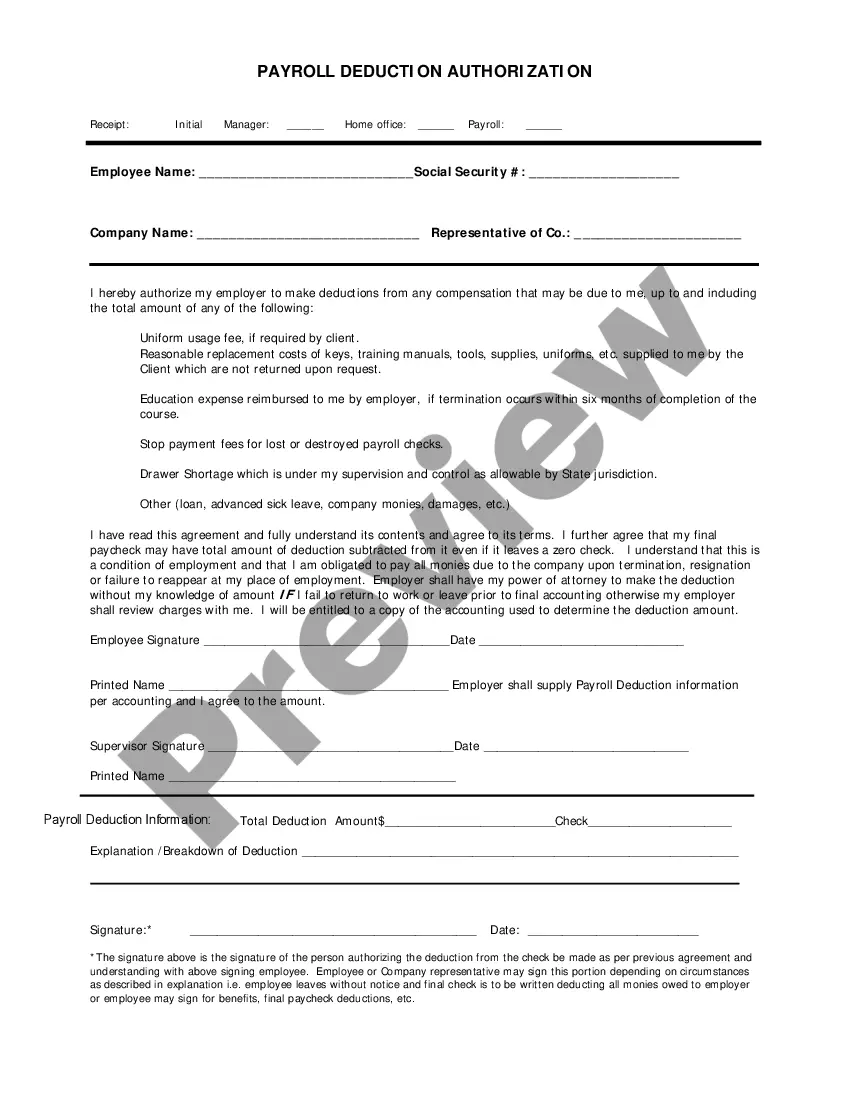
Alabama Payroll Deduction - Special Services
Description

Get your form ready online
Our built-in tools help you complete, sign, share, and store your documents in one place.
Make edits, fill in missing information, and update formatting in US Legal Forms—just like you would in MS Word.
Download a copy, print it, send it by email, or mail it via USPS—whatever works best for your next step.
Sign and collect signatures with our SignNow integration. Send to multiple recipients, set reminders, and more. Go Premium to unlock E-Sign.
If this form requires notarization, complete it online through a secure video call—no need to meet a notary in person or wait for an appointment.
We protect your documents and personal data by following strict security and privacy standards.

Make edits, fill in missing information, and update formatting in US Legal Forms—just like you would in MS Word.

Download a copy, print it, send it by email, or mail it via USPS—whatever works best for your next step.

Sign and collect signatures with our SignNow integration. Send to multiple recipients, set reminders, and more. Go Premium to unlock E-Sign.

If this form requires notarization, complete it online through a secure video call—no need to meet a notary in person or wait for an appointment.

We protect your documents and personal data by following strict security and privacy standards.
Looking for another form?

How to fill out Payroll Deduction - Special Services?
Are you currently in a situation where you need documents for personal or business purposes almost every day.
There are numerous legal document templates available online, but finding reliable ones can be challenging.
US Legal Forms provides thousands of document templates, such as the Alabama Payroll Deduction - Special Services, designed to meet federal and state regulations.
When you find the right form, click Acquire now.
Select your preferred pricing plan, complete the necessary information to create your account, and pay for the transaction using PayPal or a credit card.
- If you are already familiar with the US Legal Forms website and have an account, simply Log In.
- Then, you can download the Alabama Payroll Deduction - Special Services template.
- If you do not have an account and wish to start using US Legal Forms, follow these steps.
- Find the form you need and ensure it is for your correct area/state.
- Use the Review feature to examine the form.
- Check the description to ensure you have selected the right document.
- If the form does not meet your needs, use the Lookup section to find the form that aligns with your requirements.
Form popularity
FAQ
Which of the following is not a statutory deduction? Union Dues.
Answer and Explanation: An employer could be liable for a net FUTA tax greater than 0.6 percent in these two situations: If an employer is delaying in paying the state contributions. And if an employer is positioned in a particular state where the repayment provisions of Title XII advances have not been met.
Statutory payroll deductions include: payroll taxes, federal income tax, Social Security tax and Medicare tax, state income tax (if applicable) and local tax withholdings (if applicable) such as city, county, or school district taxes, and state disability.
Types of Payroll Deductions & WithholdingsFederal & State Income Taxes.Social Security.Medicare Tax.Retirement Deductions.Insurance Policy Deductions.Other Payroll Deductions & Withholdings.Payroll Deductions & Your Take-Home Pay.
Payroll deductions are wages withheld from an employee's paycheck for the payment of taxes, benefits, or garnishments. There are both mandatory and voluntary payroll deductions. The order in which deductions are taken out of paychecks also matters because some are made pre-tax and some are made post-tax.
For payroll purposes, deductions are divided into two types:Voluntary deductions.Involuntary (mandatory) deductions: taxes, garnishments, and fines.
Incorrect payroll deductions are often the result of employers charging their employees for benefits and services that they should be paying themselves. This includes: Federal unemployment tax (FUTA) State unemployment tax. Workers' compensation insurance.
What are payroll deductions?Income tax.Social security tax.401(k) contributions.Wage garnishments.Child support payments.
There are four basic types of payroll taxes: federal income, Social Security, Medicare, and federal unemployment. Employees must pay Social Security and Medicare taxes through payroll deductions, and most employers also deduct federal income tax payments.
There are four basic types of payroll taxes: federal income, Social Security, Medicare, and federal unemployment. Employees must pay Social Security and Medicare taxes through payroll deductions, and most employers also deduct federal income tax payments.