Alabama Motion in Limine - breathalyser test results
What this document covers
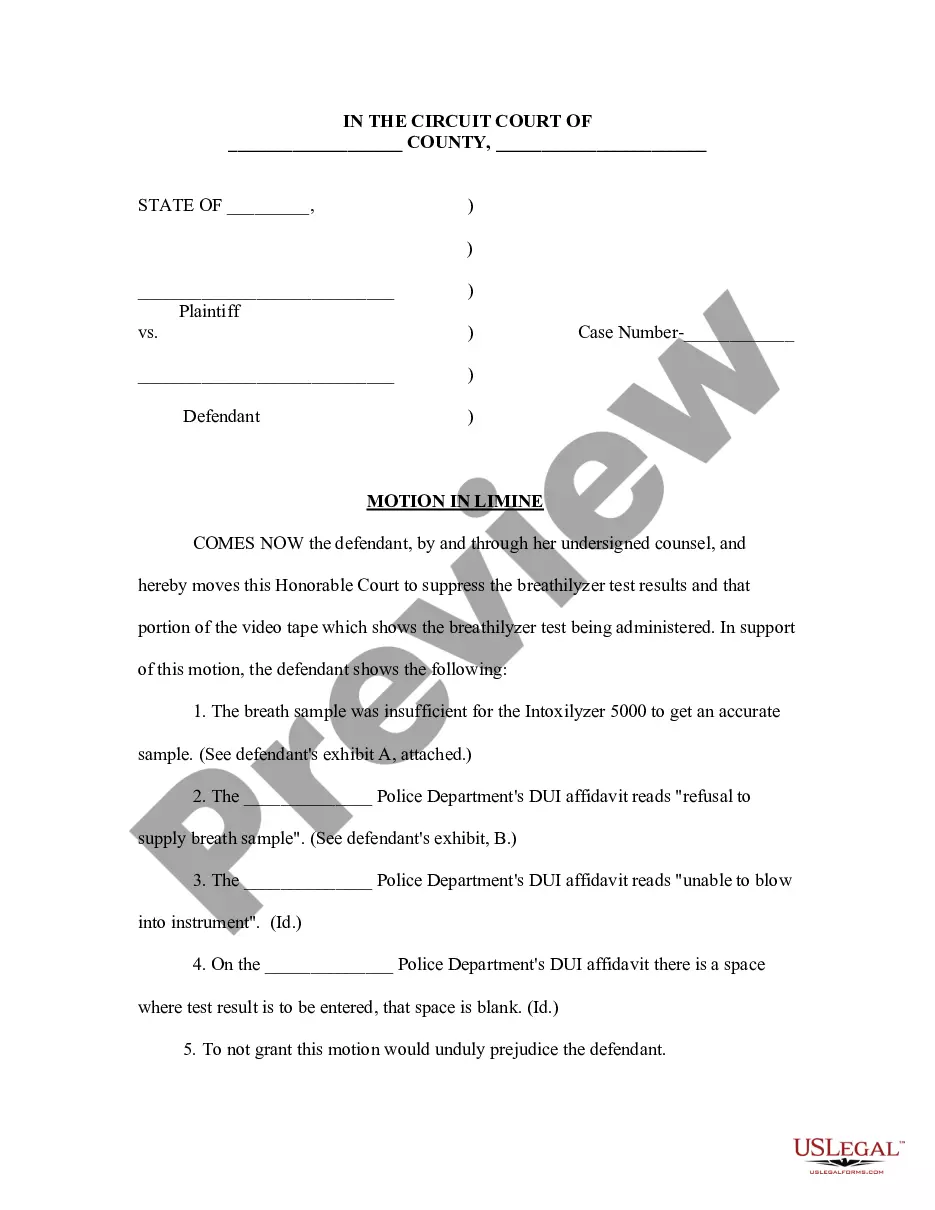
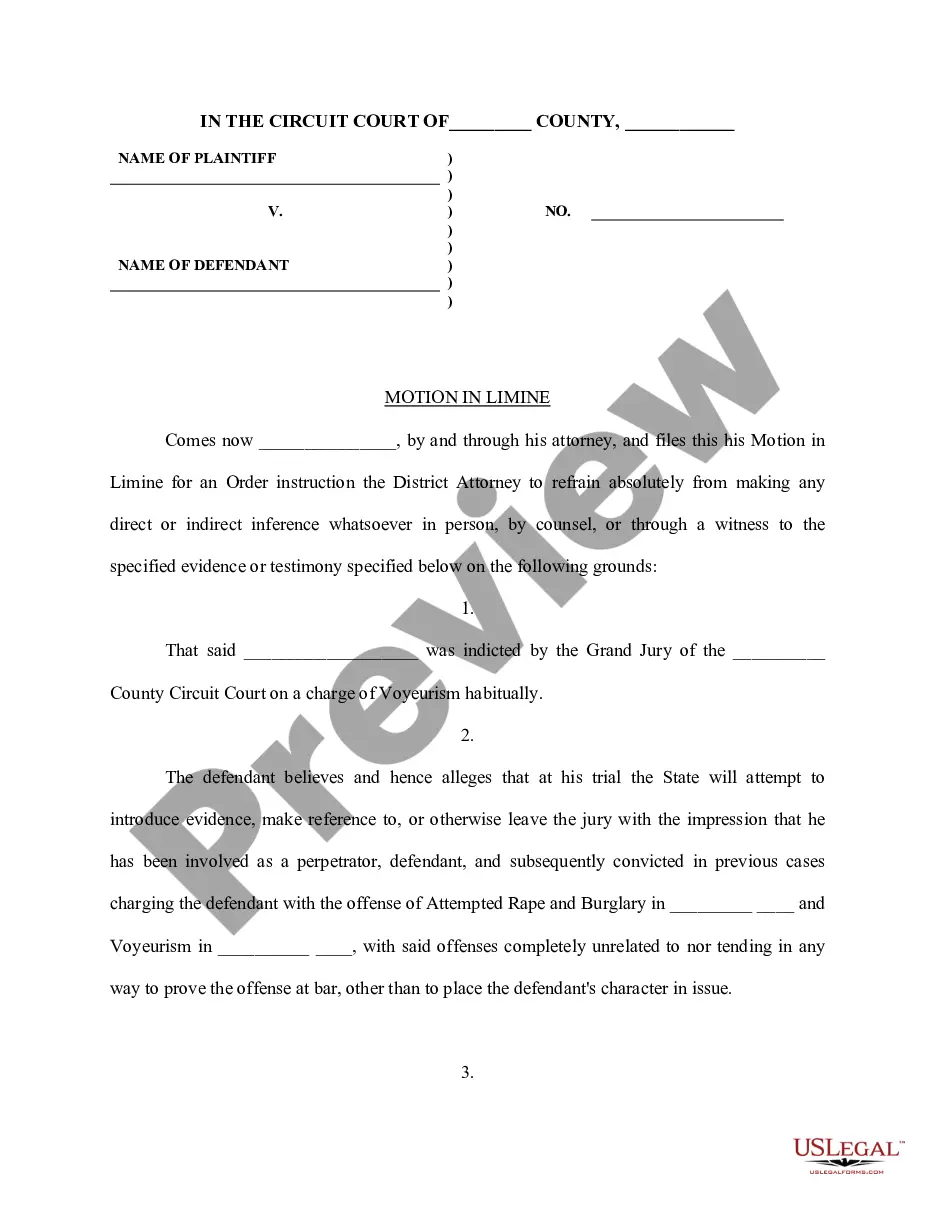
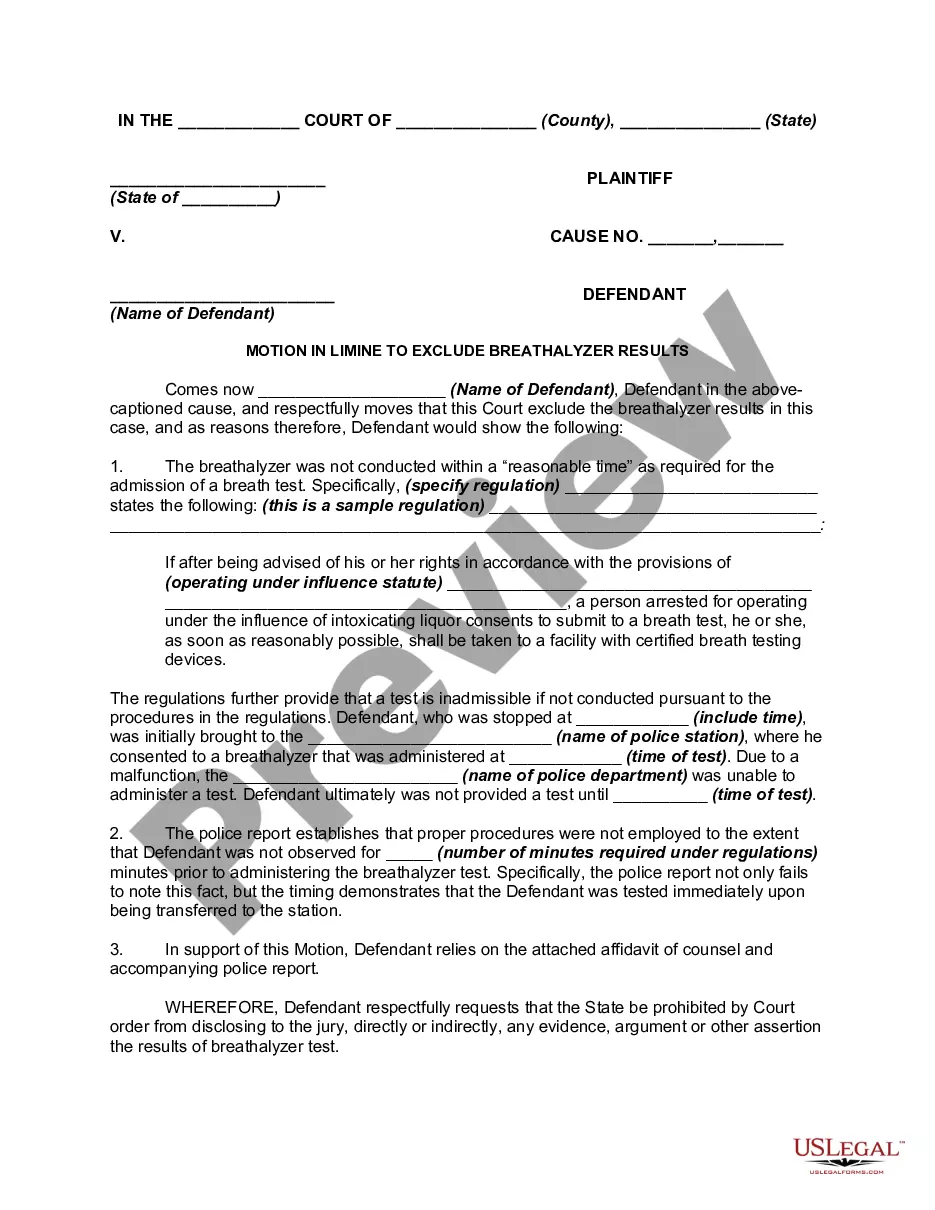
A Motion in Limine - breathalyzer test results is a legal document used by defendants in court to request that the judge exclude specific evidence, particularly the results of a breathalyzer test. This motion typically asserts that the breath sample was insufficient for accurate testing and argues that including such evidence would unfairly prejudice the defendant. Unlike other motions, a motion in limine specifically targets the validity of evidence before it is presented at trial.
Main sections of this form
- Caption: Identifies the court and parties involved in the case.
- Introduction: States the purpose of the motion and the parties making the motion.
- Arguments: Lists the reasons for suppressing the breathalyzer results, including insufficient sample and potential prejudice to the defendant.
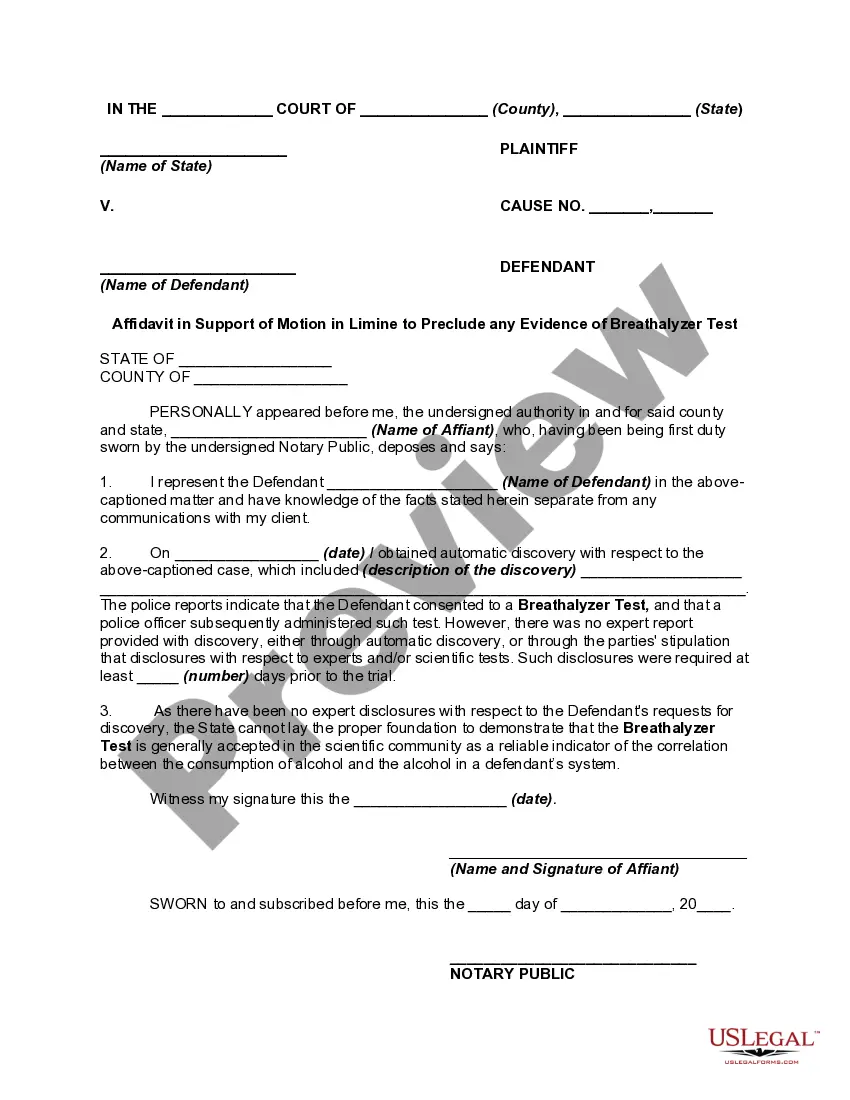
- Supporting documentation: Mentions attached exhibits that provide evidence for the motion.
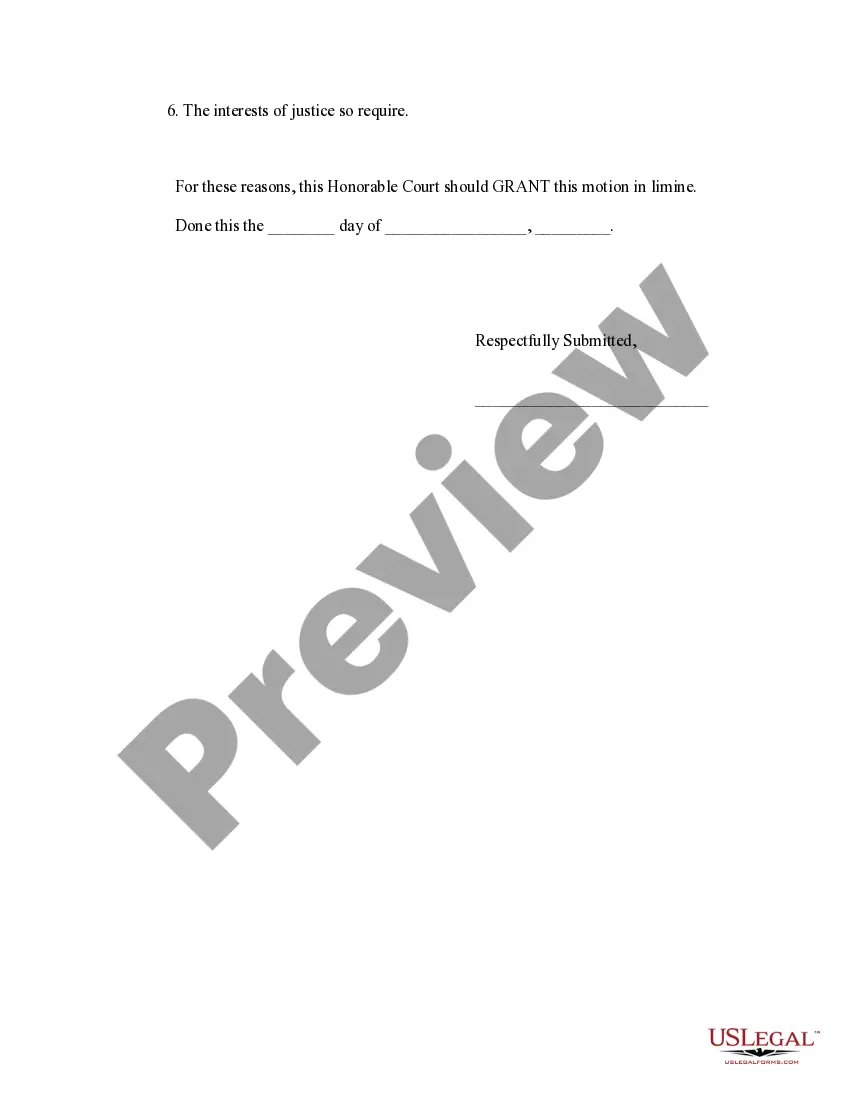
- Conclusion: Requests the court to grant the motion for the interests of justice.
When to use this document
This form should be used when a defendant believes that introducing breathalyzer test results would be unfair or unjust. Situations include cases where the breath sample was inadequate, the test was improperly administered, or evidence that could significantly affect the outcome of a trial is deemed unreliable. Utilizing this motion provides a legal pathway to challenge potentially damaging evidence before it impacts the trial.
Who can use this document
- Defendants facing DUI charges who have undergone breath testing.
- Legal representatives or attorneys seeking to protect their client's rights.
- Individuals who believe that the results of their breathalyzer test are inaccurate or unreliable.
Completing this form step by step
- Identify the court: Fill in the name of the county and state where the case is being heard.
- Enter parties: List the names of the plaintiff and defendant as appropriate.
- State the motion: Clearly articulate the reasons for filing the motion in the body of the document.
- Attach exhibits: Include any necessary supporting documents that validate the claims made in the motion.
- Sign and date: Ensure the document is signed by the undersigned counsel and dated.
Does this form need to be notarized?
This form does not typically require notarization unless specified by local law. Always check local regulations to confirm notarization requirements in your jurisdiction.
Get your form ready online
Our built-in tools help you complete, sign, share, and store your documents in one place.
Make edits, fill in missing information, and update formatting in US Legal Forms—just like you would in MS Word.
Download a copy, print it, send it by email, or mail it via USPS—whatever works best for your next step.
Sign and collect signatures with our SignNow integration. Send to multiple recipients, set reminders, and more. Go Premium to unlock E-Sign.
If this form requires notarization, complete it online through a secure video call—no need to meet a notary in person or wait for an appointment.
We protect your documents and personal data by following strict security and privacy standards.

Make edits, fill in missing information, and update formatting in US Legal Forms—just like you would in MS Word.

Download a copy, print it, send it by email, or mail it via USPS—whatever works best for your next step.

Sign and collect signatures with our SignNow integration. Send to multiple recipients, set reminders, and more. Go Premium to unlock E-Sign.

If this form requires notarization, complete it online through a secure video call—no need to meet a notary in person or wait for an appointment.

We protect your documents and personal data by following strict security and privacy standards.
Typical mistakes to avoid
- Failing to attach supporting exhibits that support the claims made in the motion.
- Submitting the motion without proper signatures or dating.
- Using vague language instead of clearly stating the reasons for the motion.
Advantages of online completion
- Convenience: Easily access and download the form from anywhere at any time.
- Editability: Fill out the form digitally, reducing the risk of errors.
- Legal assurance: Obtain forms drafted by licensed attorneys, ensuring compliance with legal standards.
Looking for another form?
Form popularity
FAQ
Winning a motion to suppress involves presenting strong legal arguments and evidence demonstrating that the information was improperly obtained. It's crucial to build a solid case around the specific details of the Alabama Motion in Limine - breathalyser test results, showcasing any violations of legal rights. Engaging with experienced legal professionals can bolster your chances, as they can help construct a compelling argument and navigate the complexities of the legal system.
A case may be suppressed if a court finds that the evidence presented violates legal standards, such as constitutional rights or procedural rules. In scenarios involving Alabama Motion in Limine - breathalyser test results, suppression can occur if the test was given without reasonable suspicion or probable cause. This ruling helps ensure that only fair and legally obtained evidence is permissible in court, maintaining the integrity of the judicial system.
A person would file a motion to suppress evidence to challenge the legality of how evidence was obtained, aiming to protect their rights in court. For instance, if breathalyser test results were gathered without following legal protocols, an Alabama Motion in Limine may be appropriate. This action can significantly impact the case's outcome, often leading to reduced charges or even dismissal. Legal advice can be beneficial for navigating these decisions.
Suppression of evidence occurs when a court decides that certain evidence cannot be presented during a trial. This typically applies when the evidence was obtained in violation of a person's rights or through improper procedures. In the context of Alabama Motion in Limine - breathalyser test results, evidence may be suppressed if the breathalyser was administered incorrectly or without proper consent. Understanding these criteria can guide your legal strategy.
Filing an Alabama Motion in Limine involves drafting a written request that outlines your legal arguments regarding the admission or exclusion of evidence. You must submit this motion to the court and serve it to the opposing party. It's essential to include specific reasons related to breathalyser test results and how they could unfairly prejudice the jury. For guidance on this process, consider using uslegalforms for templates and resources.
Implied consent is an agreement created by the situation rather than explicit words. In the context of Alabama's DUI laws, it means that by driving, you agree to submit to testing if requested by law enforcement. This principle operates to promote traffic safety and responsible driving. It plays a vital role in discussions around Alabama Motion in Limine - breathalyser test results, as it pertains to the admissibility of your test results in court.
Yes, you can refuse a breathalyzer test in Alabama, but doing so has significant consequences. Law enforcement will likely take this refusal as evidence against you, and you may face automatic license suspension. Furthermore, this refusal can be used to challenge your defense in court, especially when discussing Alabama Motion in Limine - breathalyser test results. It's essential to weigh your options carefully.
In Alabama, the implied consent law states that by operating a vehicle, you automatically consent to a breathalyzer test if an officer suspects you of driving under the influence. This law aims to encourage cooperation and compliance in keeping the roads safe. If you refuse, you may face severe penalties, including license suspension. Understanding how this law interacts with Alabama Motion in Limine - breathalyser test results is crucial to your case.
The most common motion in limine often involves the exclusion of prior convictions or bad acts of a defendant, which could unfairly bias the jury. In cases related to Alabama Motion in Limine - breathalyser test results, parties frequently file motions to exclude such evidence, arguing that it lacks relevance to the current charges. This common practice helps ensure a fair trial by focusing on the evidence directly related to the case at hand. Understanding these motions can greatly benefit legal professionals navigating the courtroom.
A motion in limine can be denied for several reasons, such as failure to demonstrate that the evidence would cause unfair prejudice. In the context of Alabama Motion in Limine - breathalyser test results, if the court finds that the results have relevant implications for the case, the motion may be rejected. Additionally, insufficient legal grounds or lack of clarity in the arguments can also lead to denial. It's crucial to present a strong case to convince the judge to grant such motions.