Virginia Agent's Certification as to Validity of Power of Attorney and Agent's Authority
What is this form?
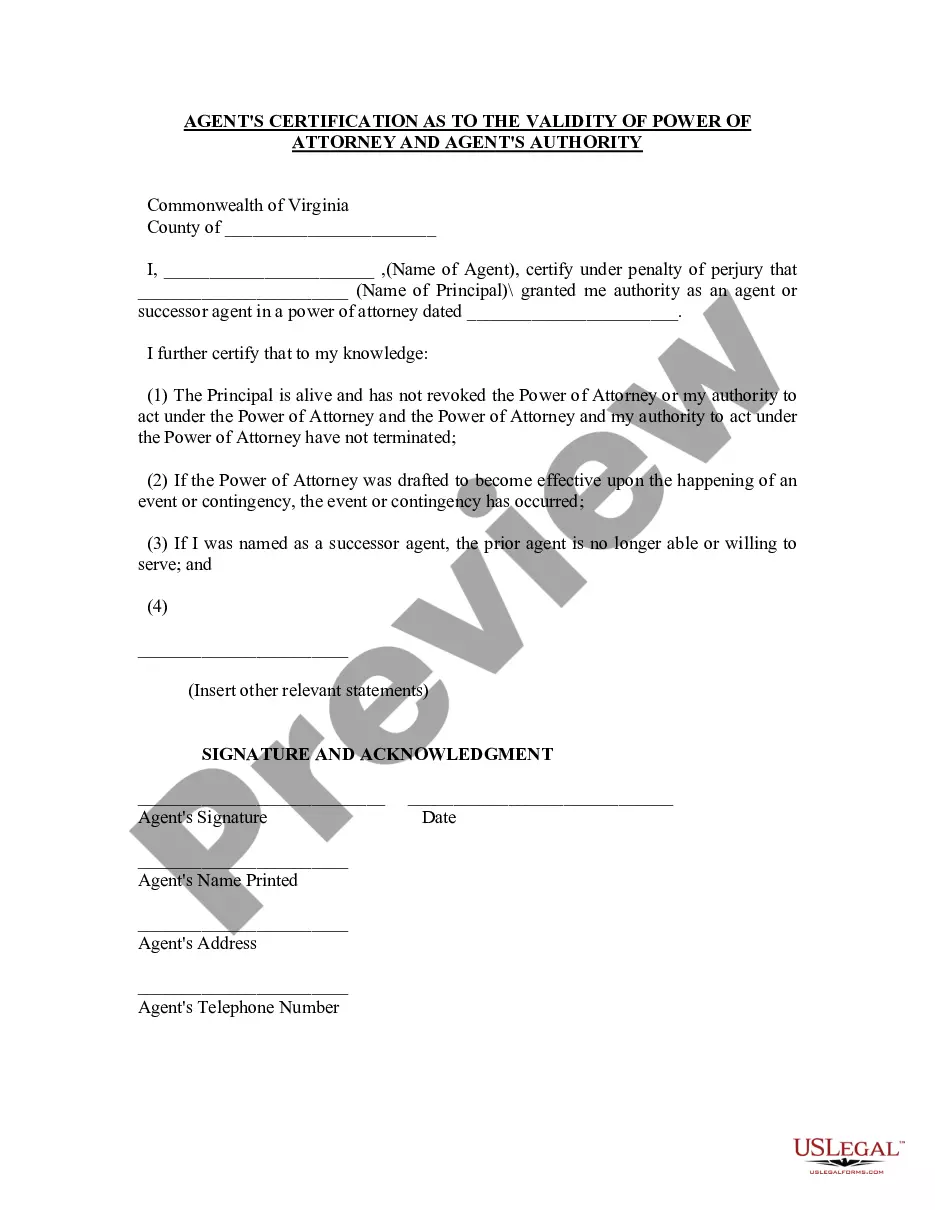
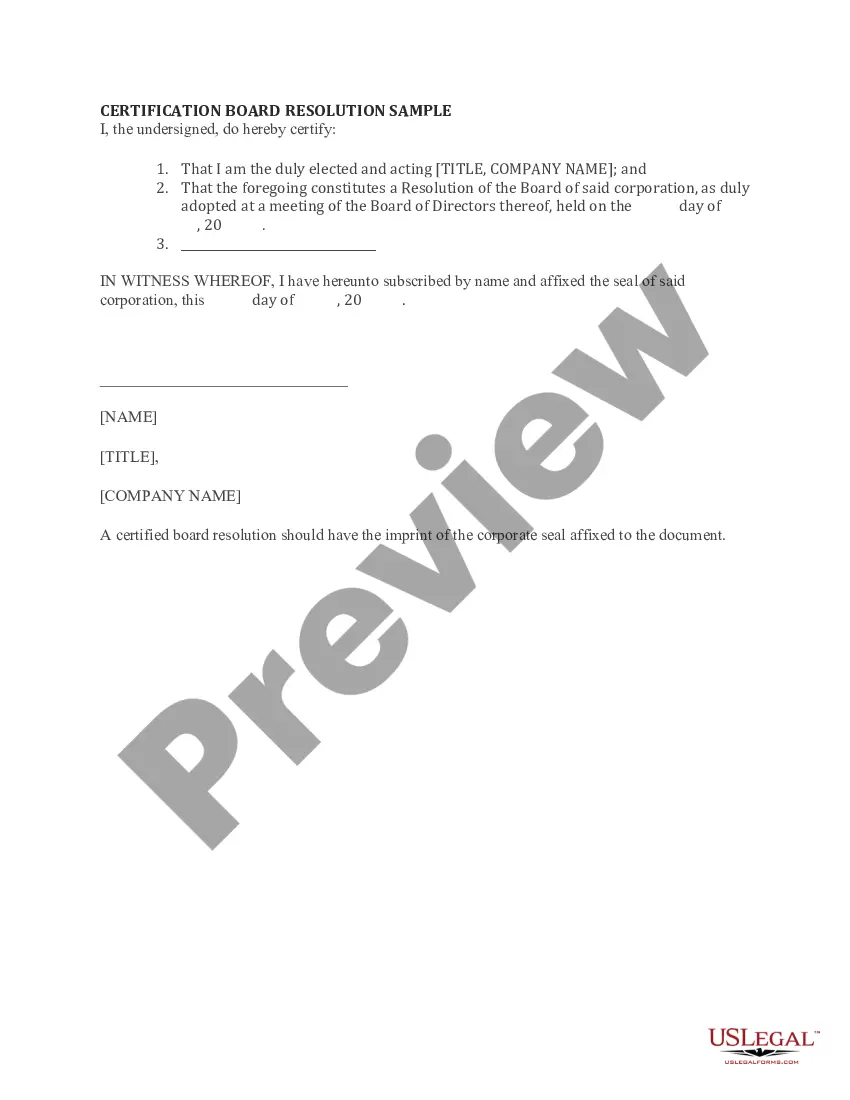
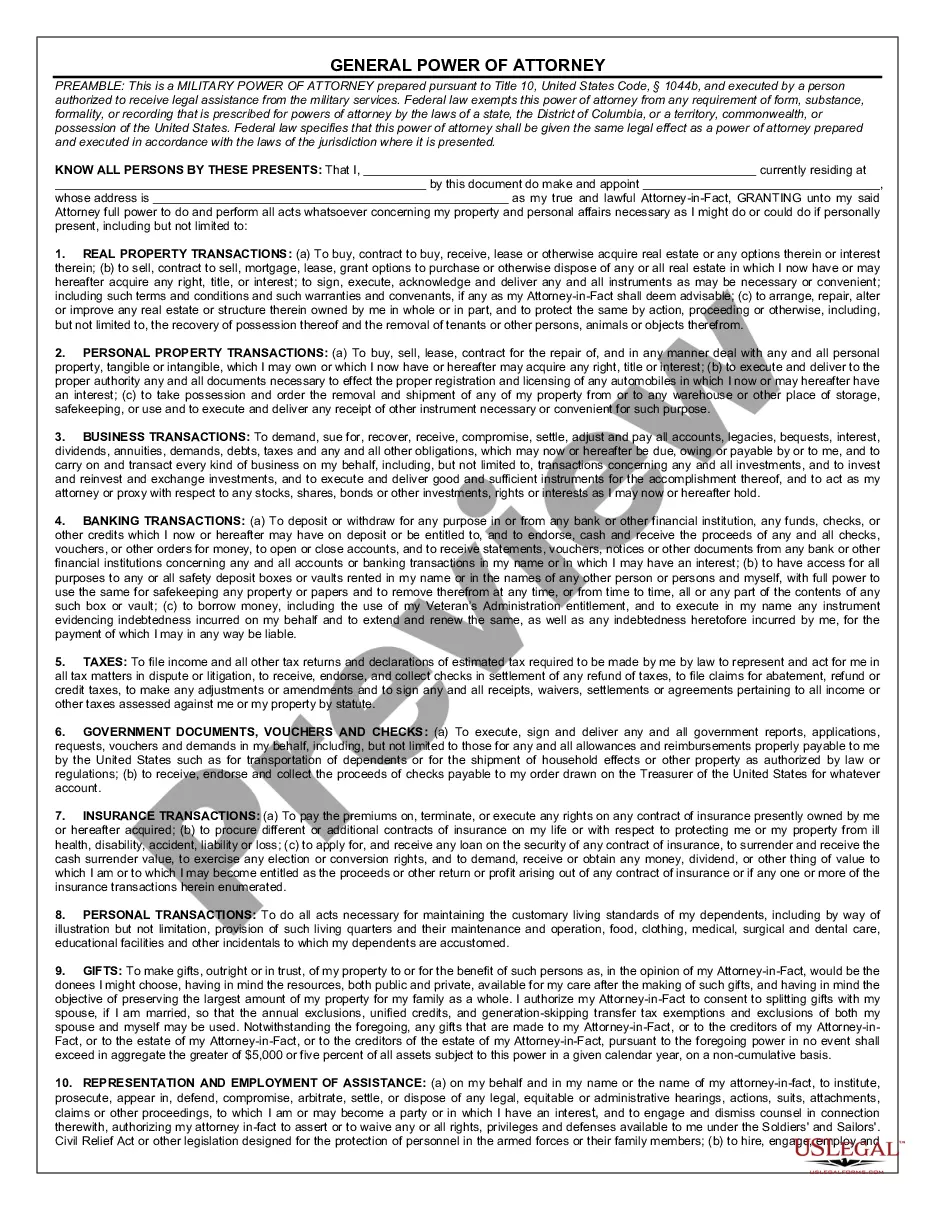
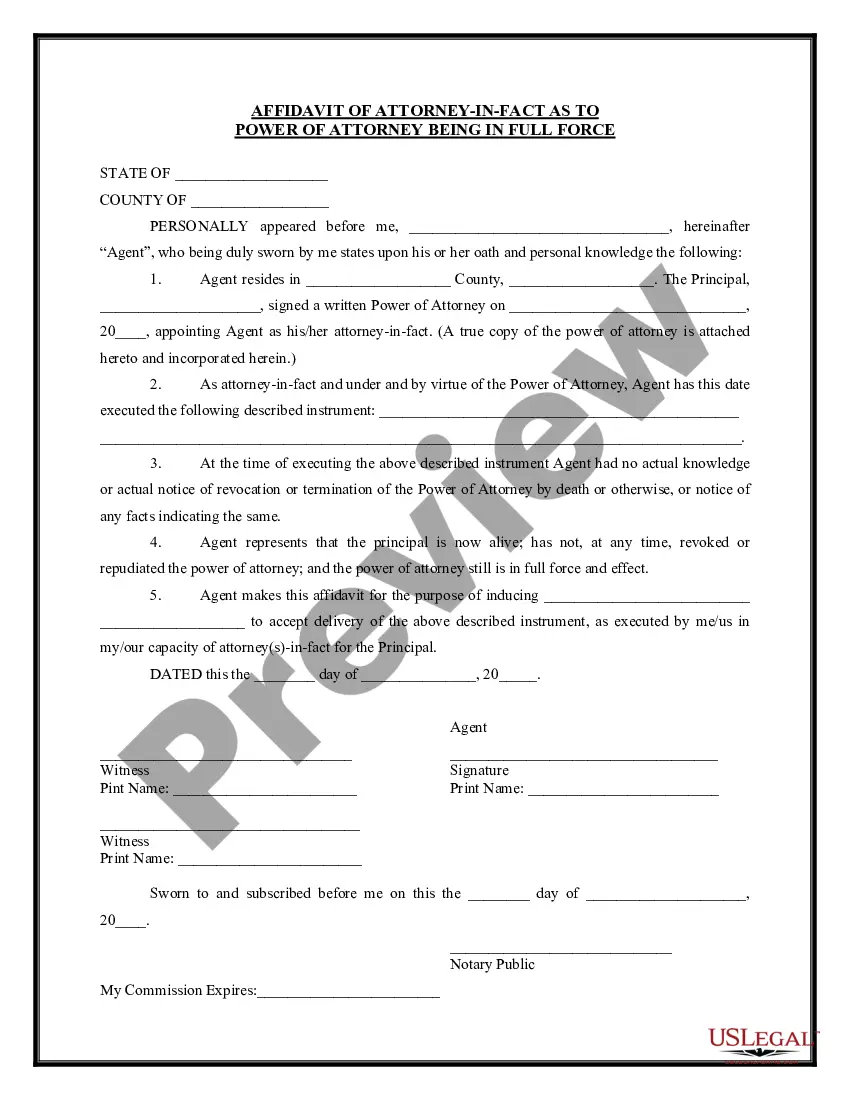
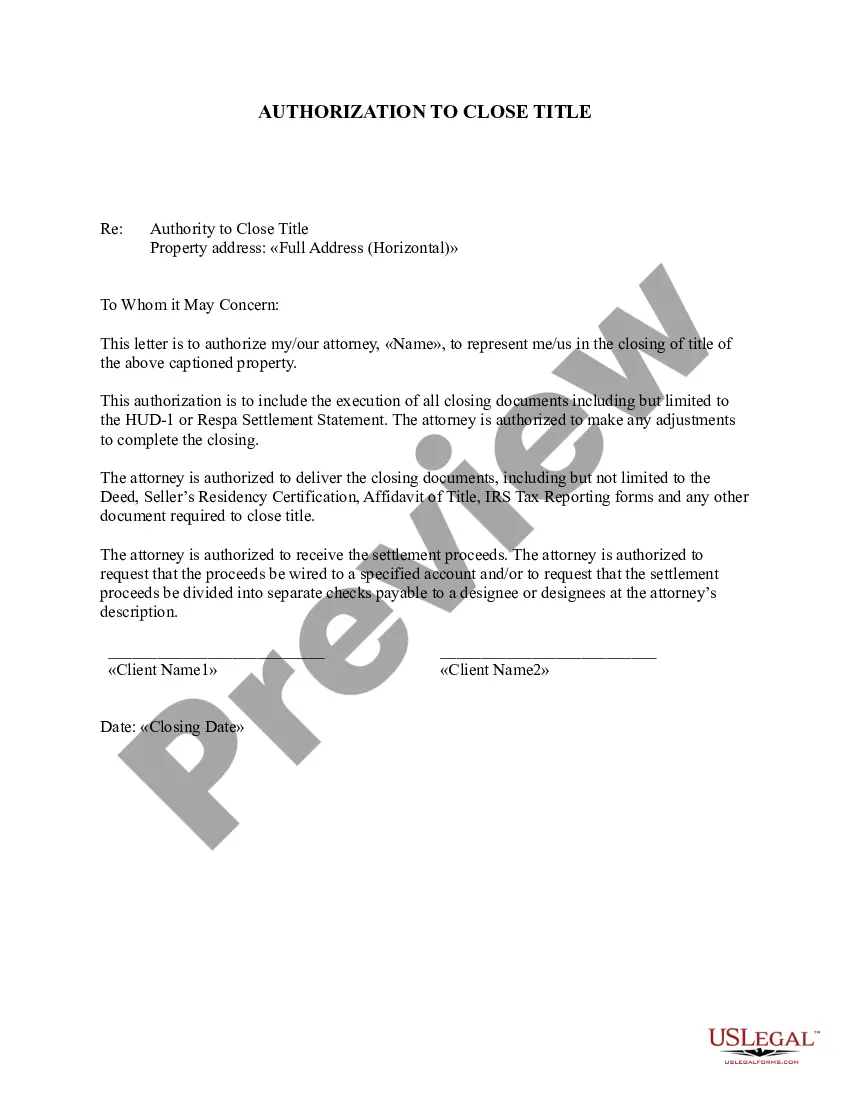
The Agent's Certification as to Validity of Power of Attorney and Agent's Authority is a legal document that verifies an agent's authority to act on behalf of a principal under a power of attorney. Unlike general powers of attorney, this certification serves a specific purpose: confirming that the power of attorney is still valid and the agent has not exceeded their authority. It is typically used in situations where a third party requires confirmation of the agent's power to act.
What’s included in this form
- Identification of the agent and principal, including their names and signatures.
- Certification of the principal's status, confirming they are alive and have not revoked the power of attorney.
- Details of the power of attorney such as the date it was executed.
- Statements confirming specific conditions regarding the power's validity and agent's authority.
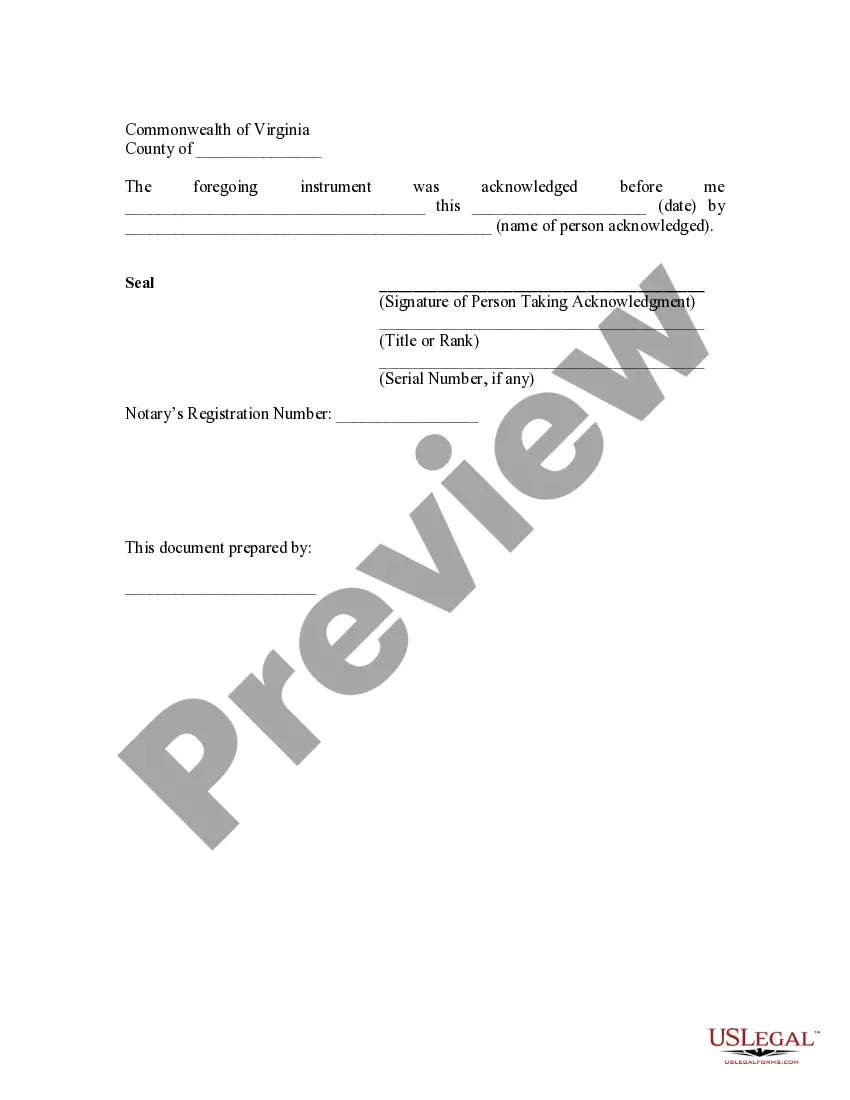
- Notary acknowledgment section for formal validation.
Common use cases
This form should be used when an agent needs to confirm their authority under a power of attorney, particularly when engaging with institutions like banks, real estate offices, or healthcare providers. It's essential in scenarios where the agent must prove to third parties that they can legally act on behalf of the principal.
Who can use this document
- Agents designated under a power of attorney needing to validate their authority.
- Attorneys representing clients in matters requiring proof of power of attorney.
- Individuals or organizations engaging with an agent on behalf of a principal.
Steps to complete this form
- Identify the names of the agent and the principal in the designated fields.
- Specify the date the power of attorney was executed.
- Include statements confirming the principal's status and any relevant conditions.
- Sign and date the form in the presence of a notary if required.
- Ensure the notary completes their section to validate the document.
Does this document require notarization?
This document requires notarization to meet legal standards. US Legal Forms provides secure online notarization powered by Notarize, allowing you to complete the process through a verified video call, available 24/7.
Get your form ready online
Our built-in tools help you complete, sign, share, and store your documents in one place.
Make edits, fill in missing information, and update formatting in US Legal Forms—just like you would in MS Word.
Download a copy, print it, send it by email, or mail it via USPS—whatever works best for your next step.
Sign and collect signatures with our SignNow integration. Send to multiple recipients, set reminders, and more. Go Premium to unlock E-Sign.
If this form requires notarization, complete it online through a secure video call—no need to meet a notary in person or wait for an appointment.
We protect your documents and personal data by following strict security and privacy standards.

Make edits, fill in missing information, and update formatting in US Legal Forms—just like you would in MS Word.

Download a copy, print it, send it by email, or mail it via USPS—whatever works best for your next step.

Sign and collect signatures with our SignNow integration. Send to multiple recipients, set reminders, and more. Go Premium to unlock E-Sign.

If this form requires notarization, complete it online through a secure video call—no need to meet a notary in person or wait for an appointment.

We protect your documents and personal data by following strict security and privacy standards.
Common mistakes
- Failing to sign the form or have it notarized where required.
- Leaving fields blank or not providing accurate information about the principal's status.
- Using an outdated version of the form that may not comply with current legal standards.
Advantages of online completion
- Easy access to legally compliant forms crafted by experienced attorneys.
- Ability to download and complete the form at your convenience.
- Instant updates to reflect the latest legal standards and practices.
Legal use & context
- Confirms an agent's authority in legal and financial matters.
- Protects against potential disputes regarding the validity of the power of attorney.
- Provides assurance to third parties that the agent is operating within their legal rights.
What to keep in mind
- The Agent's Certification form validates an agent's authority under a power of attorney.
- It is essential for transactions where proof of authority is necessary.
- The form must be notarized to maintain its legal standing in Virginia.
Looking for another form?
Form popularity
FAQ
These certificates are valid for 30 days. As per a recent order of the inspector general of registration, the new rules are applicable to all POAs registered from February 4. By law, POA is not valid once the principal dies.
A California POA can only be created by a principal who is 18 years of age or older. The principal must also have the legal capacity to enter into a contract. A general or limited POA must be signed by the principal and two witnesses or a notary.The agent listed in the POA cannot be a witness to the document.
After the principal's name, write by and then sign your own name. Under or after the signature line, indicate your status as POA by including any of the following identifiers: as POA, as Agent, as Attorney in Fact or as Power of Attorney.
Springing Power of Attorney. A standard power of attorney gives the agent the authority to act on behalf of the principal in everyday legal and financial matters. The standard power of attorney expires when the principal dies, becomes incapacitated, or revokes the power of attorney in writing.
The power of attorney must contain the date of execution. The power of attorney must be signed by the principal or by another adult in the principal's presence and under the direction of the principal. The power of attorney is signed and acknowledged before a notary public or is signed by two witnesses.
Another important thing to note here is that a PoA remains valid only till the life of the principal. Within their lifetime also, one can revoke the PoA. An SPA gets revokes on its own as soon as the specific transaction for which it was executed is completed.
Tell your agent that if he uses your power of attorney and must sign a document on your behalf, he should sign as follows: __________ (Your name) by __________(Agent's name), agent for _________(your name). It will then be clear that he is signing on your behalf only and is not making himself liable for your debts.
After the principal's name, write by and then sign your own name. Under or after the signature line, indicate your status as POA by including any of the following identifiers: as POA, as Agent, as Attorney in Fact or as Power of Attorney.
It is generally recommended that you revisit your estate plan at least once every five years, just to make sure that everything is still relevant and no changes are needed. If it has been a while since you looked at your power of attorney, here are some questions to consider when deciding whether you should update it.