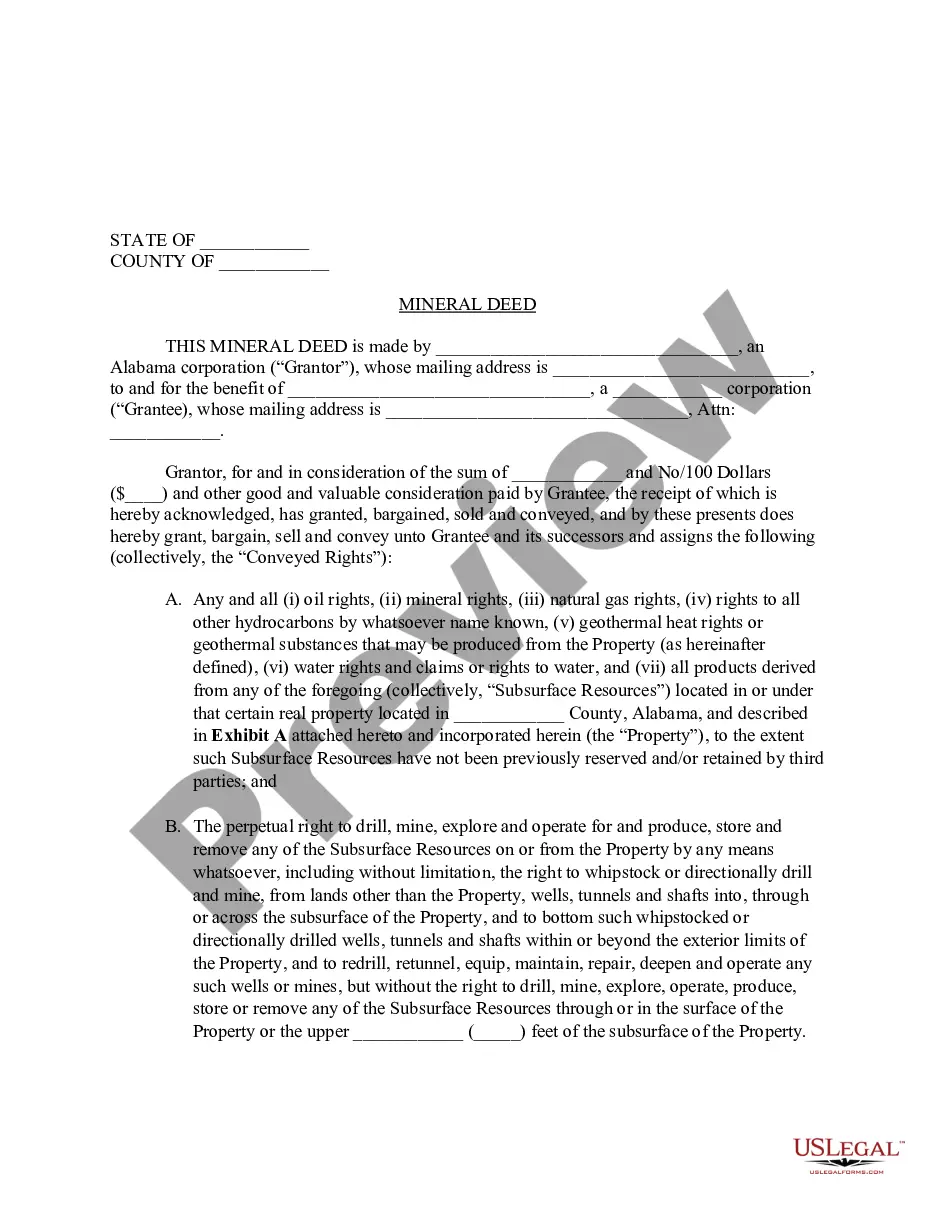
Alabama Mineral Deed
What is this form?
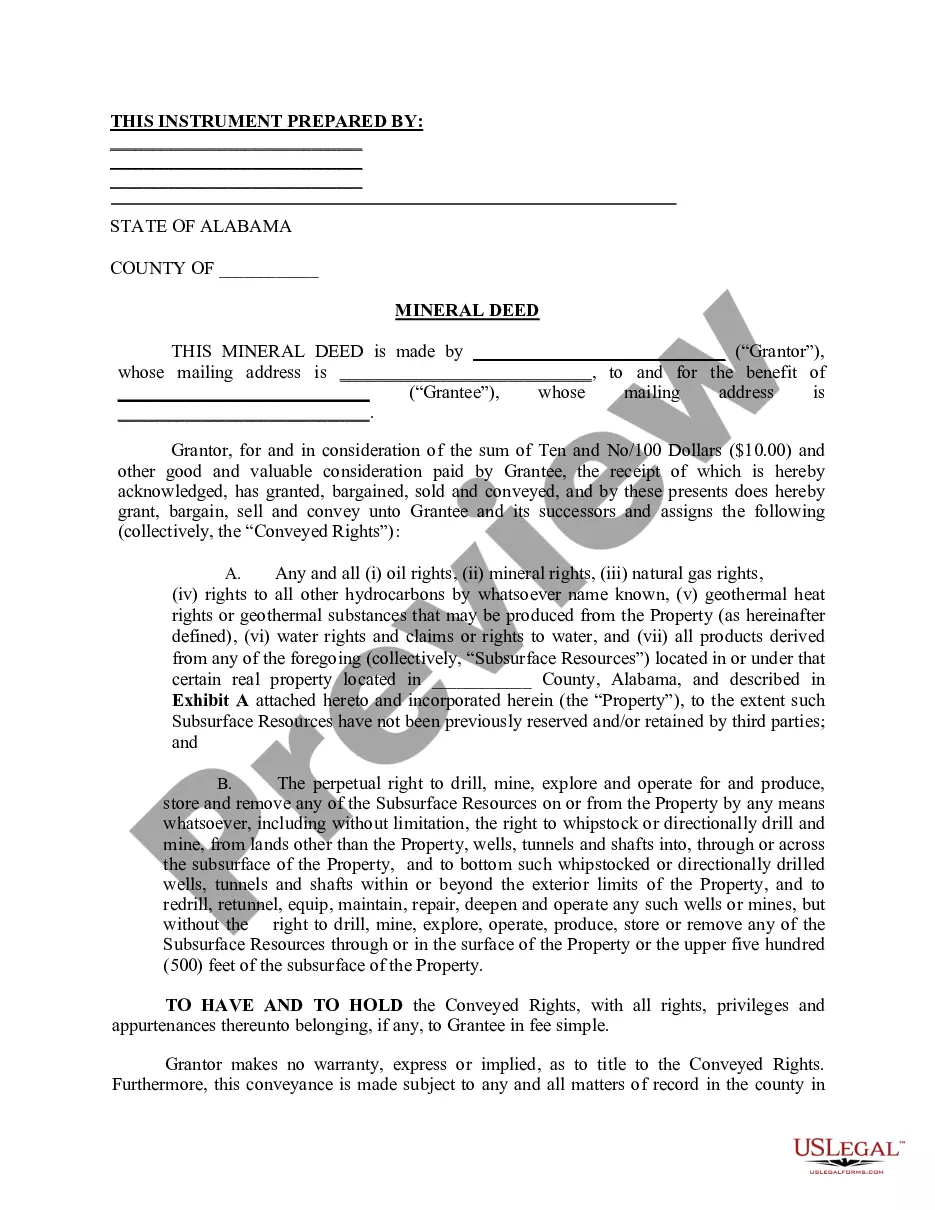
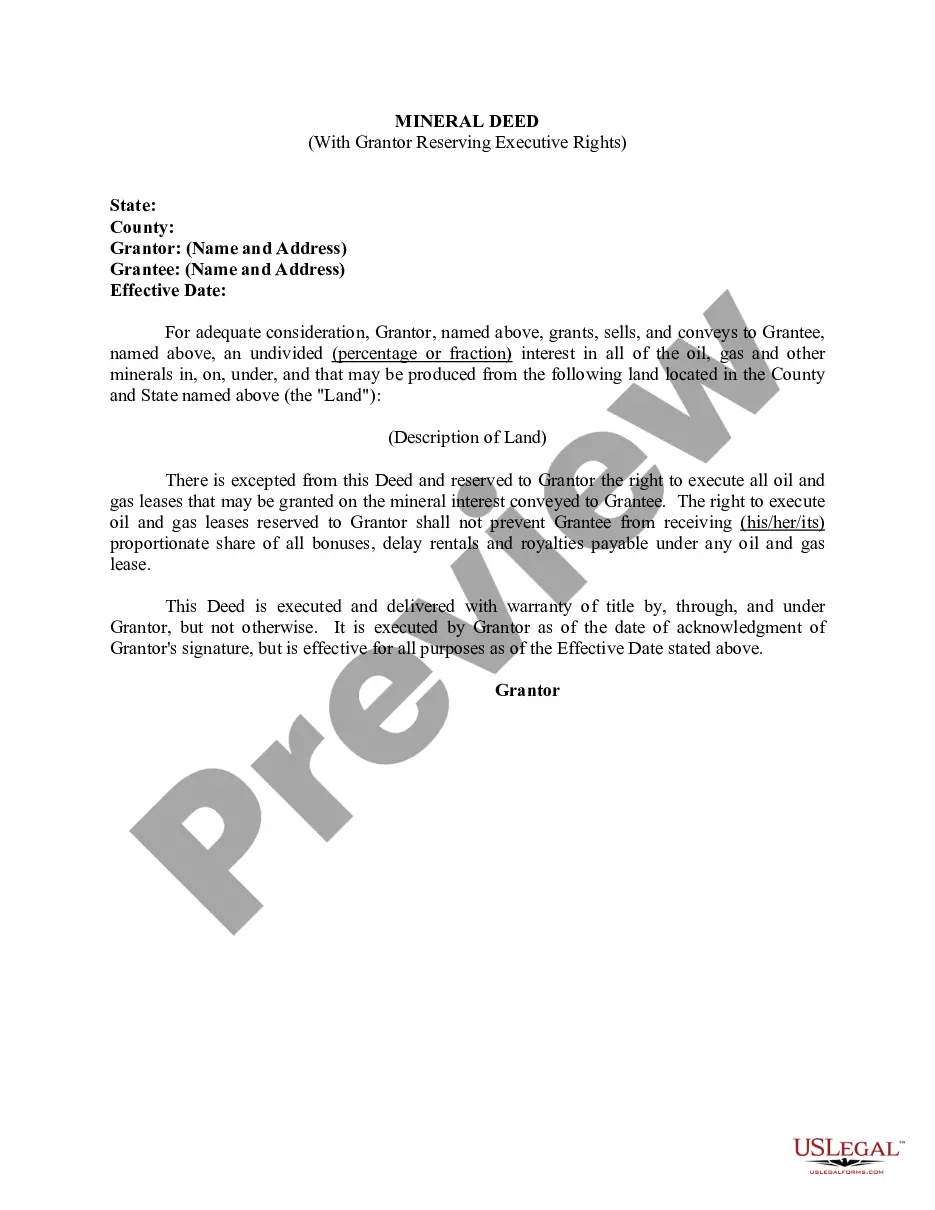
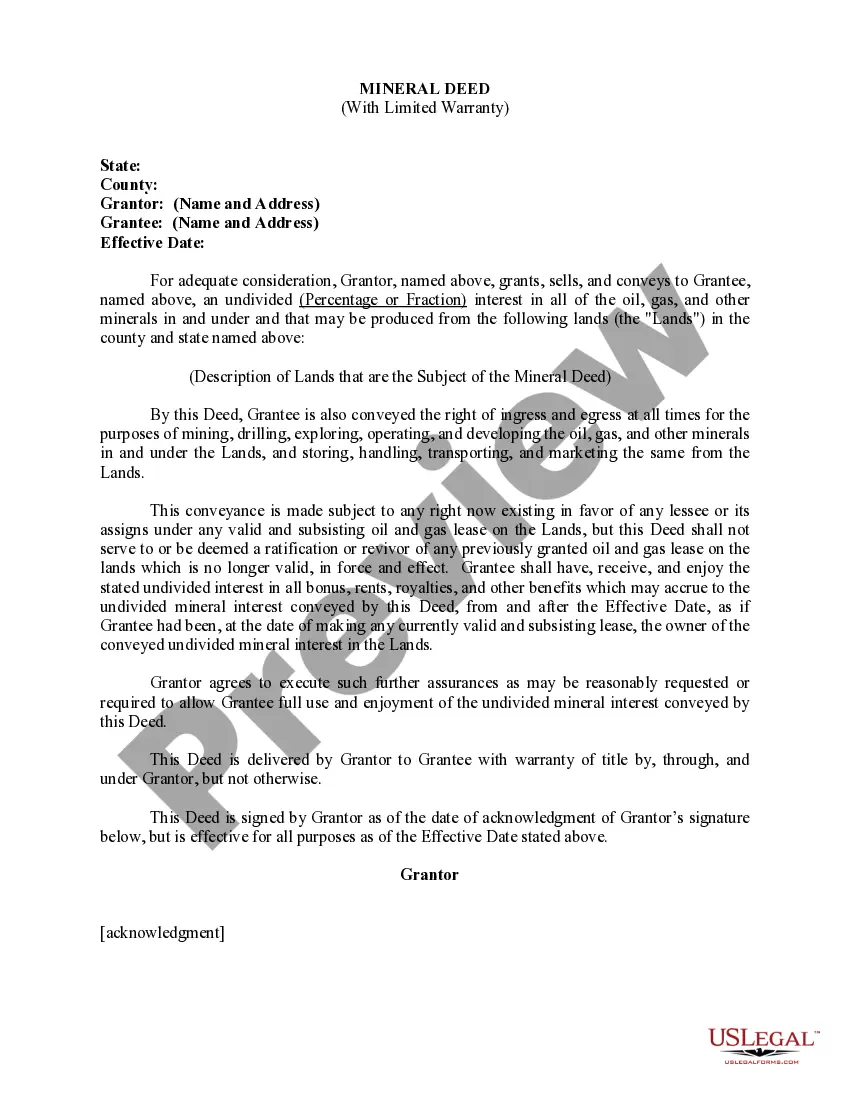
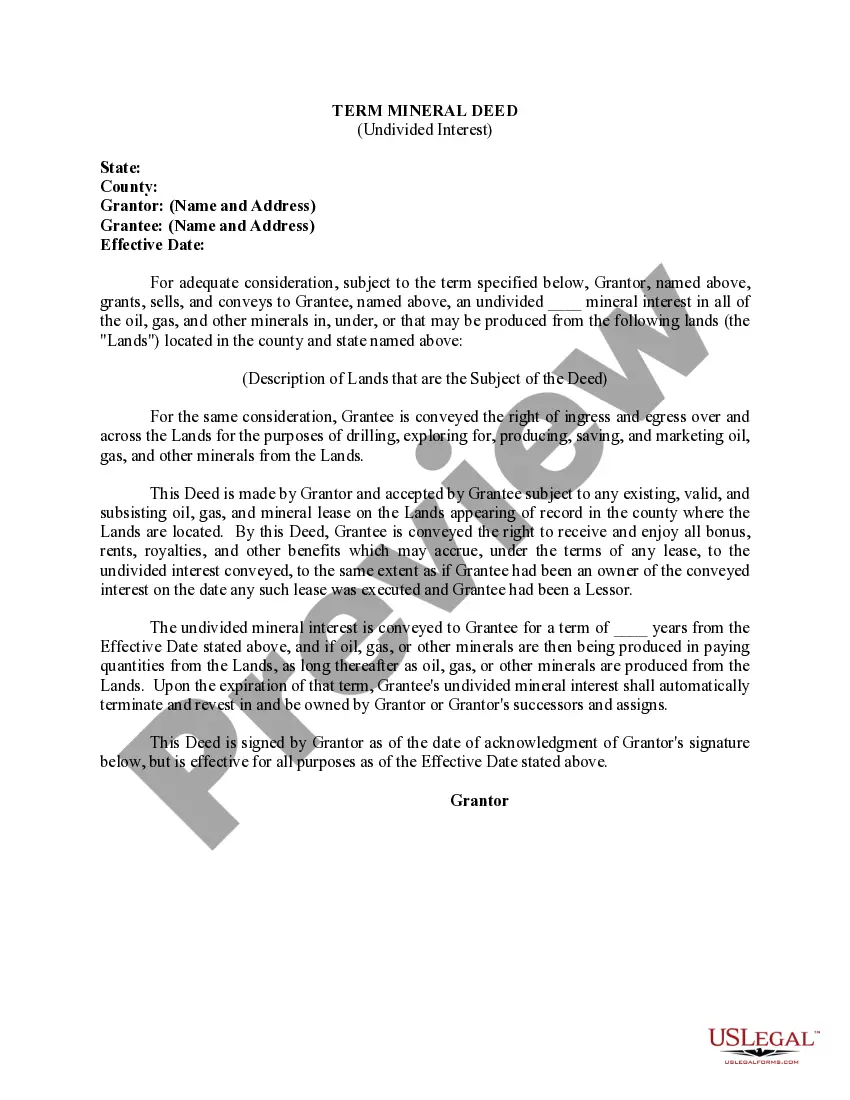
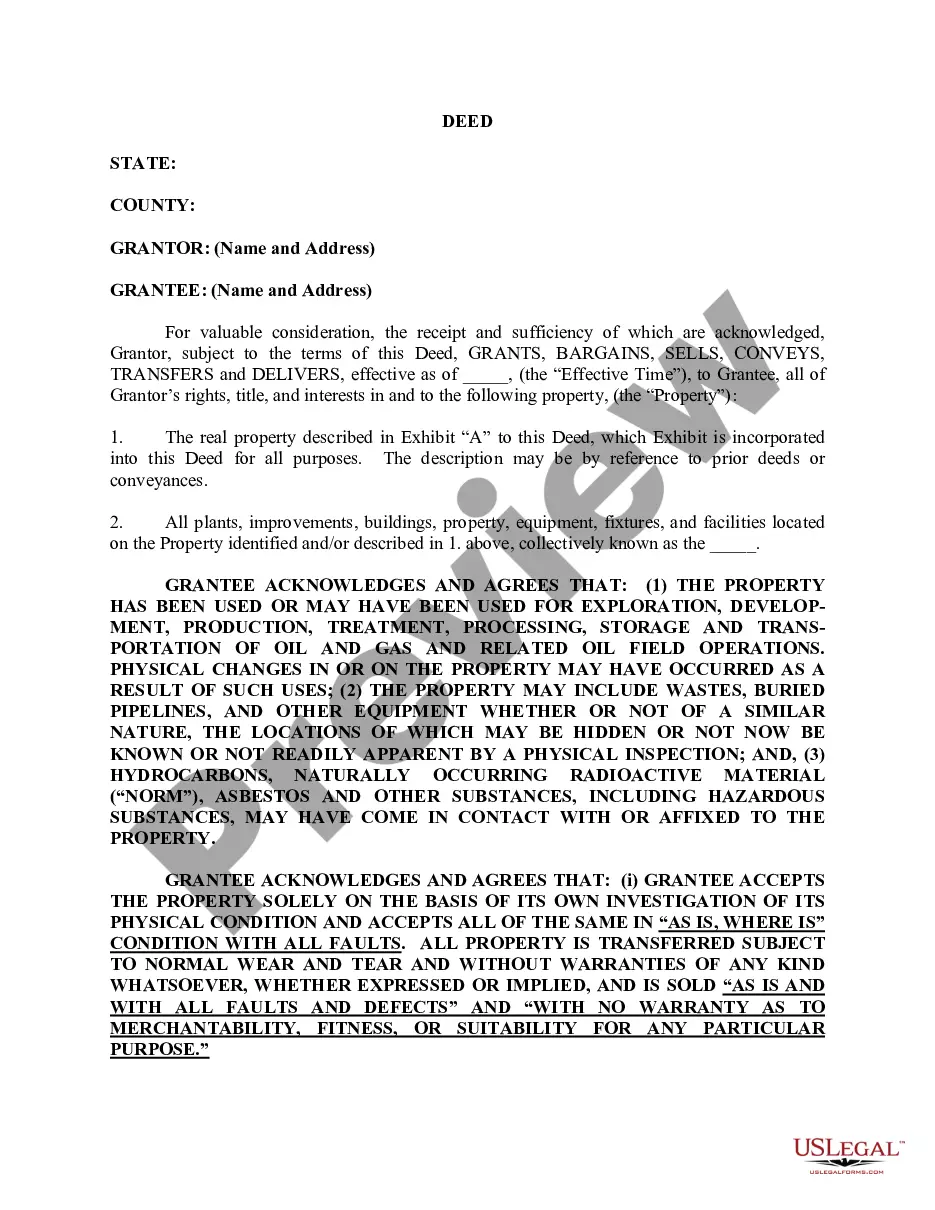
The Mineral Deed is a legal document used to transfer ownership of mineral rights from one corporation (the grantor) to another corporation (the grantee). This form specifically addresses the transfer of subsurface resources, including oil, gas, minerals, and water rights. It differs from other deeds by focusing primarily on non-surface rights, making it an essential tool for corporations involved in resource extraction and development.
Form components explained
- Grantor and Grantee Information: Identification of the corporations involved in the transaction.
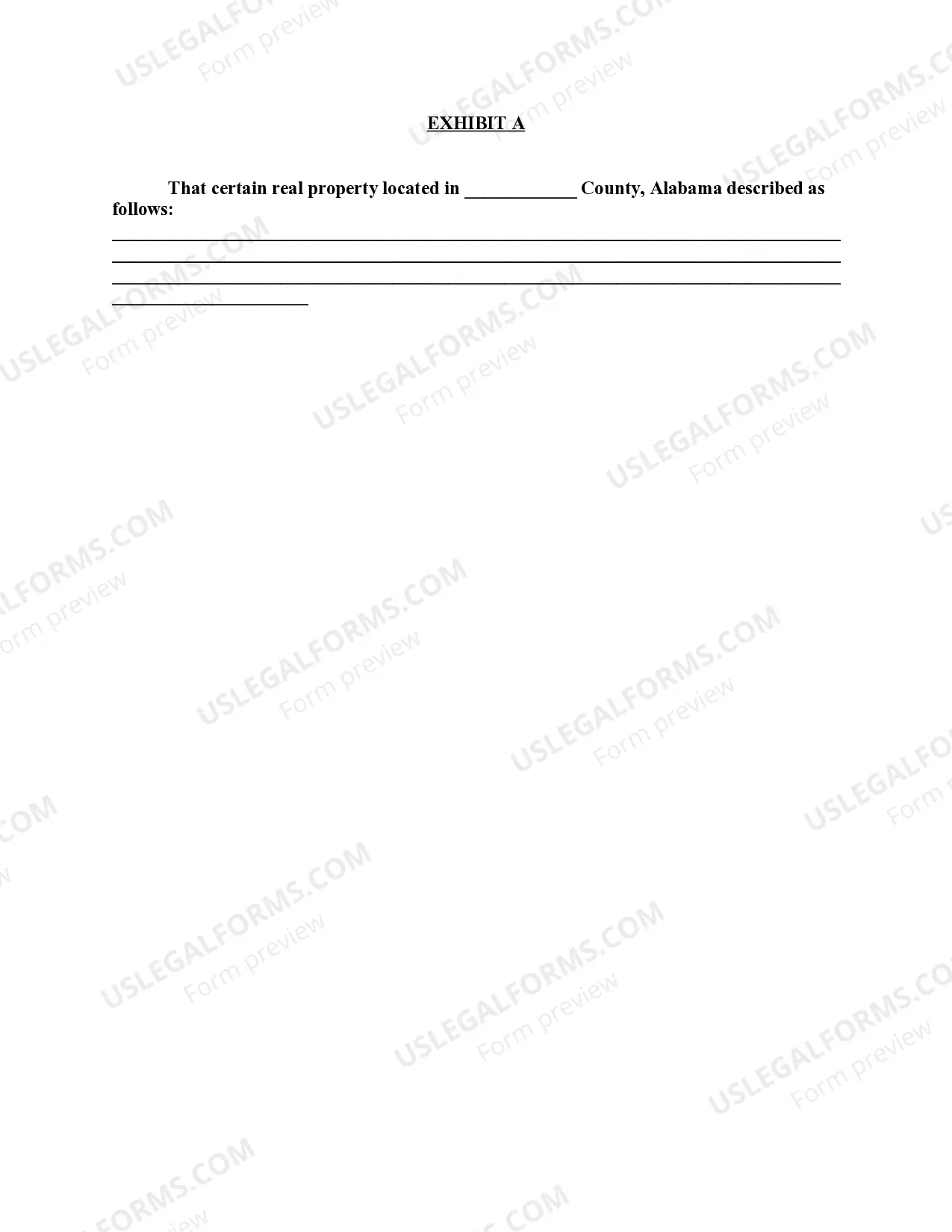
- Property Description: Detailed legal description of the real property affected.
- Conveyance of Rights: Specification of the mineral rights being transferred, including any limitations.
- Consideration: Amount of money or value exchanged for the rights.
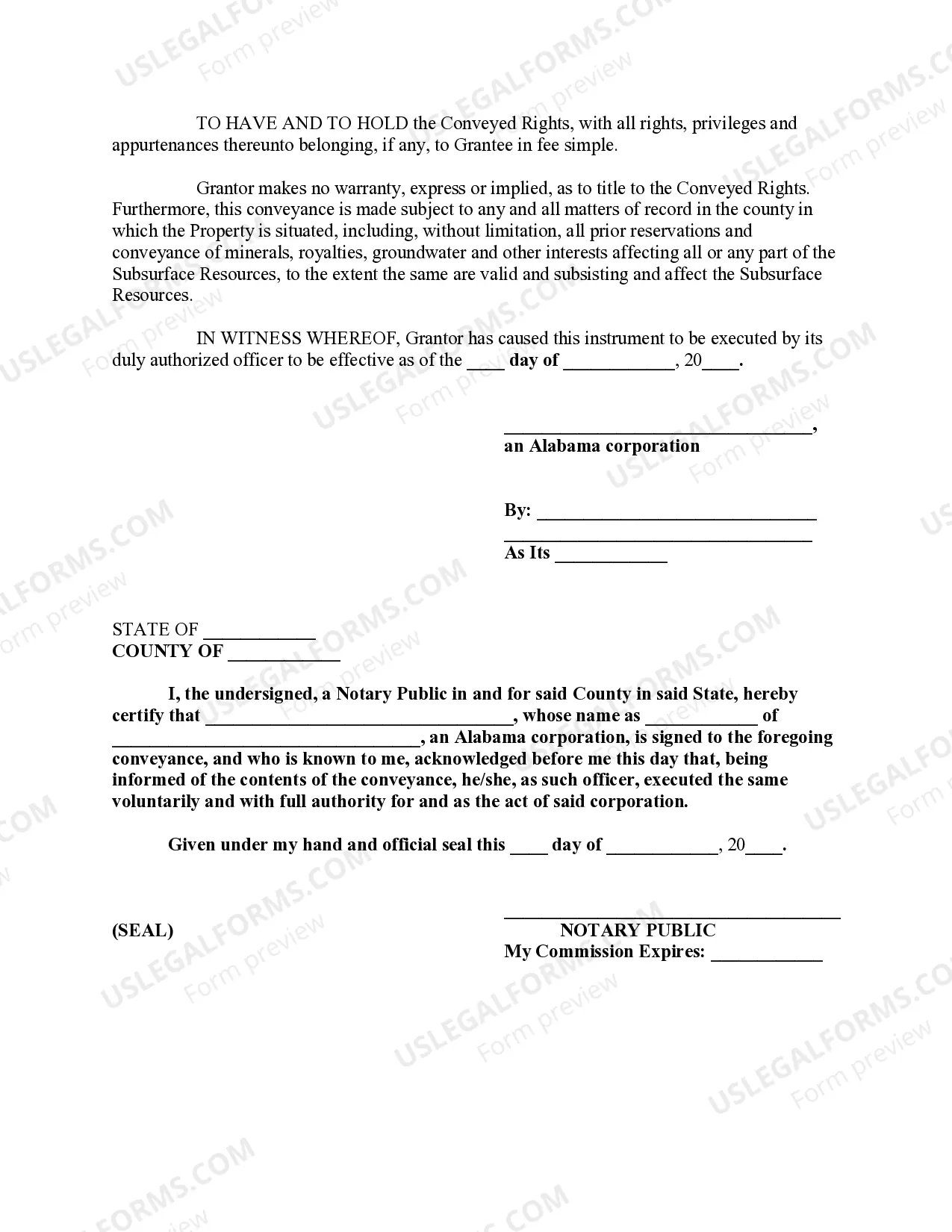
- Warranties and Limitations: Disclaimers regarding the title and existing claims or reservations by third parties.
- Execution and Notarization Section: Signatures and notary acknowledgment for legal validity.
When to use this form
Use the Mineral Deed when one corporation is transferring mineral rights to another corporation. This may occur in situations where resource extraction ventures are being established, sold, or restructured. It's essential for transactions involving oil, gas, and mineral exploration, ensuring both parties have a clear understanding of the rights being conveyed and any conditions tied to the ownership.
Who needs this form
- Corporations involved in the exploration or extraction of natural resources.
- Businesses looking to transfer mineral rights as part of an acquisition or sale.
- Legal professionals facilitating the transfer of mineral rights between corporate entities.
Completing this form step by step
- Identify the grantor and grantee by entering the names of the corporations in the appropriate fields.
- Specify the property location and include a comprehensive description in Exhibit A.
- State the amount of consideration being exchanged for the mineral rights.
- Ensure all necessary signatures are obtained from authorized representatives of both corporations.
- Have the form notarized to confirm the legal validity of the executed document.
Notarization requirements for this form
Yes, this form must be notarized to be legally valid. Notarization helps to verify the identities of the signing parties and confirms that they are executing the document voluntarily. US Legal Forms offers integrated online notarization, allowing you to complete this process securely via video call at any time.
Get your form ready online
Our built-in tools help you complete, sign, share, and store your documents in one place.
Make edits, fill in missing information, and update formatting in US Legal Forms—just like you would in MS Word.
Download a copy, print it, send it by email, or mail it via USPS—whatever works best for your next step.
Sign and collect signatures with our SignNow integration. Send to multiple recipients, set reminders, and more. Go Premium to unlock E-Sign.
If this form requires notarization, complete it online through a secure video call—no need to meet a notary in person or wait for an appointment.
We protect your documents and personal data by following strict security and privacy standards.

Make edits, fill in missing information, and update formatting in US Legal Forms—just like you would in MS Word.

Download a copy, print it, send it by email, or mail it via USPS—whatever works best for your next step.

Sign and collect signatures with our SignNow integration. Send to multiple recipients, set reminders, and more. Go Premium to unlock E-Sign.

If this form requires notarization, complete it online through a secure video call—no need to meet a notary in person or wait for an appointment.

We protect your documents and personal data by following strict security and privacy standards.
Common mistakes
- Failing to provide a complete and accurate property description.
- Not including all required signatures or using unauthorized representatives to sign.
- Omitting details about prior claims or reservations on the mineral rights.
- Neglecting to notarize the document, which may render it invalid.
Why use this form online
- Convenient access to legally compliant Mineral Deed templates.
- Easy editing and customization options to suit specific needs.
- Secure storage of documents for future reference or legal needs.
- Reliability of forms drafted by licensed attorneys to ensure accuracy.
Quick recap
- The Mineral Deed is essential for transferring mineral rights between corporations.
- Accurate completion and notarization of the form are crucial for legal validity.
- Understanding the components of this form can help prevent common errors.
- Using legal forms online enhances convenience and reliability for businesses.
Looking for another form?

Form popularity
FAQ
Mineral rights can hold significant value, especially in regions with active mining or drilling operations. The worth may depend on the type and quantity of minerals present on your property, as well as current market conditions. By using resources that detail Alabama mineral deeds, you can gain insights into evaluating the potential financial benefits of your mineral rights.
Ownership of mineral rights to your property implies that another entity can legally mine or drill for minerals beneath the surface. You may have limited say in how these resources are managed. Understanding the implications of Alabama mineral deeds can help clarify what this means for you as the surface owner.
If someone has mineral rights to your property, it means they have the legal authority to extract minerals from the ground. While you still own the surface land, the mineral rights holder has the right to access and extract valuable resources. Being aware of Alabama mineral deeds is important, as it informs you of any restrictions or obligations tied to your property.
Yes, mineral rights can be quite significant, especially if your property is in an area rich in natural resources. Owning these rights may provide financial benefits through royalties or leasing agreements when companies extract minerals. Therefore, understanding how Alabama mineral deeds work can be essential for property owners looking to maximize their investment.
In Alabama, mineral rights refer to the rights to extract minerals such as oil, gas, coal, and other natural resources from the land. When you own property, you typically also own the surface rights but may not own the mineral rights if they have been sold previously. Understanding Alabama mineral deeds is crucial, as these legal documents outline who has the rights to extract these resources.
To find out who owns the mineral rights to your property in Alabama, you may start by checking the local county courthouse for records on mineral deeds. These records often contain information about ownership transfers. Additionally, you can consult with a real estate attorney or a title company that specializes in Alabama mineral deeds to help you navigate the process.
Yes, in Alabama, for a mineral deed to be considered valid and enforceable, it must be recorded with the appropriate county office. Recording the deed provides public notice of your ownership and protects your rights from future claims. Taking this step is crucial when dealing with an Alabama Mineral Deed, as it helps to establish your legitimacy and security in your mineral rights.
To deed mineral rights, you must prepare a legal document that clearly states your intention to transfer these rights to another party. Ensure that the document includes essential details such as the parties involved, the legal description of the property, and the specific rights being conveyed. Once prepared, consider using an Alabama Mineral Deed for a smooth transaction that complies with state laws and better protects both parties.
Owning land does not always mean that you also own the mineral rights beneath it. In many cases, mineral rights can be separated from surface rights and sold or leased independently. To clarify ownership of mineral rights, it is wise to check the property's title or consider creating an Alabama Mineral Deed that explicitly states your ownership.
Valuing mineral rights requires analyzing several factors, including the potential yield of the minerals, current market trends, and the location of the property. Mineral rights can often be appraised by professionals who specialize in the field. Utilizing an Alabama Mineral Deed can be a helpful step in formalizing the ownership and legitimacy of these rights, which can, in turn, enhance their value.