Alabama Petition for Conservatorship
What is this form?
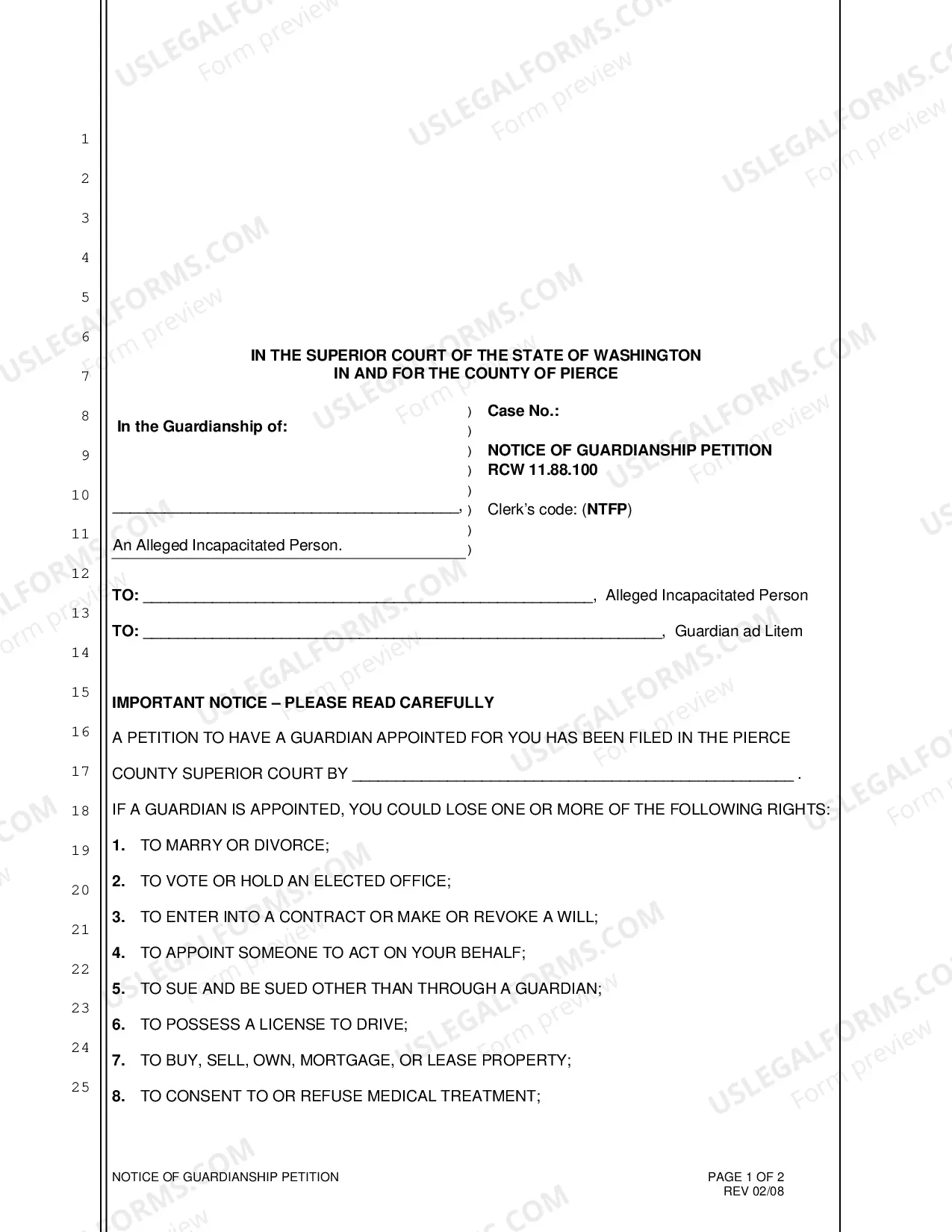
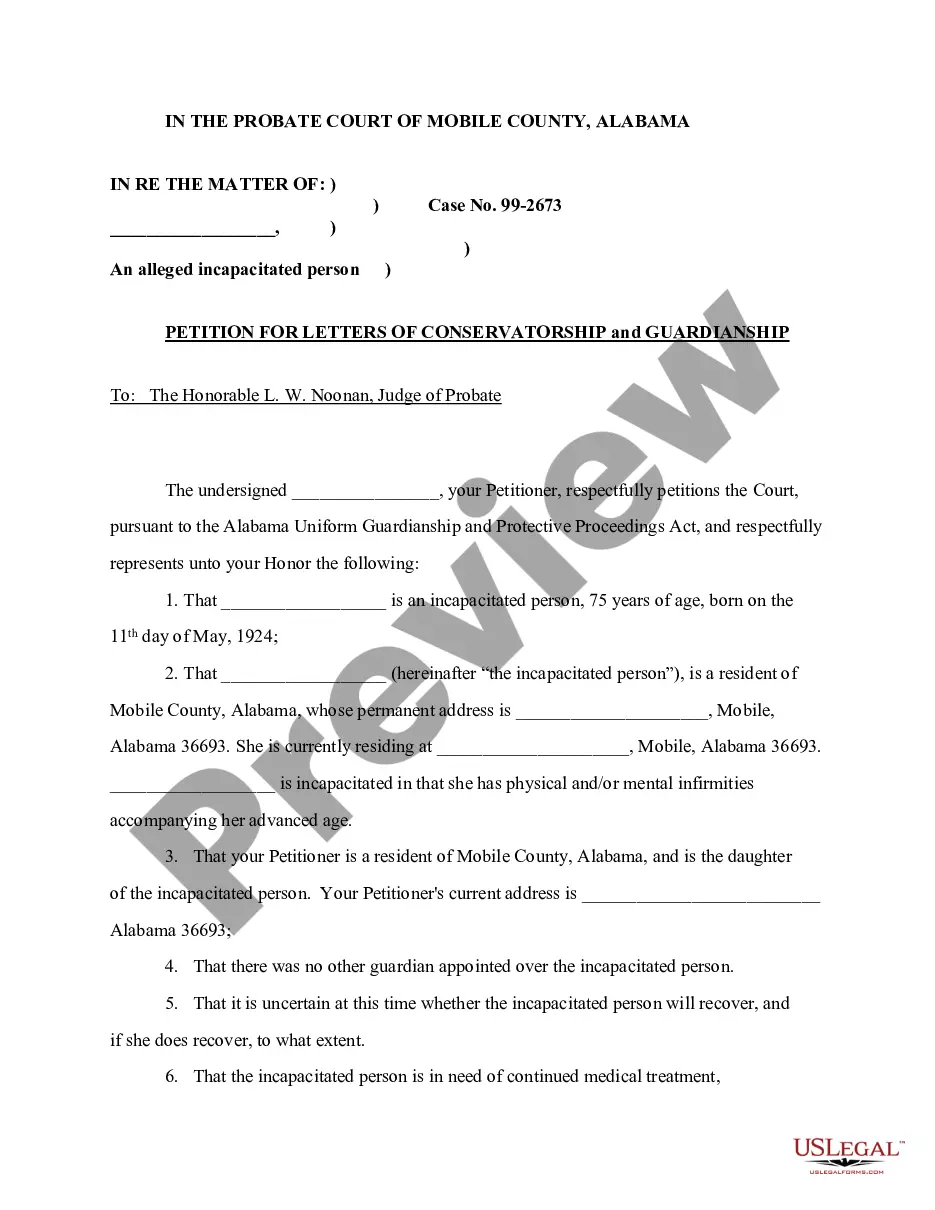
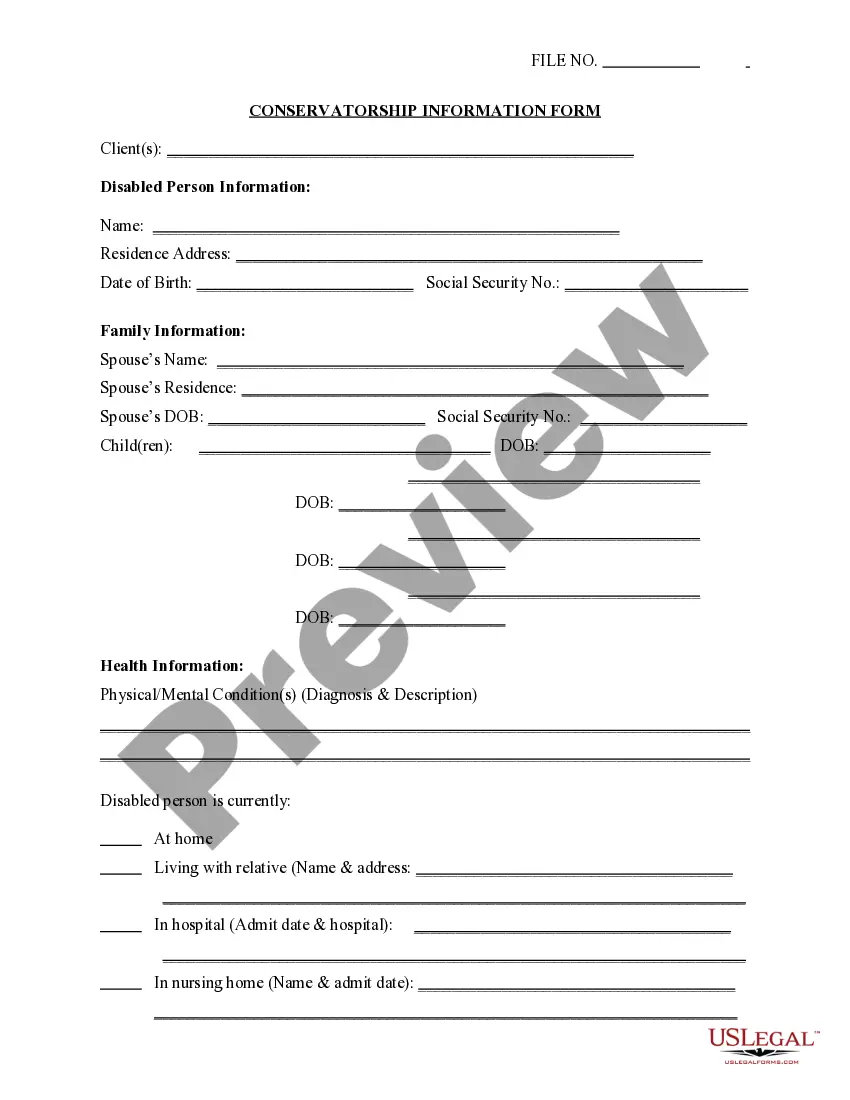
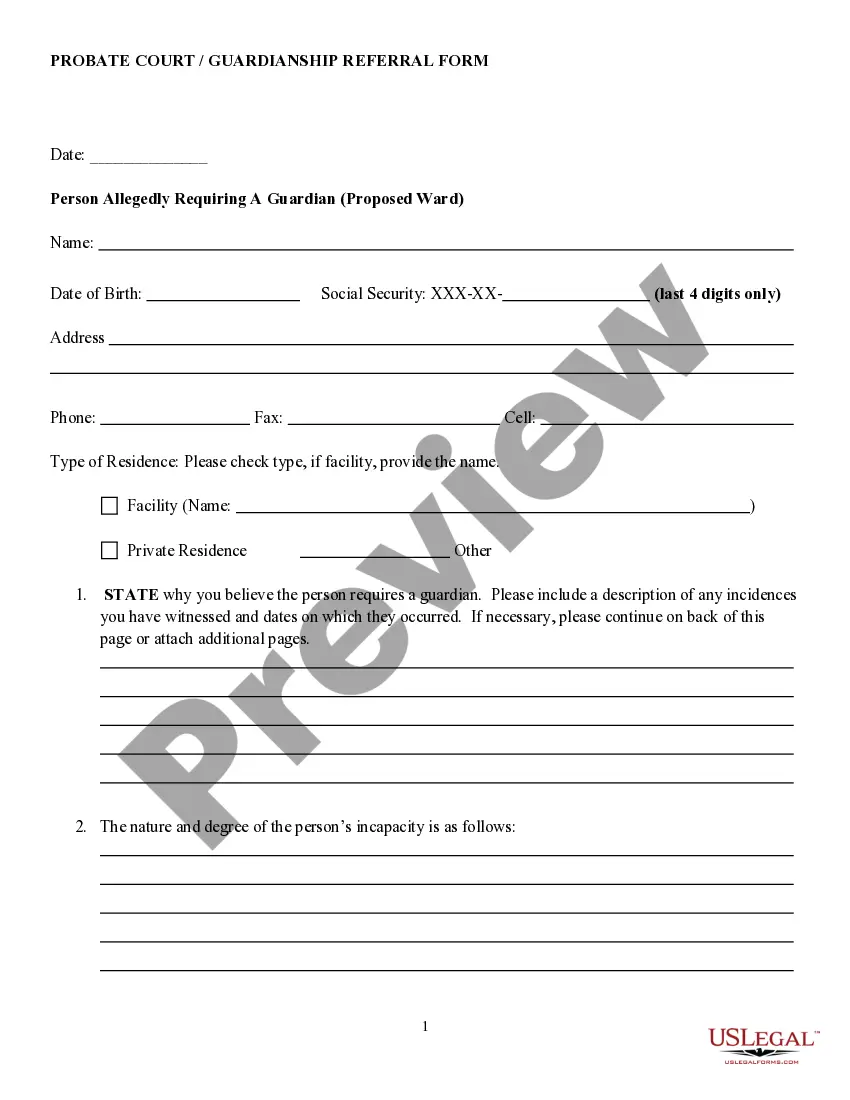
The Petition for Conservatorship is a legal document used to request that the court appoint a conservator to manage the financial and personal affairs of an incapacitated person. This form is specific to Alabama and is designed to comply with the state's Uniform Guardianship and Protective Proceedings Act. It is essential for ensuring that individuals who can no longer care for themselves have their affairs properly managed by a responsible party.
Key parts of this document
- Information about the incapacitated person, including their age and current residence.
- Details regarding the petitioner, including their relationship to the incapacitated person.
- Statements of the incapacitated person's condition and need for a conservator.
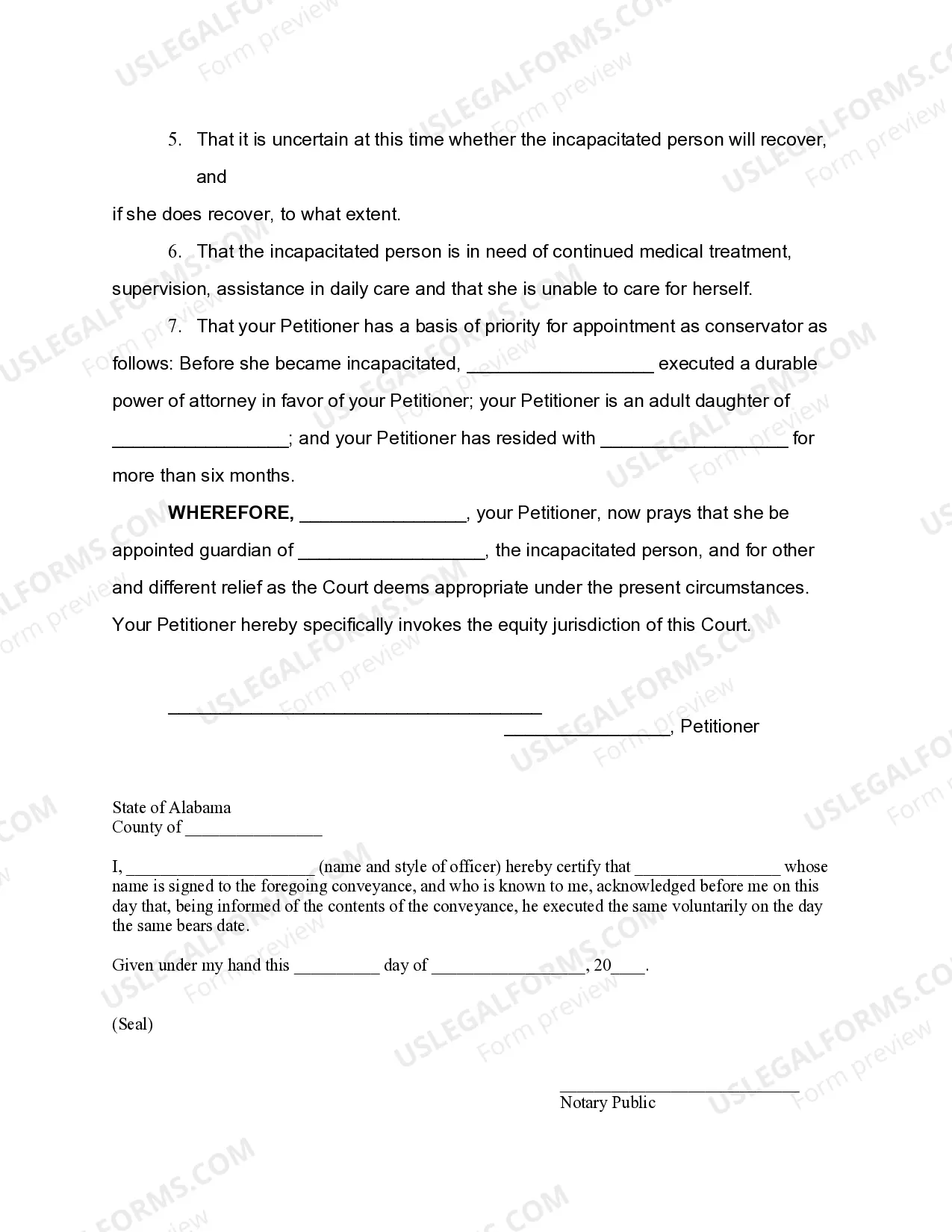
- Declaration of the petitioner's priority to serve as conservator, such as having a durable power of attorney.
- Request for the court's appointment of the petitioner as guardian and conservator.
Common use cases
This form should be utilized when an individual is unable to handle their personal or financial matters due to incapacity, and a responsible party wishes to petition for the appointment of a conservator. Situations may include severe health issues, mental incapacitation, or advanced age where the individual requires external assistance for daily care and oversight.
Intended users of this form
This form is intended for:
- Family members of an incapacitated person, such as adult children.
- Individuals appointed through a durable power of attorney.
- Any party seeking legal guardianship over an incapacitated person in Alabama.
Instructions for completing this form
- Identify the incapacitated person, including their full name and age.
- Provide your information as the petitioner, including your relationship to the incapacitated person.
- Clearly state the reasons for the petition, citing the incapacity and need for assistance.
- Include any supporting documents, such as a durable power of attorney, if applicable.
- Sign the petition in front of a notary public to ensure its validity.
Notarization requirements for this form
Yes, this form must be notarized to be legally valid. Using our integrated online notarization service, you can complete this process securely via video call, without the need to travel.
Get your form ready online
Our built-in tools help you complete, sign, share, and store your documents in one place.
Make edits, fill in missing information, and update formatting in US Legal Forms—just like you would in MS Word.
Download a copy, print it, send it by email, or mail it via USPS—whatever works best for your next step.
Sign and collect signatures with our SignNow integration. Send to multiple recipients, set reminders, and more. Go Premium to unlock E-Sign.
If this form requires notarization, complete it online through a secure video call—no need to meet a notary in person or wait for an appointment.
We protect your documents and personal data by following strict security and privacy standards.

Make edits, fill in missing information, and update formatting in US Legal Forms—just like you would in MS Word.

Download a copy, print it, send it by email, or mail it via USPS—whatever works best for your next step.

Sign and collect signatures with our SignNow integration. Send to multiple recipients, set reminders, and more. Go Premium to unlock E-Sign.

If this form requires notarization, complete it online through a secure video call—no need to meet a notary in person or wait for an appointment.

We protect your documents and personal data by following strict security and privacy standards.
Typical mistakes to avoid
- Failing to provide complete information about the incapacitated person.
- Not including necessary documentation, such as proof of relationship.
- Overlooking connection to local probate court regulations.
- Neglecting to have the petition notarized, if required.
Benefits of completing this form online
- Convenient access to the form that can be completed at any time.
- Editable templates that allow for customization based on individual circumstances.
- Reliable legal wording drafted by licensed attorneys, ensuring compliance with state laws.
Quick recap
- The Petition for Conservatorship is crucial for appointing a guardian for an incapacitated individual.
- This form follows Alabama's specific legal requirements for guardianship petitions.
- Proper completion and notarization of the form are essential for legal validity.
Looking for another form?





Form popularity
FAQ
In Alabama, you must demonstrate that the individual poses a risk to themselves or others due to mental illness to initiate involuntary commitment. This usually requires gathering evidence, including reports from mental health professionals. You can file an Alabama Petition for Conservatorship to start the legal process, which can safeguard their well-being while ensuring they receive necessary care. By understanding this path, you can take informed steps to protect your loved one.
To declare someone medically incompetent, you typically need to gather thorough medical evaluations from qualified professionals. These evaluations should clearly establish the individual's inability to make informed decisions regarding their health and finances. Following this, you can file an Alabama Petition for Conservatorship to formally seek legal authority over their affairs. This process ensures that the individual's needs are prioritized and that they receive appropriate support.
In Alabama, a conservator manages the financial affairs of an individual who is unable to do so, while a guardian takes care of the personal interests, such as healthcare and living arrangements. When considering an Alabama Petition for Conservatorship, it's important to understand this distinction, as it affects the rights and responsibilities assigned to each role. A conservator focuses on the individual’s assets, ensuring proper management and protection. On the other hand, a guardian provides support in daily living and emotional well-being, making decisions that align with the individual's best interests.
Declaring someone incompetent in Alabama requires a legal process involving the courts. Start by filing an Alabama Petition for Conservatorship, detailing the reasons and providing supporting documentation. The court will evaluate the evidence and may conduct a hearing to determine whether the individual is indeed deemed incompetent and if a conservatorship is necessary for their protection.
In Alabama, getting someone declared incompetent involves filing an Alabama Petition for Conservatorship. You will need to gather relevant evidence, including medical evaluations, that supports your claim regarding their incapacity. After filing the petition, the court will review the case and hold a hearing to decide whether the individual meets the criteria for incompetency.
To have a family member declared incompetent, you must file a petition with the court. This typically requires submitting an Alabama Petition for Conservatorship, along with evidence showcasing the individual’s inability to manage their own affairs. The court will then assess the evidence and may schedule a hearing to make a determination based on the facts provided.
Yes, the appointment of a guardian directly affects the need for a conservatorship. If the individual already has a guardian, pursuing an Alabama Petition for Conservatorship may not be necessary as the guardian holds decision-making authority. It is crucial to analyze the existing legal arrangements to determine the best course of action for the individual’s care and affairs.
Acquiring power of attorney for someone incapacitated in Alabama involves several steps. Initially, the individual must have the capacity to grant power of attorney; if they are unable, a conservatorship may be necessary through an Alabama Petition for Conservatorship. You may need to demonstrate to the court that the individual can no longer make informed decisions. Utilizing platforms like US Legal Forms can help simplify the required documentation process.
Obtaining a conservatorship in Alabama can be a straightforward process if you follow the necessary steps carefully. First, you must file an Alabama Petition for Conservatorship with the court, outlining the reasons for your request. The court will then review the petition and may require a hearing to evaluate the situation. If approved, the conservator will assume responsibility for the person’s care and financial decisions.