Alabama Order Granting Letters of Administration
Overview of this form
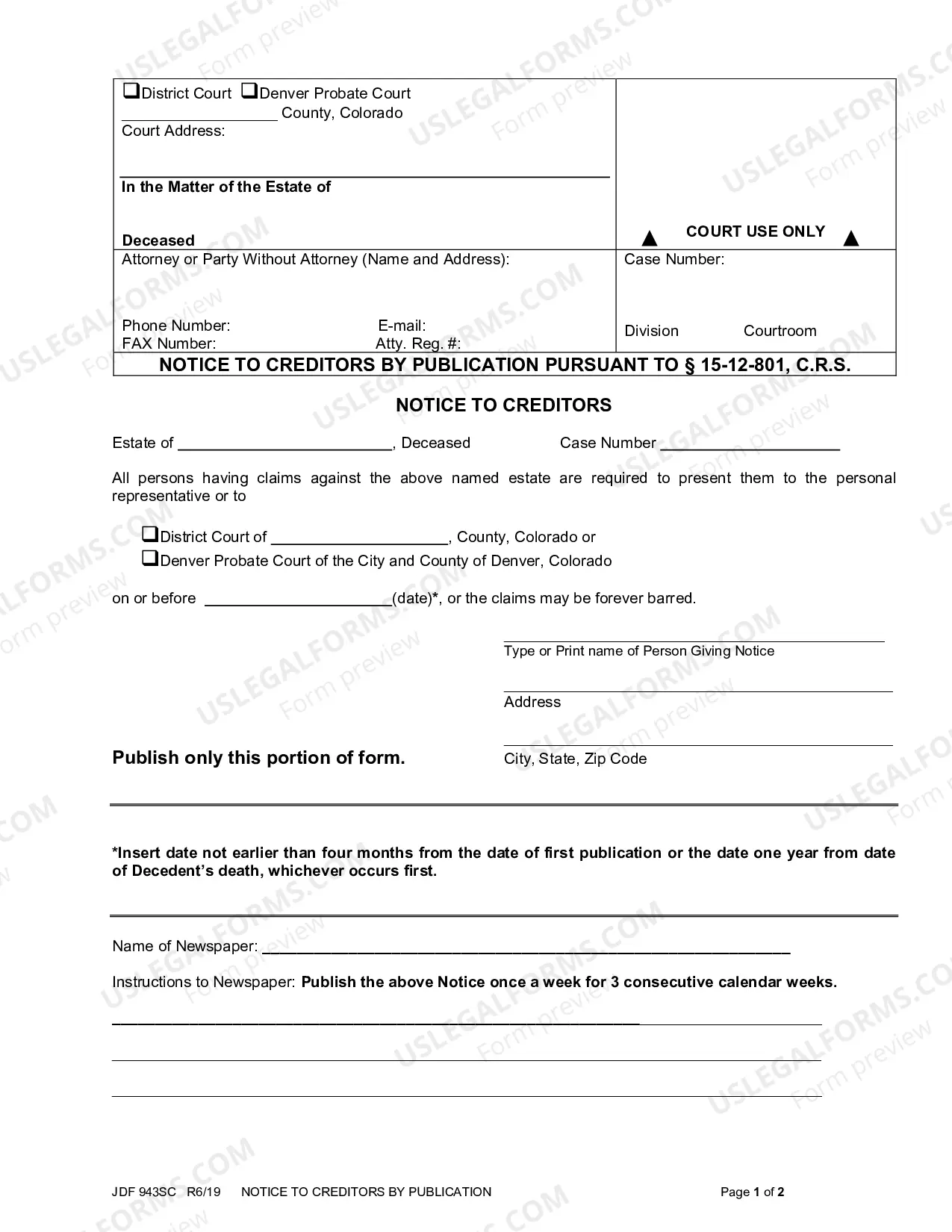
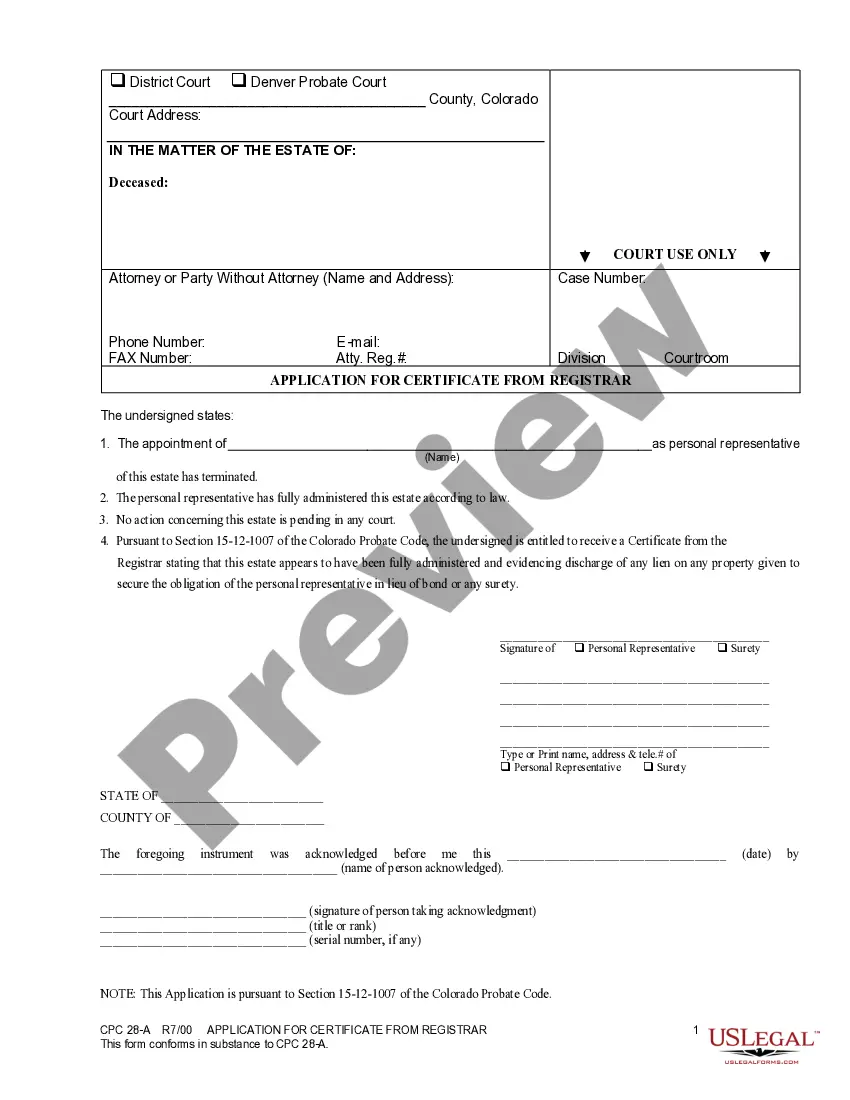
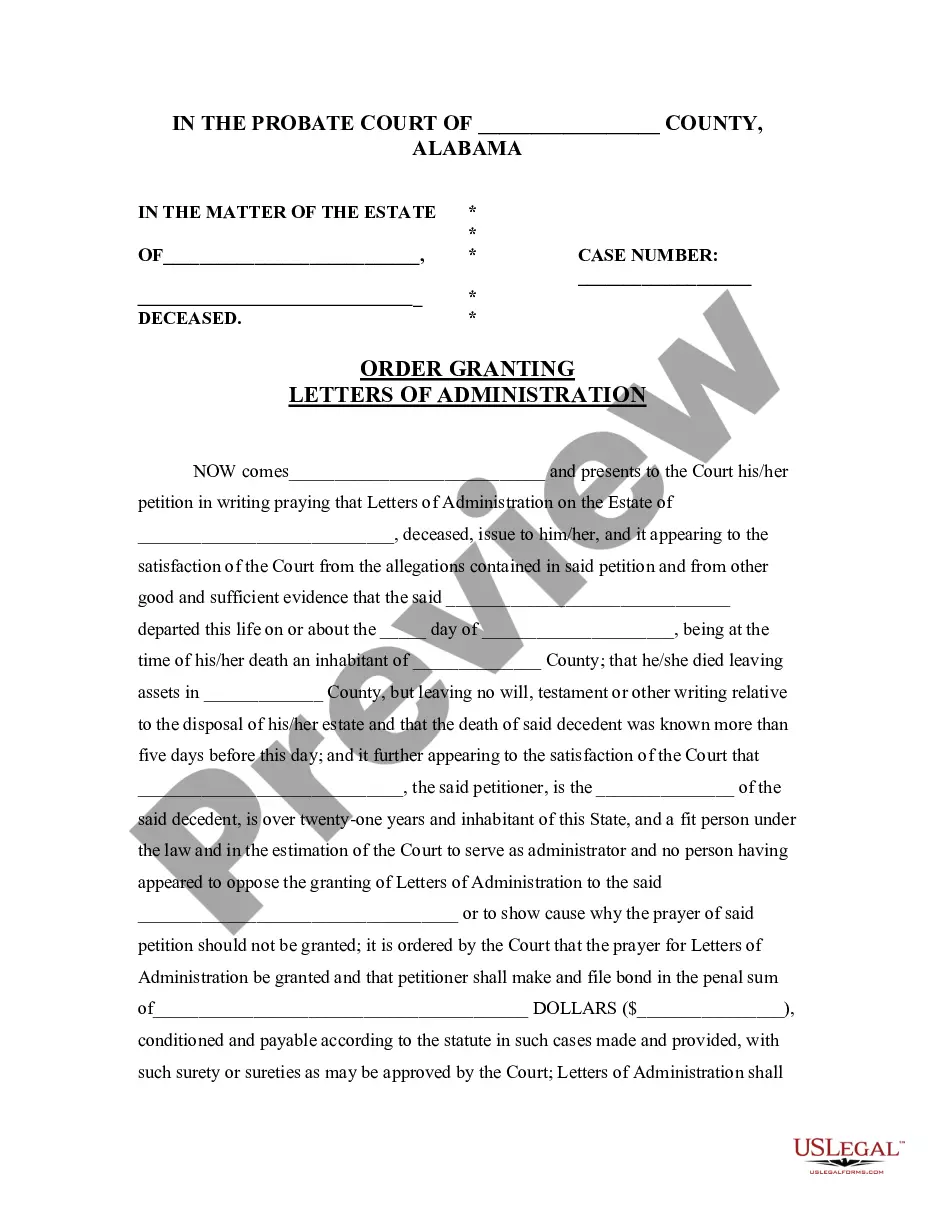
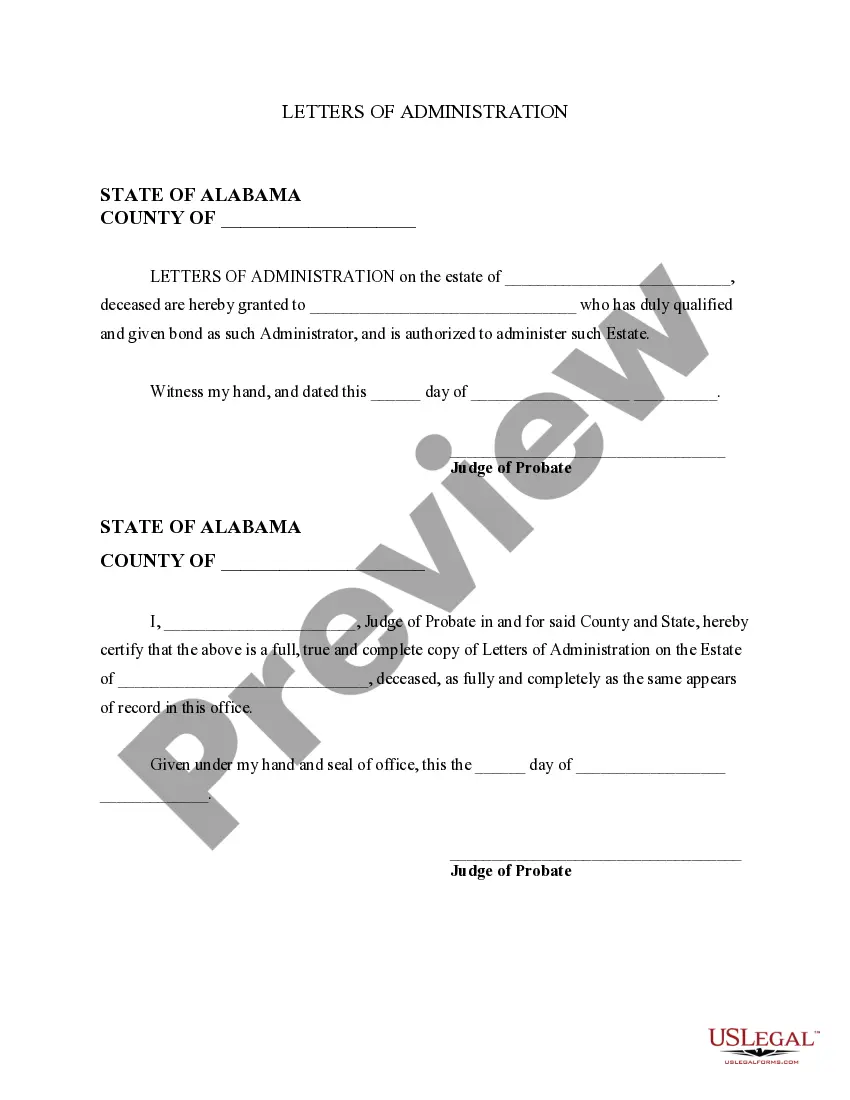
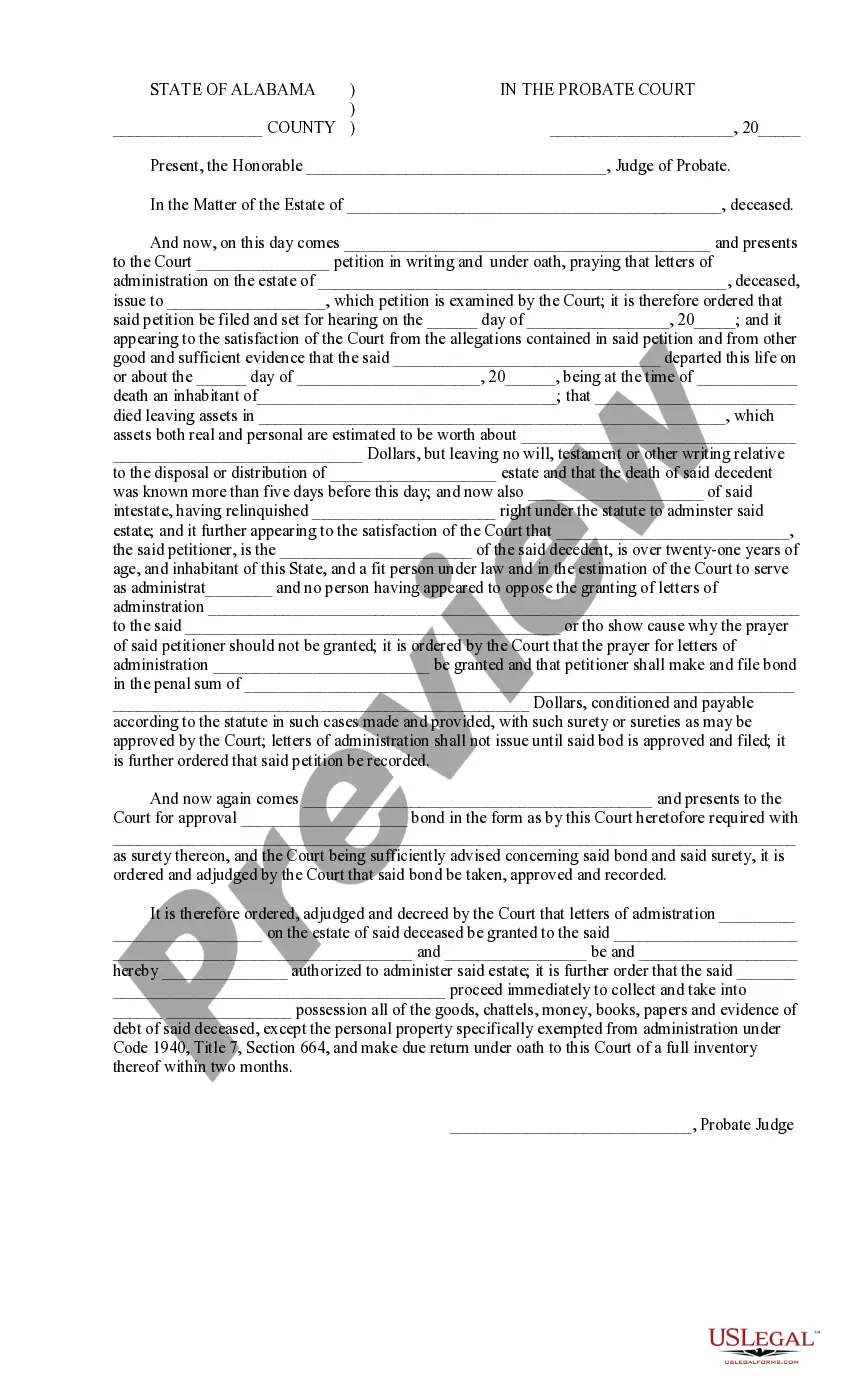
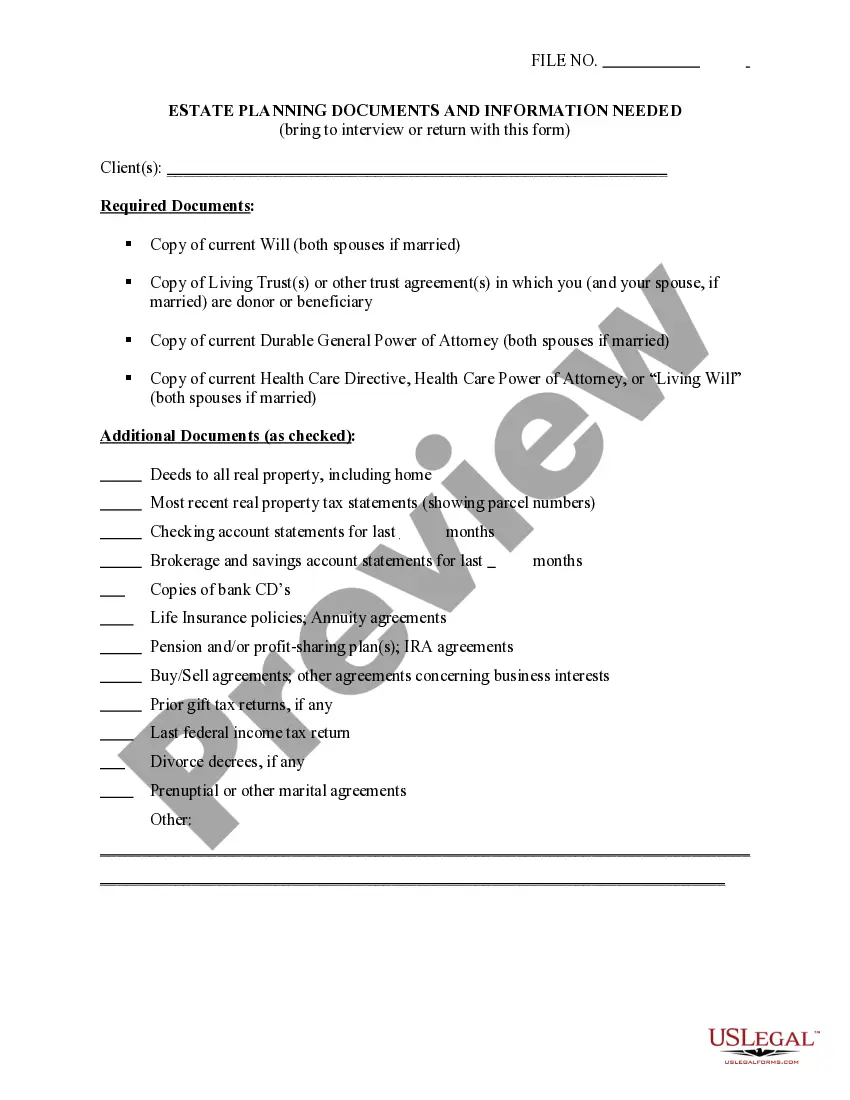
The Order Granting Letters of Administration is a legal document issued by a probate court. It authorizes an individual to manage and distribute the estate of a deceased person when no will exists. This form serves as a formal approval for the petitioner to take charge of the decedent's assets, ensuring that the estate is settled in accordance with state laws. Unlike a will, which specifies how a person wishes to distribute their assets, this form is necessary when the deceased did not leave behind any written instructions.
Key components of this form
- Case number and name of the decedent
- Petitioner's name and relationship to the deceased
- Details of the decedent's death and last residence
- Specifications regarding the bond that the petitioner must file
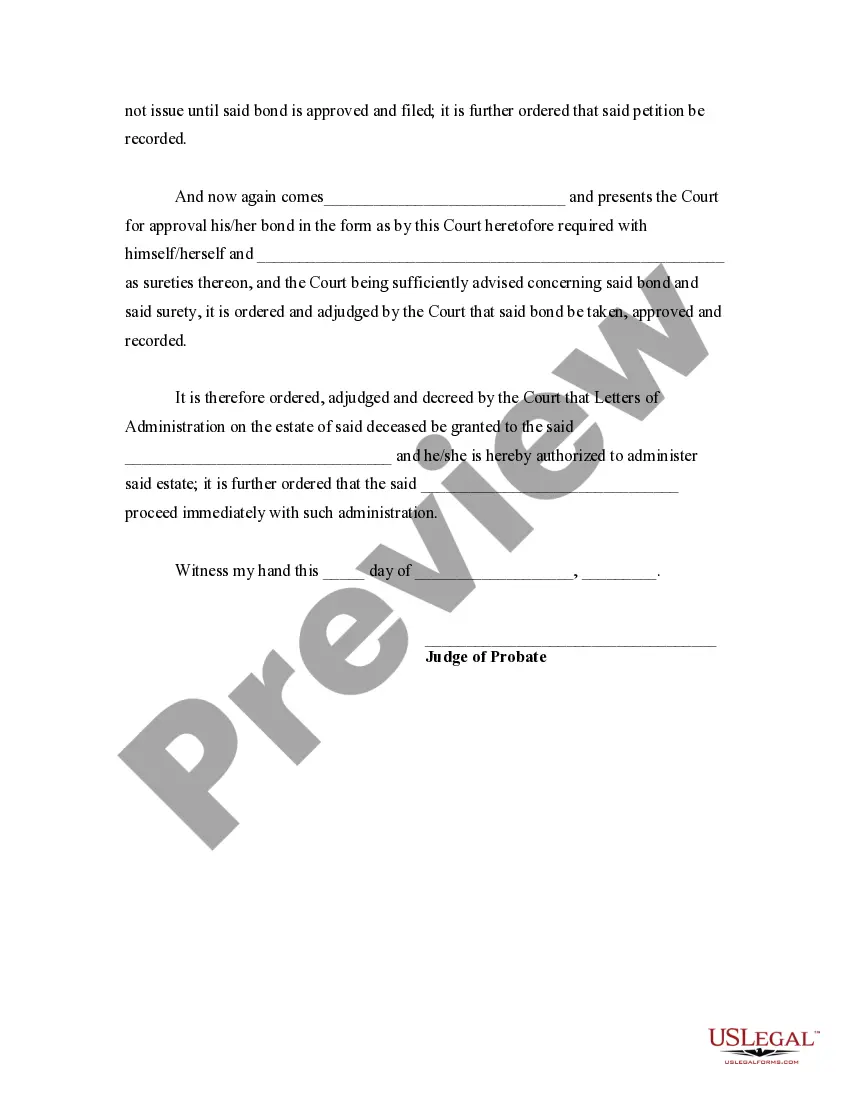
- Court's order granting the Letters of Administration
- Signature of the Judge of Probate
When to use this form
This form is used in situations where an individual needs to settle a deceased personâs estate but there is no will in place. It is particularly necessary when the estate has assets that need to be managed or distributed according to state probate laws. Common scenarios include when a family member passes away unexpectedly or when there are no clear directives provided for the distribution of the estate.
Who can use this document
- Individuals who are petitioning the court to administer an estate without a will
- Heirs or relatives of the deceased who fulfill the legal requirements to serve as an administrator
- Any party interested in managing the assets of the deceased
Instructions for completing this form
- Enter the full name of the deceased and the case number at the top of the form.
- Provide the petitioner's name, relationship to the deceased, and residency details.
- Indicate the date of death and confirm that no will exists.
- Specify the bond amount required by the court.
- Sign the form in front of a notary public, if required, and submit it to the probate court.
- Obtain the judge's signature to finalize the order.
Notarization requirements for this form
This form does not typically require notarization unless specified by local law. Always check with your local probate court for any additional requirements.
Get your form ready online
Our built-in tools help you complete, sign, share, and store your documents in one place.
Make edits, fill in missing information, and update formatting in US Legal Forms—just like you would in MS Word.
Download a copy, print it, send it by email, or mail it via USPS—whatever works best for your next step.
Sign and collect signatures with our SignNow integration. Send to multiple recipients, set reminders, and more. Go Premium to unlock E-Sign.
If this form requires notarization, complete it online through a secure video call—no need to meet a notary in person or wait for an appointment.
We protect your documents and personal data by following strict security and privacy standards.

Make edits, fill in missing information, and update formatting in US Legal Forms—just like you would in MS Word.

Download a copy, print it, send it by email, or mail it via USPS—whatever works best for your next step.

Sign and collect signatures with our SignNow integration. Send to multiple recipients, set reminders, and more. Go Premium to unlock E-Sign.

If this form requires notarization, complete it online through a secure video call—no need to meet a notary in person or wait for an appointment.

We protect your documents and personal data by following strict security and privacy standards.
Common mistakes to avoid
- Failing to provide accurate details about the decedent's death or residency.
- Omitting required sections or information from the petition.
- Not meeting the eligibility requirements for serving as an administrator.
- Neglecting to file the necessary bond or insurance within the specified time.
Advantages of online completion
- Convenient access to downloadable forms for immediate use.
- Easy customization to meet individual needs.
- Reliable templates created by licensed attorneys to ensure legal validity.
Summary of main points
- The Order Granting Letters of Administration is crucial for managing a deceased's estate without a will.
- It provides legal authority to the administrator to handle the estate's assets.
- Completing the form correctly ensures compliance with probate court requirements.
- Verify any state-specific requirements to avoid complications in the probate process.
Looking for another form?
Form popularity
FAQ
Alabama Order Granting Letters of Administration is a probate court order that authorizes an administrator to manage and distribute a deceased person’s estate when no will exists. It gives the petitioner authority to collect assets, pay debts, and distribute the remaining assets under Alabama probate laws. The form requires case number, decedent details, petitioner relationship, bond information, the court’s order, and the judge’s signature.
Common probate mistakes include failing to file the required bond, providing incomplete decedent details, and not following the court’s order during the Letters of Administration process. To reduce risk, ensure all form components are complete: case number, decedent, petitioner's relationship, death details, bond information, the court’s order, and the judge’s signature before filing.
Yes. An administrator may be sued personally for mismanaging the estate or failing to comply with court orders. To limit risk, act with fiduciary care, maintain accurate records, and follow bond terms and probate procedures when administering the estate under Alabama law.
No. Moving or disposing of assets before appointment can violate court procedures and harm beneficiaries. Until the administrator is appointed, assets should generally stay in place, and any action should await the bond filing and the court’s explicit authorization to proceed with administration.
A common mistake is failing to follow the court’s orders or to meet the bond requirements, which can jeopardize the administration. The Alabama Order Granting Letters of Administration expects complete, accurate information and adherence to fiduciary duties, bond terms, and probate procedures as listed in the form components.
This form is used when there is no will, appointing an administrator to settle the estate under intestacy rules. In contrast, Letters Testamentary appoint an executor named in a will to administer the estate under that will. The key difference is whether the decedent left a valid will guiding distribution.