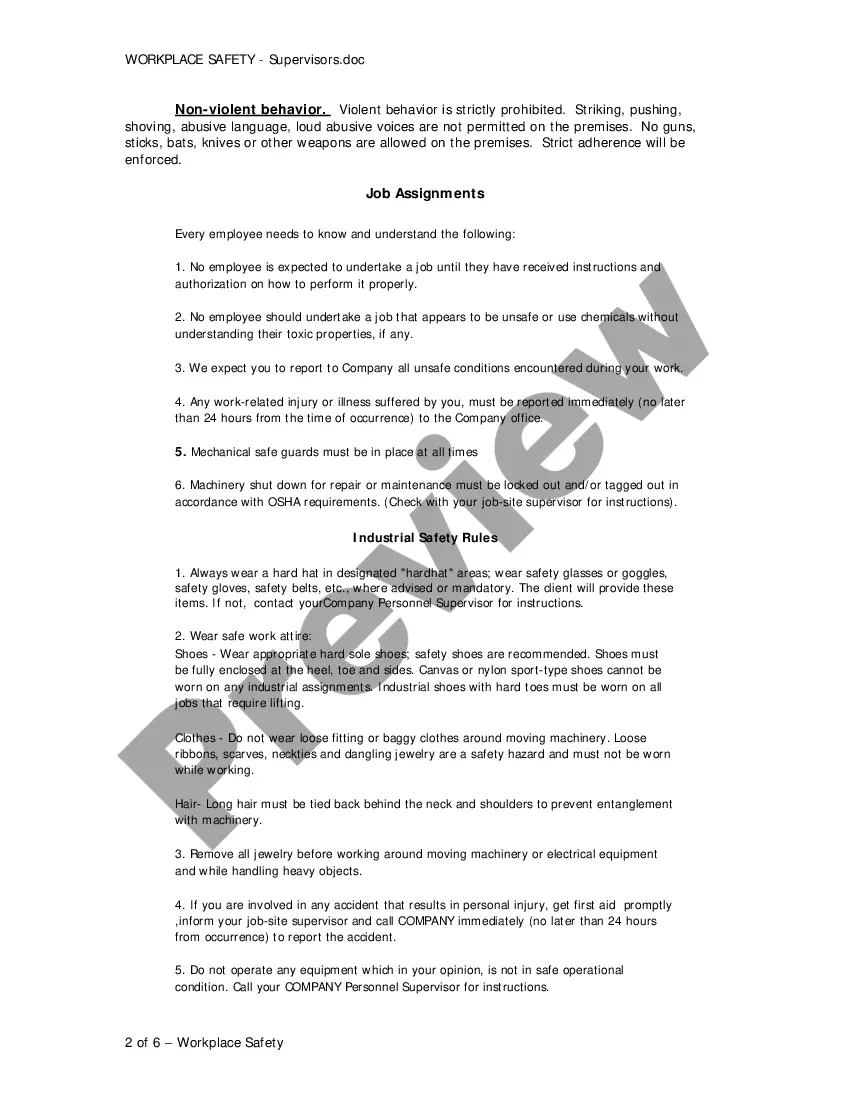
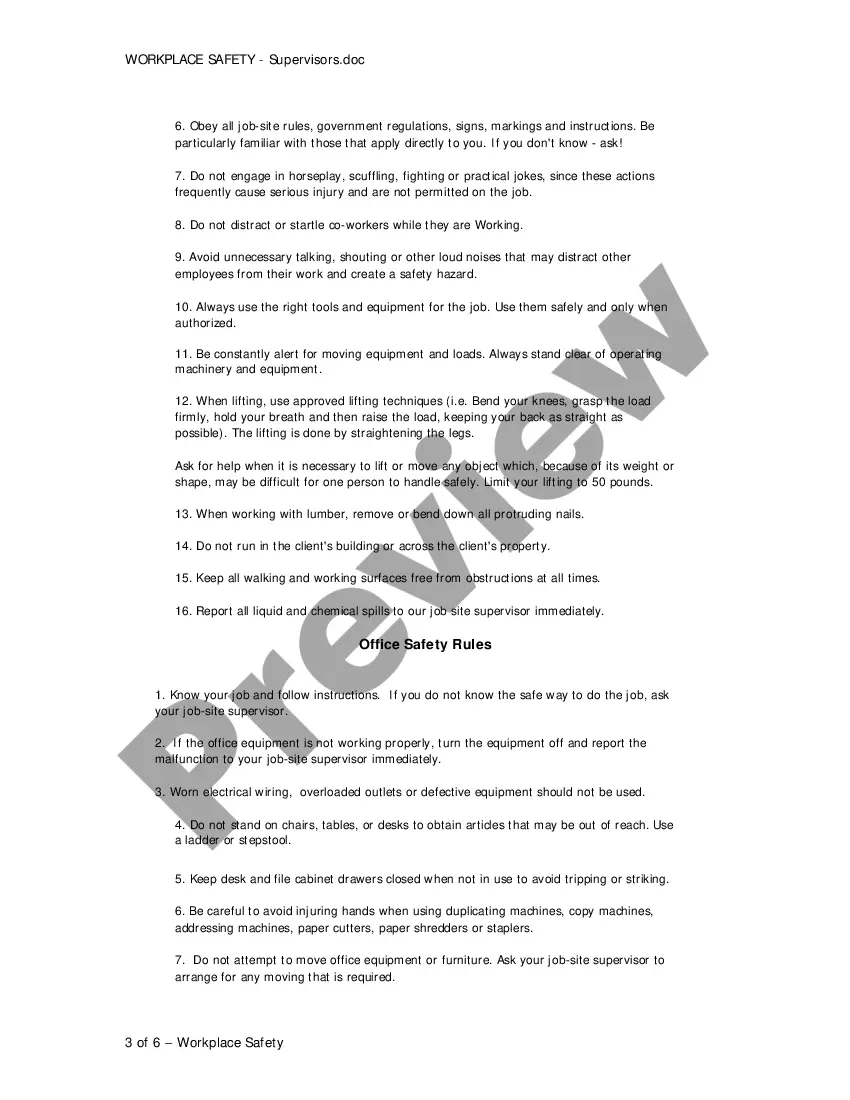
Safety policies for supervisors managing other employees.
Alaska Safety Policy for Supervisors Training
Instant download
Description
Free preview
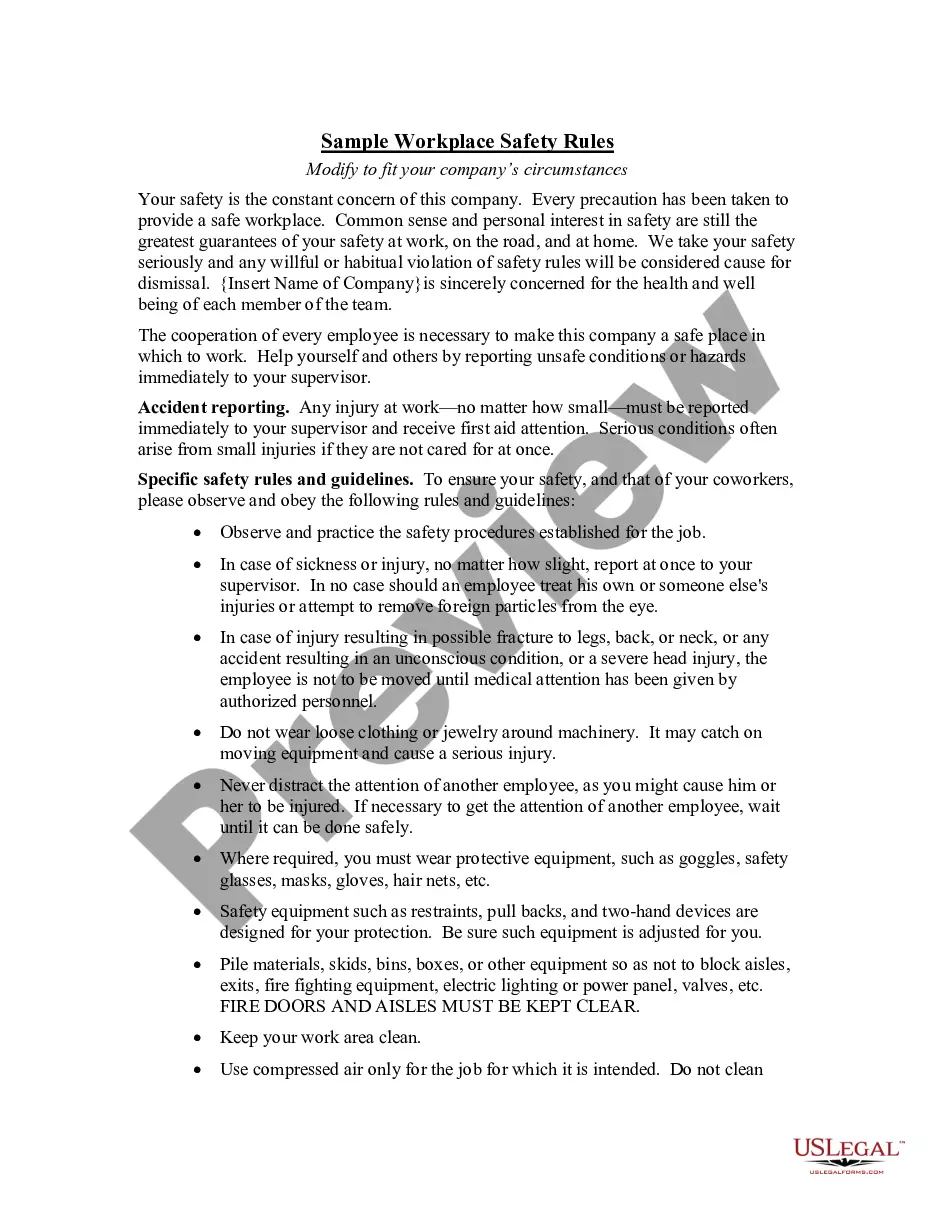
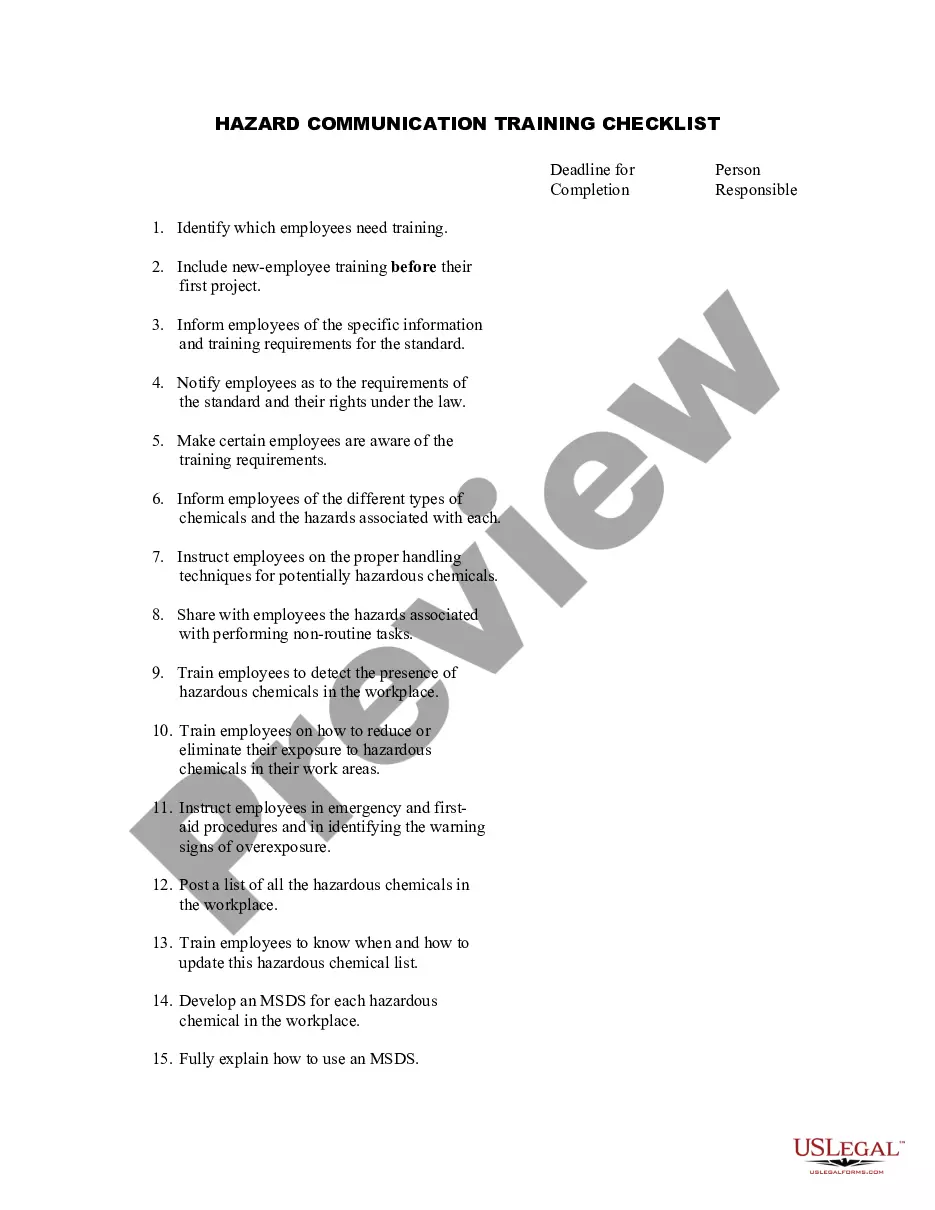
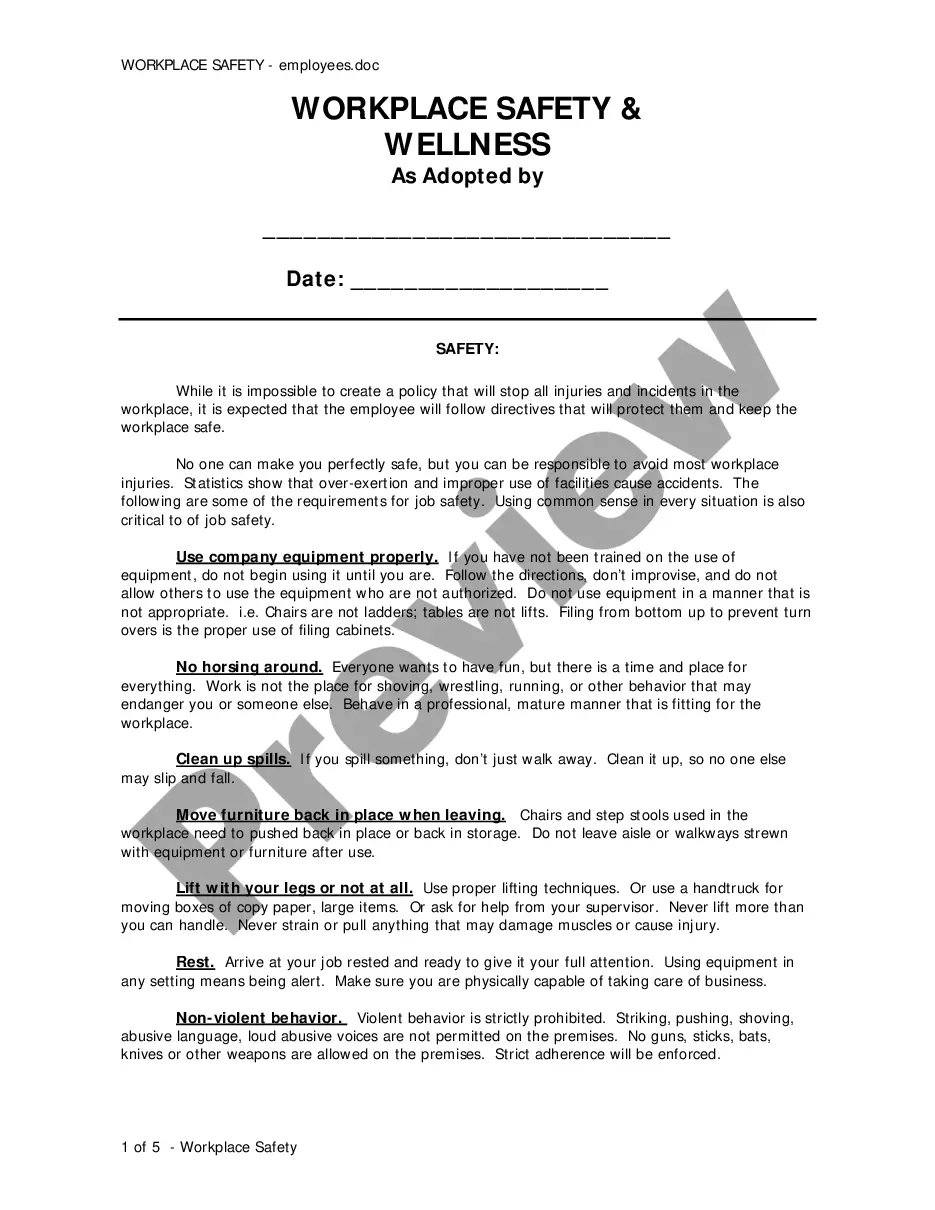
Get your form ready online
Our built-in tools help you complete, sign, share, and store your documents in one place.
Built-in online Word editor
Make edits, fill in missing information, and update formatting in US Legal Forms—just like you would in MS Word.
Export easily
Download a copy, print it, send it by email, or mail it via USPS—whatever works best for your next step.
E-sign your document
Sign and collect signatures with our SignNow integration. Send to multiple recipients, set reminders, and more. Go Premium to unlock E-Sign.
Notarize online 24/7
If this form requires notarization, complete it online through a secure video call—no need to meet a notary in person or wait for an appointment.
Store your document securely
We protect your documents and personal data by following strict security and privacy standards.

Make edits, fill in missing information, and update formatting in US Legal Forms—just like you would in MS Word.

Download a copy, print it, send it by email, or mail it via USPS—whatever works best for your next step.

Sign and collect signatures with our SignNow integration. Send to multiple recipients, set reminders, and more. Go Premium to unlock E-Sign.

If this form requires notarization, complete it online through a secure video call—no need to meet a notary in person or wait for an appointment.

We protect your documents and personal data by following strict security and privacy standards.
Looking for another form?





How to fill out Safety Policy For Supervisors Training?
You might spend numerous hours online trying to discover the legal document template that satisfies the state and federal requirements you need.
US Legal Forms offers thousands of legal forms that are evaluated by experts.
It is straightforward to obtain or print the Alaska Safety Policy for Supervisors Training from our service.
If available, use the Preview button to review the document template as well.
- If you already have a US Legal Forms account, you can Log In and click on the Acquire button.
- Once logged in, you can complete, modify, print, or sign the Alaska Safety Policy for Supervisors Training.
- Every legal document template you acquire is yours permanently.
- To get another copy of any purchased form, go to the My documents tab and click on the appropriate button.
- If this is your first time using the US Legal Forms website, follow the simple instructions outlined below.
- First, ensure that you have selected the correct document template for your chosen county/city.
- Check the form description to confirm you have chosen the accurate form.
Form popularity
FAQ
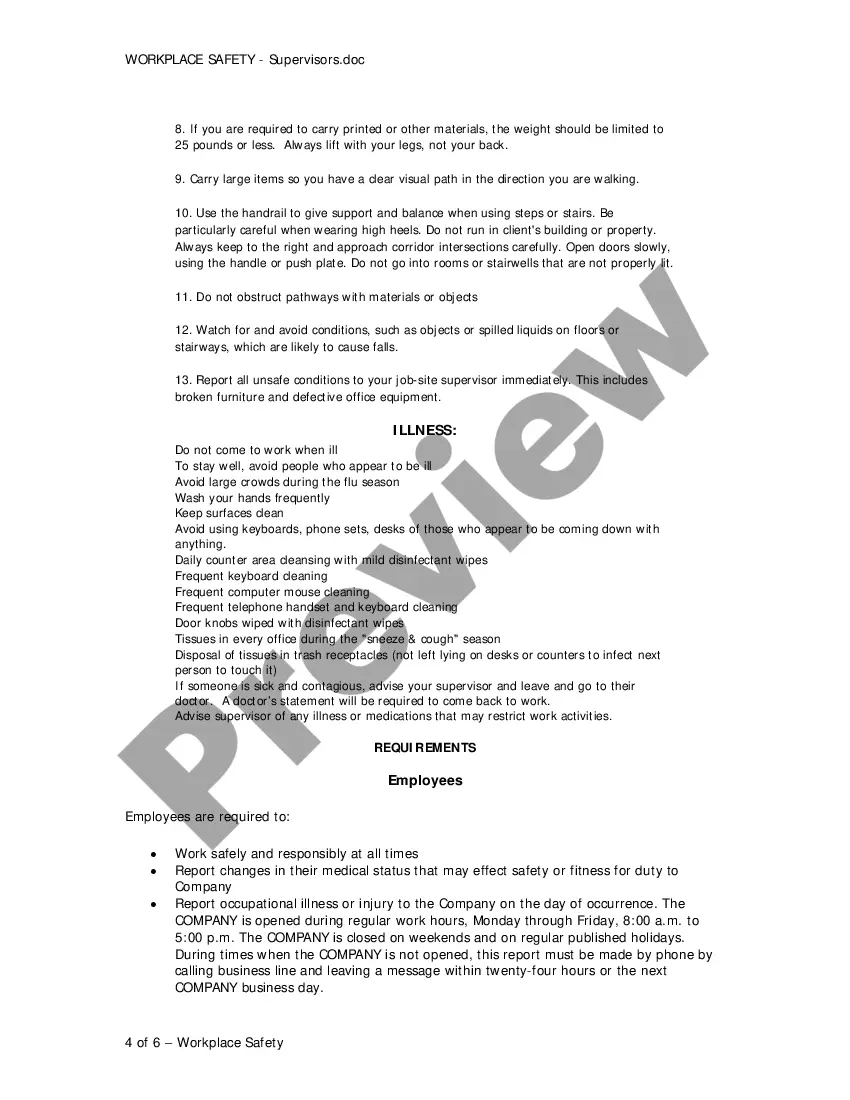
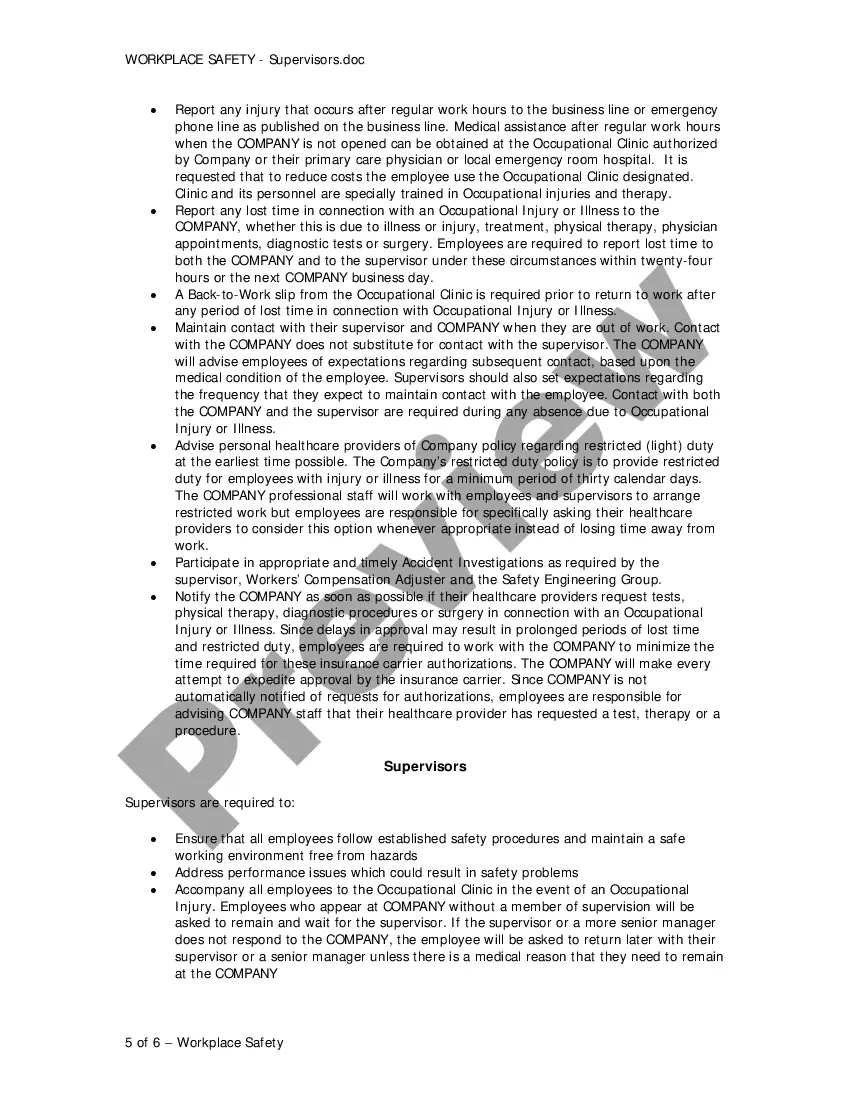
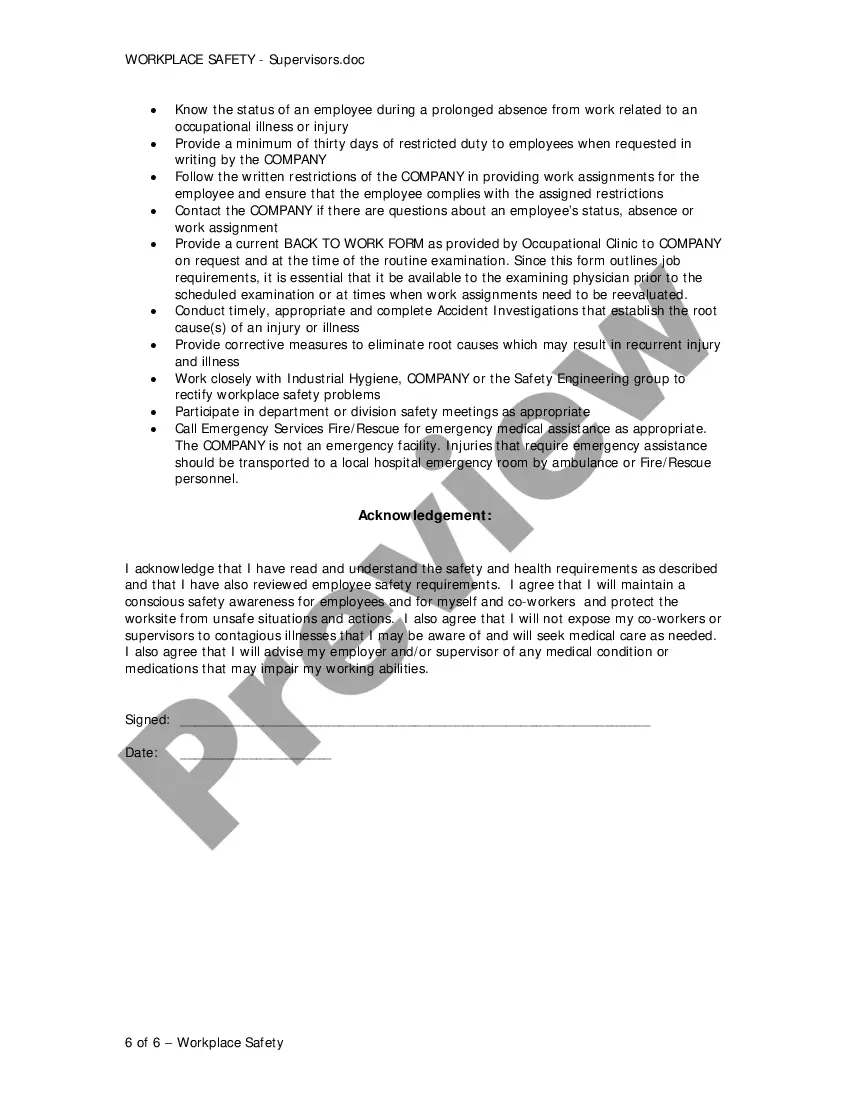
The 4 P's of safety are Policies, Procedures, People, and PPE (Personal Protective Equipment). Understanding these elements is crucial for implementing the Alaska Safety Policy for Supervisors Training. Policies provide a framework for safety practices, while procedures offer step-by-step guidelines for executing those policies effectively. By focusing on these areas, supervisors can enhance workplace safety and ensure compliance.
To implement a safety policy effectively, start by developing a comprehensive plan that aligns with the Alaska Safety Policy for Supervisors Training. Make sure to communicate this policy clearly to all employees and provide necessary training to supervisors. Regularly review and update the policy to address new risks and ensure compliance. Engaging employees in discussions about the policy can enhance understanding and encourage a culture of safety within your organization.
Employers hold the primary responsibility for providing safety training to their employees. This includes implementing the Alaska Safety Policy for Supervisors Training to ensure that supervisors are equipped with the necessary skills and knowledge. By prioritizing safety training, employers help foster a safer work environment, reduce hazards, and comply with state regulations. Comprehensive training ultimately benefits employees and the organization.
A safety policy typically presents clear, written guidelines on expected safety practices, responsibilities, and procedures. It usually includes sections on purpose, scope, definitions, responsibilities, and compliance measures. By examining examples during the Alaska Safety Policy for Supervisors Training, supervisors can craft and implement effective safety policies tailored to their workplace.
A simple example of a policy could be a rule stating that all employees must wear safety helmets on job sites. This policy clearly communicates expectations to avoid head injuries. By integrating such straightforward policies into the Alaska Safety Policy for Supervisors Training, supervisors can help maintain a safer work environment.
Supervisors have several key responsibilities for safety, including ensuring compliance with safety standards, conducting regular safety training, and addressing safety concerns promptly. They must also promote a safety-first culture among employees to enhance workplace safety. By utilizing the guidelines in the Alaska Safety Policy for Supervisors Training, supervisors can effectively fulfill these responsibilities.
The seven core elements of a safety program include management commitment, employee involvement, worksite analysis, hazard prevention and control, safety and health training, recordkeeping, and program evaluation. Each element plays a significant role in creating a comprehensive approach to workplace safety. Incorporating these elements into the Alaska Safety Policy for Supervisors Training helps foster a culture of safety.
Yes, supervisors are required to provide training for employees on the chemicals present in their workplace. This training should cover proper handling, potential hazards, and emergency procedures. By adhering to the Alaska Safety Policy for Supervisors Training, supervisors can ensure employees have the knowledge needed to work safely with these substances.
Safety policies are written documents that outline how to maintain a safe working environment. They cover various topics, including hazard identification, risk management, and personal protective equipment requirements. Implementing the Alaska Safety Policy for Supervisors Training is crucial for supervisors to understand these policies and share them effectively with their teams.
An example of a safety policy could be a guideline that outlines procedures for handling hazardous materials in the workplace. It may specify the required protective gear, procedures for reporting spills, and employee training requirements. This is important for ensuring compliance with the Alaska Safety Policy for Supervisors Training, as it establishes clear expectations for safe practices.