Alaska New Resident Guide
About this form
The New Resident Guide is an essential resource for individuals relocating to a new state. This guide clearly outlines the various state requirements for residency, voter registration, identification cards, driver's licenses, and vehicle registration. Unlike other residency forms, this guide serves as a comprehensive overview, ensuring new residents understand their legal obligations and the necessary steps to establish residency in their new state.
What’s included in this form
- Voting registration requirements, including eligibility and application process.
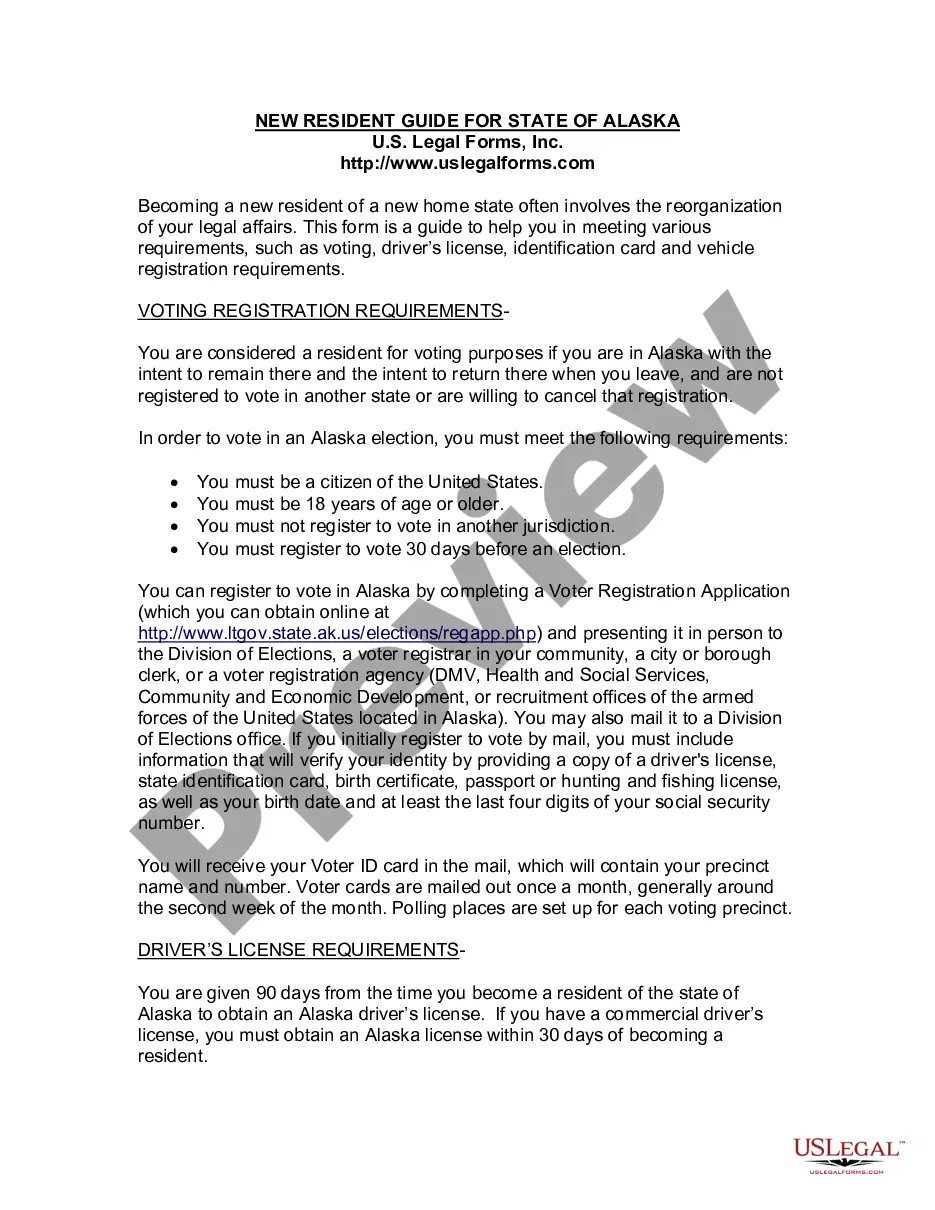
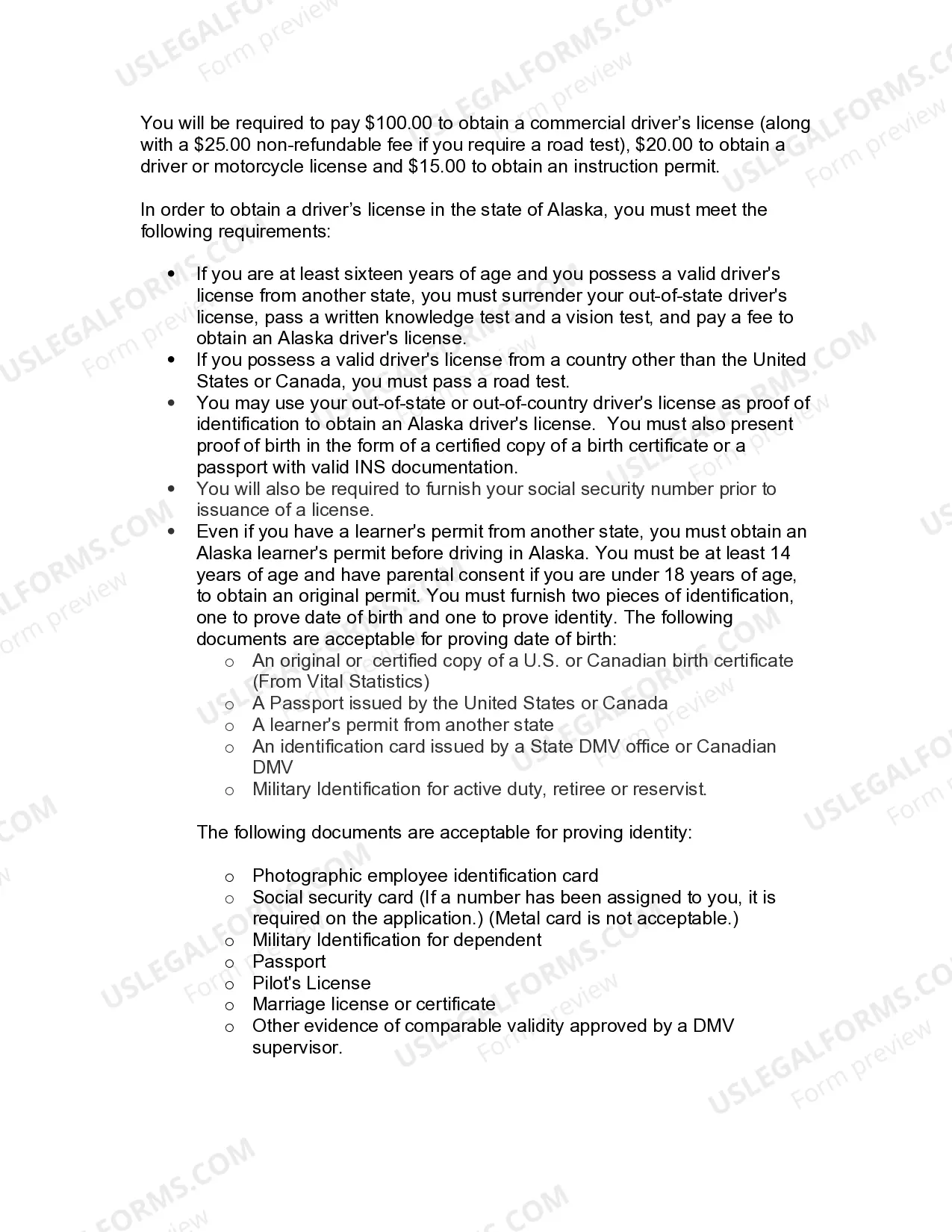
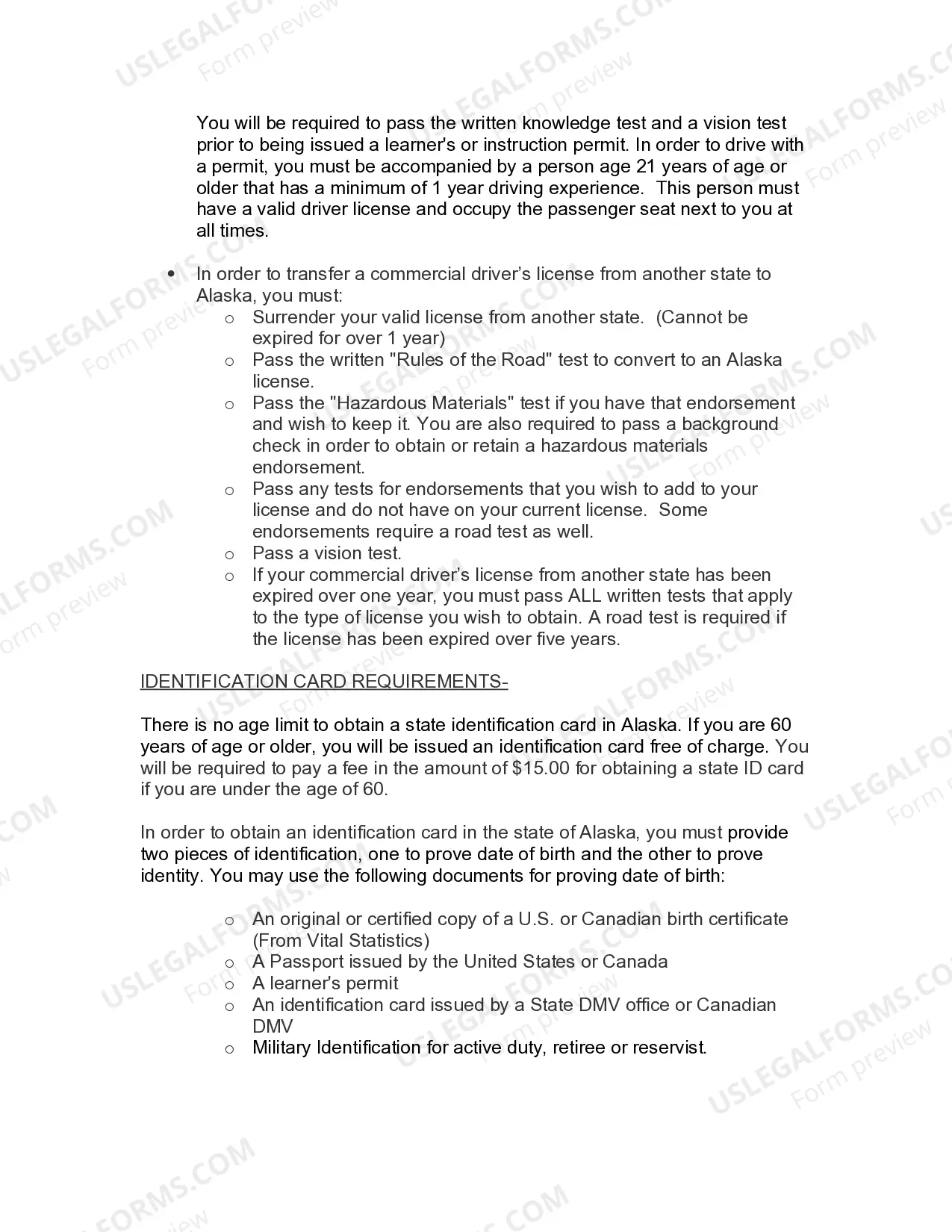
- Driver's license requirements, detailing necessary documents and procedures.
- Identification card requirements for different age groups.
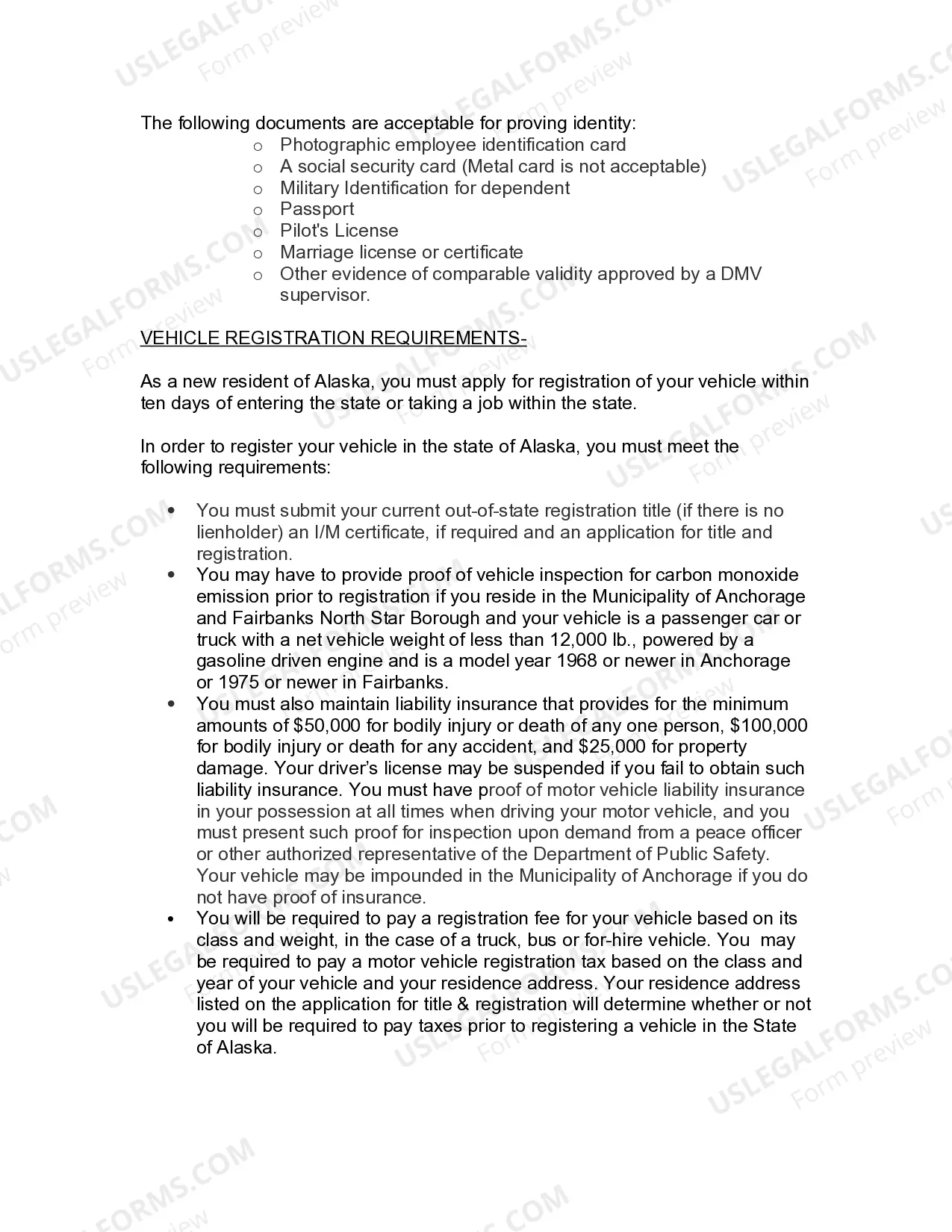
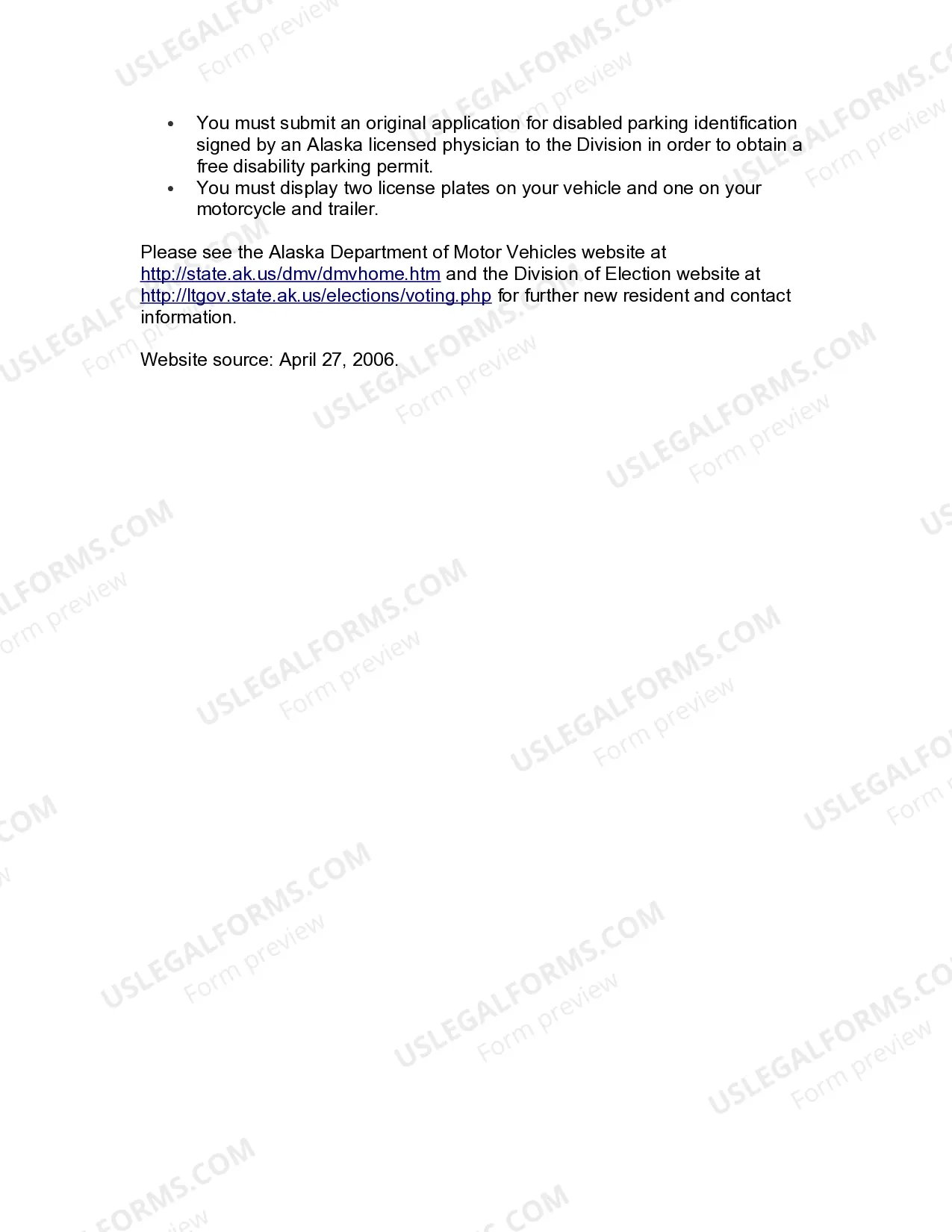
- Vehicle registration requirements, including documentation and timelines.
- Links to official state resources for further information.
When to use this document
This guide is particularly useful when moving to a new state and needing to navigate the legal landscape of residency. It helps you understand when and how to register to vote, obtain a driver's license, and register your vehicle, ensuring compliance with state laws.
Who this form is for
- New residents relocating to a different state.
- Individuals who need to register to vote in their new state.
- People requiring a new driver's license or state identification card.
- Individuals looking to register their vehicle in their new state.
Completing this form step by step
- Gather necessary documents, such as proof of identity and residency.
- Review the specific requirements for voting registration, driver's licenses, and vehicle registration.
- Complete applications for voter registration and driver's licenses as needed.
- Submit applications to the appropriate state offices in person or by mail.
- Keep copies of all submitted documents for your records.
Is notarization required?
This form does not typically require notarization to be legally valid. However, some jurisdictions or document types may still require it. US Legal Forms provides secure online notarization powered by Notarize, available 24/7 for added convenience.
Get your form ready online
Our built-in tools help you complete, sign, share, and store your documents in one place.
Make edits, fill in missing information, and update formatting in US Legal Forms—just like you would in MS Word.
Download a copy, print it, send it by email, or mail it via USPS—whatever works best for your next step.
Sign and collect signatures with our SignNow integration. Send to multiple recipients, set reminders, and more. Go Premium to unlock E-Sign.
If this form requires notarization, complete it online through a secure video call—no need to meet a notary in person or wait for an appointment.
We protect your documents and personal data by following strict security and privacy standards.

Make edits, fill in missing information, and update formatting in US Legal Forms—just like you would in MS Word.

Download a copy, print it, send it by email, or mail it via USPS—whatever works best for your next step.

Sign and collect signatures with our SignNow integration. Send to multiple recipients, set reminders, and more. Go Premium to unlock E-Sign.

If this form requires notarization, complete it online through a secure video call—no need to meet a notary in person or wait for an appointment.

We protect your documents and personal data by following strict security and privacy standards.
Avoid these common issues
- Failing to register to vote before the deadline.
- Not submitting required proof of identity or residency.
- Delaying the application for a driver's license beyond the allowed time frame.
- Omitting necessary fees when applying for vehicle registration.
Why complete this form online
- Convenience of accessing all necessary information in one place.
- Editable options for personal input before printing or mailing.
- Reliable templates drafted by licensed attorneys ensuring legal compliance.
What to keep in mind
- The New Resident Guide is essential for understanding residency laws in a new state.
- It encompasses various requirements, saving time and effort when moving.
- Proper completion of the form is crucial for compliance with state regulations.
- Staying informed helps avoid common mistakes related to voter and vehicle registration.
Looking for another form?

Form popularity
FAQ
A person must spend at least 30 cumulative days in Alaska during the past five years. Military spouses and dependent children who are absent from Alaska due to only active duty military assignments (such as a PCS) must be accompanying an eligible Alaska resident in order to themselves maintain eligibility for a PFD.
An individual's intent to establish residency, remain indefinitely in Alaska, or to return to Alaska and remain indefinitely is demonstrated through the establishment and maintenance of customary ties indicative of Alaska residency and the absence of those ties in another state or country.
You must reside in Alaska for 12 months before you can be considered a legal resident for purposes of the Permanent Fund Dividend.
Alaska runs a program called the Alaska Permanent Fund, which, per the state website, allots an equal amount of the state's oil royalties to every resident through an annual dividend. In 2018, that dividend came out to $1,600 per person.
Alaska's legislators will have to decide whether to pay the roughly $3,000 dividends proposed by Republican Gov. Mike Dunleavy using the formula in state law, or a smaller amount. Over the past five years, they've ranged from a low of $992 in 2020 to a high of $1,606 in 2019.
You must live in Alaska for 12 months before you can be considered a legal resident in order to receive dividends from the Permanent Fund.
According to the Alaska Department of Revenue, PFD amounts have ranged from $331 to $2,072 per person since 1982. The last several years' payouts were: 2017: $1,100. 2018: $1,600.
The amount of the 2020 Permanent Fund Dividend is $992.00. The state's Federal Tax Identification number is 92-6001185.
Find a new place to live in the new state. Establish domicile. Change your mailing address and forward your mail. Change your address with utility providers. Change IRS address. Register to vote. Get a new driver's license. File taxes in your new state.