Alaska Amendment of Lease Package
What this form package covers
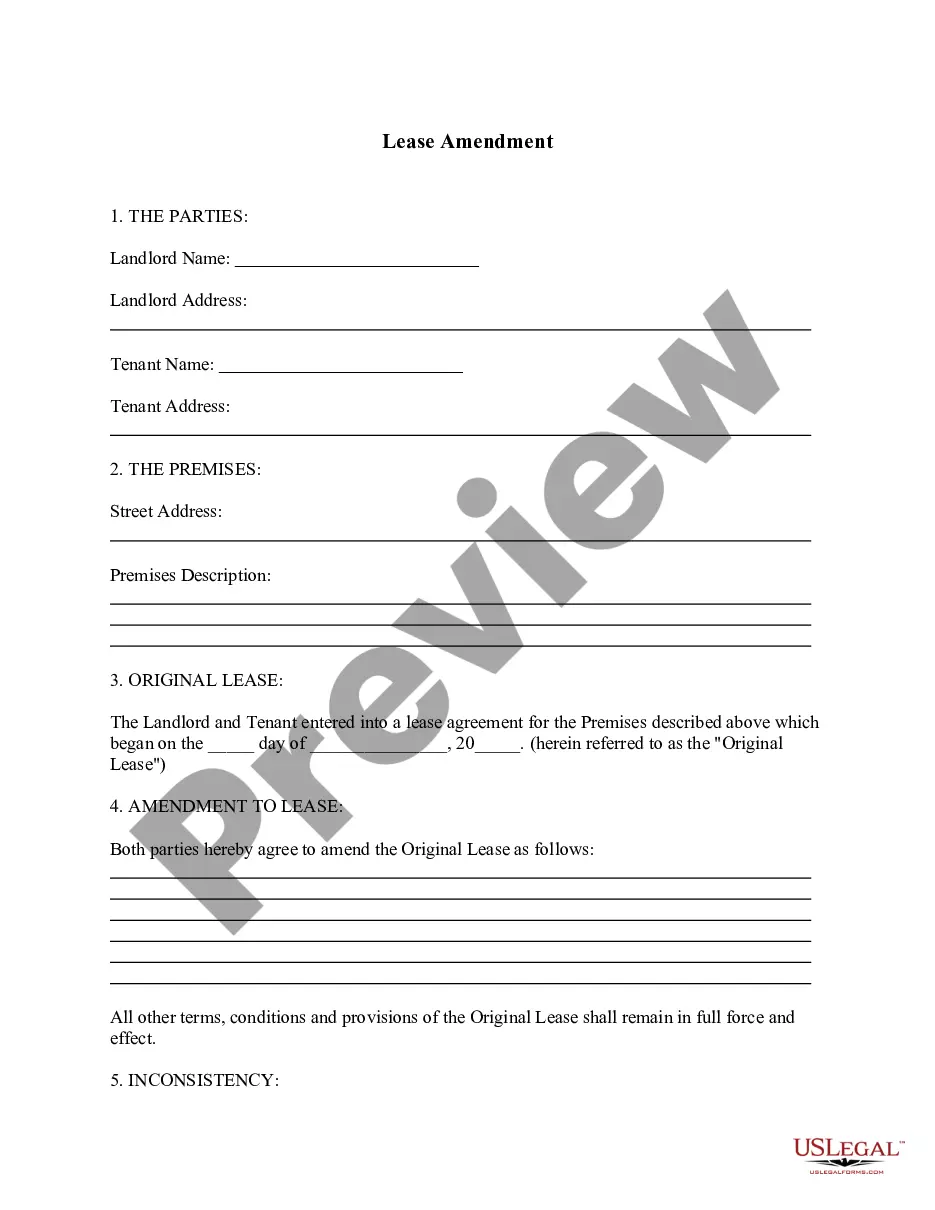
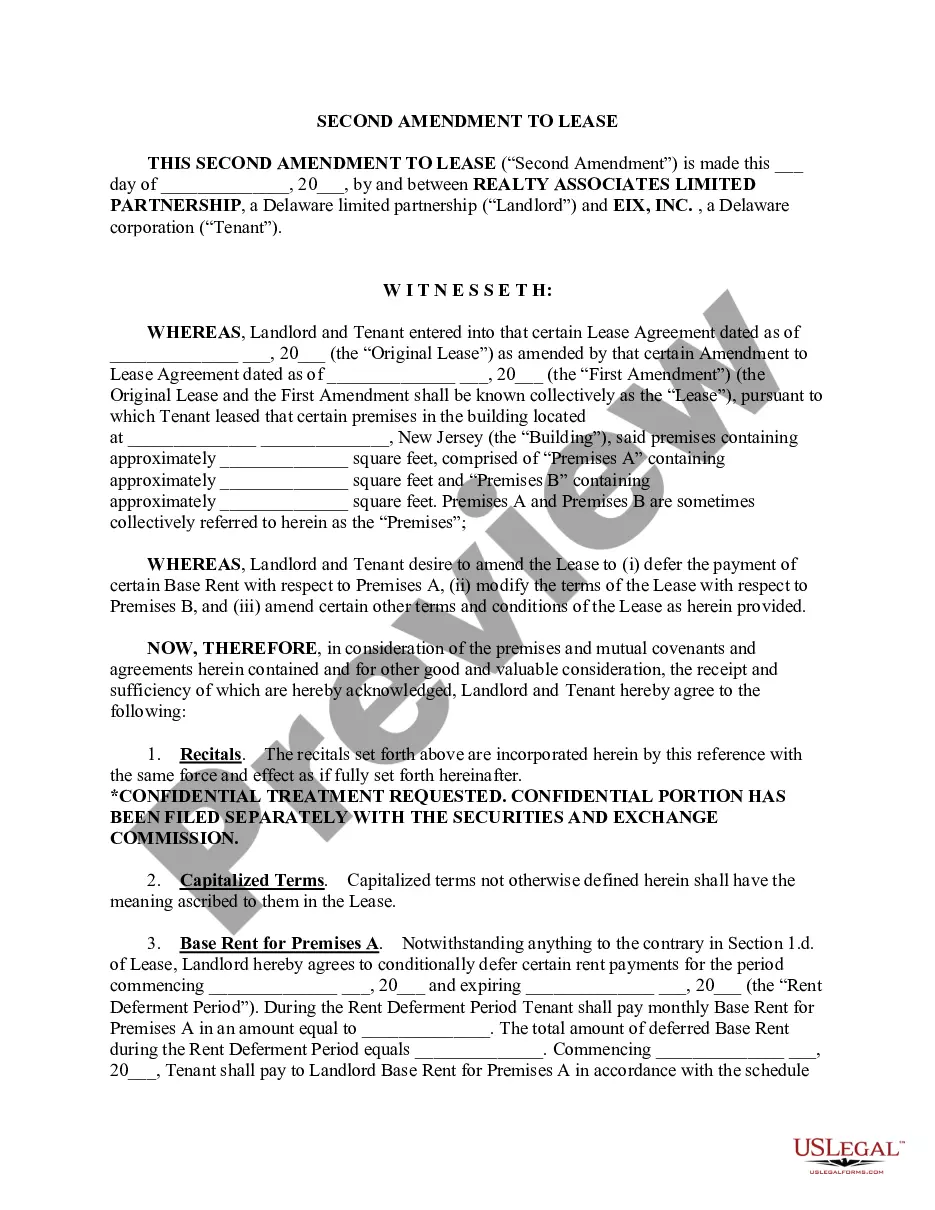
The Alaska Amendment of Lease Package provides essential legal forms needed to modify the terms of an existing lease. This package stands out by ensuring that landlords and tenants can agree on changes while maintaining legal compliance with Alaska state laws. It helps avoid potential disputes by formalizing amendments to lease agreements clearly and concisely.
Forms provided in this package
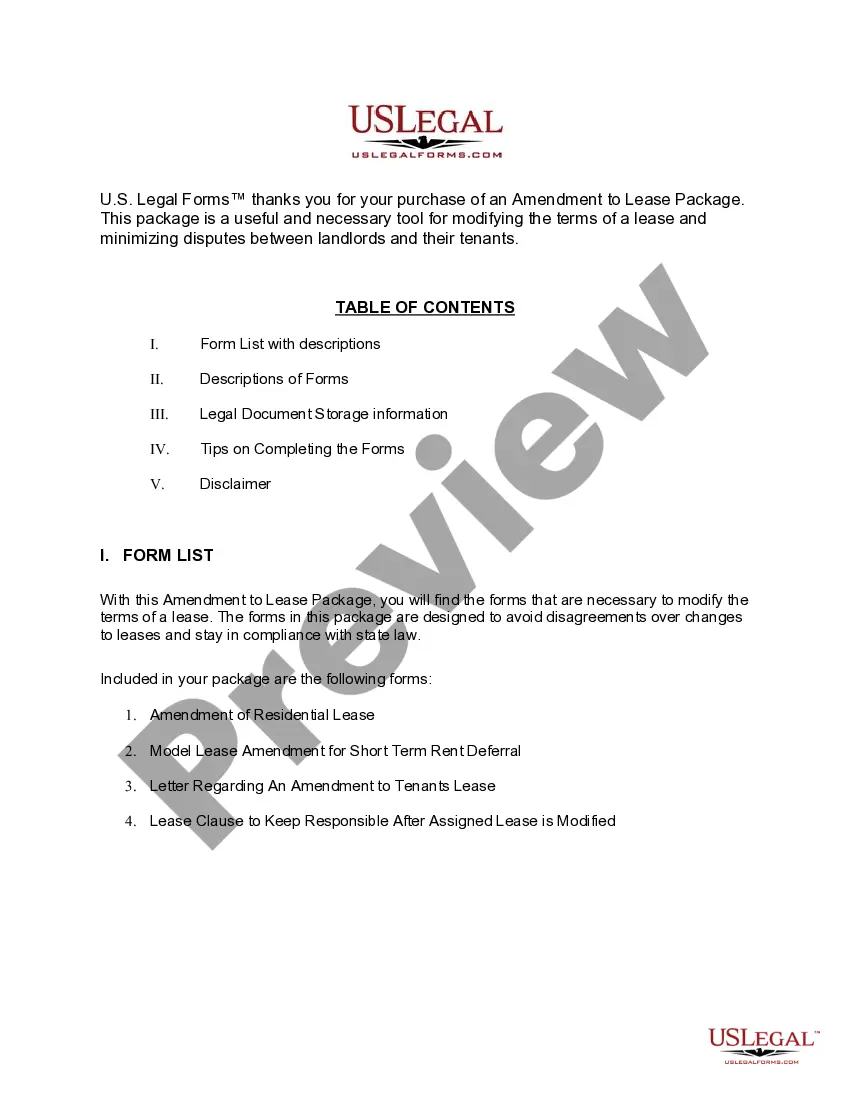
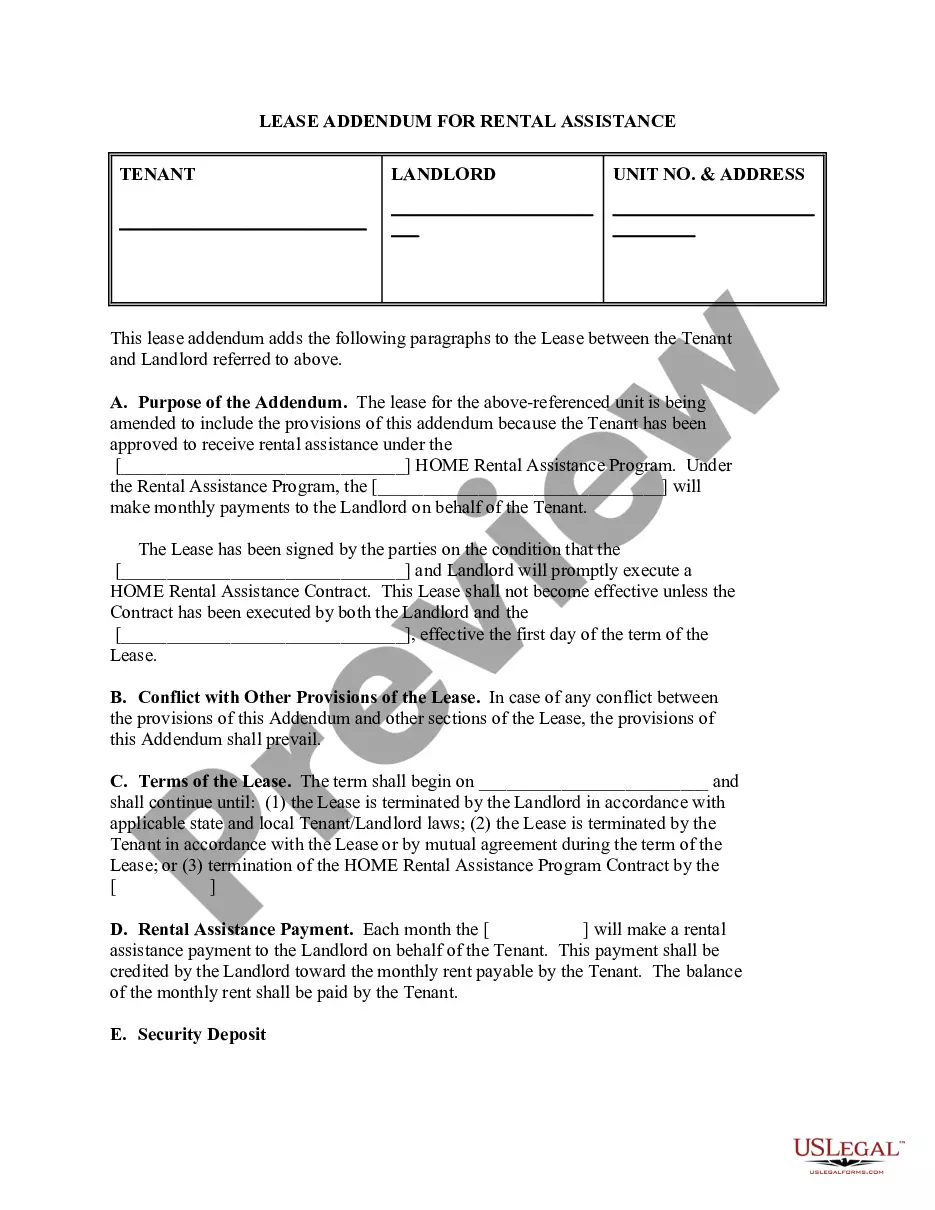
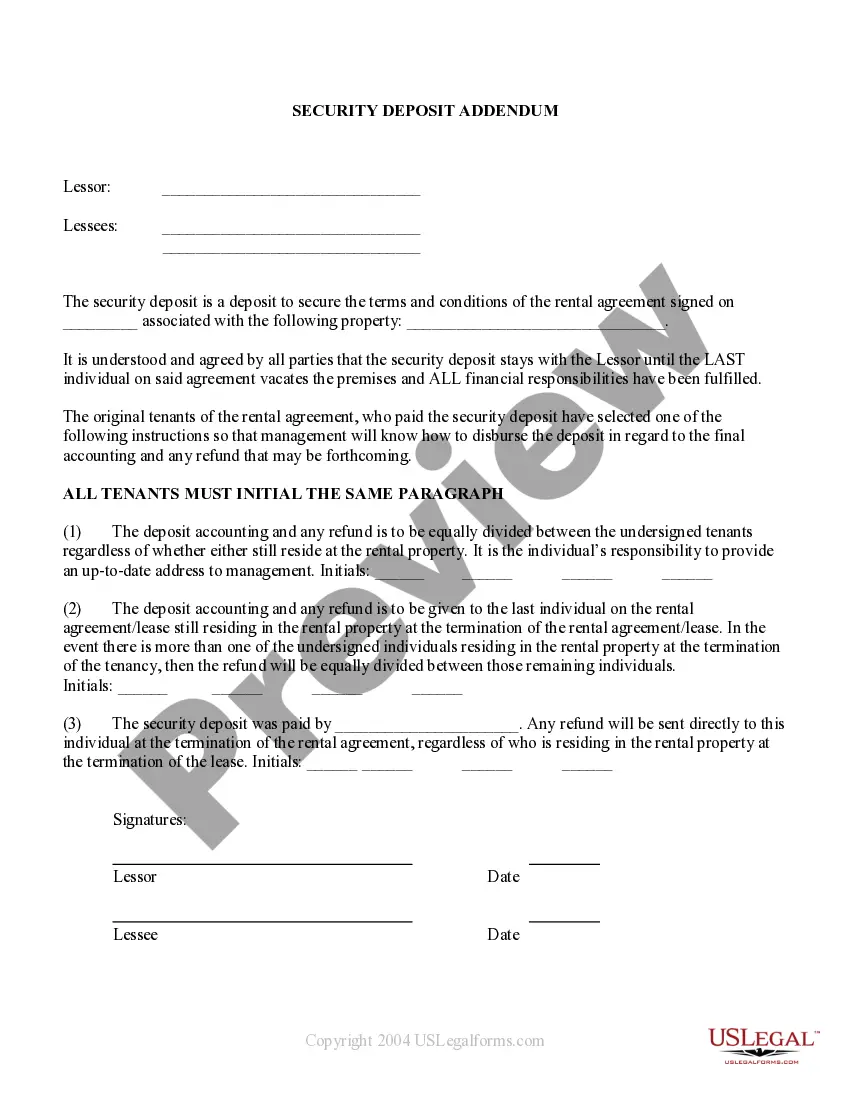
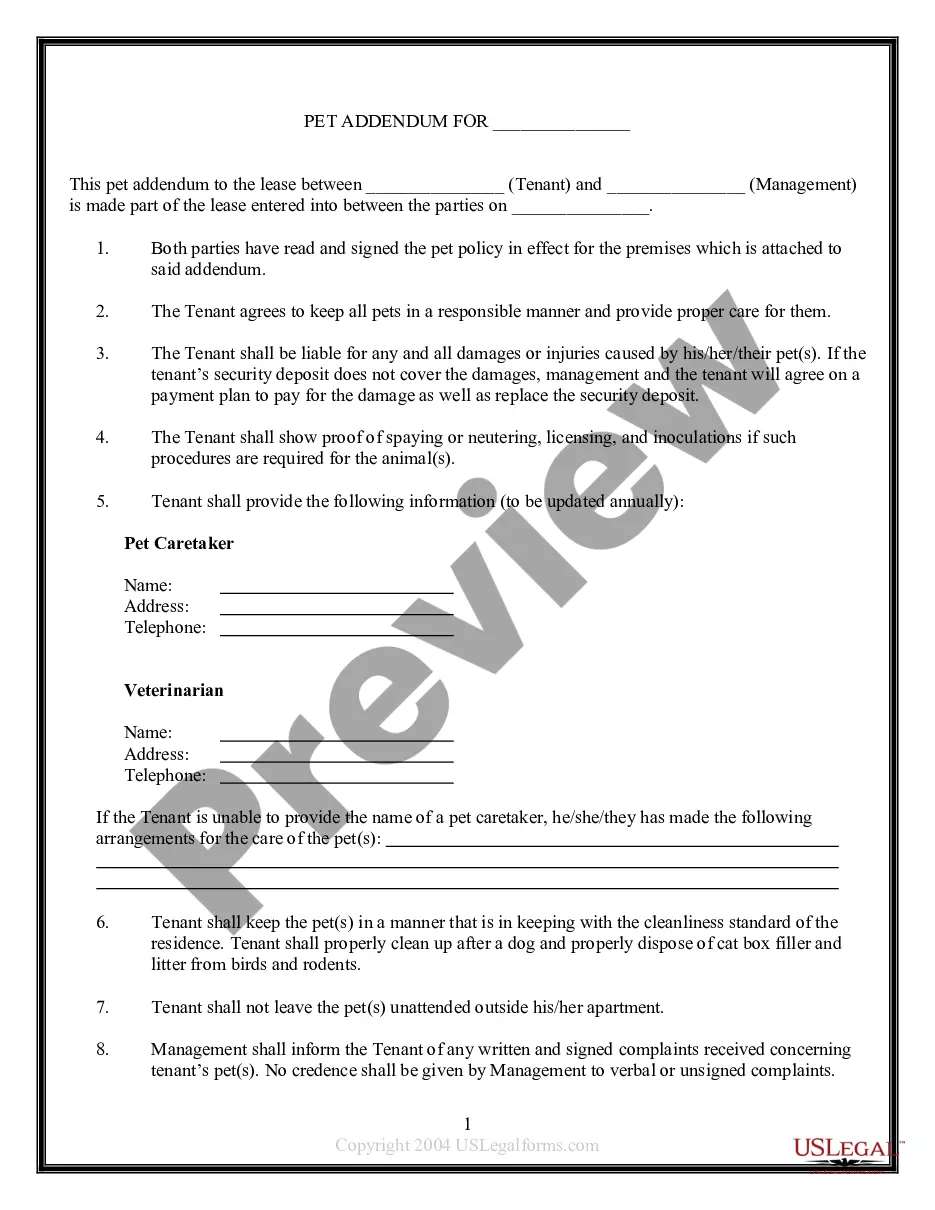
When to use this form package
This form package is useful in several situations, including when:
- A landlord and tenant agree to modify rental terms.
- There is a need to extend the lease duration with updated terms.
- Changes to rental rates or payment schedules are necessary.
- Additional tenants are being added to the lease.
- Any amendments related to the maintenance and repairs of the property are required.
Who can use this document
- Landlords in Alaska seeking to modify existing lease agreements.
- Tenants who want to formally agree to changes in their lease terms.
- Property management companies handling multiple leases.
- Legal professionals advising clients about lease modifications.
How to prepare this document
- Review the included forms to identify the applicable ones for your situation.
- Gather all relevant lease-related documents for reference.
- Fill in the necessary details, such as tenant names, addresses, and changes to existing terms.
- Ensure all parties affected by the amendments sign the forms.
- Keep copies of signed documents for your records.
Notarization requirements for forms in this package
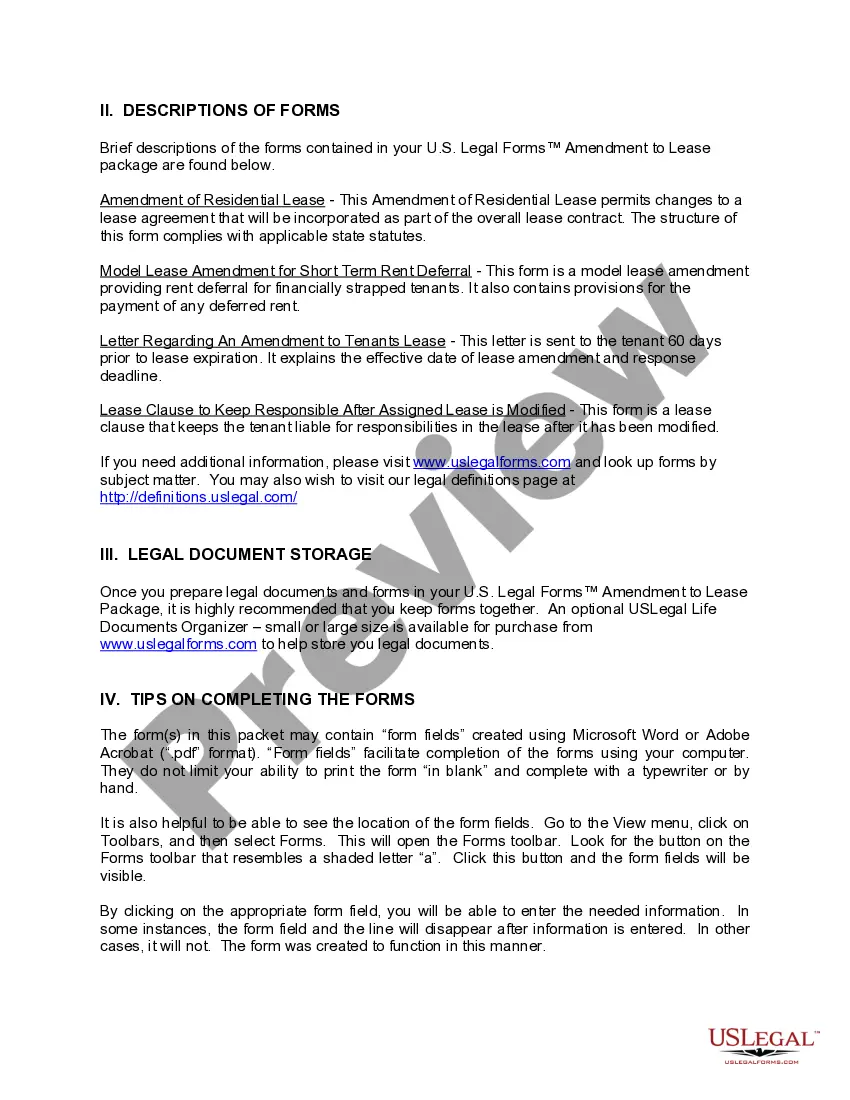
Forms in this package typically do not require notarization unless required by local law. However, it is always advisable to check the specific requirements of your lease modifications and ensure all documents are properly executed.
Get your form ready online
Our built-in tools help you complete, sign, share, and store your documents in one place.
Make edits, fill in missing information, and update formatting in US Legal Forms—just like you would in MS Word.
Download a copy, print it, send it by email, or mail it via USPS—whatever works best for your next step.
Sign and collect signatures with our SignNow integration. Send to multiple recipients, set reminders, and more. Go Premium to unlock E-Sign.
If this form requires notarization, complete it online through a secure video call—no need to meet a notary in person or wait for an appointment.
We protect your documents and personal data by following strict security and privacy standards.

Make edits, fill in missing information, and update formatting in US Legal Forms—just like you would in MS Word.

Download a copy, print it, send it by email, or mail it via USPS—whatever works best for your next step.

Sign and collect signatures with our SignNow integration. Send to multiple recipients, set reminders, and more. Go Premium to unlock E-Sign.

If this form requires notarization, complete it online through a secure video call—no need to meet a notary in person or wait for an appointment.

We protect your documents and personal data by following strict security and privacy standards.
Avoid these common issues
- Failing to complete all required fields in the forms.
- Not obtaining signatures from all relevant parties.
- Overlooking the need to date the amendments.
- Not reviewing how changes affect the original lease terms.
Why complete this package online
- Convenience of downloading forms from home without the need for physical visits.
- Editability allows users to modify forms easily to suit their needs.
- Access to attorney-drafted documents increases reliability and accuracy.
- Instant access to legal forms saves time and ensures compliance.
Legal use & context
- The forms are designed to be legally binding and enforceable in Alaska, provided they are completed correctly.
- Amendments must reflect the mutual agreement of both parties to be effective.
- Failure to comply with local laws or improper completion of forms may lead to disputes or unenforceability.
Quick recap
- This form package facilitates essential modifications to existing leases in Alaska.
- It provides clarity and legal compliance to avoid future disputes.
- Following proper completion steps ensures the amendment's enforceability.
Looking for another form?

Form popularity
FAQ
When creating your Lease Amendment, you'll want to include information such as: the names of the landlord(s) and the tenant(s); the effective date of the original lease; the date of the lease amendment; the address and nature of the leased property; whether the original lease was recorded with the county; which
A lease addendum allows a landlord or tenant to make changes to a current residential or commercial lease agreement.Once both parties agree and sign, the addendum should be added to the original lease.
In some circumstances, a tenant can break a fixed-term agreement early without penalty. A tenant can give 14 days' written notice to end an agreement early without penalty if: they have accepted an offer of social housing (e.g. from DCJ Housing)
The court holds an eviction hearing within 15 days after the case is filed in court and at least 2 days after the summons is served on the tenant. At this hearing, the judge decides who gets possession of the property.
When a landlord and tenant sign a lease agreement it forms a legally binding contract. The lease cannot be altered except through another written agreement signed by both parties unless the original lease specifically gives a party the power to change something on their own.
Changing the lease You can negotiate certain changes to the lease, sometimes known as 'varying the lease'. Speak to your landlord first. If you can't agree, you may be able to apply to a tribunal - contact Leasehold Advisory Service for advice.
Alaska state law limits how much a landlord can charge for a security deposit (two months' rent, unless the monthly rent exceeds $2,000), when it must be returned (within 14 days after a tenant moves if the tenant has given proper notice to end the tenancy or 30 days if the tenant has not), and sets other restrictions
Ideally, you should never try to renegotiate the rental amount after your lease is signed.Your tenant might want you to decrease the rent amount, but they are also proposing to increase the length of their lease by one additional year.
When there is no lease agreement (like in the case of weekly rentals), you can instead use the Alaska Notice to Vacate to inform the other party in advance that you wish to end the tenancy agreement and vacate the premises.