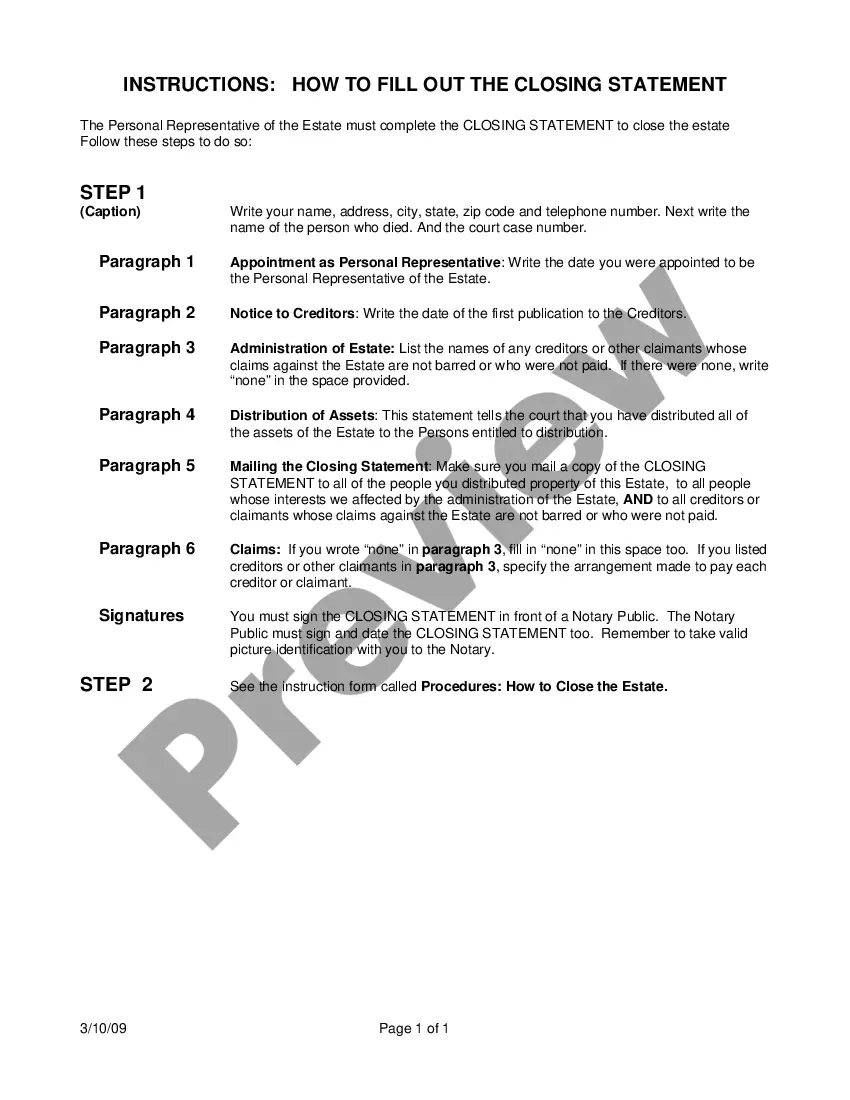
Alaska Special Warranty Deed
Overview of this form
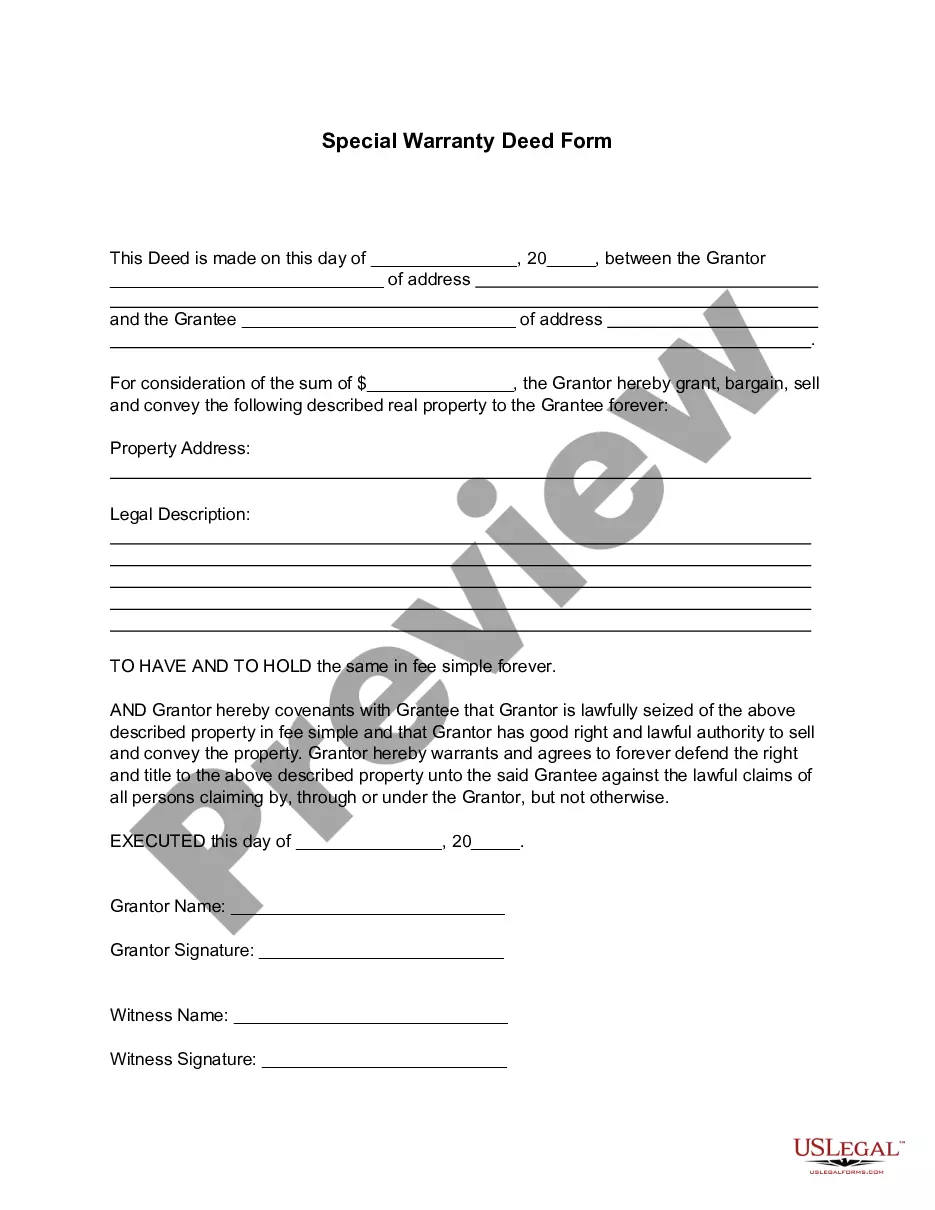
A special warranty deed is a legal document used in real estate transactions. It provides protection to the buyer by guaranteeing that the seller holds clear title to the property but only for the duration of their ownership. Unlike a general warranty deed, which guarantees title against any past claims, a special warranty deed limits this assurance to the seller's period of ownership, protecting the new owner from encumbrances that may have arisen only during that time.
Key parts of this document
- Grantor and Grantee: Names and addresses of the seller and buyer.
- Consideration: The amount paid for the property.
- Description of Property: Detailed description of the real estate being conveyed.
- Limitations of Warranty: Statement restricting the seller's warranty to their ownership period.
- Acceptance Acknowledgment: Confirmation of property inspection by the grantee.
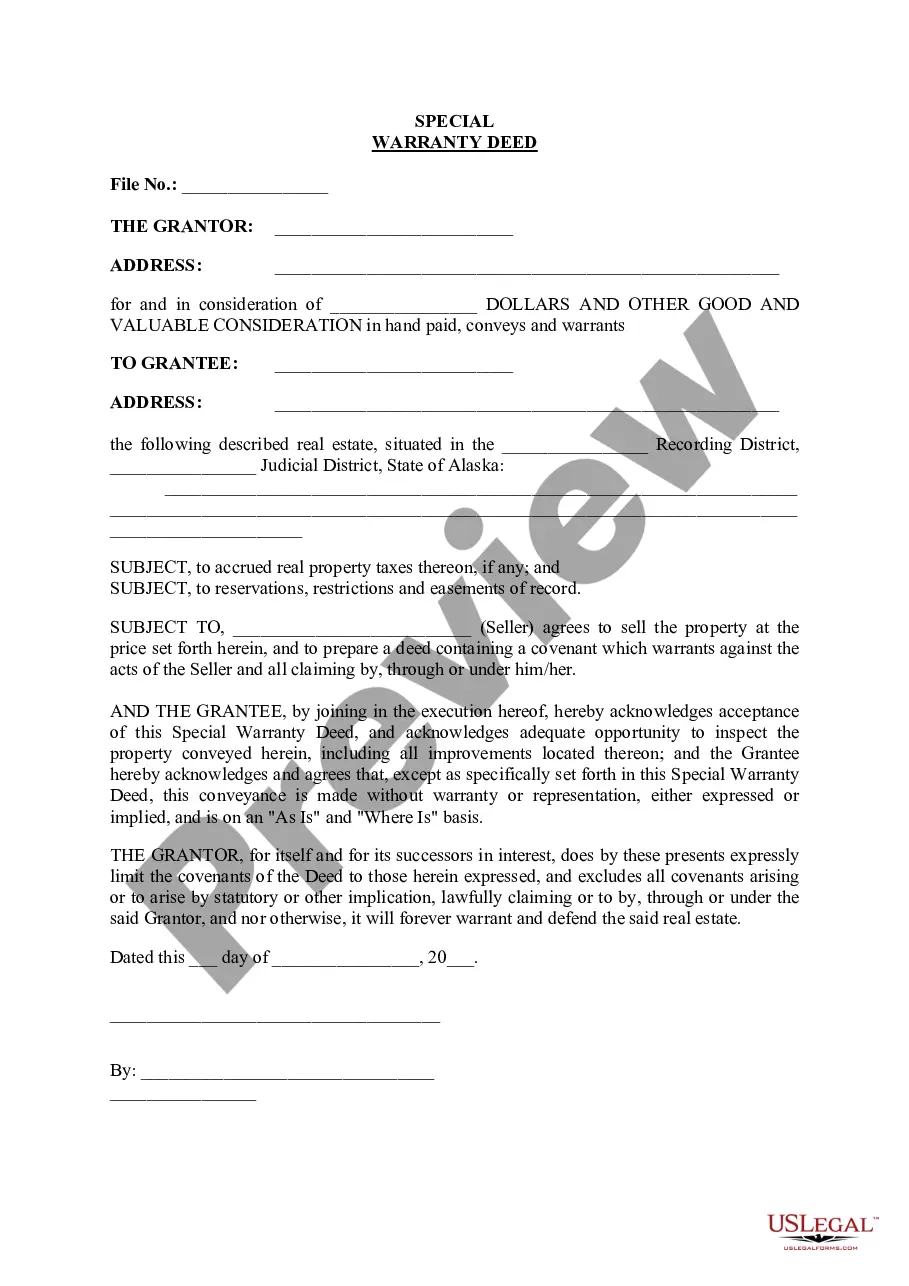
- Notary Public Signature: Required for legal validation.


When to use this form
This form should be used when a property owner (grantor) sells real estate to a buyer (grantee) and wants to limit their liability concerning the title. It is particularly useful in situations where the seller is unsure of the property's history prior to their ownership or when the buyer agrees to accept the property in its current state, including any issues that may arise from previous owners.
Who can use this document
- Property sellers seeking to limit their liability on prior ownership issues.
- Homebuyers interested in purchasing a property with limited warranty protections.
- Real estate agents facilitating transactions requiring a special warranty deed.
Steps to complete this form
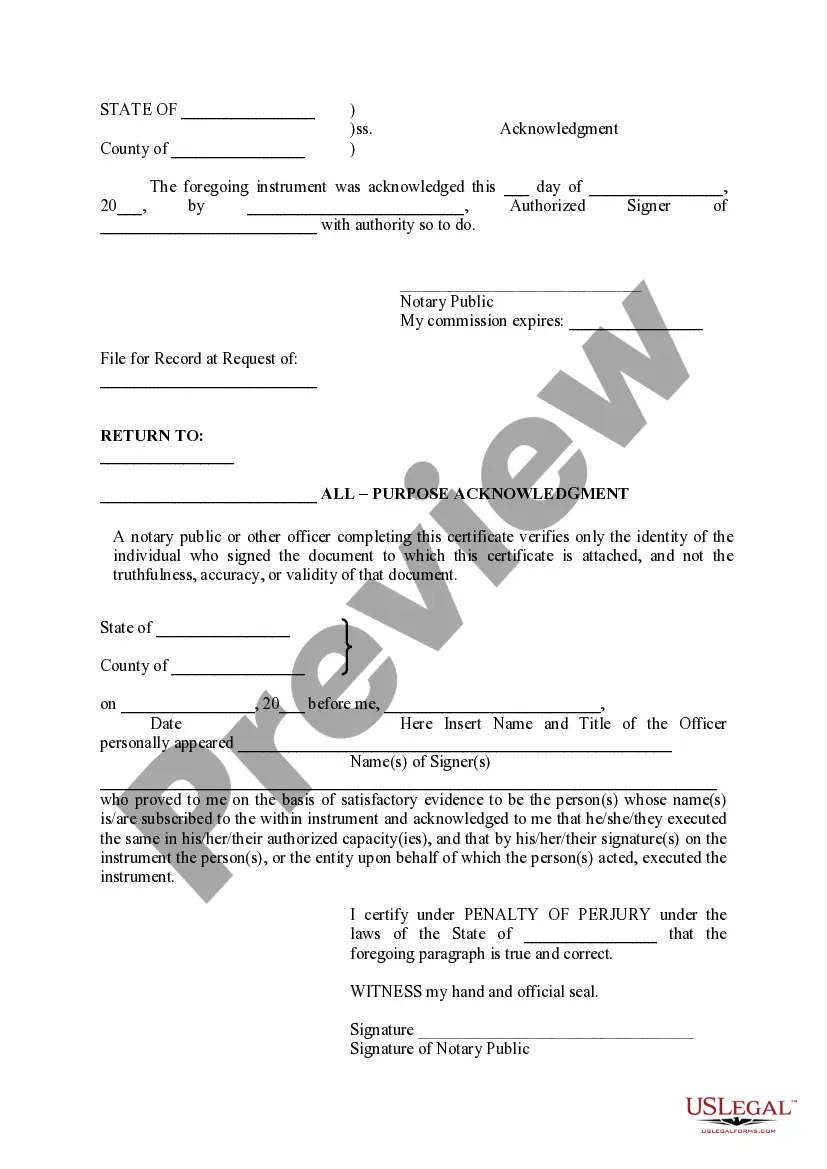
- Identify the parties involved: Enter the full names and addresses of the grantor and grantee.
- Specify the property: Provide a thorough description of the real estate including its location and any identifiers.
- Enter the consideration: State the agreed purchase price and any other valuable considerations.
- Sign and date the document: Ensure both parties sign the deed, and include the date of execution.
- Obtain notarization: Have a notary public witness the signatures to ensure legal validity.
Notarization requirements for this form
Yes, this form must be notarized to be legally valid. It is essential to have a notary public witness the signatures of both the grantor and grantee, ensuring the authenticity of the document. US Legal Forms offers integrated online notarization available 24/7 through secure video calls, allowing for convenient processing without the need to travel.
Get your form ready online
Our built-in tools help you complete, sign, share, and store your documents in one place.
Make edits, fill in missing information, and update formatting in US Legal Forms—just like you would in MS Word.
Download a copy, print it, send it by email, or mail it via USPS—whatever works best for your next step.
Sign and collect signatures with our SignNow integration. Send to multiple recipients, set reminders, and more. Go Premium to unlock E-Sign.
If this form requires notarization, complete it online through a secure video call—no need to meet a notary in person or wait for an appointment.
We protect your documents and personal data by following strict security and privacy standards.

Make edits, fill in missing information, and update formatting in US Legal Forms—just like you would in MS Word.

Download a copy, print it, send it by email, or mail it via USPS—whatever works best for your next step.

Sign and collect signatures with our SignNow integration. Send to multiple recipients, set reminders, and more. Go Premium to unlock E-Sign.

If this form requires notarization, complete it online through a secure video call—no need to meet a notary in person or wait for an appointment.

We protect your documents and personal data by following strict security and privacy standards.
Typical mistakes to avoid
- Failing to provide a comprehensive property description.
- Not including the full legal names of the grantor and grantee.
- Omitting the purchase price or consideration details.
- Forgetting to notarize the document before filing.
- Assuming the document is valid without verifying state-specific laws and requirements.
Advantages of online completion
- Convenient access to legal forms from anywhere at any time.
- Editable templates that can be customized to your needs.
- Reliability of forms drafted by licensed attorneys.
- Quick download for immediate use, reducing the time involved in real estate transactions.
Legal use & context
- The special warranty deed is enforceable in real estate transactions in most U.S. jurisdictions.
- This deed protects the buyer by limiting liability to the seller's period of ownership.
- Buyers should be aware that any encumbrances prior to the seller's ownership may remain unaddressed.
Summary of main points
- A special warranty deed limits the seller's liability to their ownership duration.
- This form protects buyers from issues that arose during the seller's tenure.
- Proper completion and notarization of the form are crucial for legal validity.
Looking for another form?
Form popularity
FAQ
Typically, the lender will provide you with a copy of the deed of trust after the closing. The original warranty deeds are often mailed to the grantee after they are recorded. These are your original copies and should be kept in a safe place, such as a fireproof lockbox or a safe deposit box at a financial institution.
A statutory warranty deed is different from a warranty deed because it is a shorter form made available through your state's statutes and it may not outright list the promise that the title is guaranteed to be clear. Instead, because it is a statutory form, this guarantee is implied and is still legally enforceable.
Special warranty deeds are most commonly used with commercial property transactions. Single-family and other residential property transactions will usually use a general warranty deed. Many mortgage lenders insist upon the use of the general warranty deed.
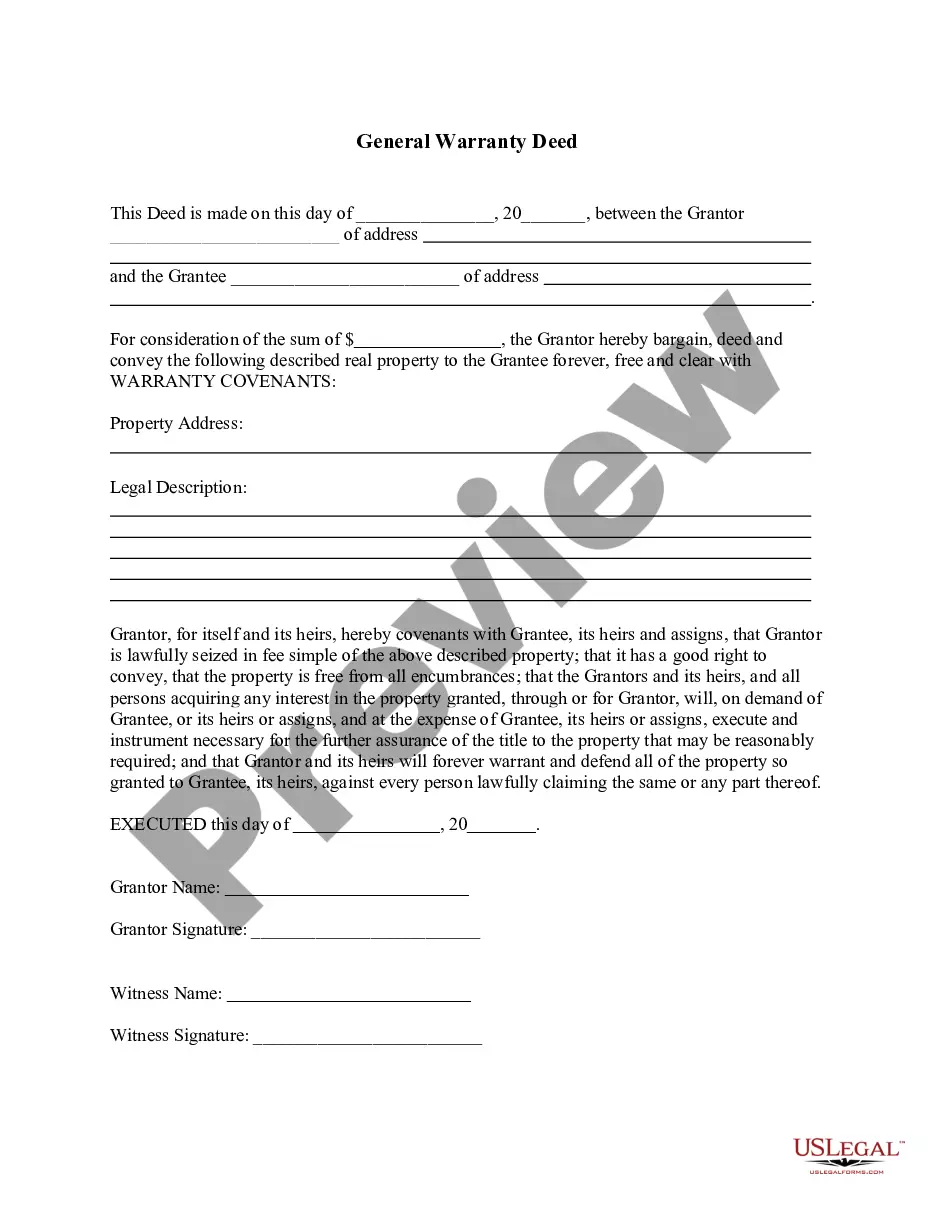
A general warranty deed covers the property's entire history.With a special warranty deed, the guarantee covers only the period when the seller held title to the property. Special warranty deeds do not protect against any mistakes in a free-and-clear title that may exist before the seller's ownership.
A warranty deed guarantees that: The grantor is the rightful owner of the property and has the legal right to transfer the title.The title would withstand third-party claims to ownership of the property. The grantor will do anything to ensure the grantee's title to the property.
Unlike a warranty deed or special warranty deed, a quitclaim deed makes no assurances whatsoever about the property.For example, in a divorce situation where one spouse deeds the house to the other spouse. Quitclaim deeds are commonly used to transfer real property to an LLC or a living trust.
A special warranty deed is common when a house has been foreclosed on by a bank because the previous owner did not pay their mortgage.The special warranty deed that the bank provides to the new buyer provides no protection for the period of time before the bank took ownership of the property.
A warranty deed, also known as a general warranty deed, is a legal real estate document between the seller (grantor) and the buyer (grantee). The deed protects the buyer by pledging that the seller holds clear title to the property and there are no encumbrances, outstanding liens, or mortgages against it.
A special warranty deed to real estate offers protection to the buyer through the seller's guarantee that the title has been free and clear of encumbrances during their ownership of the property. It does not guarantee clear title beyond their ownership.