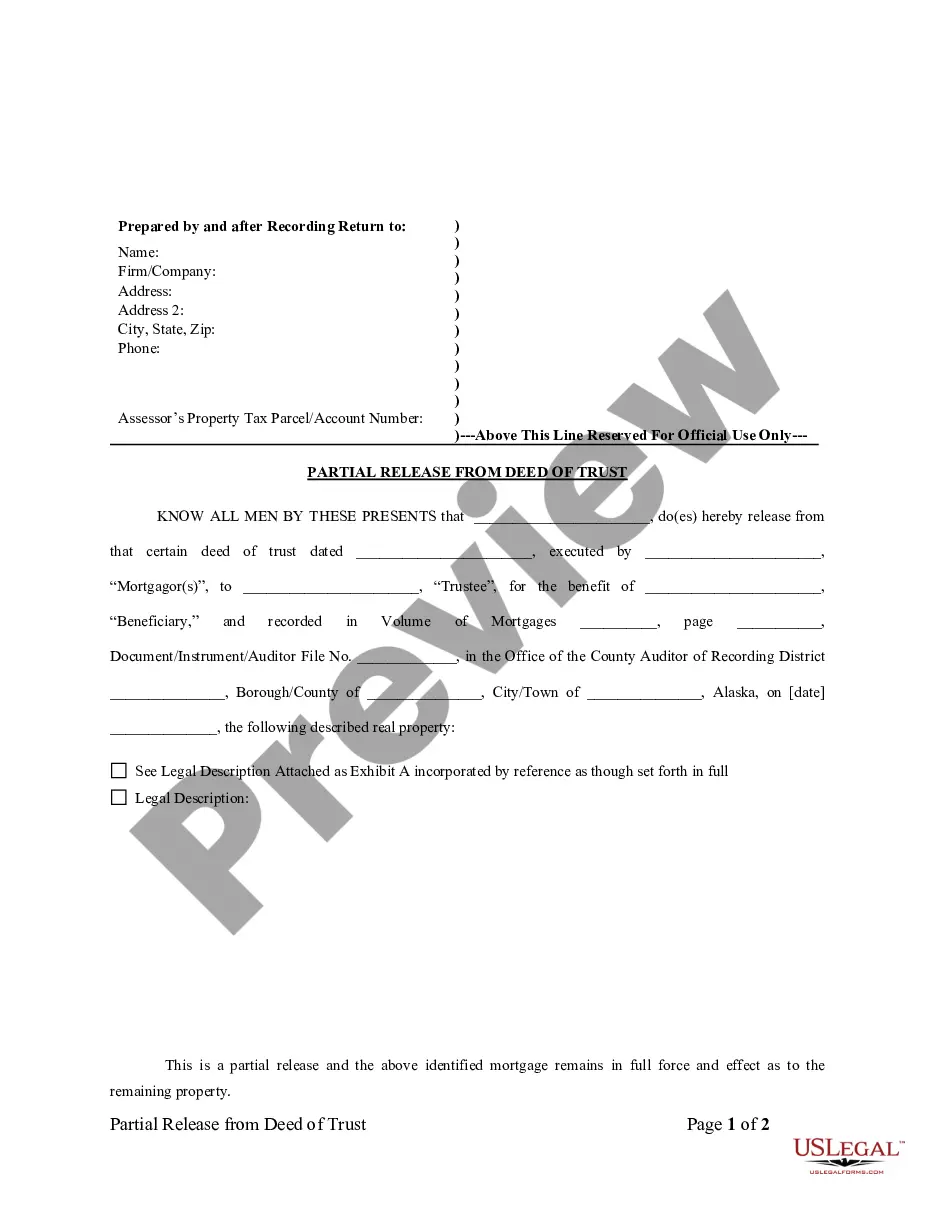
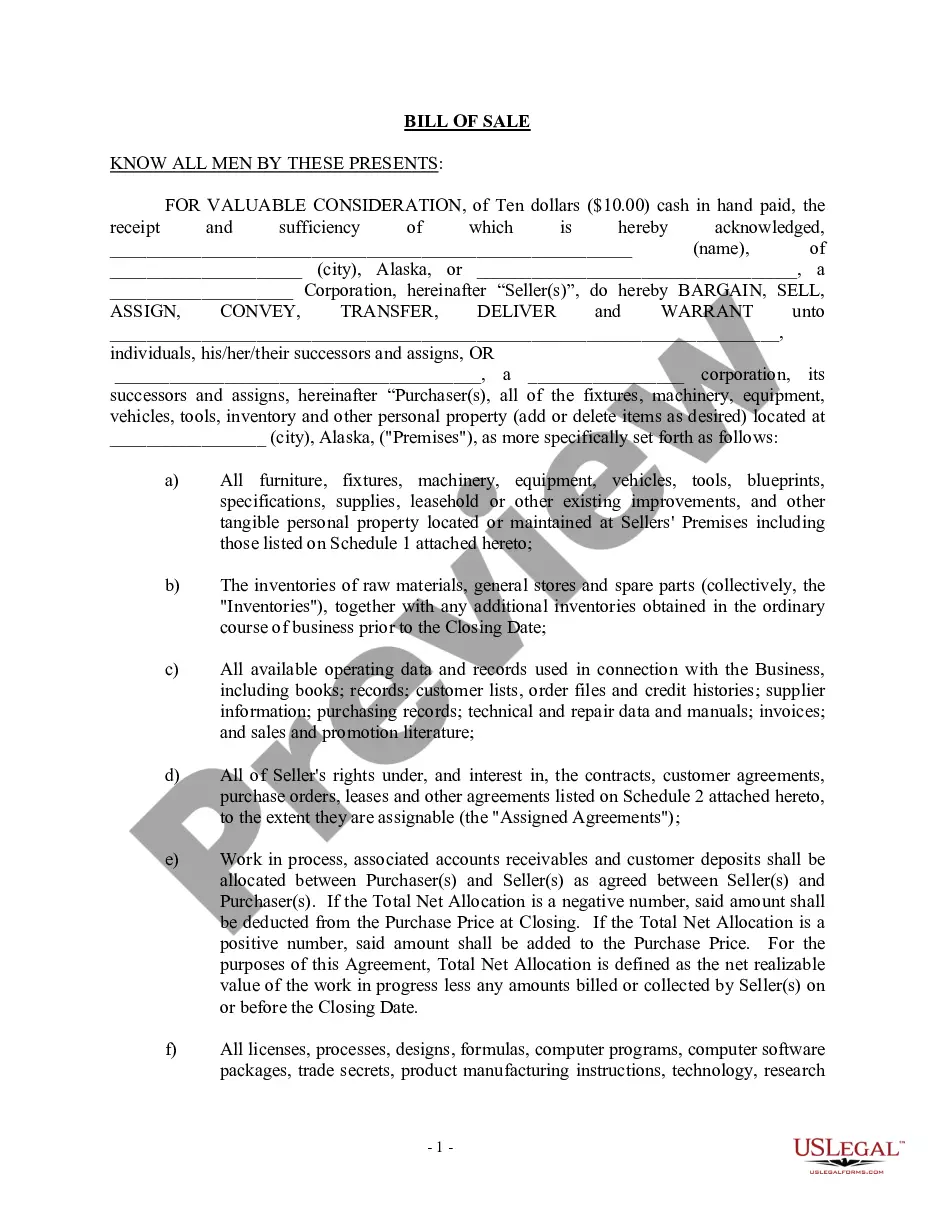
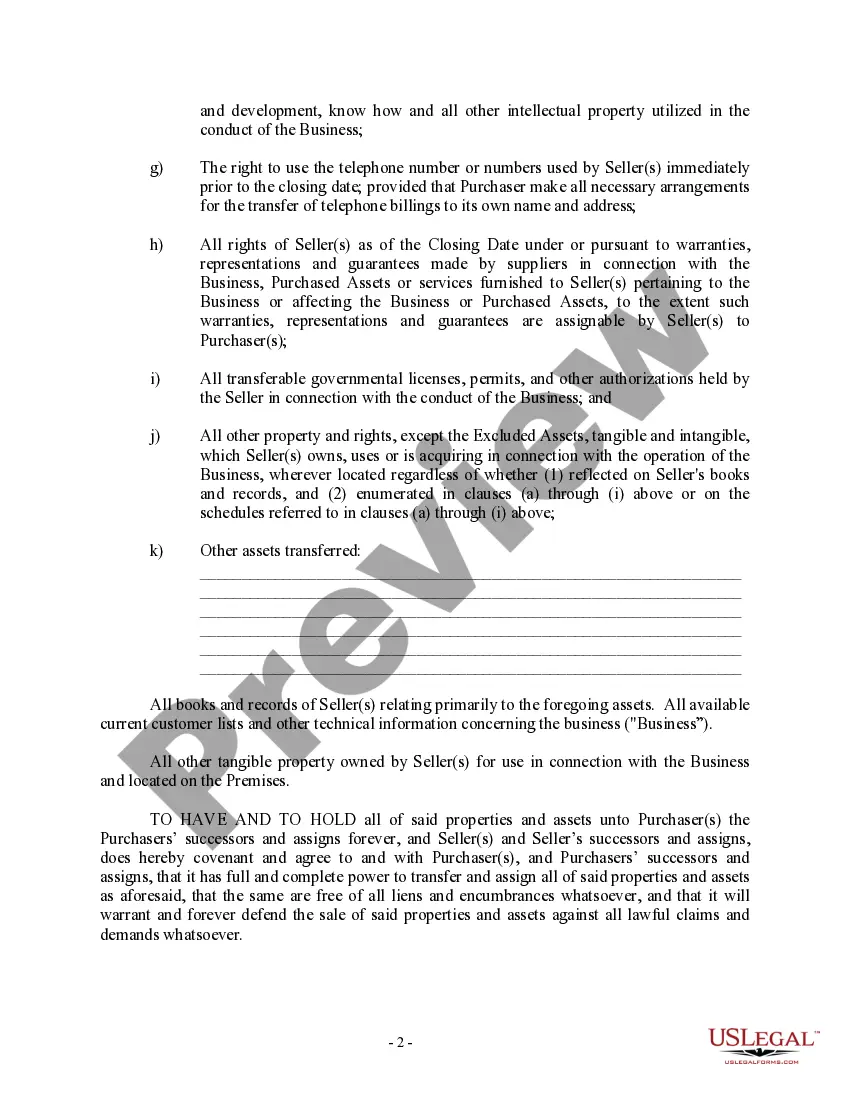
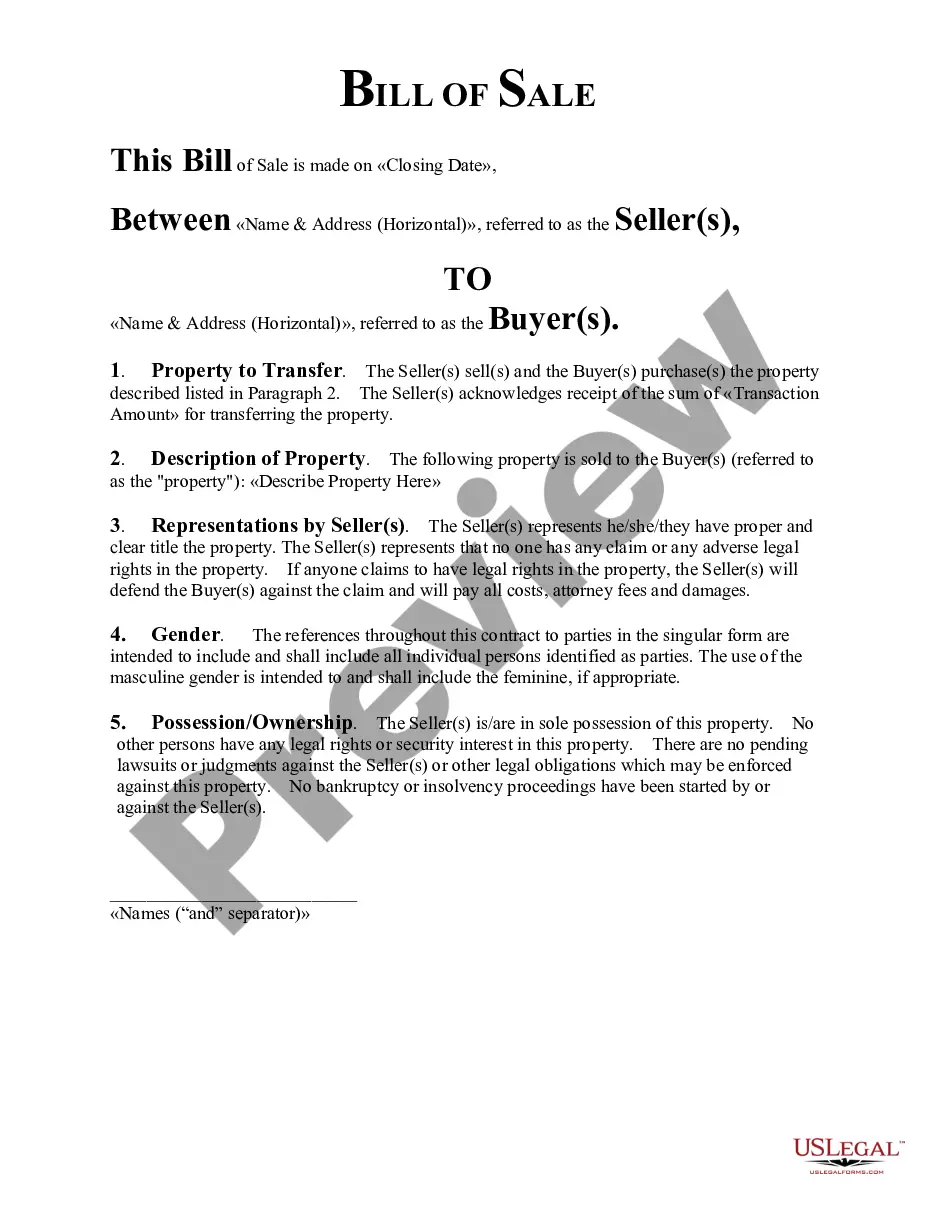
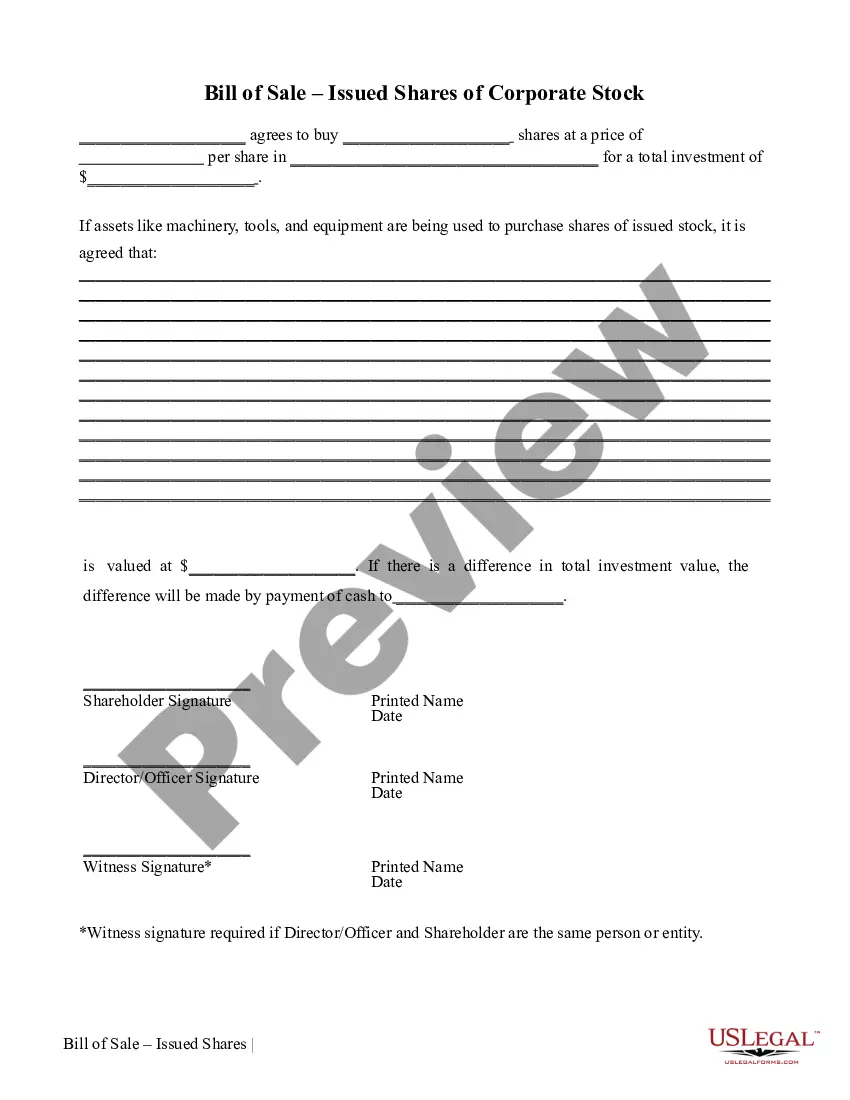
Bill of Sale in Connection with Sale of Business - Individual or Corporate Seller or Buyer. This bill of sale may include anything that is intangible but considered part of the business. These may be all licenses, processes, designs, formulas, computer programs, computer software packages, trade secrets, product manufacturing instructions etc.
Alaska Bill of Sale in Connection with Sale of Business by Individual or Corporate Seller
Instant download
Description
Free preview
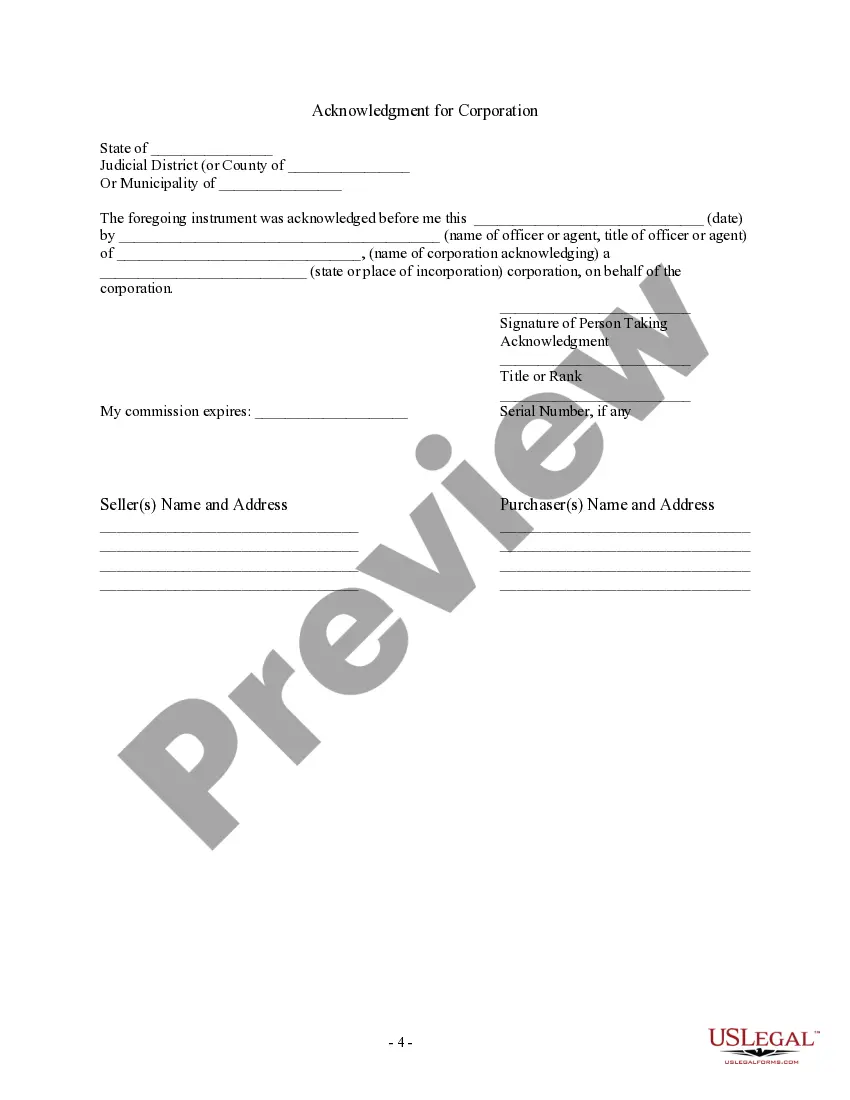

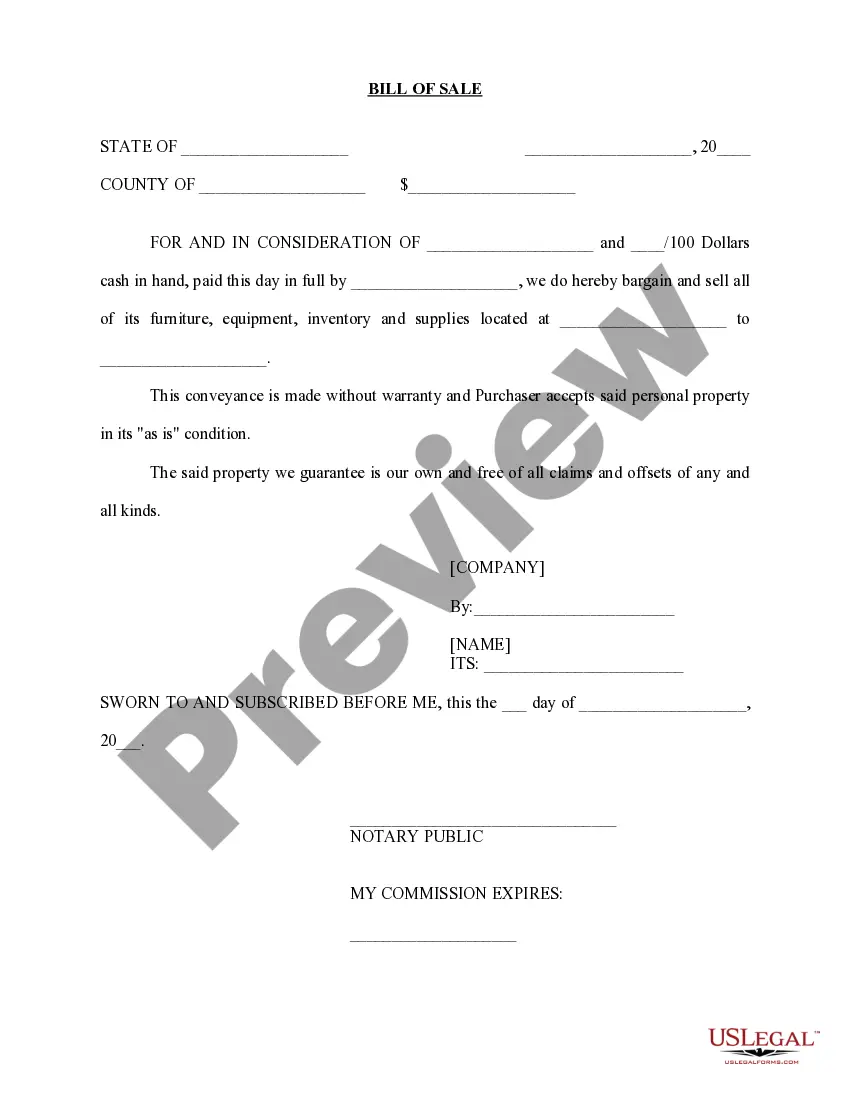
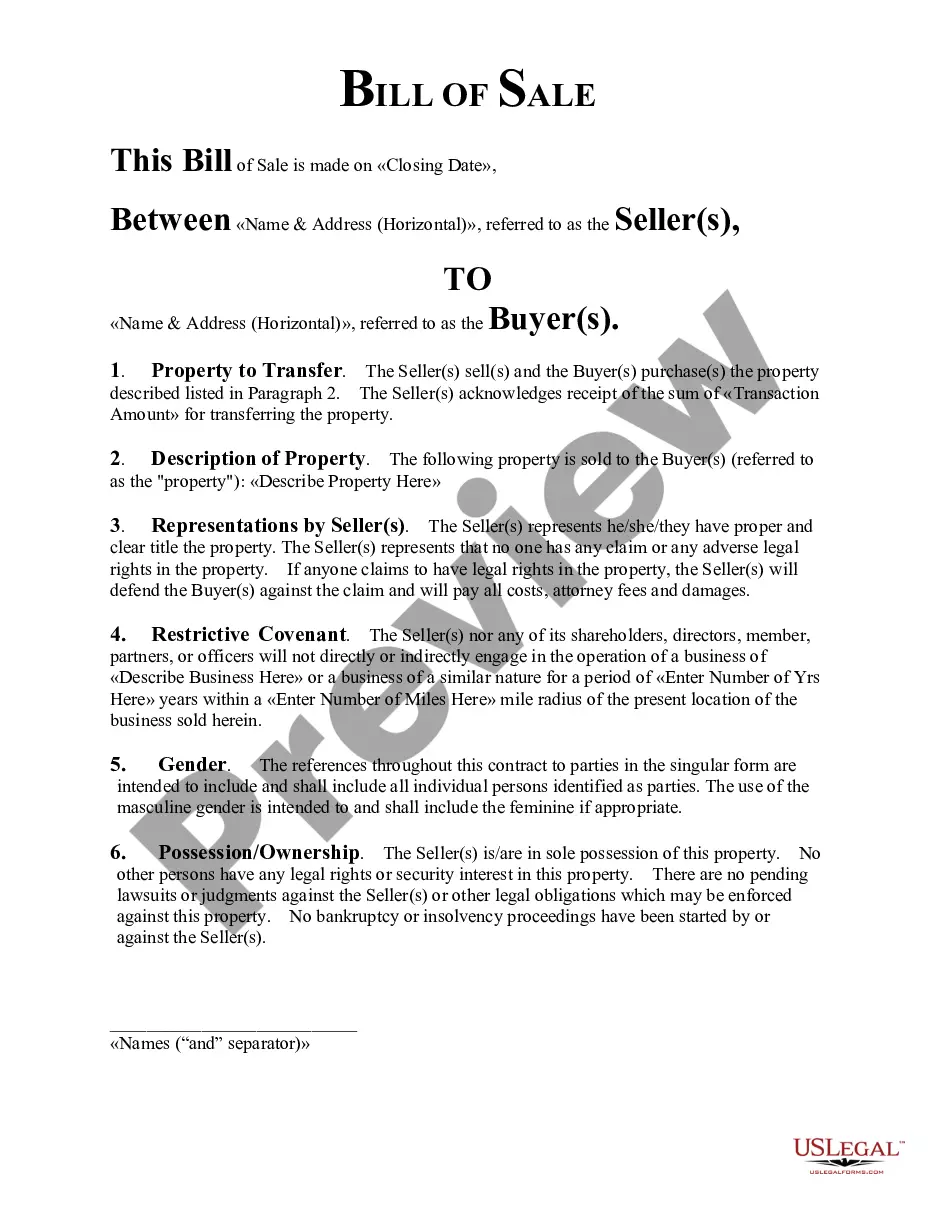




How to fill out Alaska Bill Of Sale In Connection With Sale Of Business By Individual Or Corporate Seller?
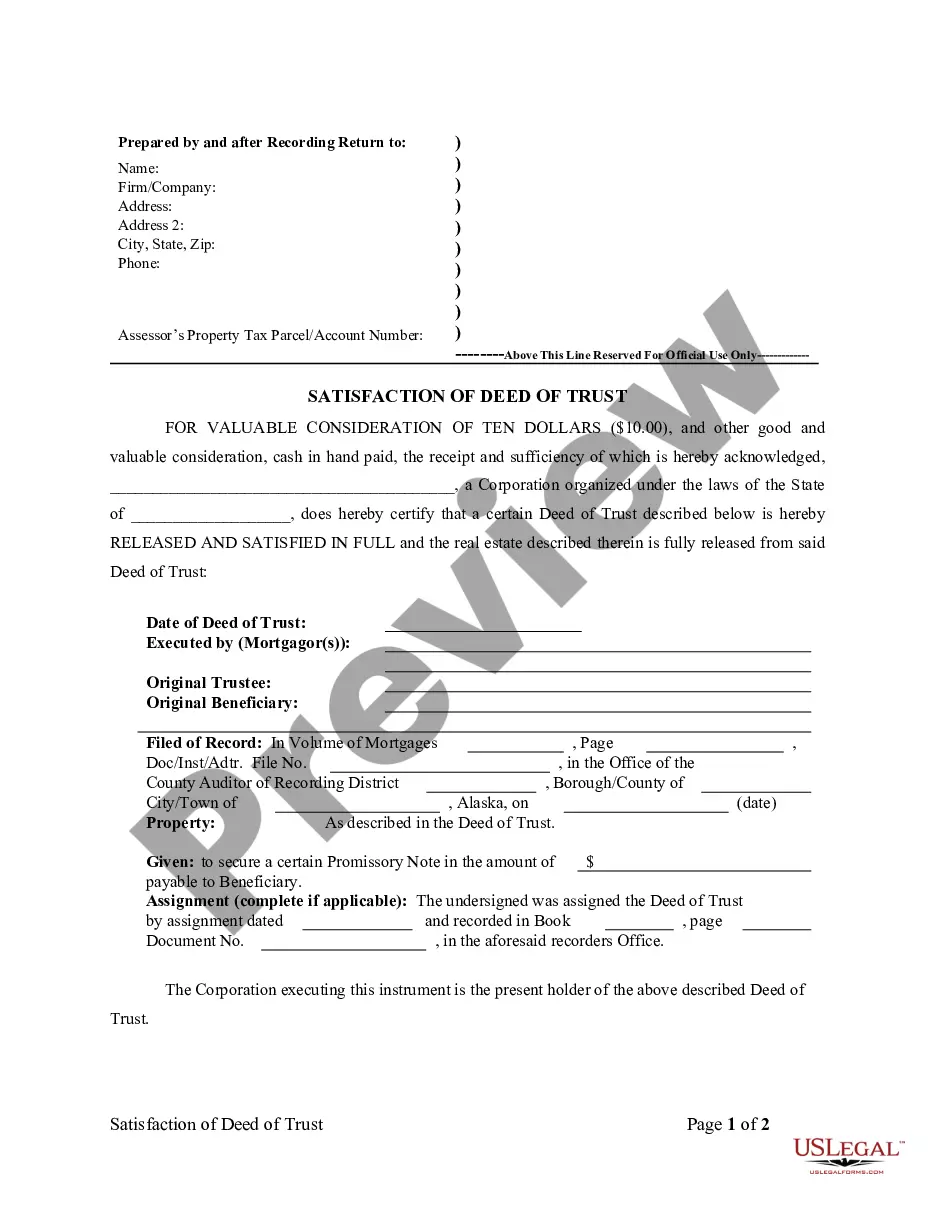
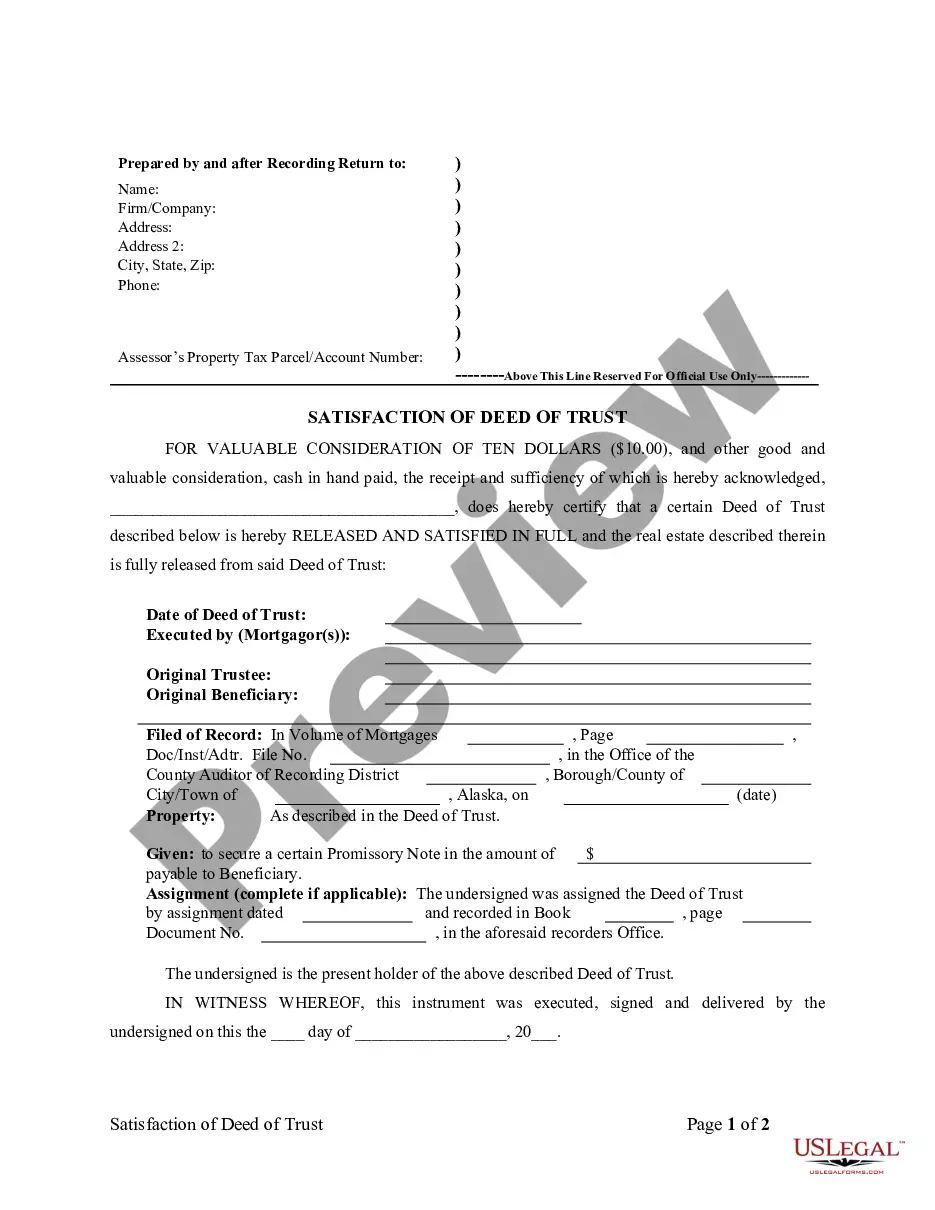
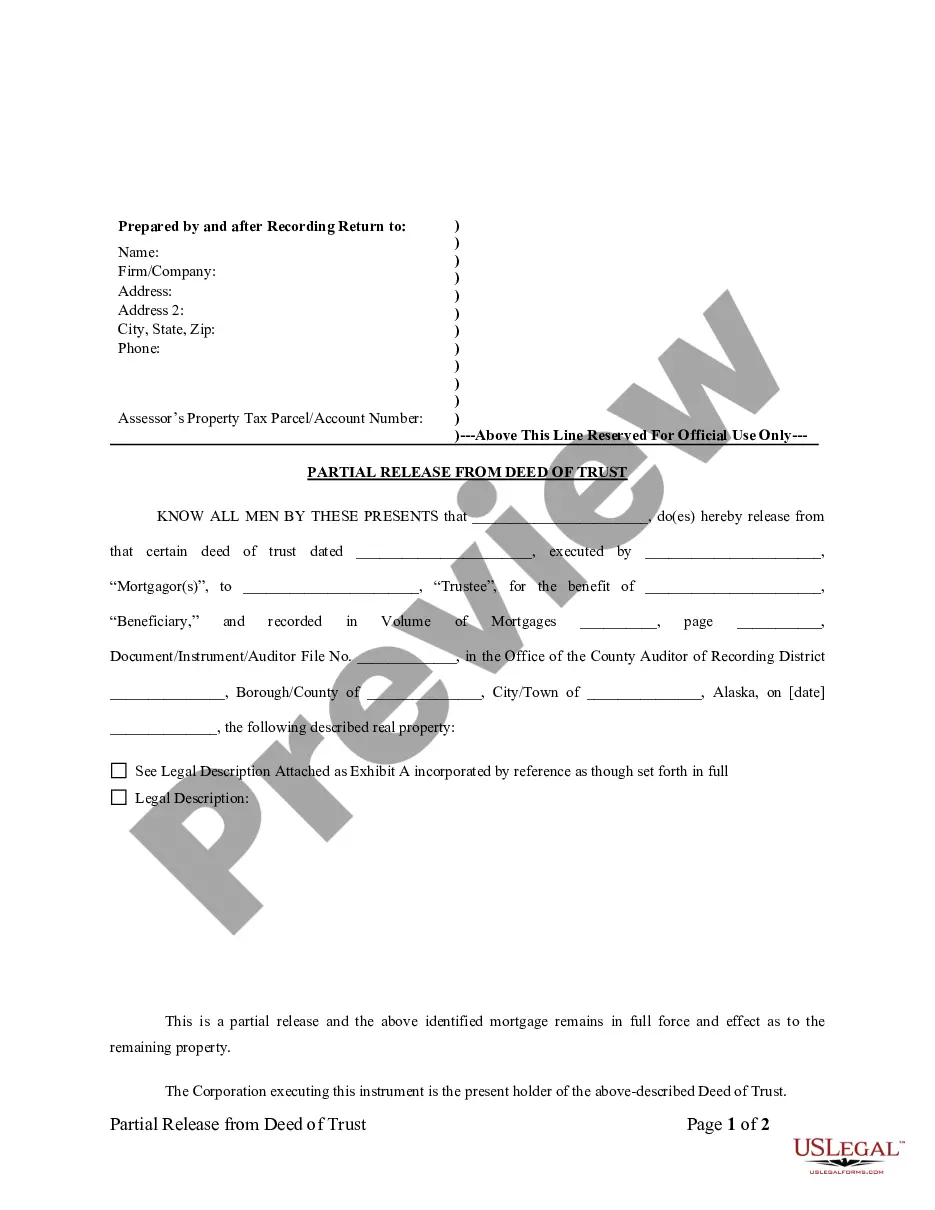
Utilizing the Alaska Bill of Sale related to the sale of a business by either an individual or corporate seller templates prepared by skilled attorneys helps you avoid complications while finalizing paperwork.
Simply download the template from our site, complete it, and have legal advice confirm it.
This approach will conserve you significantly more time and energy than seeking out a lawyer to draft a document from scratch to meet your requirements.
Utilize the Preview option and examine the description (if available) to determine if this specific template is necessary for you; if so, click Buy Now.
- If you have already subscribed to US Legal Forms, simply Log In to your account and return to the form webpage.
- Locate the Download button adjacent to the templates you are reviewing.
- After downloading a document, you can find all your saved templates in the My documents section.
- If you lack a subscription, that’s not a major issue.
- Follow the step-by-step instructions below to create an account online, obtain, and complete your Alaska Bill of Sale related to the sale of a business by either an individual or corporate seller template.
- Ensure to verify that you are downloading the correct state-specific form.
Form popularity
FAQ
Both the buyer and seller should receive copies of the bill of sale form. It's important for the buyer to keep the bill of sale with the title of the vehicle for registration and licensing purposes, if necessary. However, all parties should keep them for their own personal records.
In simple terms, a bill of sale agreement is nothing more than a contract for the purchase of a vehicle between a buyer and a seller.In most cases, the contract is legally binding between buyer and seller as long as the bill of sale follows guidelines required in the state where the sale or transfer takes place.
Yes, an Alaska bill of sale is required to register a motor vehicle.If you're buying the vehicle from a private party, you will also need a lien release, an odometer disclosure statement, and proof of previous registration.
Is a bill of sale required in California? While a bill of sale is not a legal requirement in California, it's a good idea to have one if you sell or purchase a vehicle. There is no specific form required, but the California Department of Motor Vehicles (DMV) has a bill of sale form.
You should not sign anything before you get your money. If the buyer says the buyer would be back later with your money and you sign the title over to the buyer, you likely will never see your money...
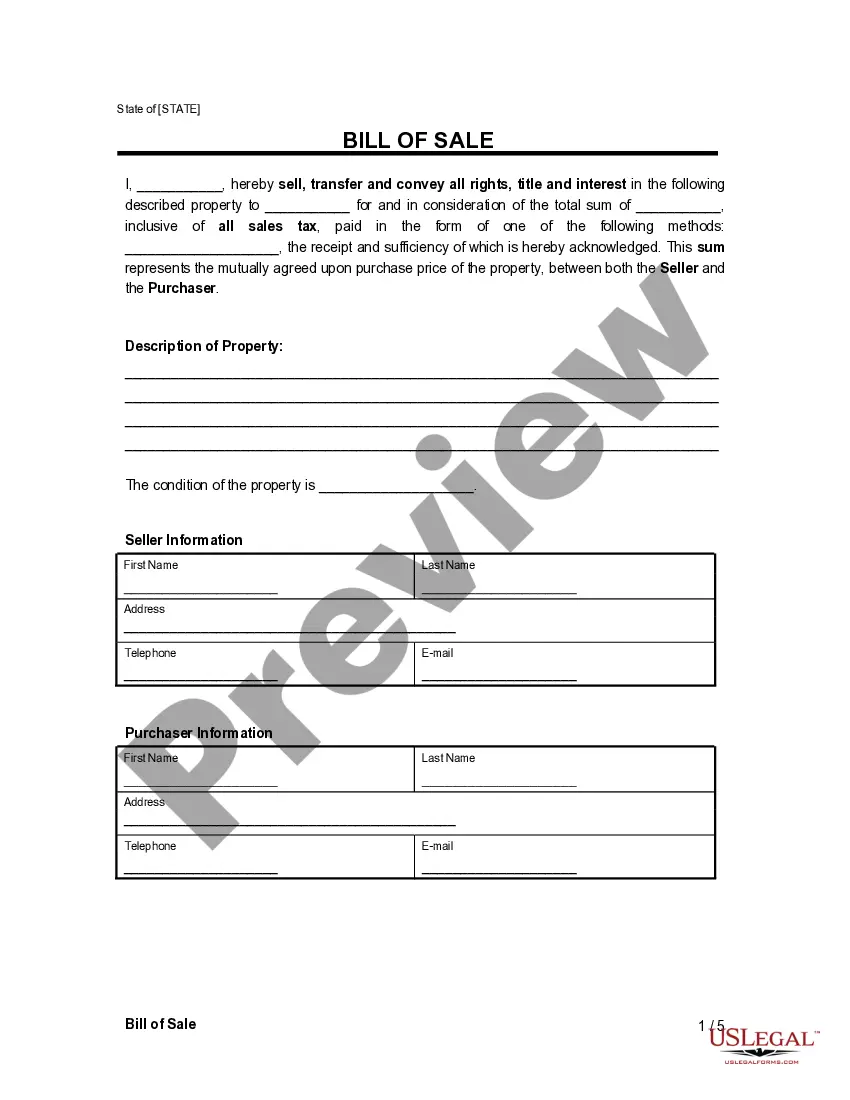
A bill of sale is a legal document that records the transfer of ownership of an asset to a second party in exchange for money.It protects both the buyer and the seller, should disagreements arise in the future.
The bill of sale, as a rule, is drafted by the seller and includes the details of the transaction. It protects both the buyer and the seller, should disagreements arise in the future.
For example, many states require that a vehicle bill of sale include an odometer reading; some states require it to be notarized. Both parties can sign a bill of sale but, in many instances, only the seller needs to sign it. Things can get complicated when a bill of sale is provided as security for a loan.
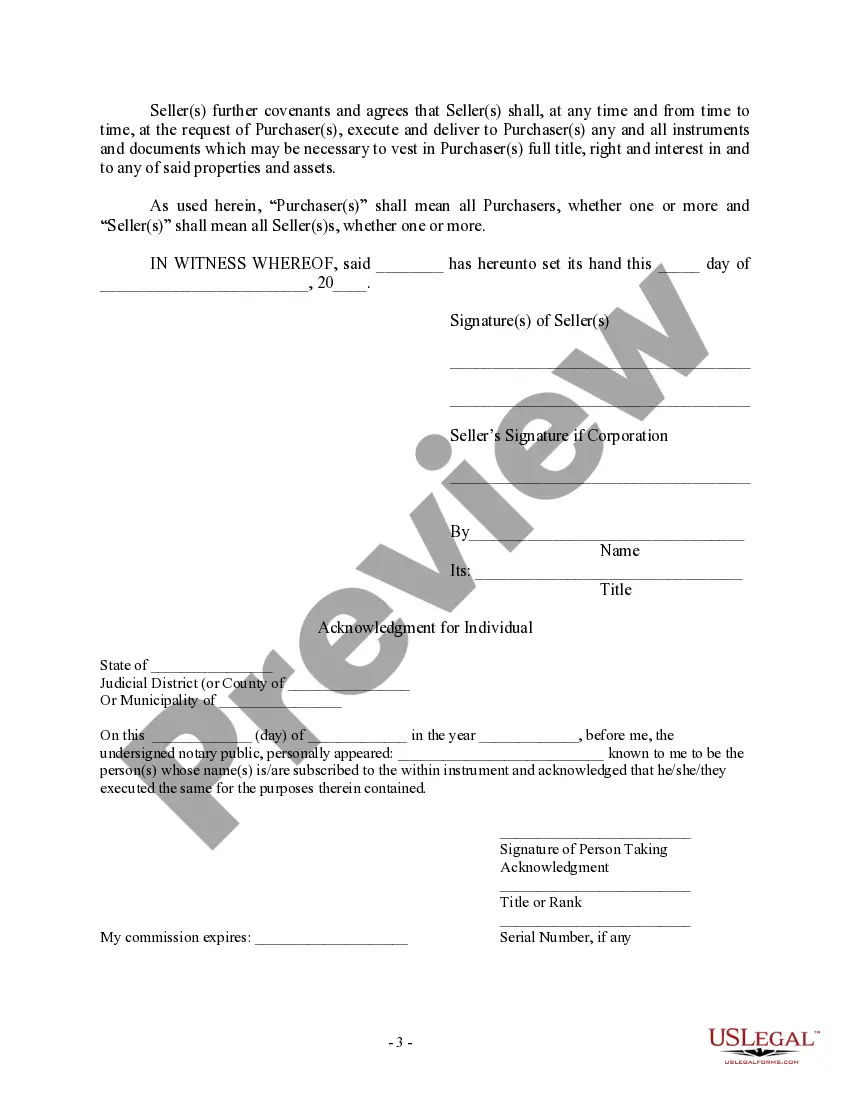
Generally, a bill of sale does not have to be recorded but may be required as proof of ownership. Who must sign a bill of sale? The owners of the property being sold must sign. If the property is owned jointly, both owners must generally sign.