Alaska 24 hours Notice of Termination for Substantial Damage to Leased Premises - Residential
What this document covers
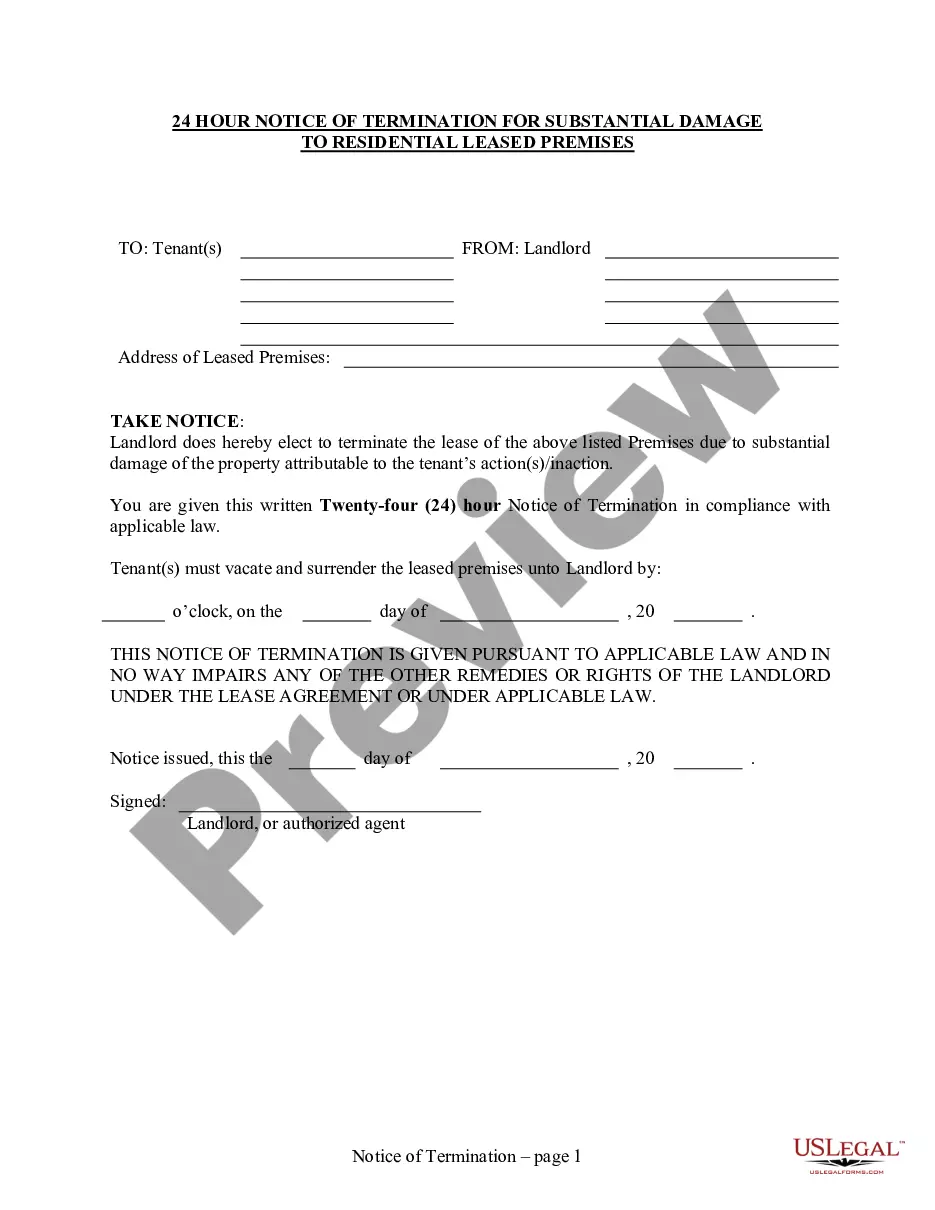
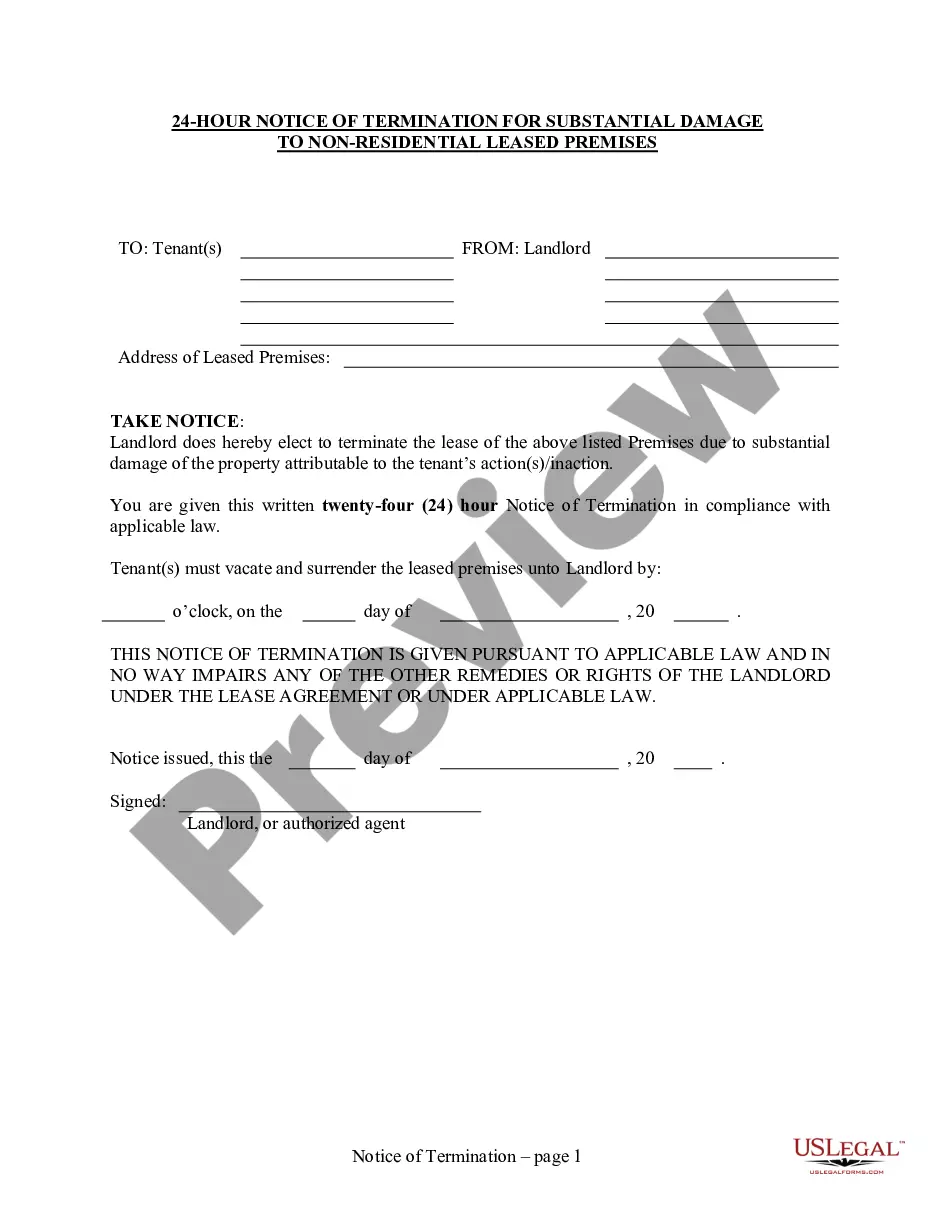
The 24 hours Notice of Termination for Substantial Damage to Leased Premises is a legal document used by landlords to notify residential tenants of a breach of lease due to significant damage caused by the tenant. This form specifically applies when the damage is so substantial that the landlord needs to take immediate action. It empowers the landlord to terminate the lease if the tenant does not resolve the stated issues within 24 hours, distinguishing it from other termination notices that may not require such urgent response times.
Form components explained
- Identification of the landlord and tenant parties.
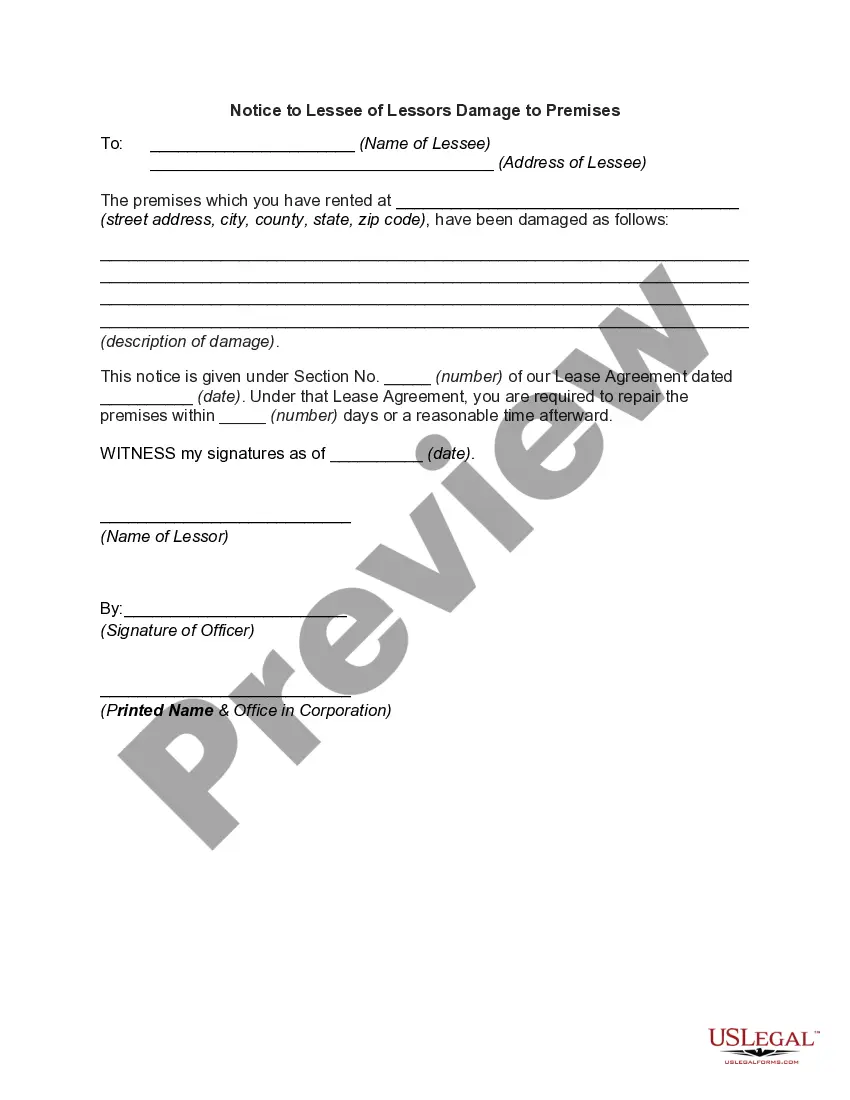
- Description of the substantial damage caused by the tenant.
- Specification of the 24-hour period for the tenant to cure the breach.
- Notice of potential lease termination if the issue remains unresolved.
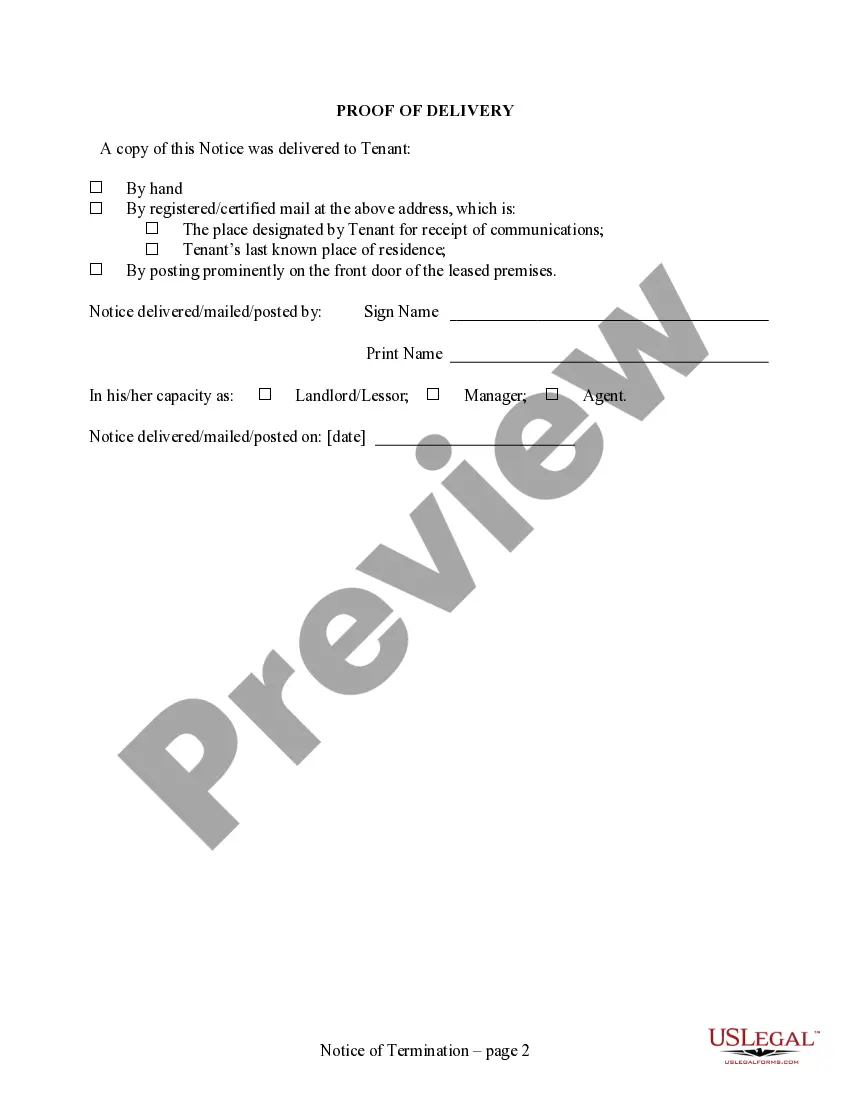
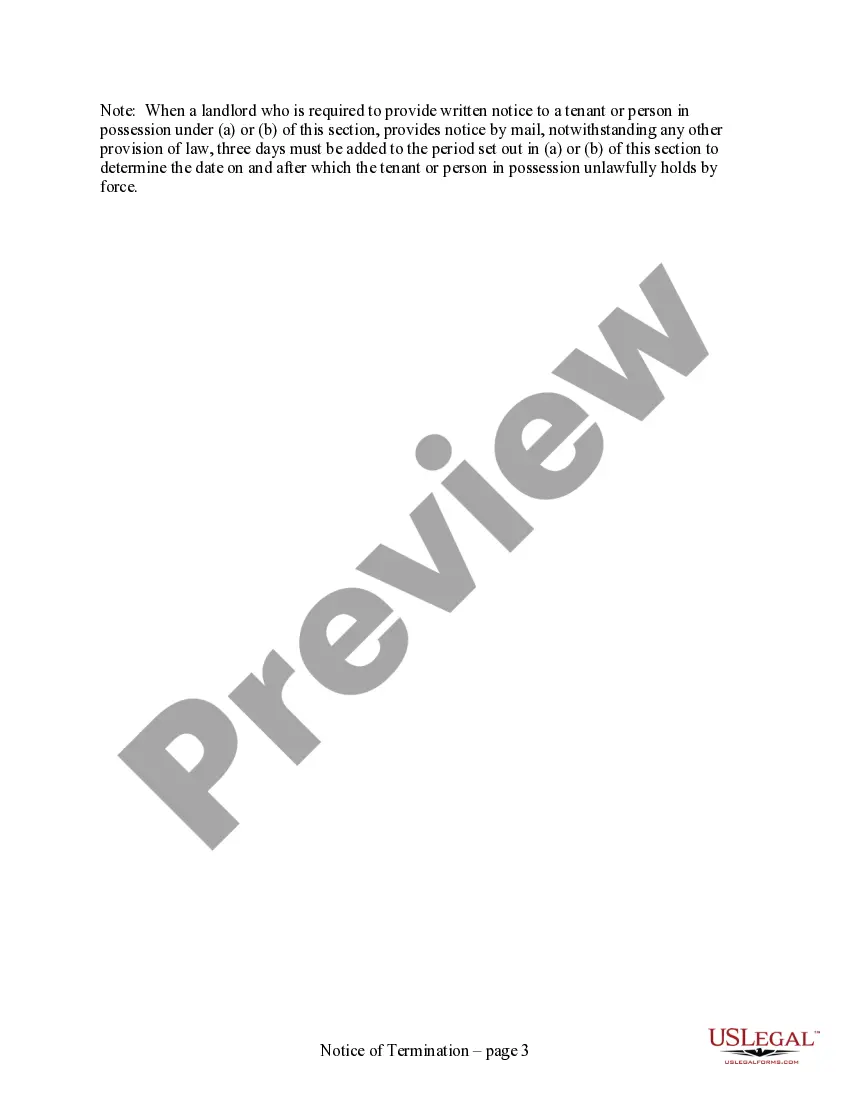
- Details on how the notice is delivered, including mail provisions.

When this form is needed
This form is necessary when a landlord discovers substantial damage to the rental property caused by the tenant, which violates the terms of the lease agreement. It should be used in situations where the damage poses a risk to the property's habitability or safety, and immediate action is required to protect the landlord's interests.
Who can use this document
- Landlords of residential properties.
- Property managers acting on behalf of landlords.
- Real estate professionals involved in leasing agreements.
How to prepare this document
- Identify and enter the names and contact information of both the landlord and tenant.
- Describe in detail the nature of the substantial damage caused by the tenant.
- Specify the date the notice is delivered and the start of the 24-hour period for curing the damage.
- Include a statement indicating what actions will be taken if the tenant fails to address the issues.
- Sign and date the form, retaining a copy for your records.
Does this form need to be notarized?
This form usually doesn’t need to be notarized. However, local laws or specific transactions may require it. Our online notarization service, powered by Notarize, lets you complete it remotely through a secure video session, available 24/7.
Get your form ready online
Our built-in tools help you complete, sign, share, and store your documents in one place.
Make edits, fill in missing information, and update formatting in US Legal Forms—just like you would in MS Word.
Download a copy, print it, send it by email, or mail it via USPS—whatever works best for your next step.
Sign and collect signatures with our SignNow integration. Send to multiple recipients, set reminders, and more. Go Premium to unlock E-Sign.
If this form requires notarization, complete it online through a secure video call—no need to meet a notary in person or wait for an appointment.
We protect your documents and personal data by following strict security and privacy standards.

Make edits, fill in missing information, and update formatting in US Legal Forms—just like you would in MS Word.

Download a copy, print it, send it by email, or mail it via USPS—whatever works best for your next step.

Sign and collect signatures with our SignNow integration. Send to multiple recipients, set reminders, and more. Go Premium to unlock E-Sign.

If this form requires notarization, complete it online through a secure video call—no need to meet a notary in person or wait for an appointment.

We protect your documents and personal data by following strict security and privacy standards.
Typical mistakes to avoid
- Failing to adequately describe the damage in detail.
- Not including the correct date for the notice delivery.
- Overlooking state-specific notice period requirements.
- Neglecting to keep a copy of the notice for documentation.
Advantages of online completion
- Convenient access to legally drafted forms that save time.
- Easy customization to suit specific circumstances of the lease.
- Reliable legal standards set by licensed attorneys.
- Immediate download allows for swift action in time-sensitive situations.
Legal use & context
- This form allows landlords to formally document the breach of lease, providing legal backing for lease termination.
- The 24-hour notice period is designed to prompt quick resolution of significant issues.
- Failure to comply with the notice can have legal implications for the tenant.
Quick recap
- The 24 hours Notice of Termination serves as a quick action tool for landlords facing substantial tenant-caused damage.
- Proper completion and delivery of this form are essential for legal enforceability.
- Always check local statutes, as they may impact the process or requirements for using this form.
Looking for another form?
Form popularity
FAQ
When there is no lease agreement (like in the case of weekly rentals), you can instead use the Alaska Notice to Vacate to inform the other party in advance that you wish to end the tenancy agreement and vacate the premises.
In some circumstances, a tenant can break a fixed-term agreement early without penalty. A tenant can give 14 days' written notice to end an agreement early without penalty if: they have accepted an offer of social housing (e.g. from DCJ Housing)
In most cases when a rental property is damaged, you have the right to keep all or part of the security deposit to offset the repair costs. But again, security deposits are heavily regulated by the landlord-tenant laws in your location.
Give the landlord/agent a written termination notice and vacate move out and return the keys according to your notice, and/or. apply to the NSW Civil & Administrative Tribunal (NCAT) for a termination order.
At-will tenancy is subject to the will of both the tenant and the landlord (hence the name). In other words, the tenant can choose to leave and stop paying rent at any time, and the landlord can choose to stop accepting rent and ask the tenant to leave at any time.
A landlord may legally terminate a lease if the tenant is in violation of the terms of the lease or has broken the law.A landlord may file an eviction lawsuit against a tenant who remains in the rental unit after receiving a termination notice. An eviction is a court-ordered removal of the tenant.
When a tenant damages property eviction is a legal recourse. You'll want to make sure you follow the proper eviction steps which include serving a proper eviction notice. If a tenant is severely damaging a rental property they are violating the lease and may be evicted for this infraction.
Fails to pay rent; Violates a clause in the lease or rental agreement; Violates a responsibility imposed by law.
Uninhabitable conditions can include dangerous ones, such as holes in the floor, unsafe or exposed wiring, or non-working air conditioning in dangerously hot summer months. Gross infestations of roaches, fleas or other pests are also uninhabitable conditions.