Wyoming Assignment to Living Trust
About this form
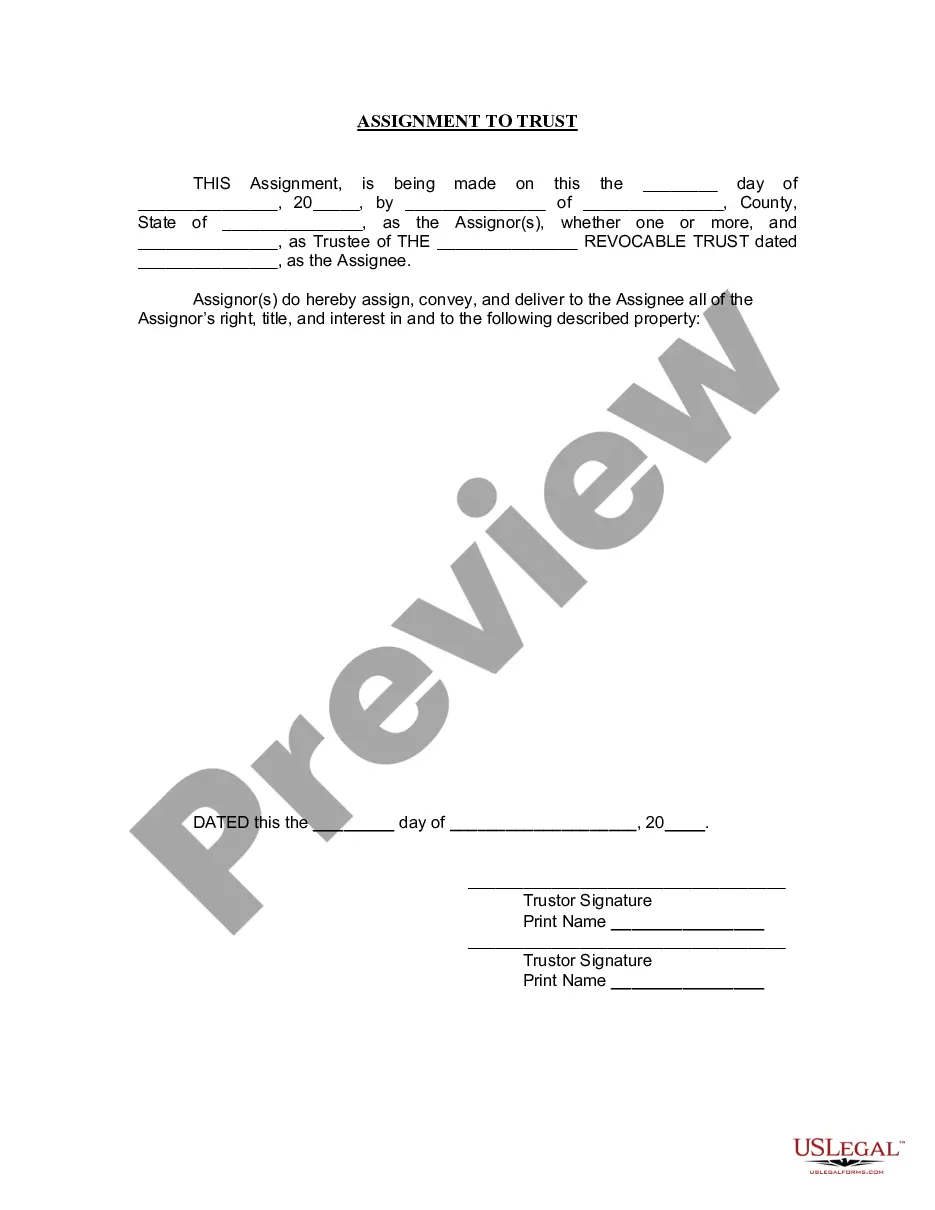
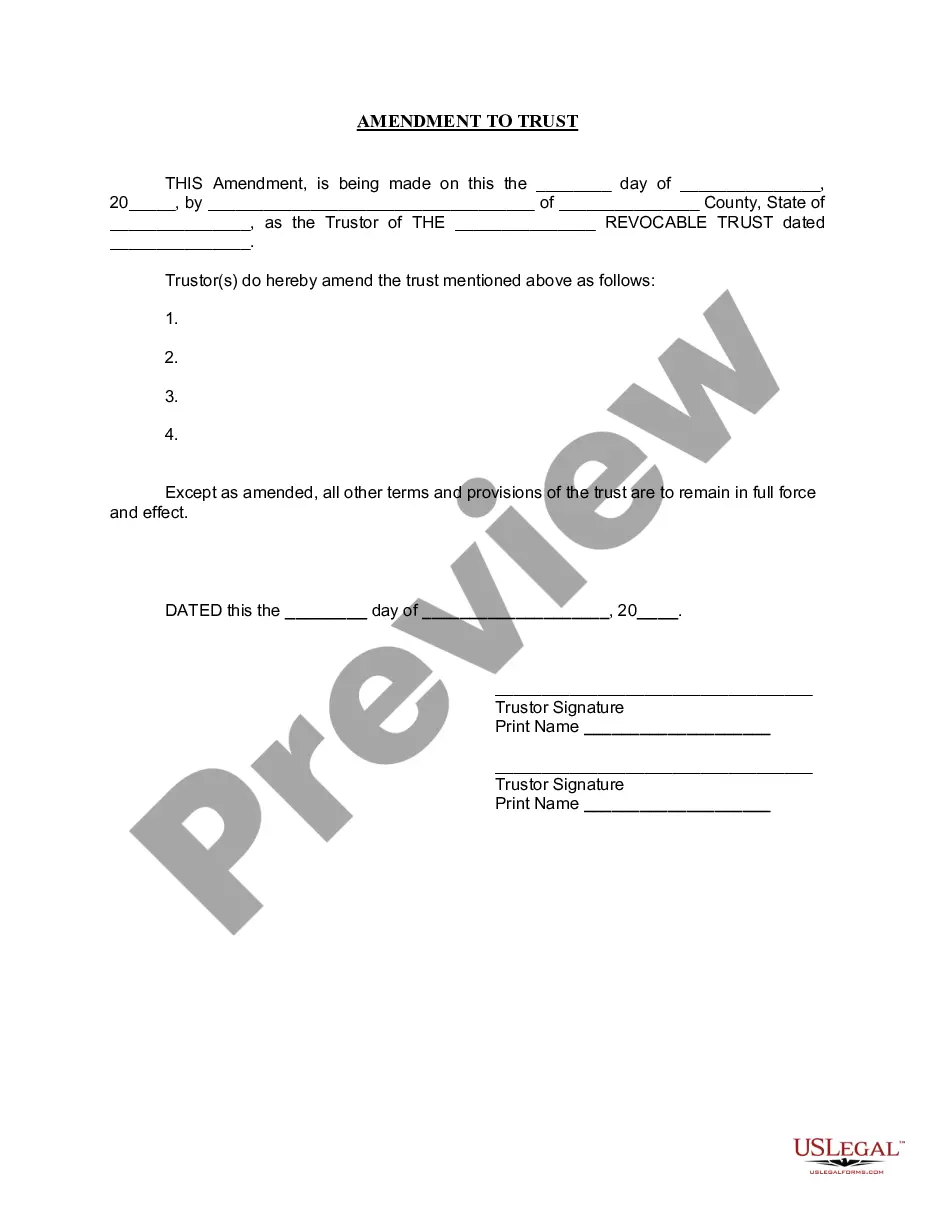
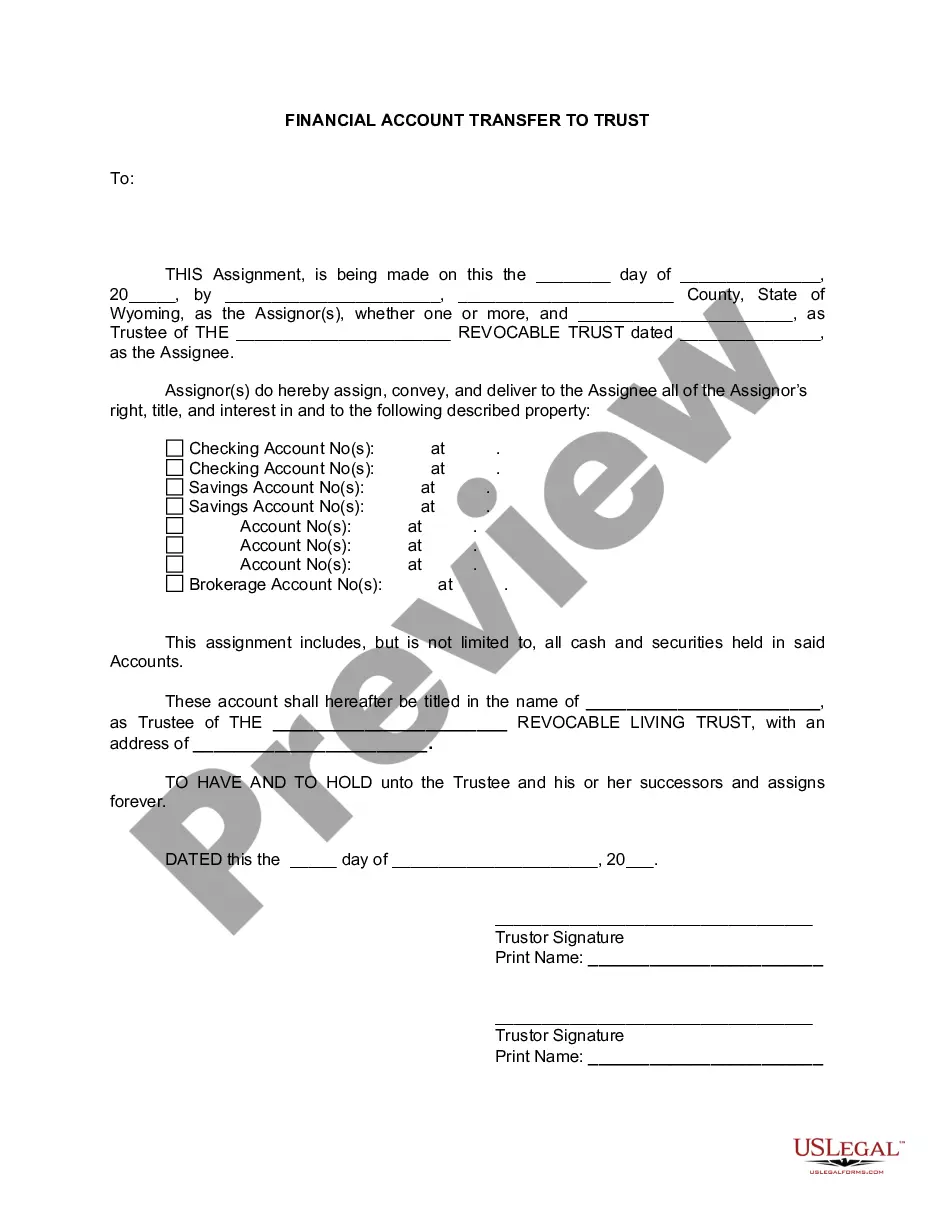
The Assignment to Living Trust form is a legal document used to transfer all rights, title, and interest in specific property to a Living Trust. A Living Trust is an estate planning tool created during a person's lifetime, allowing assets to be managed and distributed according to the terms set forth in the trust. This form ensures a smooth transition of property ownership, differing from a simple property transfer by specifically designating the trust as the recipient of the assets.
Form components explained
- Date of assignment
- Name of the Assignor(s) and Assignee (Trustee)
- Description of the property being assigned
When to use this form
This form is necessary when an individual wishes to assign their property to a Living Trust. Common scenarios include estate planning for individuals wanting to manage their assets during their lifetime or facilitate the smooth transfer of property upon death without going through probate.
Who can use this document
- Individuals planning their estates
- Trust creators looking to transfer property into a Living Trust
- Property owners wanting to ensure their assets are managed according to their wishes
Steps to complete this form
- Identify the parties involved: the Assignor (property owner) and the Assignee (Trustee).
- Specify the property: clearly describe the property being assigned, including any relevant details.
- Enter the date of the assignment at the beginning of the form.
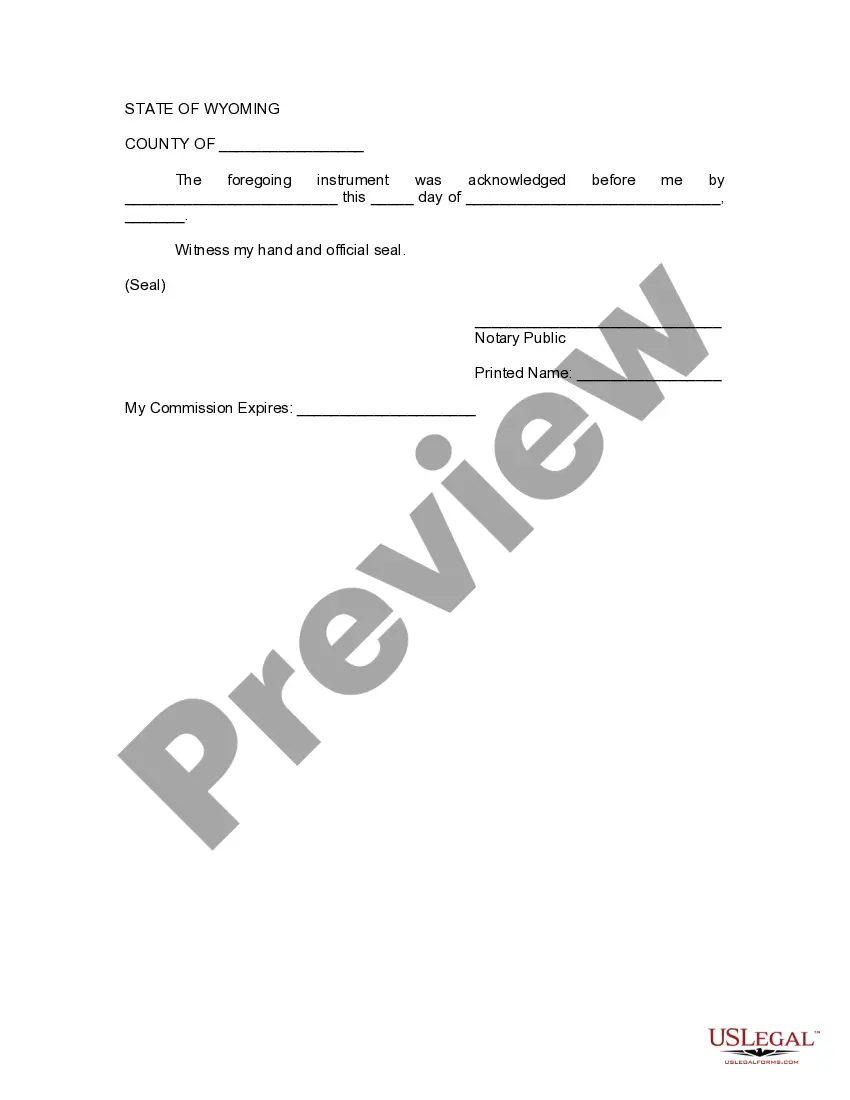
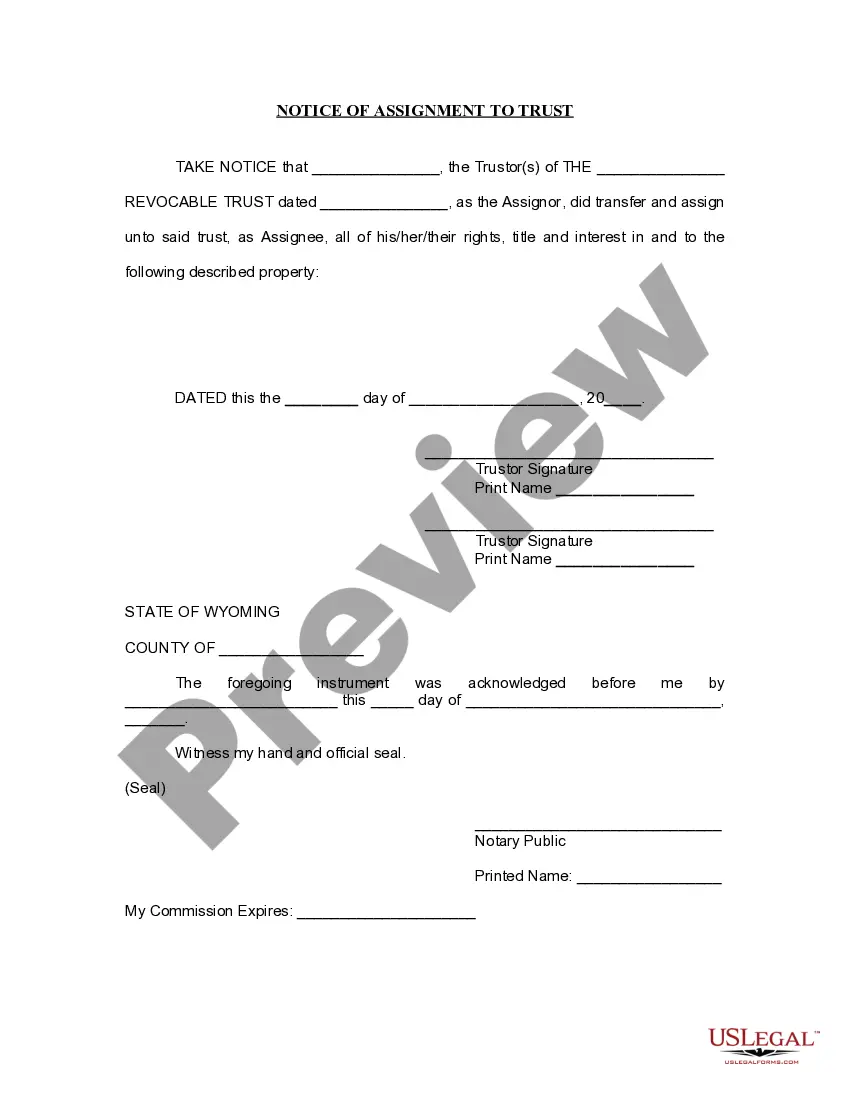
- Ensure the Assignor signs the form in the presence of a notary public.
- Complete the notary acknowledgment section after the Assignor's signature.
Does this document require notarization?
This document requires notarization to meet legal standards. US Legal Forms provides secure online notarization powered by Notarize, allowing you to complete the process through a verified video call, available 24/7.
Get your form ready online
Our built-in tools help you complete, sign, share, and store your documents in one place.
Make edits, fill in missing information, and update formatting in US Legal Forms—just like you would in MS Word.
Download a copy, print it, send it by email, or mail it via USPS—whatever works best for your next step.
Sign and collect signatures with our SignNow integration. Send to multiple recipients, set reminders, and more. Go Premium to unlock E-Sign.
If this form requires notarization, complete it online through a secure video call—no need to meet a notary in person or wait for an appointment.
We protect your documents and personal data by following strict security and privacy standards.

Make edits, fill in missing information, and update formatting in US Legal Forms—just like you would in MS Word.

Download a copy, print it, send it by email, or mail it via USPS—whatever works best for your next step.

Sign and collect signatures with our SignNow integration. Send to multiple recipients, set reminders, and more. Go Premium to unlock E-Sign.

If this form requires notarization, complete it online through a secure video call—no need to meet a notary in person or wait for an appointment.

We protect your documents and personal data by following strict security and privacy standards.
Mistakes to watch out for
- Failing to clearly describe the property being assigned.
- Not having the Assignor's signature notarized.
- Entering incorrect or incomplete names for the parties involved.
Why complete this form online
- Convenient access and easy downloads from home.
- Editability allows for customization to meet individual needs.
- Reliable templates drafted by licensed attorneys ensure legal compliance.
What to keep in mind
- The Assignment to Living Trust form is vital for transferring property into a trust.
- Proper completion and notarization are necessary for legal validity.
- Understand your state requirements before using this form.
Looking for another form?





Form popularity
FAQ
Pick a type of living trust. If you're married, you'll first need to decide whether you want a single or joint trust. Take stock of your property. Choose a trustee. Draw up the trust document. Sign the trust. Transfer your property to the trust.
Trusts aren't recorded anywhere, so you can't go to the County Recorder's office in the courthouse to ask to see a copy of the trust. However, if real estate is involved, the trust may be recorded in the local office of the county clerk.
Trusts created during your lifetime, known as living trusts, do not go into the public record after you die. With rare exceptions, trusts remain private regardless of whether you have an irrevocable or revocable trust at the time of your death.
A revocable living trust isn't subject to the same kind of rules as a will; it should be valid in any state, no matter where you signed it.If you acquire real estate in your new state, you'll probably want to hold it in the trust, so that it doesn't have to go through probate at your death.
Open a bank account in the name of the trust. Close out any bank accounts the grantor established for the trust and put the proceeds into the new trust bank account. Cash in any life insurance policies that name the trust as beneficiary and put the proceeds into the trust bank account.
Choose whether to make an individual or shared trust. Decide what property to include in the trust. Choose a successor trustee. Decide who will be the trust's beneficiaries who will get the trust property. Create the trust document. Sign the document in front of a notary public.
Trusts Are Not Public Record. Most states require a last will and testament to be filed with the appropriate state court when the person dies. When this happens, the will becomes a public record for anyone to read. However, trusts aren't recorded.
Expect to pay $1,000 for a simple trust, up to several thousand dollars. You may incur additional costs after the trust has been established if you transfer property in and out or otherwise move things around. However, the bulk of the cost will be setting it up initially.
No. Trust does not need to be filed in California. Trusts are private documents and usually there are compelling reasons not to file the trust.