West Virginia Last Will and Testament for Married person with Adult Children from Prior Marriage
About this form
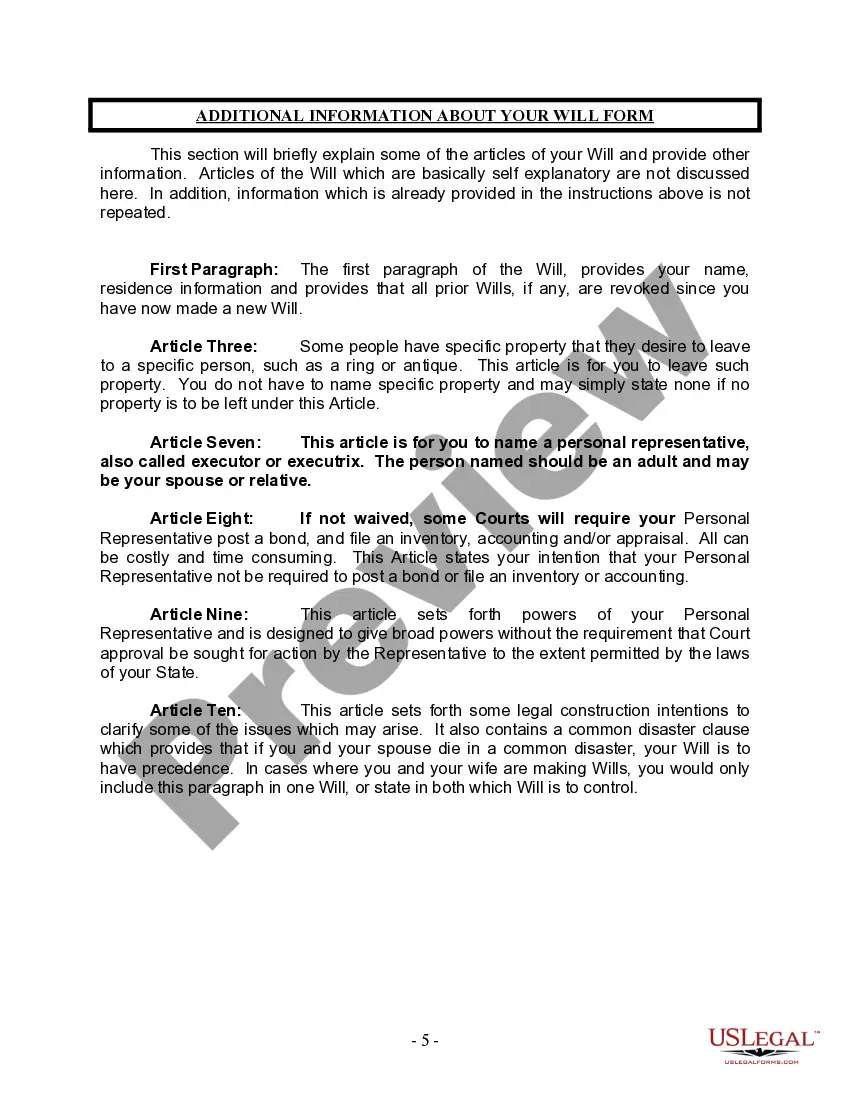
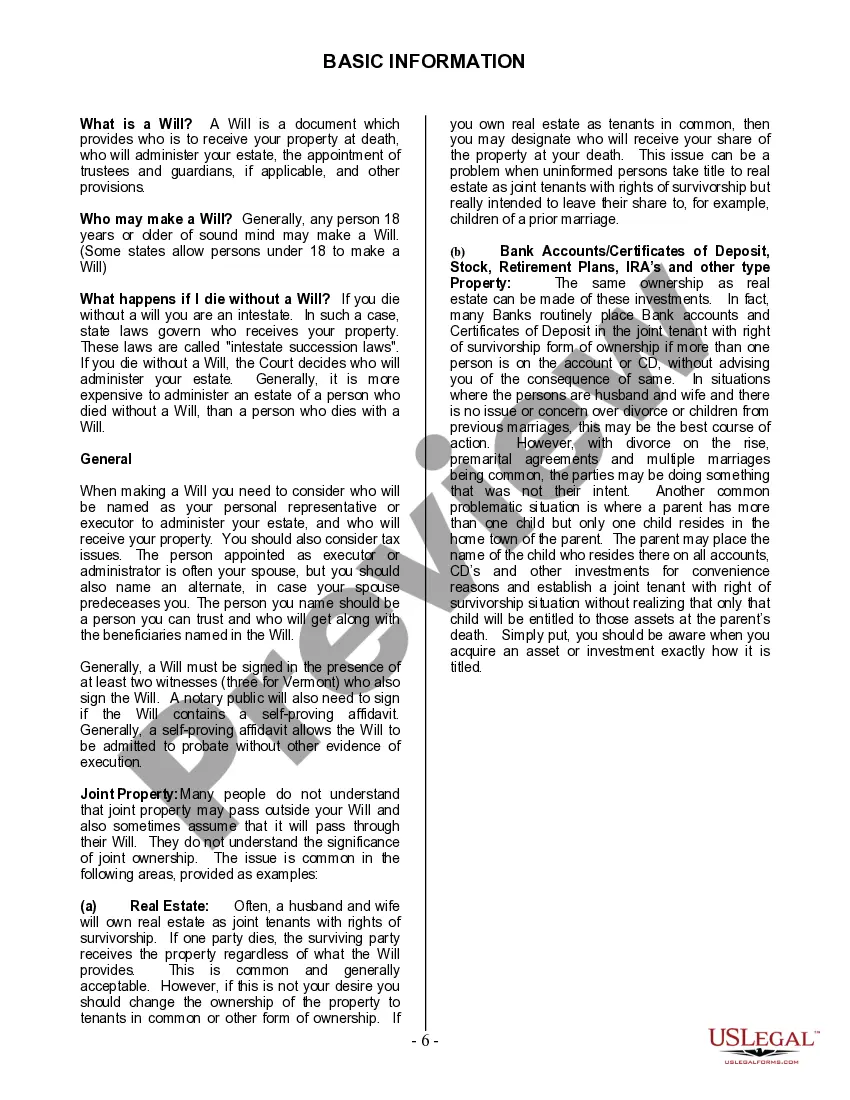
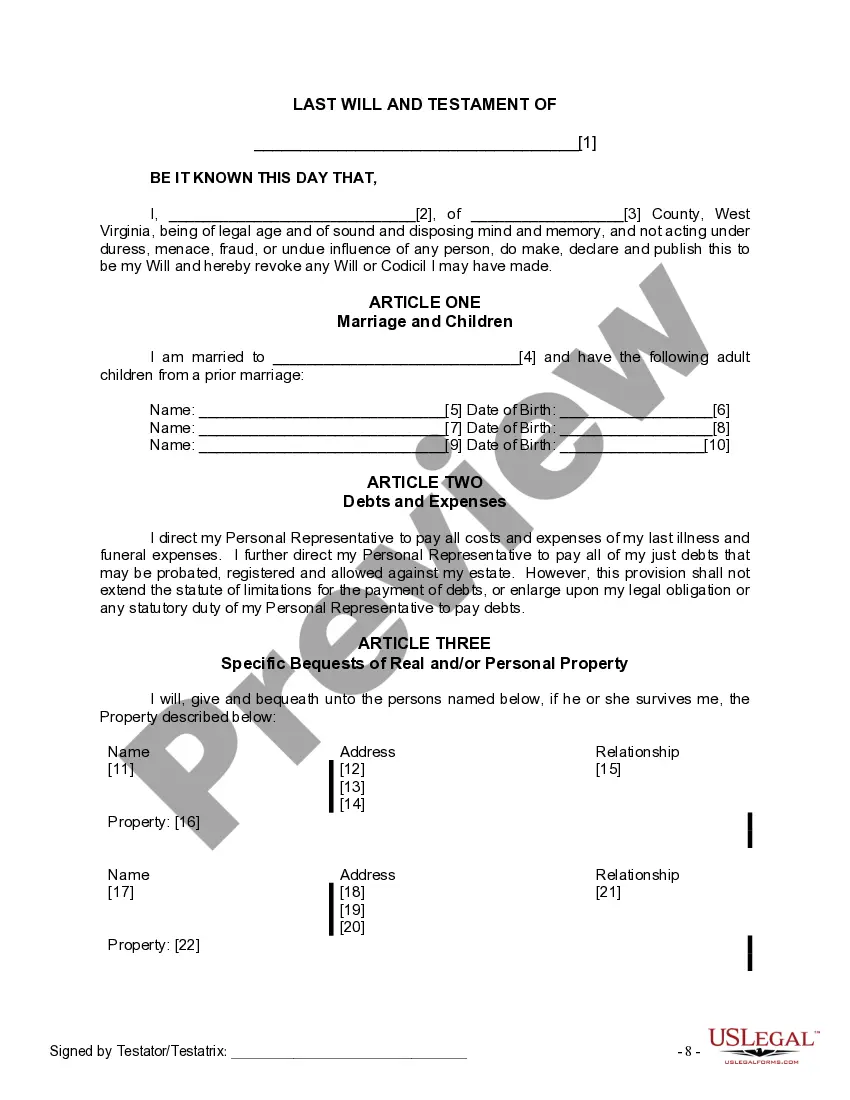
The Last Will and Testament for married person with adult children from a prior marriage is a legal document that outlines how a person wishes to distribute their assets after death. This form is specifically tailored for individuals who are married and have adult children from a previous relationship, ensuring that all parties are accounted for. Unlike a standard will, this document includes provisions for both the current spouse and the adult children, making it essential for those with blended families.
Key parts of this document
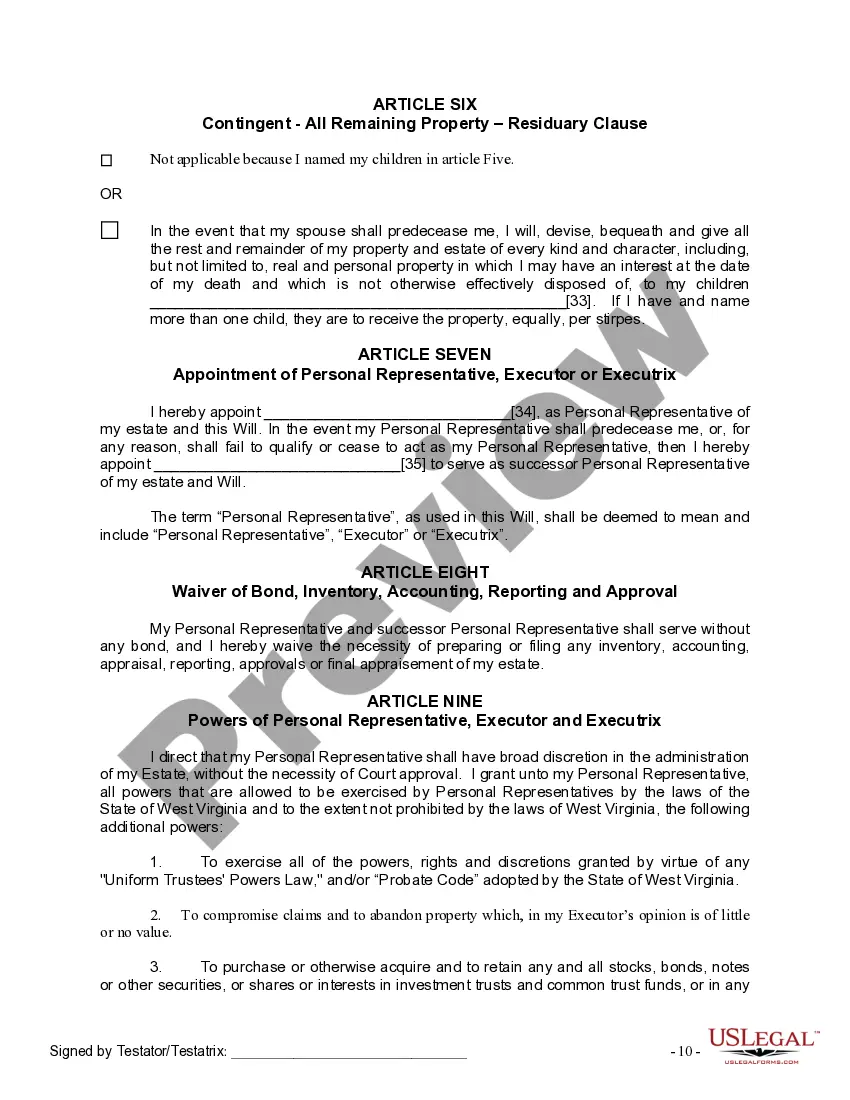
- Personal representative: Appoints an executor to manage the estate.
- Distribution of assets: Specifies who will receive property and other assets.
- Provisions for children: Includes specific clauses for adult children from a prior marriage.
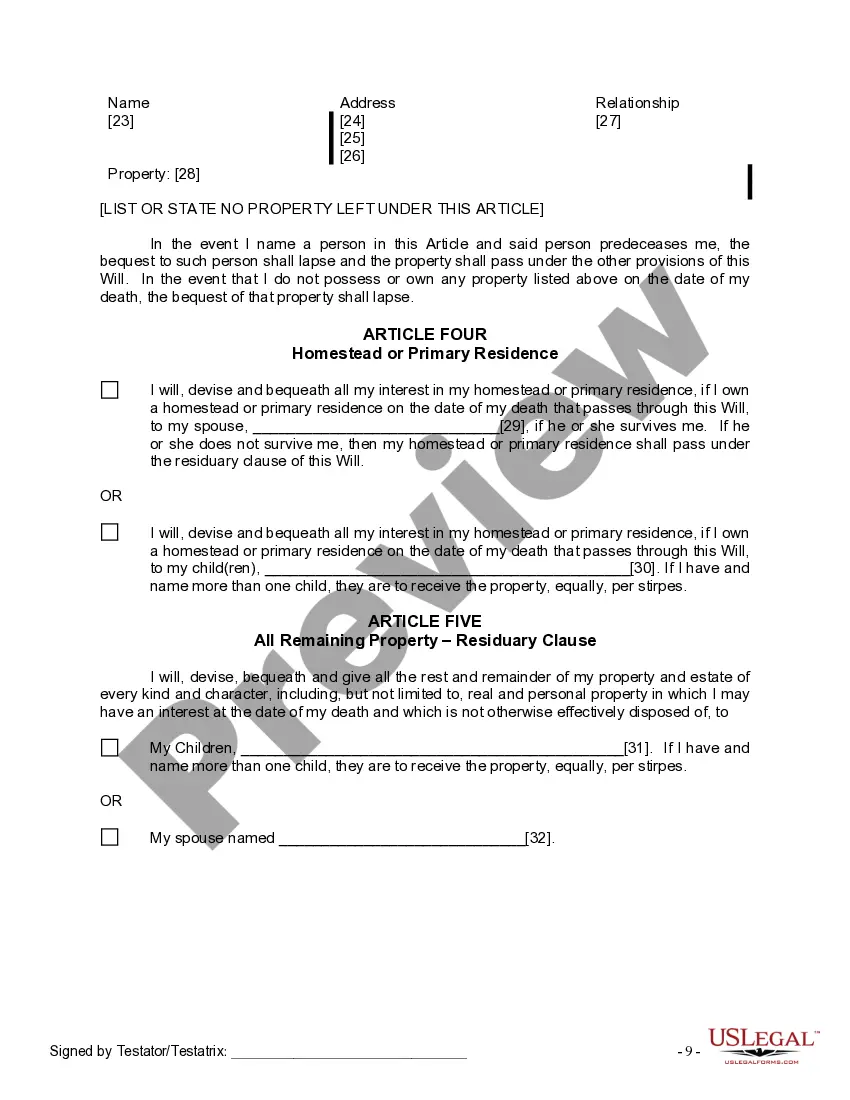
- Homestead designation: Directs the treatment of the primary residence.
- Self-proving affidavit: May include a notarized affidavit to simplify the probate process.

When to use this form
This form should be used when a married individual with adult children from a previous marriage wants to ensure that their estate is distributed according to their wishes. It is particularly important in situations where there may be complexities related to blended families, and when the individual wishes to outline specific legacies for their spouse and children. Additionally, if there have been significant life changes such as marriage or changes in family dynamics, updating a will with this form is recommended.
Who should use this form
This form is designed for:
- Married individuals who have adult children from a previous marriage.
- Anyone looking to clarify the distribution of their estate to avoid legal disputes.
- Individuals who want to ensure their spouse and children are adequately provided for in their will.
- Those who wish to simplify the probate process through a self-proving affidavit.
How to complete this form
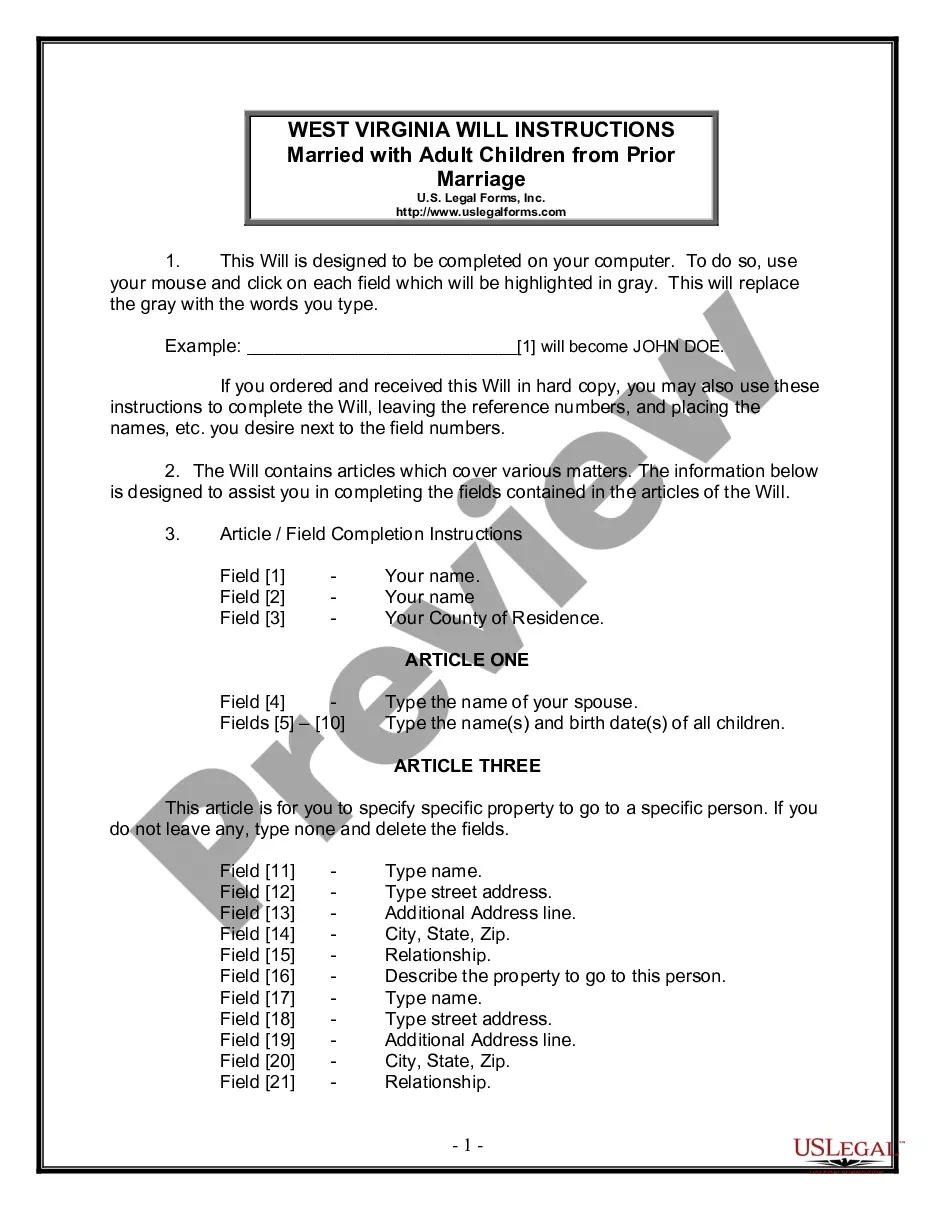
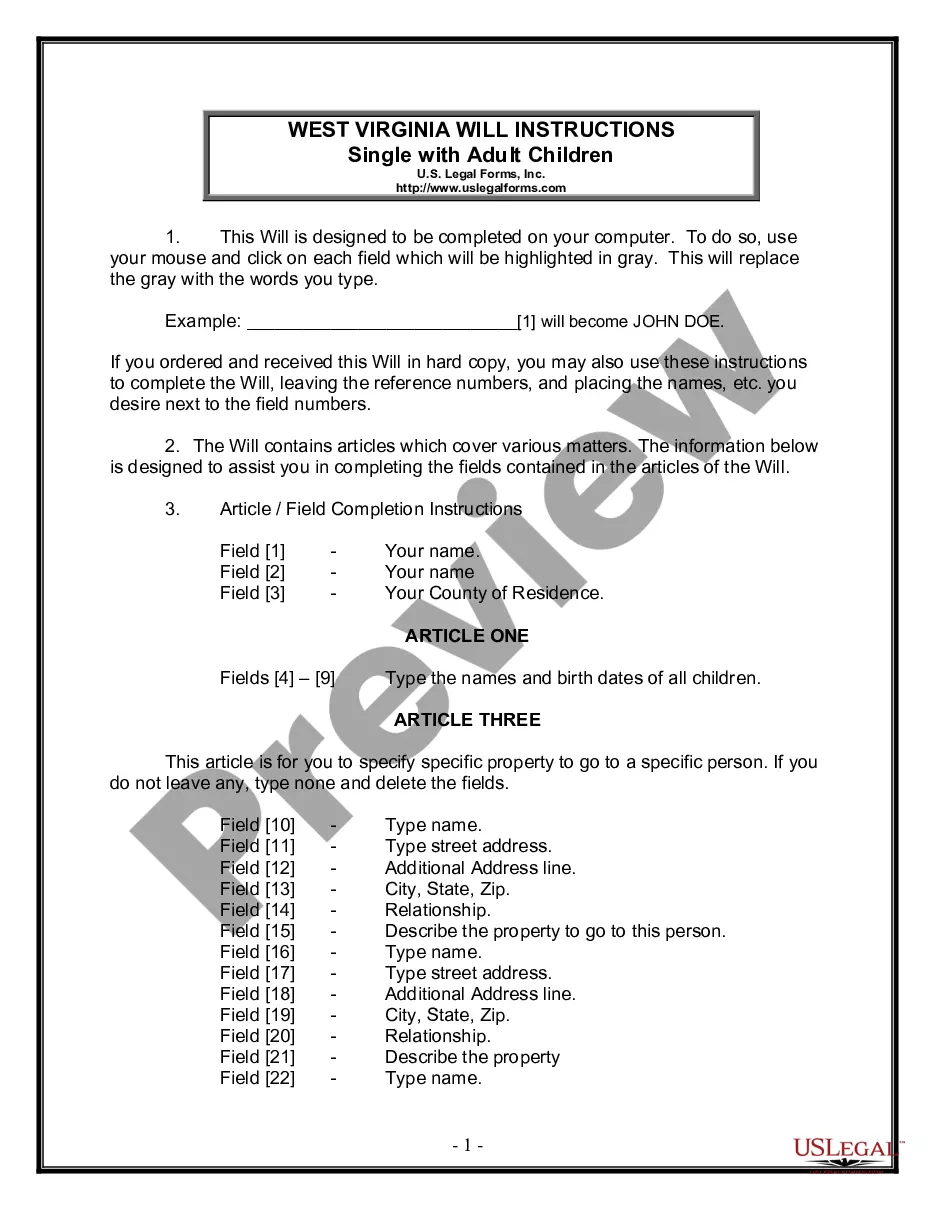
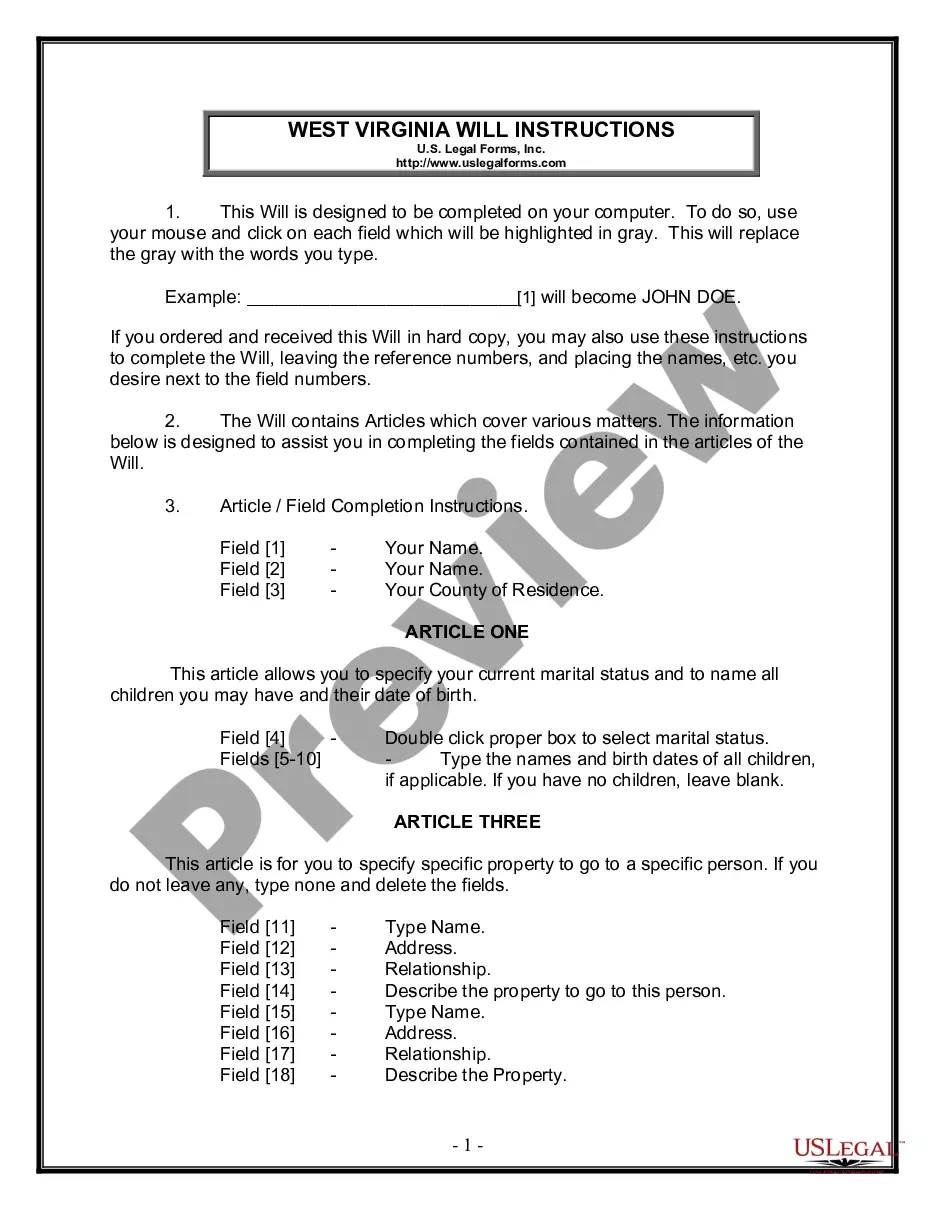
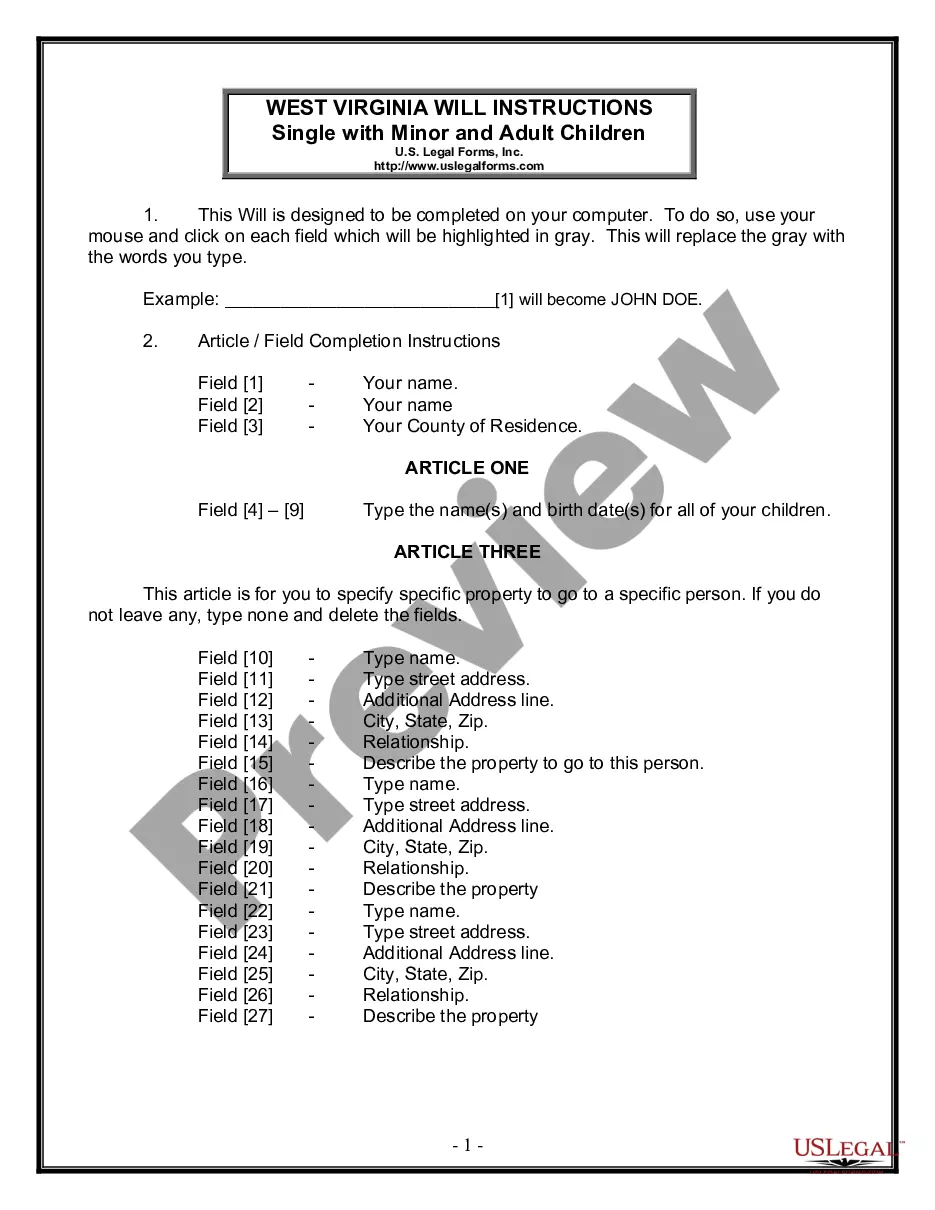
- Enter your full name and county of residence at the beginning of the document.
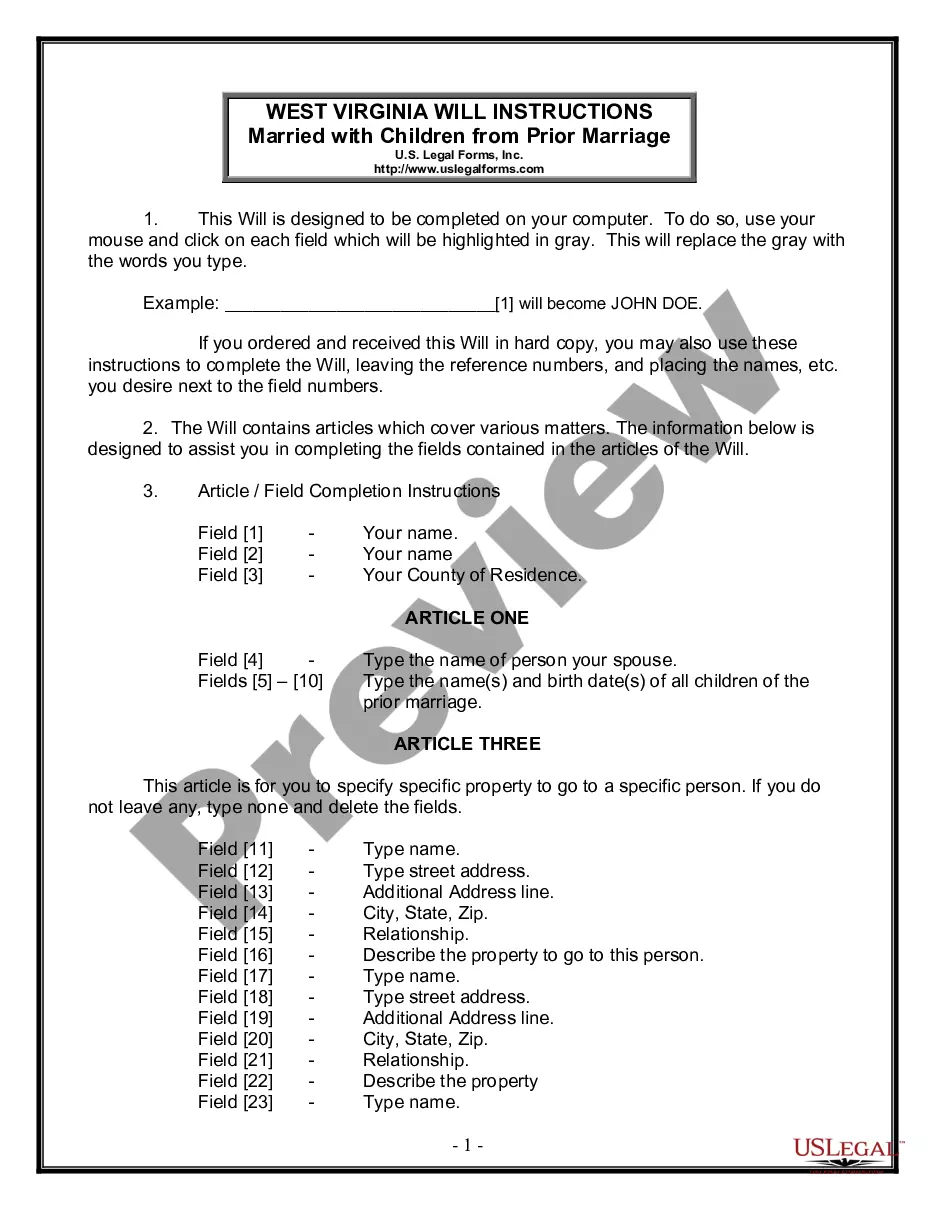
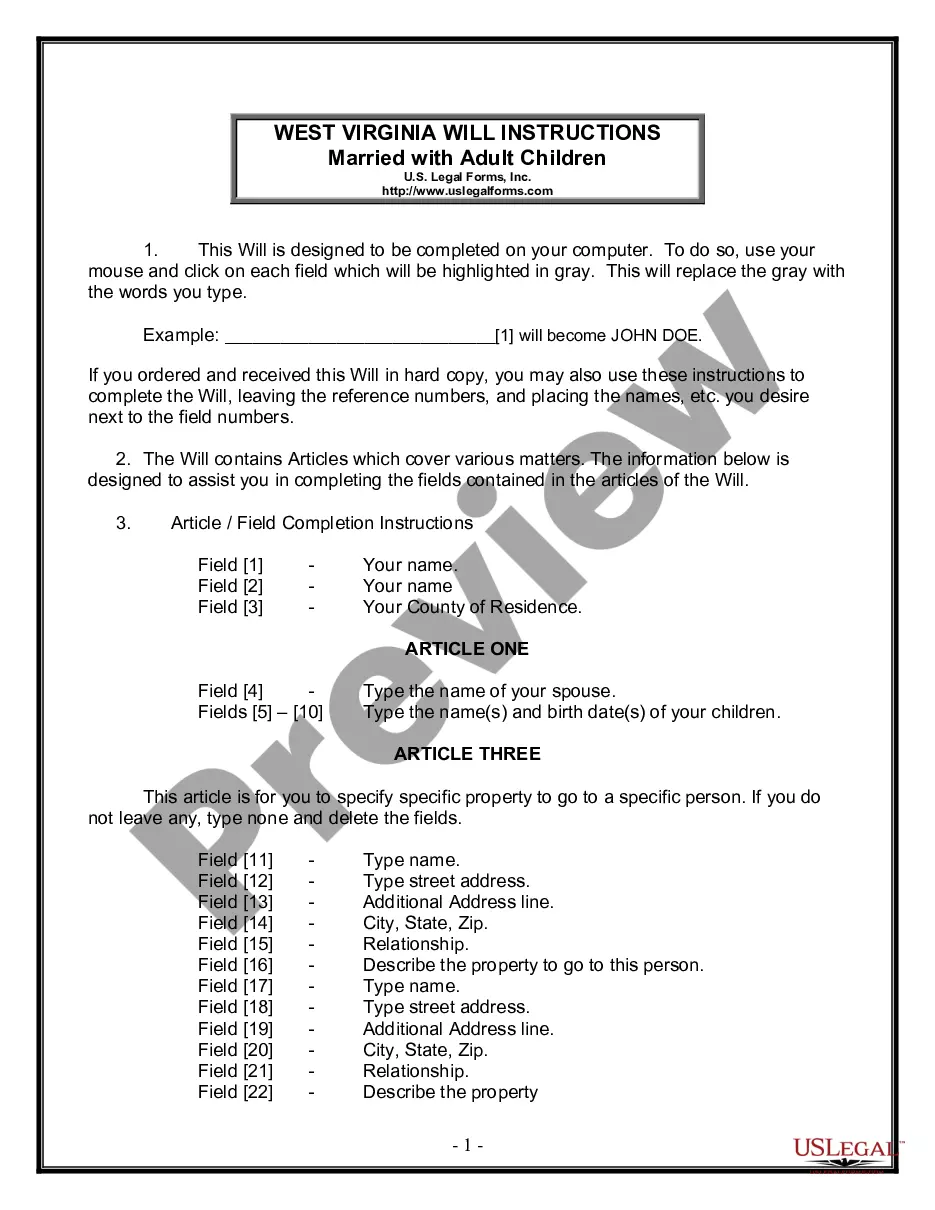
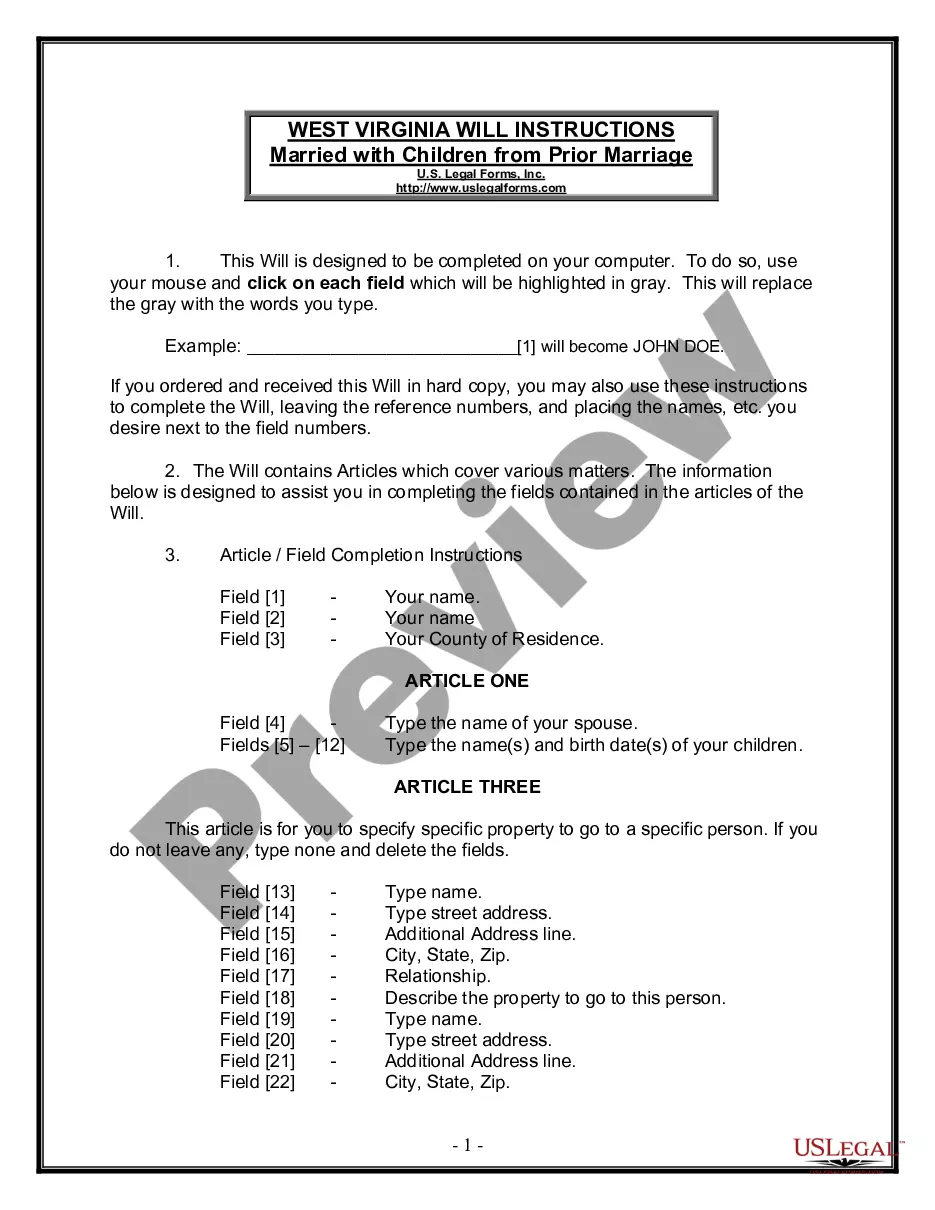
- Specify the name of your spouse and provide details for each of your adult children from the prior marriage.
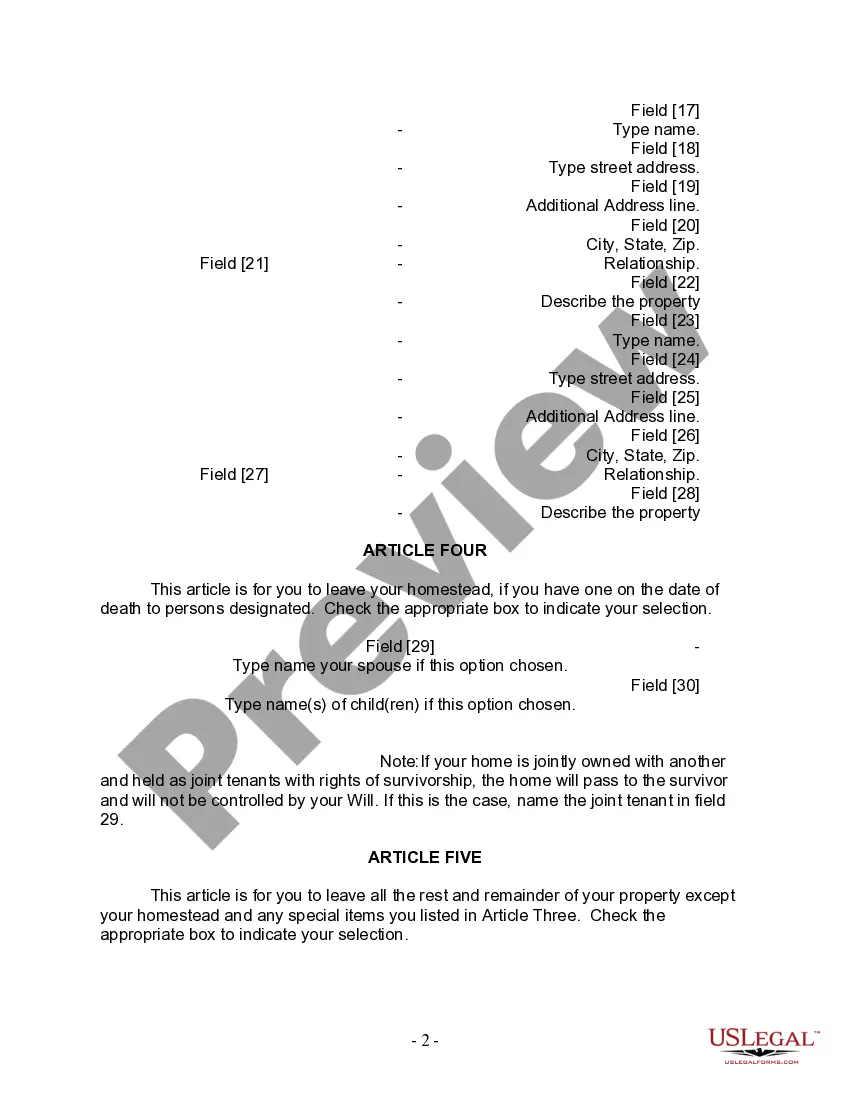
- Outline specific gifts or bequests in Article Three, detailing the relationships and property involved.
- Indicate how you want your homestead or primary residence to be passed on in Article Four.
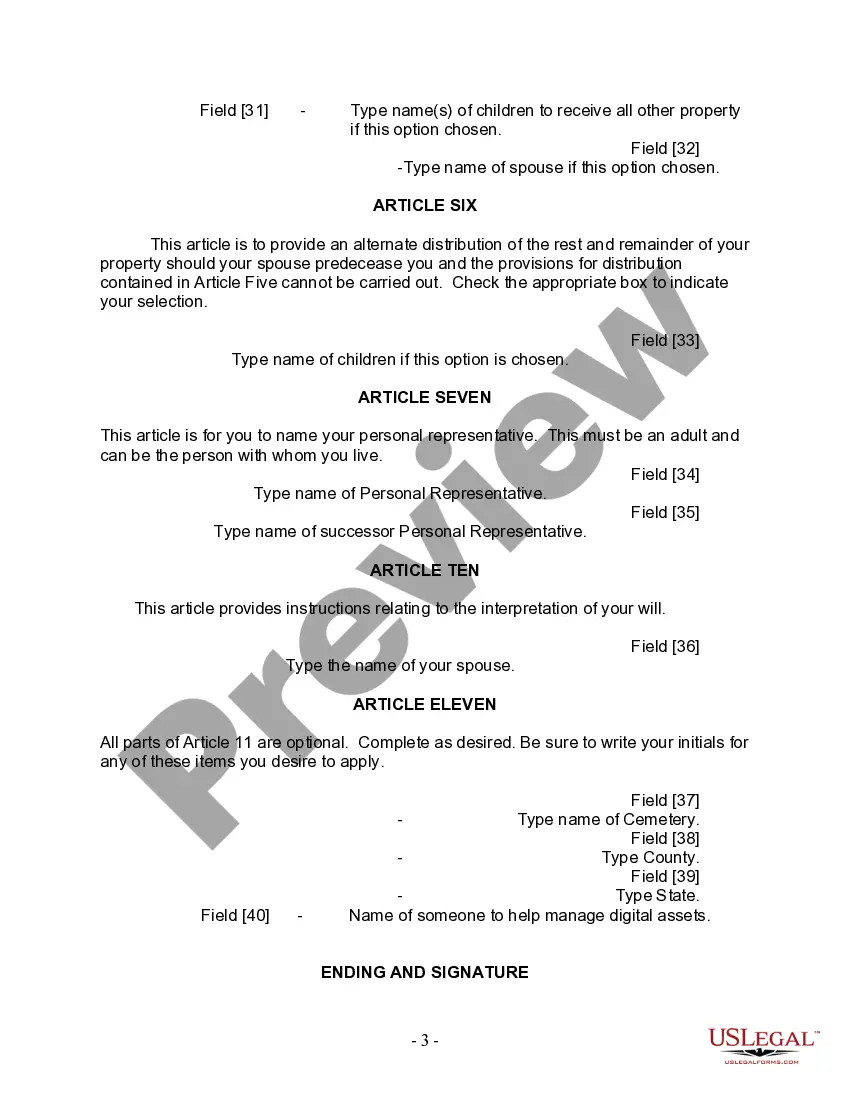
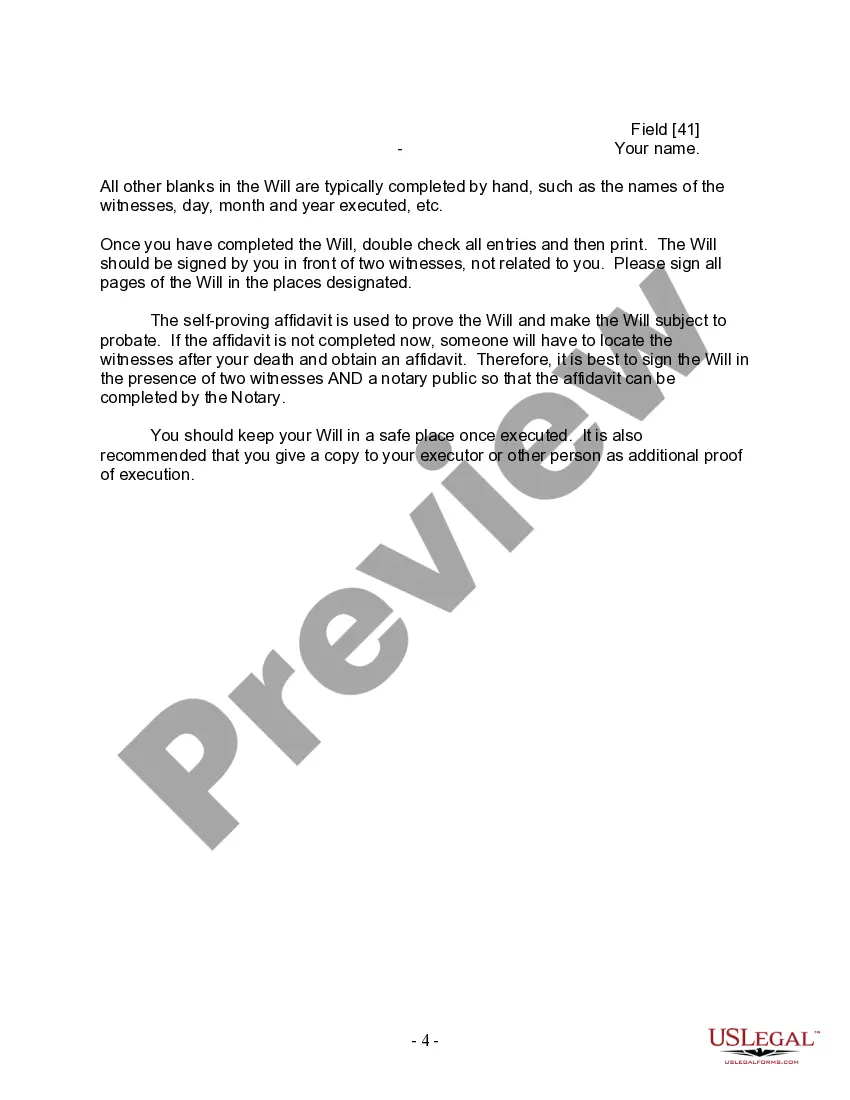
- Signature: Sign the will in front of two witnesses and a notary public, if applicable.
Notarization requirements for this form
Yes, this form must be notarized to be legally valid if it includes a self-proving affidavit. A notary public should witness the signing, which can facilitate the probate process by confirming the authenticity of the will.
Get your form ready online
Our built-in tools help you complete, sign, share, and store your documents in one place.
Make edits, fill in missing information, and update formatting in US Legal Forms—just like you would in MS Word.
Download a copy, print it, send it by email, or mail it via USPS—whatever works best for your next step.
Sign and collect signatures with our SignNow integration. Send to multiple recipients, set reminders, and more. Go Premium to unlock E-Sign.
If this form requires notarization, complete it online through a secure video call—no need to meet a notary in person or wait for an appointment.
We protect your documents and personal data by following strict security and privacy standards.

Make edits, fill in missing information, and update formatting in US Legal Forms—just like you would in MS Word.

Download a copy, print it, send it by email, or mail it via USPS—whatever works best for your next step.

Sign and collect signatures with our SignNow integration. Send to multiple recipients, set reminders, and more. Go Premium to unlock E-Sign.

If this form requires notarization, complete it online through a secure video call—no need to meet a notary in person or wait for an appointment.

We protect your documents and personal data by following strict security and privacy standards.
Common mistakes to avoid
- Failing to sign in front of the required number of witnesses.
- Not specifying details of property or beneficiaries clearly.
- Omitting the self-proving affidavit, which can complicate probate.
- Not updating the will after significant life events, such as changes in marital status or family structure.
Advantages of online completion
- Convenience: Easily complete the form at your own pace from any device.
- Editability: You can modify your choices and information as needed before finalizing.
- Reliable: Templates are drafted by licensed attorneys to ensure compliance with legal standards.
Looking for another form?

Form popularity
FAQ
No, in West Virginia, you do not need to notarize your will to make it legal.A self-proving will speeds up probate because the court can accept the will without contacting the witnesses who signed it.
Self-written wills are typically valid, even when handwritten, as long as they're properly witnessed and notarized, or proven in court. A handwritten will that is not witnessed or notarized is considered a holographic will. Not all states accept holographic wills .
For example, California requires that all sections of the will necessary to make the will valid must be written entirely by hand and that the person writing the will must sign it. If these state rules aren't followed, the holographic will won't be valid.
Create the initial document. Start by titling the document Last Will and Testament" and including your full legal name and address. Designate an executor. Appoint a guardian. Name the beneficiaries. Designate the assets. Ask witnesses to sign your will. Store your will in a safe place.
In most situations, a will template is an easy and inexpensive way to make sure your wishes are known and carried out. Most people can get everything they need by using a will template, with little cost or hassle.
The Will must be filed with the Probate Office of the County Clerk in the county where the decedent lived. A Petition for Probate must be filed as well. This requests the appointment of an executor. If there is no Will, the clerk will appoint someone to serve as the Personal Representative of the estate.
Yes. A will that you write yourself is called a holographic will. Holographic wills are not valid in every state, but they are valid in West Virginia, as long as they are written entirely in the author's handwriting.
Bank accounts. Brokerage or investment accounts. Retirement accounts and pension plans. A life insurance policy.
No, in West Virginia, you do not need to notarize your will to make it legal.A self-proving will speeds up probate because the court can accept the will without contacting the witnesses who signed it.