Wisconsin Living Trust for Husband and Wife with Minor and or Adult Children
Overview of this form
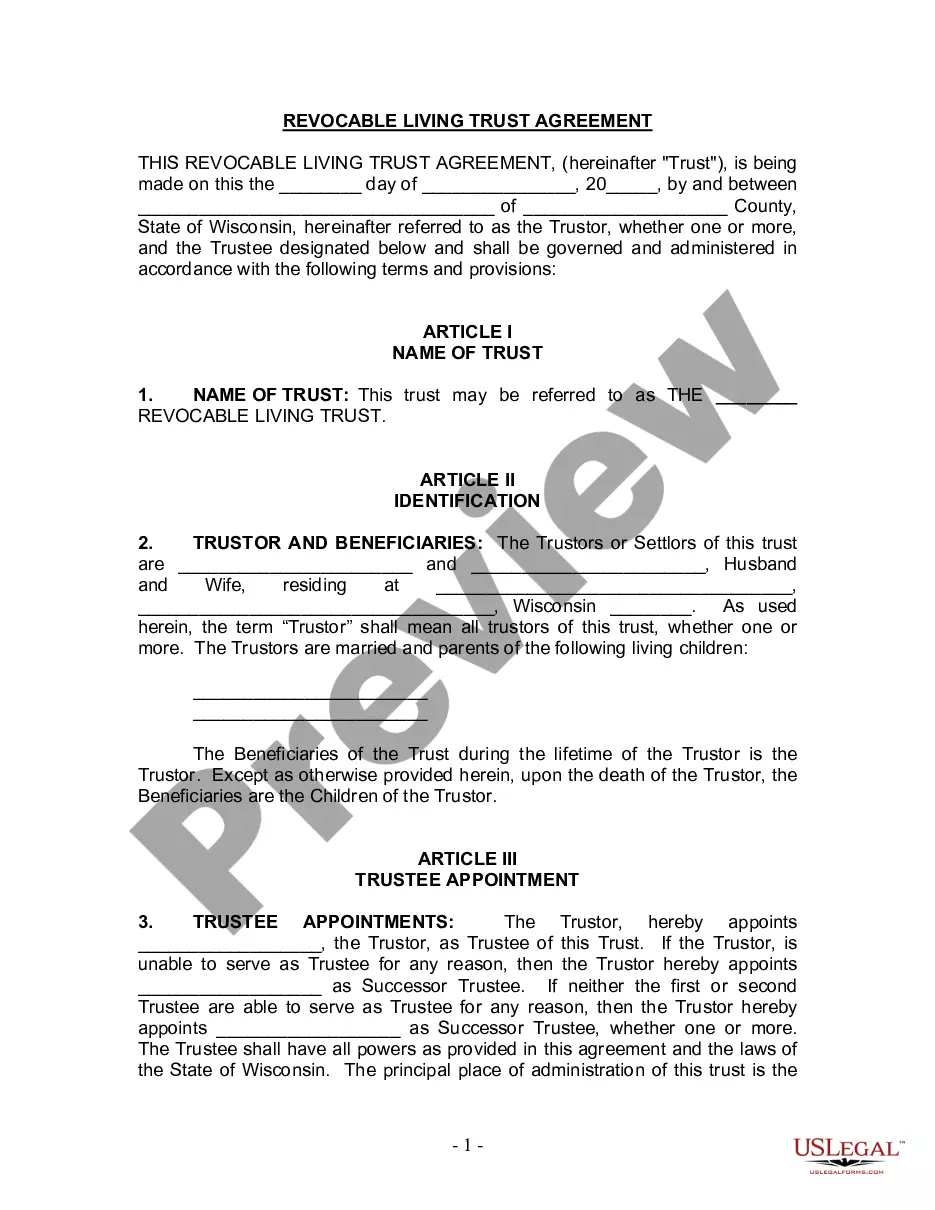
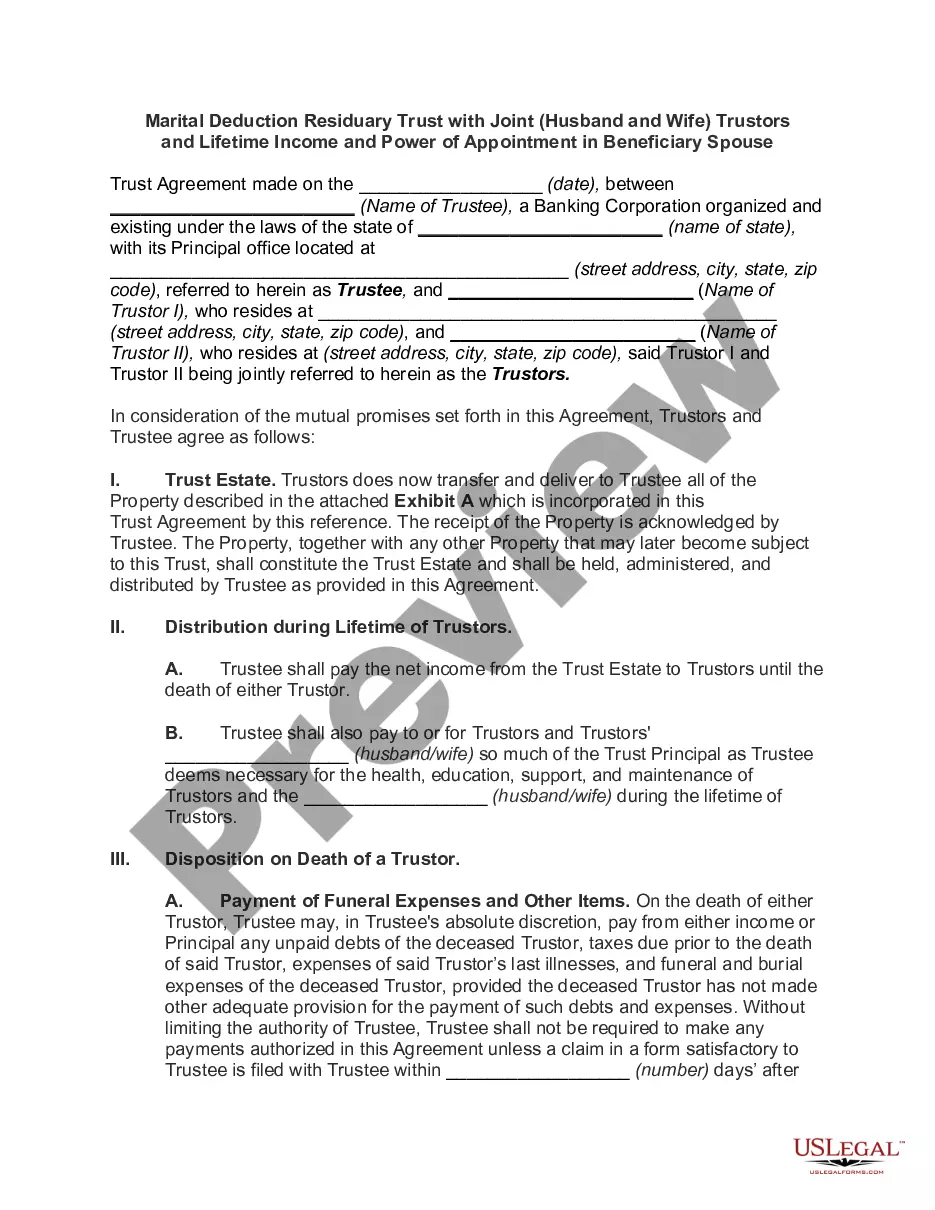
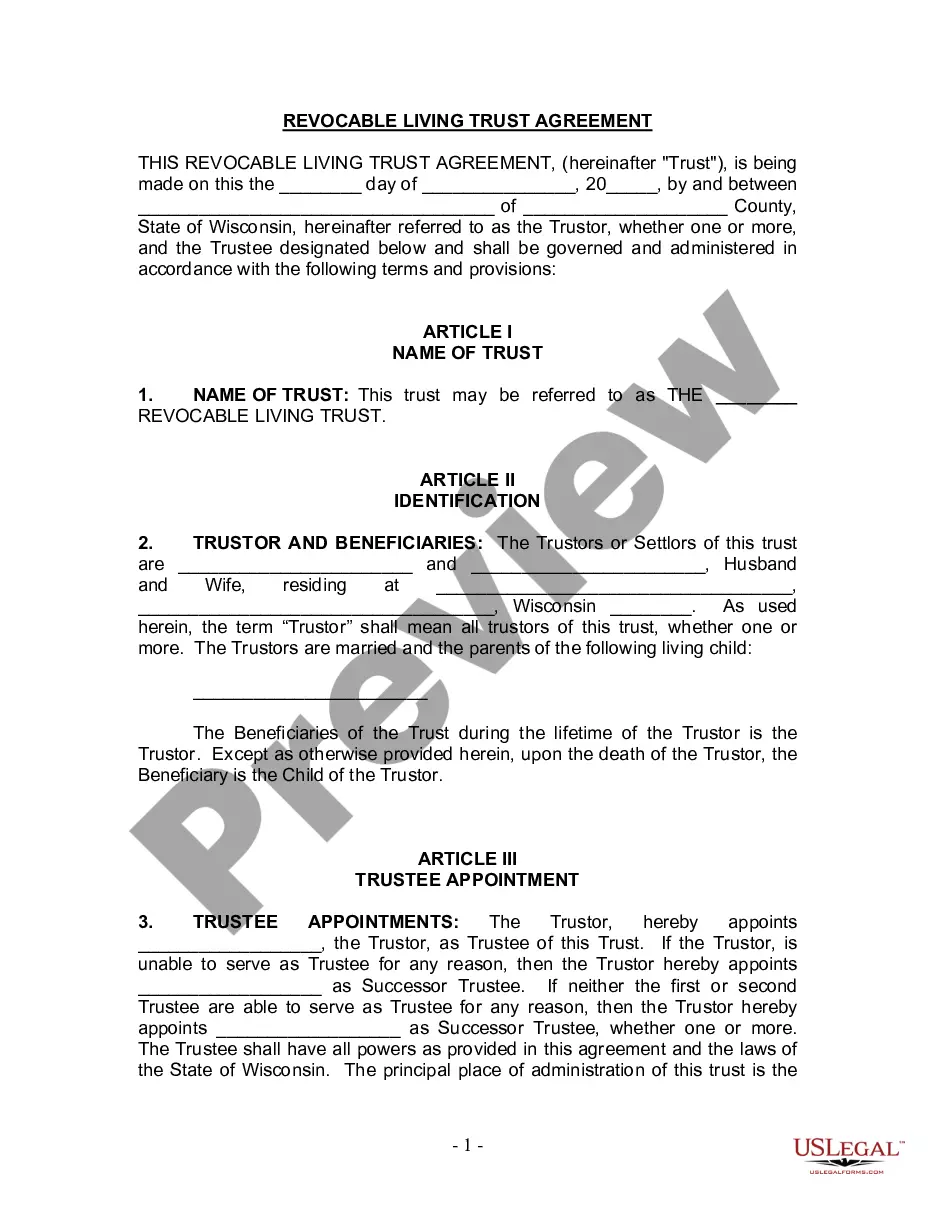
This Living Trust for Husband and Wife with Minor and/or Adult Children is a legal document allowing spouses to establish a revocable living trust during their lifetime. This trust holds and manages their assets for the benefit of their children and is designed for effective estate planning. Unlike wills, a living trust bypasses probate, enabling a smoother transition of assets upon death. It ensures that the grantors maintain control over their assets while also providing for their beneficiaries without the complexities often associated with probate proceedings.
Form components explained
- Trust Name: The document includes a section to designate the name of the trust.
- Identification of Trustors: Details about the husband and wife establishing the trust.
- Trustee Appointment: Designates who will manage the trust, including successor trustees in case of incapacity or death.
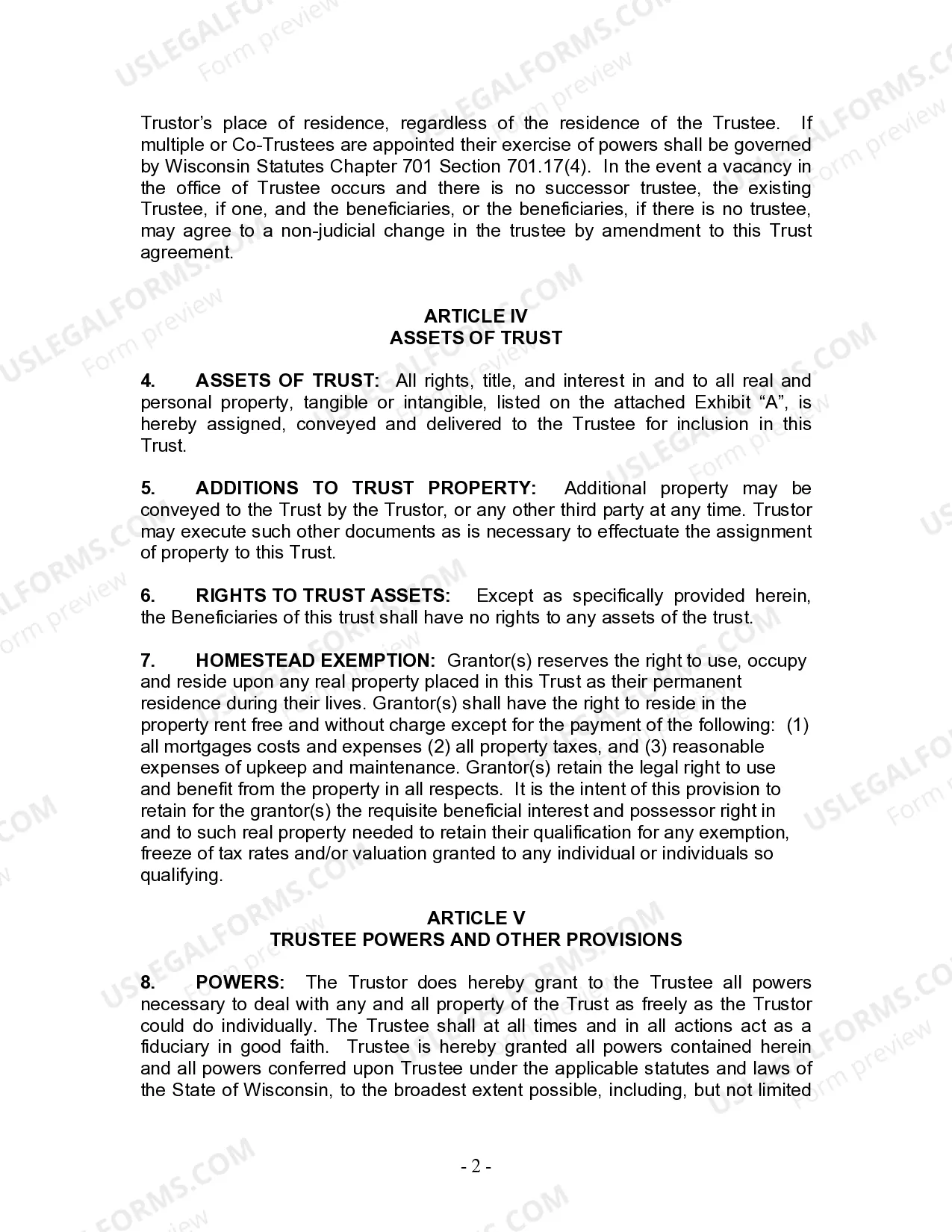
- Assets of Trust: Lists the property and assets being transferred into the trust.
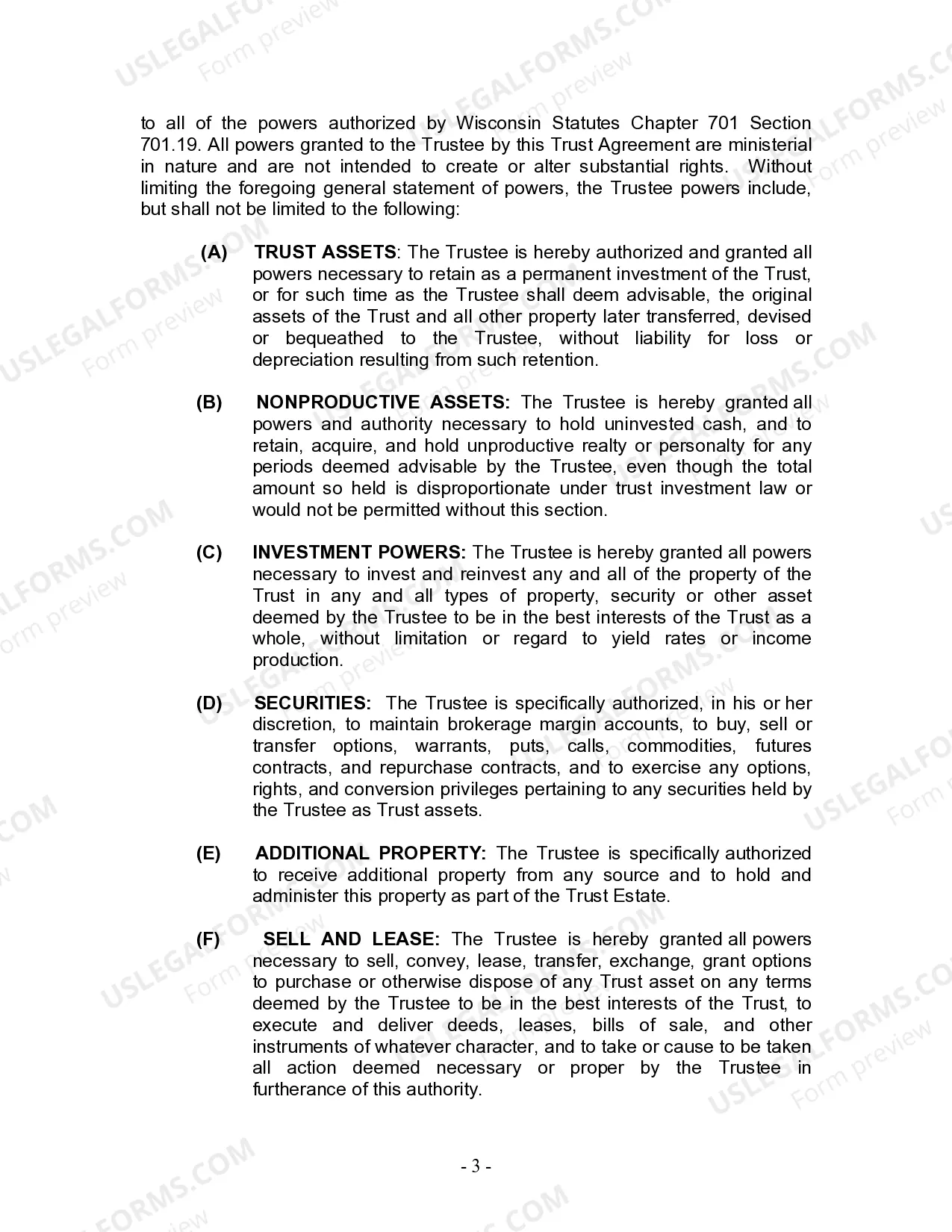
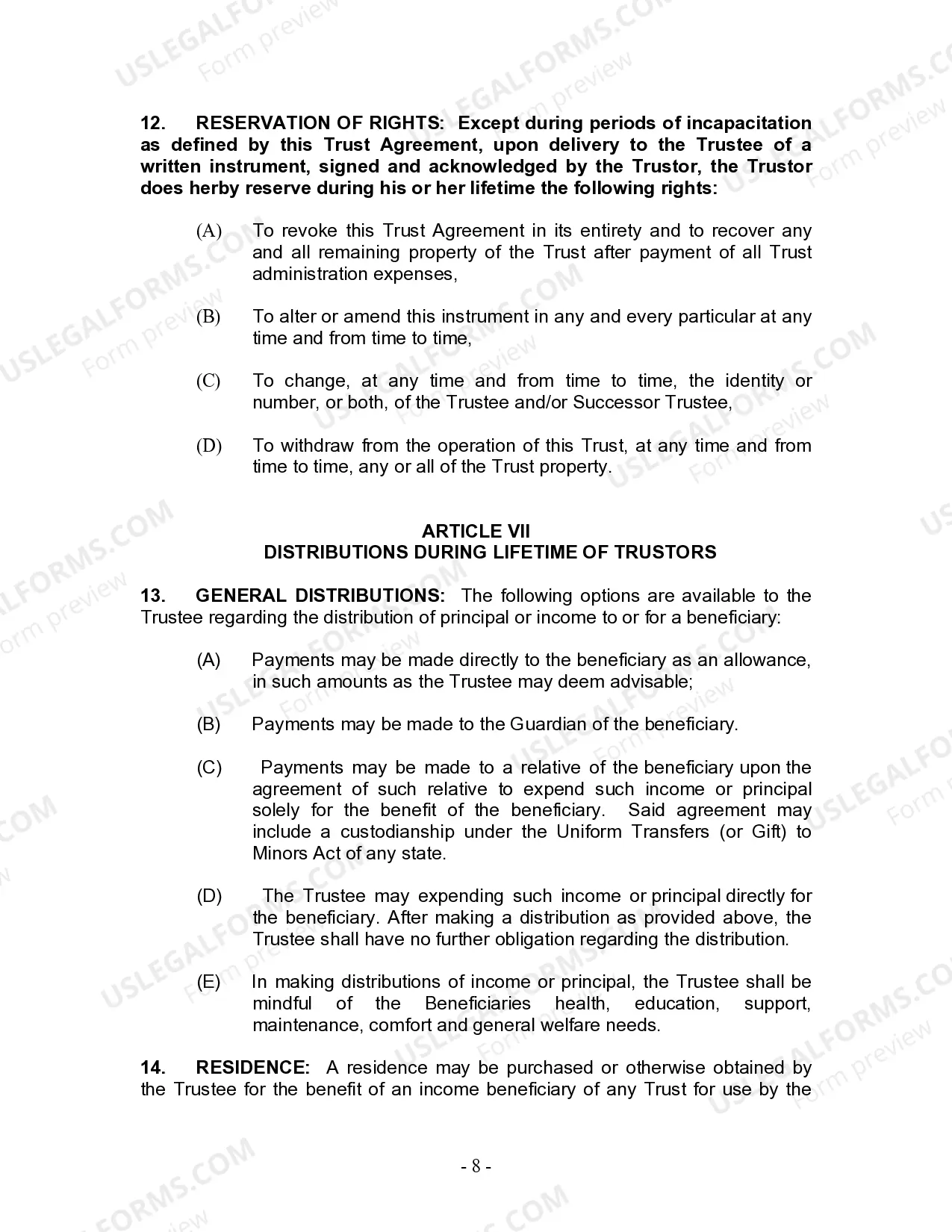
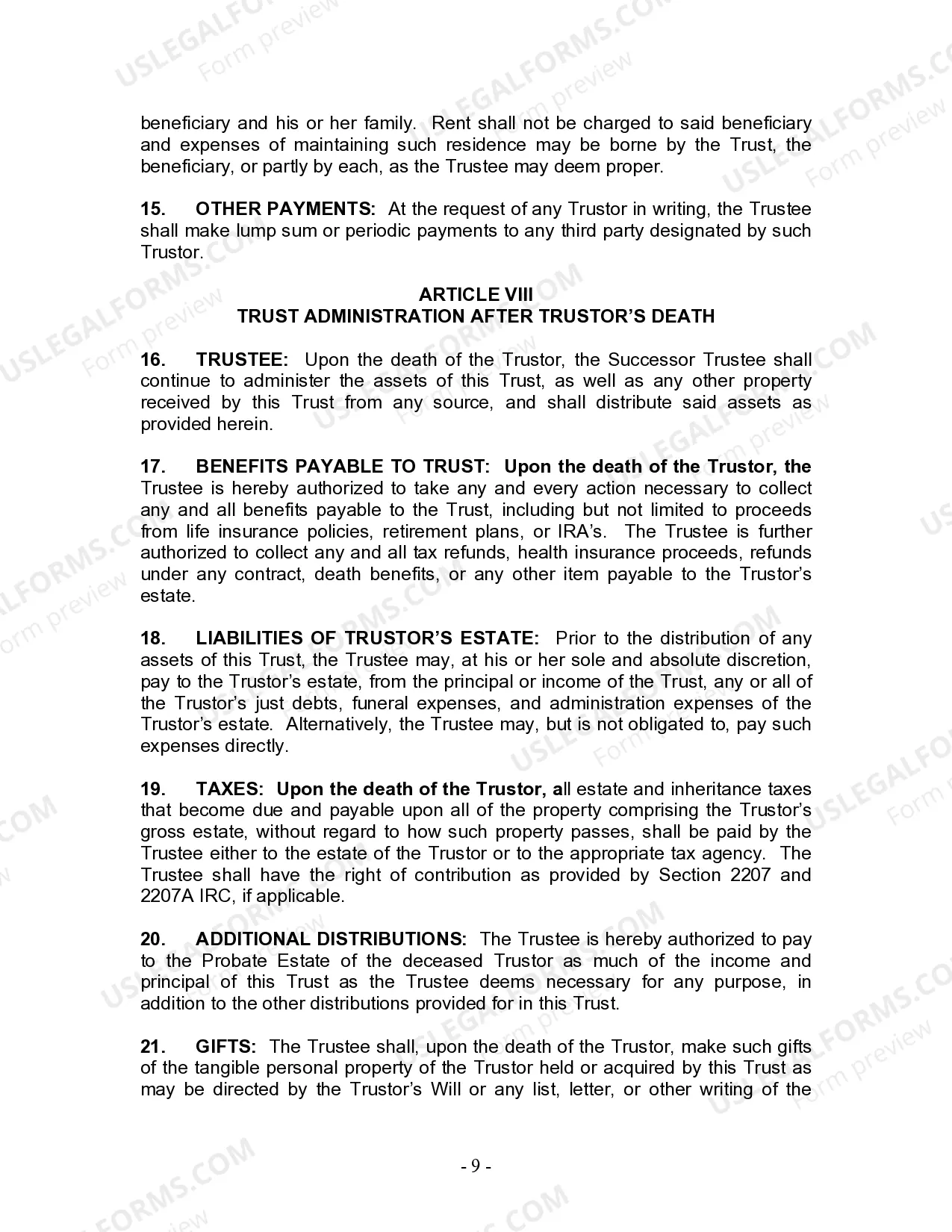
- Trustee Powers: Outlines the authority granted to the trustee for managing and distributing trust assets.
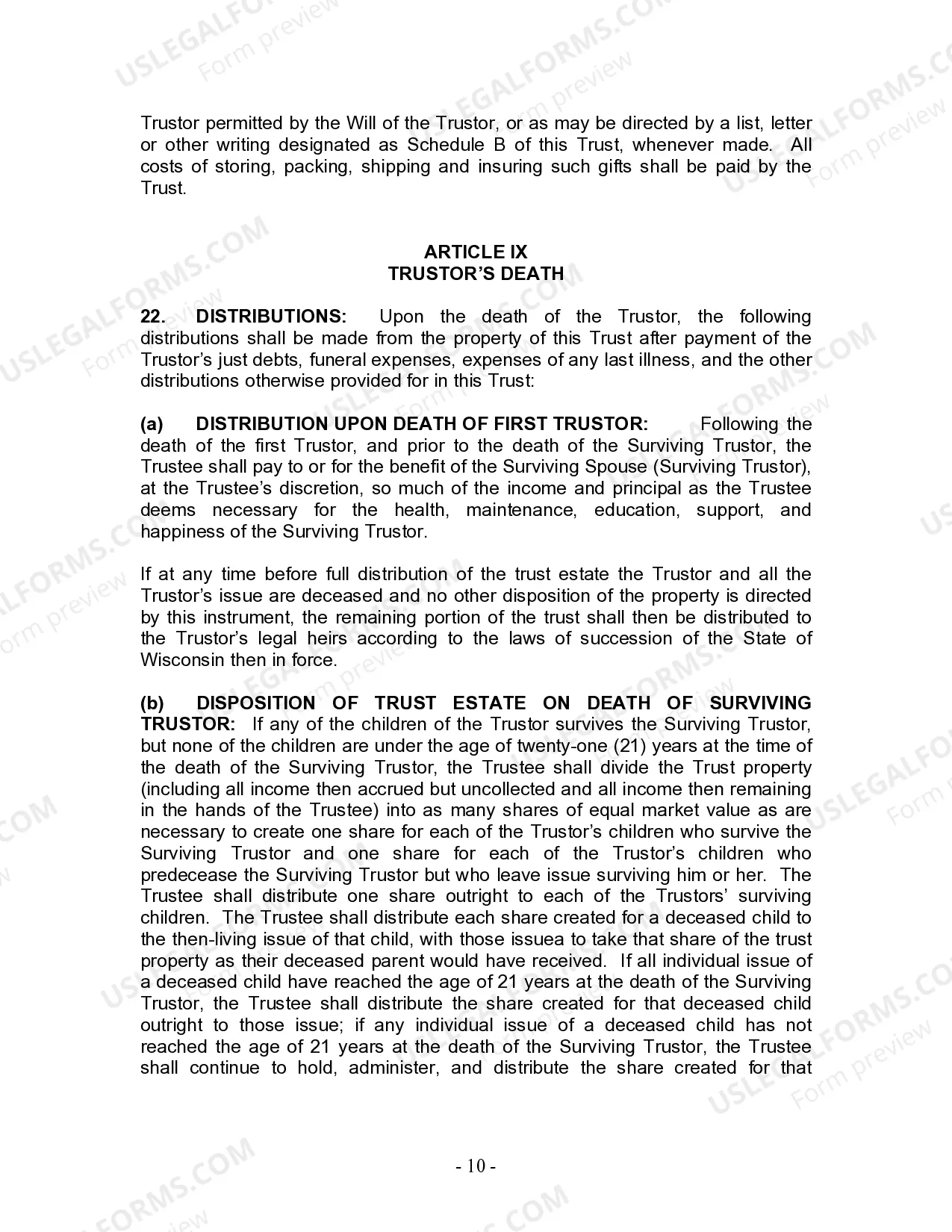
- Distributions: Specifies how assets will be distributed to beneficiaries upon the death of the trustors.



Common use cases
This form should be used when a married couple wishes to create a legally binding framework to manage their assets during life and facilitate their distribution after death. It is particularly beneficial for those with minor or adult children, as it allows parents to provide for their children without the delays or costs of probate. This form is ideal in situations such as planning for incapacitation, securing assets for children, or simply simplifying the estate process for surviving family members.
Who can use this document
This document is intended for:
- Married couples looking to set up a revocable living trust.
- Parents wanting to ensure their children's financial security in the event of their death.
- Individuals seeking to avoid the probate process for their estate.
- Couples with substantial assets who want clear instructions regarding asset management and distribution.
Completing this form step by step
- Identify the trust's name and date of establishment.
- Provide the names and addresses of the trustors (husband and wife).
- Designate the trustee and any successor trustees for the trust.
- List all assets to be included in the trust in the appropriate section.
- Review, sign, and date the document before a notary public if required.
Notarization guidance
To make this form legally binding, it must be notarized. Our online notarization service, powered by Notarize, lets you verify and sign documents remotely through an encrypted video session.
Get your form ready online
Our built-in tools help you complete, sign, share, and store your documents in one place.
Make edits, fill in missing information, and update formatting in US Legal Forms—just like you would in MS Word.
Download a copy, print it, send it by email, or mail it via USPS—whatever works best for your next step.
Sign and collect signatures with our SignNow integration. Send to multiple recipients, set reminders, and more. Go Premium to unlock E-Sign.
If this form requires notarization, complete it online through a secure video call—no need to meet a notary in person or wait for an appointment.
We protect your documents and personal data by following strict security and privacy standards.

Make edits, fill in missing information, and update formatting in US Legal Forms—just like you would in MS Word.

Download a copy, print it, send it by email, or mail it via USPS—whatever works best for your next step.

Sign and collect signatures with our SignNow integration. Send to multiple recipients, set reminders, and more. Go Premium to unlock E-Sign.

If this form requires notarization, complete it online through a secure video call—no need to meet a notary in person or wait for an appointment.

We protect your documents and personal data by following strict security and privacy standards.
Common mistakes
- Failing to explicitly name the trust or its assets, leading to confusion during trust administration.
- Not appointing a suitable successor trustee in case the primary trustee is unable to serve.
- Overlooking the need to update the trust as assets or family circumstances change.
Benefits of using this form online
- Convenient access to legal forms that can be customized and downloaded at any time.
- Forms created with the guidance of licensed attorneys, ensuring accuracy and compliance with state law.
- Easy to edit and update as personal circumstances change, providing flexibility in estate planning.
Quick recap
- A living trust allows spouses to manage and protect their assets during their lifetime and provides a clear plan for distribution after death.
- This form is specifically designed for married couples with minor or adult children in Wisconsin.
- It is crucial to keep the trust updated and properly executed to ensure it meets legal requirements and family needs.
Looking for another form?

Form popularity
FAQ
In California, surviving spouses already receive all of the community property upon the death of their spouse.However, creating a joint will is still an option in California, and while it might help a couple save some time and money on their estate plan, it can also lead to some complex problems.
Q: Can a person have more than one trust? A: Yes, it is not that uncommon for a person to be the beneficiary of multiple trusts. However, caution should be used. Trusts come in many shapes and sizes and can serve multiple purposes and can be established by you or by someone else for your benefit.
Separate trusts may offer better protection from creditors, if this is a concern. For example, at the death of the first spouse, the deceased spouse's trust becomes irrevocable, which makes it harder to access by creditors. And yet the surviving spouse can still access it for income and other needs.
Some Trusts Protect Assets from Divorce. In California, trusts established before marriage are considered separate property. Other trusts including domestic or foreign asset protection trusts, revocable trusts and irrevocable trusts also protect assets in the event of divorce.
Separate trusts provide more flexibility in the event of a death in the marriage. Since the trust property is already divided, separate trusts preserve the surviving spouse's ability to amend or revoke assets held within their own trust, while ensuring that the deceased spouse's trust cannot be amended after death.
Qualified retirement accounts 401ks, IRAs, 403(b)s, qualified annuities. Health saving accounts (HSAs) Medical saving accounts (MSAs) Uniform Transfers to Minors (UTMAs) Uniform Gifts to Minors (UGMAs) Life insurance. Motor vehicles.
Joint trusts are easier to fund and maintain.In a joint trust, after the death of the first spouse, the surviving spouse has complete control of the assets. When separate trusts are used, the deceased spouses' trust becomes irrevocable and the surviving spouse has limited control over assets.
Typically, when a married couple utilizes a Revocable Living Trust based estate plan, each spouse creates and funds his or her own separate Revocable Living Trust. This results in two trusts. However, in the right circumstances, a married couple may be better served by creating a single Joint Trust.