Wisconsin Warranty Deed from two Individuals to Husband and Wife
What is this form?
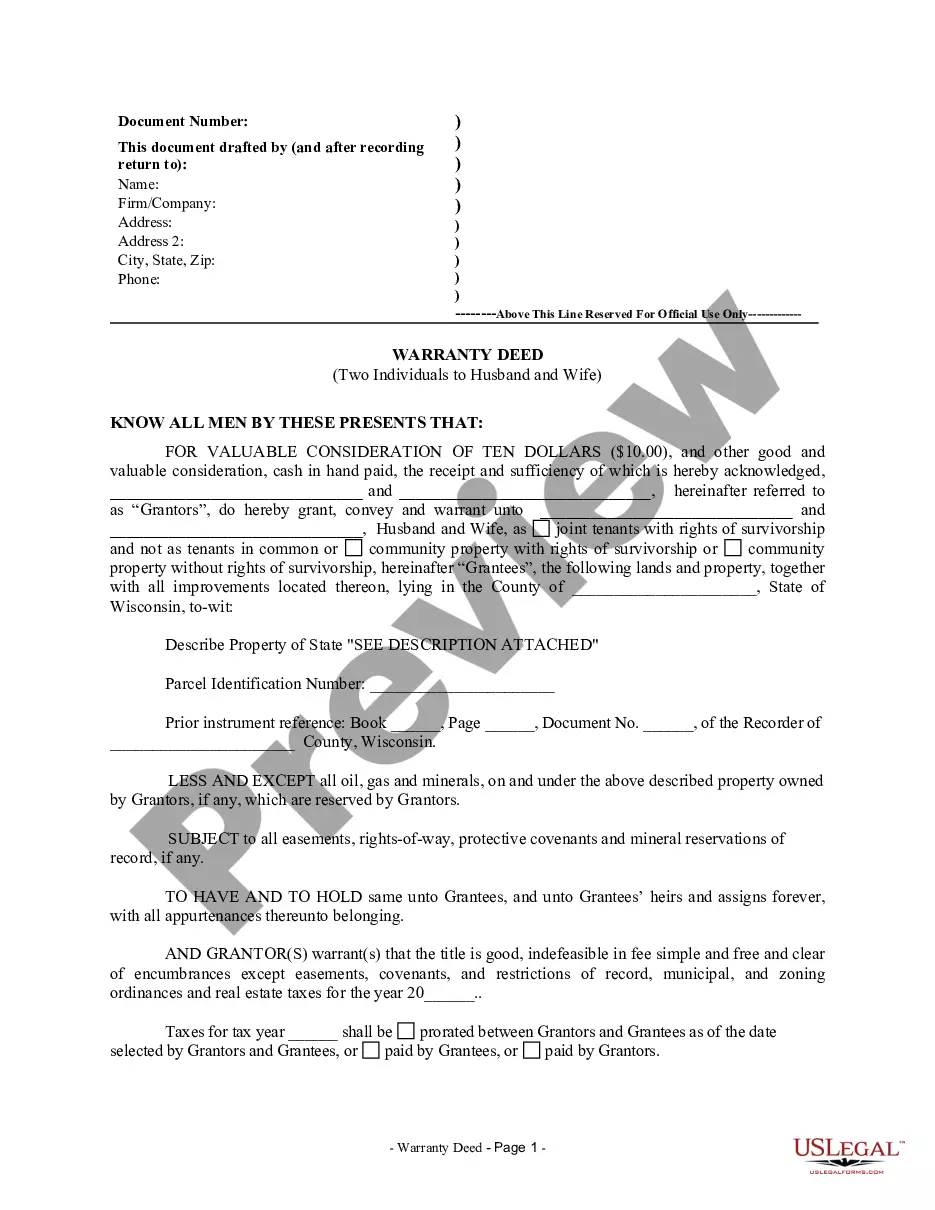
This Warranty Deed from two Individuals to Husband and Wife is a legal document that allows two individuals (the Grantors) to transfer property ownership to a married couple (the Grantees). The document ensures that the title to the property is clear and free from encumbrances, except for any specified easements or mineral rights. Unlike other forms of deeds, this warranty deed provides specific assurances about the quality of title, making it a reliable choice for property transfers between individuals and couples.
Main sections of this form
- Description of the property being conveyed.
- Parcel Identification Number for accurate property identification.
- Details of any prior instruments regarding the title.
- Warranty statements regarding the clarity of the title.
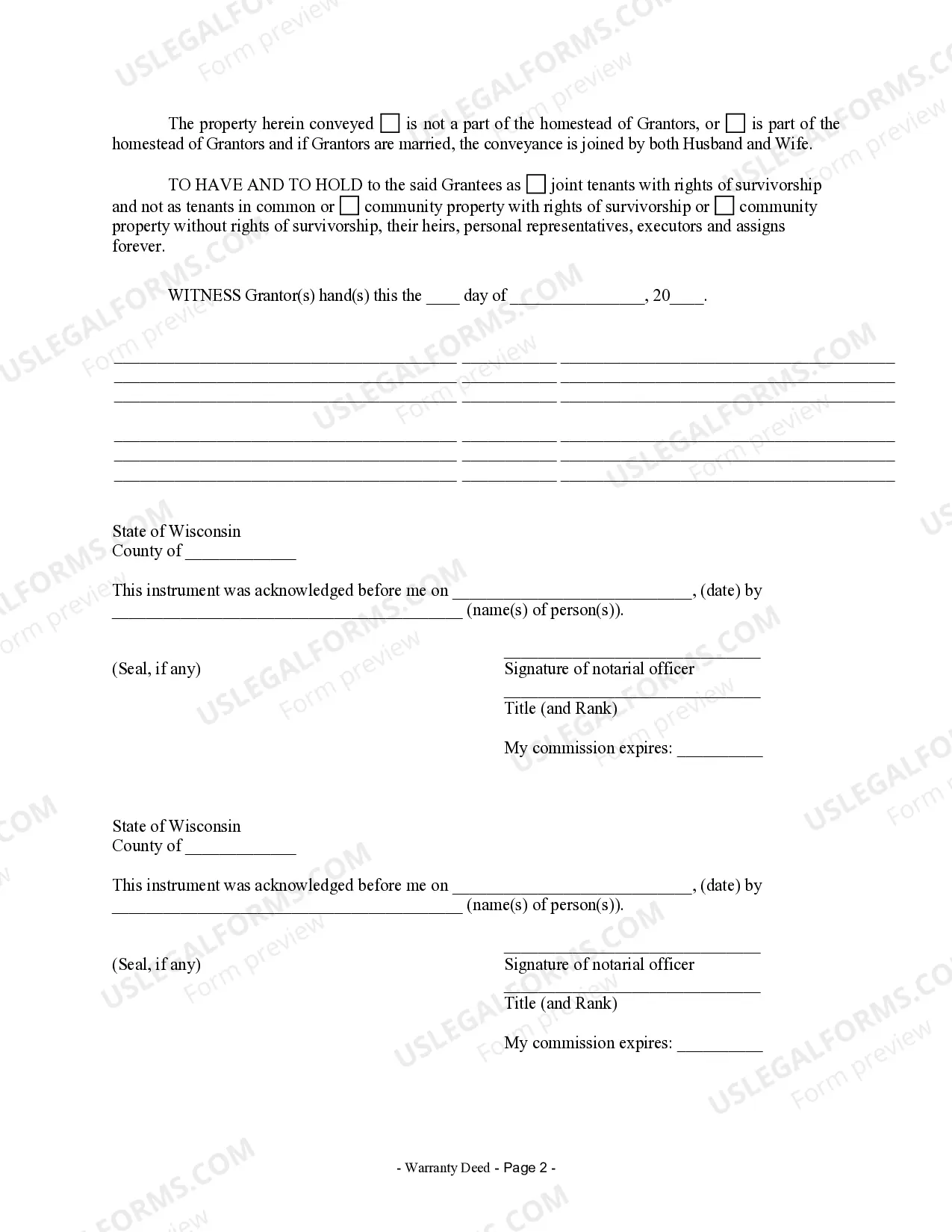
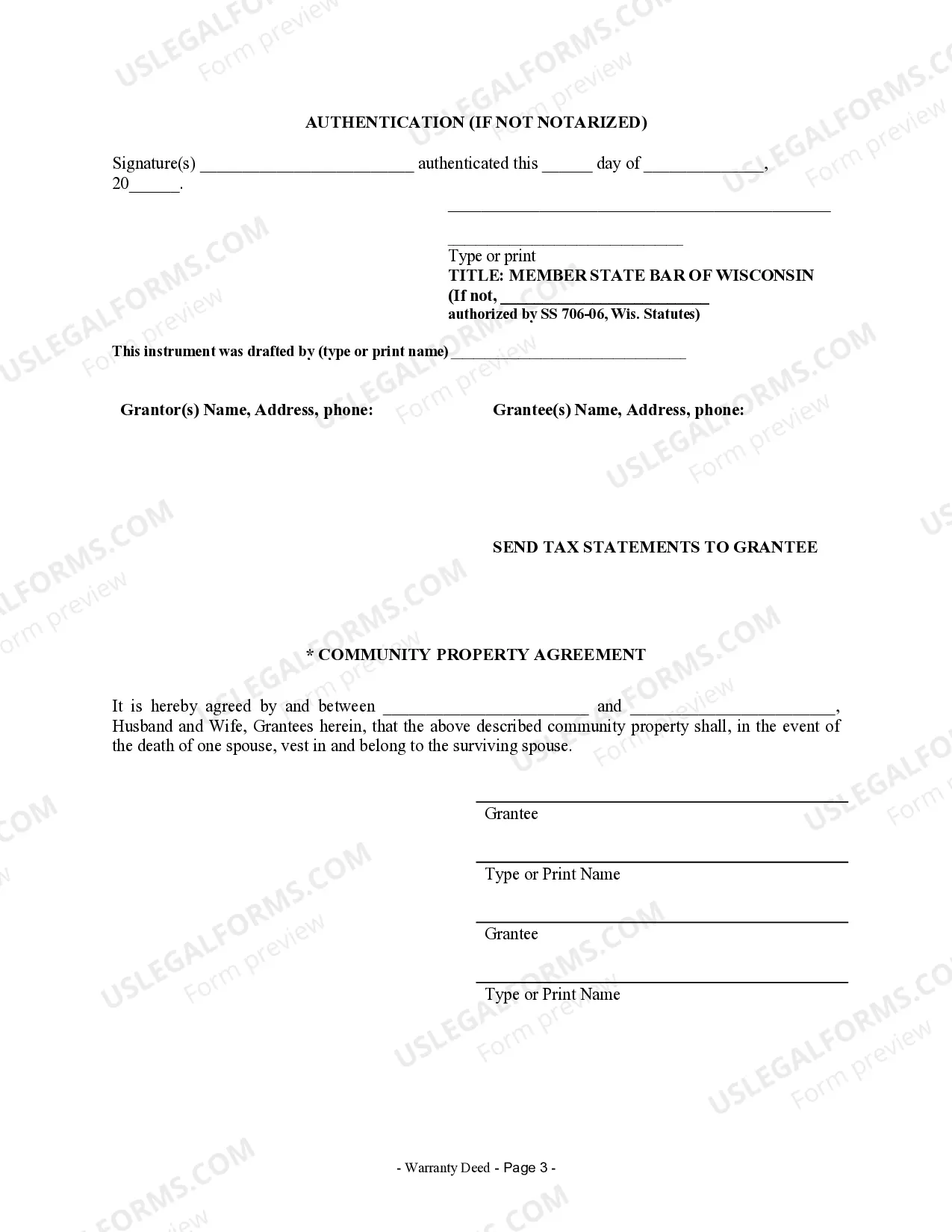
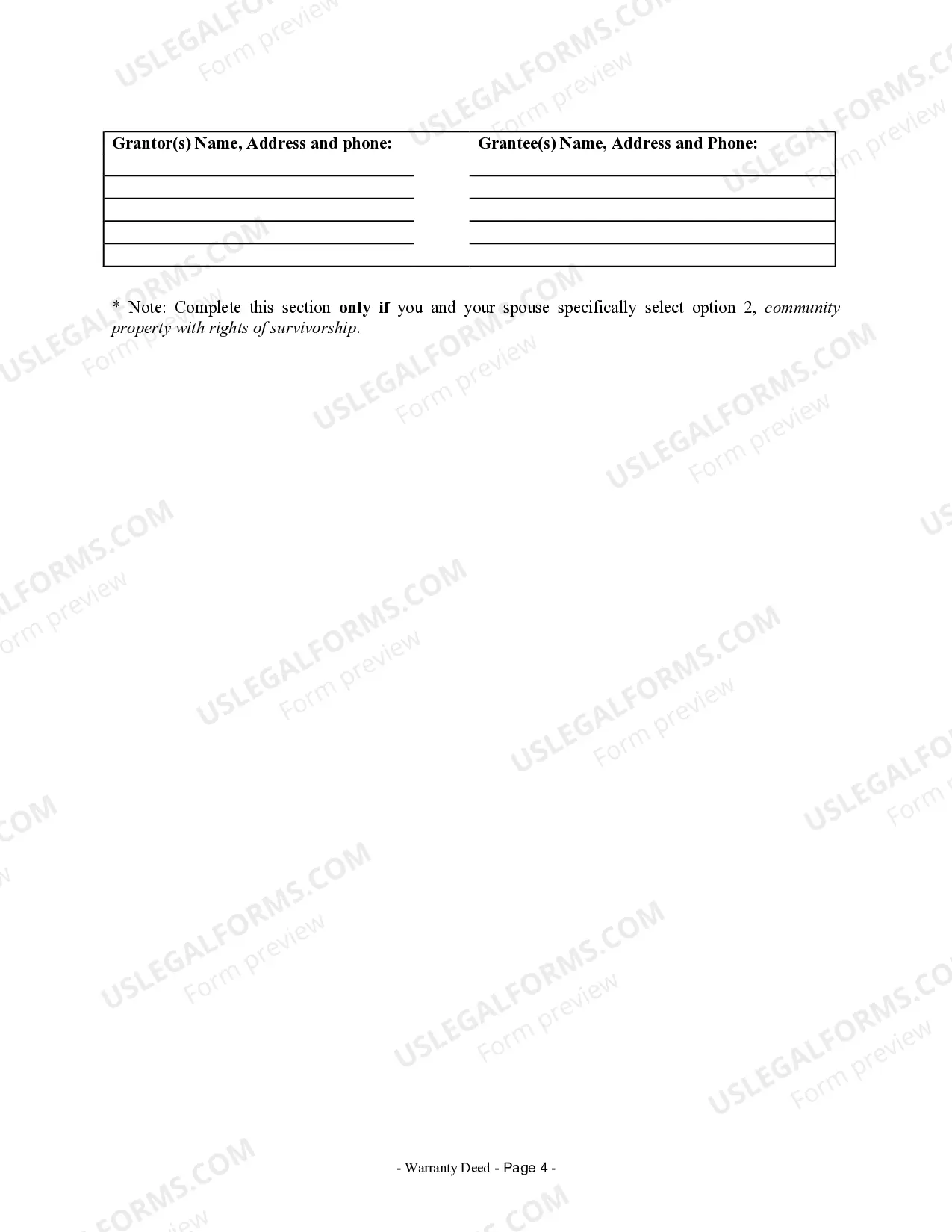
- Sections for the signatures of Grantors and acknowledgment by a Notary Public.
- Provisions for easements and rights of way affecting the property.





Common use cases
This warranty deed is typically used when two individuals want to legally transfer ownership of real estate to a married couple. It is suitable for various situations, such as family members conveying property to a couple, joint purchases, or when consolidating ownership rights. This form is particularly important when the Grantors wish to provide a strong legal guarantee about their title's validity.
Intended users of this form
This form is intended for:
- Property owners looking to transfer ownership to a husband and wife.
- Individuals who want to ensure the legal validity and clear title of the property transfer.
- Families transferring property to relatives who are married.
How to complete this form
- Identify the parties involved: list the names of the Grantors and Grantees.
- Specify the property: provide a detailed description and Parcel Identification Number.
- Enter any prior instrument references if applicable.
- Include a warranty statement ensuring the title is clear and free from encumbrances, except as noted.
- Have all parties sign the form and provide necessary notary acknowledgment.
Notarization guidance
To make this form legally binding, it must be notarized. Our online notarization service, powered by Notarize, lets you verify and sign documents remotely through an encrypted video session.
Get your form ready online
Our built-in tools help you complete, sign, share, and store your documents in one place.
Make edits, fill in missing information, and update formatting in US Legal Forms—just like you would in MS Word.
Download a copy, print it, send it by email, or mail it via USPS—whatever works best for your next step.
Sign and collect signatures with our SignNow integration. Send to multiple recipients, set reminders, and more. Go Premium to unlock E-Sign.
If this form requires notarization, complete it online through a secure video call—no need to meet a notary in person or wait for an appointment.
We protect your documents and personal data by following strict security and privacy standards.

Make edits, fill in missing information, and update formatting in US Legal Forms—just like you would in MS Word.

Download a copy, print it, send it by email, or mail it via USPS—whatever works best for your next step.

Sign and collect signatures with our SignNow integration. Send to multiple recipients, set reminders, and more. Go Premium to unlock E-Sign.

If this form requires notarization, complete it online through a secure video call—no need to meet a notary in person or wait for an appointment.

We protect your documents and personal data by following strict security and privacy standards.
Common mistakes
- Failing to accurately describe the property or misspelling the Parcel Identification Number.
- Neglecting to obtain notarization if required for valid execution.
- Forgetting to include the signatures of both Grantors if they are married.
- Not clearly stating any exceptions to the title warranty.
Benefits of using this form online
- Convenience of downloading and filling out the form from home.
- Editability allows users to customize the form to fit their specific needs.
- Access to legally drafted templates by licensed attorneys ensures reliability.
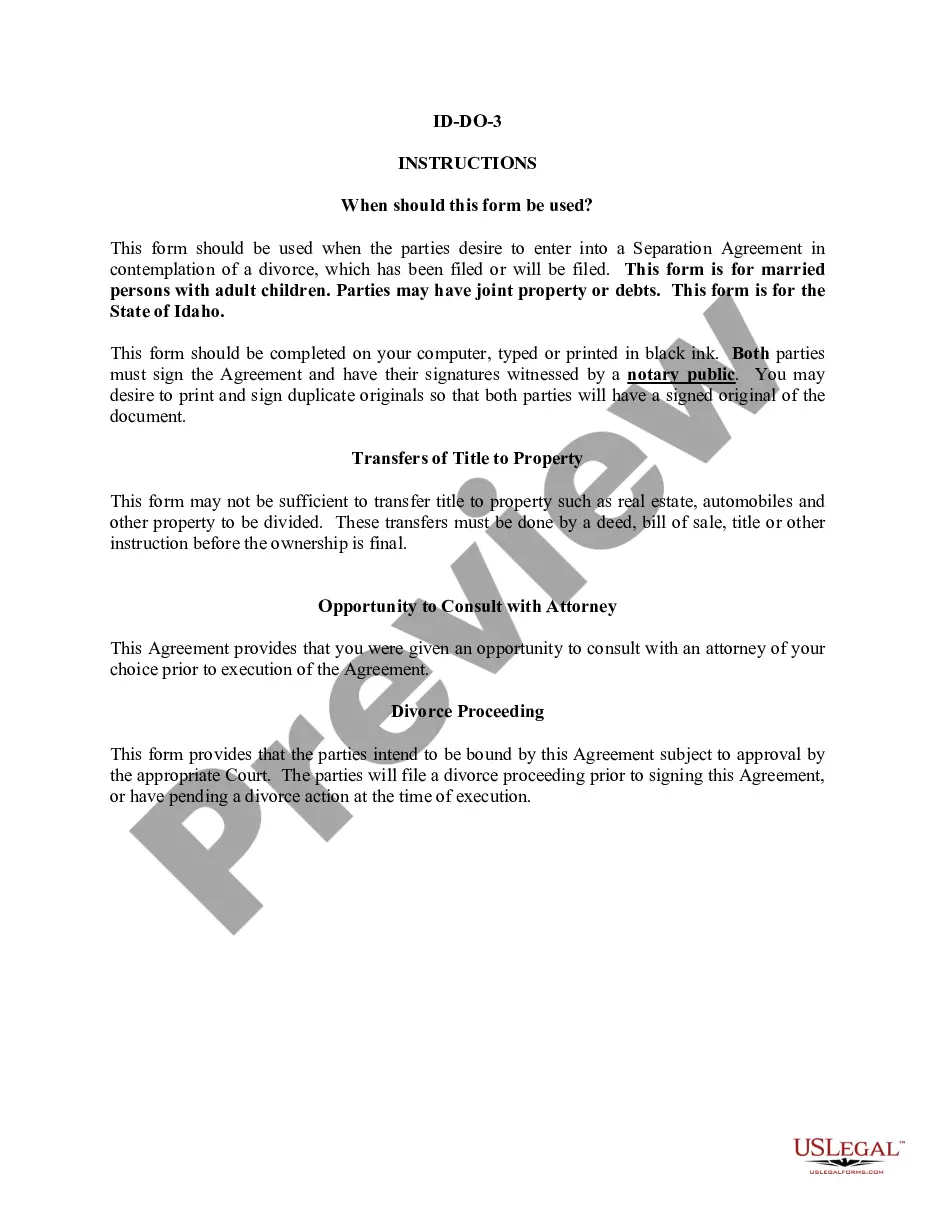
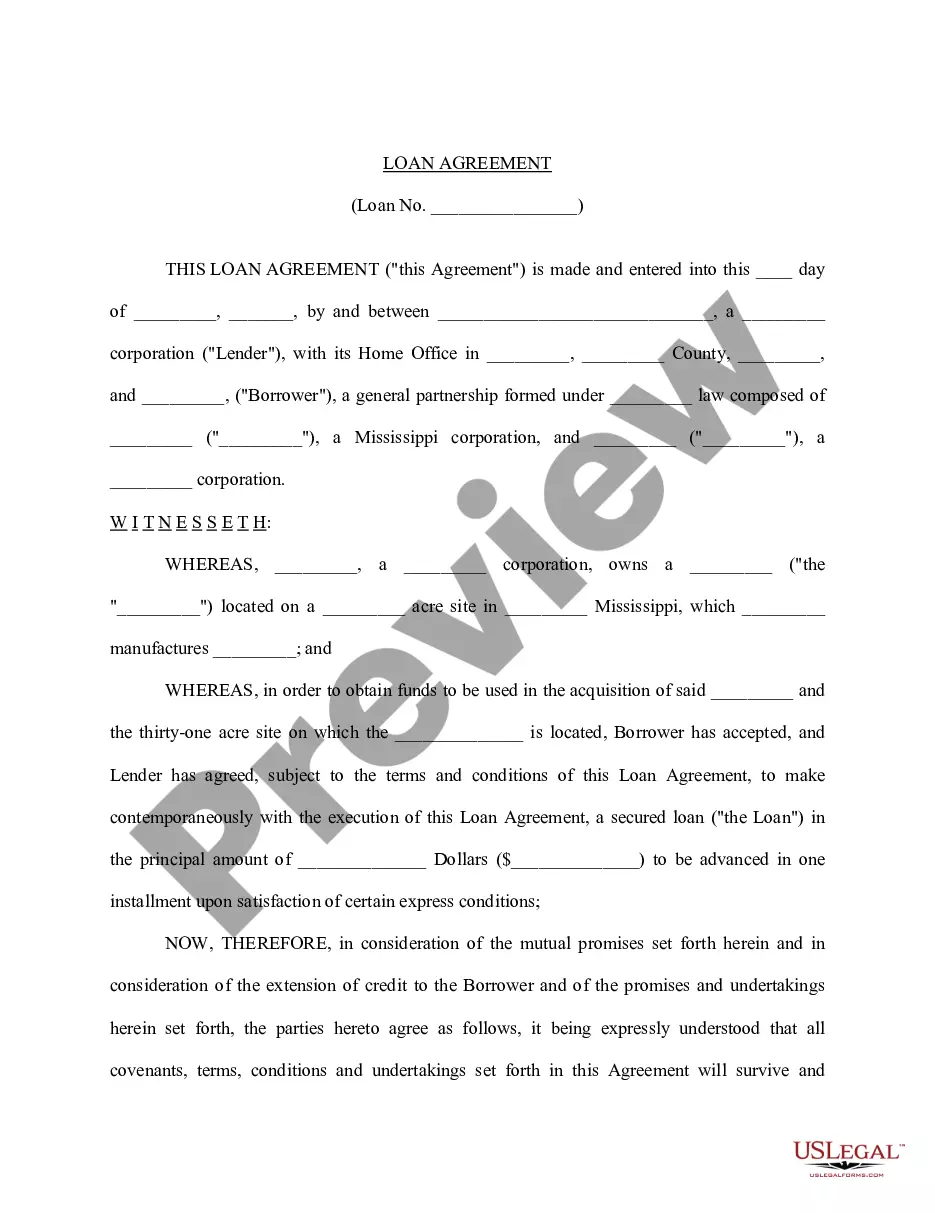
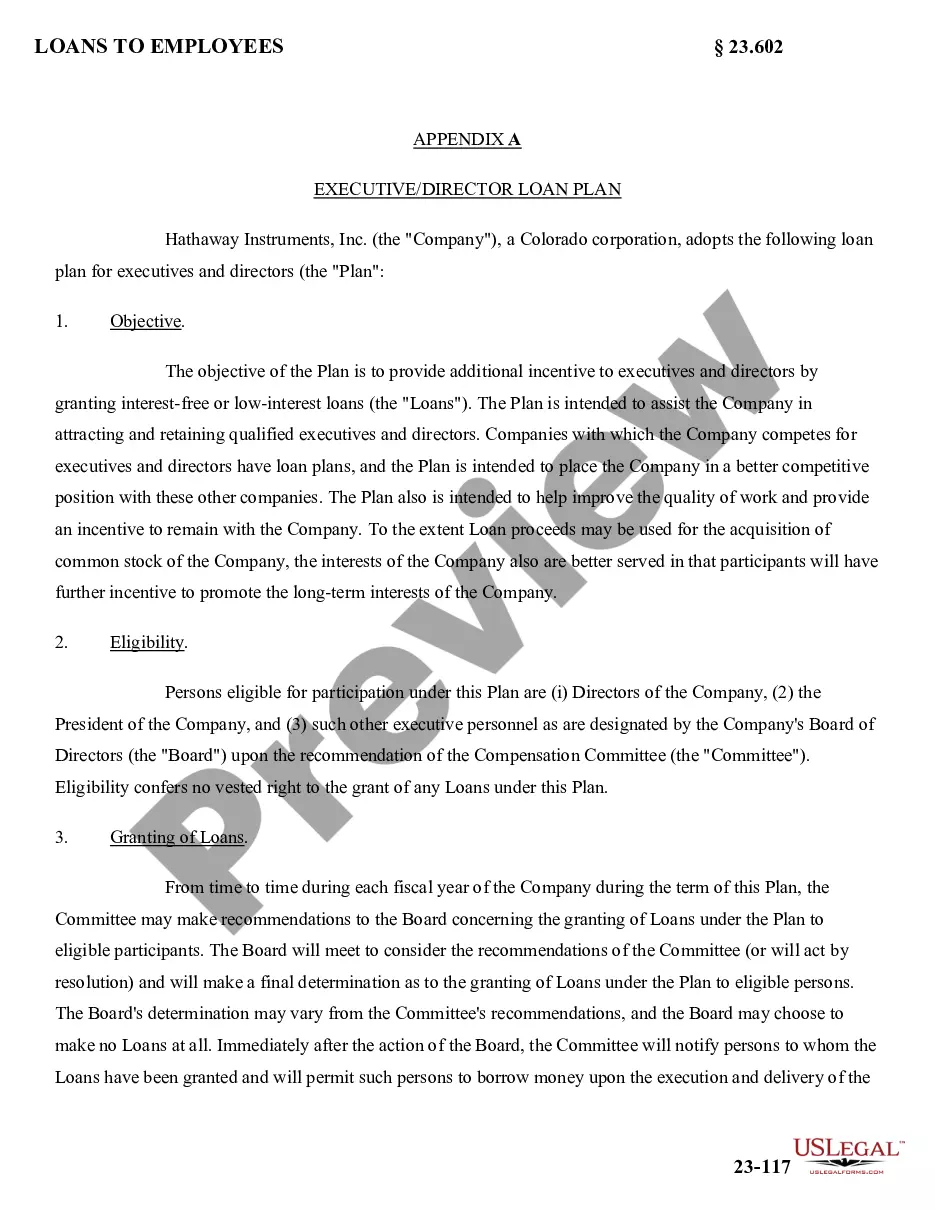
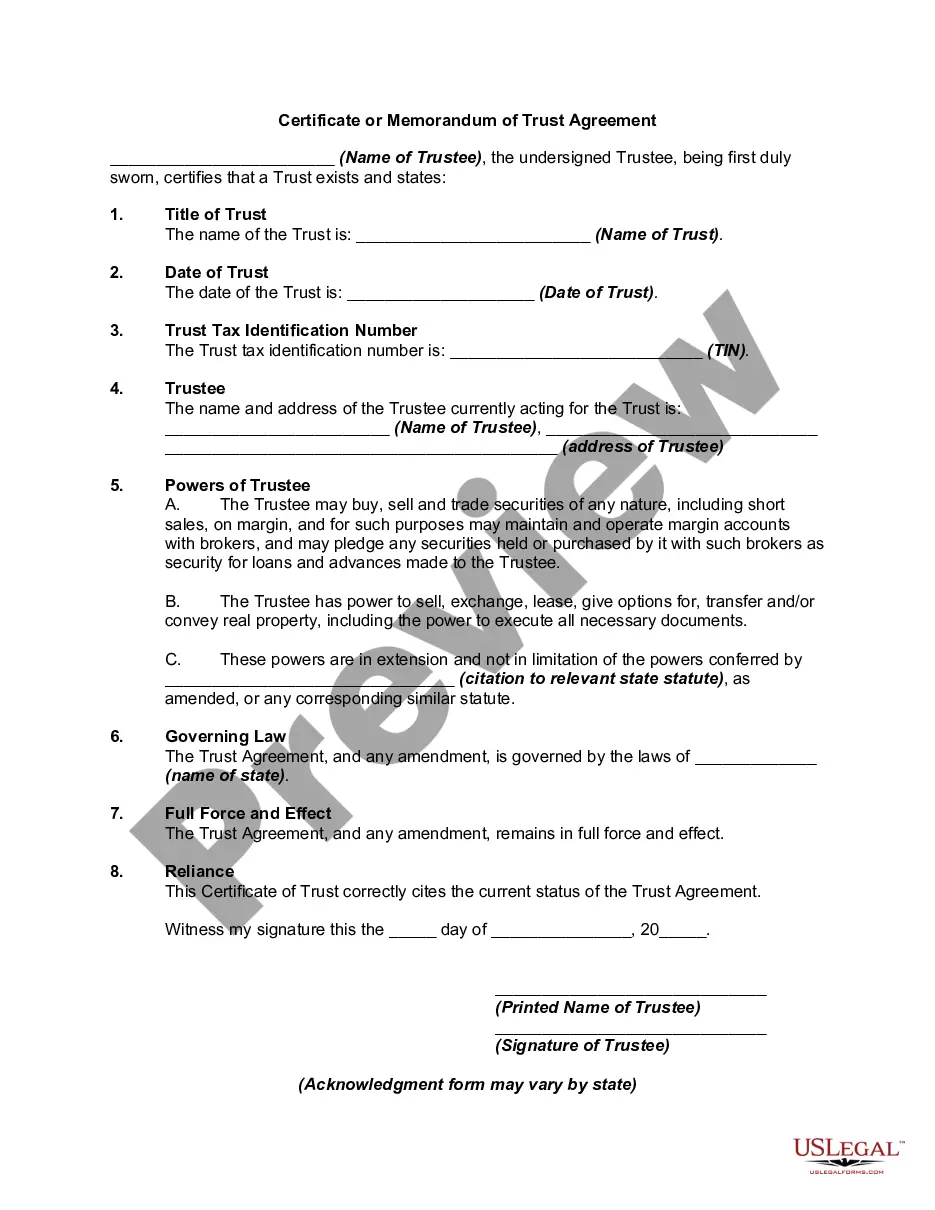
Looking for another form?



Form popularity
FAQ
To sign over property ownership to another person, you'll use one of two deeds: a quitclaim deed or a warranty deed.
With a Survivorship Deed in place, when one of the parties in a joint tenancy dies, the other party (or parties) takes over the deceased party's interest in the property instead of it passing to the deceased's heirs or beneficiaries.
Before adding your spouse to the deed, speak with your attorney. The easiest way to grant your spouse title to your home is via a quitclaim deed (Californians generally use an interspousal grant deed). With a quitclaim deed, you can name your spouse as the property's joint owner.
If you live in a common-law state, you can keep your spouse's name off the title the document that says who owns the property.You can put your spouse on the title without putting them on the mortgage; this would mean that they share ownership of the home but aren't legally responsible for making mortgage payments.
Yes you can. This is called a transfer of equity but you will need the permission of your lender. If you are not married or in a civil partnership you may wish to consider creating a deed of trust and a living together agreement which we can explain to you.
In California, most married couples hold real property (such as land and buildings) as joint tenants with right of survivorship.For instance, many married couples share real property as joint tenants. This way, upon the death of a spouse, the surviving spouse will own 100% share of the property.
In estate law, joint tenancy is a special form of ownership by two or more persons of the same property. The individuals, who are called joint tenants, share equal ownership of the property and have the equal, undivided right to keep or dispose of the property. Joint tenancy creates a Right of Survivorship.
The easiest way to grant your spouse title to your home is via a quitclaim deed (Californians generally use an interspousal grant deed). With a quitclaim deed, you can name your spouse as the property's joint owner. The quitclaim deed must include the property's description, including its boundary lines.
If you look at the registered title to your own jointly owned property and the text isn't shown on it, you own it as joint tenants. If it is there, you own it as tenants-in-common.