Washington Complex Will with Credit Shelter Marital Trust for Large Estates
What is this form?
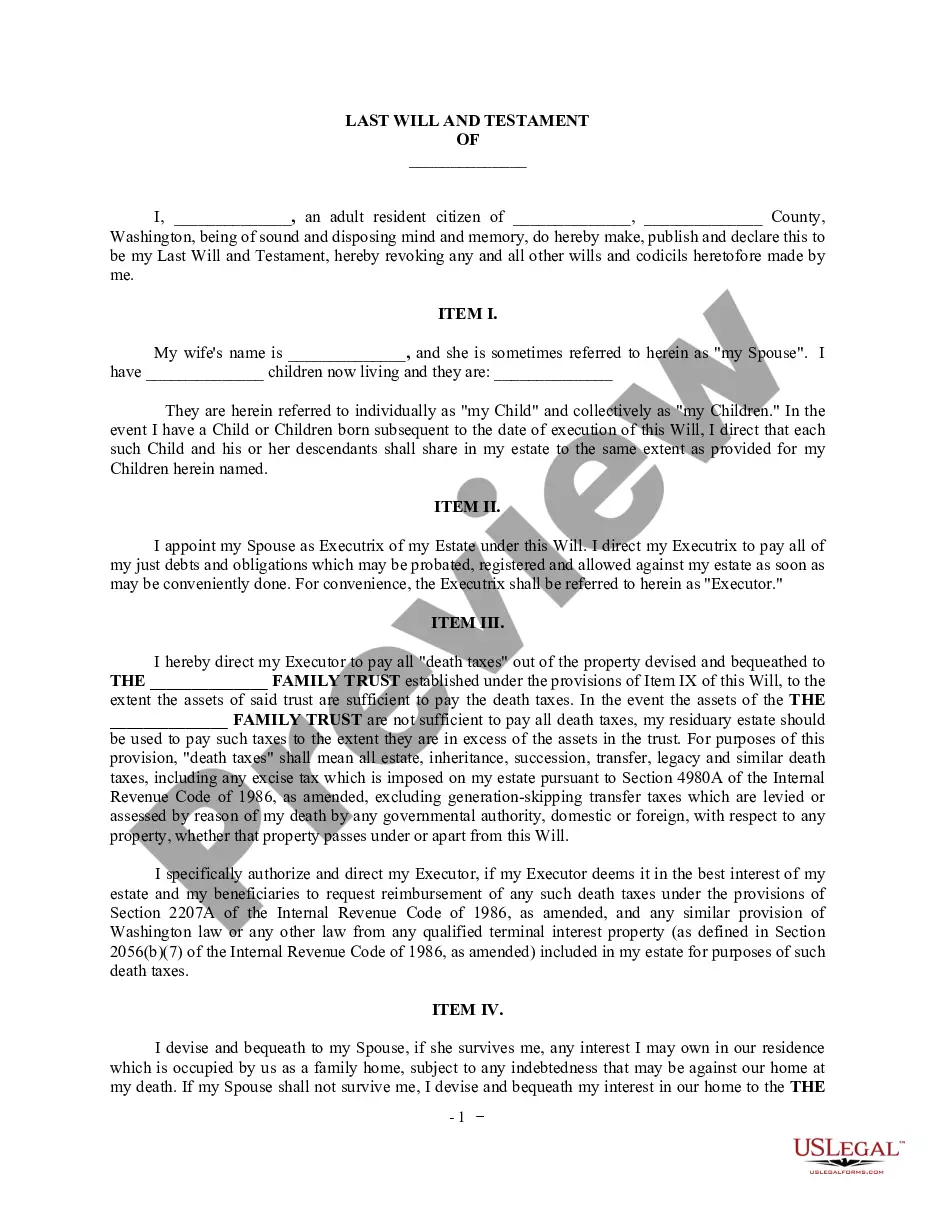
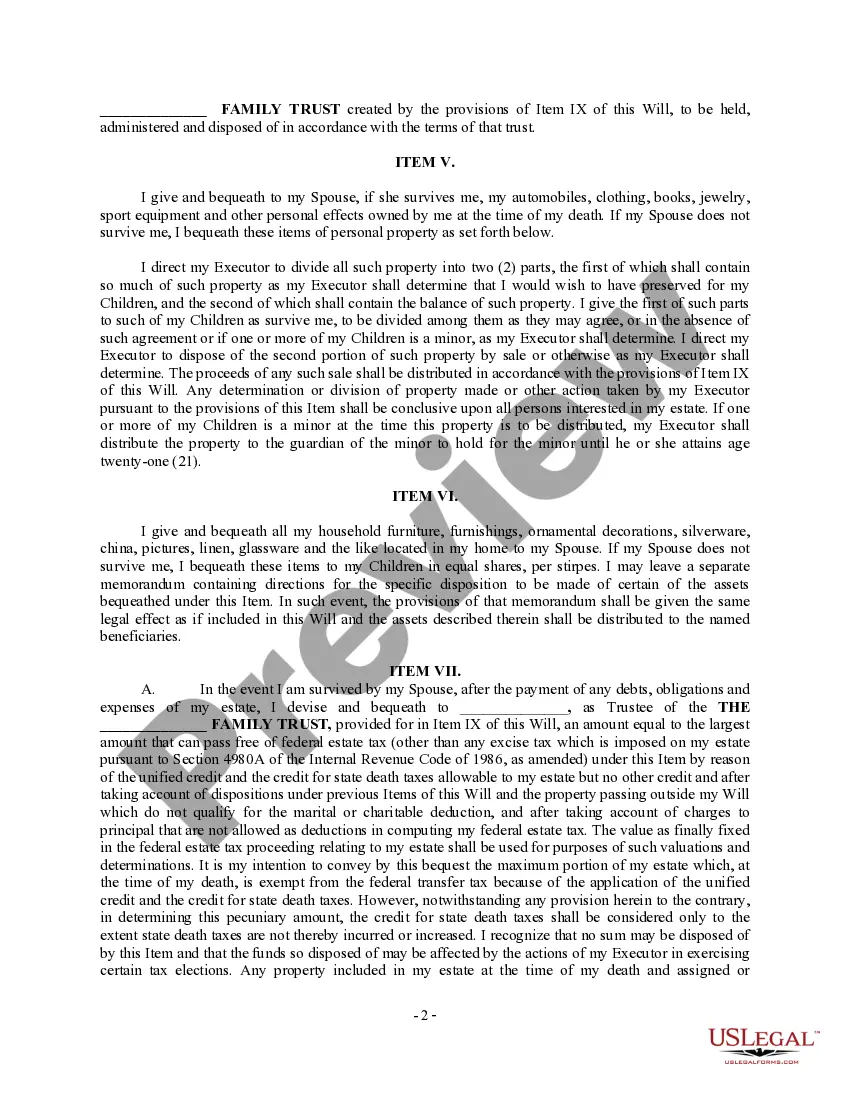
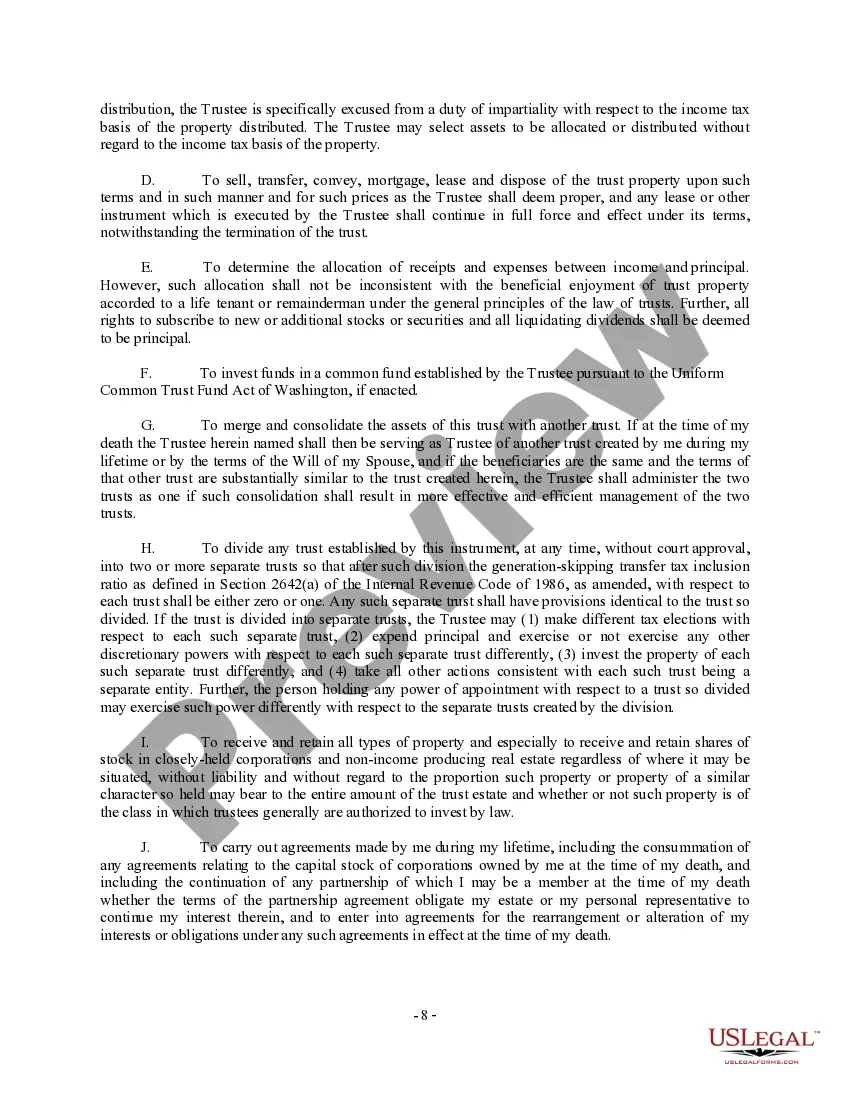
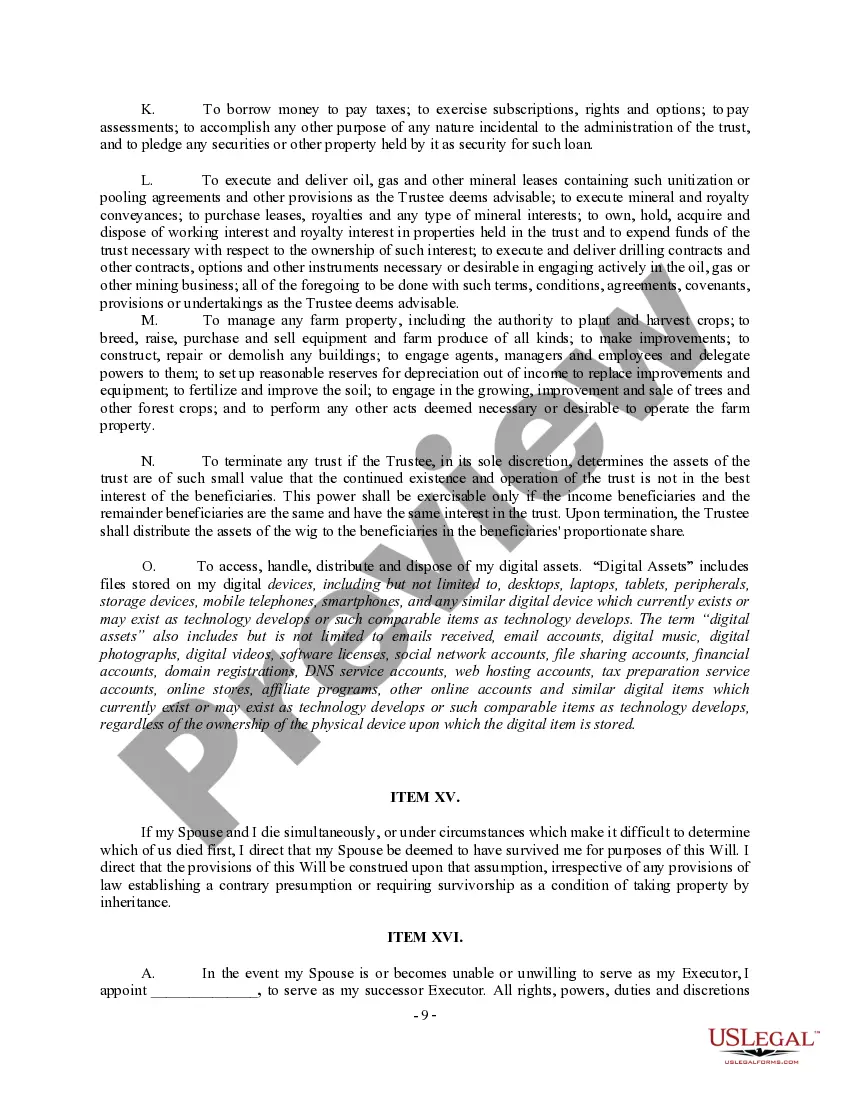
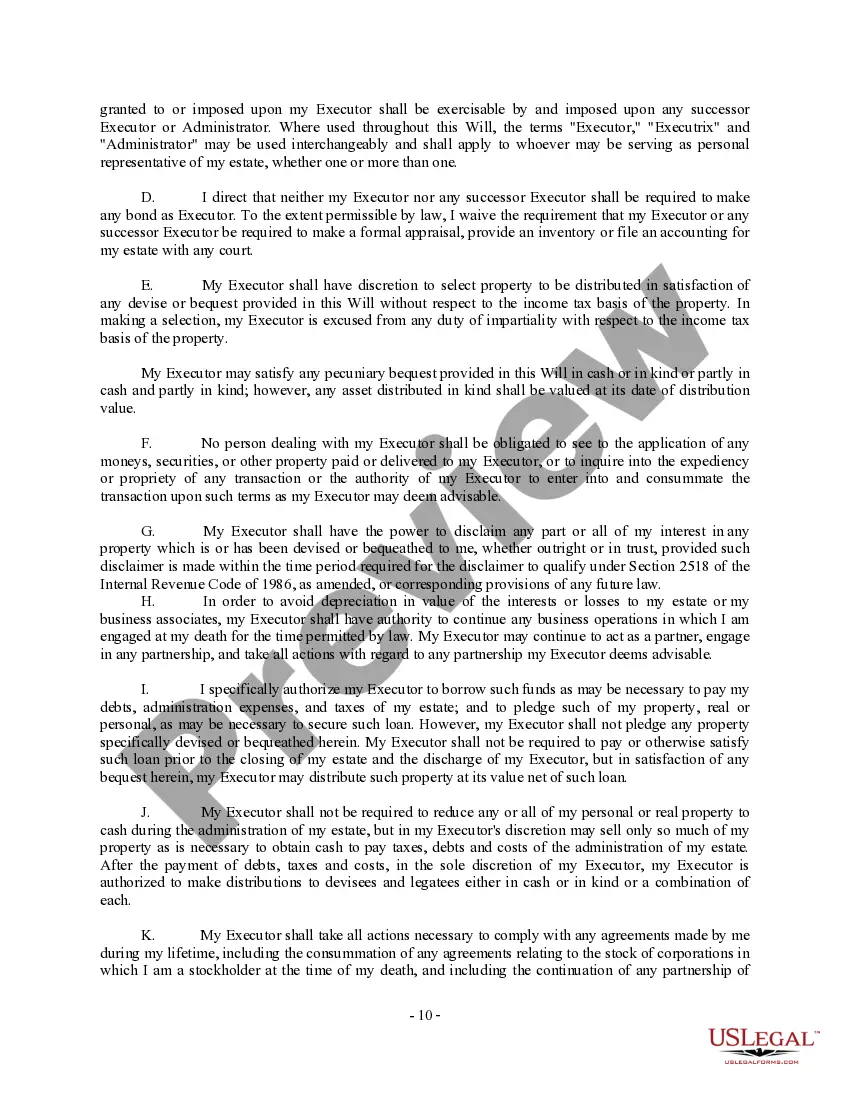
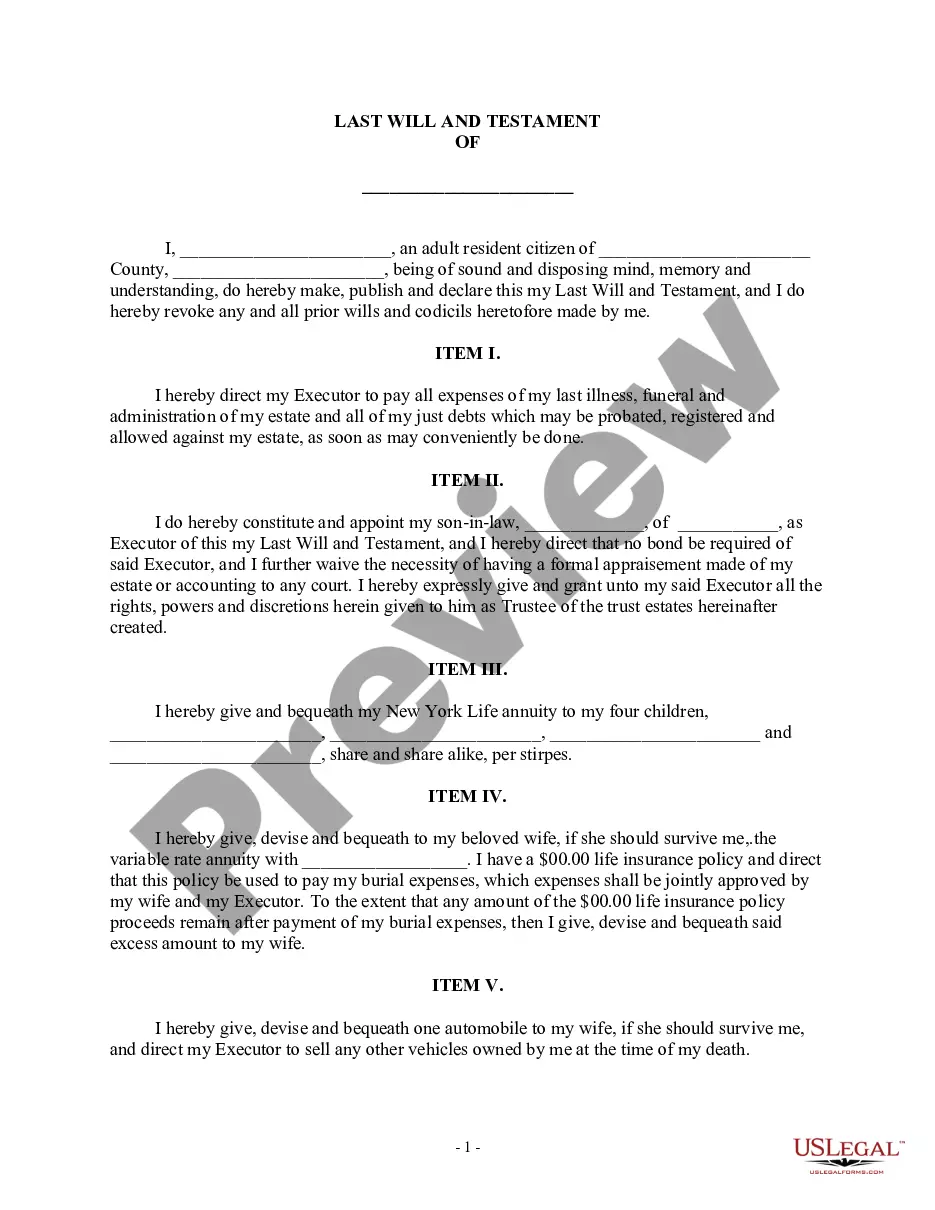
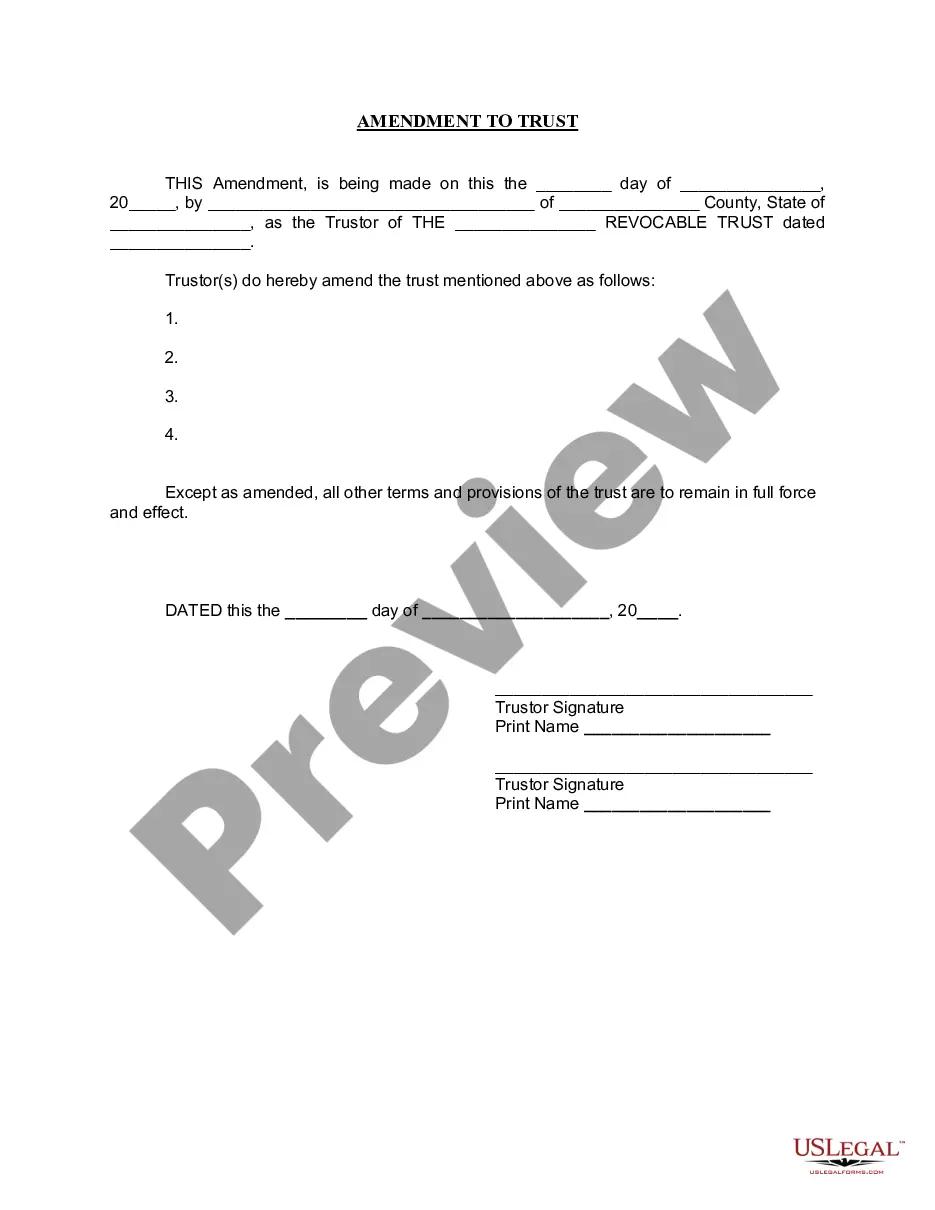
This Complex Will with Credit Shelter Marital Trust for Large Estates is a legally binding document designed for couples who want to maximize the amount of their estate that can pass to heirs without incurring estate taxes. This form allows the first spouse to pass a significant tax-free amount into a trust, benefiting the surviving spouse and children while minimizing tax liability. Unlike simpler wills, this complex will incorporates a trust mechanism that provides enhanced tax benefits, particularly suitable for larger estates, ensuring financial security for loved ones.
Form components explained
- Appointment of an executor to manage the estate.
- Provisions for estate tax payment from trust assets.
- Distribution of property to the surviving spouse and children.
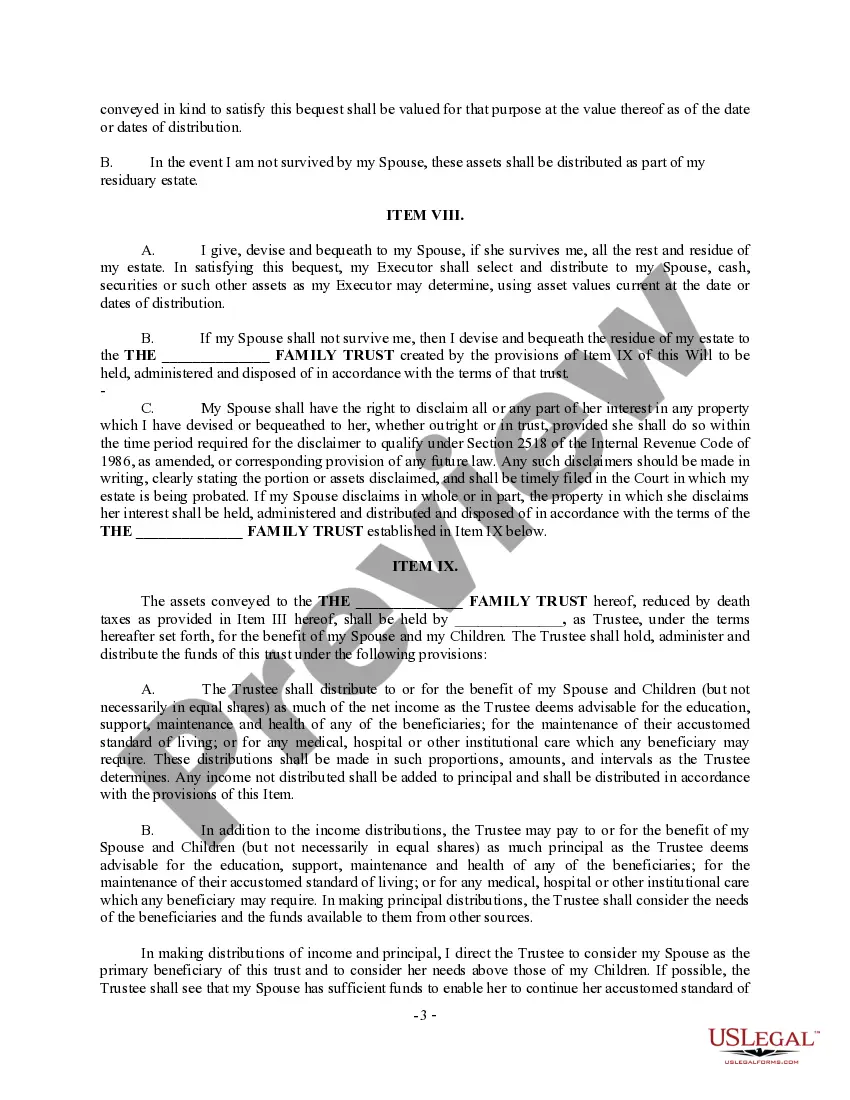
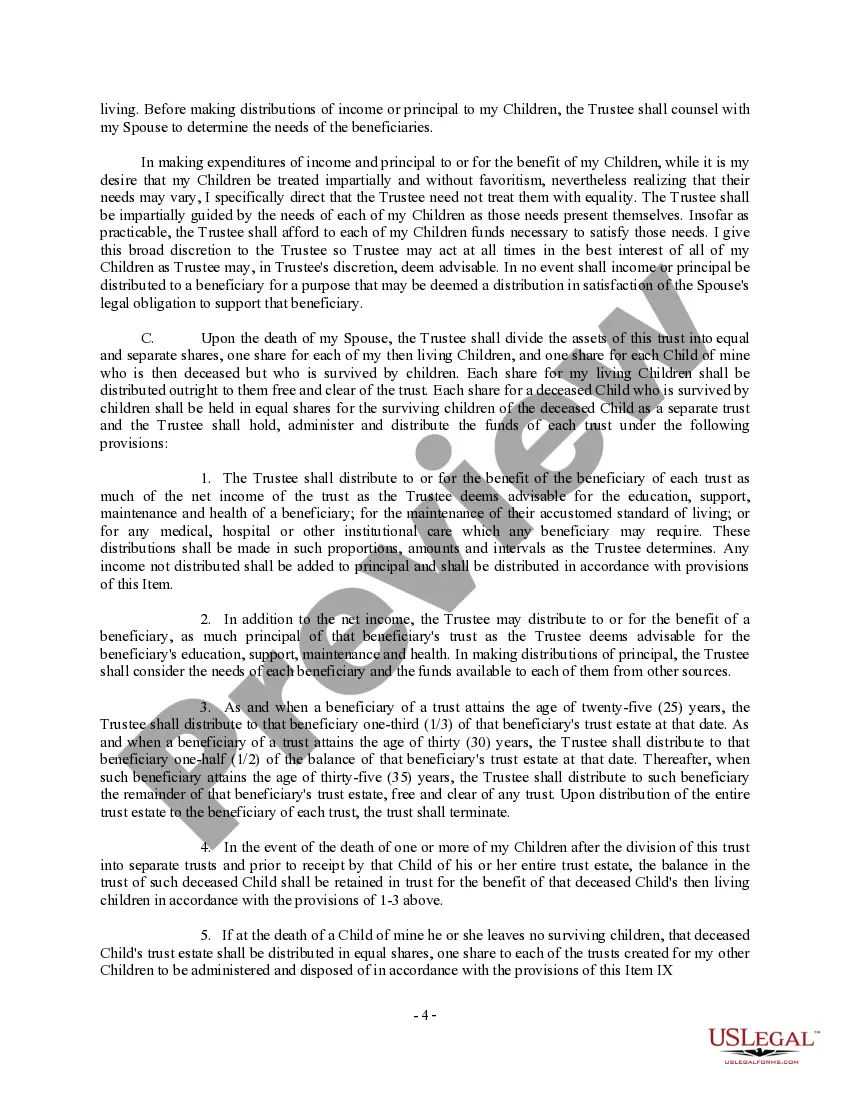
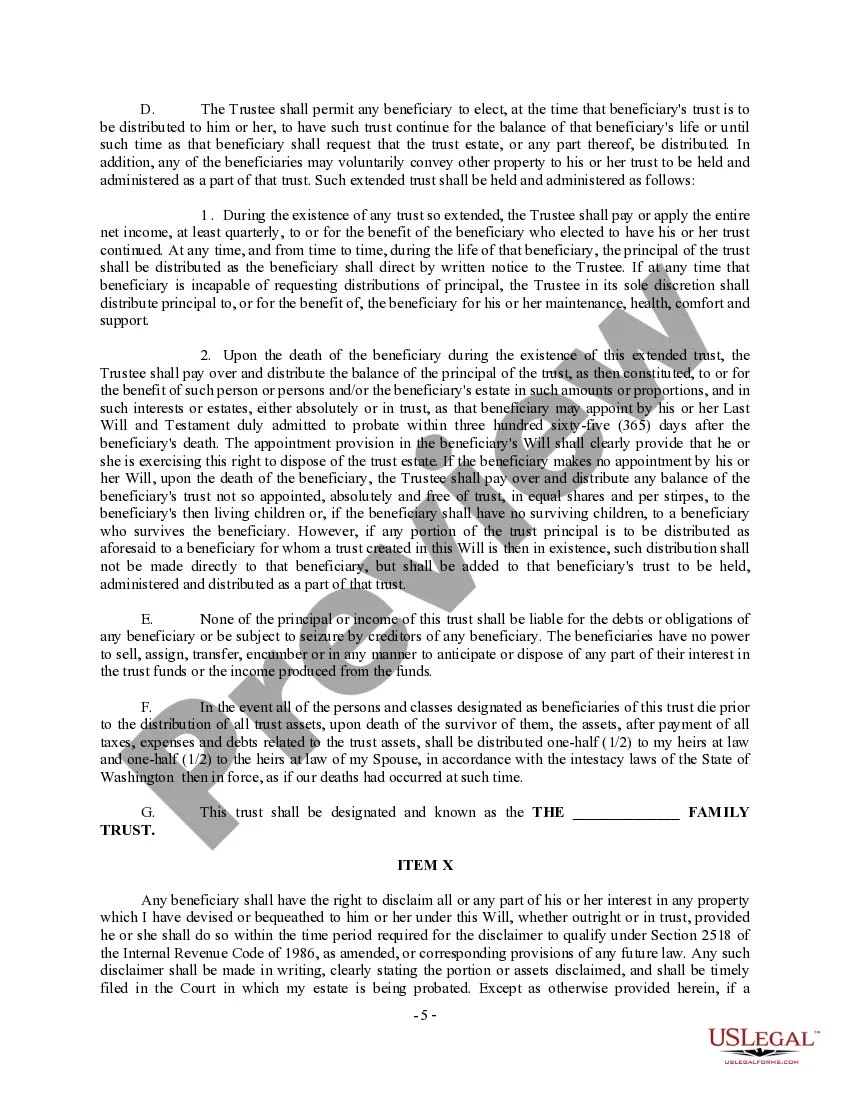
- Establishment of a family trust for tax-free inheritance.
- Specific clauses addressing the treatment of minor children.
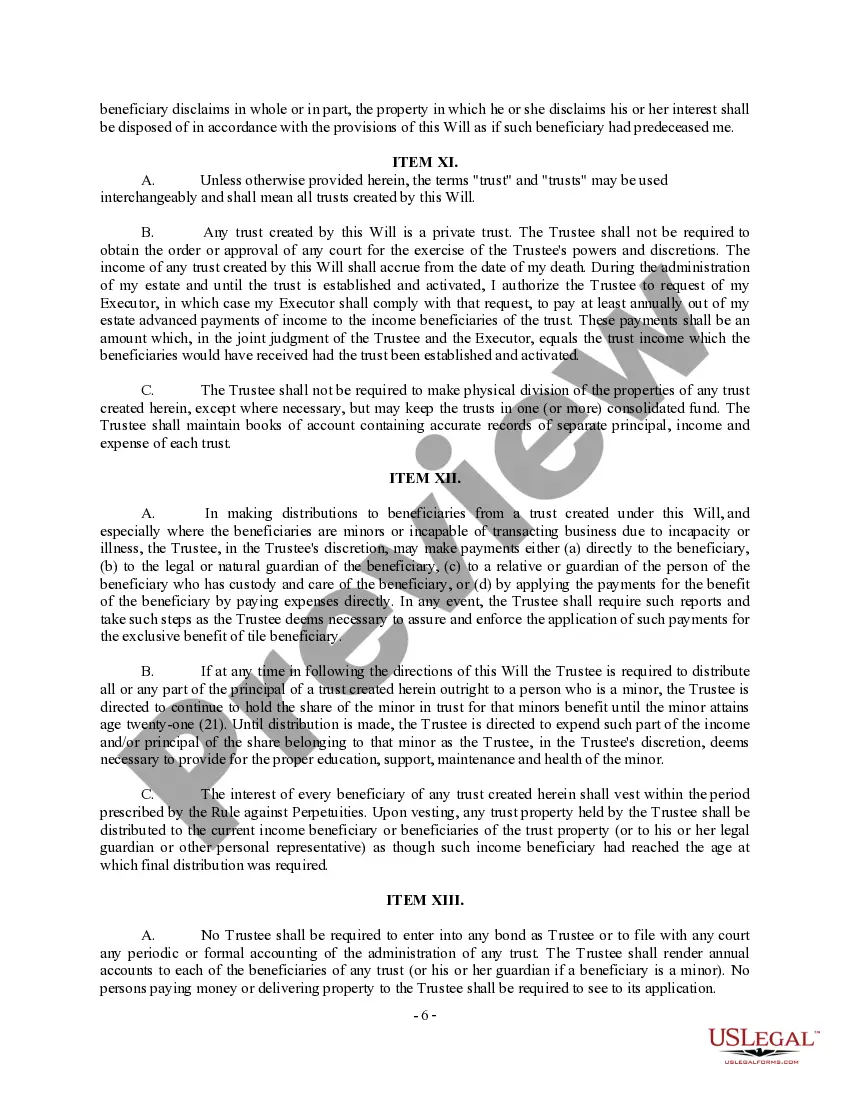
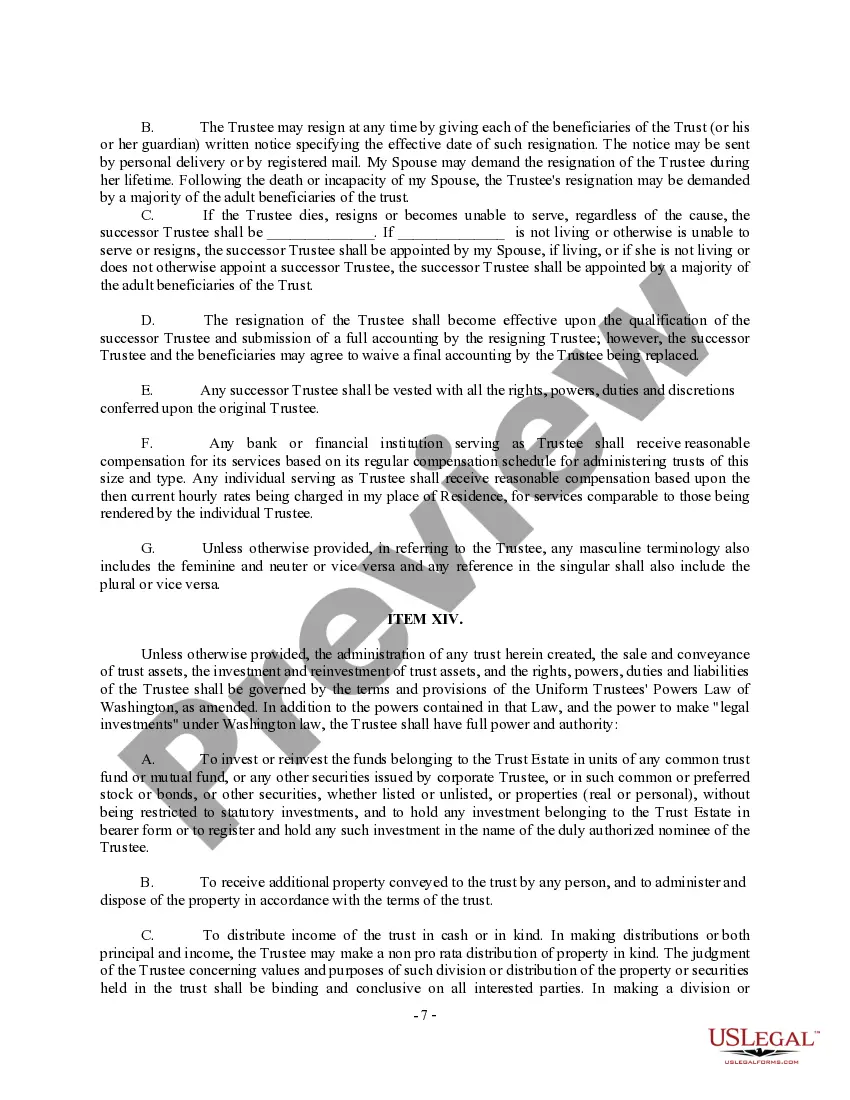
- Detailed instructions for trust management and distribution.




Situations where this form applies
You should use this form when you are married and have a substantial estate, potentially exceeding the federal estate tax exemption threshold. It is particularly useful if you wish to ensure that a significant portion of your estate can be passed on to your heirs without incurring estate taxes. This form is advisable if you have specific wishes for the division of assets and want to establish a marital trust to provide financial security for your spouse and children.
Who should use this form
This complex will is intended for:
- Married individuals with substantial assets or estates.
- Couples seeking to minimize tax liabilities for their heirs.
- Individuals looking for detailed estate planning solutions.
- Parents wishing to secure their children's financial future.
Completing this form step by step
- Identify and enter the names of the testators and their spouse.
- List the names of any living children and outline provisions for future offspring.
- Appoint an executor responsible for managing the estate.
- Specify the assets being placed into the family trust and their intended beneficiaries.
- Sign the document in the presence of witnesses, ensuring compliance with local laws.
Does this form need to be notarized?
To make this form legally binding, it must be notarized. Our online notarization service, powered by Notarize, lets you verify and sign documents remotely through an encrypted video session.
Get your form ready online
Our built-in tools help you complete, sign, share, and store your documents in one place.
Make edits, fill in missing information, and update formatting in US Legal Forms—just like you would in MS Word.
Download a copy, print it, send it by email, or mail it via USPS—whatever works best for your next step.
Sign and collect signatures with our SignNow integration. Send to multiple recipients, set reminders, and more. Go Premium to unlock E-Sign.
If this form requires notarization, complete it online through a secure video call—no need to meet a notary in person or wait for an appointment.
We protect your documents and personal data by following strict security and privacy standards.
Make edits, fill in missing information, and update formatting in US Legal Forms—just like you would in MS Word.
Download a copy, print it, send it by email, or mail it via USPS—whatever works best for your next step.
Sign and collect signatures with our SignNow integration. Send to multiple recipients, set reminders, and more. Go Premium to unlock E-Sign.

If this form requires notarization, complete it online through a secure video call—no need to meet a notary in person or wait for an appointment.
We protect your documents and personal data by following strict security and privacy standards.
Common mistakes to avoid
- Failing to update the will after significant life events (e.g., birth of a child).
- Providing insufficient detail in asset distribution clauses.
- Neglecting to have the will properly witnessed or notarized.
- Not clearly outlining the responsibilities of the executor or trustee.
Why complete this form online
- Convenient access to a complex legal form that reflects current laws.
- Editability allows customization to fit specific needs and circumstances.
- Reliable templates drafted by licensed attorneys ensure legal compliance.
- Fast and easy download to get your estate planning underway quickly.
Legal use & context
- This will aims to provide a comprehensive approach to estate management, particularly suitable for larger estates.
- It establishes clear directives for asset allocation, minimizing the potential for disputes among beneficiaries.
- The complex will ensures compliance with estate tax laws, thus safeguarding your estate against unnecessary tax burdens.
Main things to remember
- The form is designed for married couples with significant estates seeking to minimize estate taxes.
- It establishes a trust, allowing for greater tax-free inheritance options.
- Proper execution in accordance with state laws is crucial for validity.
- Utilizing this form promotes clarity and reduces potential conflicts among heirs.
Looking for another form?
Form popularity
FAQ
The "A Trust" is also commonly referred to as the "Marital Trust," "QTIP Trust," or "Marital Deduction Trust." The "B Trust" is also commonly referred to as the "Bypass Trust," "Credit Shelter Trust," or "Family Trust."
A marital trust allows the couple's heirs to avoid probate and take less of a hit from estate taxes by taking full advantage of the unlimited marital deductiona provision that enables spouses to pass assets to each other without tax consequences.
A bypass trust, or AB trust, is a legal arrangement that allows married couples to avoid estate tax on certain assets when one spouse passes away.The first part is the marital trust, or A trust. The second is a bypass, family or B trust. The marital trust is a revocable trust that belongs to the surviving spouse.
Yes, the surviving spouse may serve as trustee of the credit shelter trust.All of the assets in the credit shelter trust, including any appreciation in value during the surviving spouse's lifetime, pass free of estate tax to the beneficiaries.
A marital trust is a type of irrevocable trust that allows you to transfer assets to a surviving spouse tax free. It can also shield the estate of the surviving spouse before the remaining assets pass on to your children.
First, in a standard credit shelter trust, there is no step-up in basis at the death of the surviving spouse.Second, the credit shelter trust is a separate taxpayer and requires its own tax return, Form 1041.
A marital deduction trust is a trust in which transfers of property between married partners are free of federal transfer tax.
A credit shelter trust (CST) is a trust created after the death of the first spouse in a married couple. Assets placed in the trust are generally held apart from the estate of the surviving spouse, so they may pass tax-free to the remaining beneficiaries at the death of the surviving spouse.
Assets that have been conveyed into a revocable living trust do get a step-up in basis when they are distributed to the beneficiaries after the passing of the grantor. We should point out the fact that the beneficiaries would be responsible for any future appreciation from a capital gains perspective.