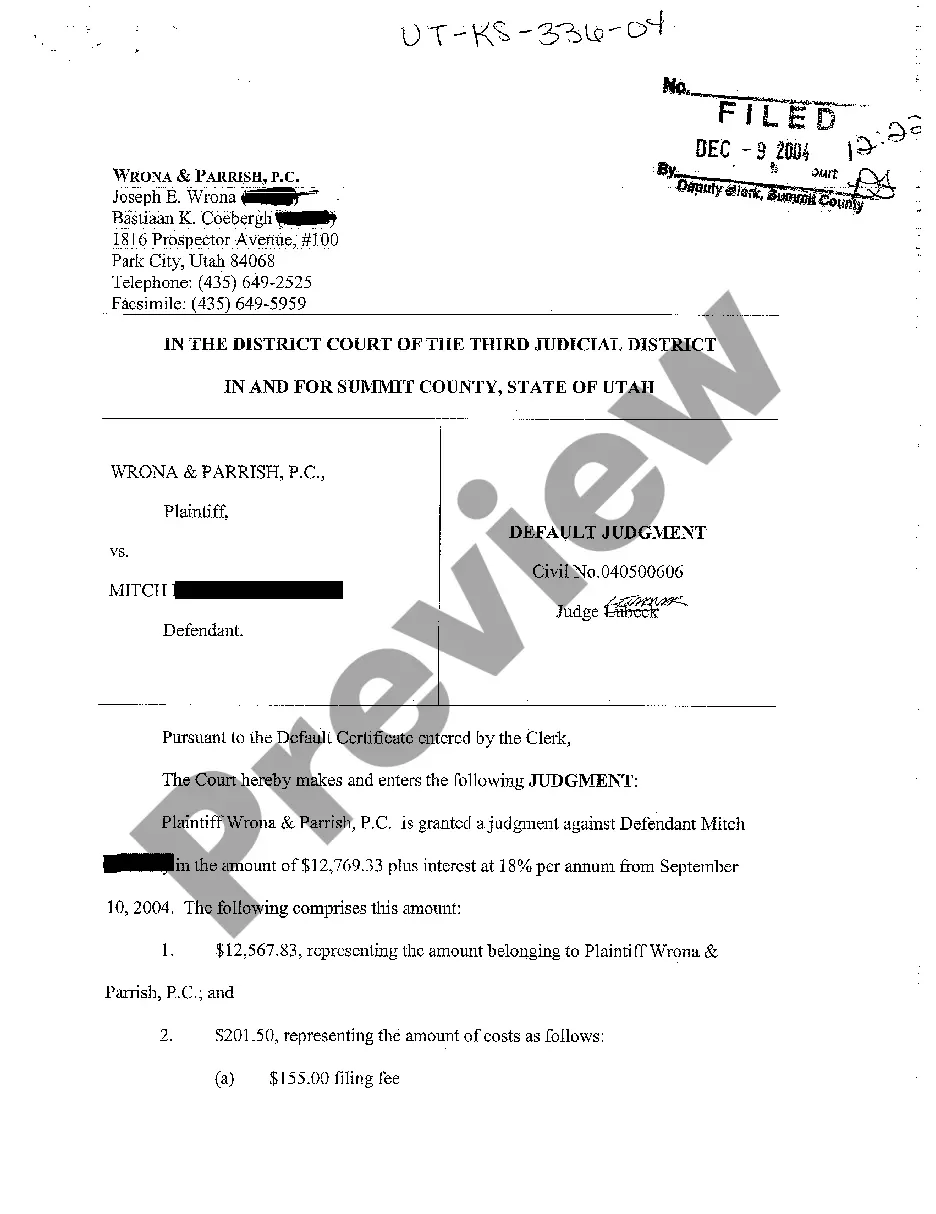
Washington Warranty Deed from Husband and Wife to a Trust
What is this form?
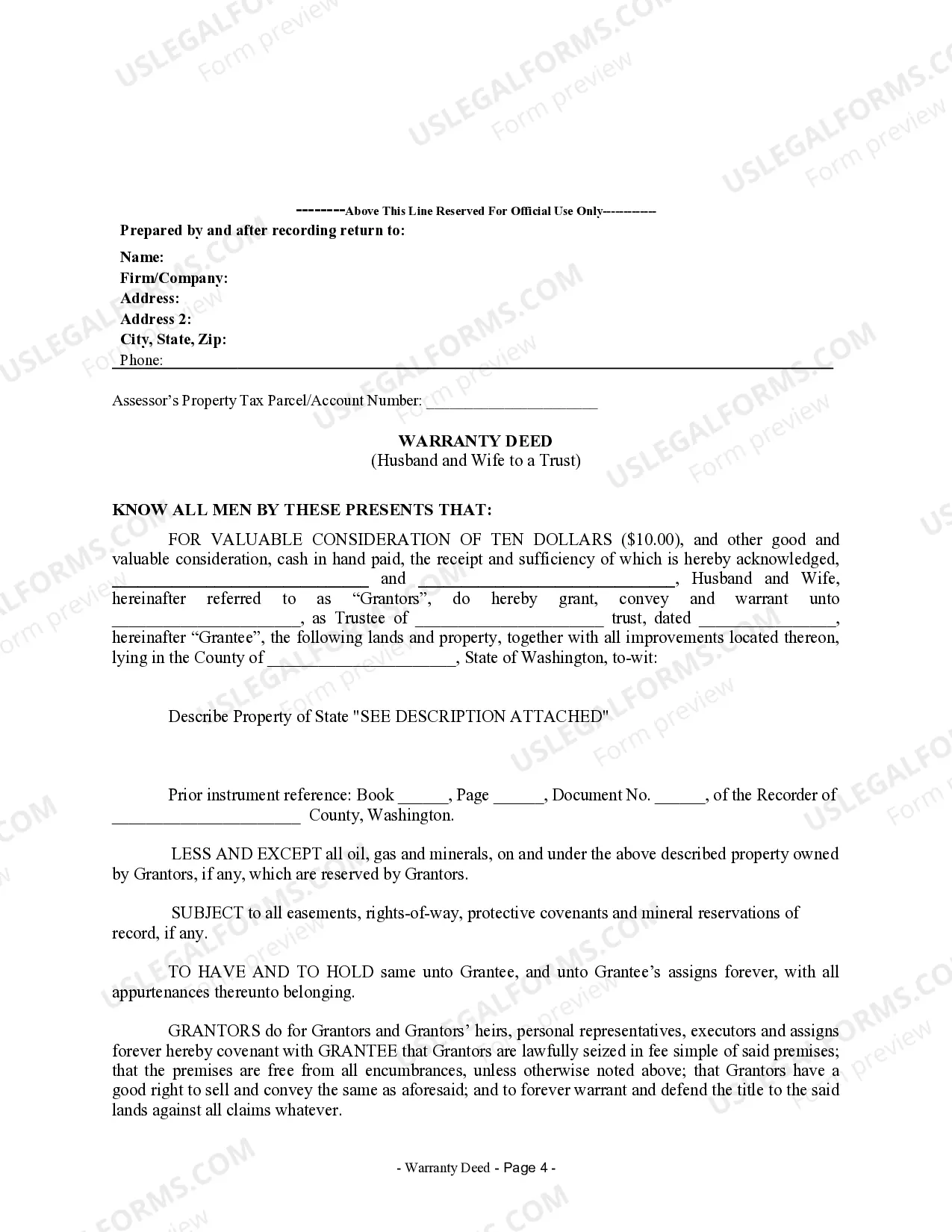
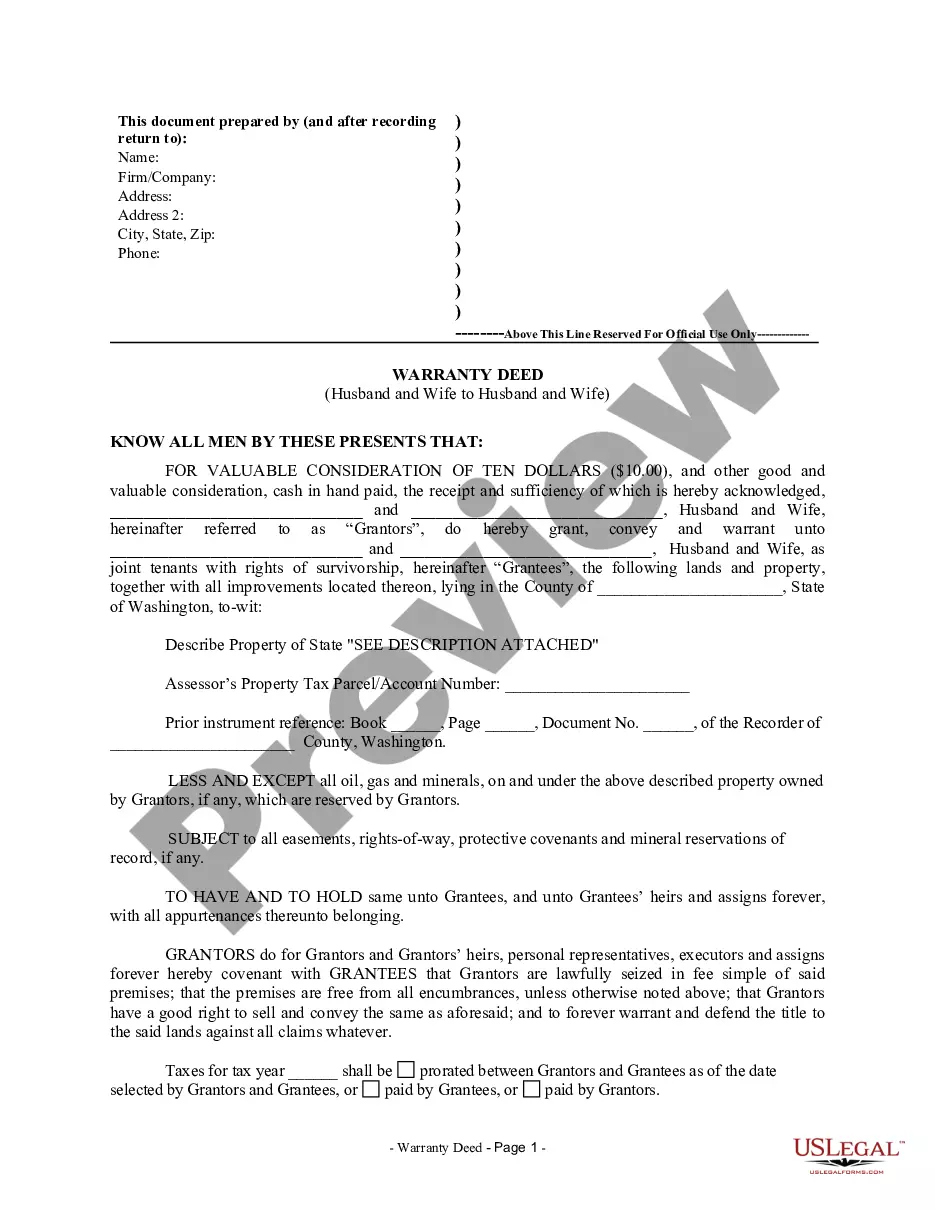
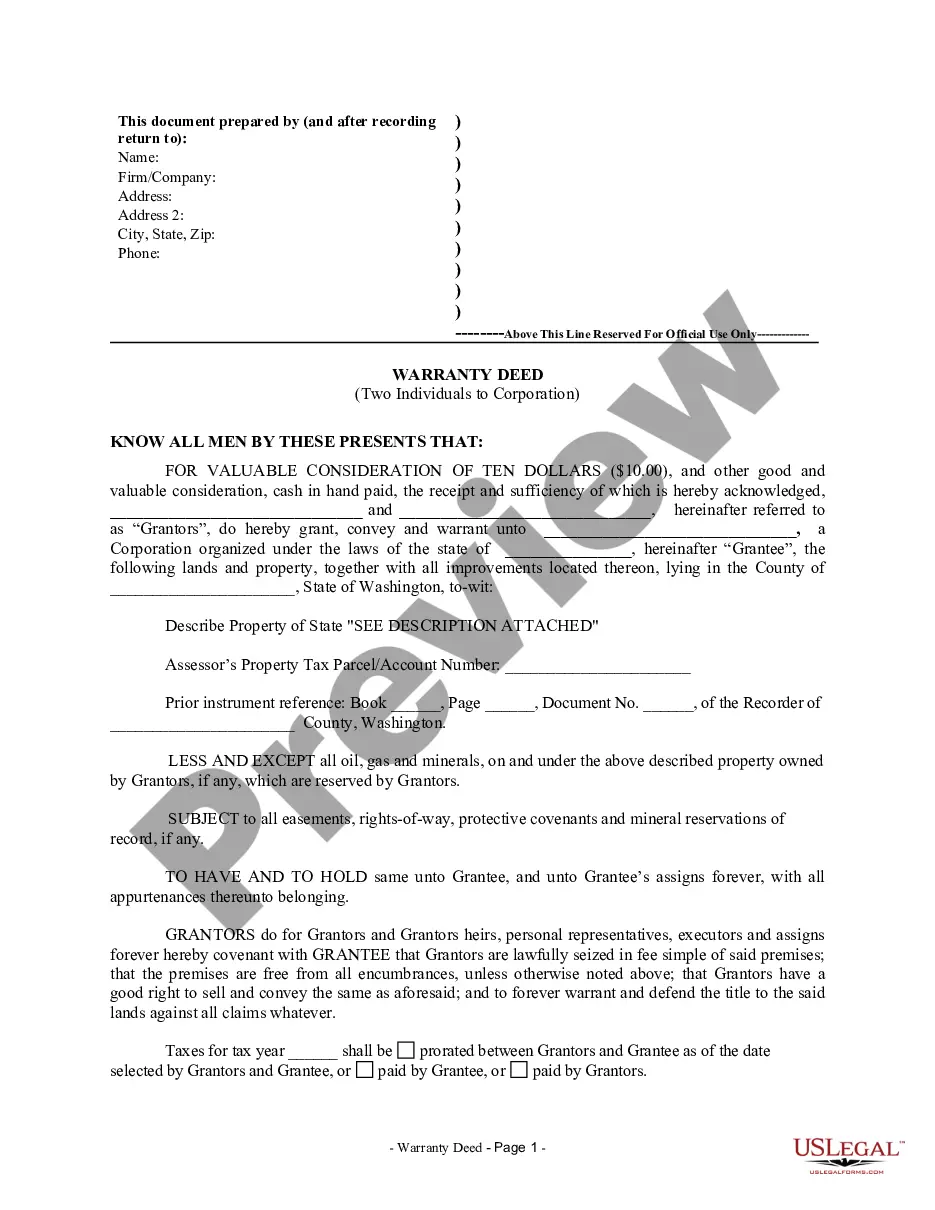
The Warranty Deed from Husband and Wife to a Trust is a legal document used to transfer property ownership from a married couple to a trust. This form ensures that the property is conveyed to the trust while protecting the grantorsâ rights, including reservations of oil, gas, and minerals. Unlike other types of deeds, this warranty deed provides a guarantee of title, making it a preferred choice for transferring real estate to a trust for estate planning purposes.
Key parts of this document
- Grantors: Identifies the husband and wife transferring the property.
- Grantee: Specifies the trustee receiving the property on behalf of the trust.
- Description of property: Details the specific property being conveyed, including any improvements.
- Reservations: Includes any reservations made by the grantors regarding oil, gas, and minerals.
- Covenant of title: A promise that the grantors have the right to sell and that the property is free of encumbrances.
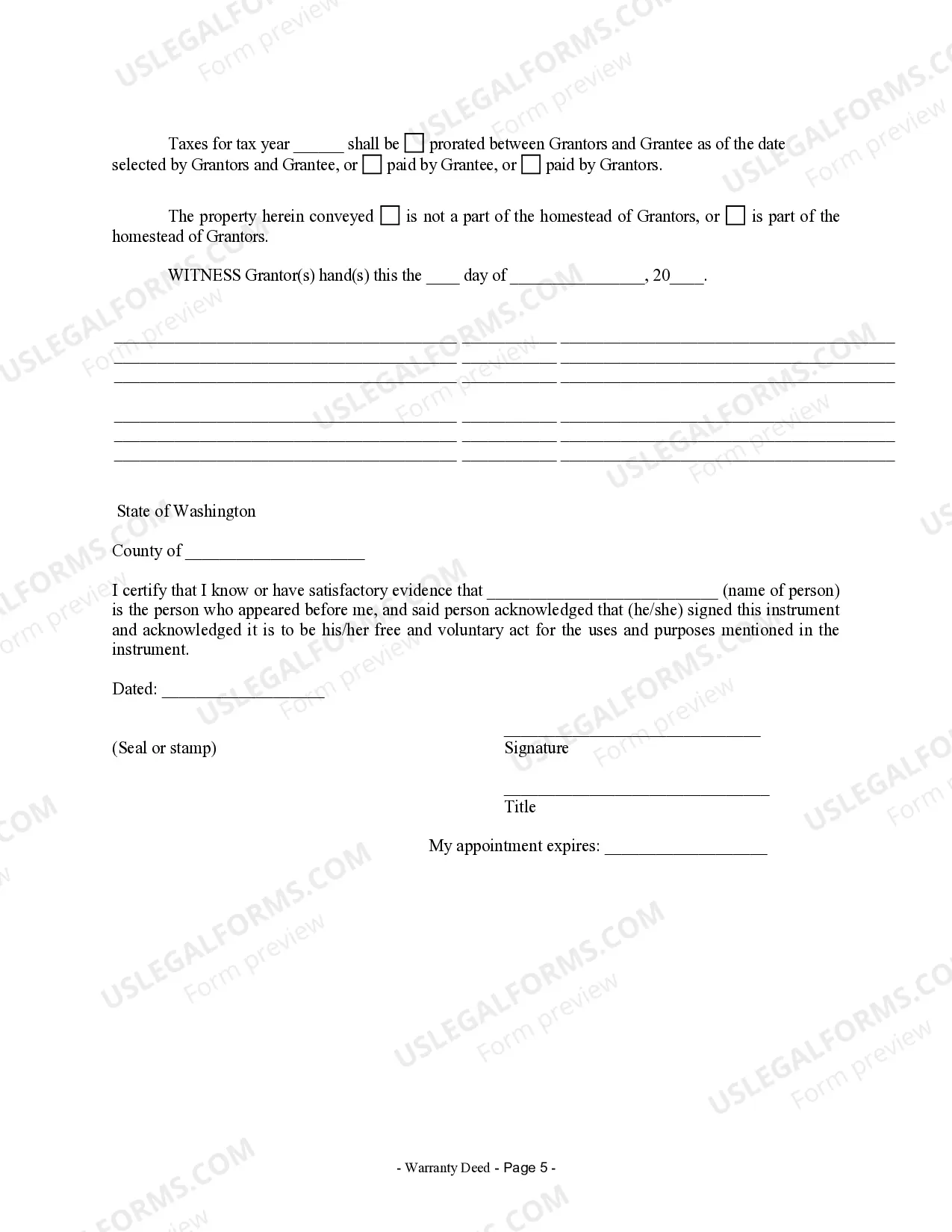
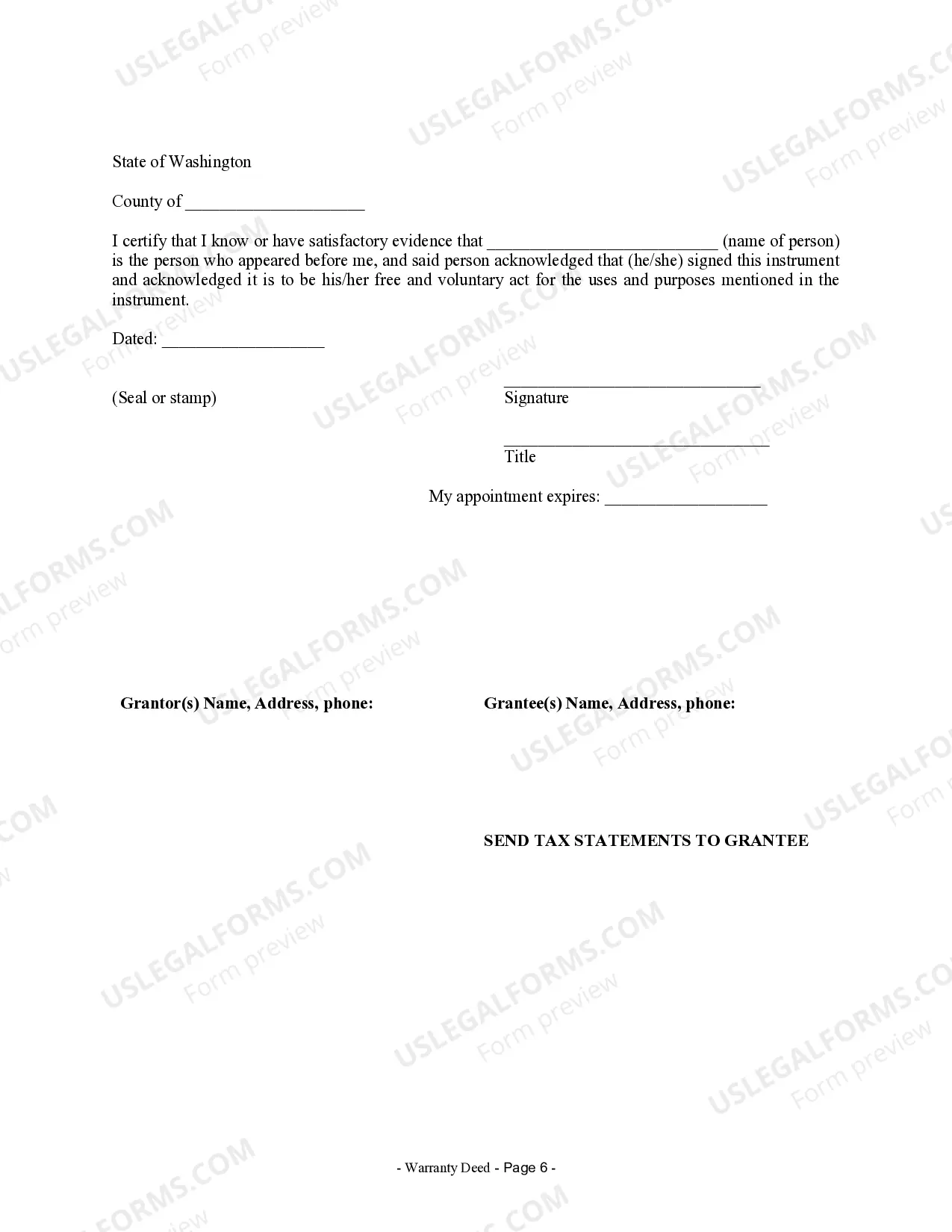
- Notarization section: Details the requirements for legal acknowledgment of the deed.




When this form is needed
This form should be used when a married couple wishes to transfer ownership of real estate to a trust. It is ideal for couples looking to simplify their estate management and ensure that their assets are managed according to their wishes. This deed is particularly useful in situations where the couple aims to help avoid probate and streamline the distribution of their property after passing.
Who this form is for
The following individuals or parties may need this form:
- Married couples intending to transfer real estate to a trust.
- Trustees acting on behalf of a trust to receive property.
- Individuals involved in estate planning who want to manage their assets effectively.
Instructions for completing this form
- Identify the parties: Enter the names of the grantors (husband and wife) and the trustee.
- Specify the property: Provide a detailed description of the property being transferred, including its location.
- Include reservations: Note any reservations regarding oil, gas, and minerals that the grantors wish to keep.
- Fill in the legal covenants: Ensure that the property is stated as free from encumbrances, unless otherwise noted.
- Sign and notarize: Both grantors should sign the deed in front of a notary public to validate the transfer.
Does this document require notarization?
Yes, this form must be notarized to be legally valid. It is essential for both grantors to sign the document in the presence of a notary public, who will then acknowledge their signatures to ensure the transfer is recognized legally.
Get your form ready online
Our built-in tools help you complete, sign, share, and store your documents in one place.
Make edits, fill in missing information, and update formatting in US Legal Forms—just like you would in MS Word.
Download a copy, print it, send it by email, or mail it via USPS—whatever works best for your next step.
Sign and collect signatures with our SignNow integration. Send to multiple recipients, set reminders, and more. Go Premium to unlock E-Sign.
If this form requires notarization, complete it online through a secure video call—no need to meet a notary in person or wait for an appointment.
We protect your documents and personal data by following strict security and privacy standards.

Make edits, fill in missing information, and update formatting in US Legal Forms—just like you would in MS Word.

Download a copy, print it, send it by email, or mail it via USPS—whatever works best for your next step.

Sign and collect signatures with our SignNow integration. Send to multiple recipients, set reminders, and more. Go Premium to unlock E-Sign.

If this form requires notarization, complete it online through a secure video call—no need to meet a notary in person or wait for an appointment.

We protect your documents and personal data by following strict security and privacy standards.
Common mistakes to avoid
- Failing to include a detailed property description.
- Not including all relevant reservations related to minerals or resources.
- Omitting notarization or failing to complete it correctly.
- Entering incorrect details about grantors or grantee.
- Not specifying who will be responsible for property taxes post-transfer.
Why use this form online
- Easy access: Download the form at your convenience without needing to visit a law office.
- Editability: Fill in the required fields digitally, ensuring accuracy and clarity.
- Reliable format: Designed by licensed attorneys to comply with legal standards and requirements.
Legal use & context
- This Warranty Deed is enforceable under the laws of Washington State.
- It protects the interests of both grantors and beneficiaries by formally documenting the transfer of property.
- Failure to complete the deed correctly may result in disputes regarding property rights.
Main things to remember
- A Warranty Deed ensures a legally binding transfer of property to a trust.
- Proper completion and notarization are critical for the deed's validity.
- This form serves as an essential tool for estate planning and asset management.
Looking for another form?
Form popularity
FAQ
Bring the original deed to the Registry of Deeds in your town in Washington. You must pay a recording fee to record the deed (the fee is usually no more than $50). Once the deed is recorded, ask an abstractor for the book and page in which it is recorded. It is now legal.
A warranty deed is a document often used in real estate that provides the greatest amount of protection to the purchaser of a property. It pledges or warrants that the owner owns the property free and clear of any outstanding liens, mortgages, or other encumbrances against it.
If you'd like to avoid having your property going through the probate process, it's a good idea to look into a transfer on death deed. A transfer on death deed allows you to select a beneficiary who will receive your property, but only when you've passed away.
A statutory warranty deed is a legal document used to transfer real property.This type of deed guarantees that the grantor holds full and clear title to the property and will compensate the buyer should any claims emerge against the title in the future.
A warranty deed guarantees that: The grantor is the rightful owner of the property and has the legal right to transfer the title.The title would withstand third-party claims to ownership of the property. The grantor will do anything to ensure the grantee's title to the property.
A warranty deed is a higher level of protection produced by the seller upon the real estate closing. It includes a full legal description of the property, and confirms the title is clear and free from all liens, encumbrances, or title defects. Most property sales make use of a warranty deed.Our title agents can help.
Signing: § 64.04. 020 requires that all quitclaim deeds in Washington are notarized by a notary public. Recording: In Washington, quitclaim deeds must be filed with the County Recorder's Office in the county where the property named in the deed resides. The Recorder's Office may charge a fee for filing this document.
It's important to note that a warranty deed does not actually prove the grantor has ownership (a title search is the best way to prove that), but it is a promise by the grantor that they are transferring ownership and if it turns out they don't actually own the property, the grantor will be responsible for compensating
The Washington transfer-on-death deed form allows property to be automatically transferred to a new owner when the current owner dies, without the need to go through probate. It also gives the current owner retained control over the property, including the right to change his or her mind about the transfer.