Vermont Warranty Deed for Limited Partnership or LLC is the Grantor, or Grantee
Overview of this form
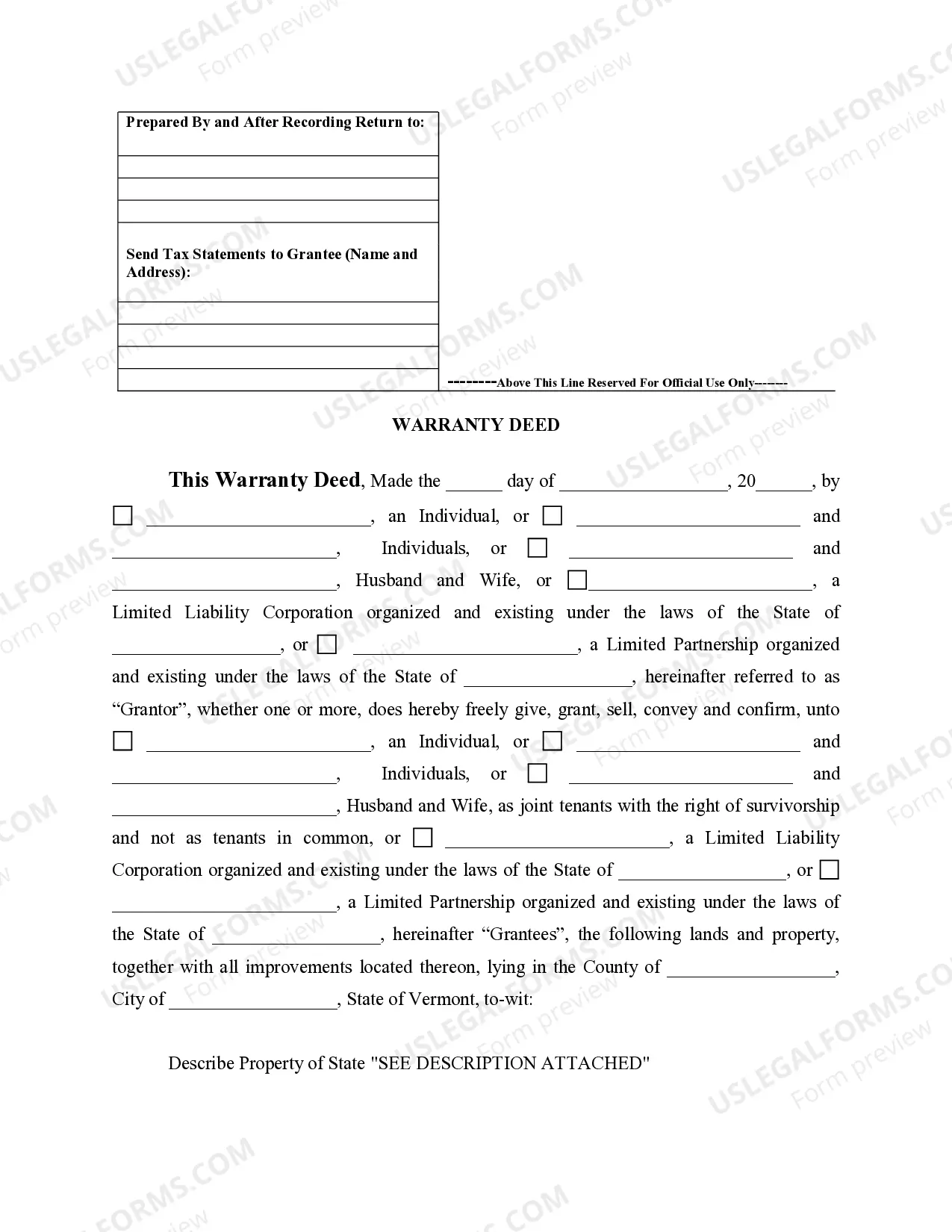
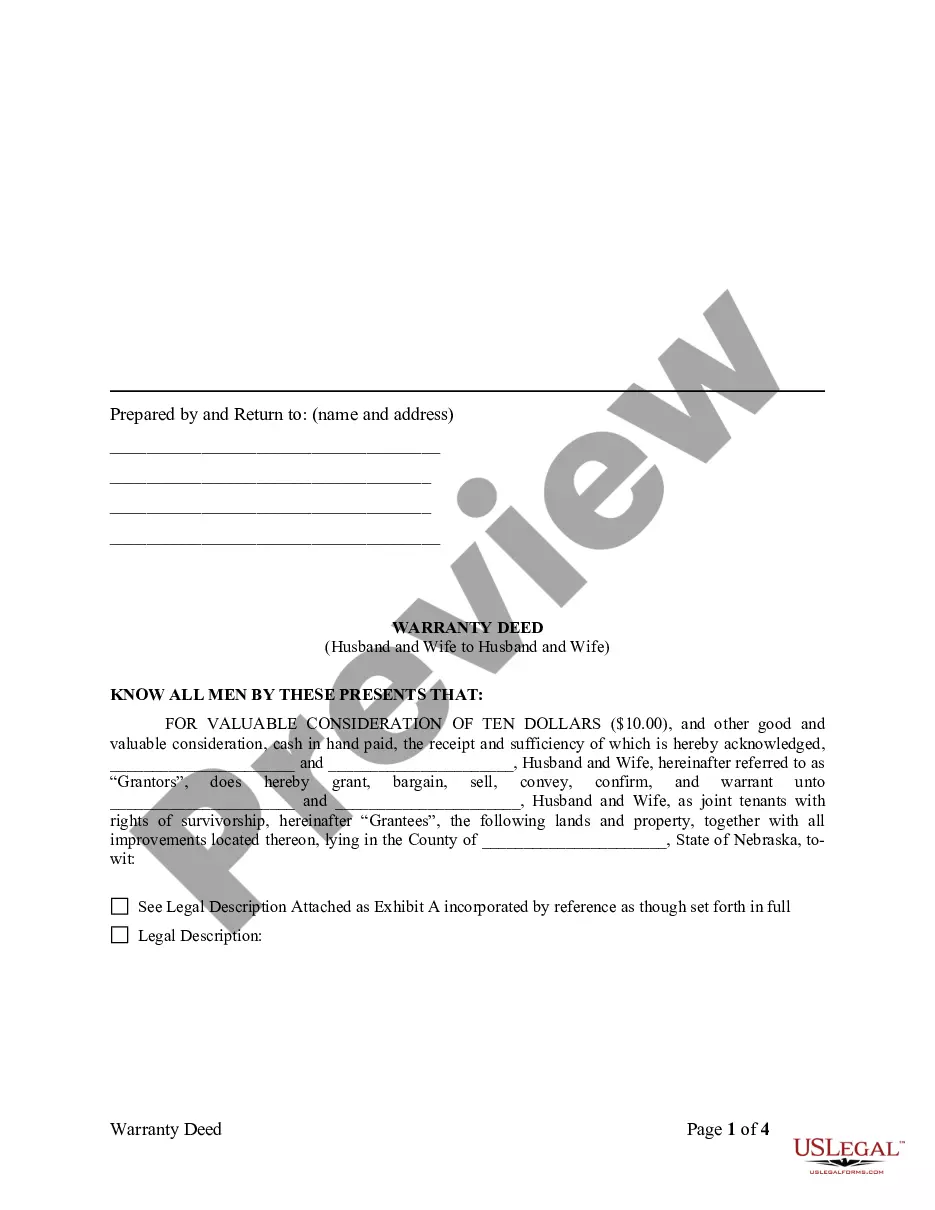
The Warranty Deed for Limited Partnership or LLC is a legal document used to transfer property ownership from a grantor, such as a limited partnership or a limited liability company, to one or more grantees. This form is essential for providing assurance that the grantor holds a valid title to the property and guarantees that it is free from any encumbrances unless otherwise stated. Unlike typical warranty deeds, this form caters specifically to entities like limited partnerships and LLCs, making it suitable for transactions involving these types of organizations.
Key parts of this document
- Identification of the grantor, whether an individual or a business entity.
- Details of the grantee, including options for joint ownership.
- Legal description of the property being transferred.
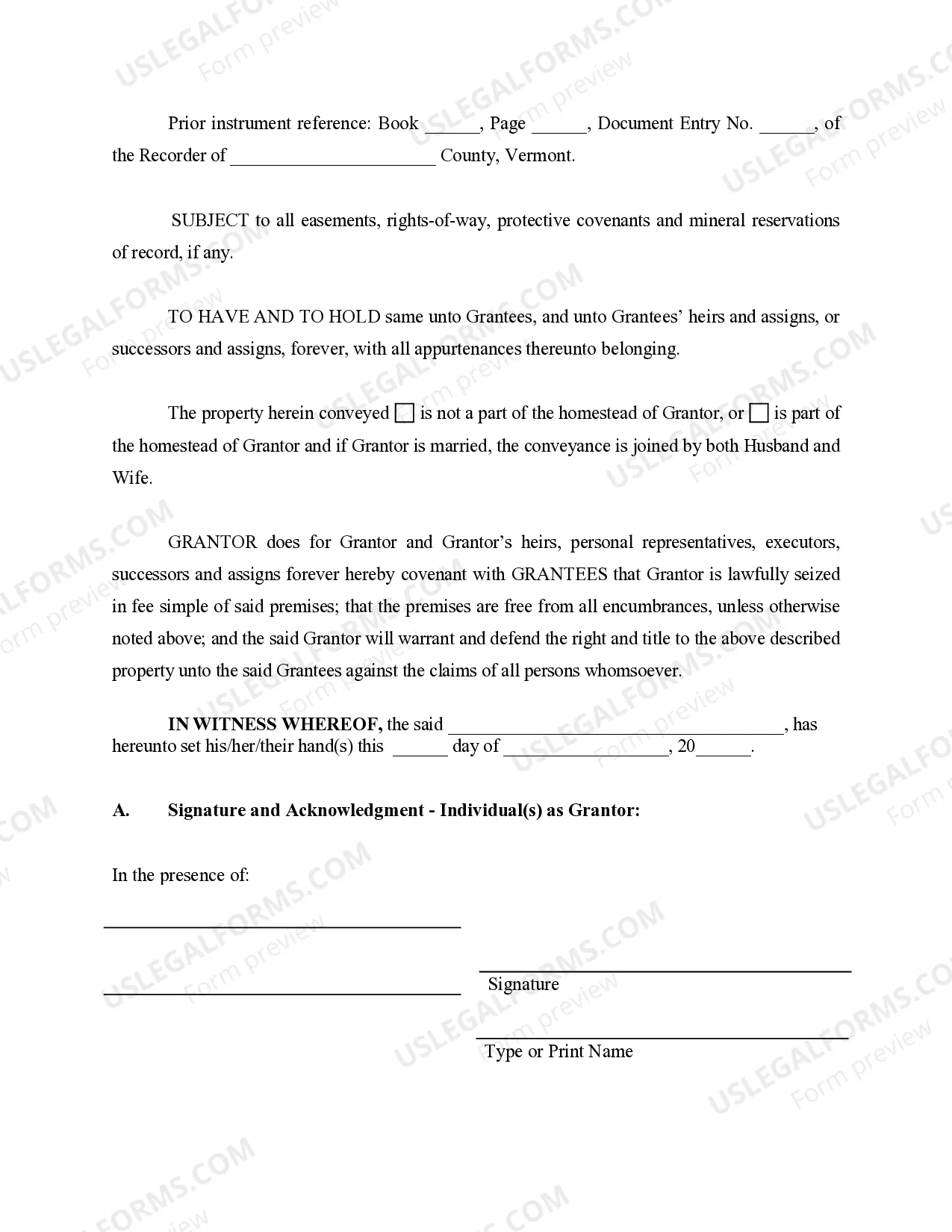
- Indication of any prior instruments referencing the property.
- Covenants regarding the grantor's ownership and title to the property.
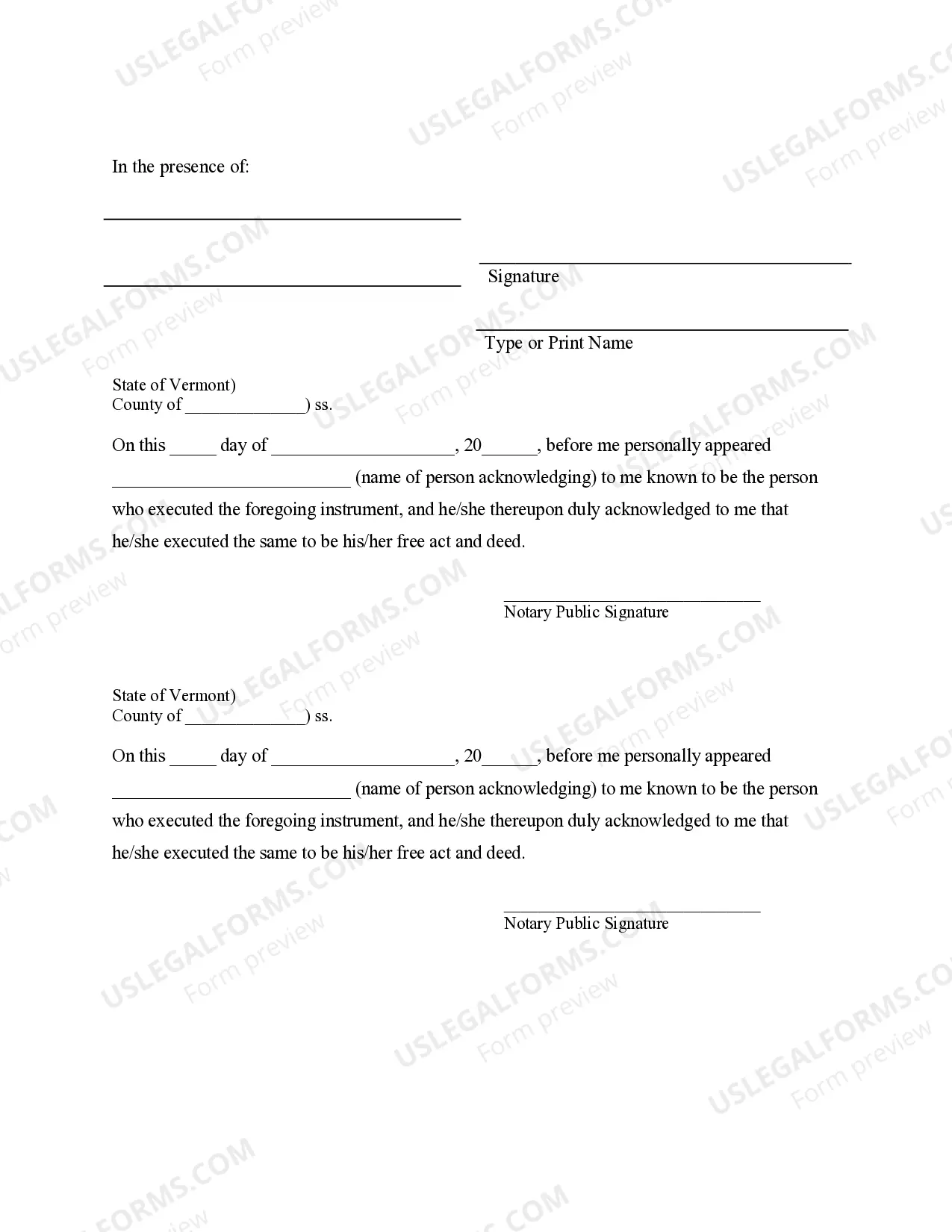
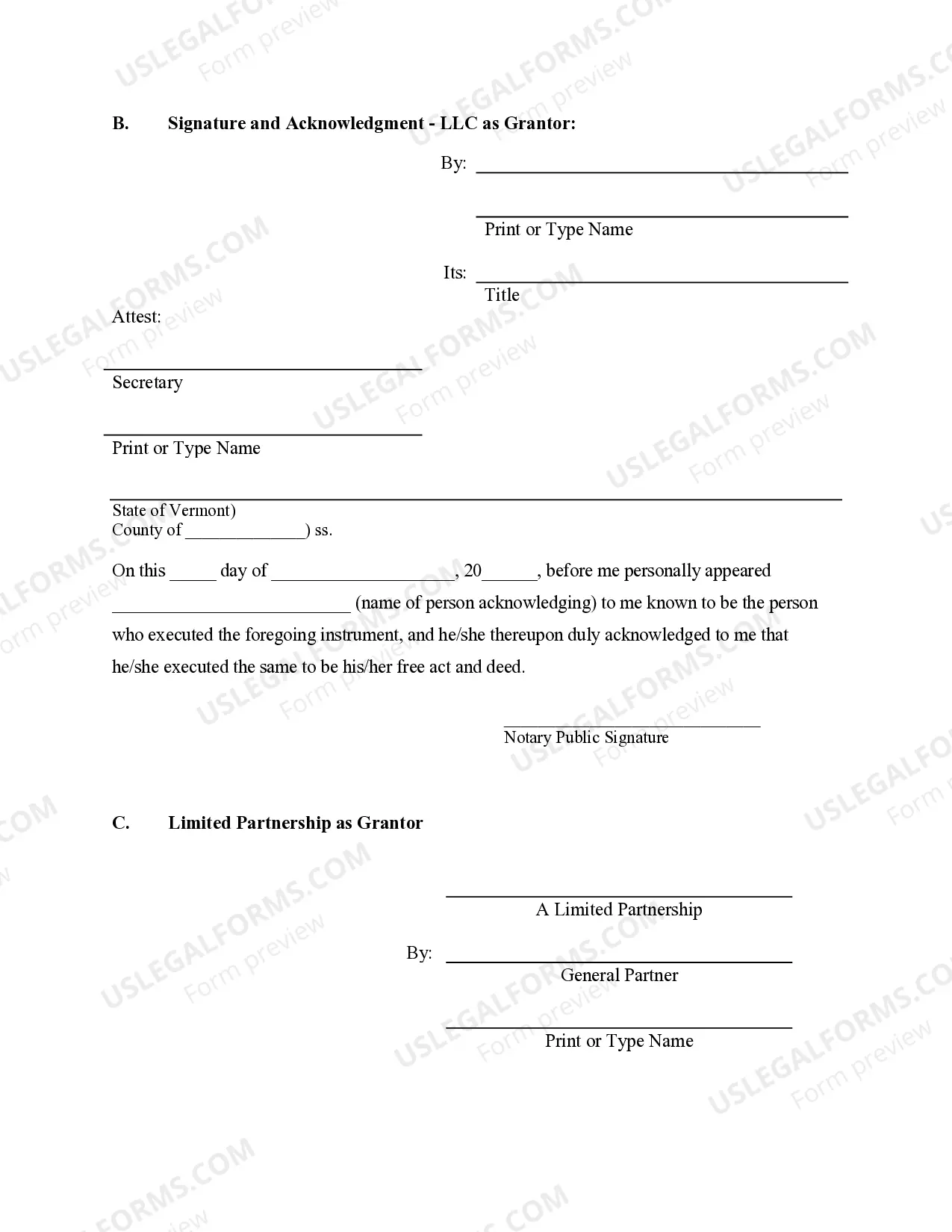
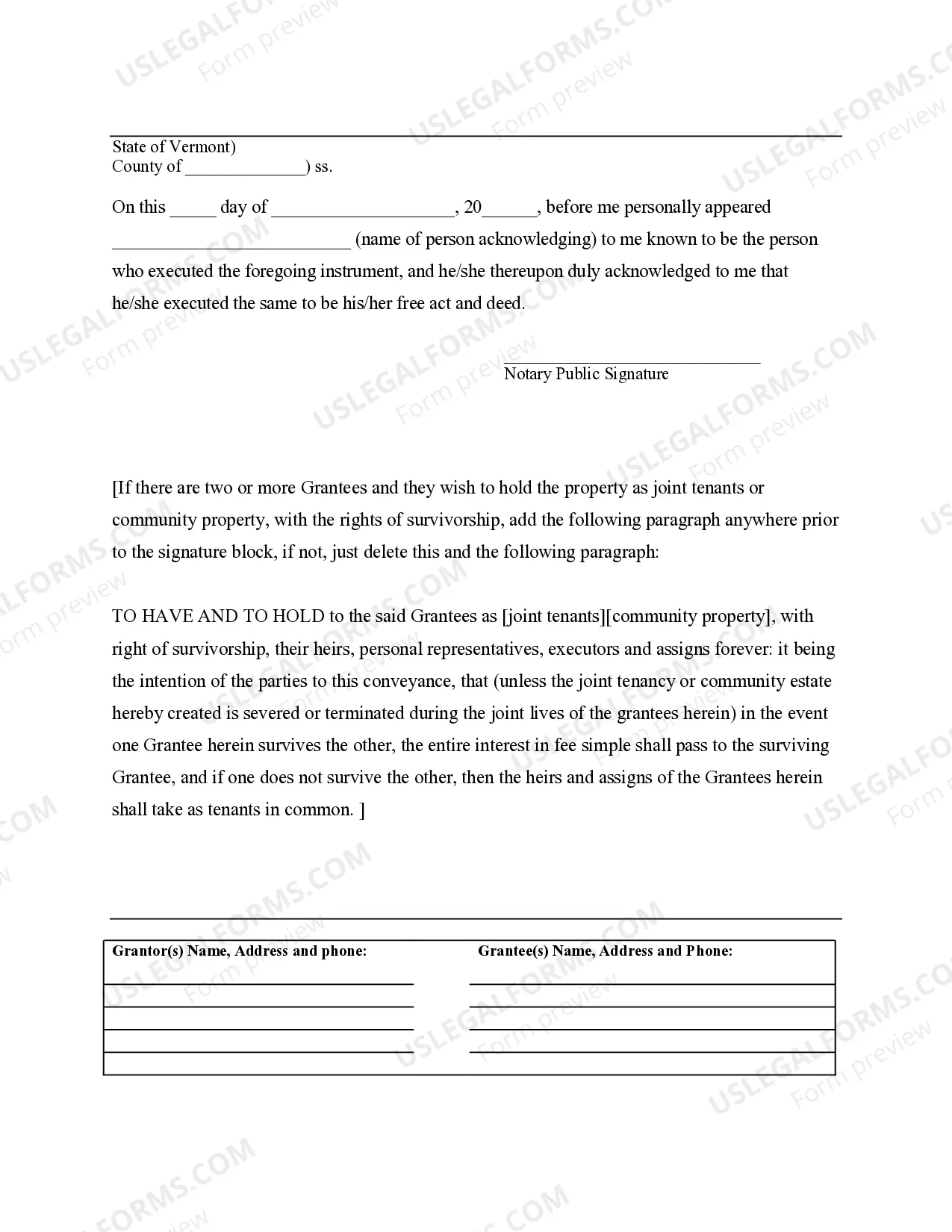
- Signature and acknowledgment sections for notary verification.




Situations where this form applies
This Warranty Deed should be used when a limited partnership or LLC is involved in the transfer of real estate property. It is essential in scenarios where the property is being sold, gifted, or inherited, ensuring that the ownership transfer is legally recognized and that the new owner receives clear title to the property. It is particularly useful in commercial real estate transactions or when an entity acquires or conveys property.
Intended users of this form
This Warranty Deed is intended for:
- Limited partnerships looking to transfer property ownership.
- Limited liability companies engaged in real estate transactions.
- Real estate attorneys assisting clients with property transfers.
- Anyone involved in a transaction where a business entity is the grantor or grantee.
Steps to complete this form
- Identify the parties involved: enter the name of the grantor(s) and grantee(s).
- Specify the property: provide the legal description of the property being conveyed.
- Complete any requirement fields regarding prior instruments and property references.
- Sign the deed in the presence of a notary to validate the deed.
- Ensure the deed is notarized and retain copies for record-keeping.
Notarization requirements for this form
This form needs to be notarized to ensure legal validity. US Legal Forms provides secure online notarization powered by Notarize, allowing you to complete the process through a verified video call, available anytime.
Get your form ready online
Our built-in tools help you complete, sign, share, and store your documents in one place.
Make edits, fill in missing information, and update formatting in US Legal Forms—just like you would in MS Word.
Download a copy, print it, send it by email, or mail it via USPS—whatever works best for your next step.
Sign and collect signatures with our SignNow integration. Send to multiple recipients, set reminders, and more. Go Premium to unlock E-Sign.
If this form requires notarization, complete it online through a secure video call—no need to meet a notary in person or wait for an appointment.
We protect your documents and personal data by following strict security and privacy standards.
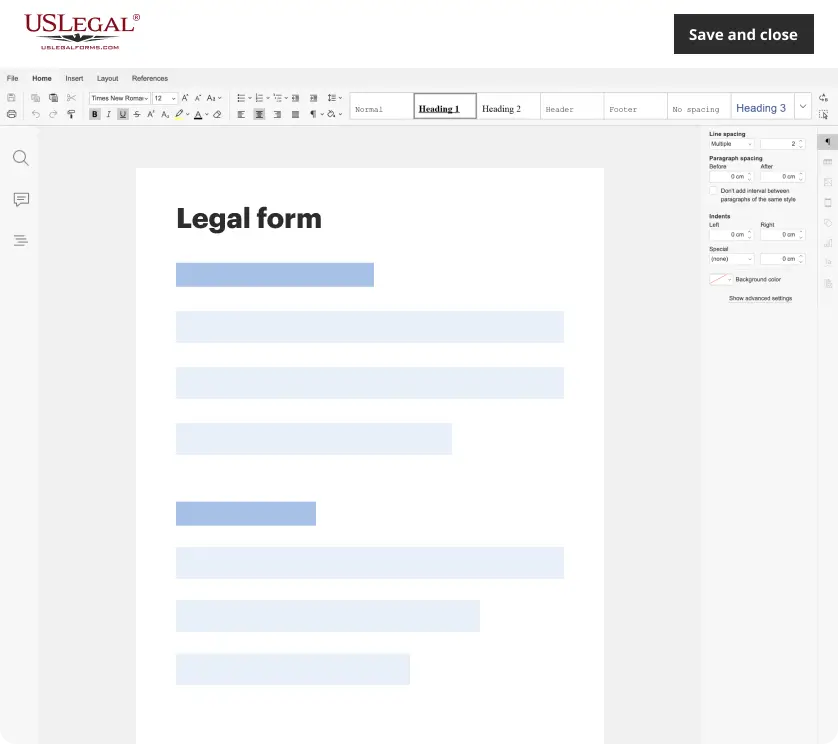
Make edits, fill in missing information, and update formatting in US Legal Forms—just like you would in MS Word.
Download a copy, print it, send it by email, or mail it via USPS—whatever works best for your next step.
Sign and collect signatures with our SignNow integration. Send to multiple recipients, set reminders, and more. Go Premium to unlock E-Sign.
If this form requires notarization, complete it online through a secure video call—no need to meet a notary in person or wait for an appointment.
We protect your documents and personal data by following strict security and privacy standards.
Common mistakes
- Failing to provide a complete legal description of the property.
- Not obtaining necessary signatures from all parties involved.
- Omitting the acknowledgment by notary public.
- Leaving out any prior instrument references that could affect title.
Why complete this form online
- Conveniently fill out and print the form from the comfort of your home.
- Forms are editable, allowing you to easily correct any mistakes prior to submission.
- Access to professionally drafted templates ensuring compliance with legal standards.
Looking for another form?
Form popularity
FAQ
To form a limited partnership, you must file with your state agency, usually the secretary of state's office, and pay a filing fee, which varies by state. For example, in Delaware, one of the most common states in which to incorporate a business, it costs $200 to file for a certificate of limited partnership.
A limited partnership is usually a type of investment partnership, often used as investment vehicles for investing in such assets as real estate. LPs differ from other partnerships in that partners can have limited liability, meaning they are not liable for business debts that exceed their initial investment.
Limited partners are simply investors in the business; they don't have control of day-to-day operations, and they're only liable for as much as they invest in the company.They're considered passive investors because they contribute money to the partnership but don't have control over decisions.
Some LLP examples can include veterinarian's offices, dental offices, auditing firms, law firms, financial advising services, business consultancies and real estate agencies. However, state laws might place restrictions on the types of businesses that use this partnership model.
Limited partnerships are generally used by hedge funds and investment partnerships as they offer the ability to raise capital without giving up control. Limited partners invest in an LP and have little to no control over the management of the entity, but their liability is limited to their personal investment.
Limited partnership are usually found in time-restricted projects, like filmmaking and real estate businesses.Medical partnerships, law firms, and accounting firms are common examples of Limited Liability Partnership.
A few examples of businesses where limited partnership works best are the real estate industry, small and medium scale business, professional knowledge ones like a lawyer and so on.
Limited Partnership Interest means the ownership interest of a Limited Partner, including its interest in distributions, including liquidating distributions, and profits and losses of the Partnership and all of its other rights, duties and obligations under the Partnership Agreement.
GoPro & Red Bull. Pottery Barn & Sherwin-Williams. Casper & West Elm. Bonne Belle & Dr. Pepper. BMW & Louis Vuitton. Uber & Spotify. Apple & MasterCard. Airbnb & Flipboard.