Vermont Landlord Tenant Lease Co-Signer Agreement
What this document covers
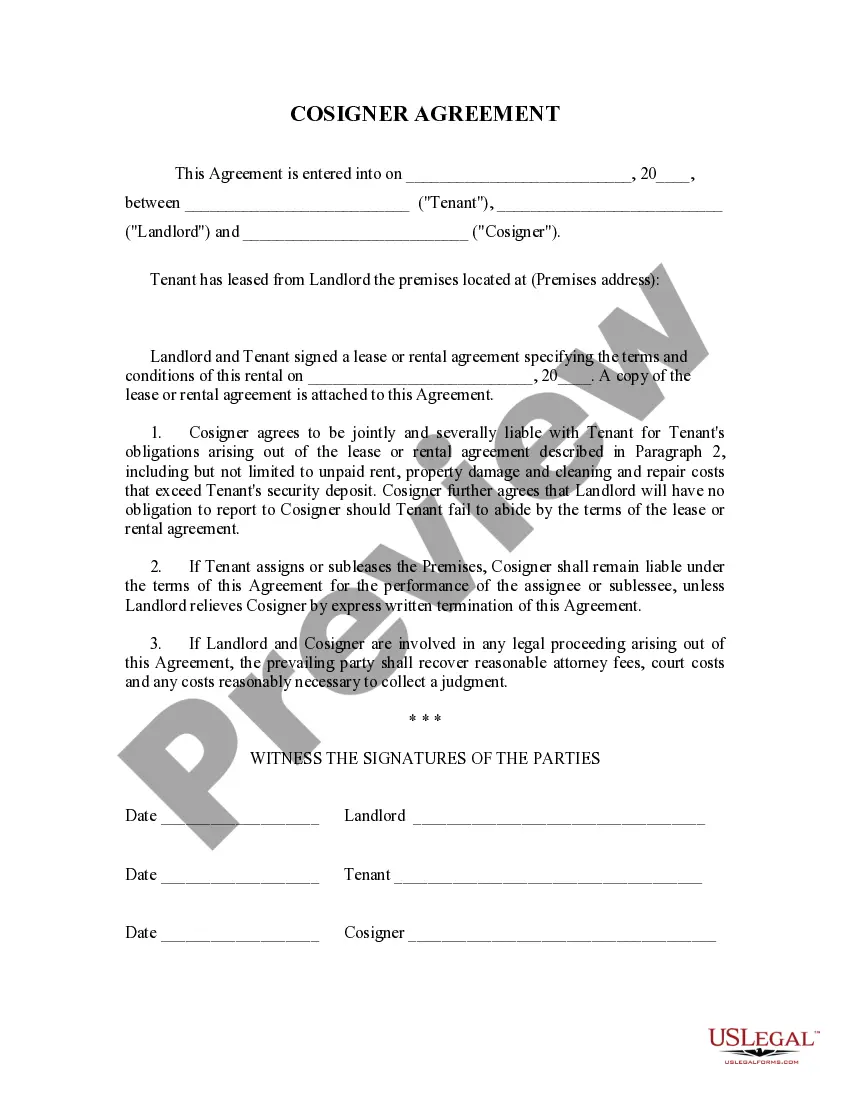
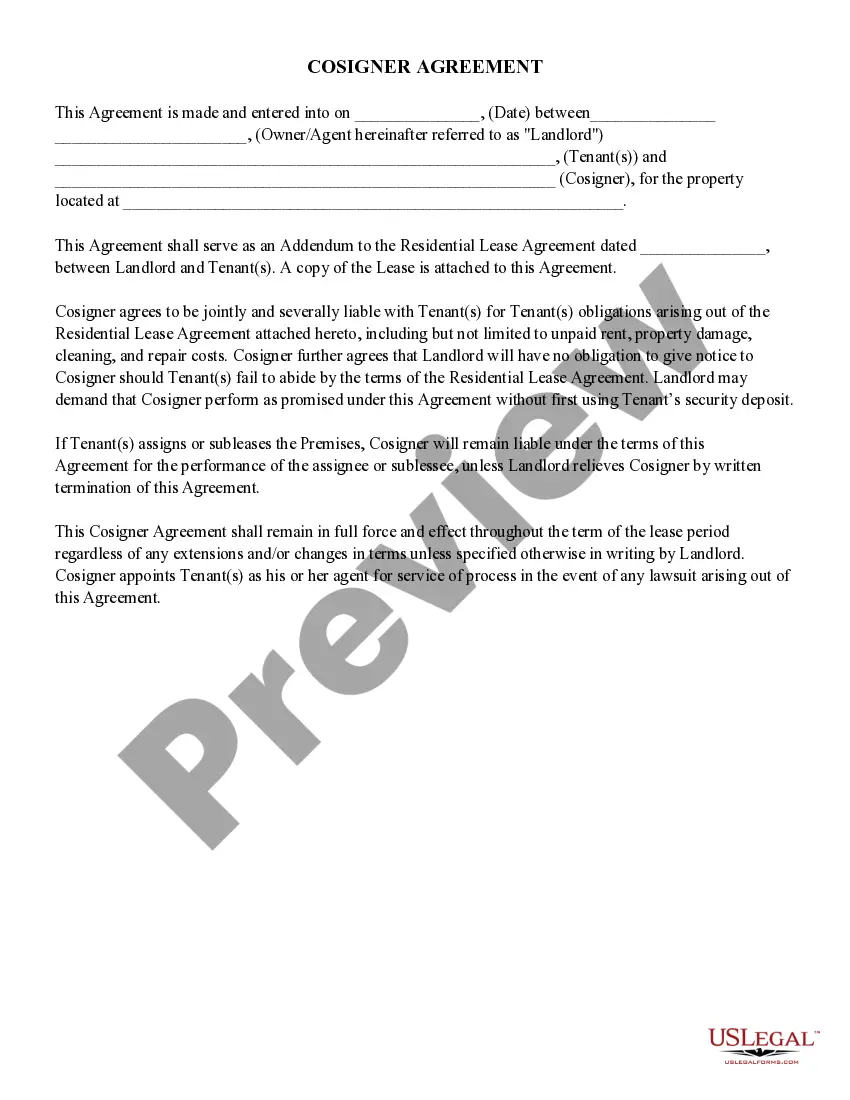
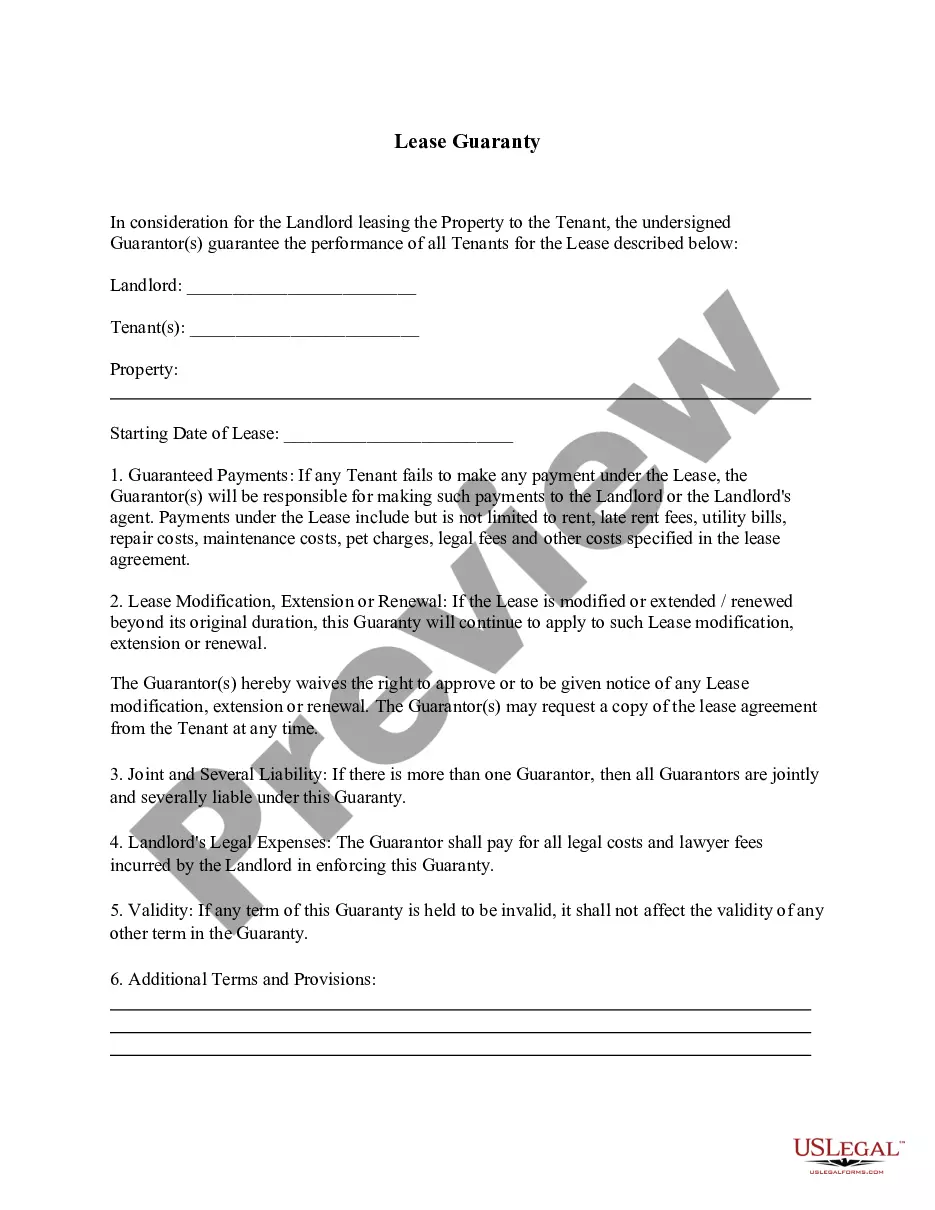
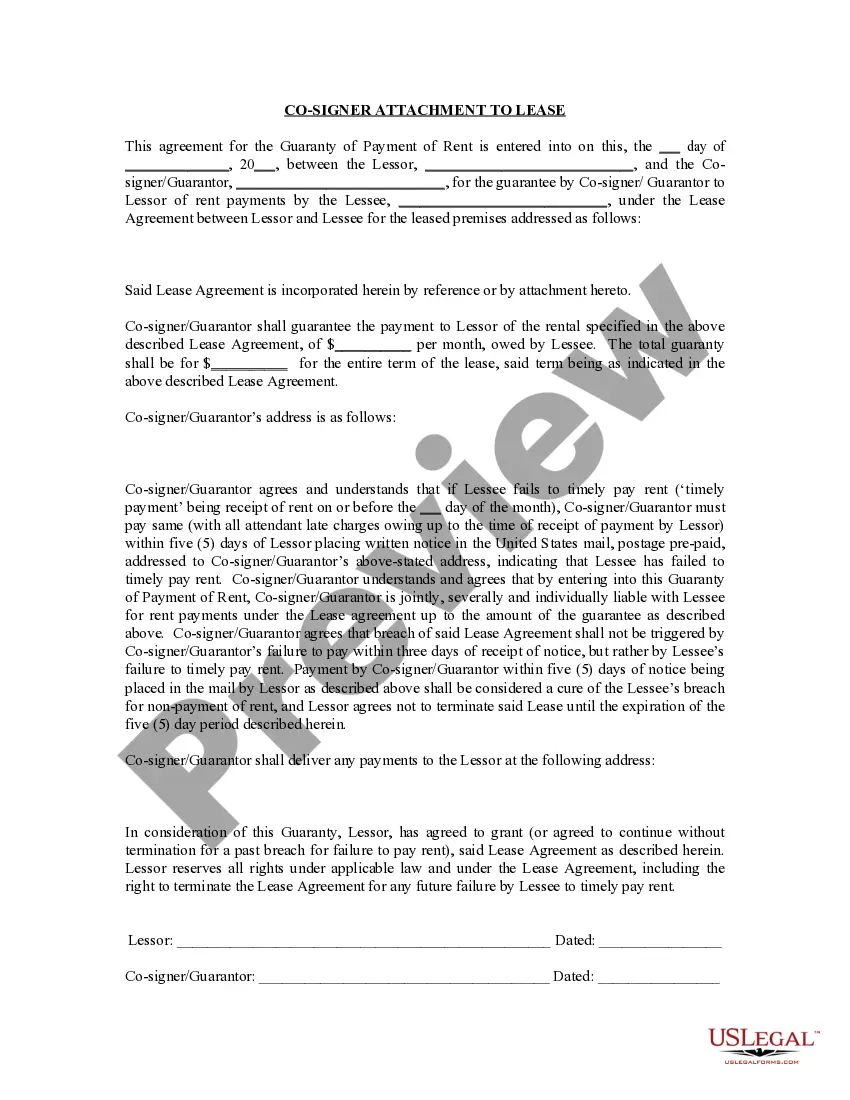
The Landlord Tenant Lease Co-Signer Agreement is a legal document that outlines the responsibilities of a co-signer in a rental arrangement. It establishes the co-signer's liability for rent and damages if the tenant fails to fulfill their obligations. Unlike standard lease agreements, this form specifically addresses the role of the co-signer, sometimes referred to as a guarantor, ensuring all parties understand their commitments and expectations within the lease framework.
Form components explained
- Date of agreement establishment
- Identification of the tenant, landlord, and co-signer
- Premises address being leased
- Liability terms concerning assignments or subleases
- Provision for attorney fees in case of legal disputes
- Signature lines for all parties involved
When this form is needed
This form should be used when a landlord requires a co-signer for a lease agreement to ensure that rent and any damages can be covered if the tenant defaults. It is particularly beneficial in situations where the tenant has a limited credit history or insufficient income to meet leasing criteria independently. Additionally, it's useful when a dependent or student is leasing for the first time, and someone else is needed to guarantee the obligations.
Intended users of this form
- Landlords needing to secure financial responsibility from a co-signer
- Tenants who may require a co-signer to qualify for a lease
- Co-signers who wish to understand their liabilities before signing
How to prepare this document
- Identify all parties involved: the tenant, landlord, and co-signer.
- Enter the date the agreement is being finalized.
- Provide the complete address of the leased premises.
- Include any clauses related to subleasing or assignments if applicable.
- Have all parties sign and date the agreement to make it legally binding.
Does this form need to be notarized?
This form does not typically require notarization unless specified by local law. However, it's advisable to check local regulations to ensure compliance with any additional legal requirements that may apply to rental agreements and co-signing. Always consider notarization for added legal assurance.
Get your form ready online
Our built-in tools help you complete, sign, share, and store your documents in one place.
Make edits, fill in missing information, and update formatting in US Legal Forms—just like you would in MS Word.
Download a copy, print it, send it by email, or mail it via USPS—whatever works best for your next step.
Sign and collect signatures with our SignNow integration. Send to multiple recipients, set reminders, and more. Go Premium to unlock E-Sign.
If this form requires notarization, complete it online through a secure video call—no need to meet a notary in person or wait for an appointment.
We protect your documents and personal data by following strict security and privacy standards.

Make edits, fill in missing information, and update formatting in US Legal Forms—just like you would in MS Word.

Download a copy, print it, send it by email, or mail it via USPS—whatever works best for your next step.

Sign and collect signatures with our SignNow integration. Send to multiple recipients, set reminders, and more. Go Premium to unlock E-Sign.

If this form requires notarization, complete it online through a secure video call—no need to meet a notary in person or wait for an appointment.

We protect your documents and personal data by following strict security and privacy standards.
Common mistakes
- Not including full legal names of all parties.
- Failing to specify the address of the leased premises.
- Omitting the date of the agreement's execution.
- Forgetting to obtain signatures from all parties involved.
Why complete this form online
- Convenience of immediate access and downloading from anywhere.
- Editability allows customization to fit specific needs.
- Reliability, as forms are drafted by licensed attorneys.
Looking for another form?
Form popularity
FAQ
Some landlords agree to consider cosigners as long as they pass a background check, while other landlords don't allow them at all. Since there are no laws that require you to accept a cosigner, according to RentPrep, it's up to you to determine what makes the most sense for your property.
It's common for apartment complexes to accept a co-signer on your rental application if you don't qualify on your own.
According to Nolo, a cosigner is a person designated to make the rental payments if the tenant does not pay.However, if a lease doesn't have this provision, then the only people who need to sign the lease are the people responsible for paying the rent.
Only the owner/landlord can evict. Tenants and co-signors do not have the authority. If you want your ex GF out, there must be a basis for the eviction and a cooperative landlord.
Any adult can act as a cosigner provided they meet the landlord's qualifications. Often, tenants ask a family member or trusted friend to cosign for them. However, keep in mind that your cosigner will also have to submit an application and be put through a credit and background check.
As a parent, you may have the best intentions when co-signing for a child on a loan, a credit card or an apartment lease. But doing so opens you up to risk.If you can't absorb the expense without compromising your future financial security, you may want to think twice about co-signing for a loan.
Sometimes, a landlord might require a co-signer in order to lease the apartment to you. This is usually the case if you have low income, poor or no rental history, or bad credit. For any of these situations, having a co-signer will give the landlord a lot more peace of mind about letting you rent the apartment.
Co-signers have equal responsibility for payment of monthly rental costs, while a guarantor is generally sought for payment only when the primary signer is unable to make the rental payment.
A co-signer is a third party who is responsible if you are unable to pay rent. This person does not typically live in the apartment with you, but he or she is equally liable for your lease.