Vermont Demolition Contract for Contractor
What this document covers
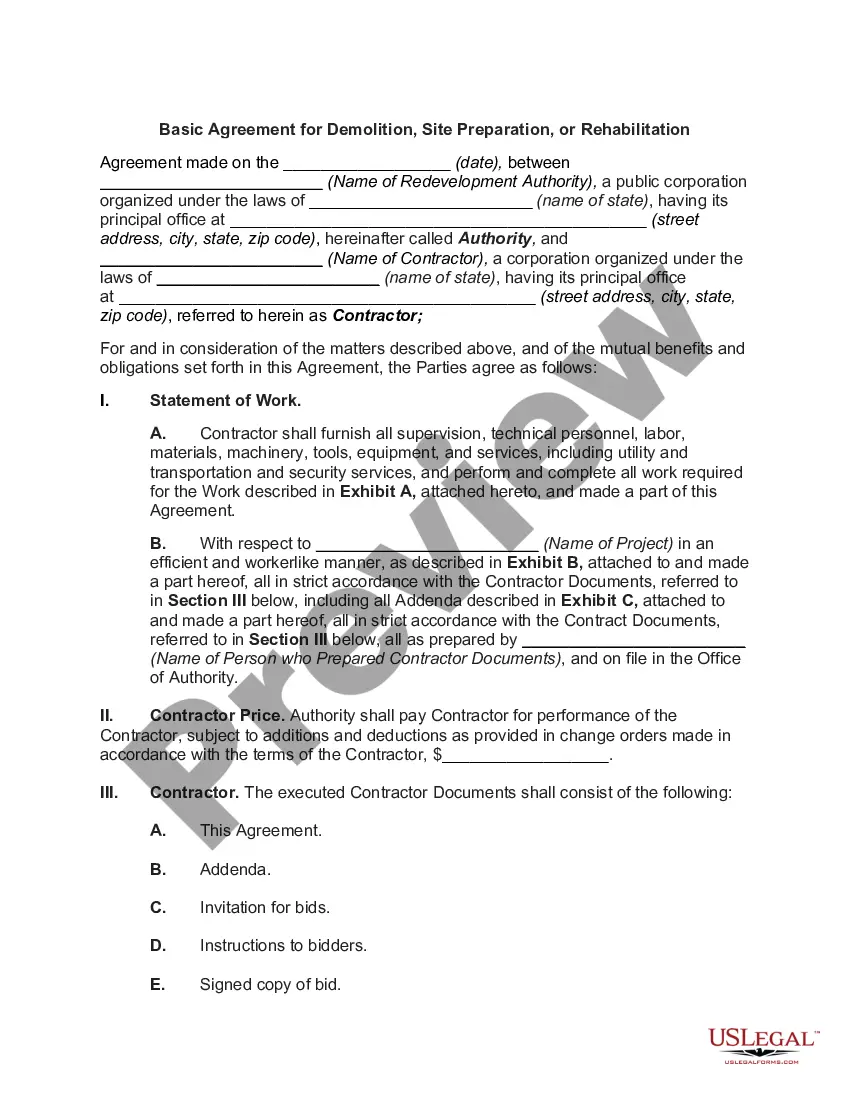
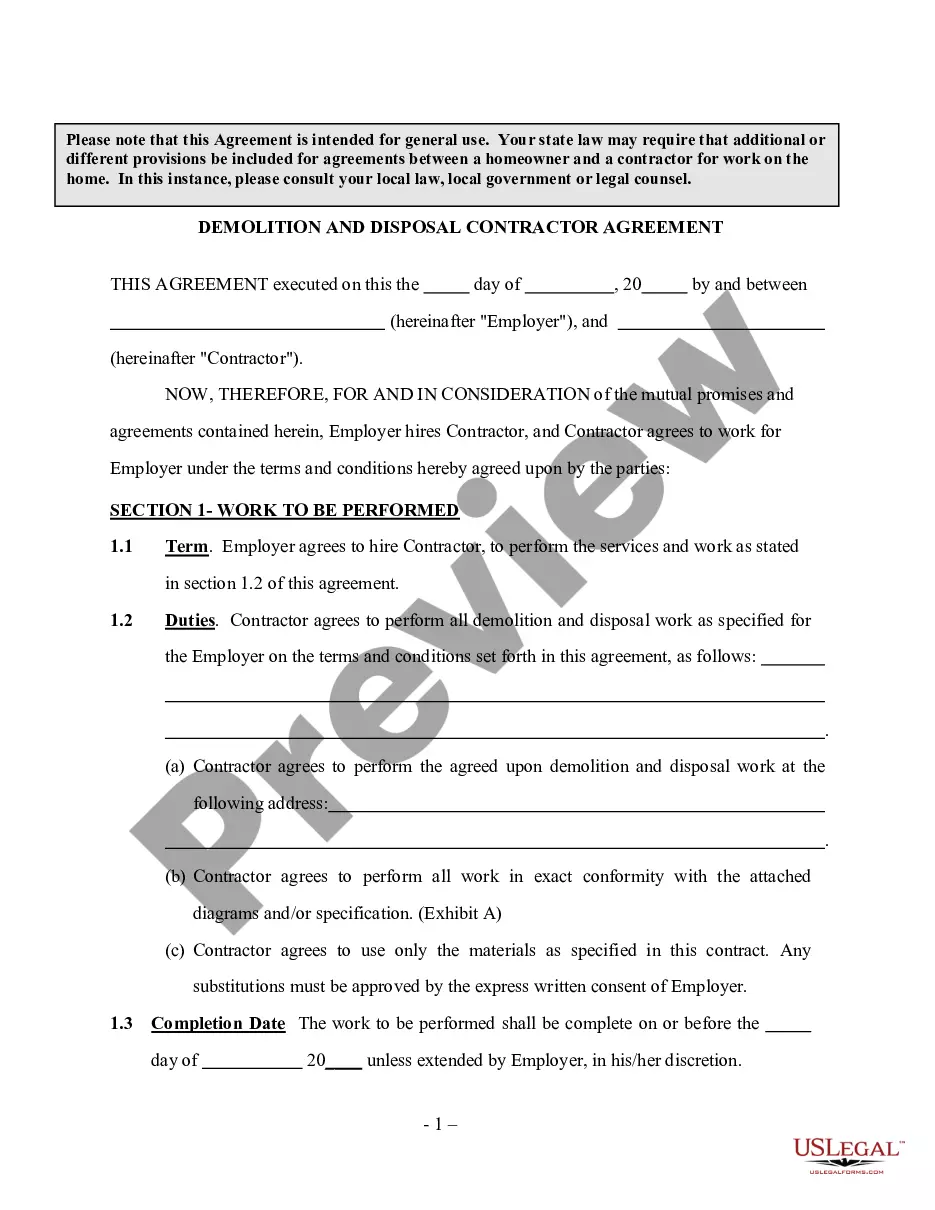
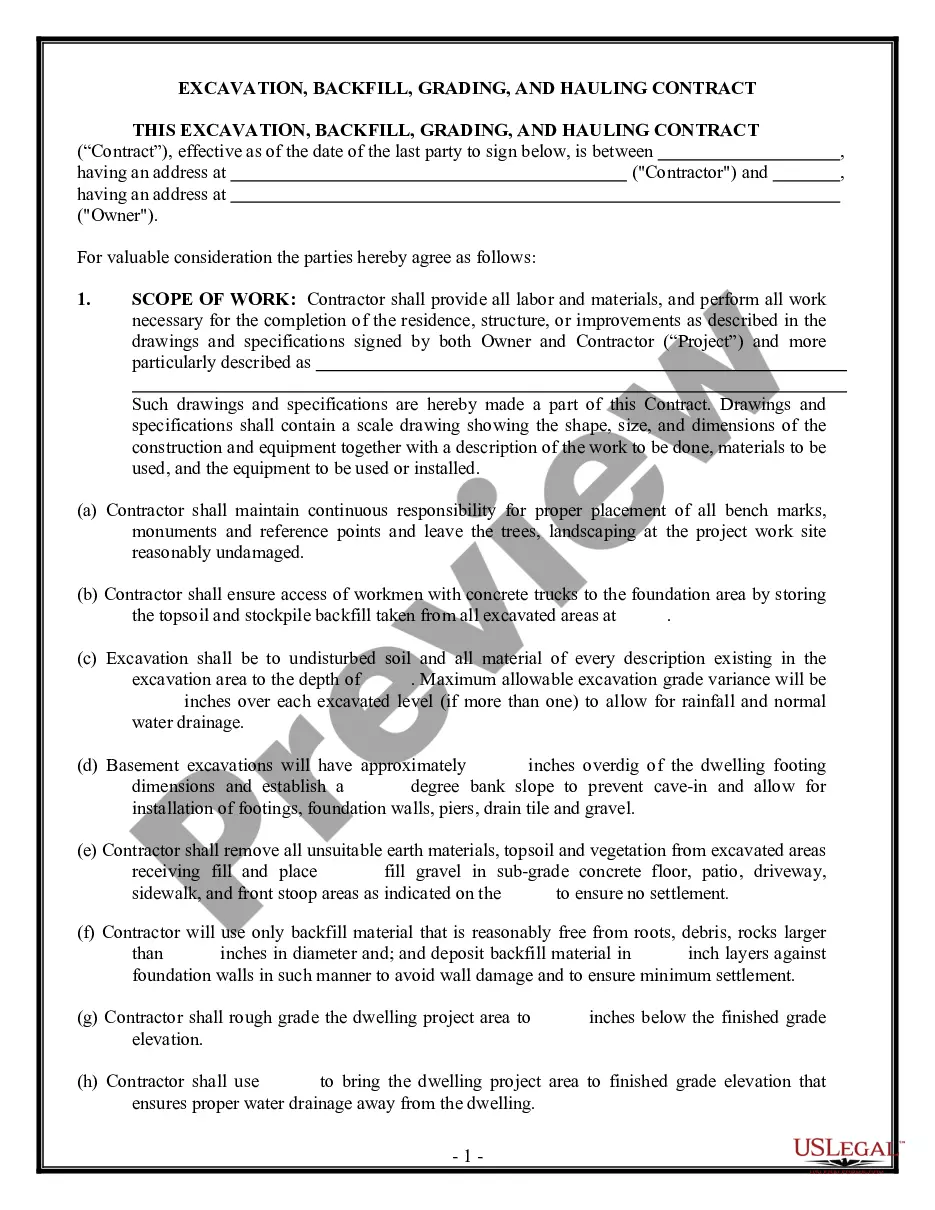
The Demolition Contract for Contractor is a legal agreement that formalizes the relationship between a demolition contractor and a property owner. This contract outlines key terms such as payment arrangements, work specifications, and other vital details pertaining to demolition projects. Unlike more generic contractor agreements, this form is specifically tailored to address the unique needs and legal requirements of demolition work in Vermont.
Key parts of this document
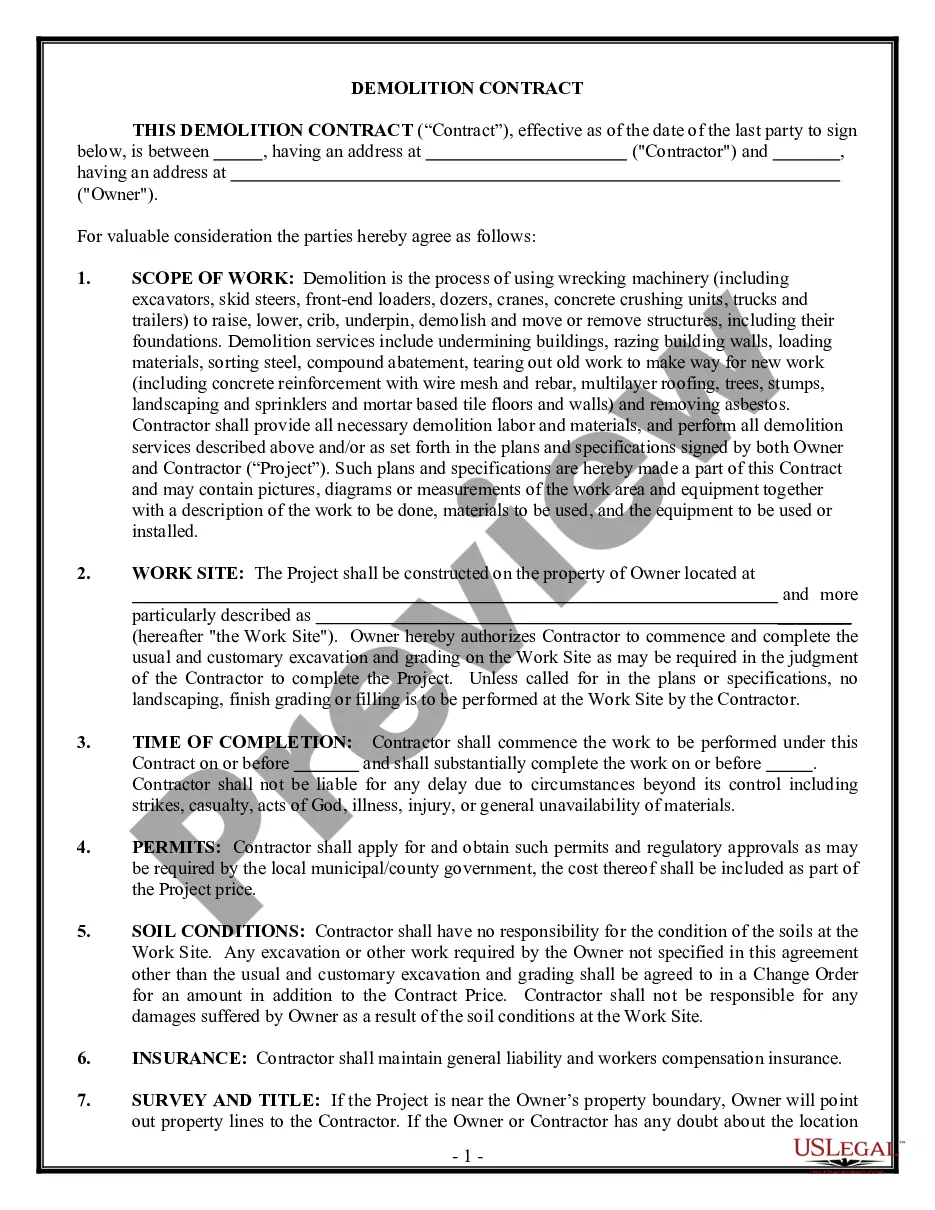
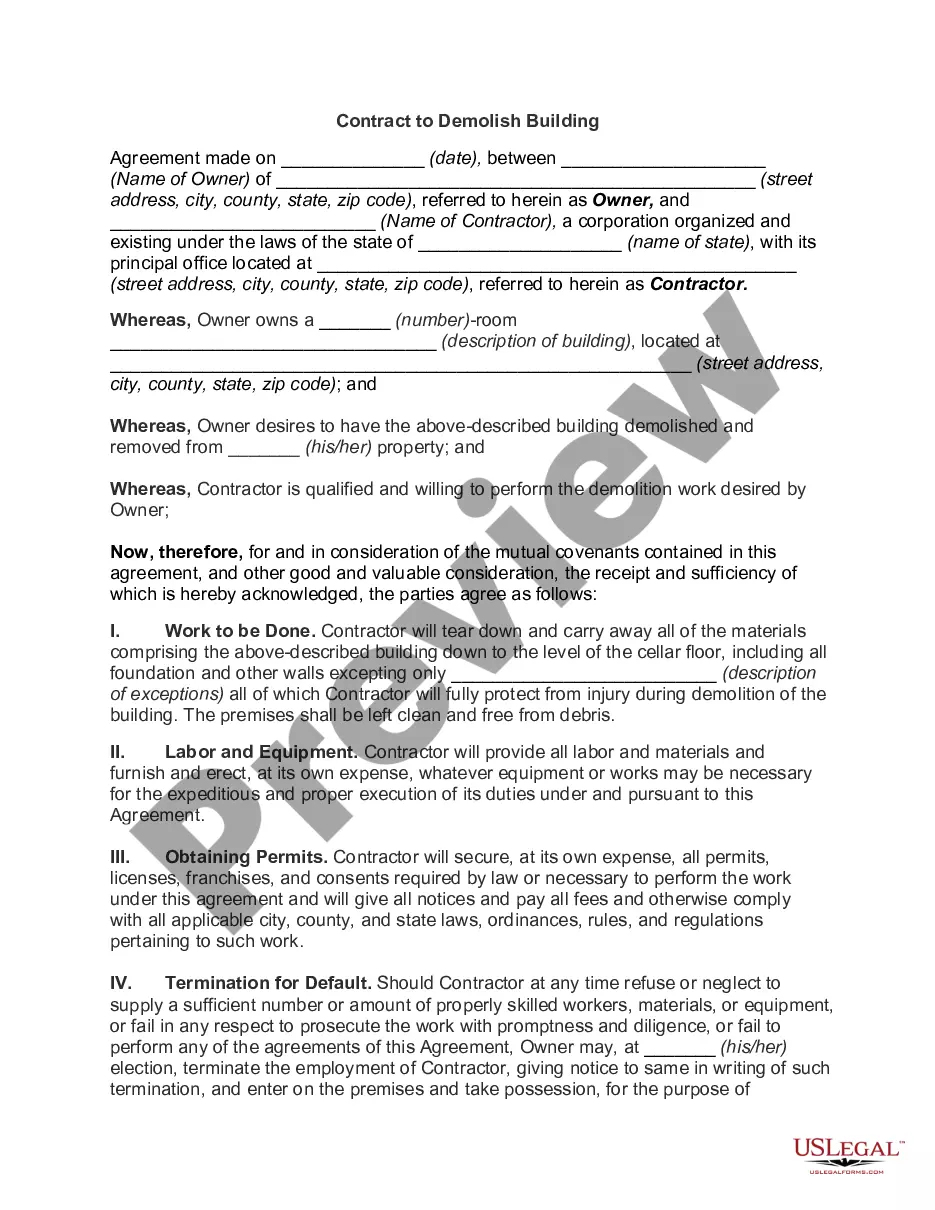
- Permits: Contractor is responsible for obtaining necessary local permits.
- Soil conditions: Defines the contractor's non-responsibility for soil issues at the work site.
- Insurance: Requires the contractor to maintain general liability and workers compensation insurance.
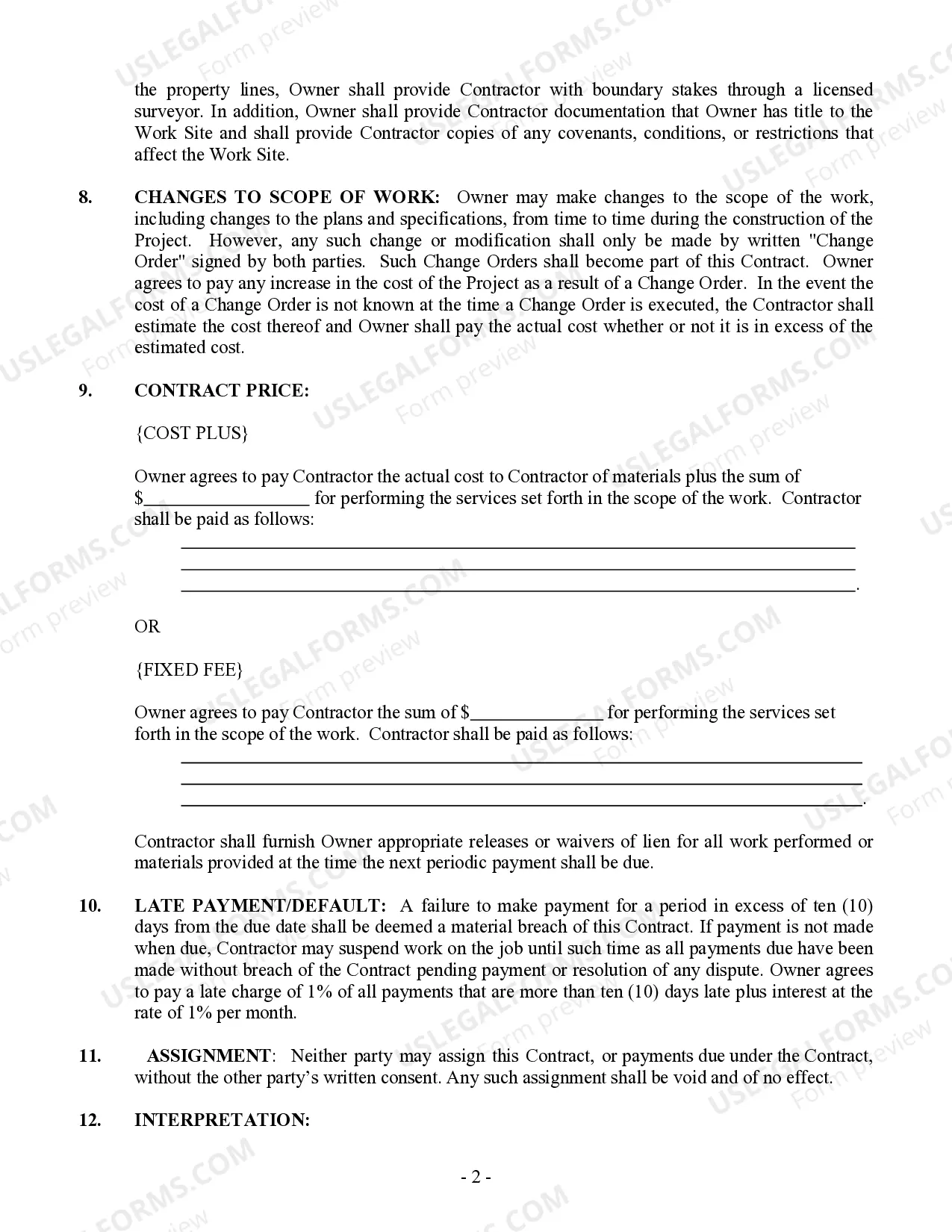
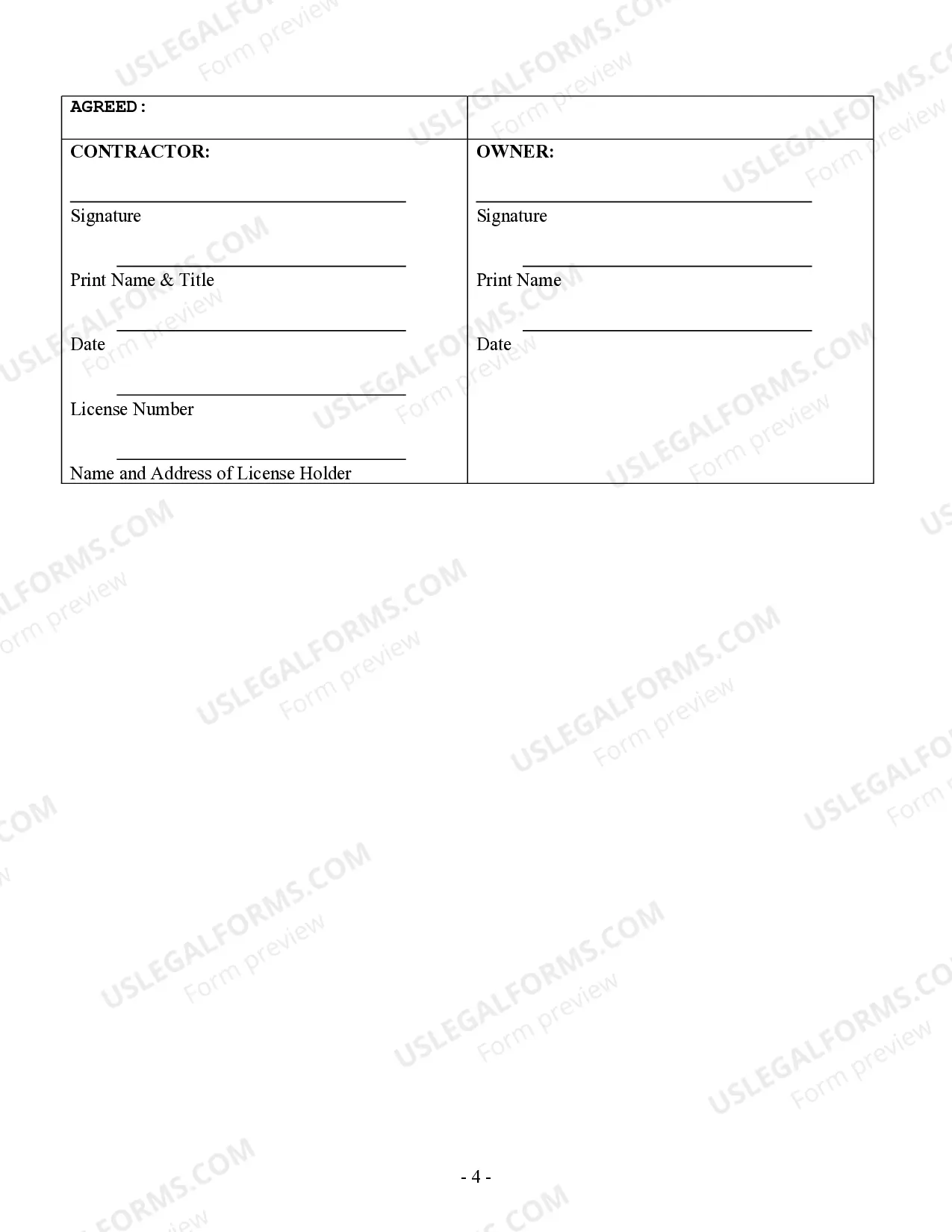
- Changes to scope of work: Details how changes are to be managed through written change orders.
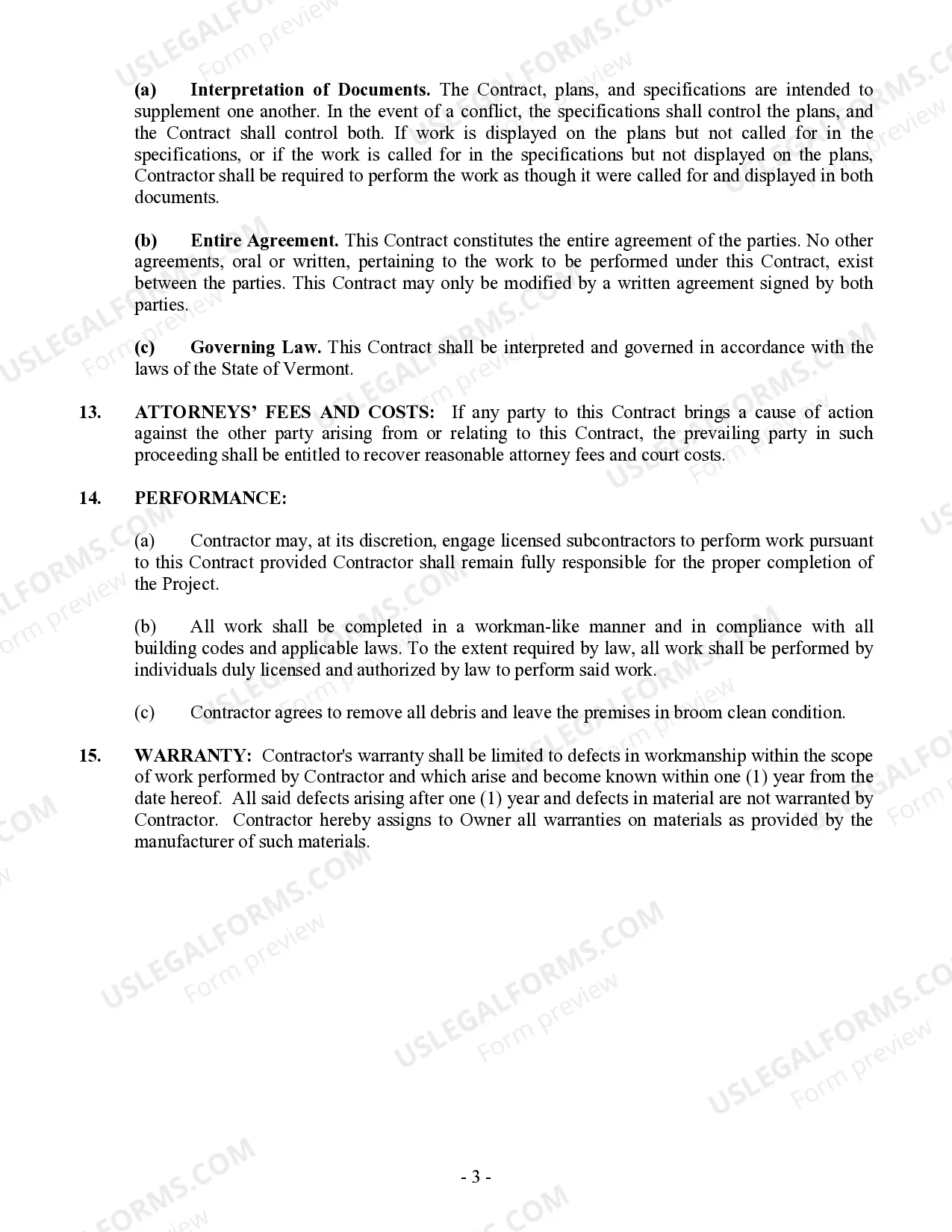
- Late payment/default: Specifies consequences for late payments, including a late charge.
When to use this document
This form should be used when a property owner wishes to hire a demolition contractor for a project. It is appropriate for residential and commercial demolition efforts and can be employed in various scenarios, such as when the property owner needs to clear land for new construction or to make renovations.
Intended users of this form
- Property owners planning to demolish an existing structure.
- Demolition contractors looking for a formal contract to outline project terms.
- Individuals or businesses involved in real estate needing to negotiate demolition services.
How to prepare this document
- Identify the parties: Clearly state the names and addresses of both the contractor and the property owner.
- Specify the project: Detail the work to be performed, including the nature of the demolition and any specific requirements.
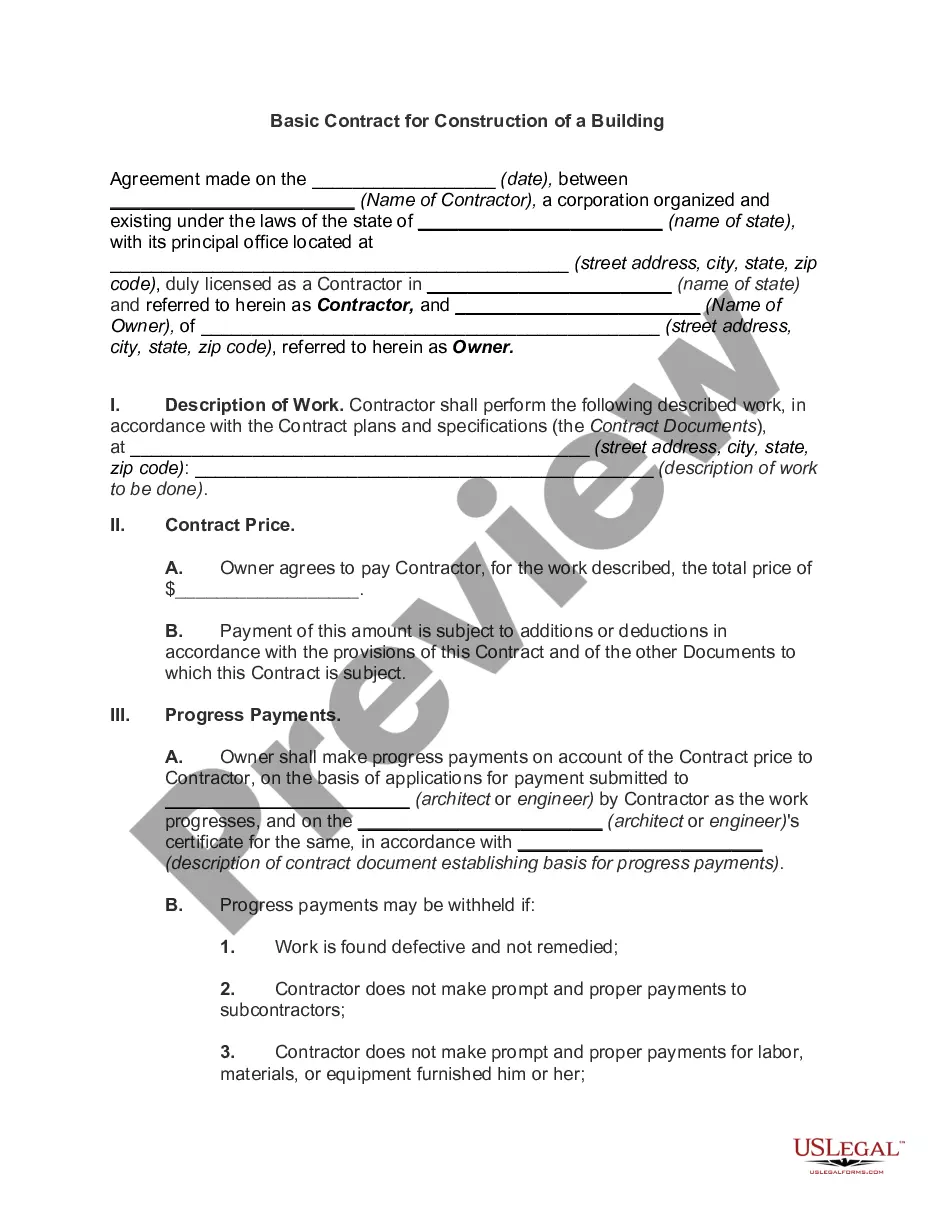
- Outline payment terms: Indicate whether the payment will be cost-plus or a fixed fee and provide the agreed amount.
- Enter dates: Include the start date of the demolition work and any deadlines for project completion.
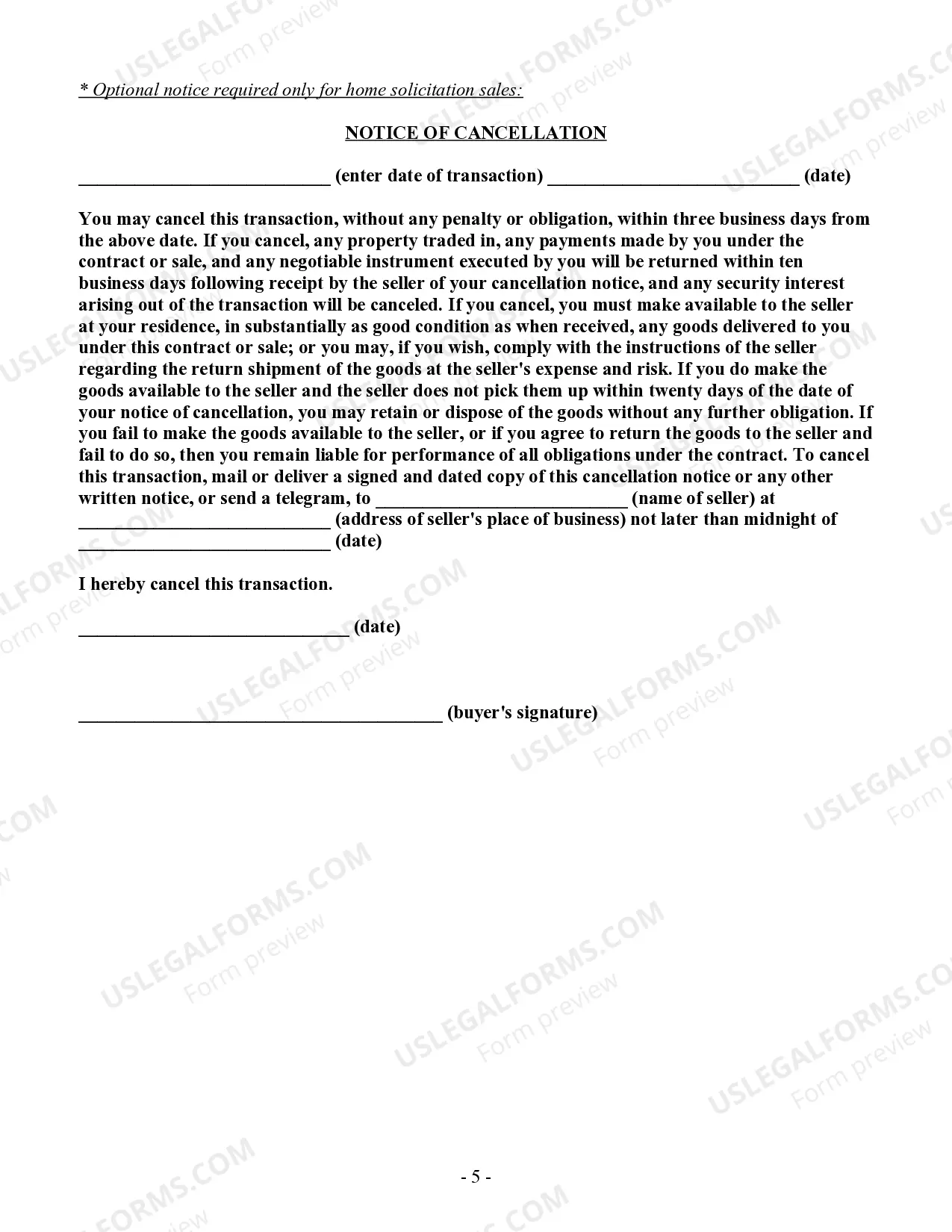
- Sign the contract: Ensure both parties sign the contract to make it legally binding.
Does this document require notarization?
In most cases, this form does not require notarization. However, some jurisdictions or signing circumstances might. US Legal Forms offers online notarization powered by Notarize, accessible 24/7 for a quick, remote process.
Get your form ready online
Our built-in tools help you complete, sign, share, and store your documents in one place.
Make edits, fill in missing information, and update formatting in US Legal Forms—just like you would in MS Word.
Download a copy, print it, send it by email, or mail it via USPS—whatever works best for your next step.
Sign and collect signatures with our SignNow integration. Send to multiple recipients, set reminders, and more. Go Premium to unlock E-Sign.
If this form requires notarization, complete it online through a secure video call—no need to meet a notary in person or wait for an appointment.
We protect your documents and personal data by following strict security and privacy standards.
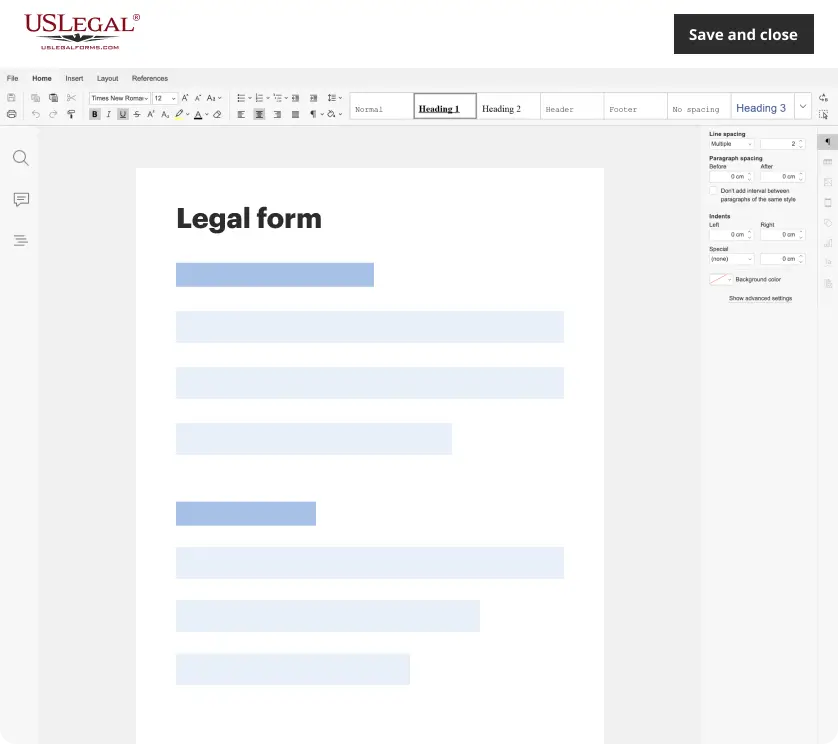
Make edits, fill in missing information, and update formatting in US Legal Forms—just like you would in MS Word.
Download a copy, print it, send it by email, or mail it via USPS—whatever works best for your next step.
Sign and collect signatures with our SignNow integration. Send to multiple recipients, set reminders, and more. Go Premium to unlock E-Sign.
If this form requires notarization, complete it online through a secure video call—no need to meet a notary in person or wait for an appointment.
We protect your documents and personal data by following strict security and privacy standards.
Mistakes to watch out for
- Failing to specify the exact scope of work, which can lead to disputes.
- Not including payment schedules, leading to confusion or late payments.
- Neglecting to address change orders, which can complicate project modifications.
Benefits of completing this form online
- Convenience: Access and download the form at any time from anywhere.
- Editability: Customize the form to fit specific project needs before finalizing.
- Reliability: Ensure that the contract adheres to Vermont law, crafted by legal professionals.
Legal use & context
- This contract serves as a binding agreement between the contractor and the owner, making it enforceable in court.
- Proper completion of this form helps prevent disputes over scope, cost, and responsibilities.
- Adherence to local law is crucial for the validity of this contract.
Quick recap
- Use the Demolition Contract for Contractor to formalize demolition agreements.
- Ensure you specify all relevant project details to avoid misunderstandings.
- Consult local regulations to ensure compliance with Vermont law.
Looking for another form?
Form popularity
FAQ
Many contractors ask for half of their payment upfront before they begin a job. Bad idea. You should pay no more than one-third of the agreed-upon fee in advance; in some states, this is the law.That way, if you reach an impasse over work that hasn't been done correctly, or at all, you can withhold payment.
The owner can only defer payment if, within 14 days of receipt of the invoice, the owner gives a notice of dispute to the contractor. The notice must set out the amount that is not being paid, and all of the reasons for non-payment.
If a contractor does the work promised, you can't refuse to pay him based on the idea that, because no written contract exists, you lack a legal obligation to do so. However, the situation becomes complicated if you lack a written contract and there is dispute.
There are many reasons for terminating a construction contract. Some of the most common are nonpayment by the owner or contractor, nonperformance by the contractor or subcontractors, timeliness of performance, lack of communication or simply an inability to get along.
Arranging Progress Payments Is Wise. Most contractors ask, in negotiating the contract for work, for some amount of money up front. Talk to the Homeowners About the Balance Due. File a Lien. Sue for Breach of Contract.
The most common reason that contractors find it necessary to stop work, McManus said, is that they haven't been paid for approved invoices. In that scenario, he said, contractors have the right to pull off the job as long as their contracts allow for it, providing they've complied with all of the notice requirements.
A termination for cause can only take place if one party cannot completely fulfill their contractual duties. An example of this would be a contractor terminating their contract for cause because the owner failed to pay them in the time that was determined in the contract.
Breach of contract means that one party did not do what they promised to do in the agreement. A party who breaches a contract can be held legally responsible for damages. Most often, in construction contract cases, damages can include money for the party who suffered a loss or was injured by the breach.
No you don't have to pay them the final payment. Provide reasons and defects. When it comes to small claims, have all your documents, emails, text in order.