Virginia Estate Planning Questionnaire and Worksheets
What is this form?
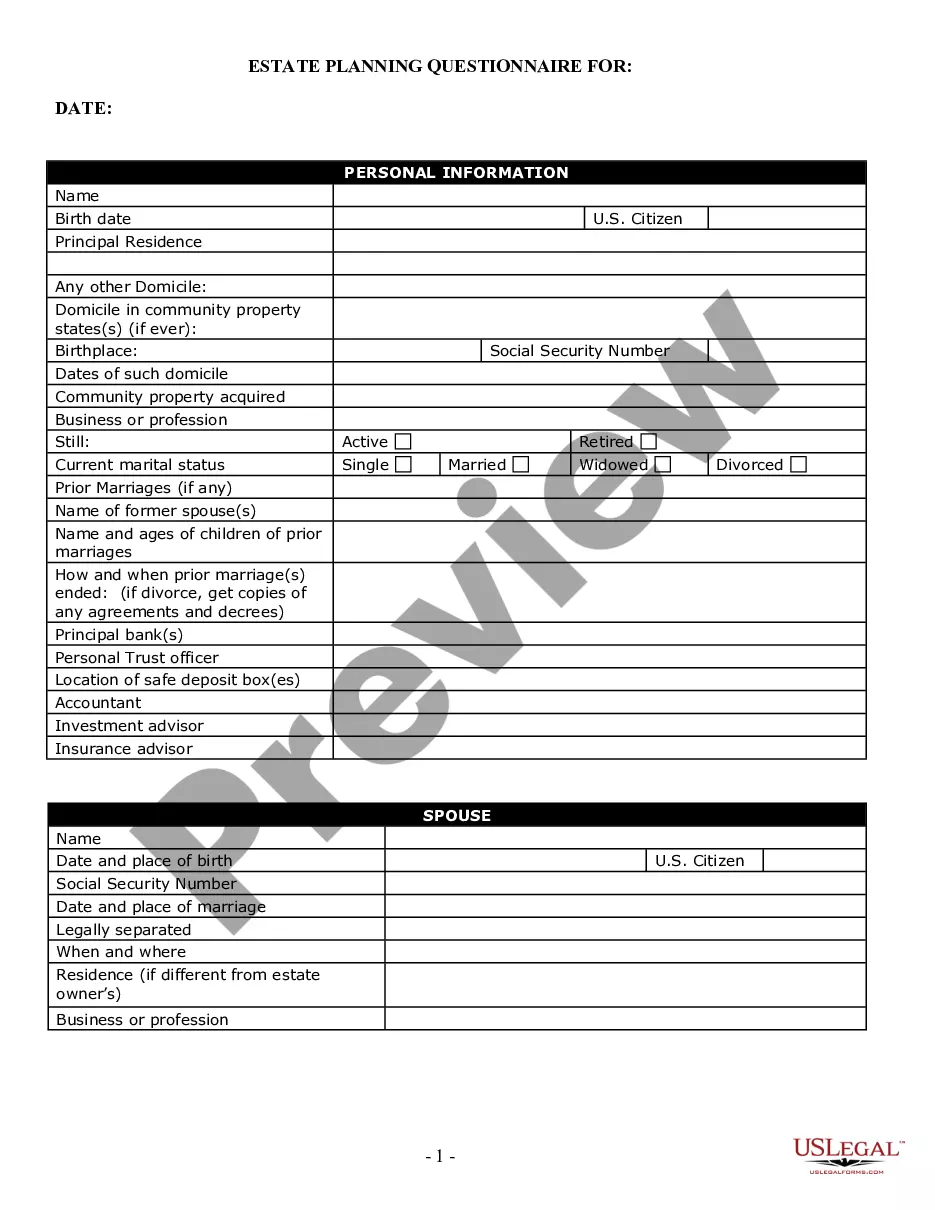
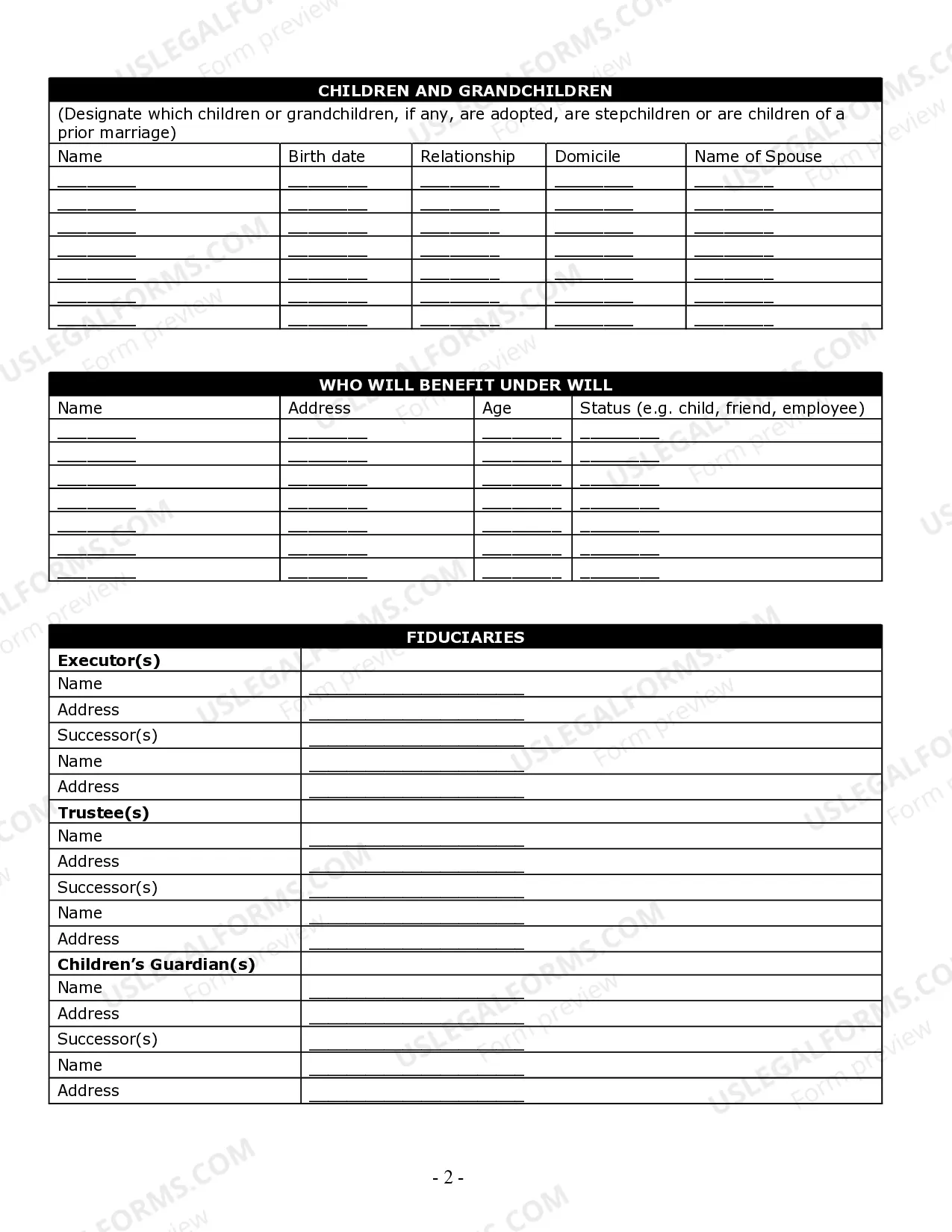
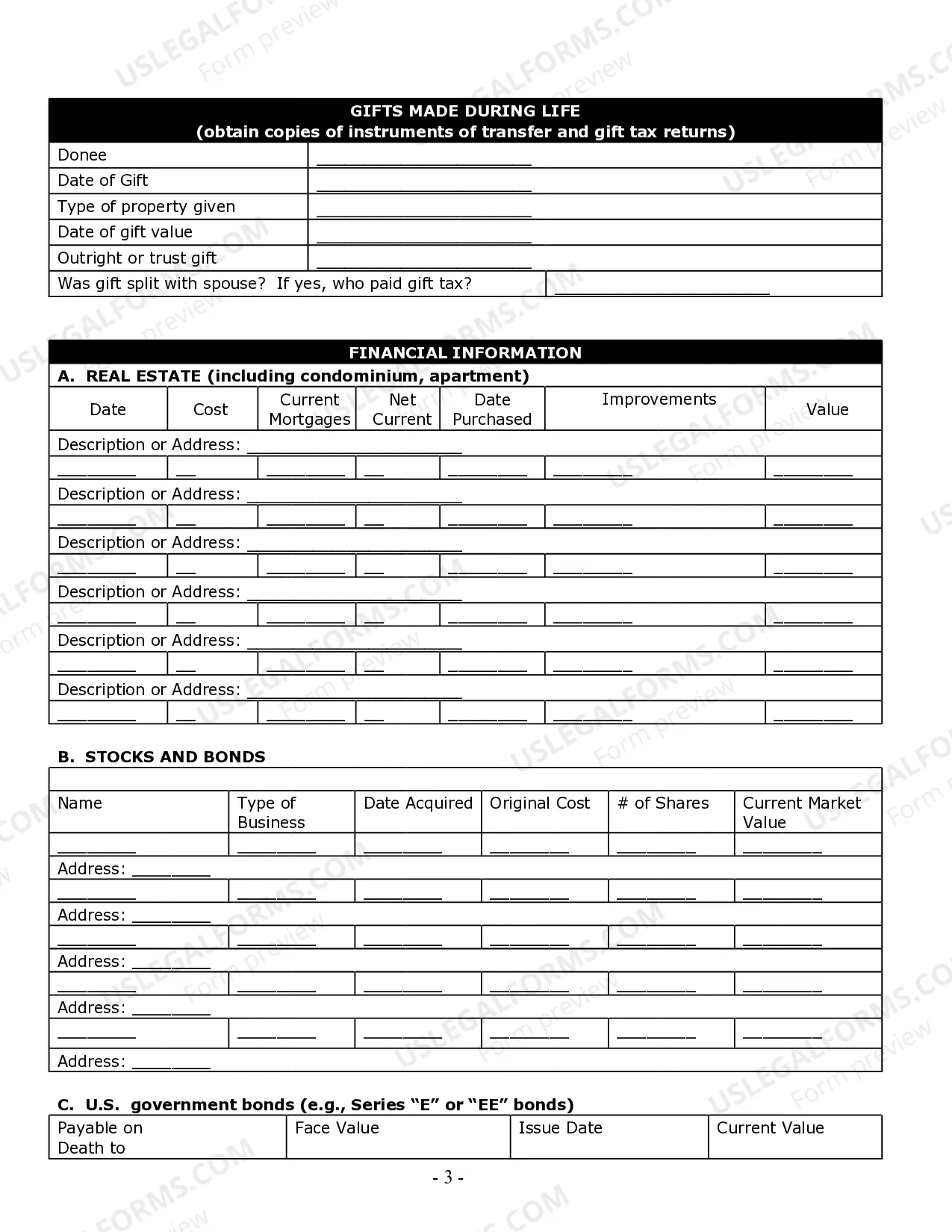
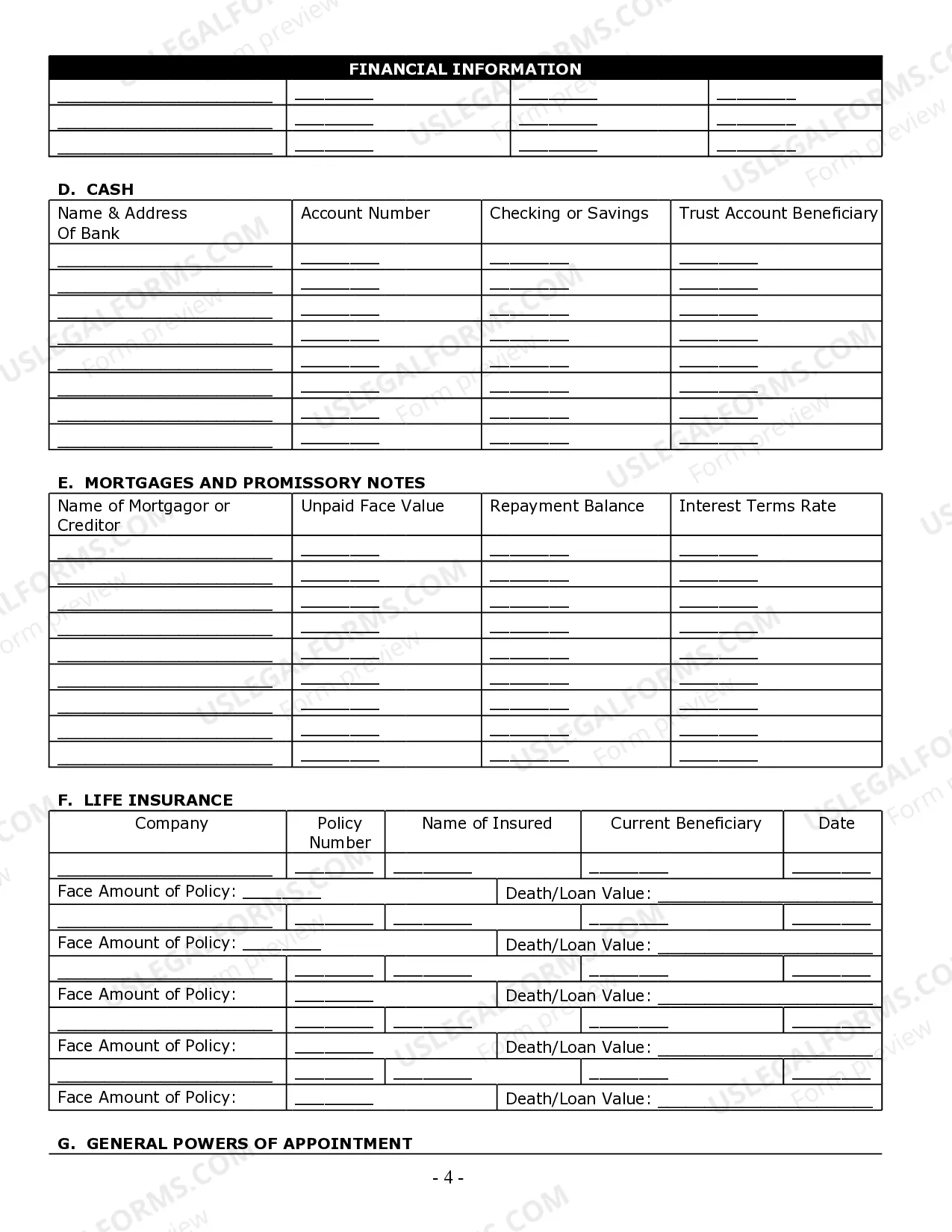
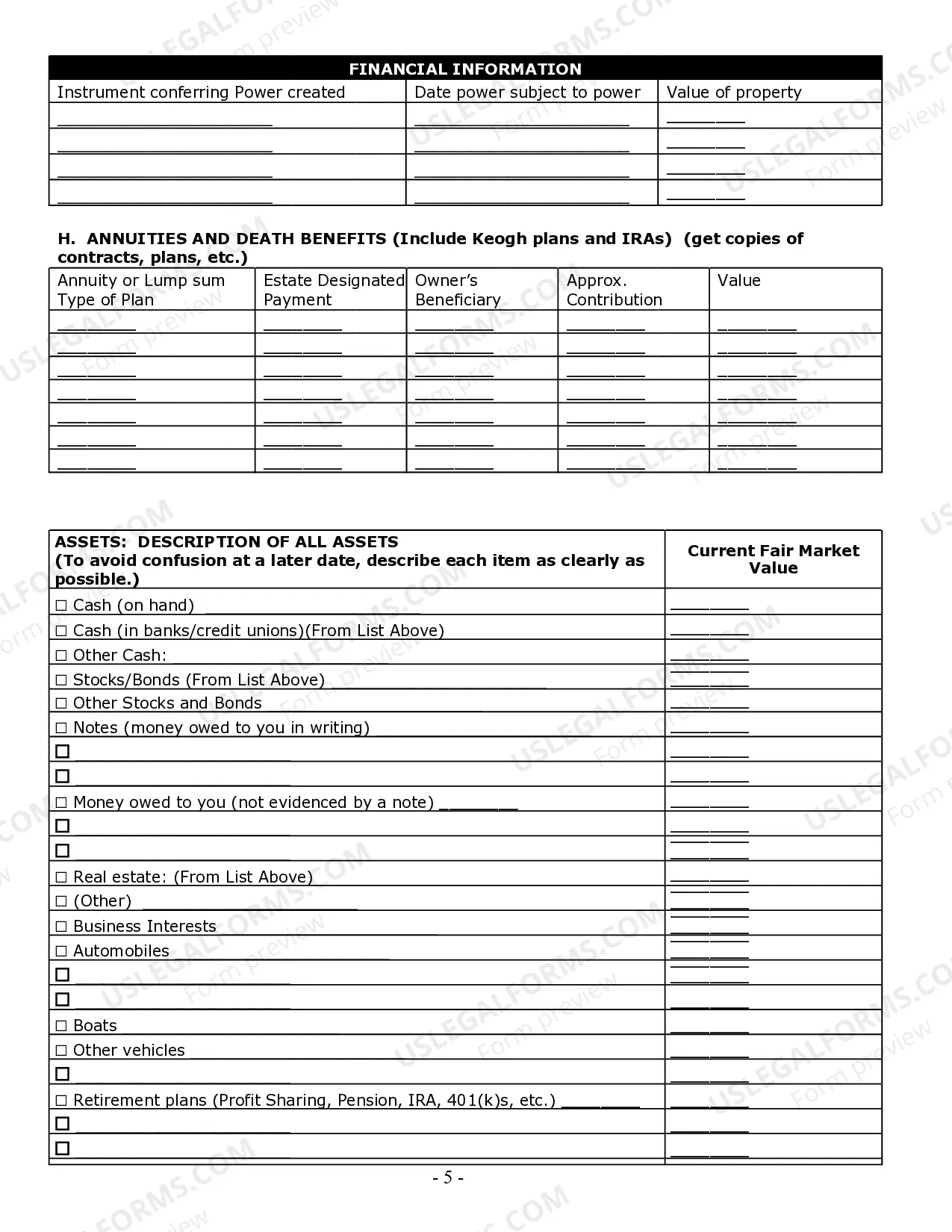
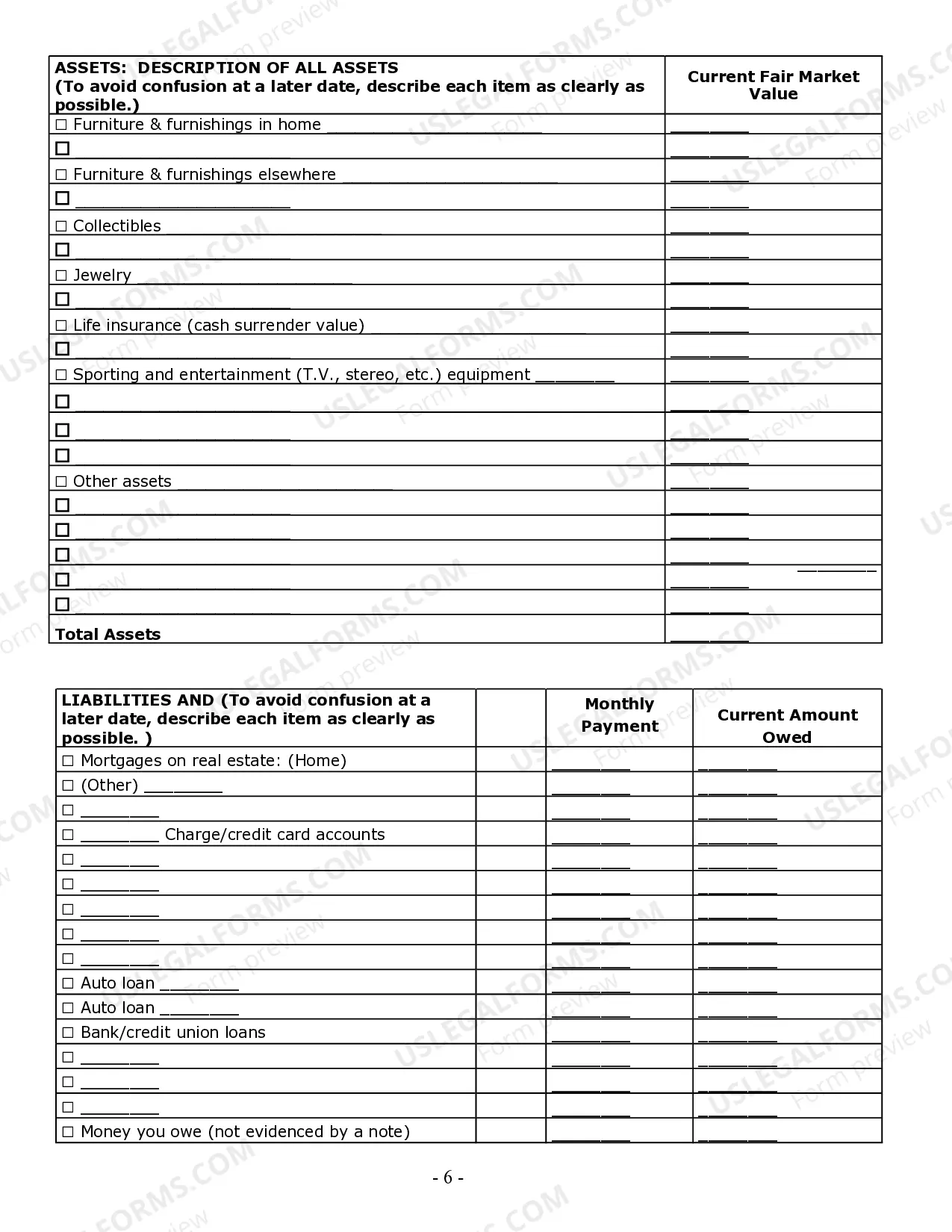
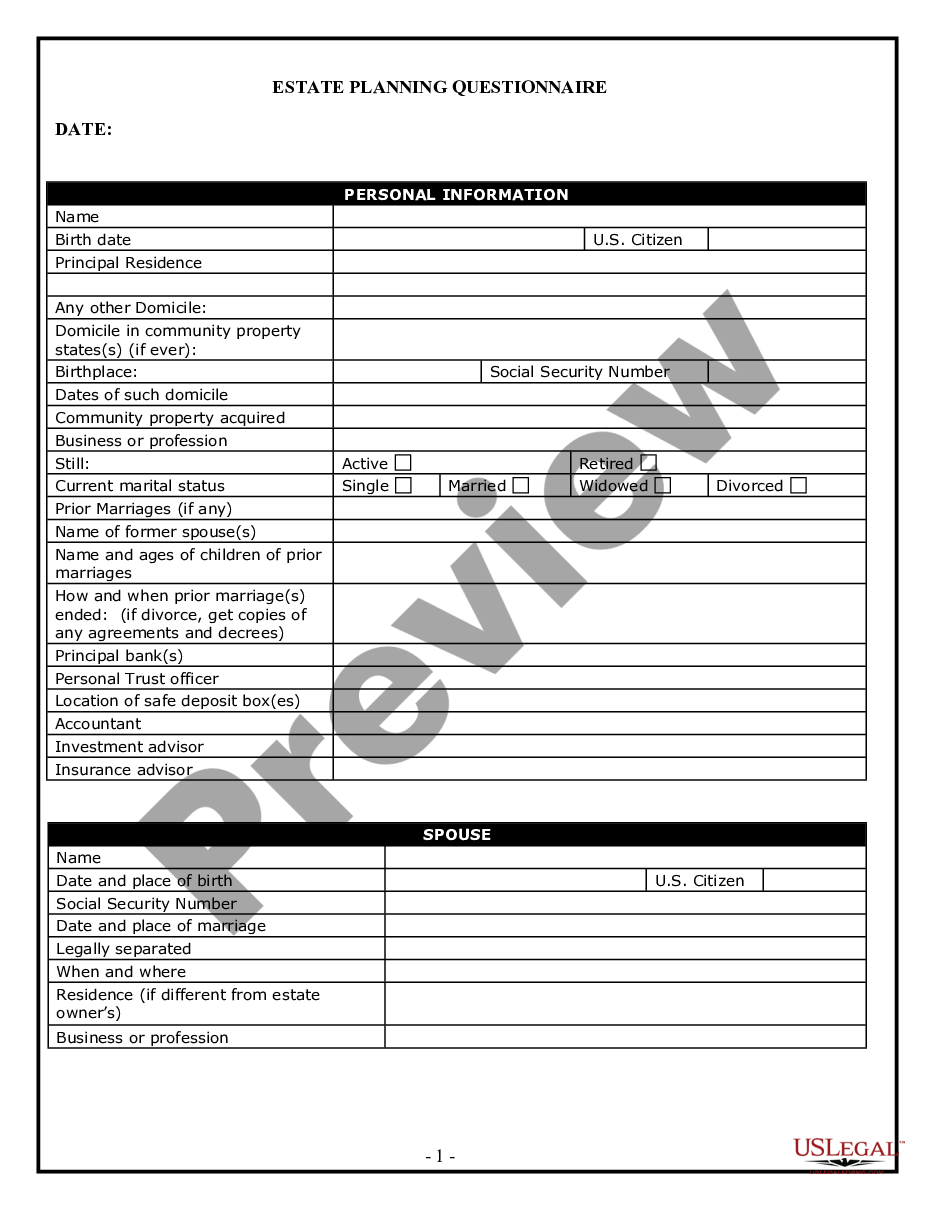
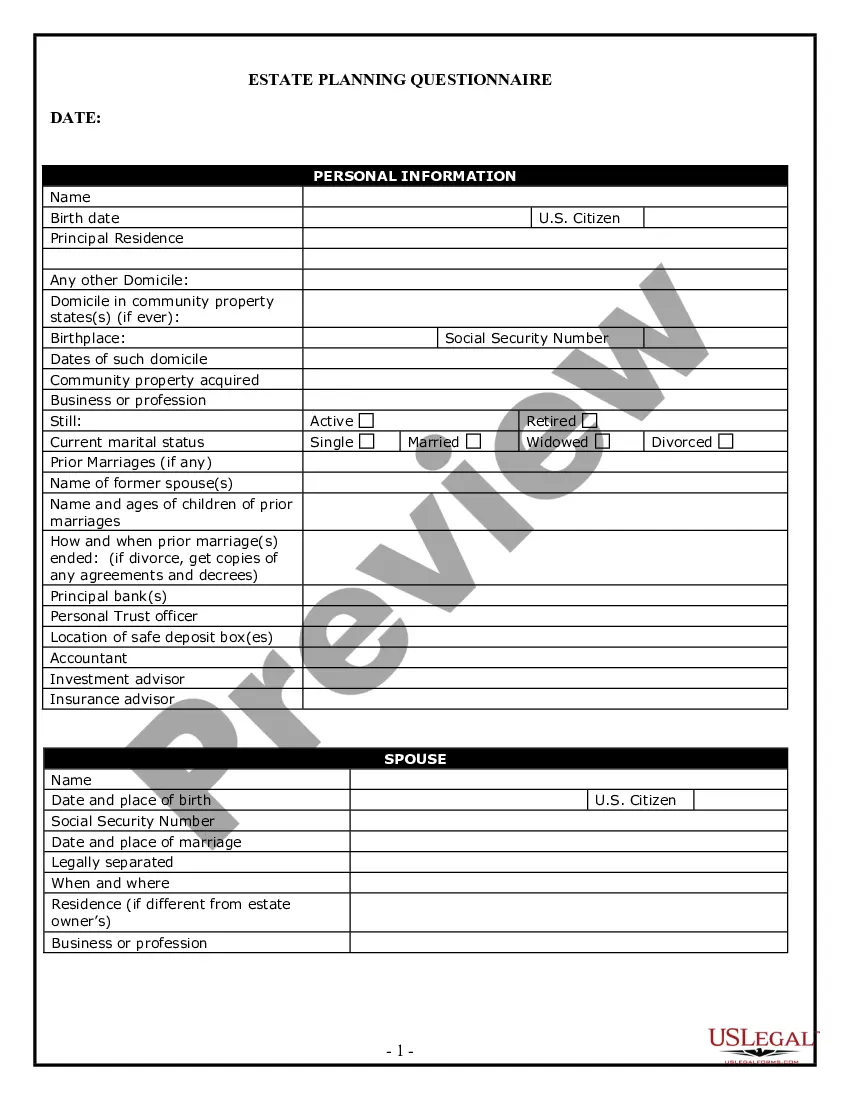
The Estate Planning Questionnaire and Worksheets is a tool designed to assist individuals in gathering crucial information about their personal and financial situations in relation to estate planning. This form serves as a comprehensive guide for organizing details that are essential for creating an effective estate plan. It ensures users can clearly outline their assets, beneficiaries, and desires, making the estate planning process smoother and more efficient compared to simpler forms. It can also be used effectively during client interviews by legal professionals.
Main sections of this form
- Sections for personal information, including family details and health considerations.
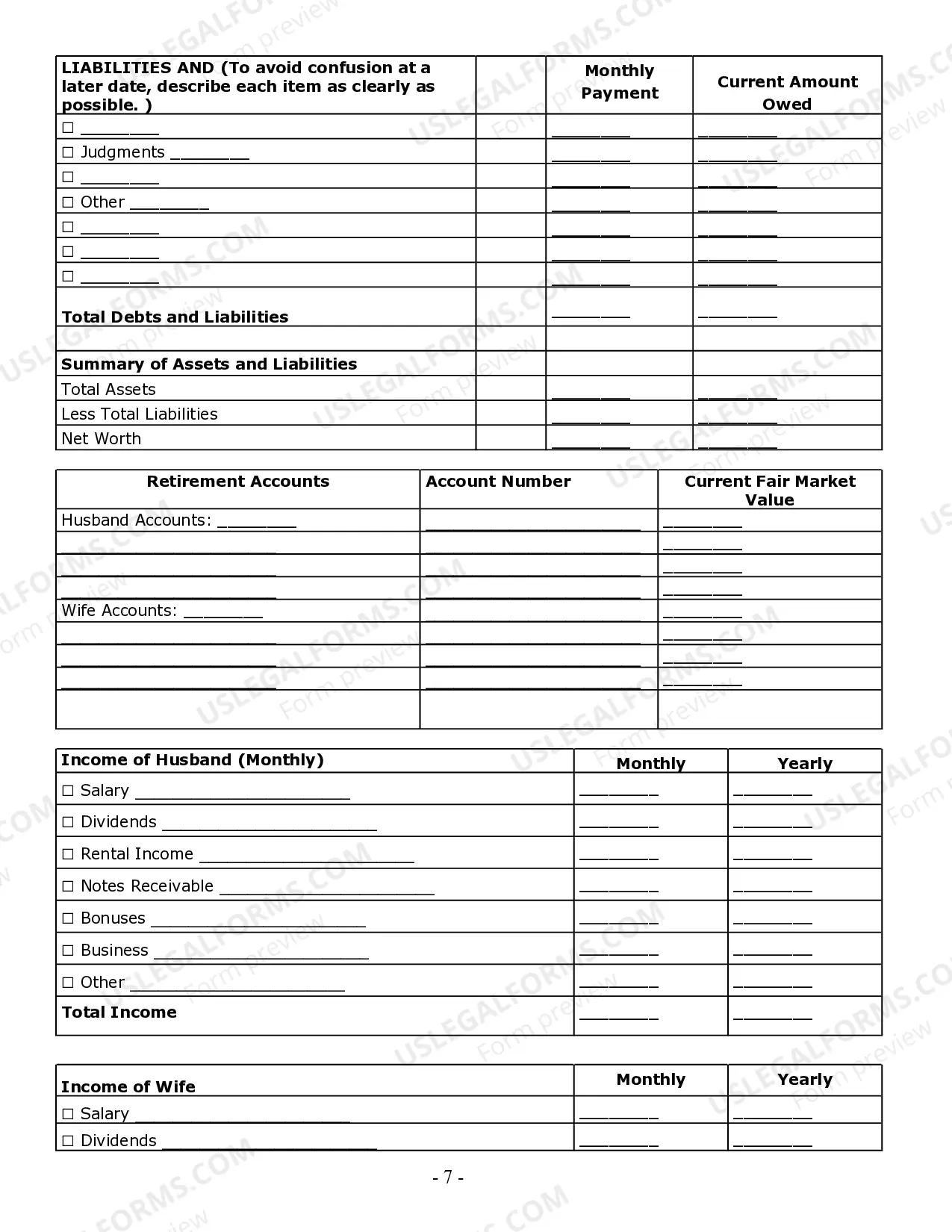
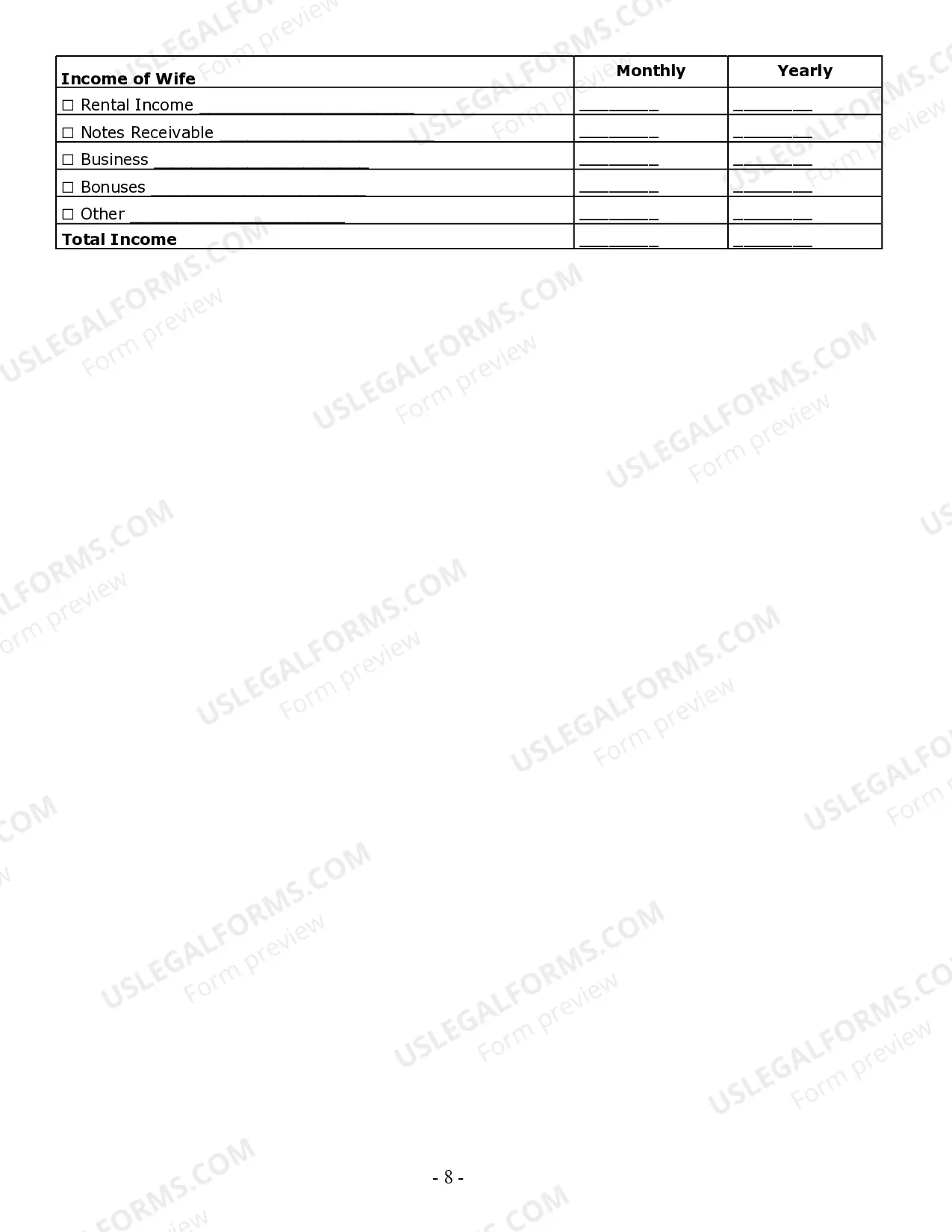
- Financial overview that covers assets, debts, and income sources.
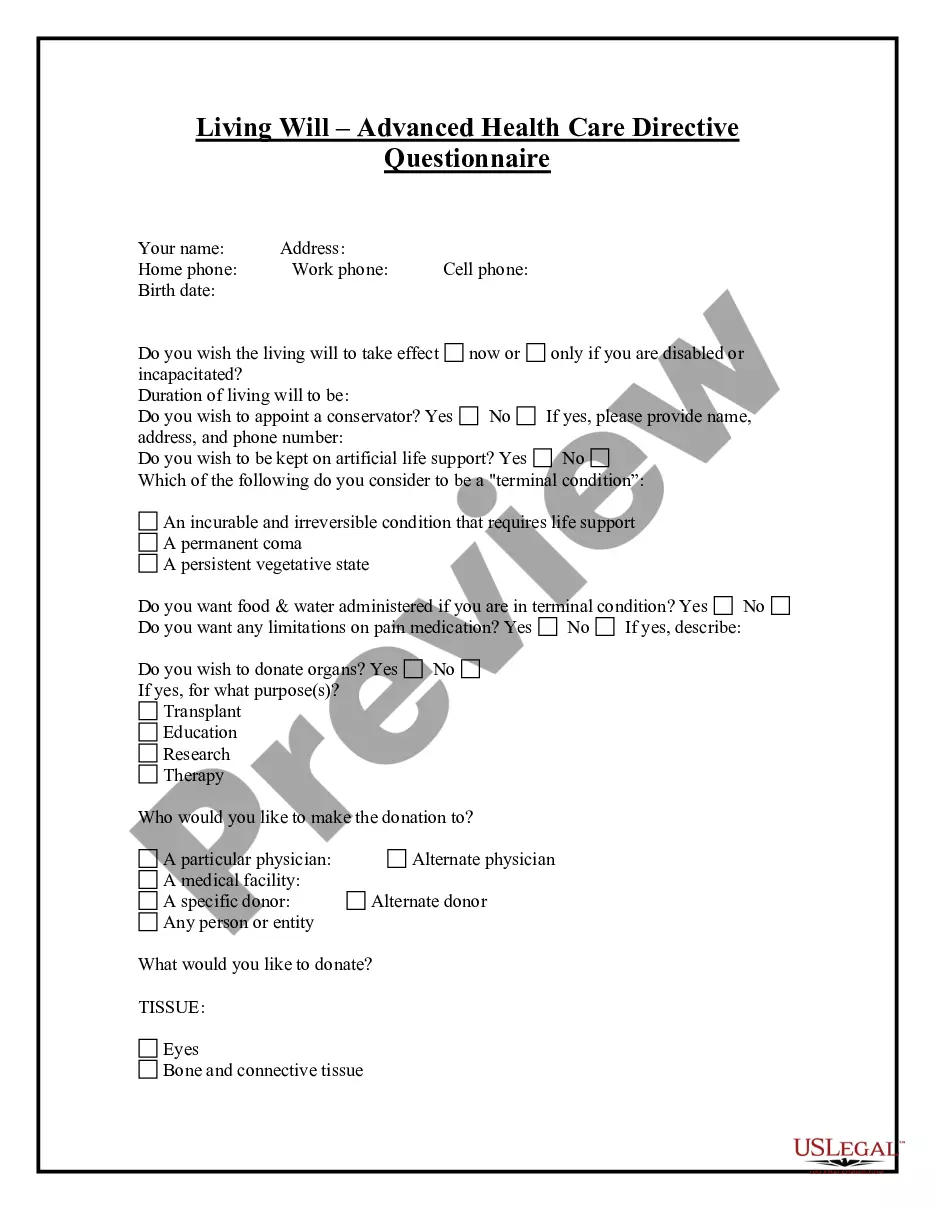
- Detailed inquiries regarding specific estate planning preferences, such as beneficiaries and powers of attorney.
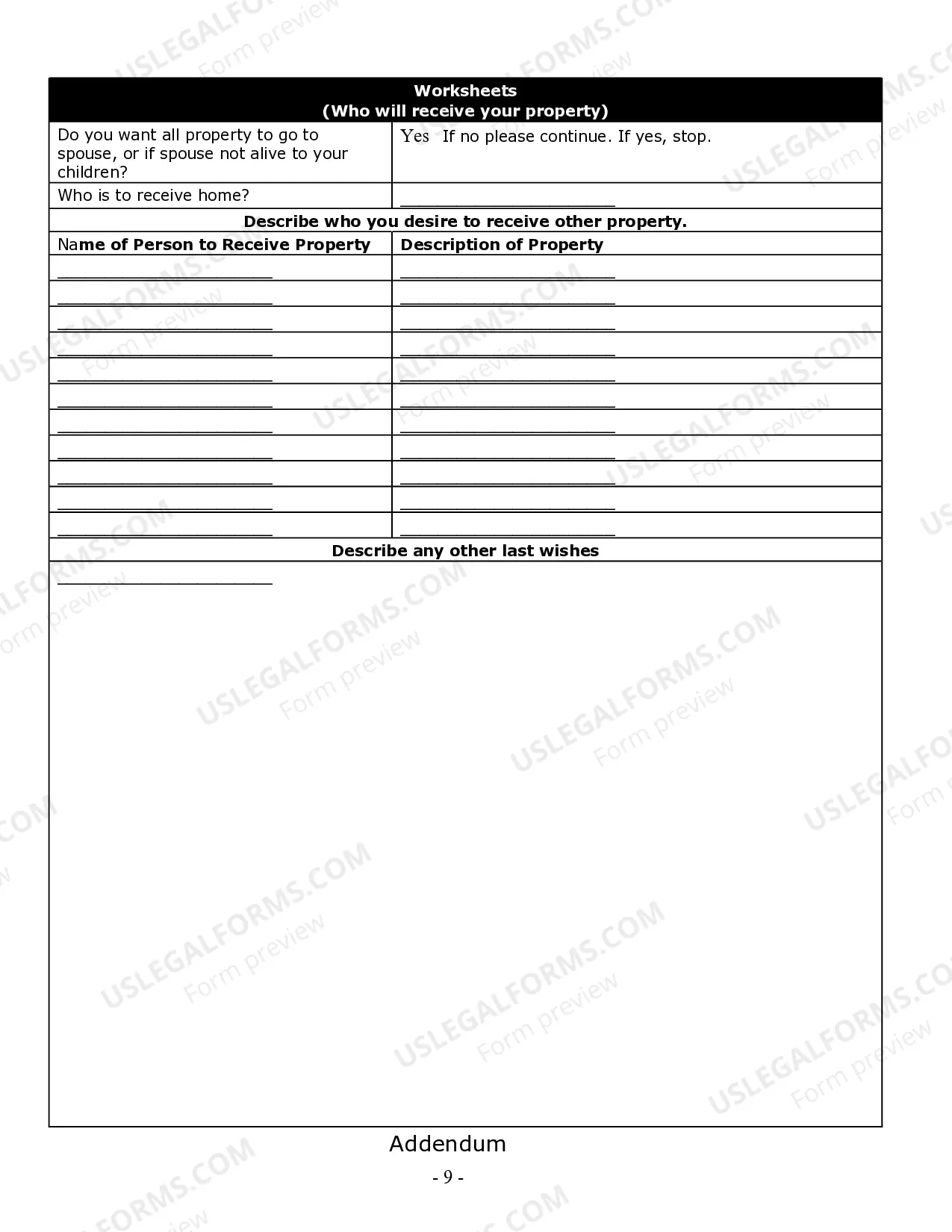
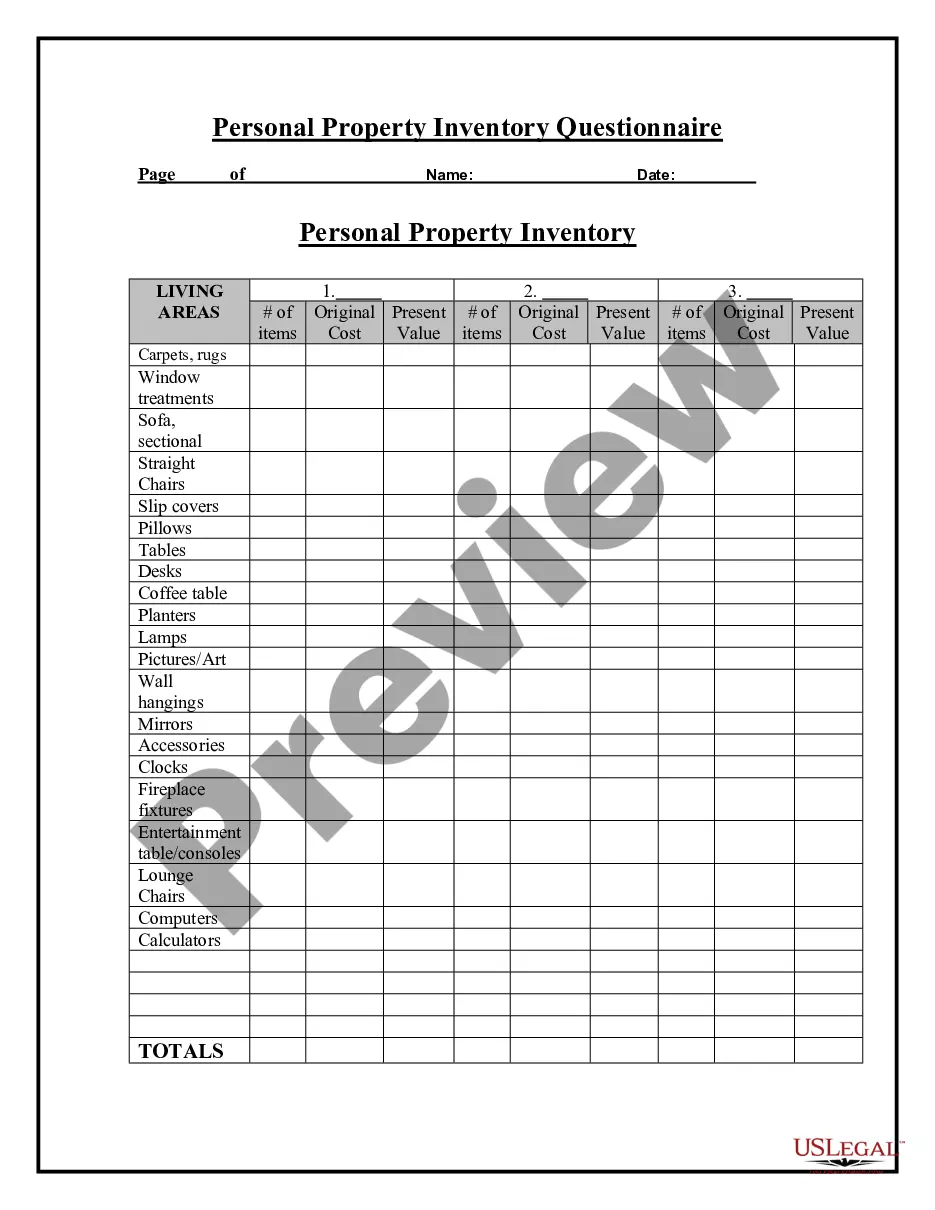
- Worksheets designed to help the user visualize their overall financial situation for estate planning purposes.
- Client interview prompts to guide discussions with legal professionals.

When to use this form
This form is beneficial when an individual is beginning the estate planning process. It is ideal for situations such as planning for future health care decisions, determining how assets will be distributed after death, and preparing to meet with an attorney. Whether you are an individual, family, or legal professional, the questionnaire can help clarify thoughts and intentions when considering estate plans.
Who this form is for
- Individuals planning their estates to ensure that their wishes are documented.
- Families seeking to organize and communicate their estate planning goals.
- Legal professionals conducting interviews with clients regarding estate planning.
- Anyone looking to take inventory of their finances and determine how best to allocate their assets in the future.
Instructions for completing this form
- Begin by identifying your personal details and family relationships to paint a clear picture of your situation.
- List all assets, debts, and sources of income in the financial overview section.
- Answer questions regarding your estate planning preferences, including designated beneficiaries and preferred decision-makers.
- Utilize the worksheets to summarize your financial situation and plan effectively.
- Review your responses to ensure clarity and completeness before using the information in your estate plan or meeting with an attorney.
Notarization guidance
This form does not typically require notarization to be legally valid. However, some jurisdictions or document types may still require it. US Legal Forms provides secure online notarization powered by Notarize, available 24/7 for added convenience.
Get your form ready online
Our built-in tools help you complete, sign, share, and store your documents in one place.
Make edits, fill in missing information, and update formatting in US Legal Forms—just like you would in MS Word.
Download a copy, print it, send it by email, or mail it via USPS—whatever works best for your next step.
Sign and collect signatures with our SignNow integration. Send to multiple recipients, set reminders, and more. Go Premium to unlock E-Sign.
If this form requires notarization, complete it online through a secure video call—no need to meet a notary in person or wait for an appointment.
We protect your documents and personal data by following strict security and privacy standards.

Make edits, fill in missing information, and update formatting in US Legal Forms—just like you would in MS Word.

Download a copy, print it, send it by email, or mail it via USPS—whatever works best for your next step.

Sign and collect signatures with our SignNow integration. Send to multiple recipients, set reminders, and more. Go Premium to unlock E-Sign.

If this form requires notarization, complete it online through a secure video call—no need to meet a notary in person or wait for an appointment.

We protect your documents and personal data by following strict security and privacy standards.
Mistakes to watch out for
- Failing to include all assets and liabilities, which can lead to misunderstandings about your estate.
- Not specifying beneficiaries clearly, potentially causing disputes among heirs.
- Overlooking health care decisions, which are important for comprehensive estate planning.
- Rushing through the questionnaire, leading to incomplete information that complicates the planning process.
Advantages of online completion
- Convenient access to the form anytime, allowing for thorough completion at your own pace.
- Editability ensures you can update your information as circumstances change.
- The reliable format helps ensure clarity and structure in organizing your information.
- Downloadable content enables you to save or print for use in meetings with legal professionals.
Legal use & context
Using this form helps ensure that important financial information is documented, paving the way for effective estate planning. While this questionnaire can guide your planning, final legal documents should be crafted with the help of a qualified attorney to ensure compliance with all applicable laws and regulations.
Key takeaways
- The Estate Planning Questionnaire and Worksheets is essential for gathering personal and financial data for effective estate planning.
- It is suited for individuals, families, and legal professionals alike.
- Completing the form thoroughly can prevent common mistakes and complications in estate distribution.
- Using the form online offers flexibility, editability, and reliability for users.
Looking for another form?
Form popularity
FAQ
A Last Will and Testament. When it comes to estate planning, having a last will and testament is likely the first thing that will come to mind. A Document Granting Power of Attorney. An Advance Medical Directive. Revocable Living Trust.
There are four main elements of an estate plan; these include a will, a living will and healthcare power of attorney, a financial power of attorney, and a trust.
Creating an estate plan is a lot like getting into better shape. Step 1: Sign a will. Step 2: Name beneficiaries. Step 3: Dodge estate taxes. Step 4: Leave a letter. Step 5: Draw up a durable power of attorney. Step 6: Create an advance health care directive.
What Property Can Go in a Living Trust? Who Should Be My Trustee? Does a Living Trust Avoid Estate and Probate Taxes? What Are the Benefits of a Living Trust? What Are the Drawbacks of a Living Trust? Do I Still Need a Power of Attorney?
More Than a Last Will. Itemize Your Inventory. Follow with Non-Physical Assets. Assemble a List of Debts. Make a Memberships List. Make Copies of Your Lists. Review Your Retirement Account. Update Your Insurance.
Fill out your attorney's intake questionnaire. Gather your financial documents. Bring copies of your current estate plan documents. Divorce agreements, premarital agreements, and other relevant contracts. Choose your executors and health care agents.
Bank accounts. Brokerage or investment accounts. Retirement accounts and pension plans. A life insurance policy.
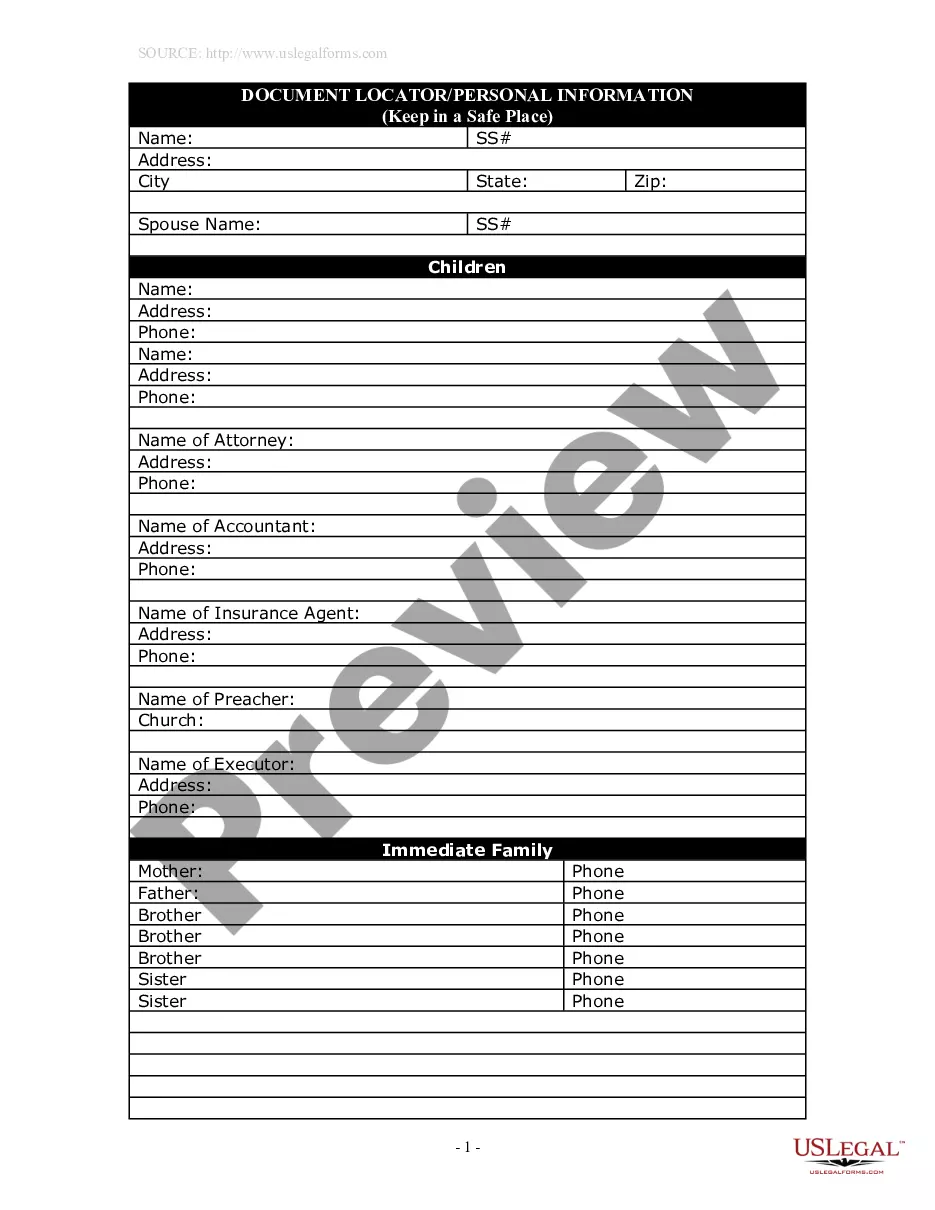
Step 1: Create a checklist of important documents (and their locations) Step 2: List the names and contact information of key associates. Step 3: Catalog your digital asset inventory. Step 4: Ensure all documents are organized and accessible.