Virginia Assignment to Living Trust
Understanding this form
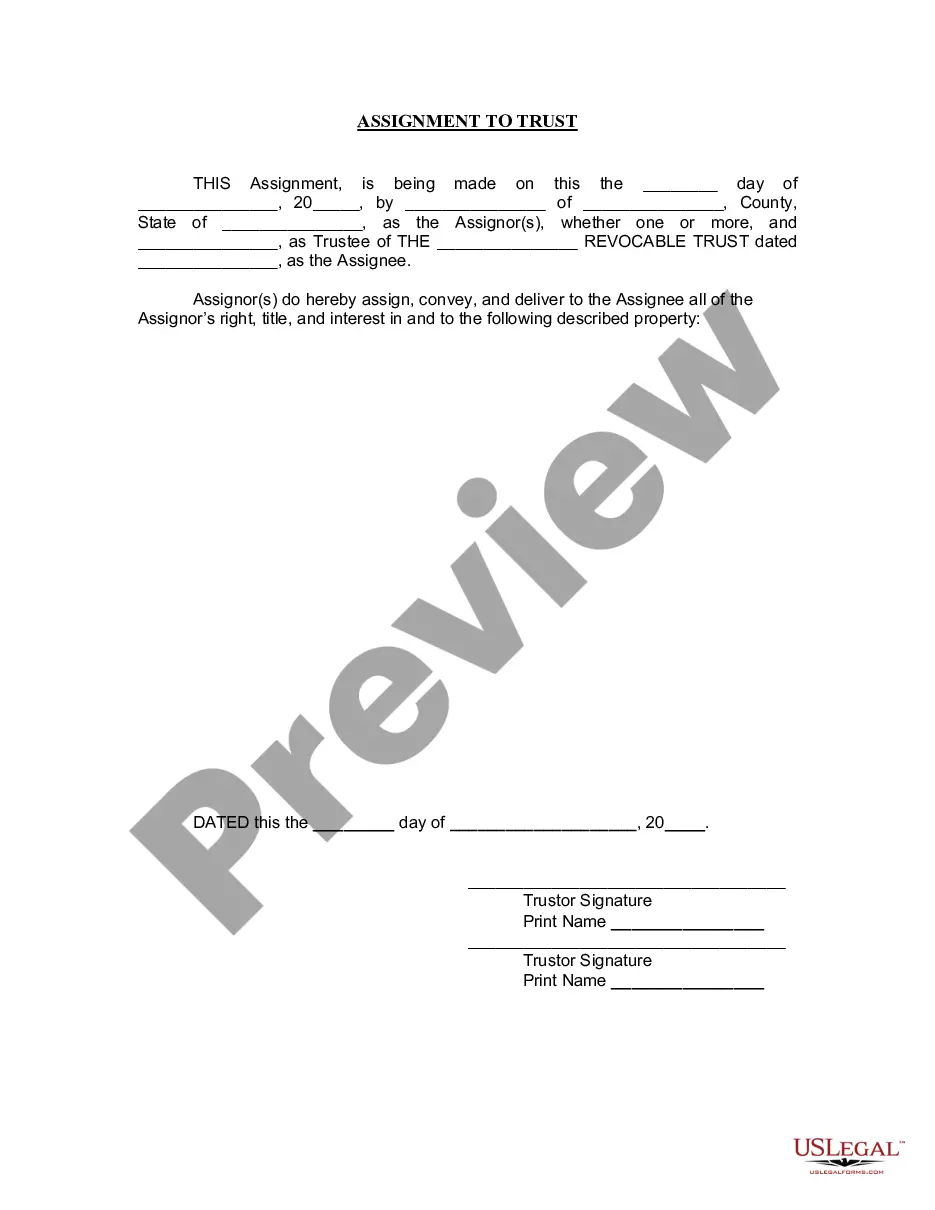
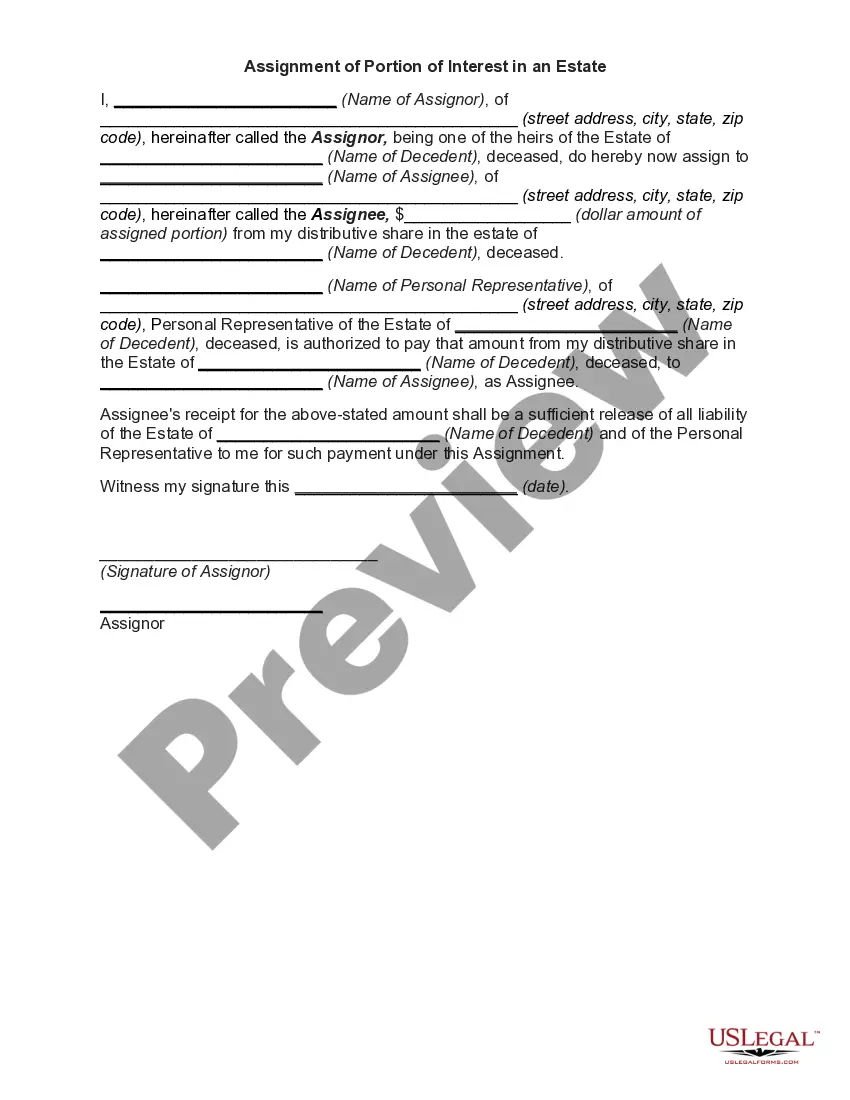
The Assignment to Living Trust form is a legal document used to transfer ownership of specific property into a Living Trust. A Living Trust is established during an individual's lifetime and allows their assets to be managed according to their wishes, typically for estate planning purposes. This form facilitates the assignment of a property to the trust, ensuring that it is designated for future management and distribution by the appointed trustee.
Key components of this form
- Assignor: The individual transferring property to the trust.
- Trustee: The person or entity managing the Living Trust.
- Description of Property: Detailed information about the asset being assigned.
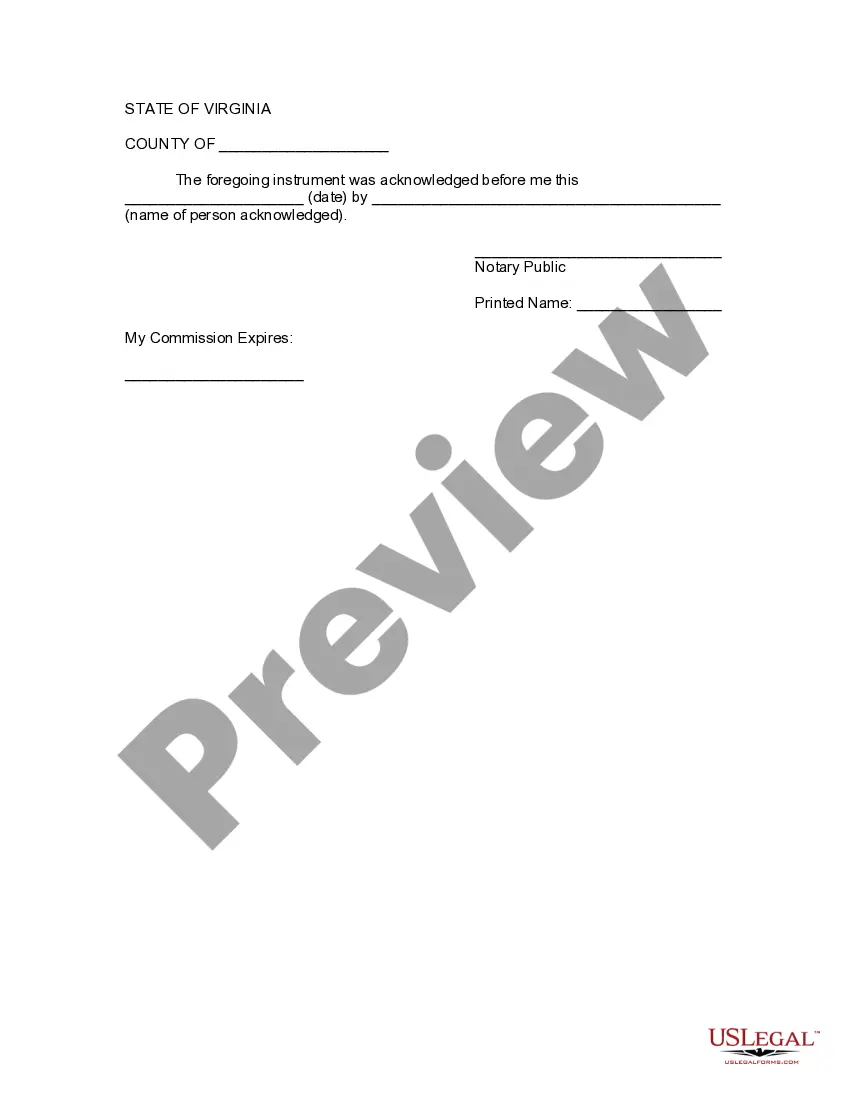
- Notary Acknowledgment: Confirmation that the Assignor signed the document in the presence of a notary public.
- Date of Assignment: The date when the assignment takes effect.
When to use this document
This form is typically used when an individual wants to place personal property, such as real estate or financial accounts, into a Living Trust for effective estate management. It can be important when preparing to avoid probate and ensure that assets are distributed according to the individualâs wishes after their passing.
Who should use this form
- Individuals creating a Living Trust.
- Property owners looking to simplify the distribution of their assets.
- Anyone involved in estate planning who wishes to assign property to a trust.
Completing this form step by step
- Identify the parties involved: the Assignor(s) and the Trustee.
- Provide a detailed description of the property being assigned.
- Enter the date of the assignment in the designated field.
- Have the Assignor sign the document in the presence of a notary public.
- Ensure the notary completes the acknowledgment section.
Notarization guidance
Yes, this form must be notarized to be legally valid. US Legal Forms offers integrated online notarization, available 24/7 via secure video call, making it easy and convenient to get your document notarized without the need to travel.
Get your form ready online
Our built-in tools help you complete, sign, share, and store your documents in one place.
Make edits, fill in missing information, and update formatting in US Legal Forms—just like you would in MS Word.
Download a copy, print it, send it by email, or mail it via USPS—whatever works best for your next step.
Sign and collect signatures with our SignNow integration. Send to multiple recipients, set reminders, and more. Go Premium to unlock E-Sign.
If this form requires notarization, complete it online through a secure video call—no need to meet a notary in person or wait for an appointment.
We protect your documents and personal data by following strict security and privacy standards.

Make edits, fill in missing information, and update formatting in US Legal Forms—just like you would in MS Word.

Download a copy, print it, send it by email, or mail it via USPS—whatever works best for your next step.

Sign and collect signatures with our SignNow integration. Send to multiple recipients, set reminders, and more. Go Premium to unlock E-Sign.

If this form requires notarization, complete it online through a secure video call—no need to meet a notary in person or wait for an appointment.

We protect your documents and personal data by following strict security and privacy standards.
Common mistakes to avoid
- Failing to provide a clear description of the property.
- Not signing in the presence of a notary public.
- Incorrectly filling out the date or names of the parties involved.
Why use this form online
- Convenience: Download and complete the form at your convenience, without needing a physical appointment.
- Accessibility: Edit and save the form whenever necessary until it is finalized.
- Reliability: Form templates are drafted by licensed attorneys, ensuring legal compliance.
Summary of main points
- The Assignment to Living Trust form is essential for transferring assets into a living trust.
- This form enhances estate planning and helps avoid probate.
- Notarization is required for the document to be legally valid.
Looking for another form?


Form popularity
FAQ
Funding a Trust Is Expensive... This is the major drawback to using a revocable living trust for many people, but it's not worth the time, money, and effort to create one if the trust isn't fully funded.
When you create a DIY living trust, there are no attorneys involved in the process. You will need to choose a trustee who will be in charge of managing the trust assets and distributing them.You'll also need to choose your beneficiary or beneficiaries, the person or people who will receive the assets in your trust.
Charges vary from lawyer to lawyer based on their fees, as well as the complexity of your overall estate. In the end, expect to pay $1,000 or more. If you decide to go the DIY route, your costs will likely fall to around $200 to $500, depending on which online program you prefer.
Select a type of trust. Inventory your assets and property. Choose a trustee. Put together your trust document. Visit a notary public and sign your living trust in front of them. Fund your trust.
No, you don't need a lawyer to set up a trust, but it might be a good idea to seek legal advice to ensure the trust is set up correctly and that you have considered all long-term financial and estate planning aspects of the trust.Some living trusts are revocable, which means the trust can be changed at any time.
A Virginia living trust is established by you, the grantor, the person setting up the trust and placing assets into it. The assets in the trust are managed for your benefit during your life.A living trust Virginia allows you to keep your trust assets out of probate, a court process required for approving a will.
Open a bank account in the name of the trust. Close out any bank accounts the grantor established for the trust and put the proceeds into the new trust bank account. Cash in any life insurance policies that name the trust as beneficiary and put the proceeds into the trust bank account.
Expect to pay $1,000 for a simple trust, up to several thousand dollars. You may incur additional costs after the trust has been established if you transfer property in and out or otherwise move things around. However, the bulk of the cost will be setting it up initially.
In this article: A living trust is a type of estate planning tool that allows you to transfer ownership of your assets to a separate fund while you're still alive.In some circumstances, you can use a living trust to protect money you owe to creditors.