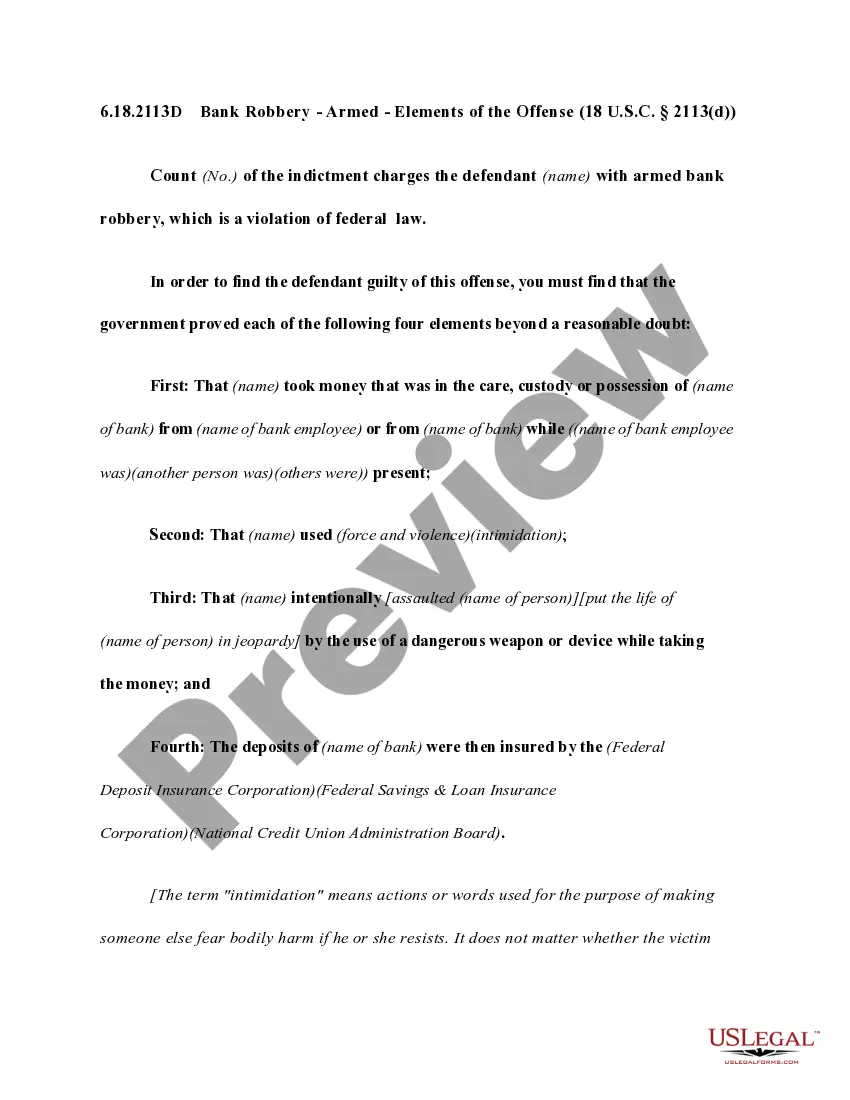
Bank Robbery - Armed - Elements of the Offense (18 U.S.C. Sec. 2113(d))
What this document covers
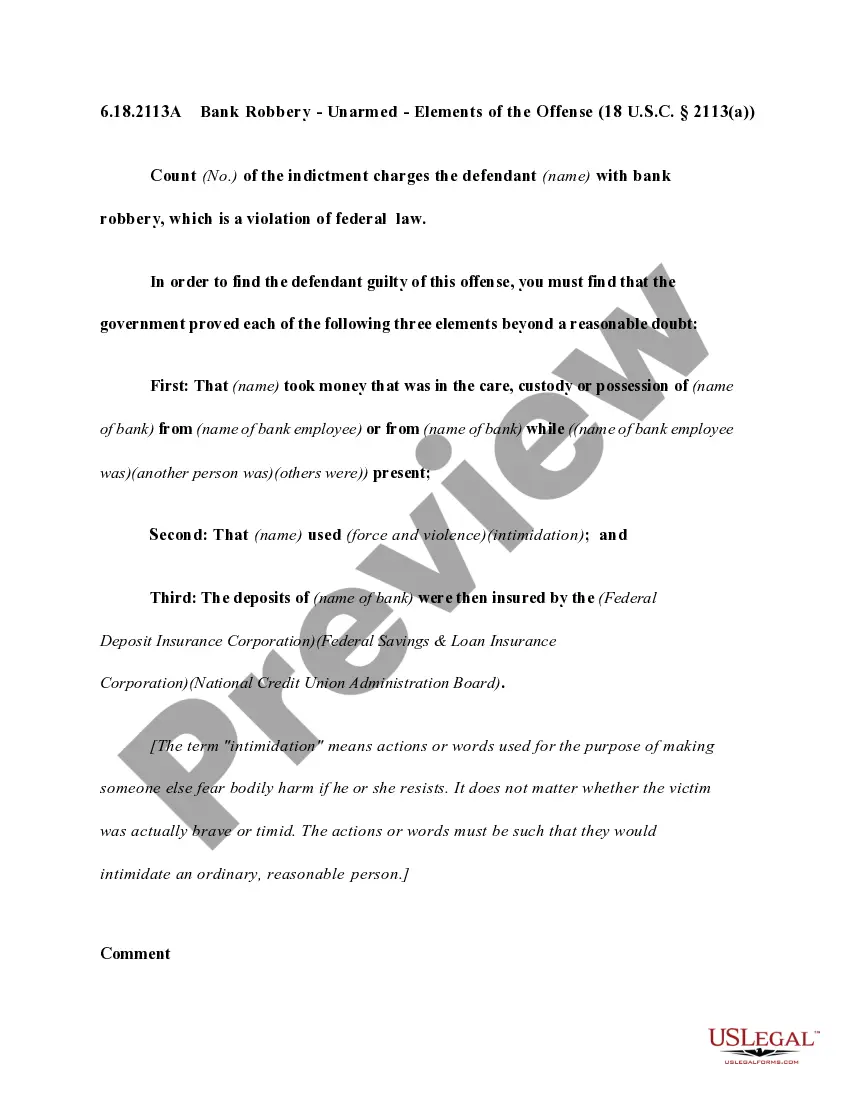
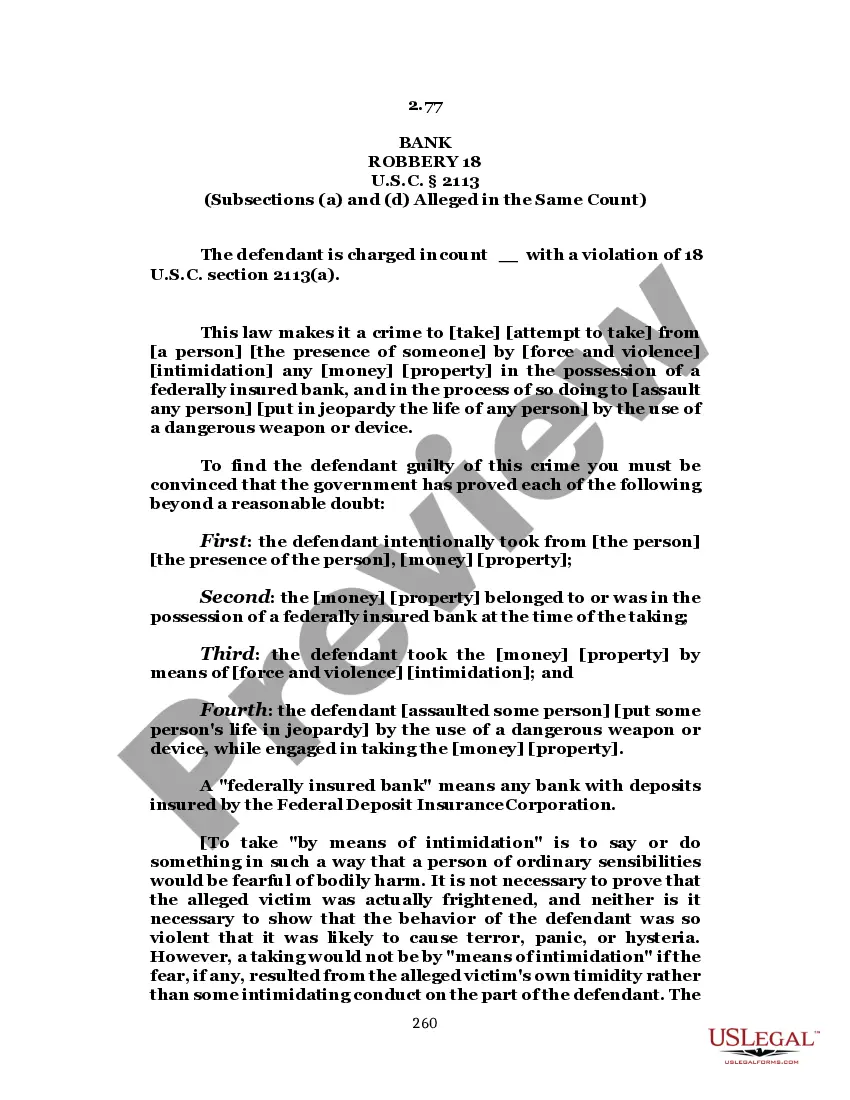
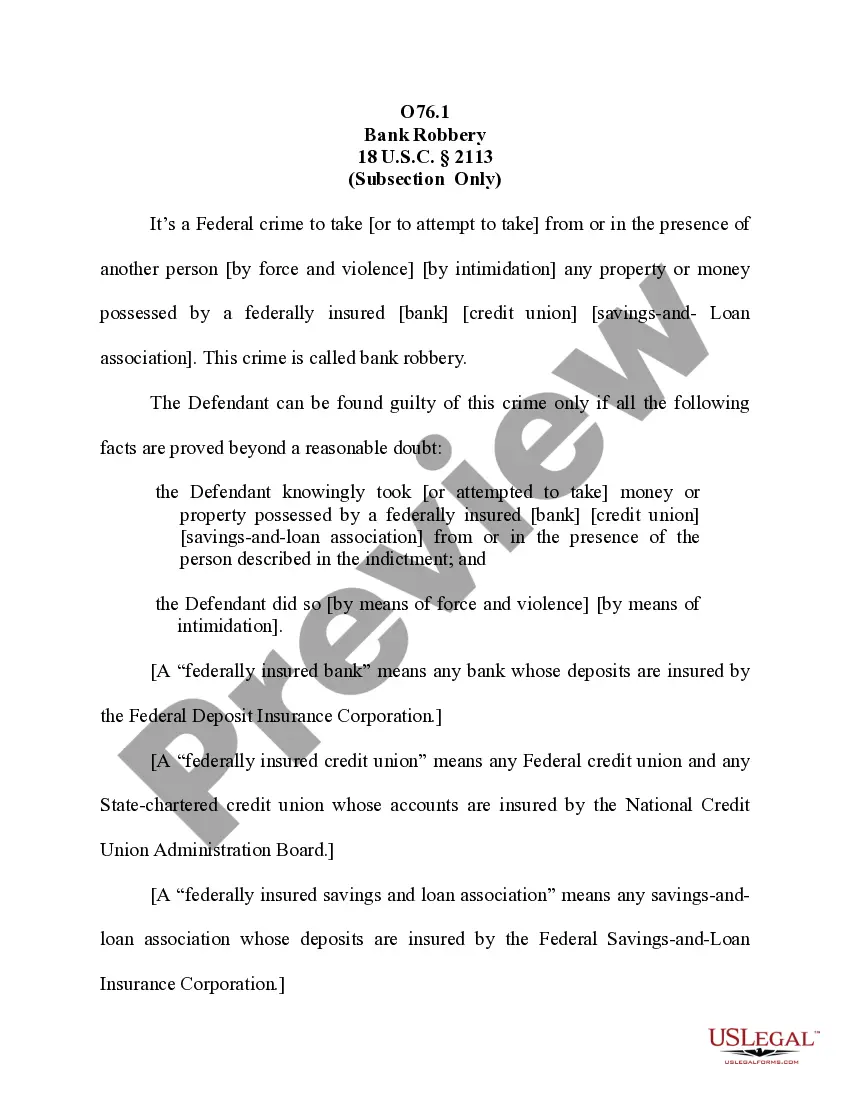
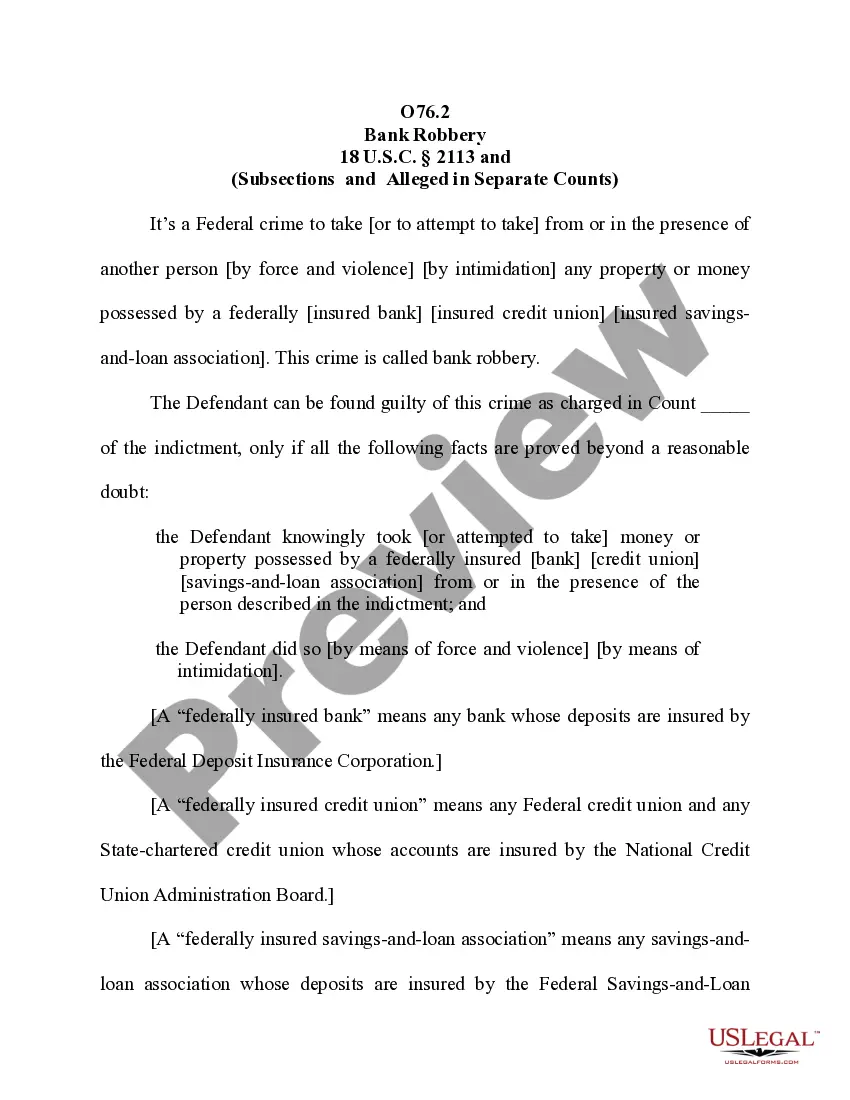
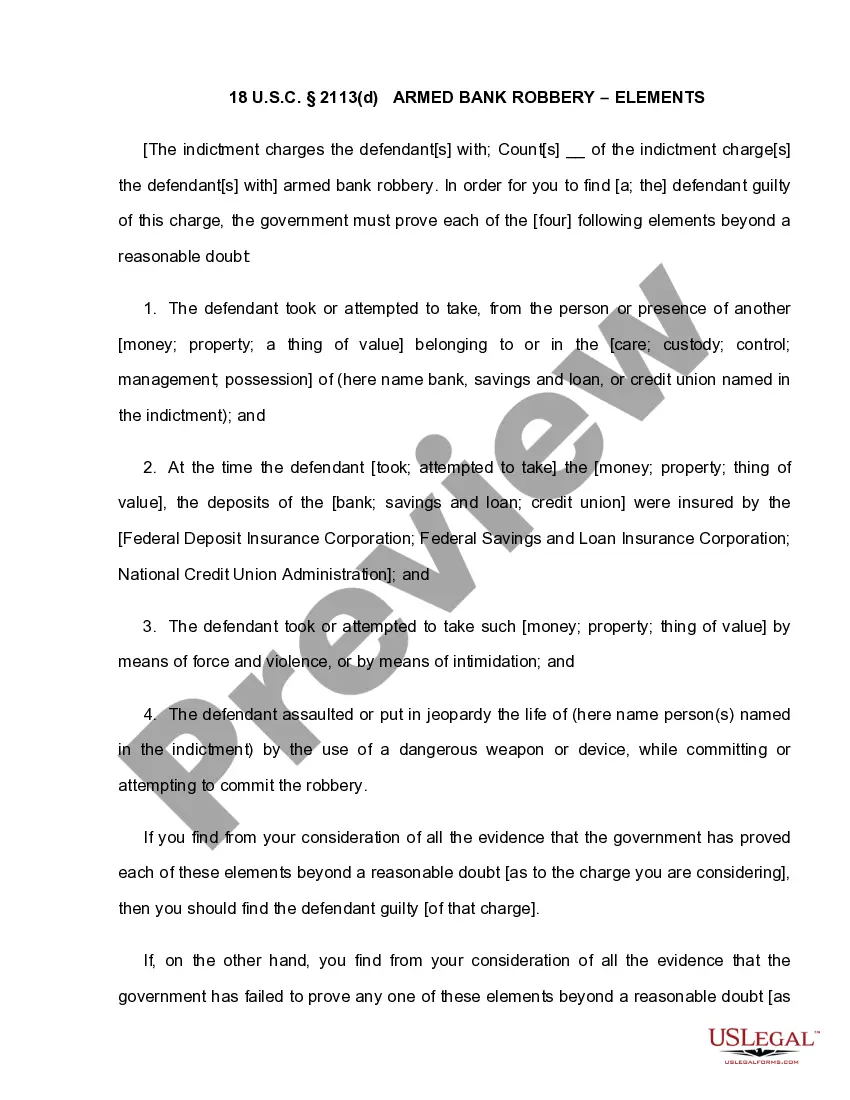
The "Bank Robbery - Armed - Elements of the Offense" form describes the legal requirements for prosecuting armed bank robbery under federal law, specifically 18 U.S.C. Sec. 2113(d). This form is essential for understanding the elements that must be proven during prosecution, distinguishing it from similar charges such as unarmed robbery or attempted robbery. It outlines the critical components necessary for a successful conviction, ensuring that legal practitioners grasp the foundational aspects of this serious offense.
Main sections of this form
- Defendant's Identification: Name of the defendant charged with armed bank robbery.
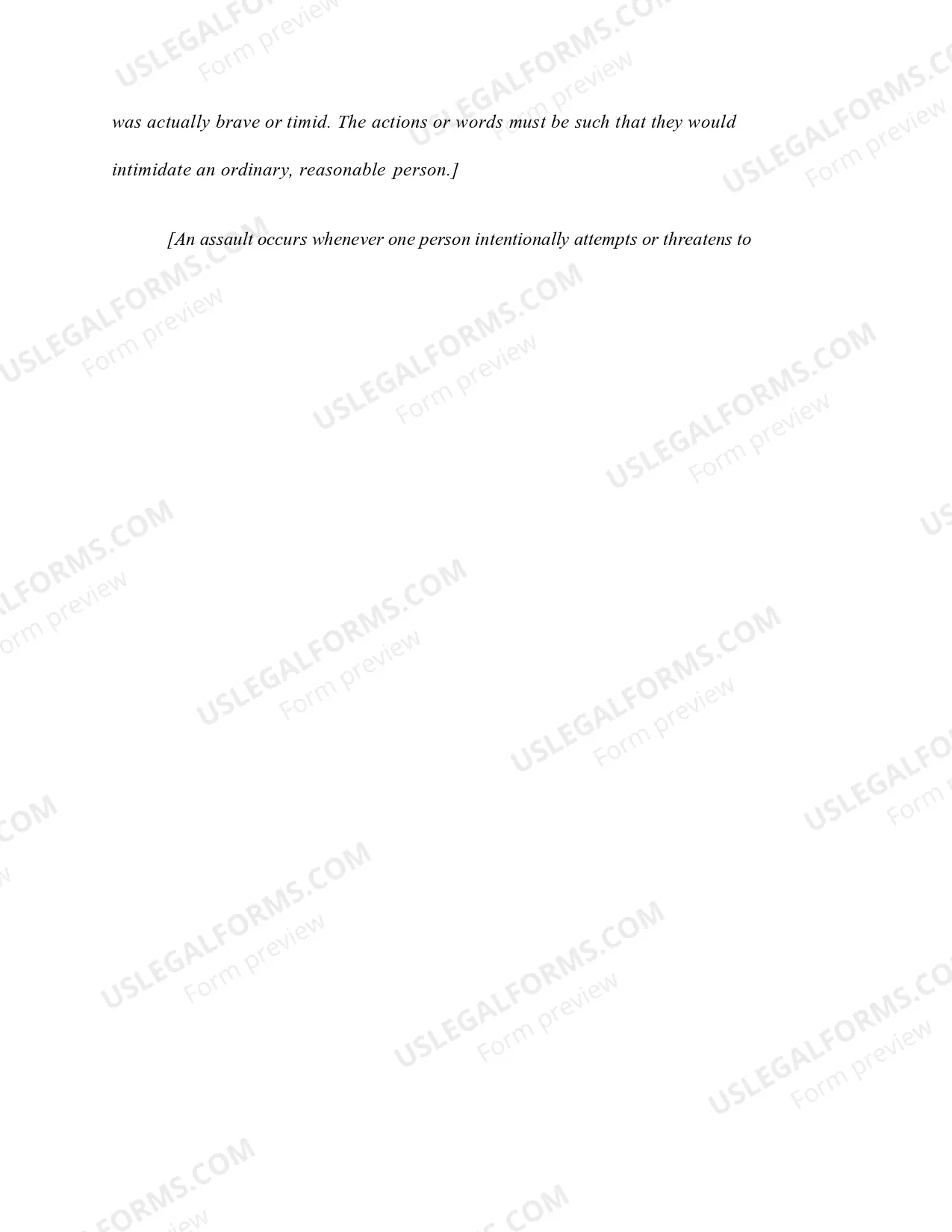
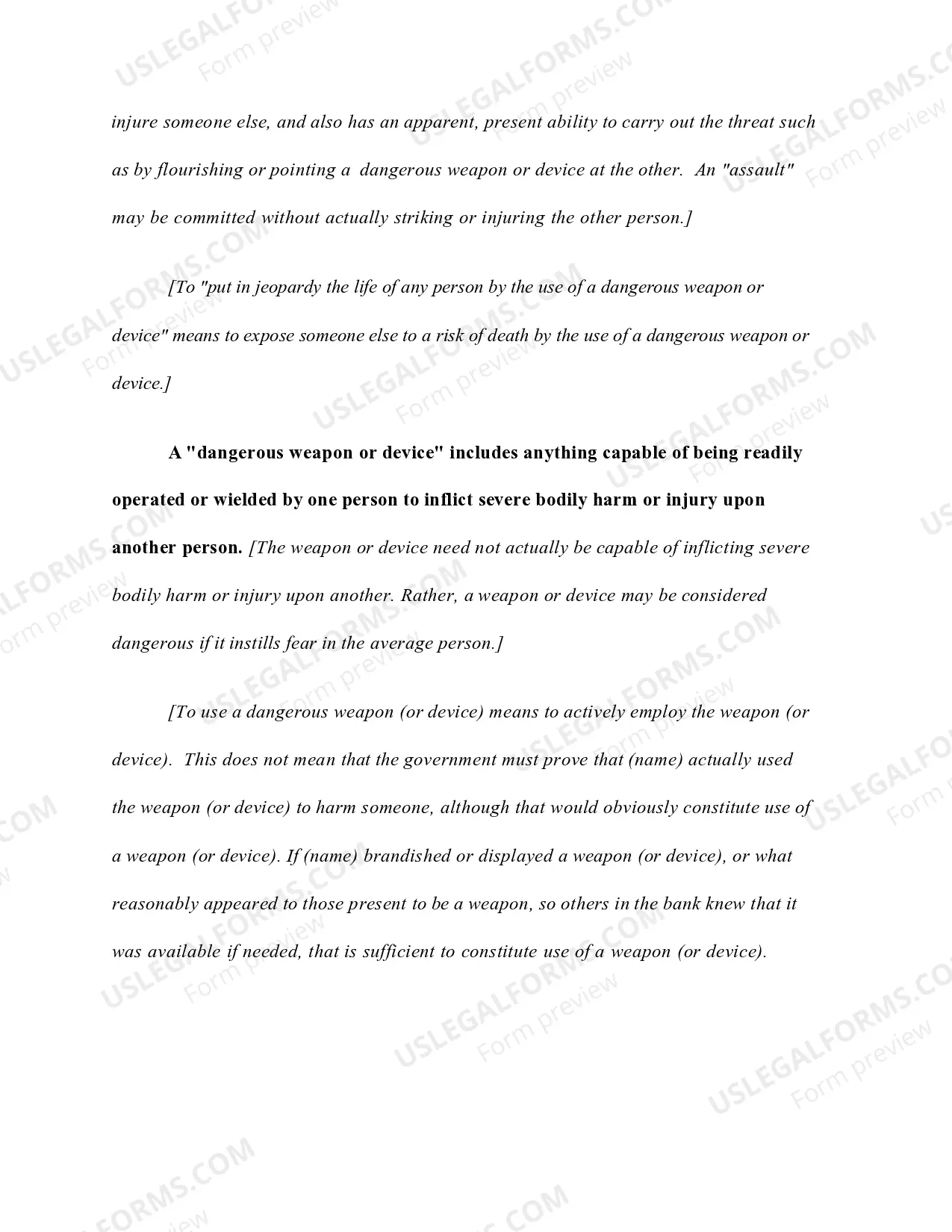
- Elements of the Offense: Four essential elements that must be proven for a conviction, including taking money from the bank and using intimidation or force.
- Definition of Terms: Clear definitions of intimidation, assault, and what constitutes a dangerous weapon.
- Federal Deposit Insurance: Requirement that the bank's deposits be federally insured for the offense to be valid.
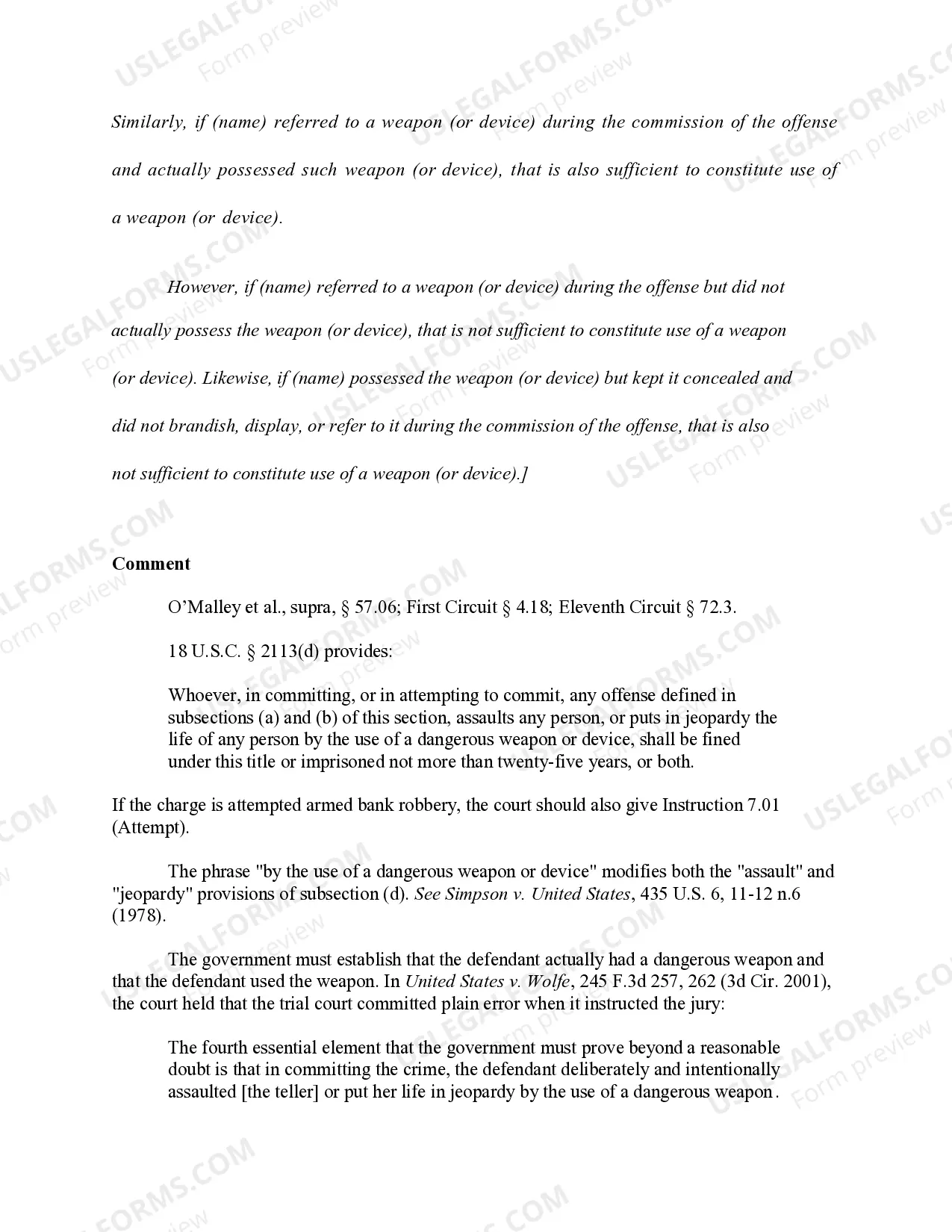
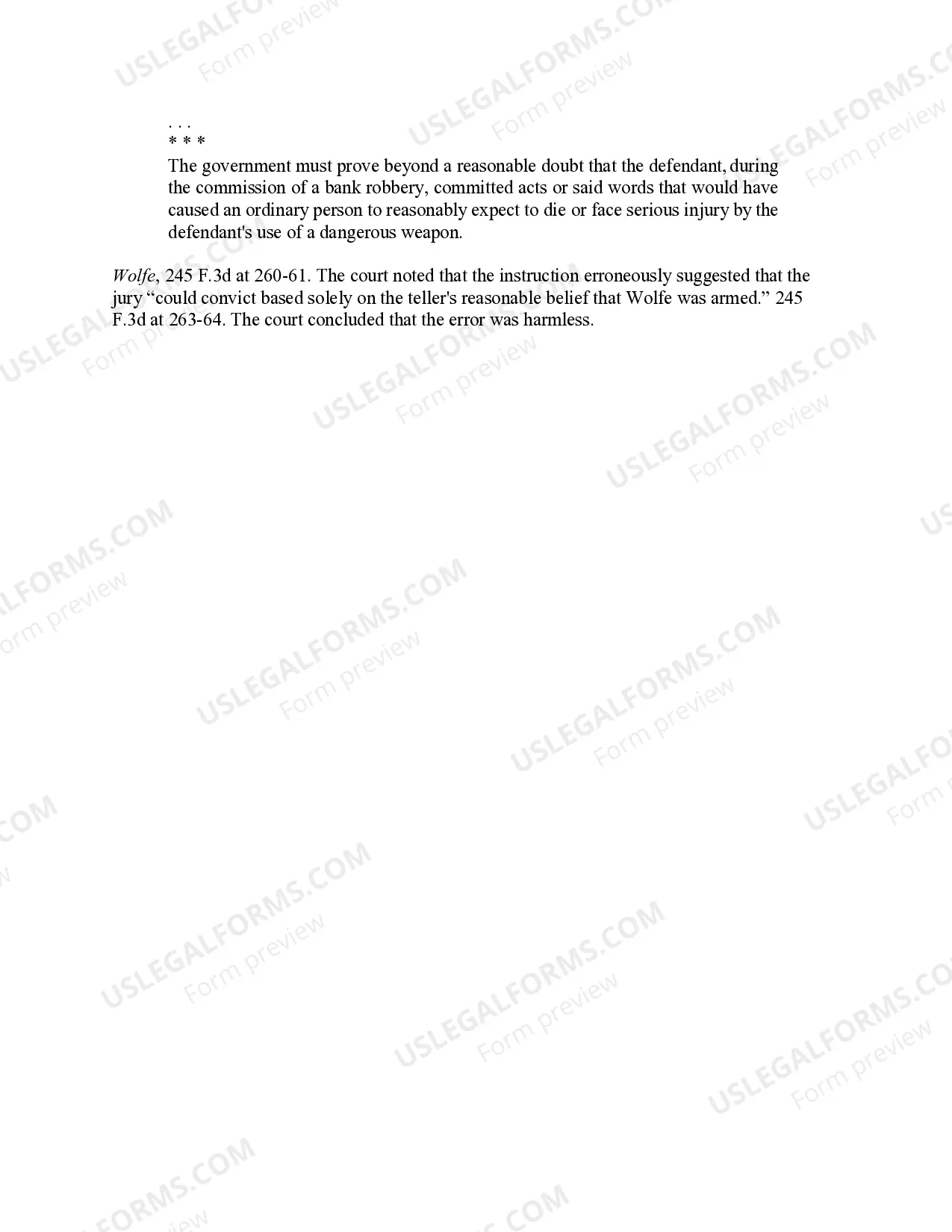
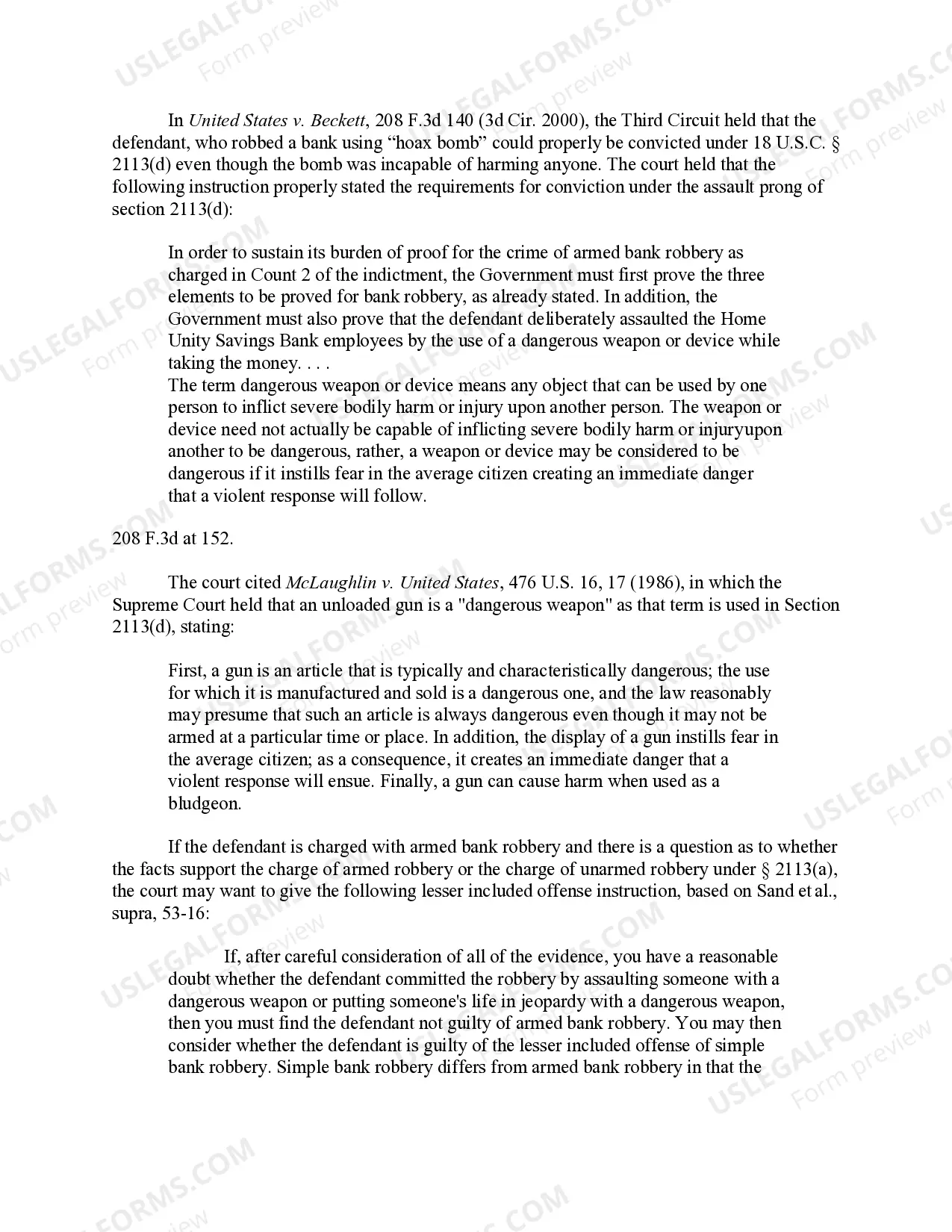
- Judicial Precedents: References to case law that clarify the interpretation of the statute.

When to use this form
This form is used in federal criminal cases involving charges of armed bank robbery. It is applicable when a defendant is accused of taking money from a bank while using or threatening the use of a dangerous weapon. Law enforcement and the judiciary reference this document during trial proceedings to clarify the legal standards that must be met for a conviction.
Who this form is for
- Prosecutors handling armed bank robbery cases.
- Defense attorneys representing clients facing armed robbery charges.
- Judges overseeing criminal trials involving such charges.
- Law students and legal interns studying federal prosecution procedures.
Instructions for completing this form
- Identify the defendant's full name and the specific charges being brought forward.
- Outline the elements of the offense, ensuring each component is thoroughly explained.
- Include definitions for terms such as intimidation and dangerous weapon for clarity.
- Indicate the name of the bank and confirm that it is federally insured.
- Reference relevant case law and judicial instructions that support the charge.
Notarization guidance
This form does not typically require notarization to be legally valid. However, some jurisdictions or document types may still require it. US Legal Forms provides secure online notarization powered by Notarize, available 24/7 for added convenience.
Get your form ready online
Our built-in tools help you complete, sign, share, and store your documents in one place.
Make edits, fill in missing information, and update formatting in US Legal Forms—just like you would in MS Word.
Download a copy, print it, send it by email, or mail it via USPS—whatever works best for your next step.
Sign and collect signatures with our SignNow integration. Send to multiple recipients, set reminders, and more. Go Premium to unlock E-Sign.
If this form requires notarization, complete it online through a secure video call—no need to meet a notary in person or wait for an appointment.
We protect your documents and personal data by following strict security and privacy standards.

Make edits, fill in missing information, and update formatting in US Legal Forms—just like you would in MS Word.

Download a copy, print it, send it by email, or mail it via USPS—whatever works best for your next step.

Sign and collect signatures with our SignNow integration. Send to multiple recipients, set reminders, and more. Go Premium to unlock E-Sign.

If this form requires notarization, complete it online through a secure video call—no need to meet a notary in person or wait for an appointment.

We protect your documents and personal data by following strict security and privacy standards.
Typical mistakes to avoid
- Failing to clearly define each element of the offense.
- Not providing adequate legal definitions for key terms.
- Overlooking the requirement for federal insurance on bank deposits.
- Neglecting to cite relevant case law that supports the prosecution's efforts.
Advantages of online completion
- Immediate availability for download and editing.
- Convenience of accessing legal forms from anywhere, anytime.
- Guidance from templates drafted by licensed attorneys ensures accuracy.
- Reduction of paperwork hassles, allowing for quick preparation and submission.
Legal use & context
- This form is used in federal courts in the prosecution of armed bank robbery, a serious felony.
- The government must prove beyond a reasonable doubt that the defendant committed all elements of the offense.
- Legal precedents clarify how elements are defined, emphasizing the need for a dangerous weapon to be involved.
Key takeaways
- The form outlines the elements necessary for a federal conviction of armed bank robbery.
- Understanding the definitions and standards is crucial for both prosecution and defense.
- Legal practitioners should ensure clear communication of the essential elements during trials.
Looking for another form?
Form popularity
FAQ
It's important to note that a few specific elements have to be present in order for a certain crime to be considered a bank robbery. First, there must be a presence of a gun or other type of weapon (or the implication of a weapon). Also, there has to be a threat of injury or death. Finally, money has to be stolen.
§ 2113 of the United States Code. Under section (a) of this statute, bank robbery is defined as: ?using force, violence, or intimidation to take, attempt to take, or extort any property or money in the possession of any bank, credit union, or savings and loan association.?
If you are convicted of federal bank robbery in California, you face up to 20 years in state prison. If you are found guilty of felony bank robbery, you may face the following penalties: Up to 20 years in federal prison. Up to $250,000 in fines.
Under federal law, bank robbery is a serious offense and you could be sentenced for up to 20 years in a federal prison, a fine up to $250,000, or both. If you used violence to accomplish the bank robbery, you could face more severe penalties.
Title 18, section 2113 of the United States Code is the Federal criminal bank robbery statute.
Consequently, many bank robbers are caught the same day. The clearance rate for bank robbery is among the highest of all crimes, at nearly 60%. The urban location of the crime also contributes to its repeat victimization profile, a measure of how quickly a crime victim will suffer a repeat of the original crime.
Bank Robbery -- General Overview. Title 18, section 2113 of the United States Code is the Federal criminal bank robbery statute. Section 2113 outlines and defines prohibited criminal conduct vis-a-vis federally protected financial institutions and concomitant penalties.