Virginia Affidavit of Occupancy and Financial Status
Understanding this form
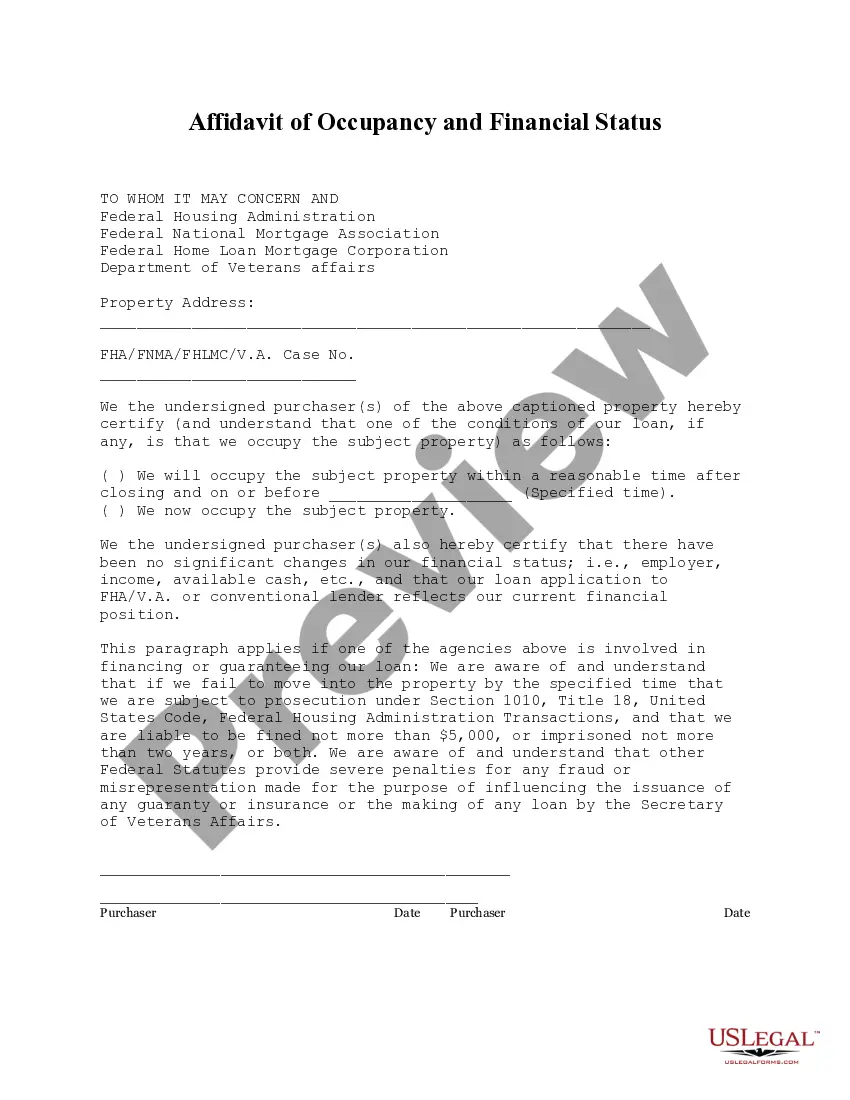
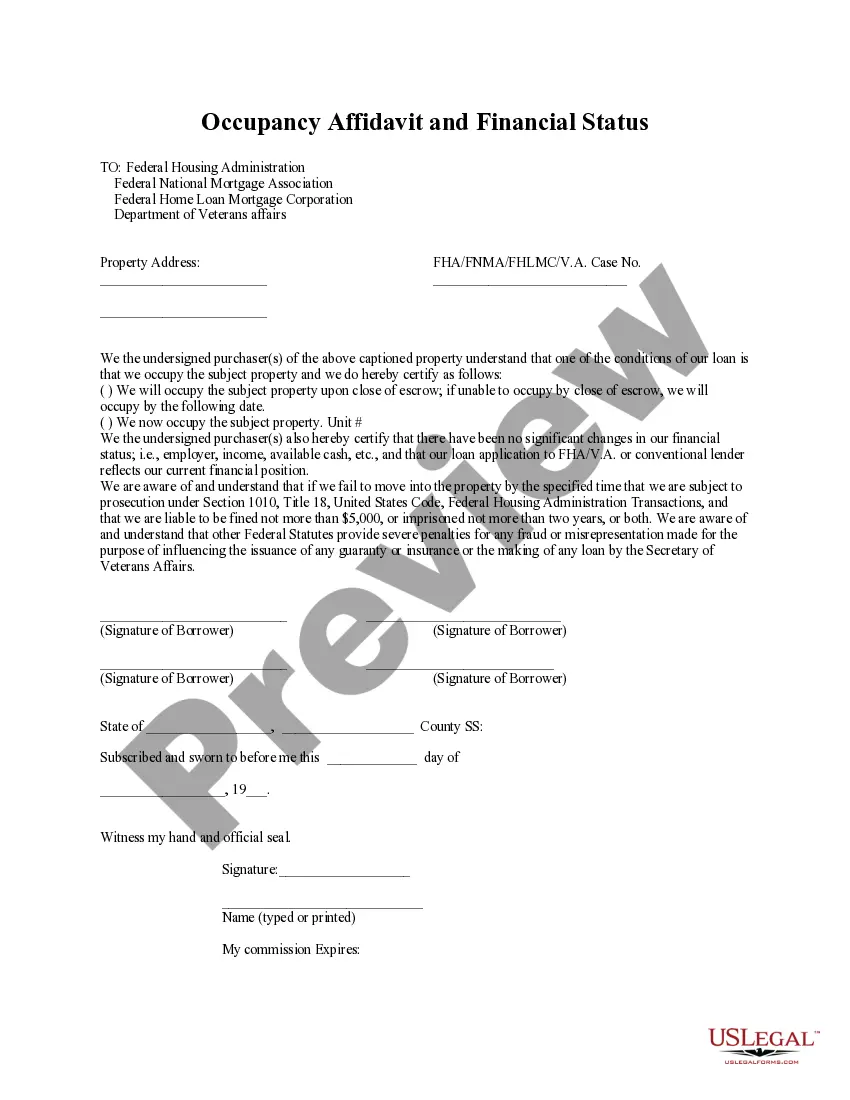
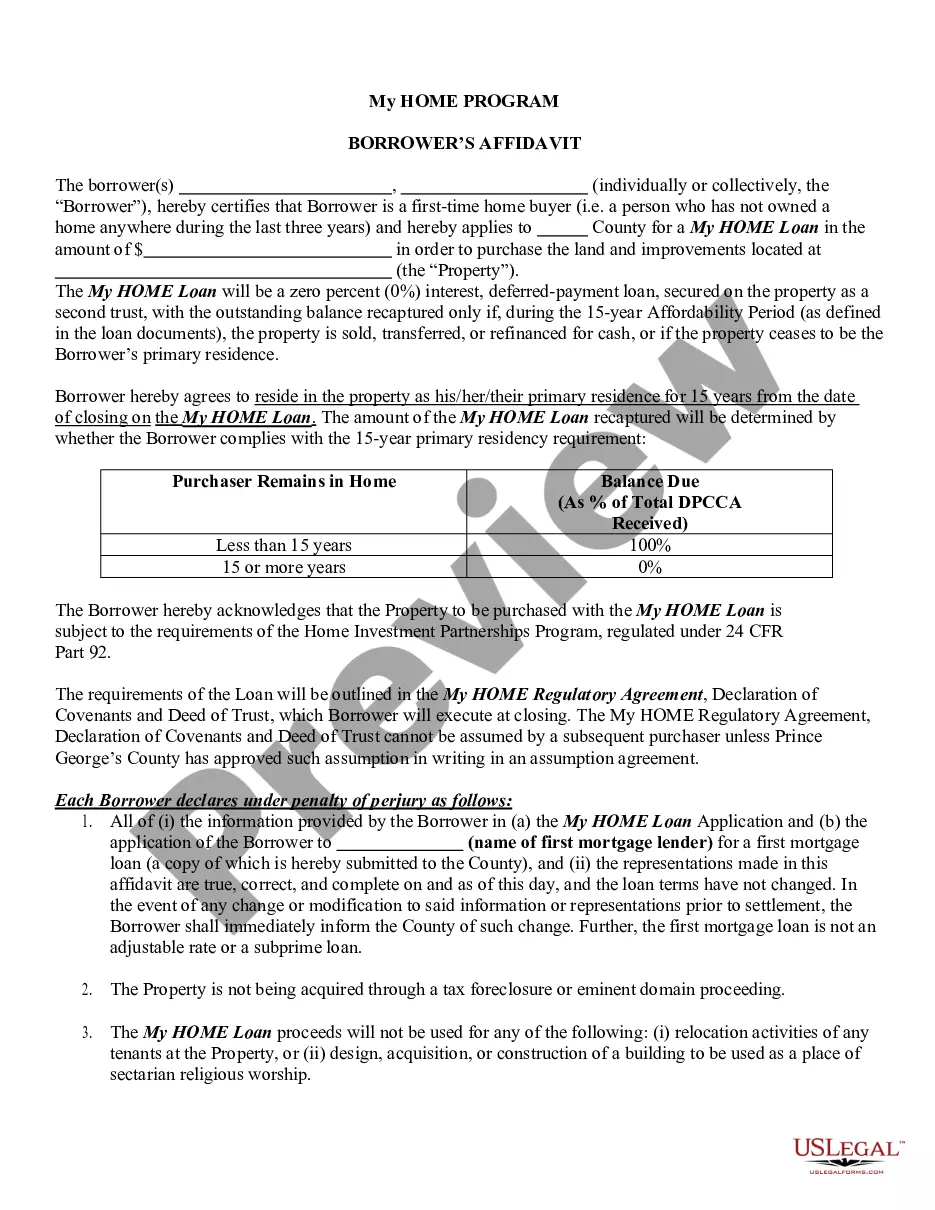
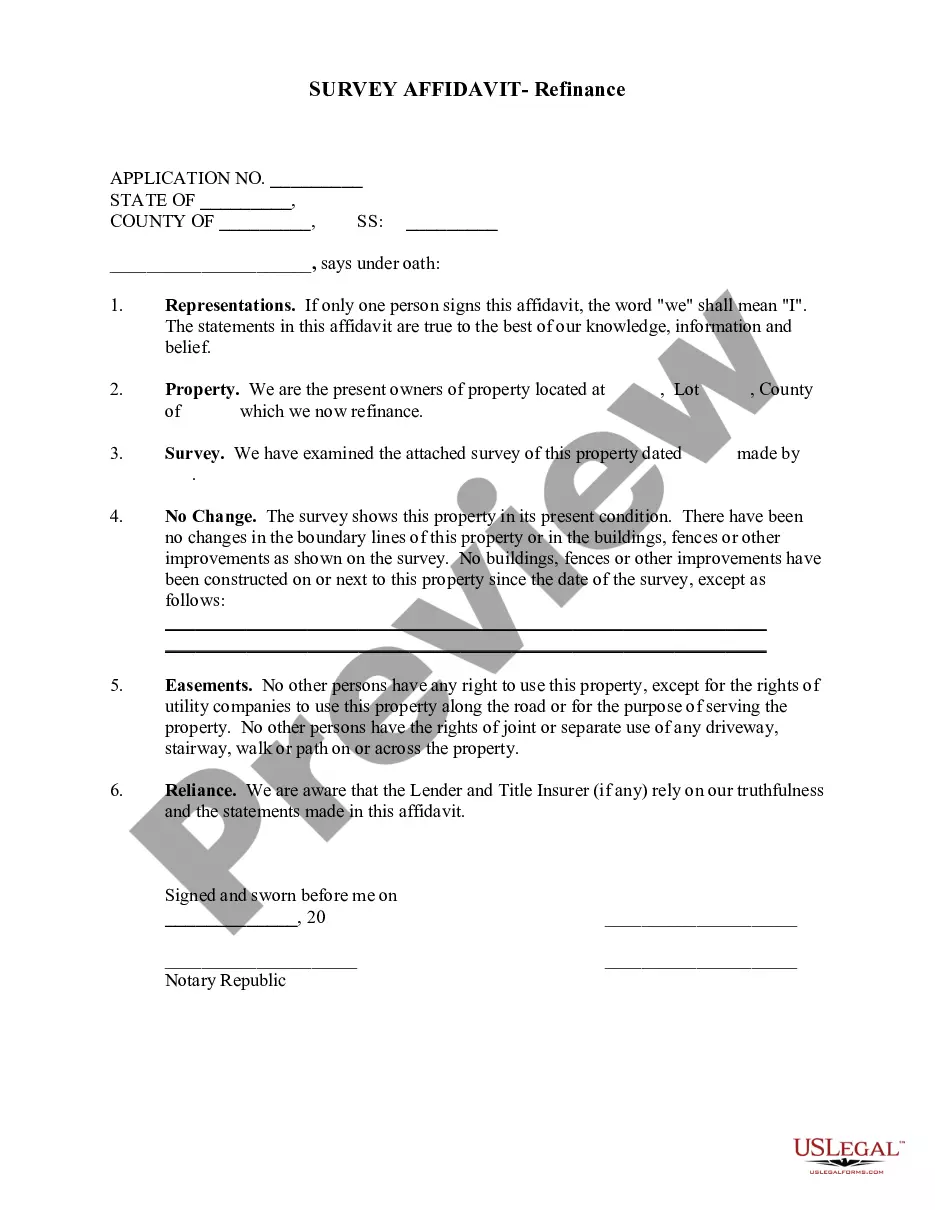
The Affidavit of Occupancy and Financial Status is a document that buyers use to confirm their intention to occupy a property as their primary residence after purchase. This form is essential during the loan closing process, ensuring that there have been no significant changes in the buyer's financial situation since their loan application. Unlike other affidavits, this specific form focuses on occupancy commitment and financial stability linked to mortgage applications.
Main sections of this form
- Property address section for identifying the specific property.
- Certification of occupancy and specified time for moving in.
- Certification of unchanged financial status since the loan application.
- Legal warning regarding penalties for falsifying information.
- Signature lines for purchasers and dates of signing.

Situations where this form applies
This form is typically used during the closing process of a real estate transaction. It is essential when obtaining a mortgage, particularly with government-backed loans such as FHA or VA loans. Buyers should use this affidavit to confirm their future residence intentions and financial status at the time of property purchase.
Who this form is for
- Homebuyers purchasing property with a mortgage.
- Individuals or couples seeking FHA or VA loans.
- Real estate agents assisting clients in the closing process.
- Any party required to confirm occupancy and financial status before loan approval.
Completing this form step by step
- Begin by entering the property address in the designated field.
- Specify your intention to occupy the property by checking the appropriate box.
- Indicate the date by which you will move into the property.
- Confirm that your financial status has not changed since the loan application.
- Sign and date the form, ensuring all purchasers have completed their signatures.
Notarization requirements for this form
To make this form legally binding, it must be notarized. Our online notarization service, powered by Notarize, lets you verify and sign documents remotely through an encrypted video session.
Get your form ready online
Our built-in tools help you complete, sign, share, and store your documents in one place.
Make edits, fill in missing information, and update formatting in US Legal Forms—just like you would in MS Word.
Download a copy, print it, send it by email, or mail it via USPS—whatever works best for your next step.
Sign and collect signatures with our SignNow integration. Send to multiple recipients, set reminders, and more. Go Premium to unlock E-Sign.
If this form requires notarization, complete it online through a secure video call—no need to meet a notary in person or wait for an appointment.
We protect your documents and personal data by following strict security and privacy standards.
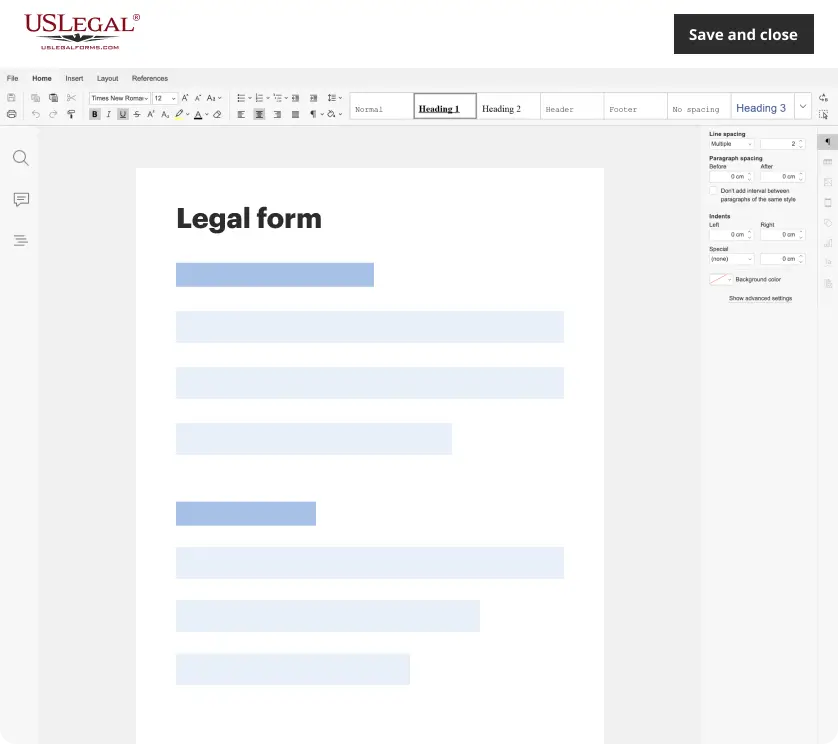
Make edits, fill in missing information, and update formatting in US Legal Forms—just like you would in MS Word.
Download a copy, print it, send it by email, or mail it via USPS—whatever works best for your next step.
Sign and collect signatures with our SignNow integration. Send to multiple recipients, set reminders, and more. Go Premium to unlock E-Sign.

If this form requires notarization, complete it online through a secure video call—no need to meet a notary in person or wait for an appointment.
We protect your documents and personal data by following strict security and privacy standards.
Mistakes to watch out for
- Failing to accurately state the intended occupancy date.
- Not updating financial information that may have changed after the loan application.
- Leaving sections of the form incomplete, such as signatures or property details.
- Not understanding the legal consequences of misrepresenting occupancy status.
Advantages of online completion
- Convenient access to the form anytime, allowing for quick completion.
- Editable templates that can be tailored to specific situations.
- Reliable guidance on legal requirements and definitions.
- Easy download and storage options for your records.
Looking for another form?
Form popularity
FAQ
VA loans are for primary residences and borrowers are expected to live in the properties they purchase. To ensure this, the VA developed occupancy requirements that make certain homeownership is the borrower's intended purpose essentially ruling out the ability to purchase an investment property or vacation home.
An affidavit is used for the purpose of proving in court that a claim is true, and is typically used in conjunction with witness statements and other corroborating evidence. Through an affidavit, an individual swears that the information contained within is true to the best of their knowledge.
Generally, for a property to be owner-occupied, the owner must move into the residence within 60 days of closing and live there for at least one year. Buyers purchasing property in the name of a trust, as a vacation or second home, or as the part-time home or for a child or relative do not qualify as owner-occupants.
Signature Affidavit document is generally combined with the Name Affidavit & is a document in which a person certifies that the signature provided is the true and correct signature used by the person; Name Affidavit allows a person to give a declaration that they are the same person as another name.
Part of your loan paperwork will include signing two forms that certify your intent, as the borrower, to occupy the home as your main address. They are VA Form 26-1802a, HUD/VA Addendum to the Uniform Residential Loan Application, and VA Form 26-1820, Report and Certification of Loan Disbursement.
The short answer is yes. The VA official site reminds borrowers, The lender may accept the occupancy certification at face value unless there is specific information indicating the veteran will not occupy the property as a home or does not intend to occupy within a reasonable time after loan closing.
An affiant is someone who files an affidavit, which is a written statement used as evidence in court. In order to be admissible, affidavits must be notarized by a notary public.
Verification. Lenders usually stipulate that homeowners have 30 days after closing to occupy a primary residence. To verify the person moving in is actually the owner, the lender may call the house and ask to speak to the homeowner.The lender may also drive past the house looking for a rental sign in the yard.
An affidavit is a sworn or affirmed statement made before a notary public or any public official who has the authority to administer oaths. It is made under penalty of perjury.A notarized affidavit is one in which you swear the content is true before a notary public.