This Notice of Assignment of Contract for Deed is used by a Seller to provide notice to the Buyer(s) that the Seller has assigned a contract for deed to a third party and to make future payments to the third party. This form must be signed by the Seller and notarized.
New Hampshire Notice of Assignment of Contract for Deed
Category:
State:
New Hampshire
Control #:
NH-00470B
Format:
Word;
Rich Text
Instant download
Description
Free preview
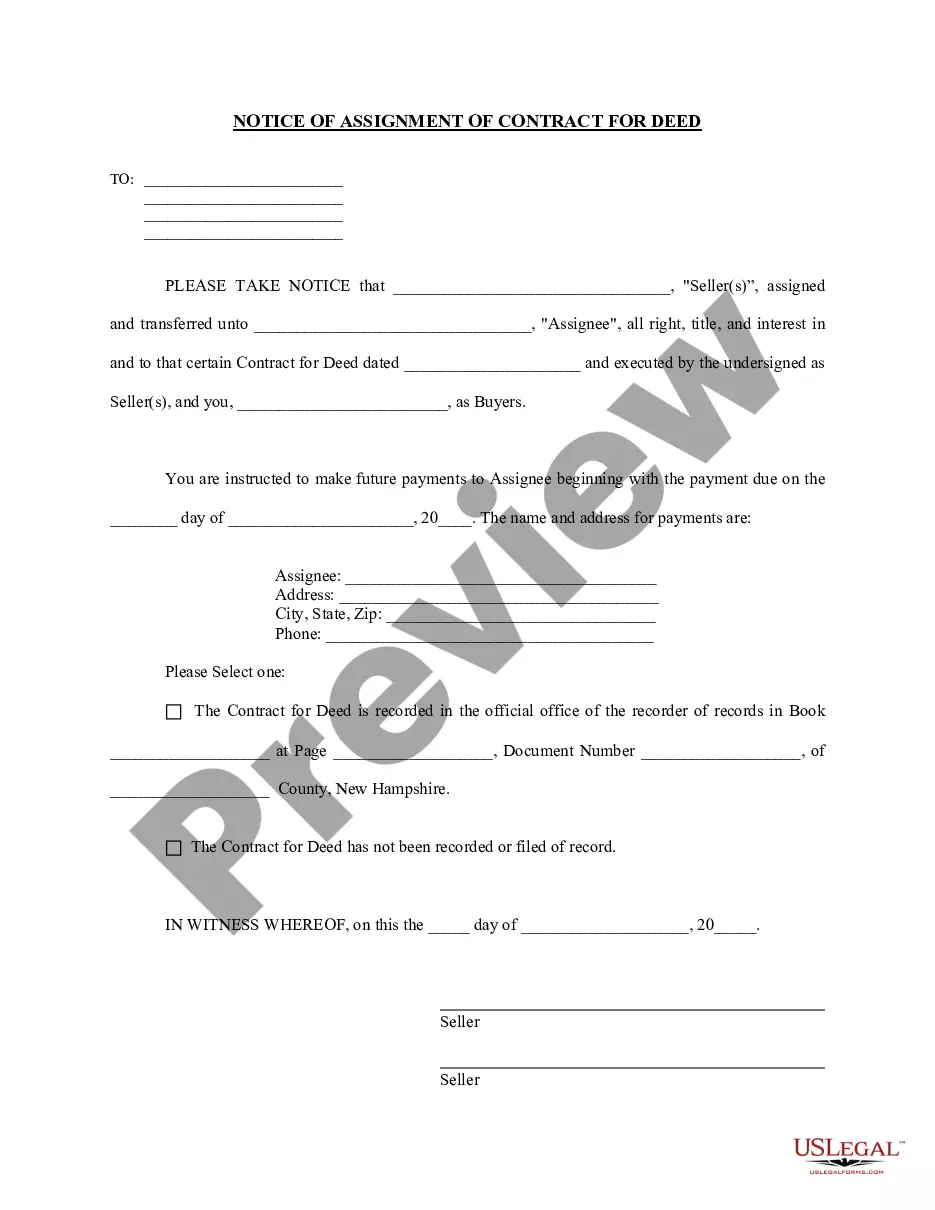
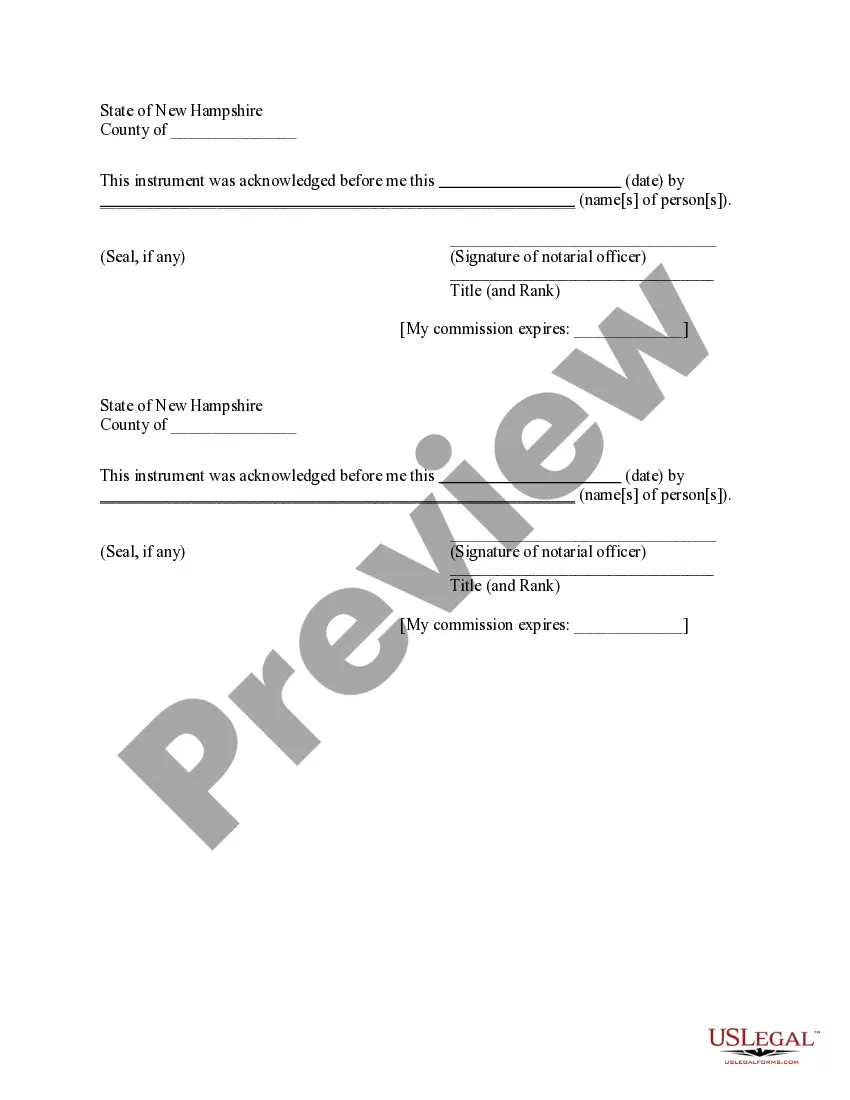
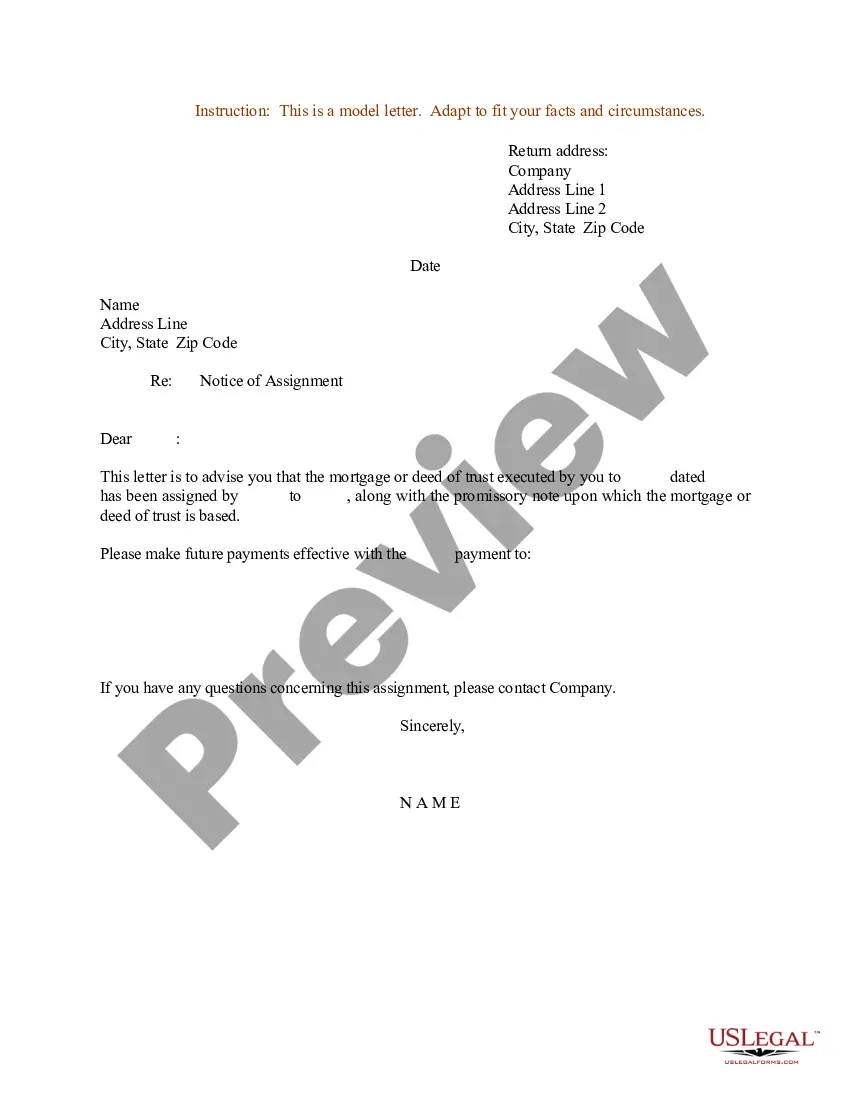
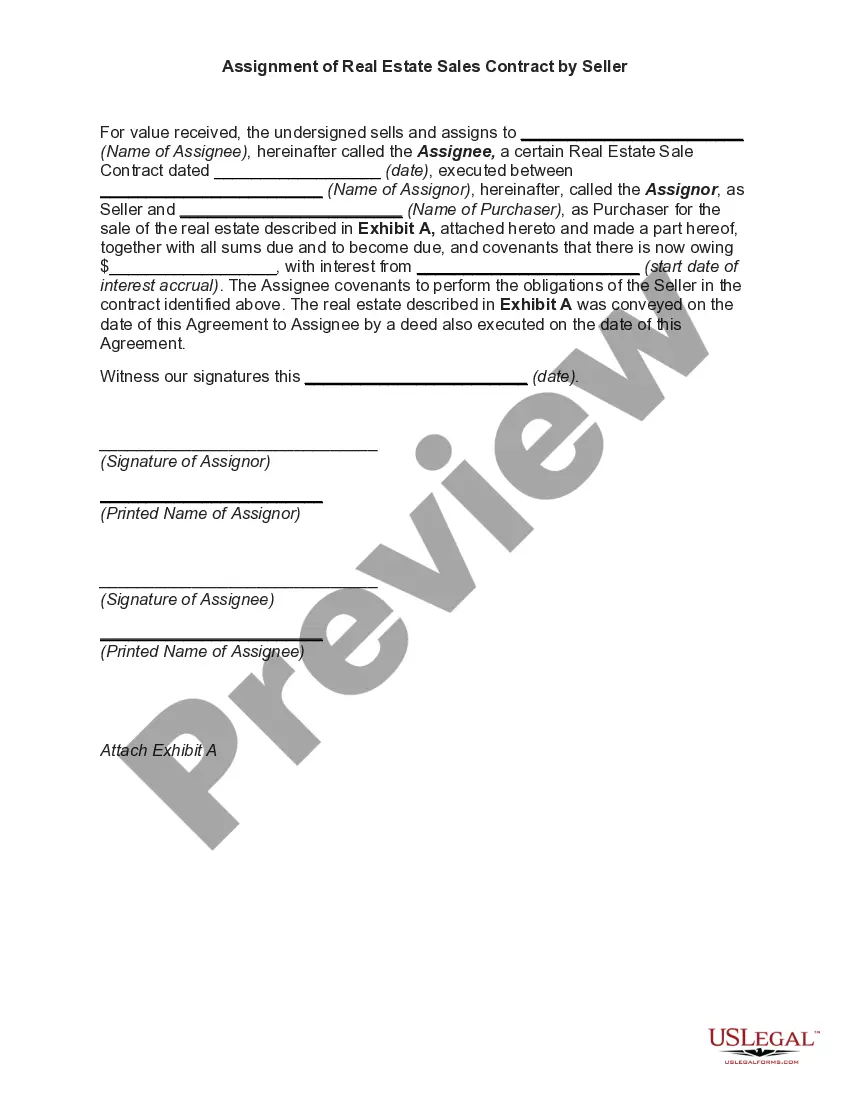
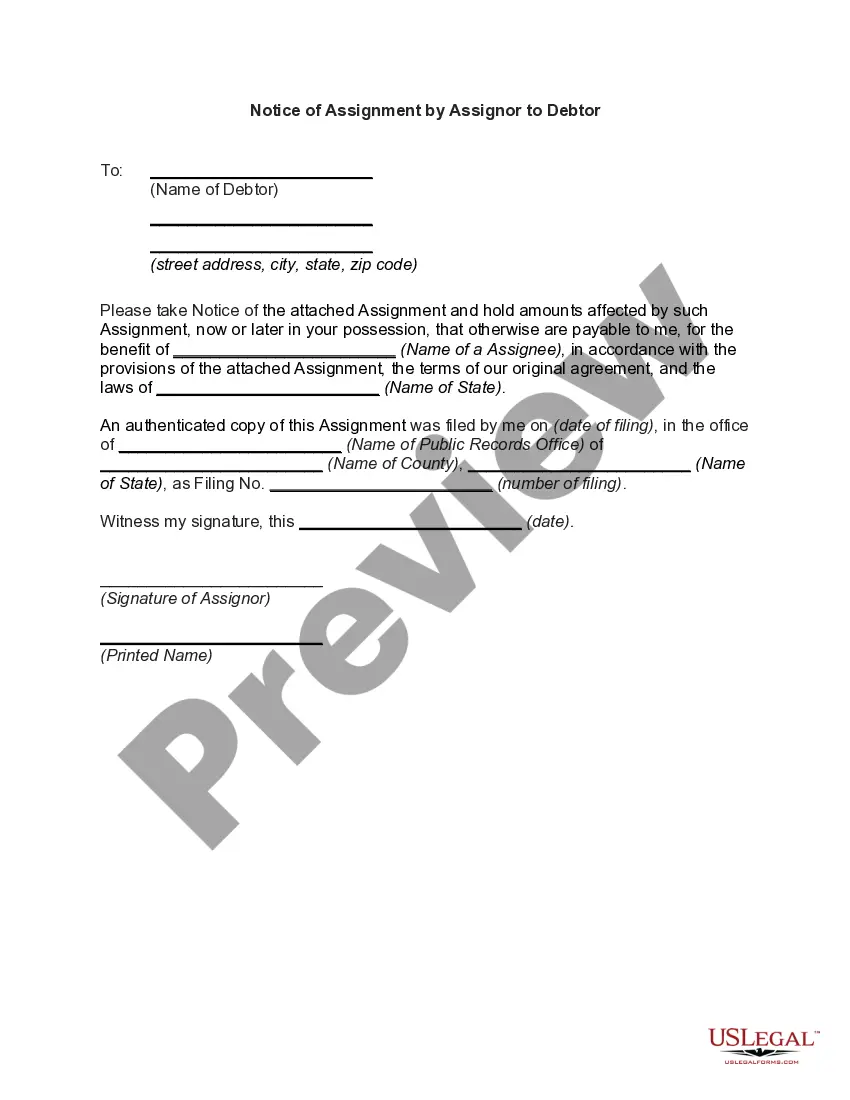
How to fill out New Hampshire Notice Of Assignment Of Contract For Deed?
Avoid pricey lawyers and find the New Hampshire Notice of Assignment of Contract for Deed you want at a affordable price on the US Legal Forms website. Use our simple categories functionality to search for and obtain legal and tax documents. Go through their descriptions and preview them just before downloading. Moreover, US Legal Forms provides customers with step-by-step instructions on how to download and complete every single form.
US Legal Forms customers basically have to log in and download the specific form they need to their My Forms tab. Those, who have not obtained a subscription yet should follow the tips listed below:
- Make sure the New Hampshire Notice of Assignment of Contract for Deed is eligible for use in your state.
- If available, look through the description and use the Preview option prior to downloading the sample.
- If you are confident the document suits you, click on Buy Now.
- If the form is wrong, use the search field to get the right one.
- Next, create your account and select a subscription plan.
- Pay by card or PayPal.
- Choose to download the form in PDF or DOCX.
- Simply click Download and find your template in the My Forms tab. Feel free to save the form to the gadget or print it out.
Right after downloading, it is possible to complete the New Hampshire Notice of Assignment of Contract for Deed manually or with the help of an editing software. Print it out and reuse the form many times. Do more for less with US Legal Forms!
Form popularity
FAQ
But you might be wondering if an owner can transfer a deed to another person without a real estate lawyer. The answer is yes. Parties to a transaction are always free to prepare their own deeds.A quitclaim deed, for example, is far simpler than a warranty deed.
Other benefits include: no loan qualifying, low or flexible down payment, favorable interest rates and flexible terms, and a quicker settlement. The biggest risk when buying a home contract for deed is that you really don?t have a legal claim to the property until you have paid off the entire purchase price.
A contract for deed is a legal agreement for the sale of property in which a buyer takes possession and makes payments directly to the seller, but the seller holds the title until the full payment is made.
They are commonly used to add/remove someone to/from real estate title or deed (divorce, name changes, family and trust transfers). The quitclaim deed is a legal document (deed) used to transfer interest in real estate from one person or entity (grantor) to another (grantee).
Signing - According to New Hampshire Law (§ 477:3) the Grantor must sign the quit claim deed in the presence of a Notary Public. Recording - Once notarized, the quit claim deed must be filed with the County Recorder's Office in the city or county where the property is located.
Signing - According to New Hampshire Law (§ 477:3) the Grantor must sign the quit claim deed in the presence of a Notary Public. Recording - Once notarized, the quit claim deed must be filed with the County Recorder's Office in the city or county where the property is located.
Purchase price. Down payment. Interest rate. Number of monthly installments. Responsibilities of the buyer and seller. Legal remedies for the seller if the buyer does not make payments.
A: No, they are not. The Contract to Sell comes before a Deed of Sale, as the former serves as the basis for the latter. There is an act of finality when it comes to the Deed of Sale. On the other hand, the Contract to Sell requires that the parties first complete the conditions they agreed to.
A Quitclaim Deed must be notarized by a notary public or attorney in order to be valid.Consideration in a Quitclaim Deed is what the Grantee will pay to the Grantor for the interest in the property.