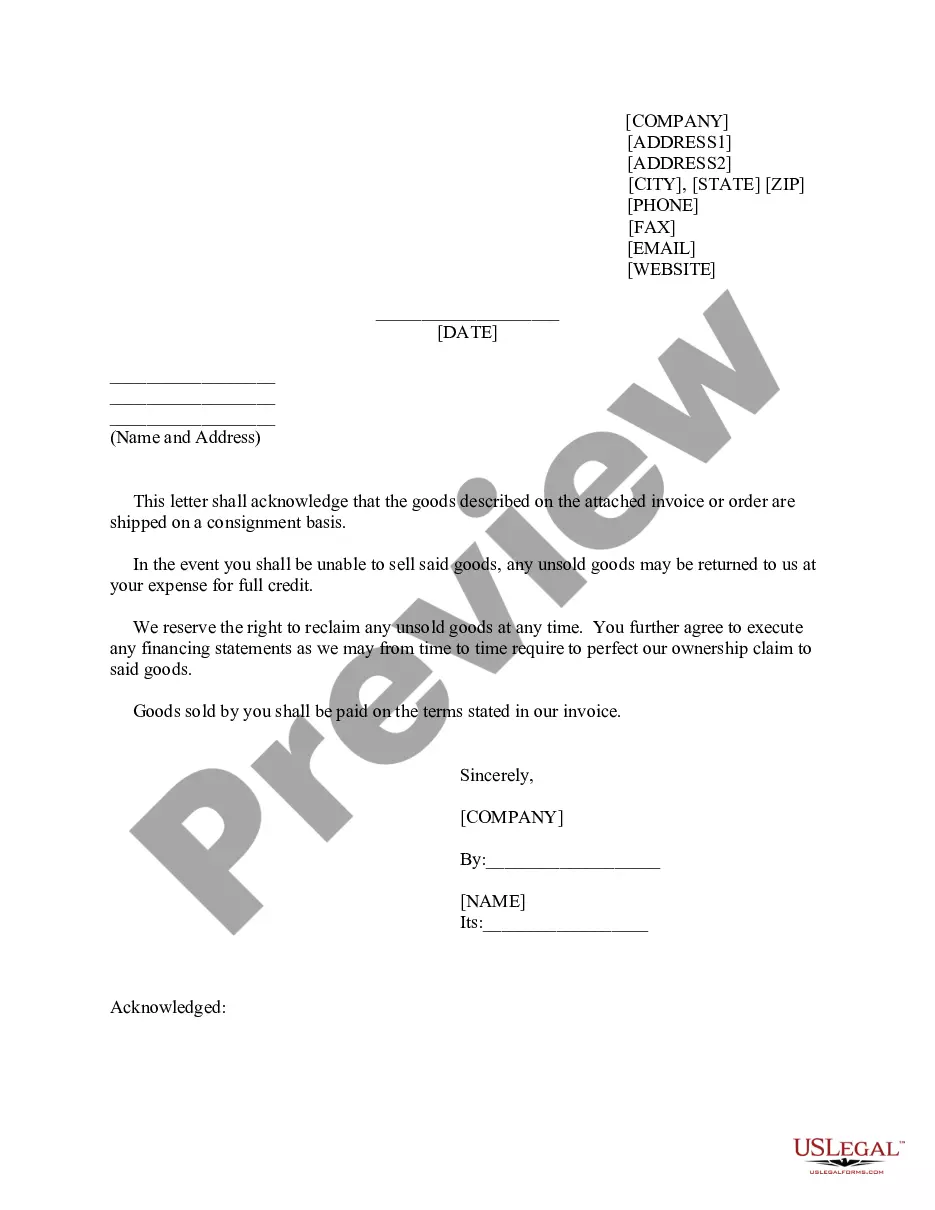
Virginia Assignment of Deed of Trust by Corporate Mortgage Holder
What is this form?
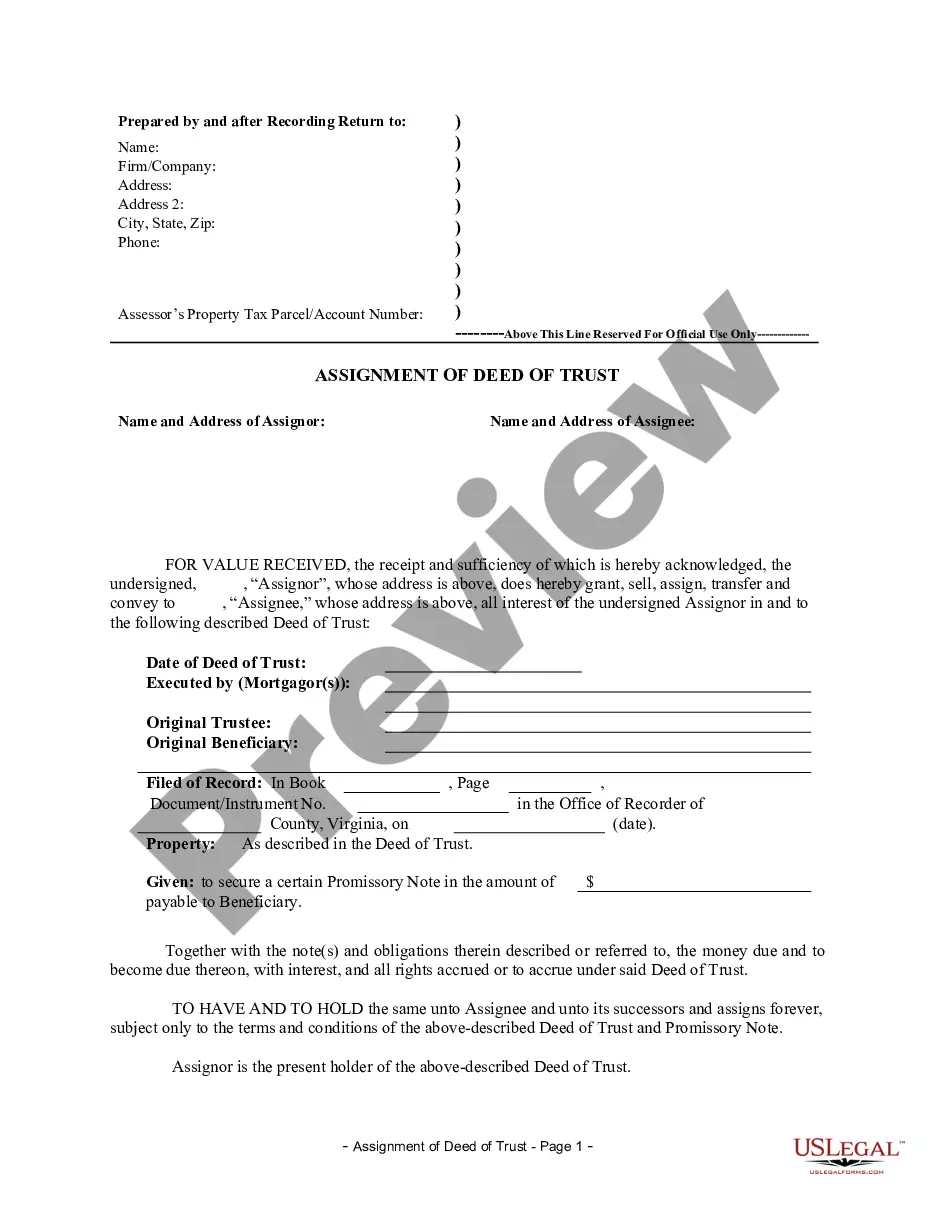
The Assignment of Deed of Trust by Corporate Mortgage Holder is a legal document that enables a corporation holding a deed of trust or mortgage to transfer its interest in that deed to a third party. This form is specifically designed for corporate entities, distinguishing it from similar forms used by individuals or partnerships, ensuring compliance with corporate regulations and protocols.
Form components explained
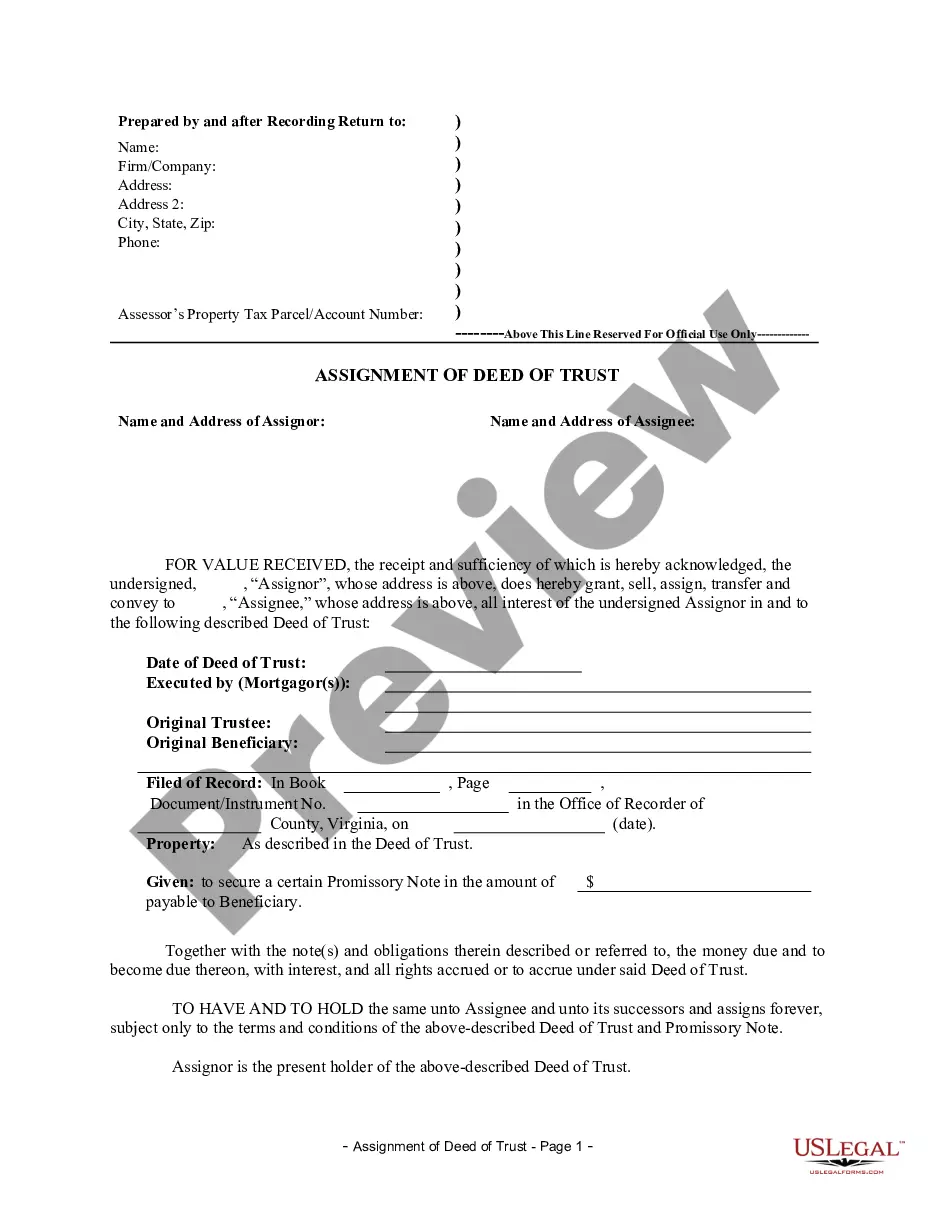
- Date of execution
- Names of the mortgagor(s)
- Original trustee and beneficiary information
- Property description as stated in the deed of trust
- Amount secured by the promissory note
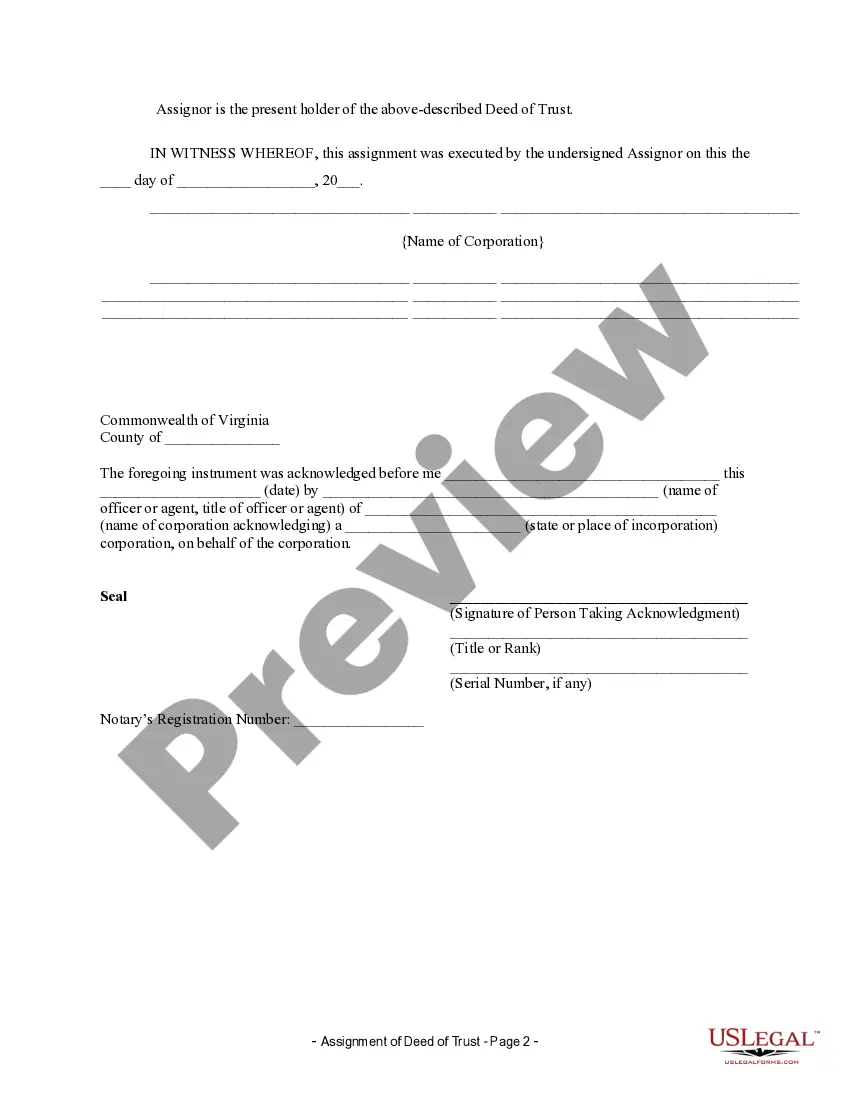
- Declaration of assignment by the corporation and signature of the officer
- Notary acknowledgment section
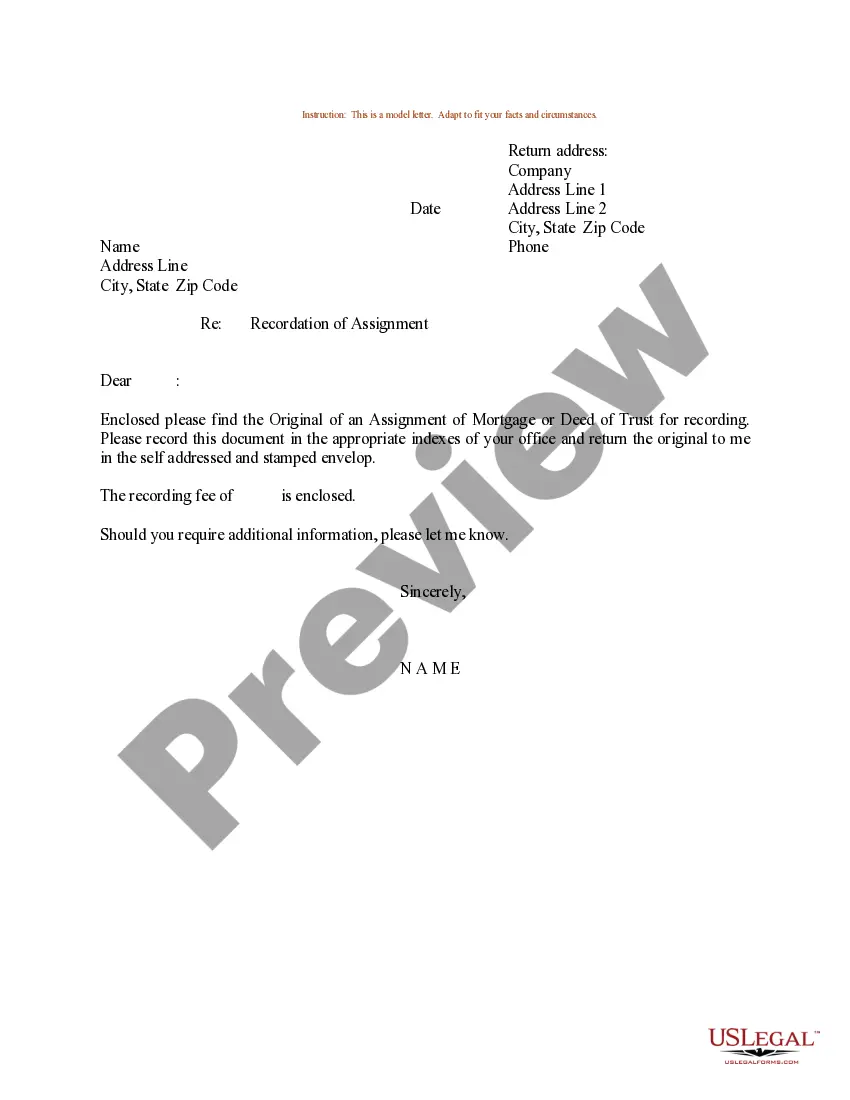
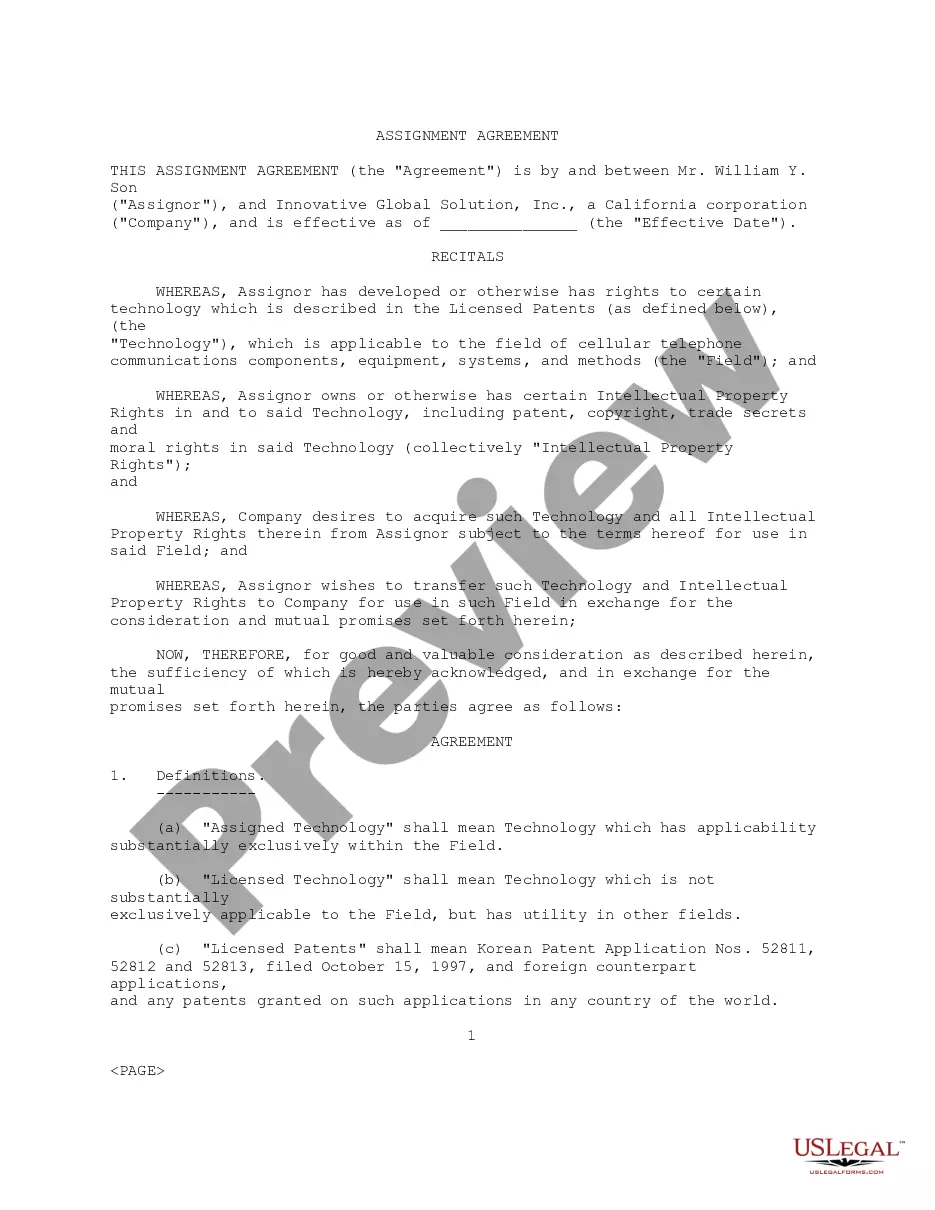
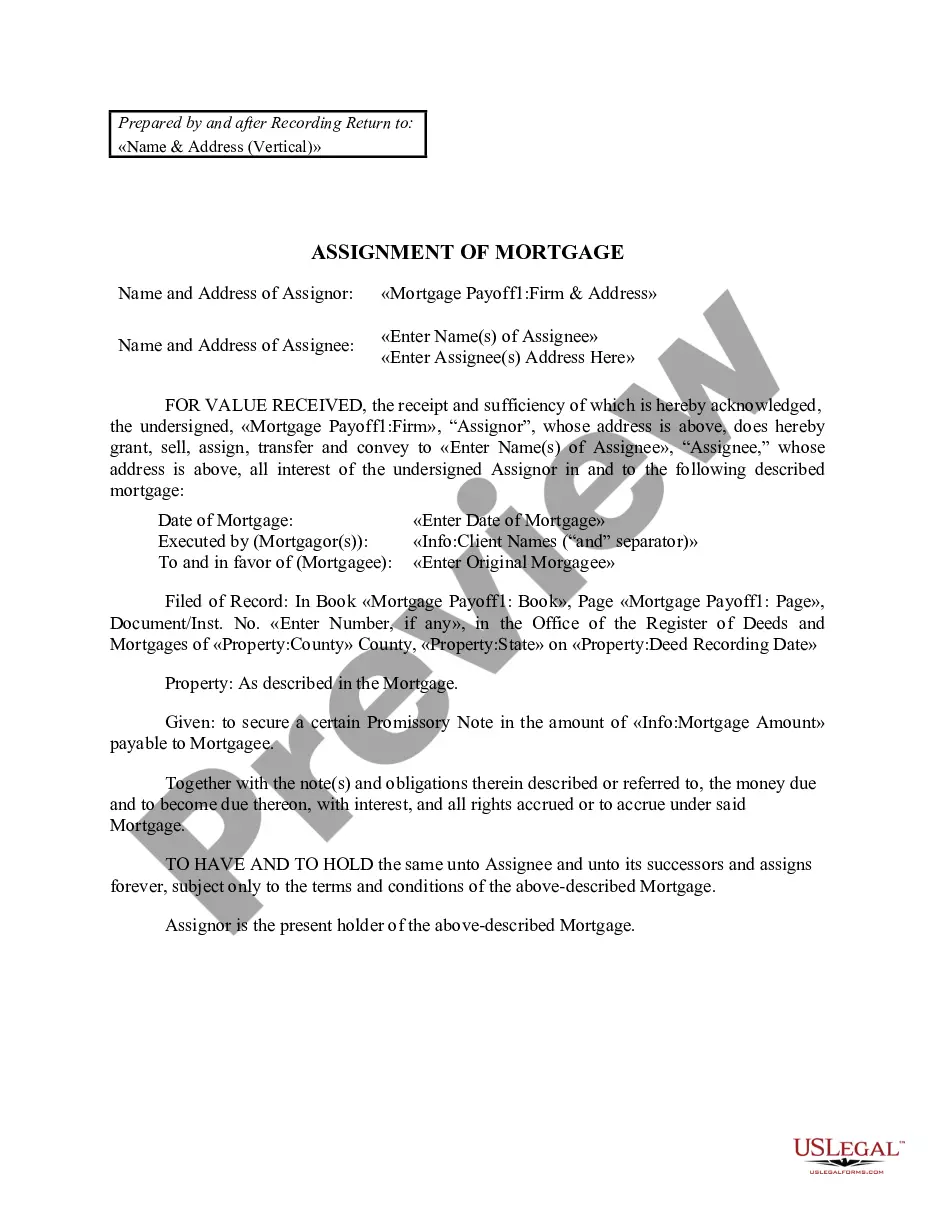
When this form is needed
This form should be used when a corporation that holds a deed of trust intends to assign its interests to another party. Common scenarios include securing financing, transferring loans, or restructuring debts. This assignment is necessary to formally document the change in ownership of the mortgage interest.
Who this form is for
This form is intended for:
- Corporations that are current holders of a deed of trust
- Third parties interested in acquiring the mortgage interest
- Legal professionals assisting corporate clients with property transactions
Instructions for completing this form
- Identify the date of the deed of trust and the parties involved.
- Enter the property description as specified in the original deed of trust.
- Document the amount of the promissory note secured by the deed of trust.
- Ensure the assignment is signed by an authorized officer of the corporation.
- Complete the notary acknowledgment section to validate the signature.
Notarization guidance
To make this form legally binding, it must be notarized. Our online notarization service, powered by Notarize, lets you verify and sign documents remotely through an encrypted video session.
Get your form ready online
Our built-in tools help you complete, sign, share, and store your documents in one place.
Make edits, fill in missing information, and update formatting in US Legal Forms—just like you would in MS Word.
Download a copy, print it, send it by email, or mail it via USPS—whatever works best for your next step.
Sign and collect signatures with our SignNow integration. Send to multiple recipients, set reminders, and more. Go Premium to unlock E-Sign.
If this form requires notarization, complete it online through a secure video call—no need to meet a notary in person or wait for an appointment.
We protect your documents and personal data by following strict security and privacy standards.
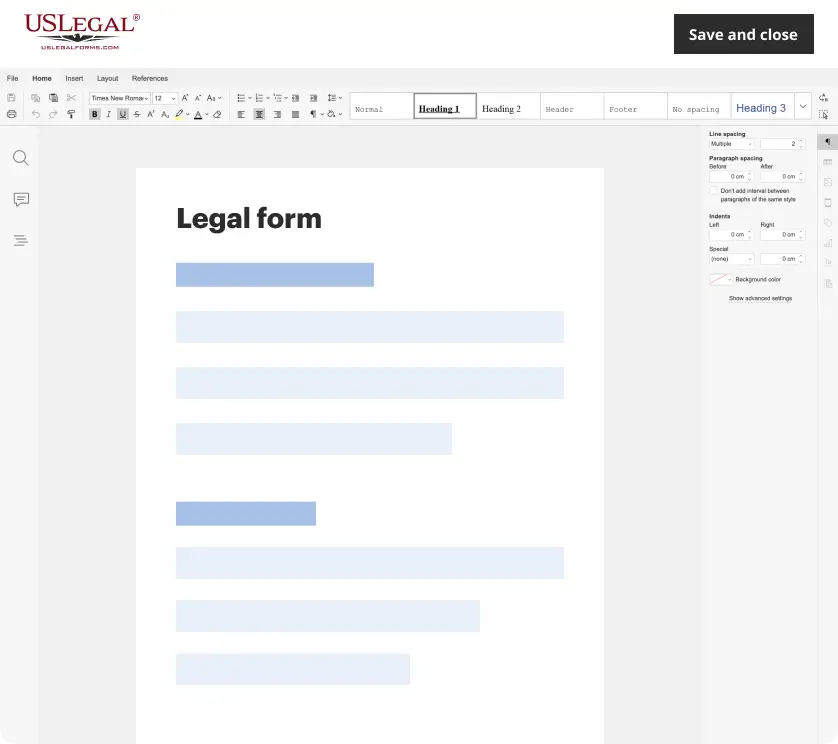
Make edits, fill in missing information, and update formatting in US Legal Forms—just like you would in MS Word.
Download a copy, print it, send it by email, or mail it via USPS—whatever works best for your next step.
Sign and collect signatures with our SignNow integration. Send to multiple recipients, set reminders, and more. Go Premium to unlock E-Sign.

If this form requires notarization, complete it online through a secure video call—no need to meet a notary in person or wait for an appointment.
We protect your documents and personal data by following strict security and privacy standards.
Avoid these common issues
- Failing to include all relevant parties in the assignment.
- Not accurately describing the property, leading to potential disputes.
- Omitting the authorized signature of a corporate officer.
- Neglecting to secure notarization when needed.
Why use this form online
- Convenience of downloading and completing the form at your own pace.
- Editability allows for easy customization to fit specific transaction details.
- Reliability of forms drafted by licensed attorneys, ensuring legal accuracy.
What to keep in mind
- The Assignment of Deed of Trust by Corporate Mortgage Holder is essential for transferring deed of trust rights between entities.
- This form should be used to ensure the legal enforceability of the assignment.
- Correct completion and notarization are crucial for validity.
Looking for another form?
Form popularity
FAQ
An assignment of a deed of trust is simply the movement of the deed of trust from one party to another, a party that was not originally involved in the deed creation when the property was bought. A corporate assignment is simply an assignment of the deed of trust between different businesses.
Most states that use deeds of trust to secure home loans are title theory states.A few deed of trust states include West Virginia, Alaska, Virginia, Arizona, Texas, California, North Carolina, Colorado, New Mexico, Idaho, Montana, Illinois, Missouri and Mississippi.
As you stated in your question, it is recorded among the land records, and your lender keeps the original. When you pay off the loan, the lender will return the deed of trust with the promissory note. This document is rather lengthy and quite legalistic.
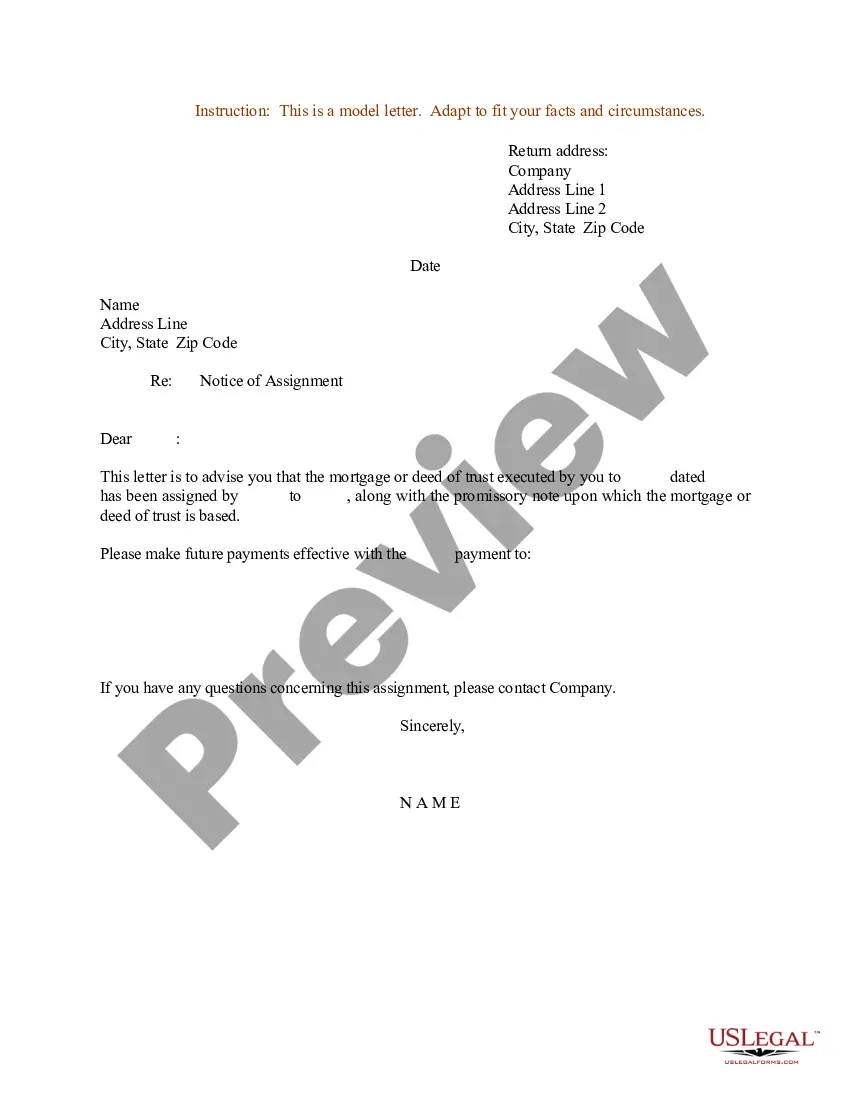
When your mortgage lender decides he wants to sell your mortgage loan to another lender, your mortgage lender will sign an assignment of deed of trust in favor of the new lender. This assignment gives the new lender the same lien on your property that your original lender had under the mortgage loan.
A deed of trust the form used almost exclusively in Virginia and in many other states in place of a true mortgage is similar to a mortgage in that both create a lien on the property to secure repayment of a loan.In a mortgage, the lender holds title to your real property until the loan is repaid in full.
They serve different purposes and are signed by different parties. The warranty deed transfers the property's ownership from the current owner to the new buyer, while the deed of trust ensures the lender has interest in the property in the event a buyer defaults on the loan.
When your mortgage lender decides he wants to sell your mortgage loan to another lender, your mortgage lender will sign an assignment of deed of trust in favor of the new lender. This assignment gives the new lender the same lien on your property that your original lender had under the mortgage loan.
Deeds of trust are the most common instrument used in the financing of real estate purchases in Alaska, Arizona, California, Colorado, the District of Columbia, Idaho, Maryland, Mississippi, Missouri, Montana, Nebraska, Nevada, North Carolina, Oregon, Tennessee, Texas, Utah, Virginia, Washington, and West Virginia,
The following states use Deed of Trusts: Alaska, Arizona, California, District of Columbia, Georgia, Mississippi, Missouri, Nevada, North Carolina, and Virginia.