Sample Letter to Attorney regarding Notice of filing of Family Law matter - cover Letter
Understanding this form
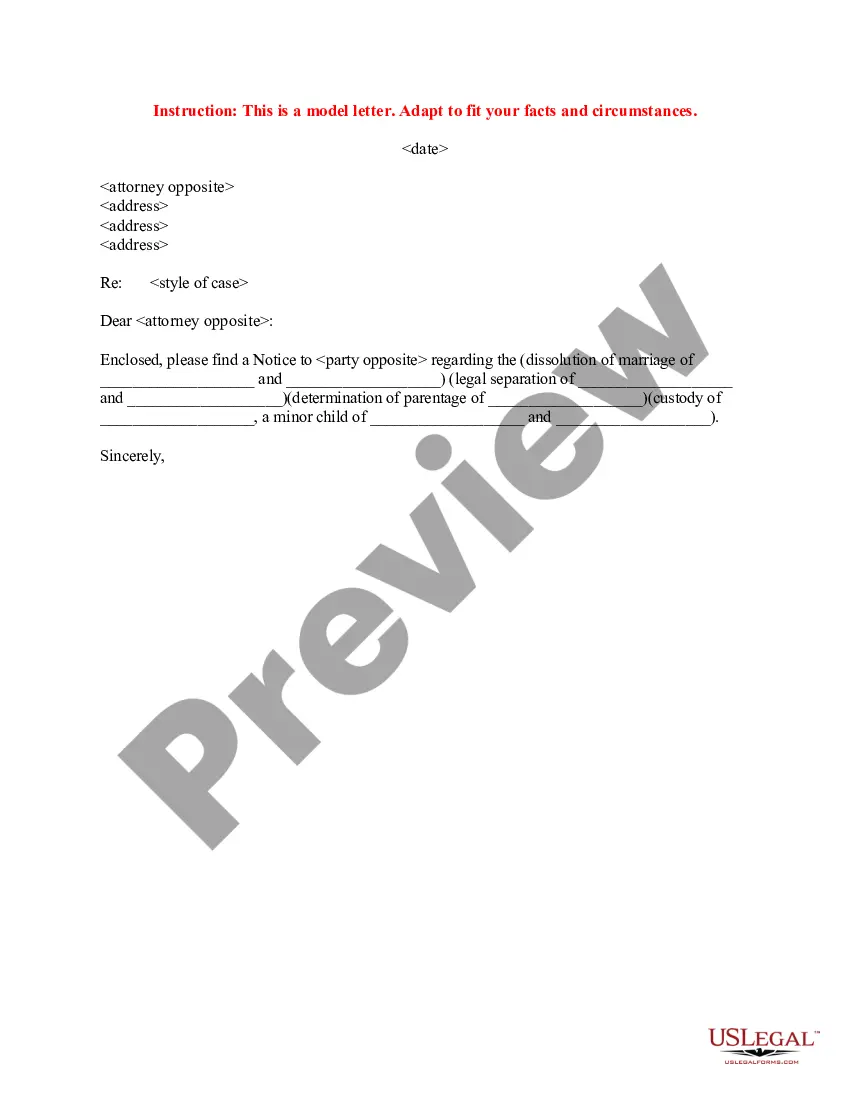
The Sample Letter to Attorney regarding Notice of Filing of Family Law Matter serves as a formal cover letter to accompany a notice to the opposing party in a family law case. This form is specifically designed to address family law matters such as dissolution of marriage, legal separation, determination of parentage, or child custody. It differs from similar documents by providing a structured format tailored for communication with an attorney regarding these sensitive issues.
Main sections of this form
- Date of the letter
- Name and address of the opposing attorney
- Case style (e.g., dissolution of marriage)
- Specific details about the involved parties (names of spouses or parents)
- A closing statement for formality
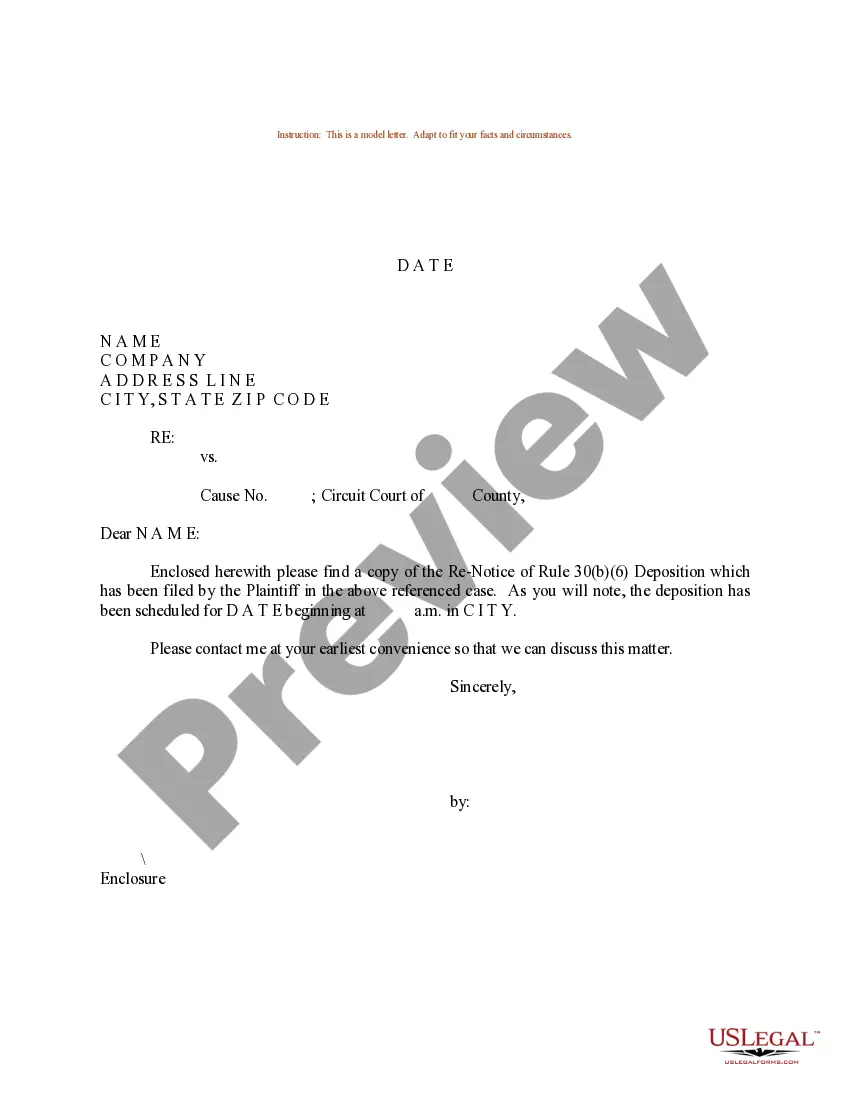
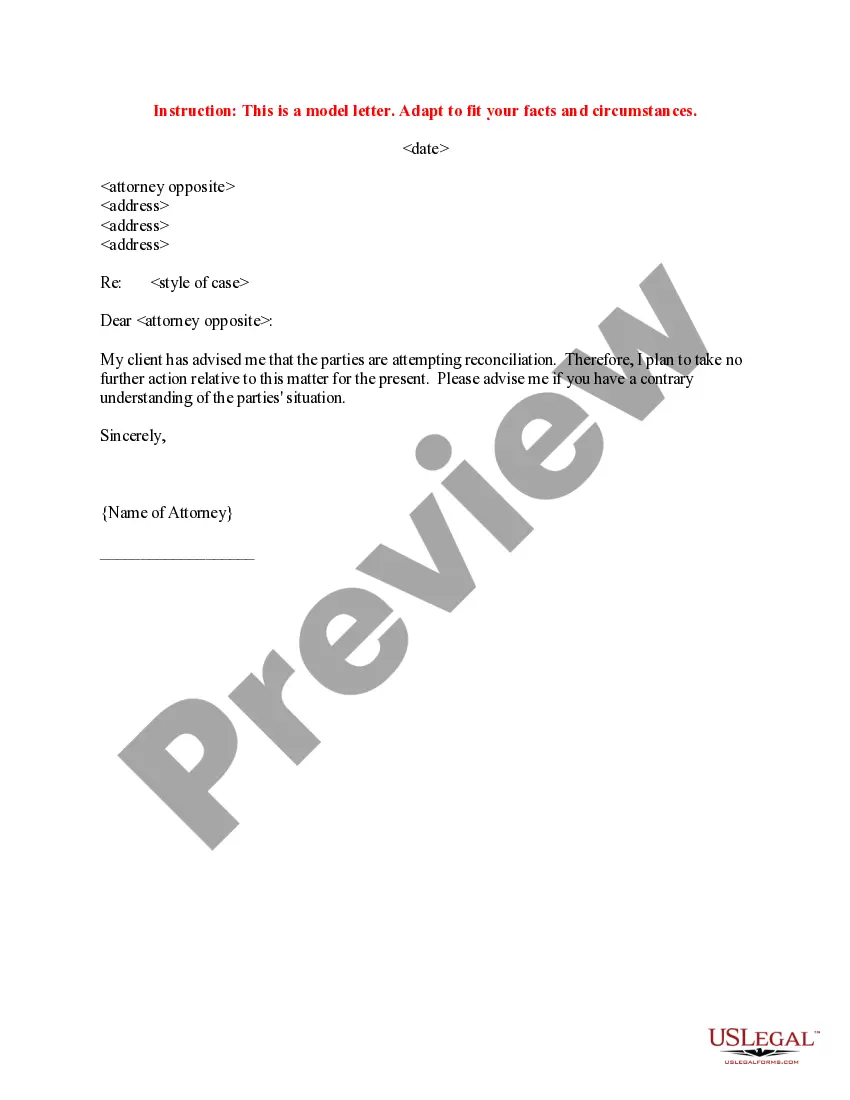
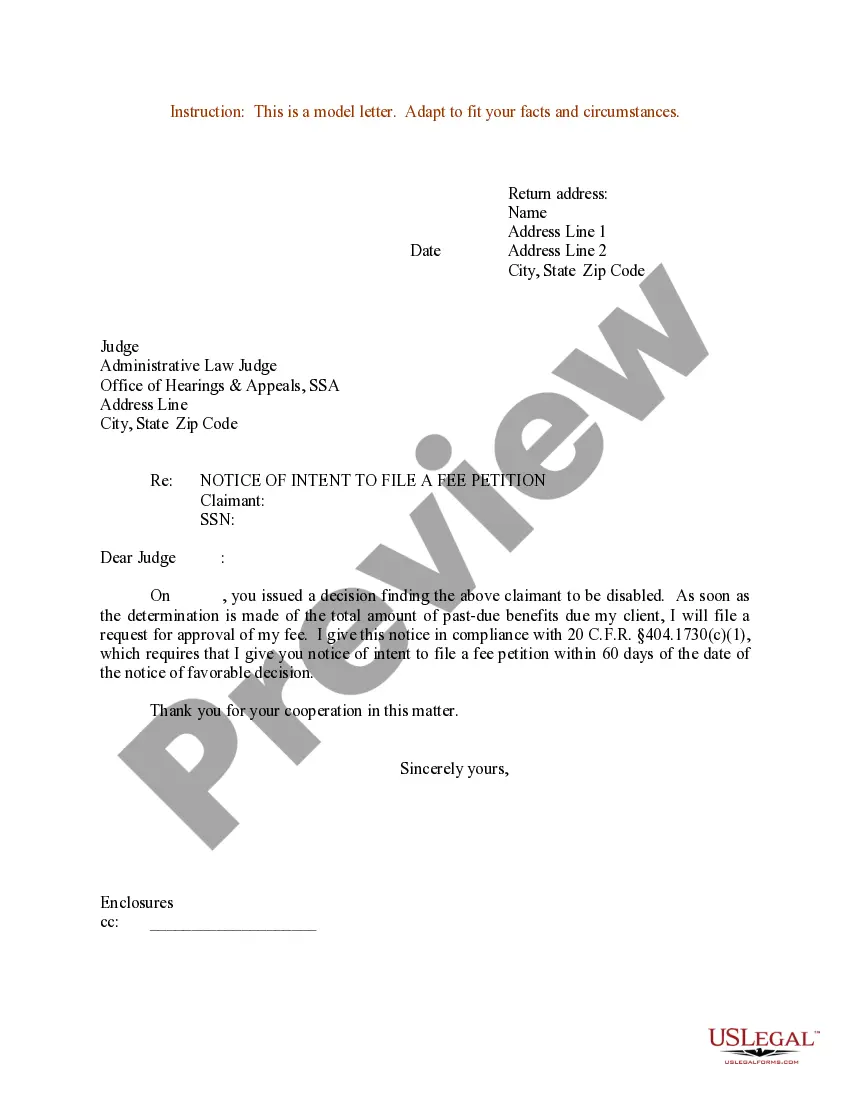
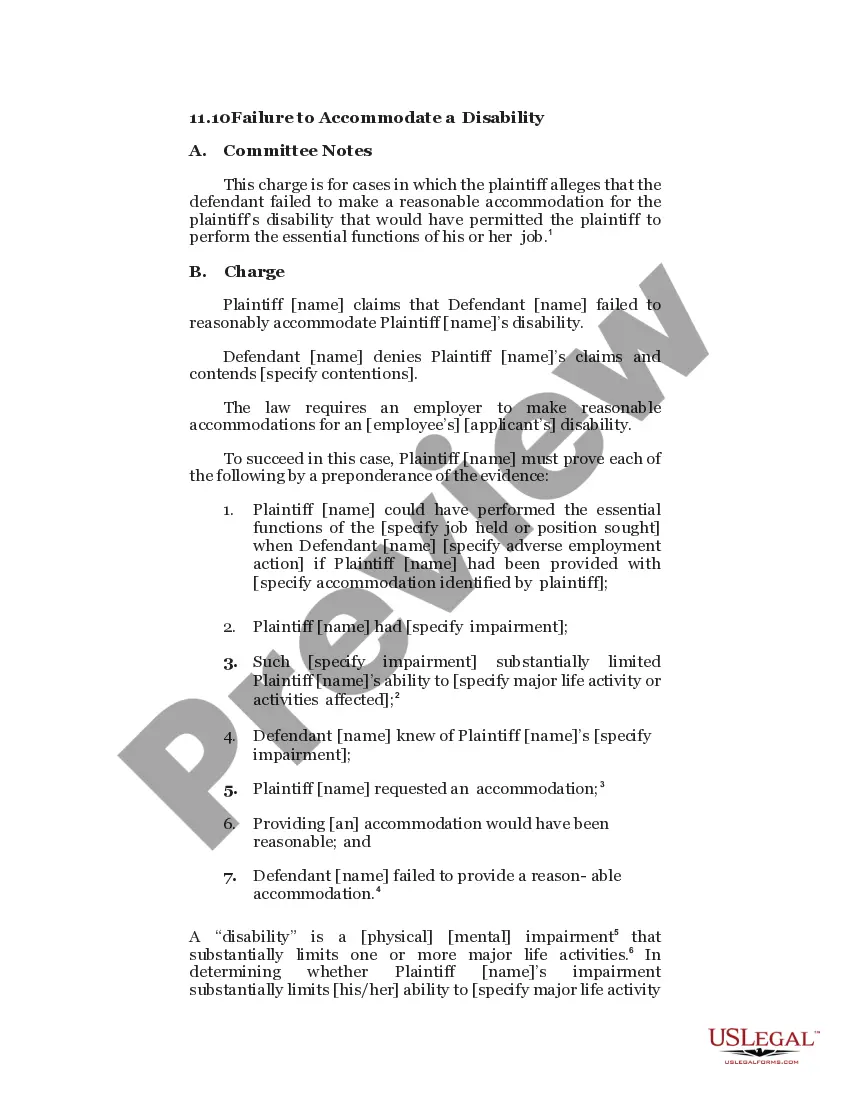
When to use this document
This form should be utilized when you need to formally notify the opposing party's attorney about a specific family law matter. It is particularly important when you are filing for divorce, seeking legal separation, establishing paternity, or addressing custody issues. Using this form ensures that the proper legal procedures are followed in your case.
Who can use this document
This form is intended for any individual involved in a family law case who needs to communicate with an opposing attorney. Specifically, it is suitable for:
- Individuals filing for divorce or legal separation
- Parents involved in custody disputes
- Parties seeking determination of parentage
- Anyone needing to communicate legal notices in family law matters
Instructions for completing this form
- Enter the date at the top of the letter.
- Provide the name and address of the opposing attorney.
- Specify the case style, including details of the family law matter.
- Fill in the names of the parties involved in the case.
- Sign the letter to formalize the notice.
Does this form need to be notarized?
This form does not typically require notarization unless specified by local law. It is advisable to check local regulations to determine if notarization is required for your situation.
Get your form ready online
Our built-in tools help you complete, sign, share, and store your documents in one place.
Make edits, fill in missing information, and update formatting in US Legal Forms—just like you would in MS Word.
Download a copy, print it, send it by email, or mail it via USPS—whatever works best for your next step.
Sign and collect signatures with our SignNow integration. Send to multiple recipients, set reminders, and more. Go Premium to unlock E-Sign.
If this form requires notarization, complete it online through a secure video call—no need to meet a notary in person or wait for an appointment.
We protect your documents and personal data by following strict security and privacy standards.

Make edits, fill in missing information, and update formatting in US Legal Forms—just like you would in MS Word.

Download a copy, print it, send it by email, or mail it via USPS—whatever works best for your next step.

Sign and collect signatures with our SignNow integration. Send to multiple recipients, set reminders, and more. Go Premium to unlock E-Sign.

If this form requires notarization, complete it online through a secure video call—no need to meet a notary in person or wait for an appointment.

We protect your documents and personal data by following strict security and privacy standards.
Avoid these common issues
- Failing to include the correct date.
- Not providing accurate names of the parties involved.
- Leaving out essential information regarding the legal matter.
- Not addressing the letter to the correct attorney.
Advantages of online completion
- Convenience of downloading the form at any time.
- Editability to customize the letter for your specific case.
- Reliability of using a professionally drafted template.
Legal use & context
- Maintains a formal line of communication between parties in a family law case.
- Helps ensure that all parties are informed of legal proceedings, promoting transparency.
- Functions as a record of notice which may be important in future legal references.
Quick recap
- The form serves as a formal communication tool for family law cases.
- It is important to complete the letter carefully to ensure all necessary details are included.
- Using an online template can simplify the process and ensure reliability.
Looking for another form?
Form popularity
FAQ
For example: "Dear Mr. Jones" or "Dear Ms. Fisher" Position the greeting on the left side of the page. Follow the greeting with a colon, i.e. "Dear Ms. Fisher:"
Character letters should include your name, mailing address, phone number and email address so that the court can verify your information. They should be addressed either to the Honorable FIRST NAME LAST NAME or Judge FIRST NAME LAST NAME.
Type your letter. Concisely review the main facts. Be polite. Write with your goal in mind. Ask for exactly what you want. Set a deadline. End the letter by stating you will promptly pursue legal remedies if the other party does not meet your demand. Make and keep copies.
Type your letter. Concisely review the main facts. Be polite. Write with your goal in mind. Ask for exactly what you want. Set a deadline. End the letter by stating you will promptly pursue legal remedies if the other party does not meet your demand. Make and keep copies.
You can't write to the judge. You can hire your own attorney to make your case to the court.
Open with a salutation.Write "Dear Judge (last name)," to start your letter. Note that you use "the Honorable" when referring to the judge, but use "Judge" when addressing him or her in person. The title still applies even if the judge has retired.
However, when a person is awaiting trial, writing a letter to the judge will not help. At best, the letter will go unread by the judge, and will be of no help. In a worst-case scenario, the letter will end up being used by the prosecution as evidence against that person.
Character letters should include your name, mailing address, phone number and email address so that the court can verify your information. They should be addressed either to the Honorable FIRST NAME LAST NAME or Judge FIRST NAME LAST NAME.
A letter to an attorney should be written in a formal letter format with the attorney's name, law firm and address at the top near the date, addressed using a salutation and signed off with a closing such as "Very Truly Yours" or "Sincerely."