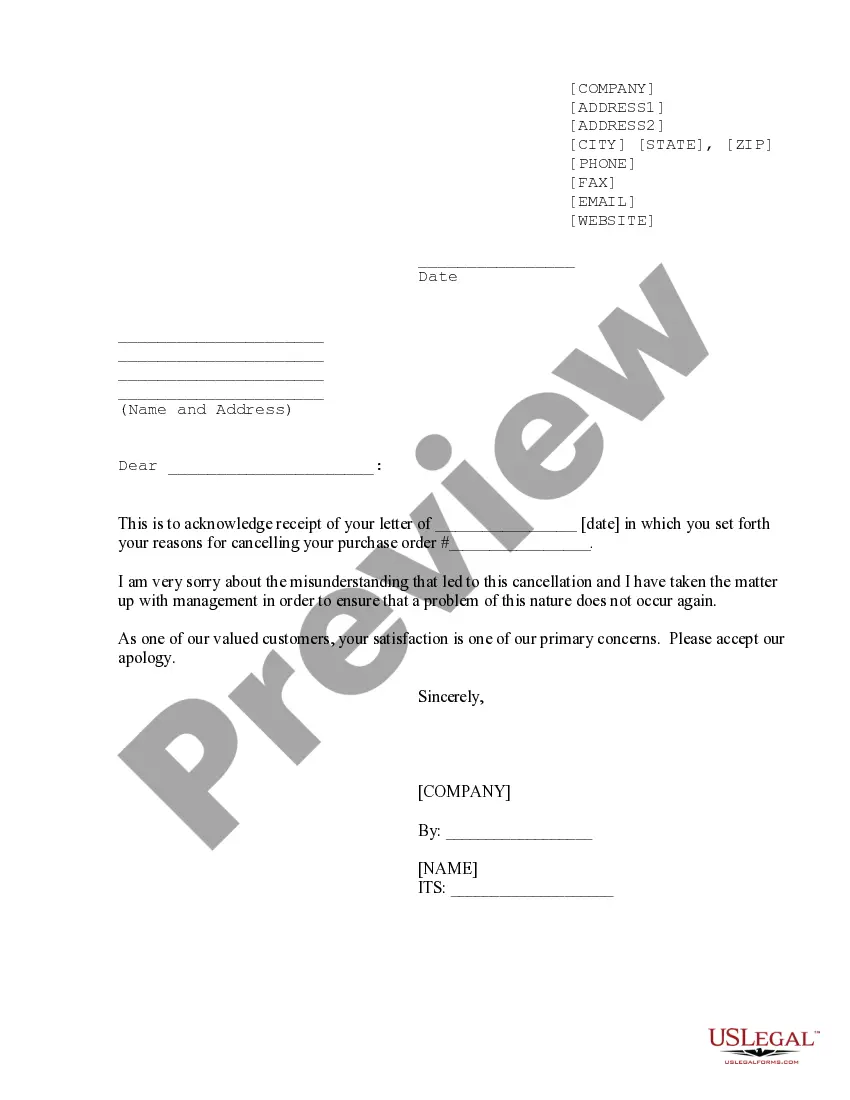
Virginia Letter from Tenant to Landlord for Failure of Landlord to comply with building codes affecting health and safety or resulting in untenantable condition - demand for remedy
Understanding this form
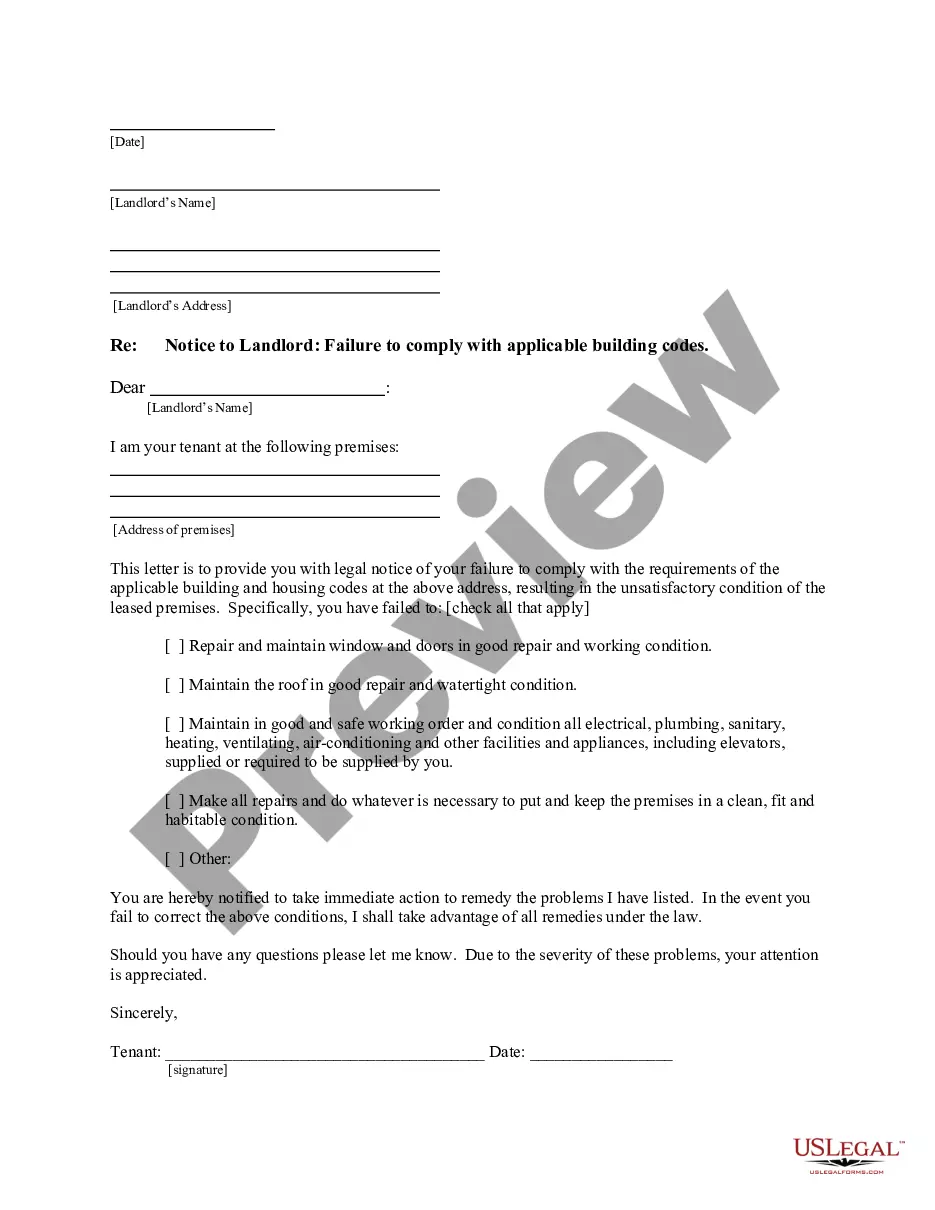
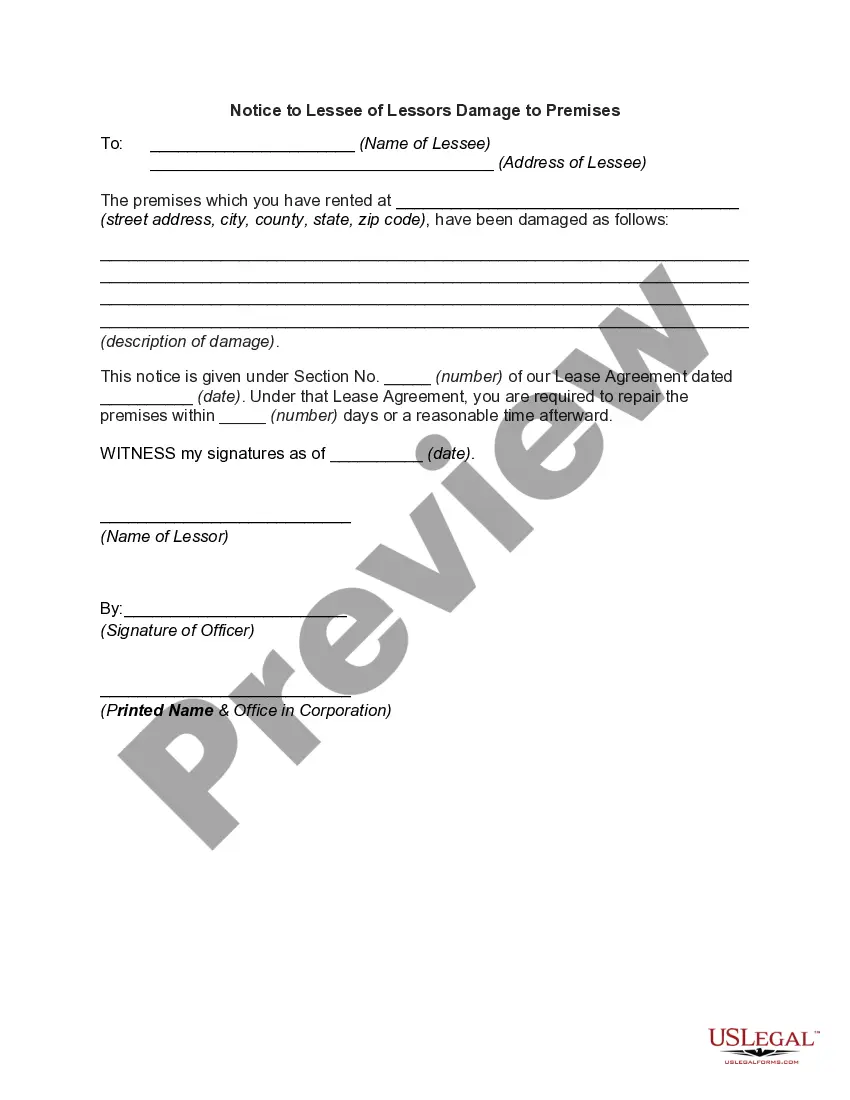
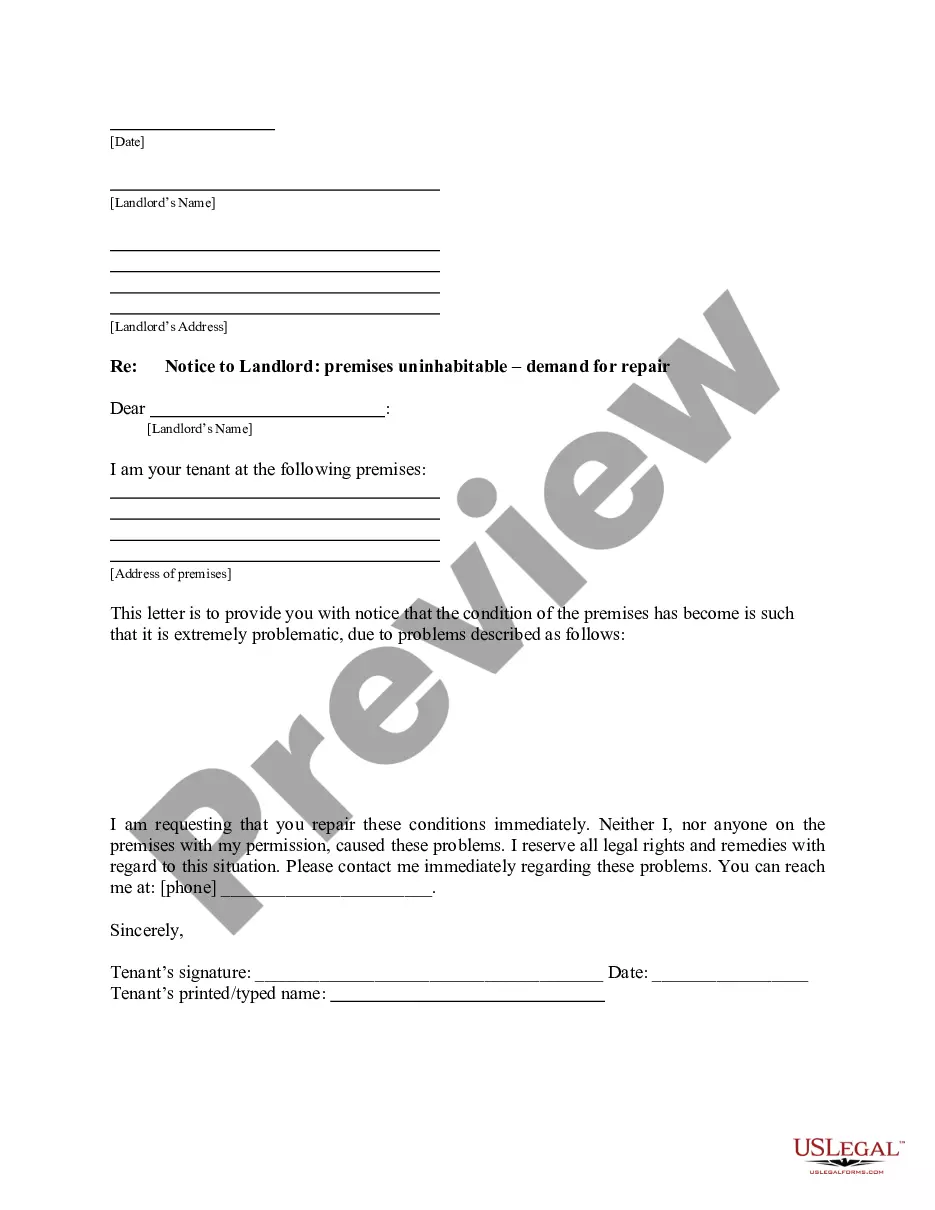
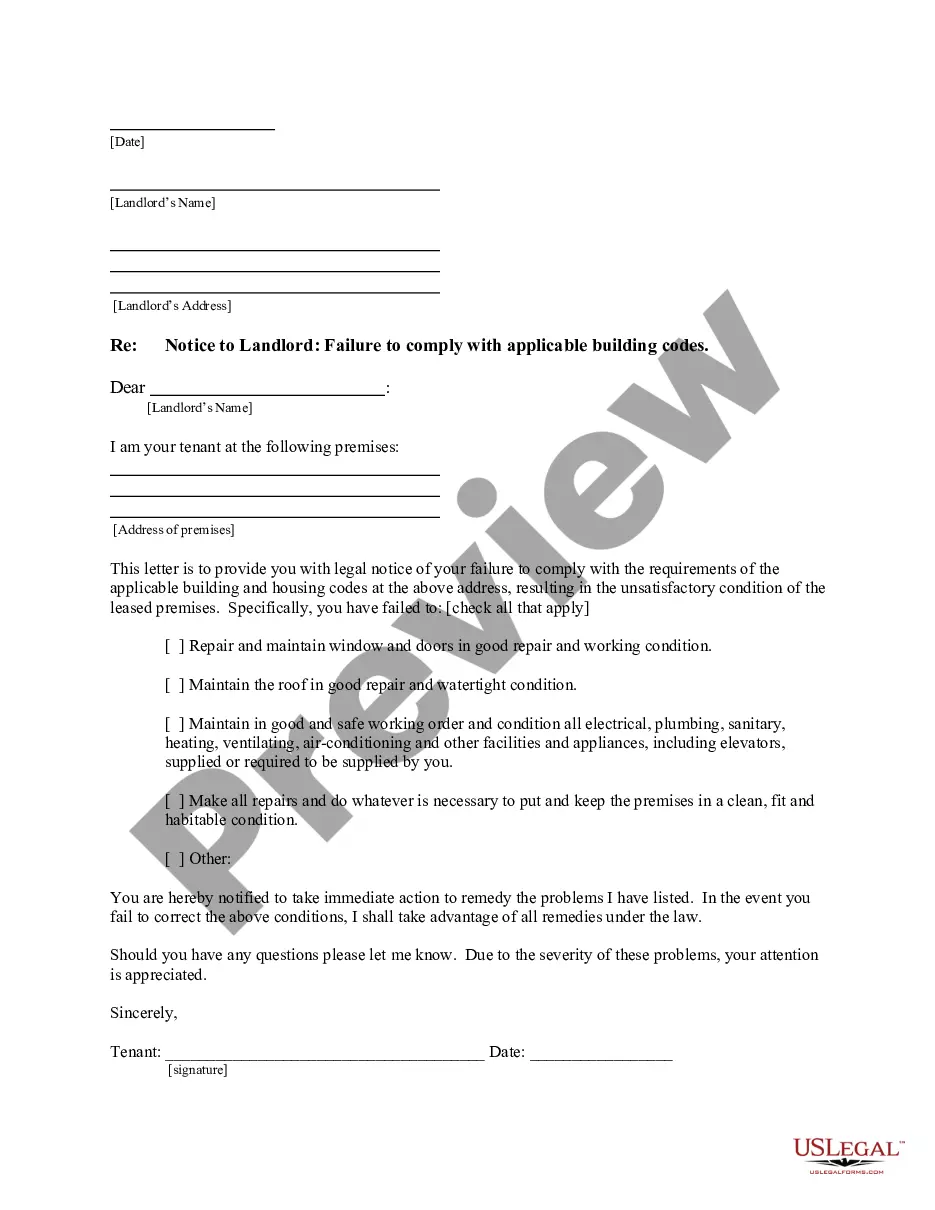
This form is a demand letter from a tenant to a landlord addressing the landlord's failure to comply with building codes that affect health and safety or result in an untenantable condition. It specifically requests that the landlord remedy the unsafe or unhealthy living conditions within ten days. This form differs from general repair requests by emphasizing legal obligations regarding building codes and tenant rights.
Form components explained
- Identification of the tenant and landlord.
- A description of the specific building code violations or unsafe conditions.
- A clear demand for repairs to be made within ten days.
- Signature of the tenant for validation.
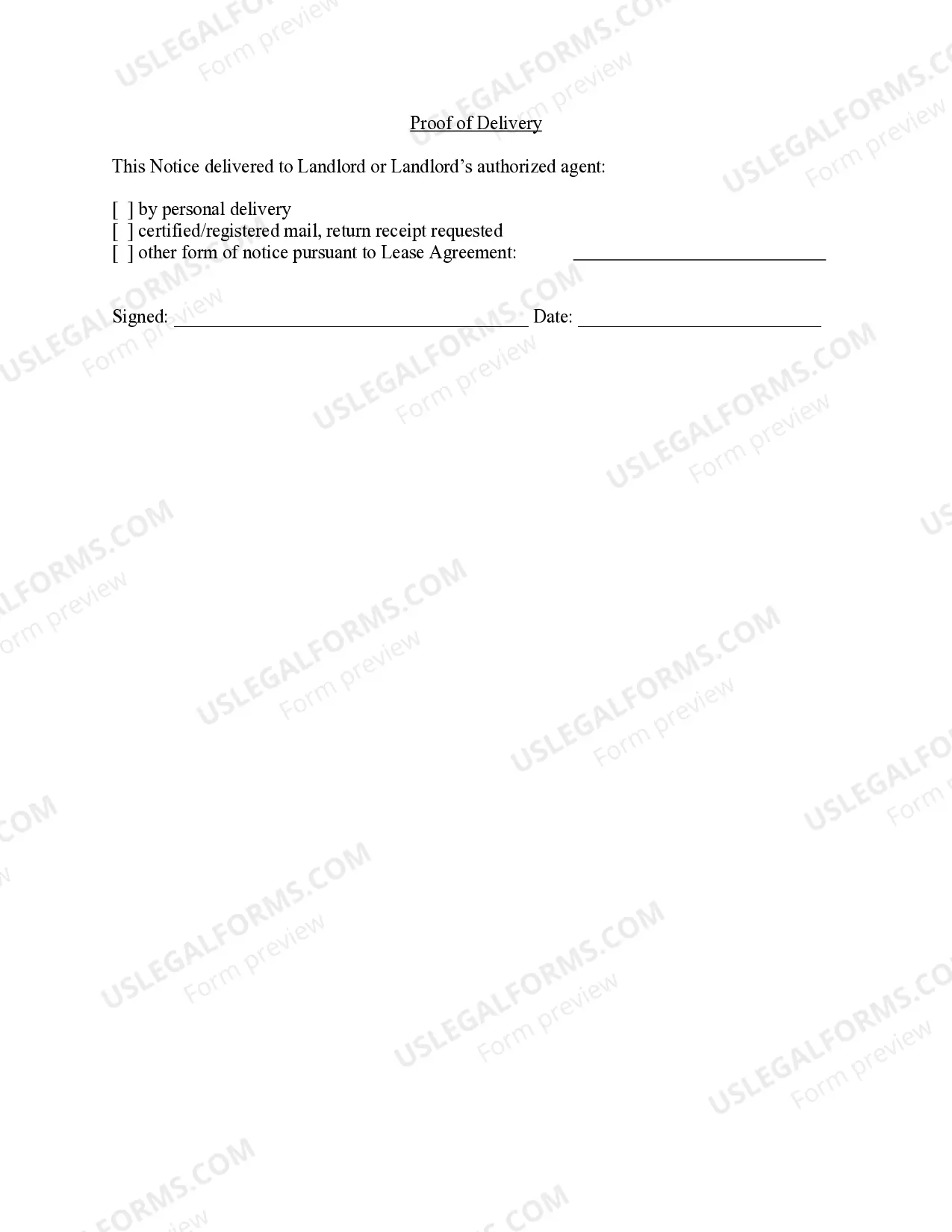
- Proof of delivery method for the notice.


When this form is needed
This form is useful when a tenant observes that their living conditions are unsafe or unhealthy due to the landlord's failure to maintain compliance with building codes. It serves as an official request for remedy, prompting the landlord to take immediate action to rectify the situation.
Who can use this document
- Tenants living in rented premises with health and safety issues.
- Individuals who have not seen corrective actions taken by their landlord.
- Anyone needing to formally document their request for repairs to comply with building codes.
How to prepare this document
- Identify the parties involved by entering the names of both the tenant and the landlord.
- Detail the specific health or safety issues caused by the landlord's failure to comply with building codes.
- Specify the conditions that need repair, such as windows, doors, or roofing.
- Set a deadline of ten days for the landlord to make the necessary repairs.
- Sign and date the letter to validate your request.
- Indicate the method of delivery to the landlord or their agent.
Notarization requirements for this form
This form usually doesn’t need to be notarized. However, local laws or specific transactions may require it. Our online notarization service, powered by Notarize, lets you complete it remotely through a secure video session, available 24/7.
Get your form ready online
Our built-in tools help you complete, sign, share, and store your documents in one place.
Make edits, fill in missing information, and update formatting in US Legal Forms—just like you would in MS Word.
Download a copy, print it, send it by email, or mail it via USPS—whatever works best for your next step.
Sign and collect signatures with our SignNow integration. Send to multiple recipients, set reminders, and more. Go Premium to unlock E-Sign.
If this form requires notarization, complete it online through a secure video call—no need to meet a notary in person or wait for an appointment.
We protect your documents and personal data by following strict security and privacy standards.

Make edits, fill in missing information, and update formatting in US Legal Forms—just like you would in MS Word.

Download a copy, print it, send it by email, or mail it via USPS—whatever works best for your next step.

Sign and collect signatures with our SignNow integration. Send to multiple recipients, set reminders, and more. Go Premium to unlock E-Sign.

If this form requires notarization, complete it online through a secure video call—no need to meet a notary in person or wait for an appointment.

We protect your documents and personal data by following strict security and privacy standards.
Mistakes to watch out for
- Failing to provide specific details about the violations or unsafe conditions.
- Not including a clear deadline for repairs.
- Omitting the signature and date, which can render the form ineffective.
- Neglecting to document proof of delivery for future reference.
Benefits of completing this form online
- Convenient access to editable templates tailored to state-specific laws.
- Fast and easy downloads allow for immediate use.
- Reassurance of using a legally vetted document prepared by licensed attorneys.
Key takeaways
- Ensure your health and safety concerns are formally documented through this demand letter.
- Utilize this form to compel your landlord to comply with building codes.
- Adhere to the outlined steps to enhance the effectiveness of your communication.
Looking for another form?
Form popularity
FAQ
In general, a Landlord, as well as a Tenant, both have the right to give notice to each other, to cancel any lease agreement between them. HOWEVER should the above additional rights of the Tenant be exercised, the Tenant may be obligated to pay a reasonable cancellation fee Up to 3 months rental. 2.
Health Issues When the environment in a unit becomes hazardous to one's health, the rental is considered to be uninhabitable.Other health risks such as mold and asbestos can make a unit uninhabitable, by causing respiratory problems and serious illnesses.
Uninhabitable conditions can include dangerous ones, such as holes in the floor, unsafe or exposed wiring, or non-working air conditioning in dangerously hot summer months. Gross infestations of roaches, fleas or other pests are also uninhabitable conditions.
Landlords have a responsibility to ensure the property meets health and safety laws. Landlords must also provide and maintain locks or other security devices to ensure the property is reasonably secure.
Contact us at (888) 700-9995.
What is the Law? In California, there is no legal definition for unsafe living conditions. Generally, the rule of thumb is that if your living environment affects your health or safety, then it can be considered an unsafe living condition.
Fundamental responsibilities of landlords include: providing and maintaining the property in a clean and reasonable standard; giving proper receipts and maintaining records of all transactions pertaining to the tenancy; paying council rates and taxes; maintaining locks to ensure the property's security; and lodging the
When a home is condemned, the owner (and tenants, if any) are notified in writing that the building must be vacated. A sign is attached to the building stating that the dwelling is not fit for human habitation, and that it cannot be occupied.The owner of the building may be ordered to repair or demolish the building.
In California, habitability includes the following specific warranties: A dwelling also may be considered uninhabitable (unlivable) if it substantially lacks any of the following: Effective waterproofing and weather protection of roof and exterior walls, including unbroken windows and doors.