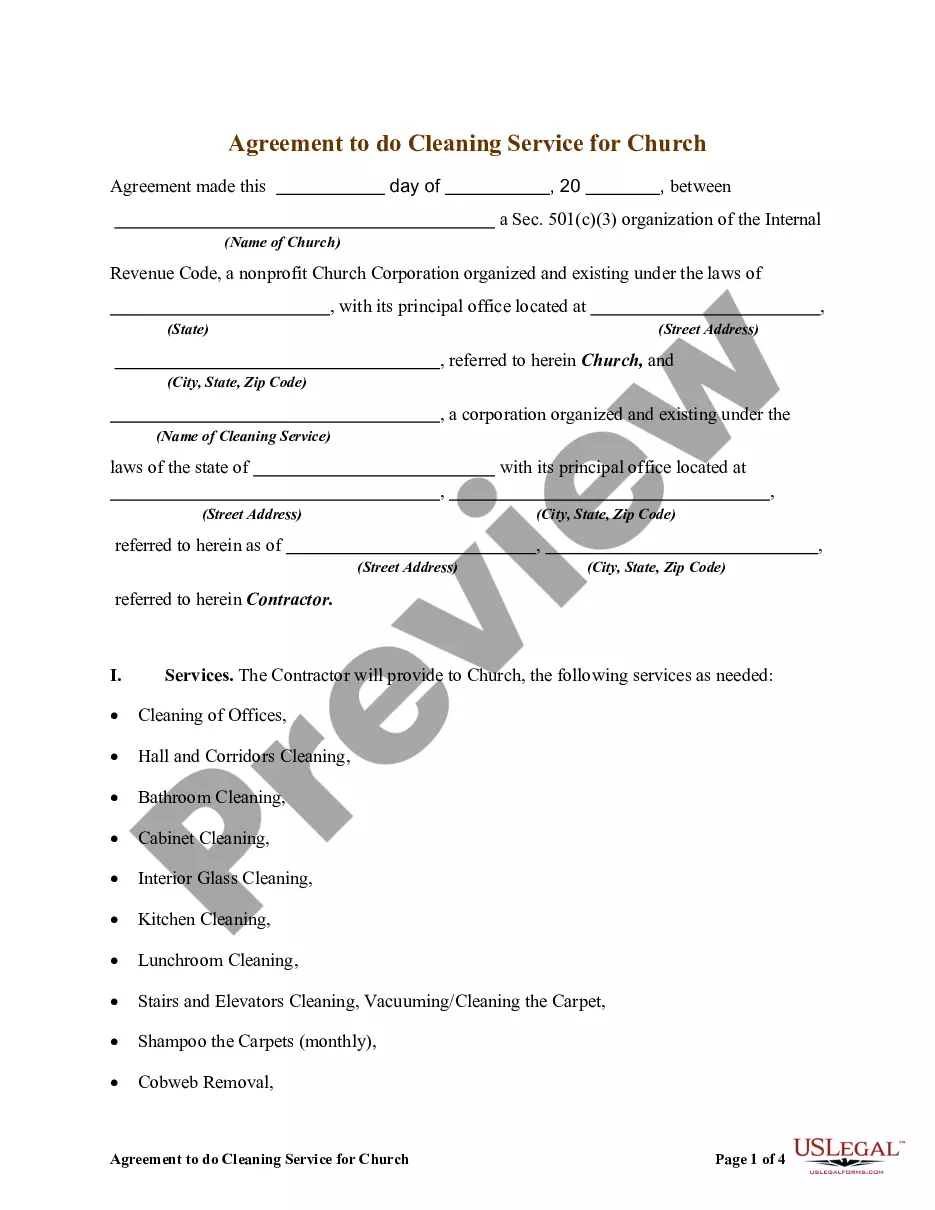
Virginia Satisfaction of Judgment
What is this form?
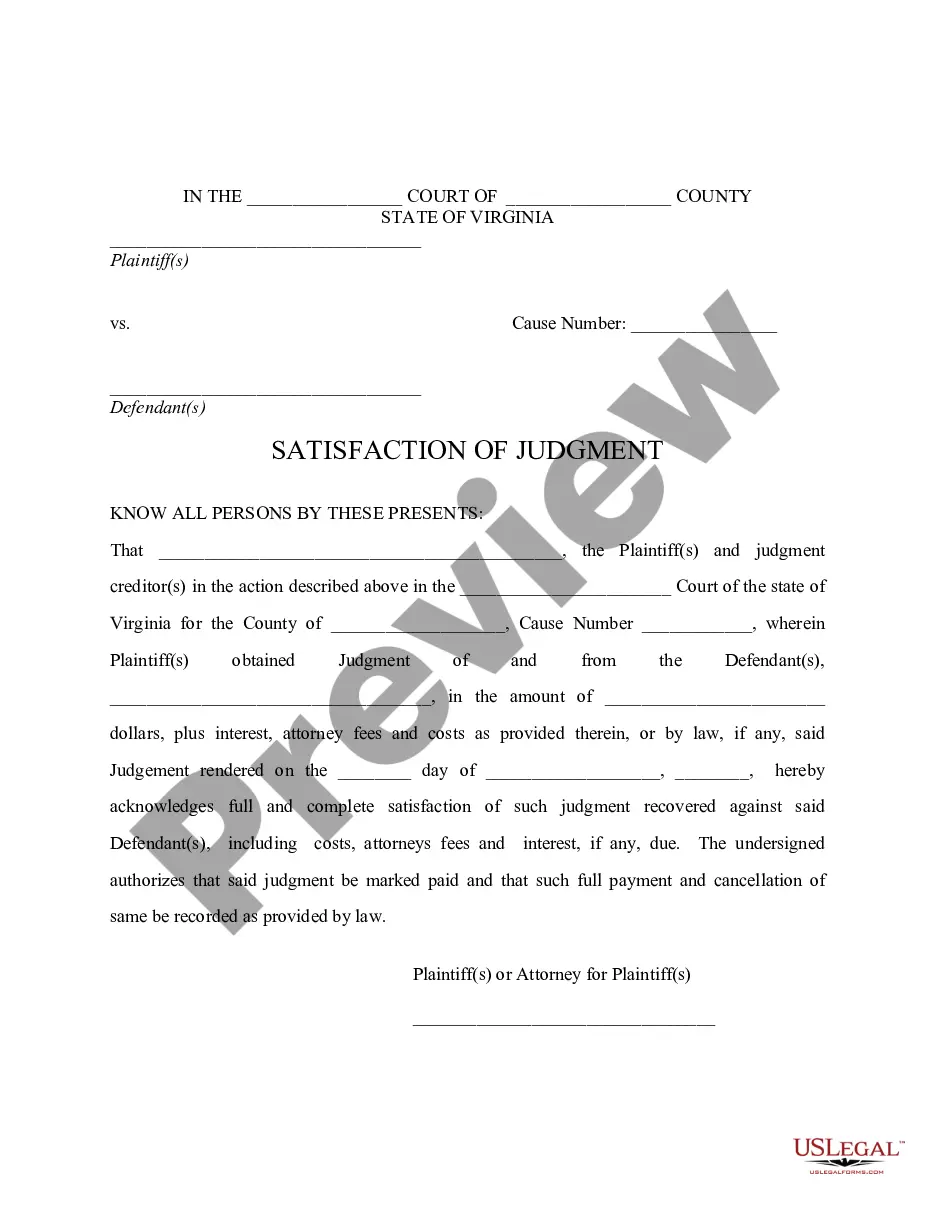
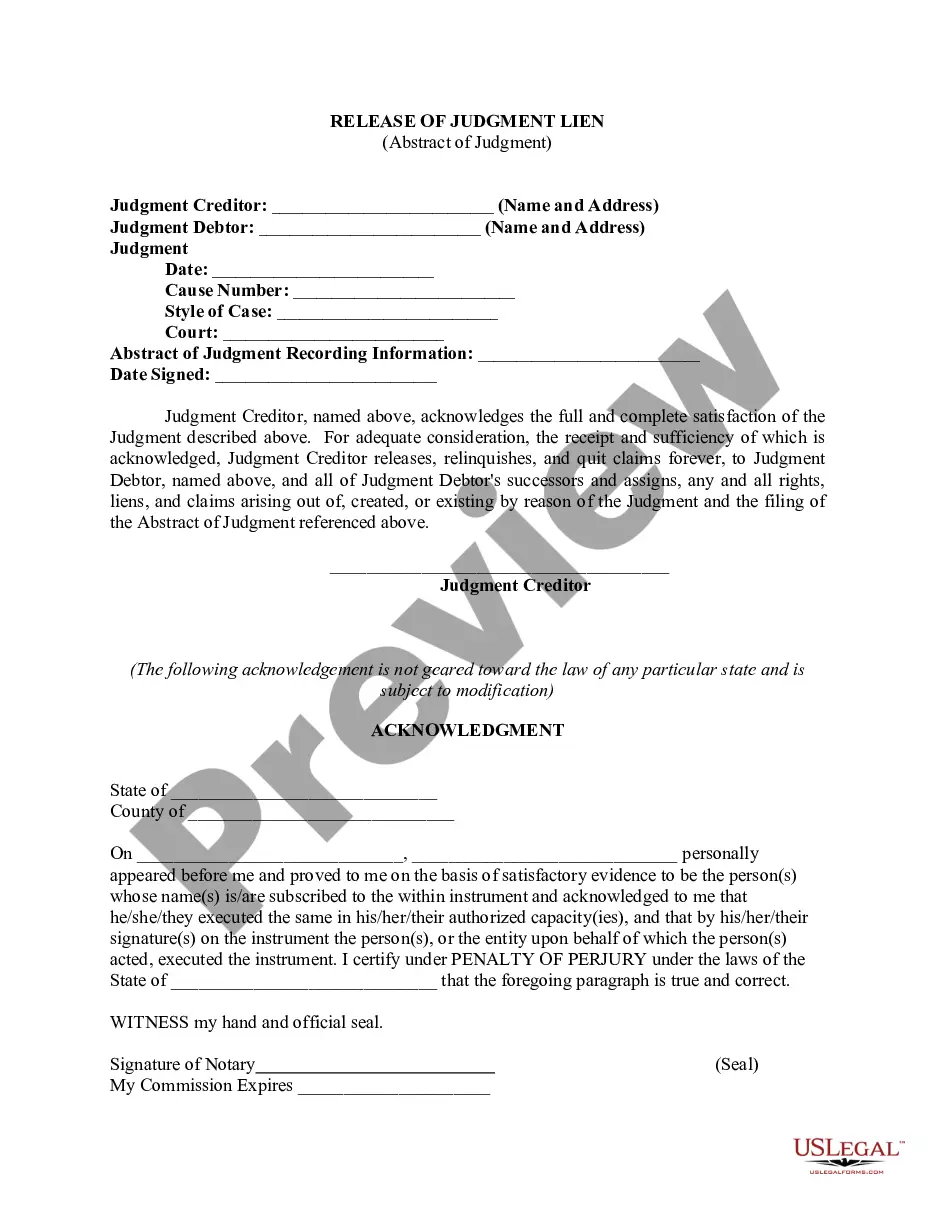
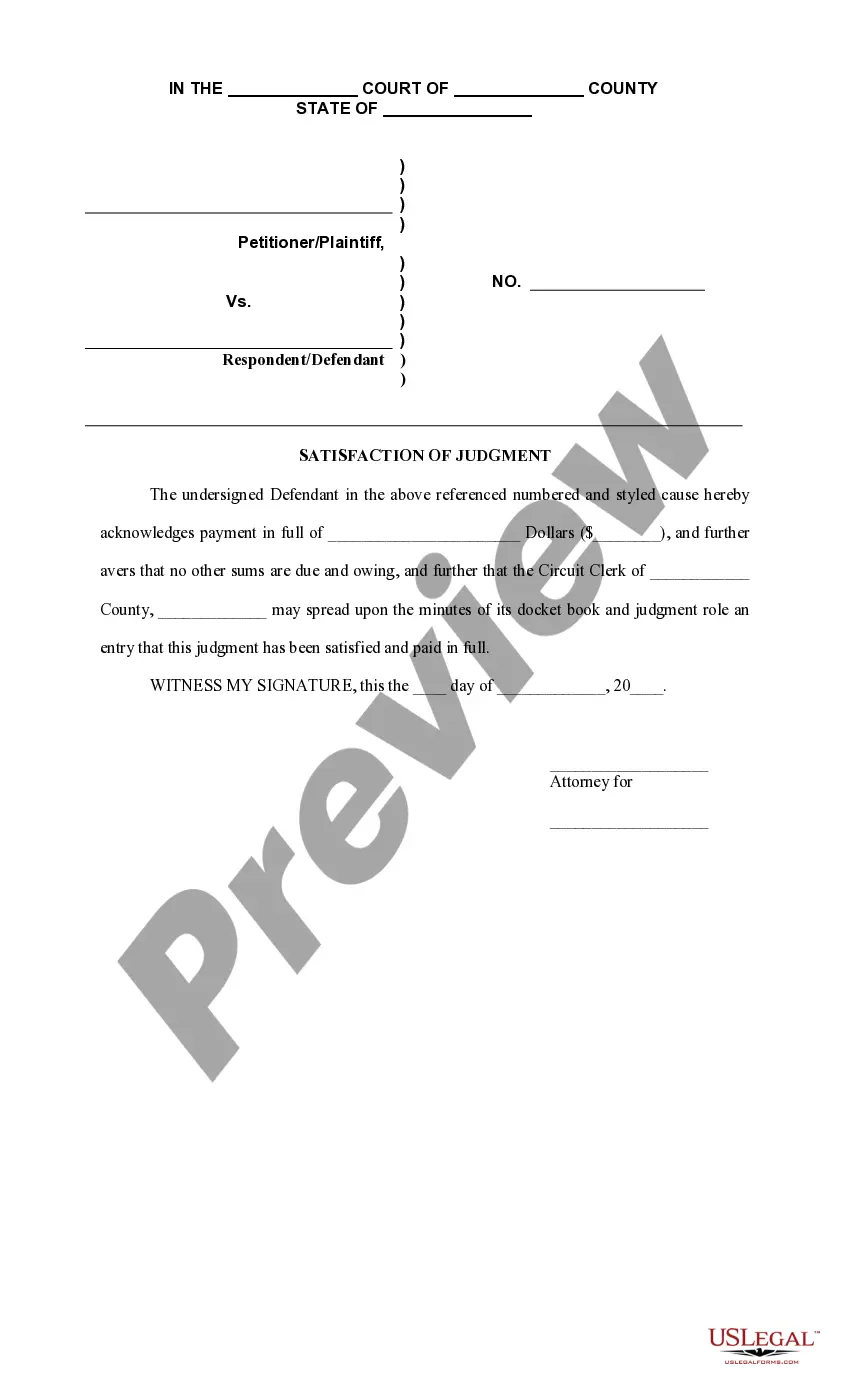
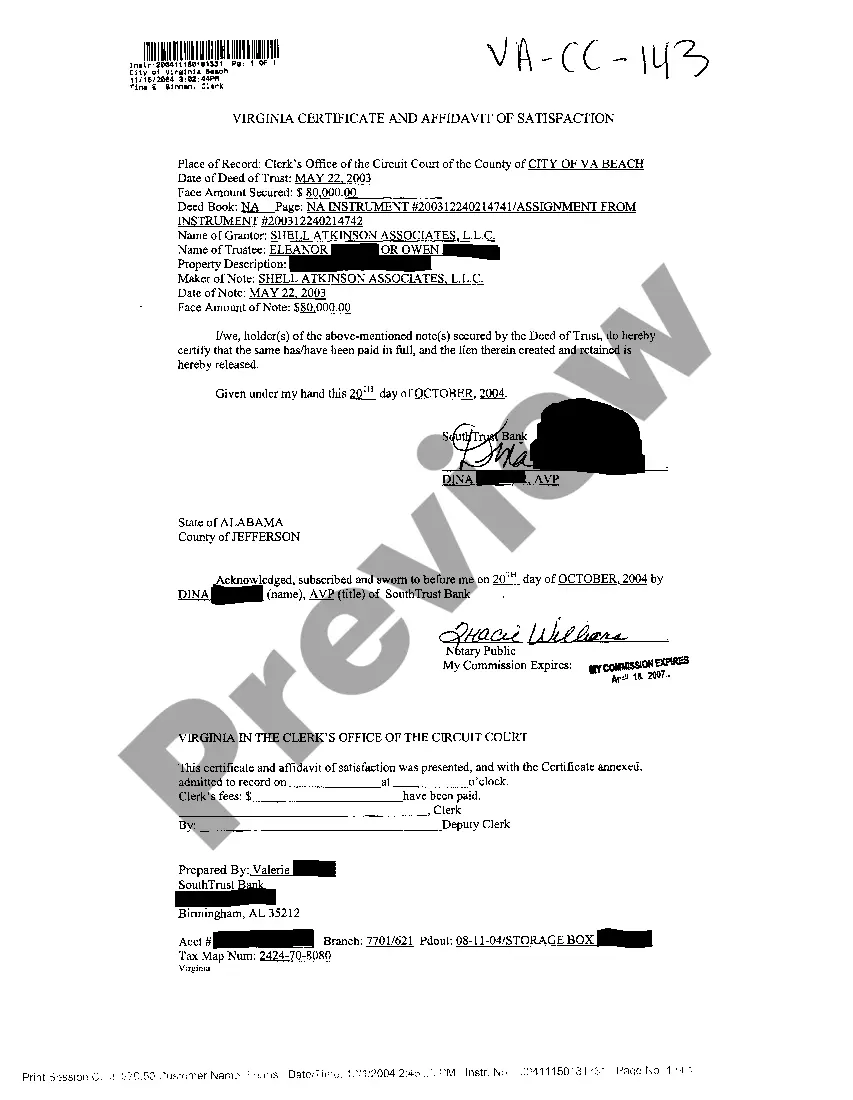
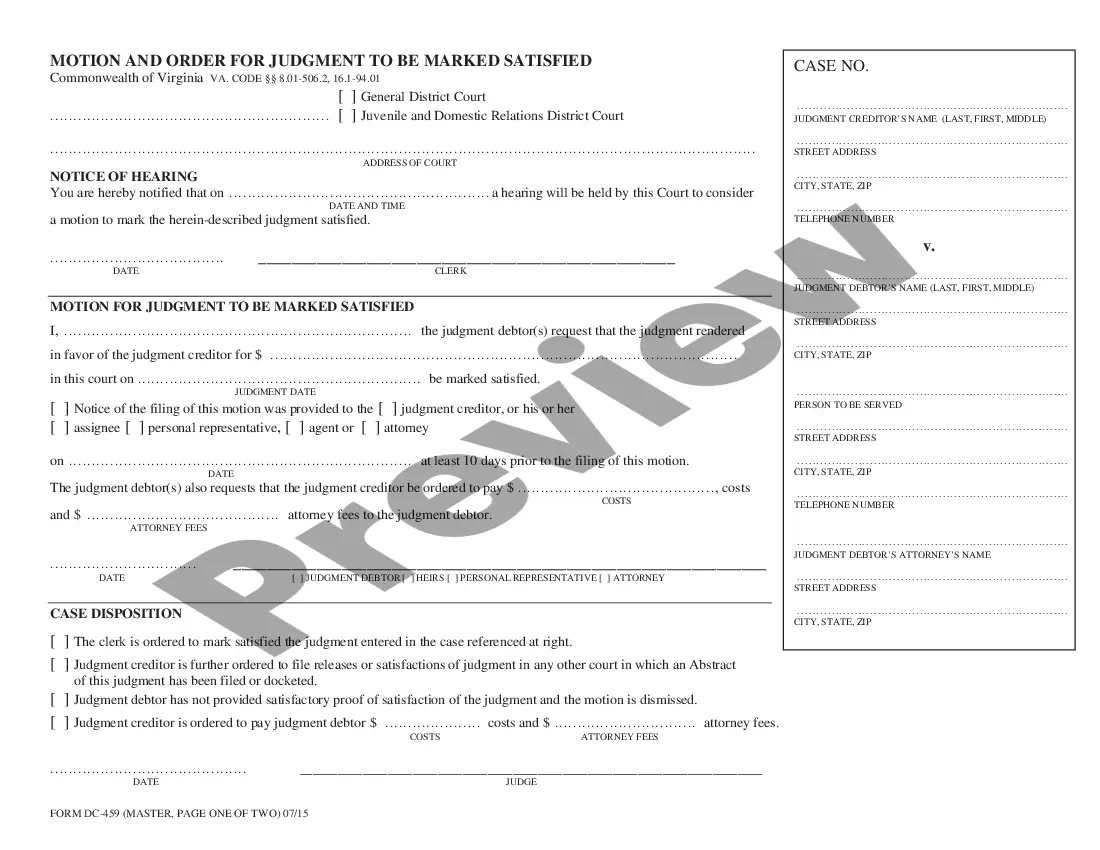
The Virginia Satisfaction of Judgment is a legal document that indicates a judgment has been fully paid, including any fees, costs, and interest. This form officially acknowledges that the judgment has been satisfied and directs the appropriate court to mark it as paid in full. It serves a vital role in closing out legal claims and distinguishes itself from other forms by focusing specifically on the acknowledgment of judgment satisfaction in Virginia.
Main sections of this form
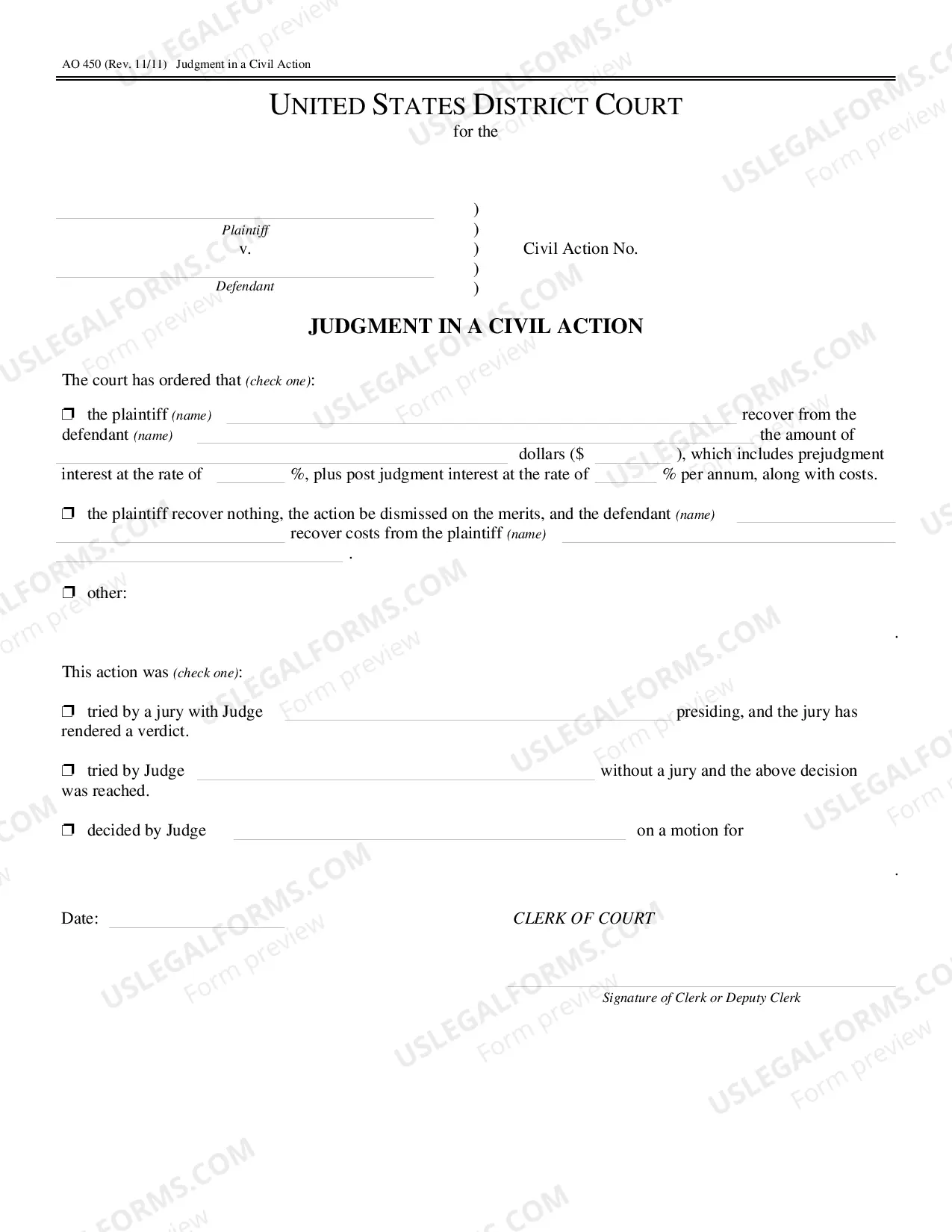
- Identification of the court and parties involved in the case.
- Details of the original judgment, including amount and date.
- Acknowledgment of full payment of the judgment and any associated costs.
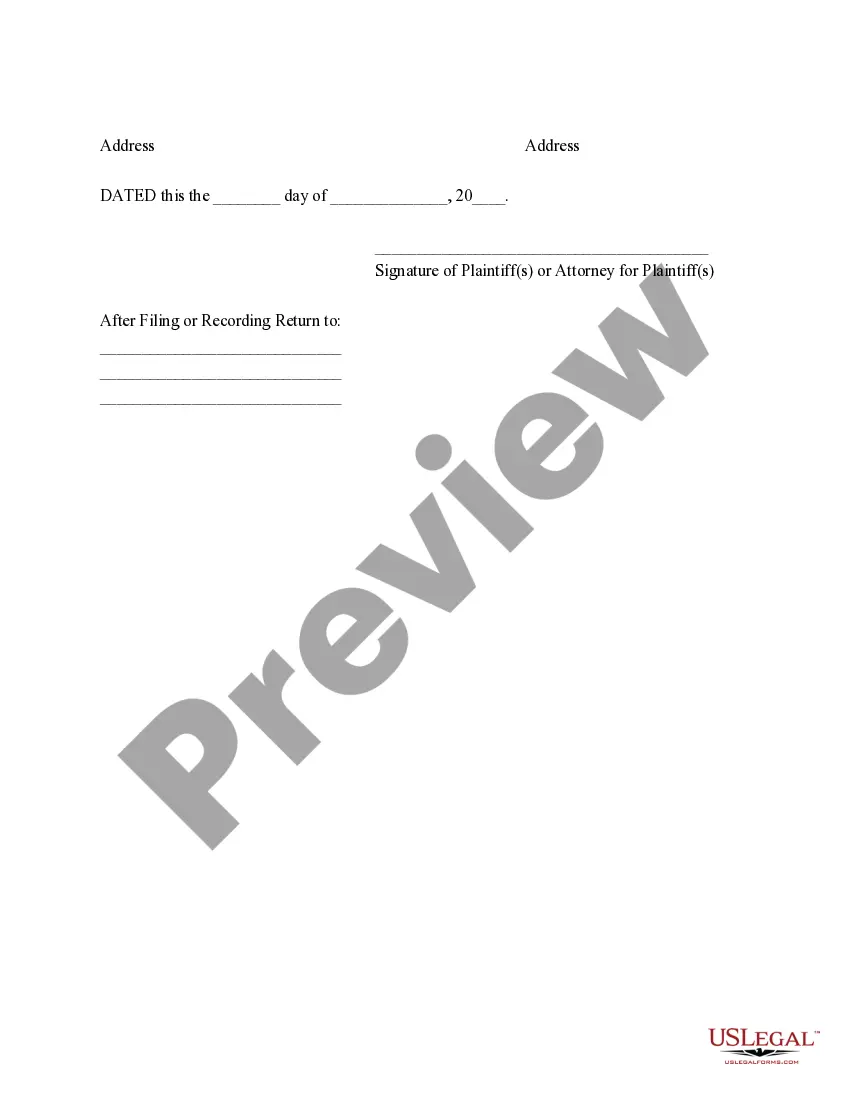
- Authorized signature of the plaintiff or attorney, affirming the satisfaction.
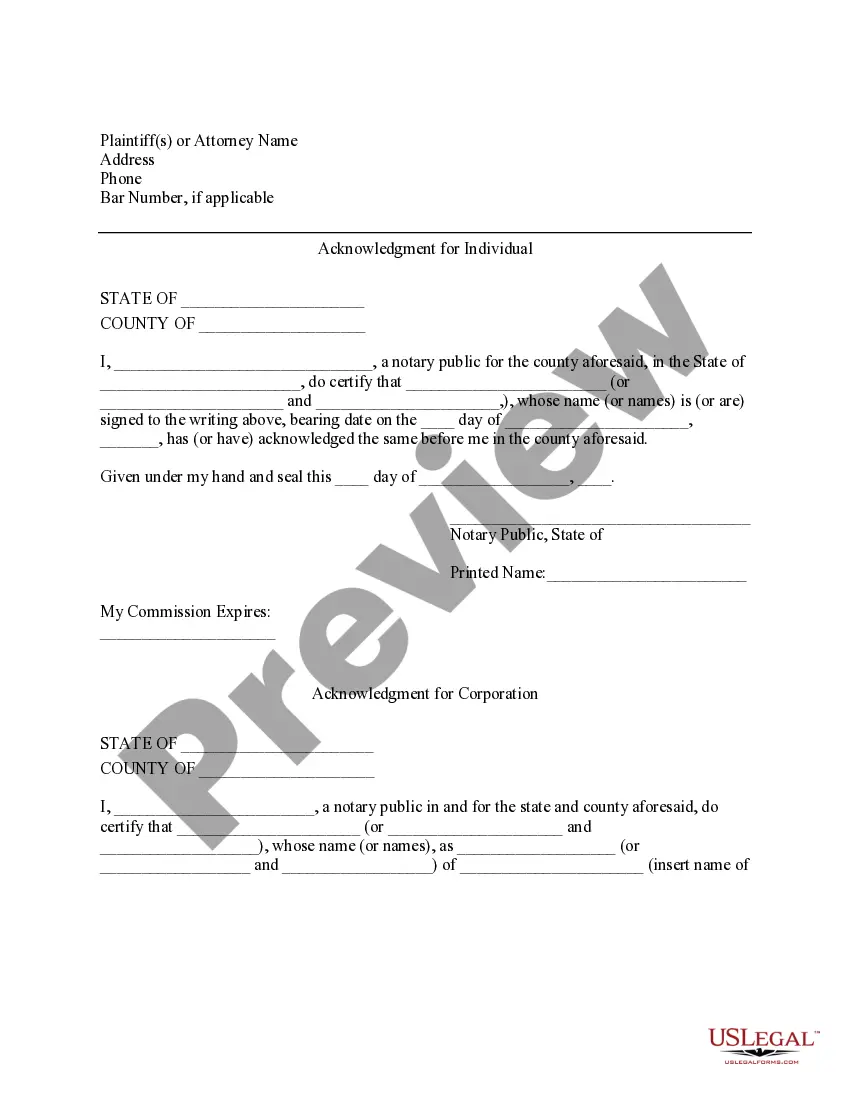
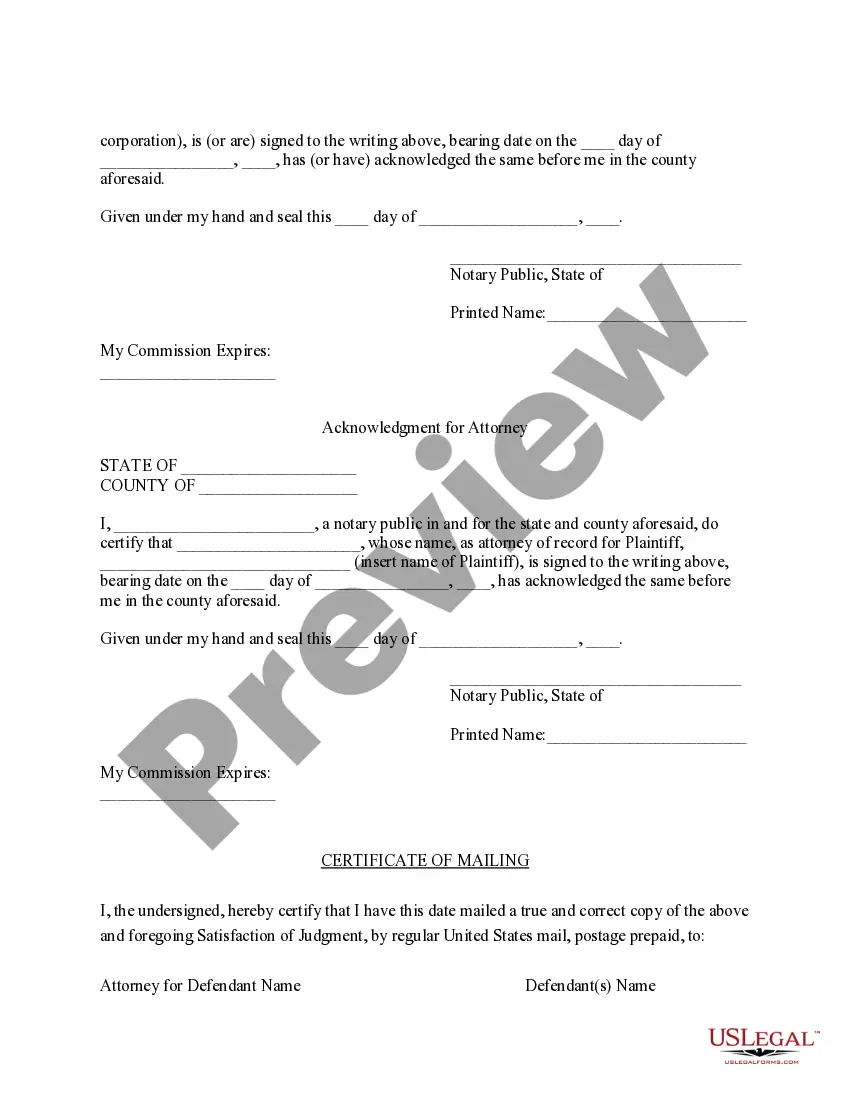
- Notarization section for verification of the signature.
- Certificate of mailing to ensure notification to the defendant.

When this form is needed
This form is needed when a court judgment has been paid off in full by the debtor. It is typically used by the plaintiff or creditor once they have received all amounts due, allowing them to formally notify the court and the opposing party that the debt obligations have been fulfilled. This process helps clear the debtor's record and confirms no further legal action can be taken regarding that judgment.
Who needs this form
- Plaintiffs or creditors seeking to acknowledge full payment of a judgment.
- Attorneys representing a plaintiff in a judgment recovery case.
- Debtors wishing to ensure that their judgment is recorded as satisfied.
How to complete this form
- Identify the correct court and fill in the relevant case details, including parties involved and cause number.
- Specify the total amount of the judgment, including any fees or costs if applicable.
- Provide the date on which the judgment was rendered.
- Sign the form as the plaintiff or attorney, ensuring your signature is notarized.
- Mail a copy of the satisfaction to the defendant and keep a record of the mailing.
Does this document require notarization?
This form needs to be notarized to ensure legal validity. US Legal Forms provides secure online notarization powered by Notarize, allowing you to complete the process through a verified video call, available anytime.
Get your form ready online
Our built-in tools help you complete, sign, share, and store your documents in one place.
Make edits, fill in missing information, and update formatting in US Legal Forms—just like you would in MS Word.
Download a copy, print it, send it by email, or mail it via USPS—whatever works best for your next step.
Sign and collect signatures with our SignNow integration. Send to multiple recipients, set reminders, and more. Go Premium to unlock E-Sign.
If this form requires notarization, complete it online through a secure video call—no need to meet a notary in person or wait for an appointment.
We protect your documents and personal data by following strict security and privacy standards.

Make edits, fill in missing information, and update formatting in US Legal Forms—just like you would in MS Word.

Download a copy, print it, send it by email, or mail it via USPS—whatever works best for your next step.

Sign and collect signatures with our SignNow integration. Send to multiple recipients, set reminders, and more. Go Premium to unlock E-Sign.

If this form requires notarization, complete it online through a secure video call—no need to meet a notary in person or wait for an appointment.

We protect your documents and personal data by following strict security and privacy standards.
Avoid these common issues
- Failing to include all relevant case details, such as the cause number.
- Not obtaining a notarization when required.
- Omitting the certificate of mailing after sending to the defendant.
Why complete this form online
- Convenient access to the form allows for quick completion.
- Easily editable templates ensure accuracy before finalizing.
- Reliability in having a legally vetted document prepared by attorneys.
Looking for another form?
Form popularity
FAQ
The Virginia Satisfaction of Judgment is a standard Civil Procedure form used to acknowledge that a judgment has been fully paid, including any fees, costs, and interest. It directs the court to mark the judgment as paid in full and serves to close the case, notifying the opposing party that the obligation has been satisfied.
After a judgment is entered in Virginia, the creditor may pursue collection until the payoff is received. Once paid in full, the plaintiff should file the Virginia Satisfaction of Judgment to formally acknowledge satisfaction, instruct the court to record that the judgment is satisfied, and complete the process with the required details and signatures.
To fill out the form, identify the court and parties, provide the original judgment amount and date, and confirm that payment in full has been made. Then sign the form (or have an attorney sign), have it notarized, and attach a certificate of mailing to show that the defendant received notice.
After signing, arrange for notarization and submit the form to the court that entered the judgment. Ensure the certificate of mailing is completed to prove notice to the defendant. This submission officially records the judgment as satisfied and helps prevent further collection actions.
The certificate of mailing shows that notice of the judgment’s satisfaction was mailed to the defendant, confirming they were informed of the payoff. Including this certificate helps verify proper notice and supports the court’s update of the record to reflect the satisfied judgment.
Virginia Satisfaction of Judgment specifically records that the judgment has been paid in full and directs the court to mark it as satisfied. It also requires notarization and a certificate of mailing, features that distinguish it from more general judgment forms that do not document payment or trigger a court update.