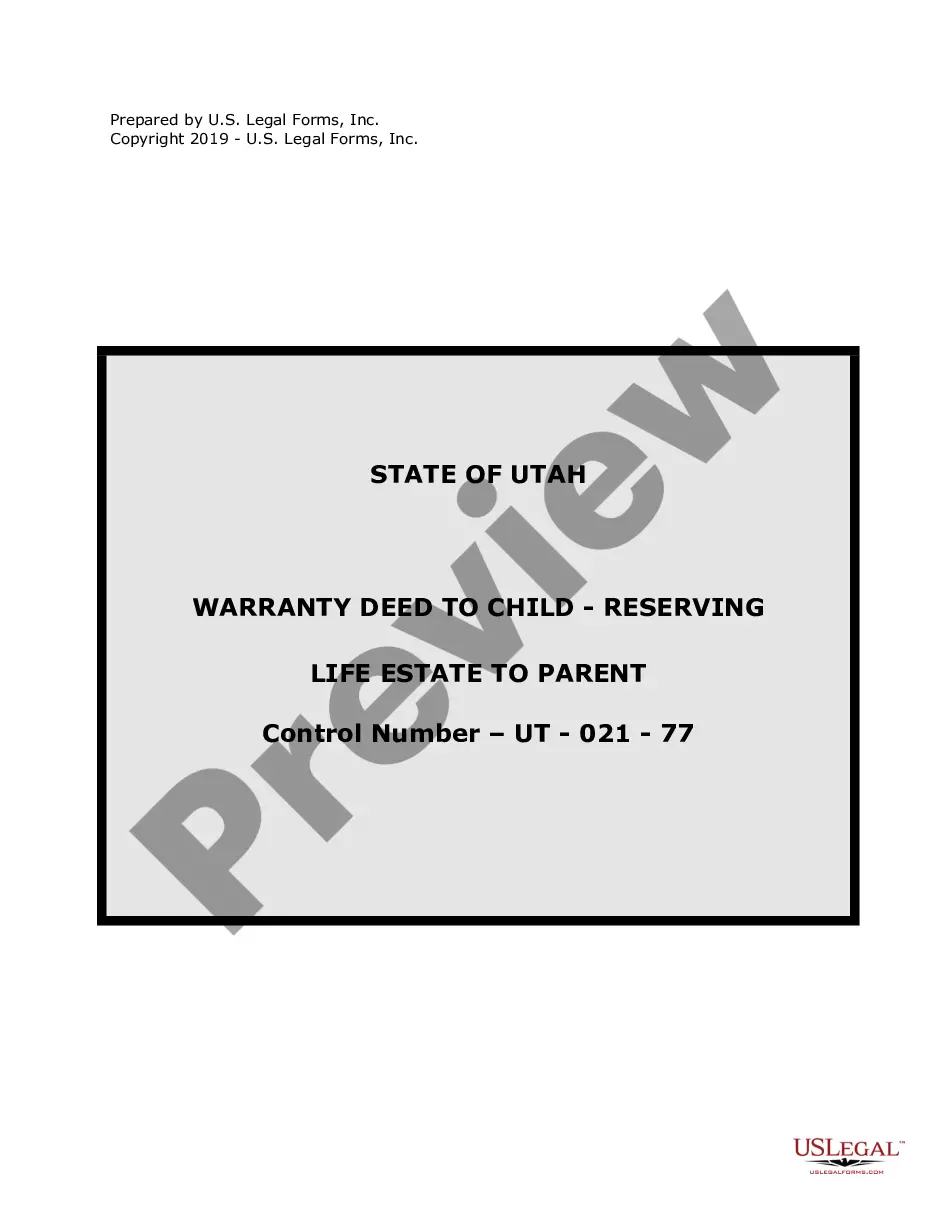
Utah Warranty Deed for Parents to Child with Reservation of Life Estate
What this document covers
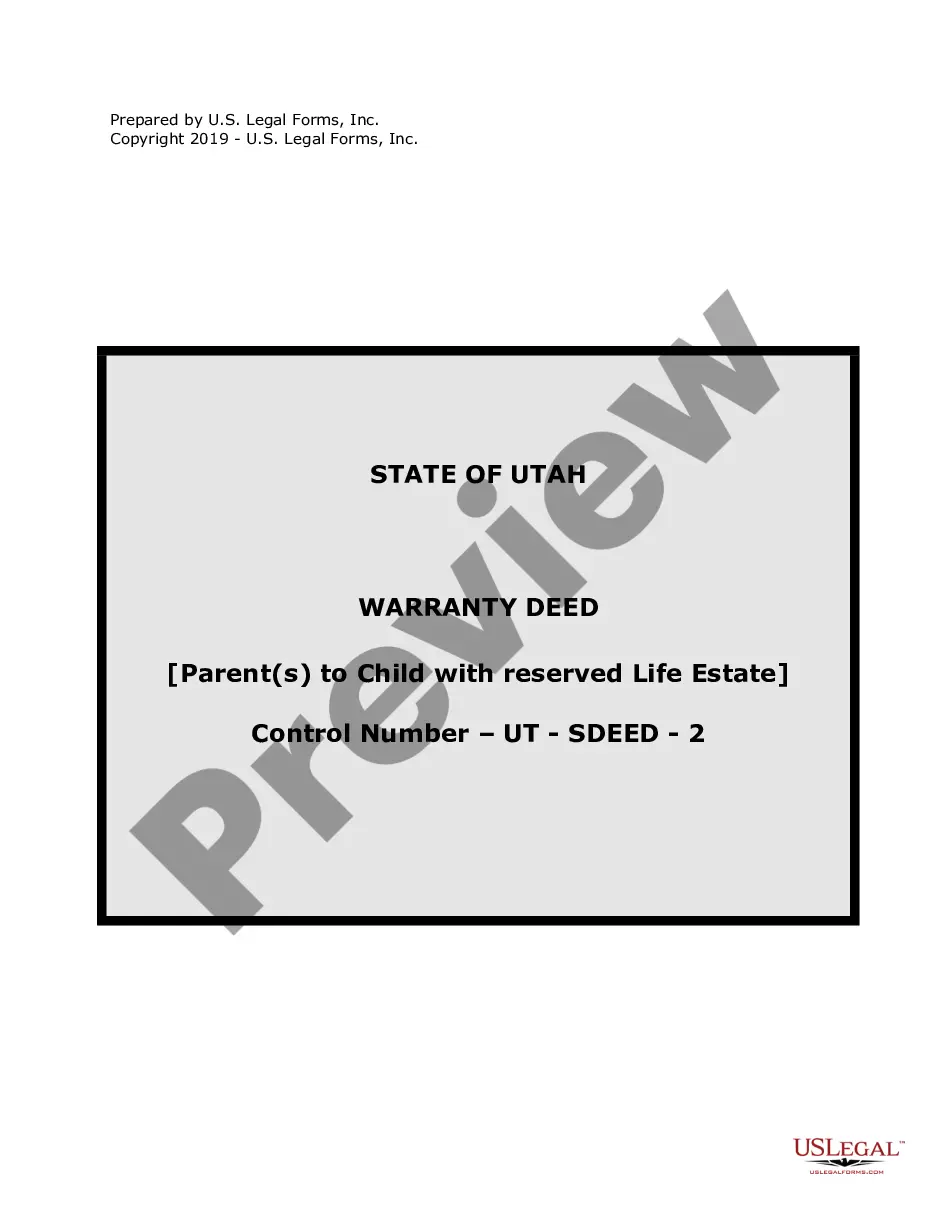
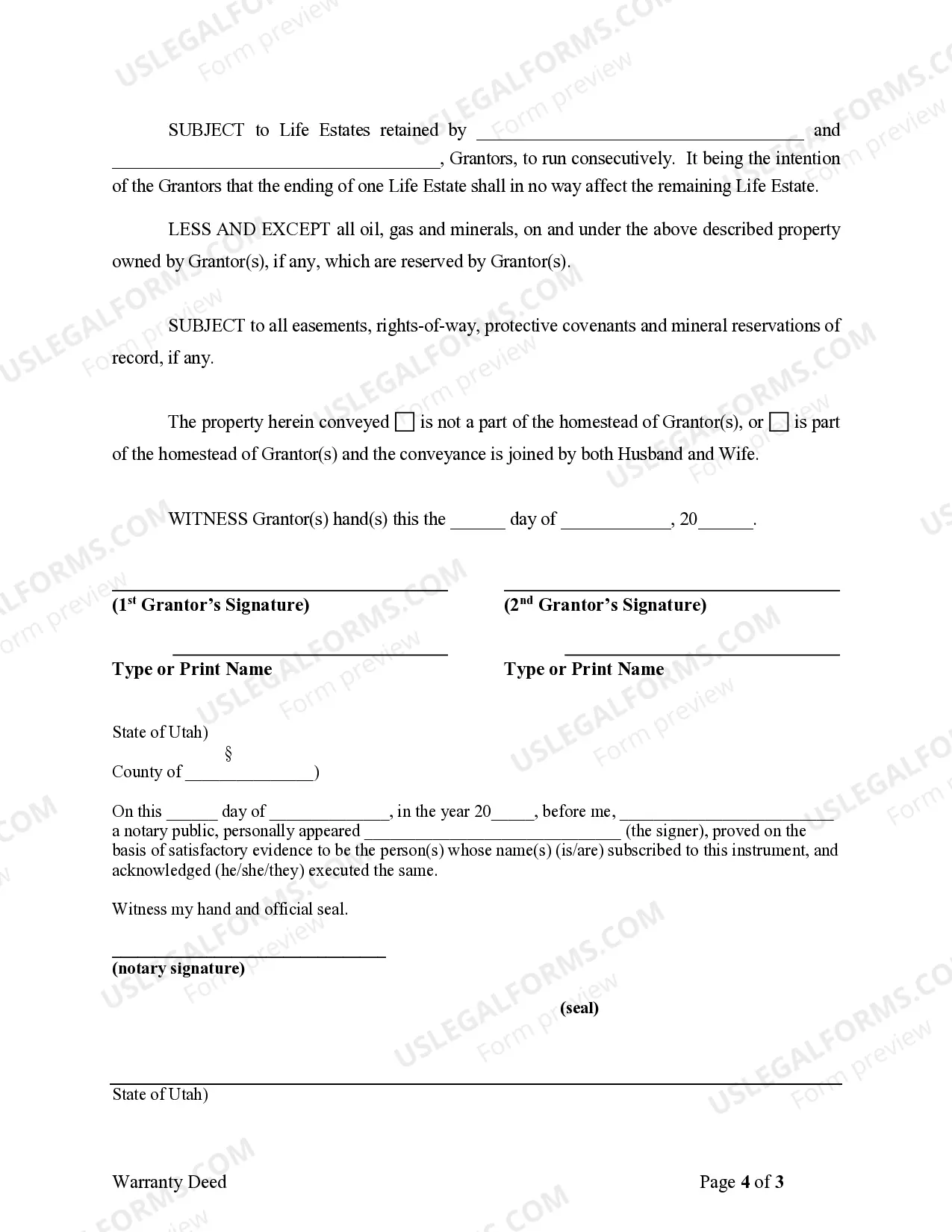
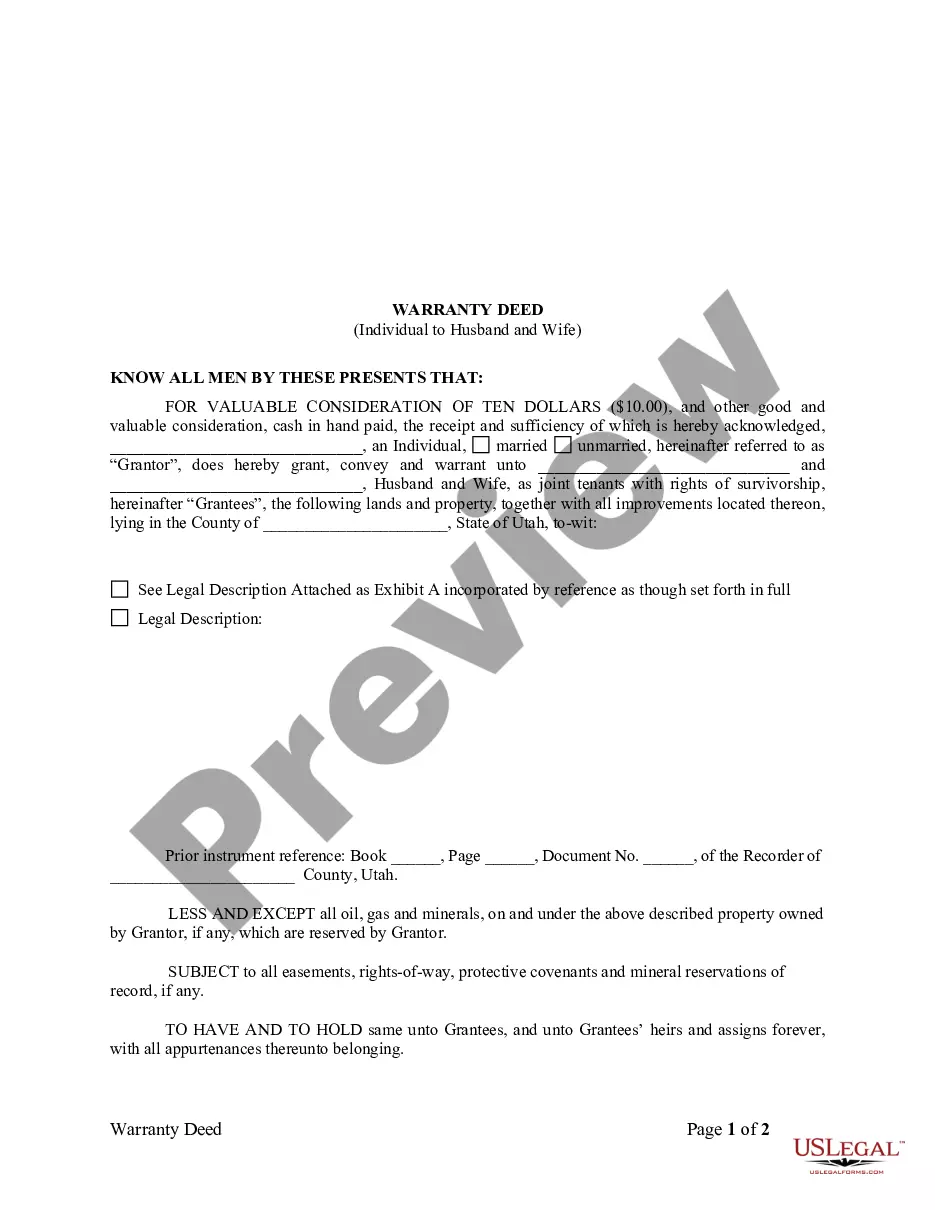
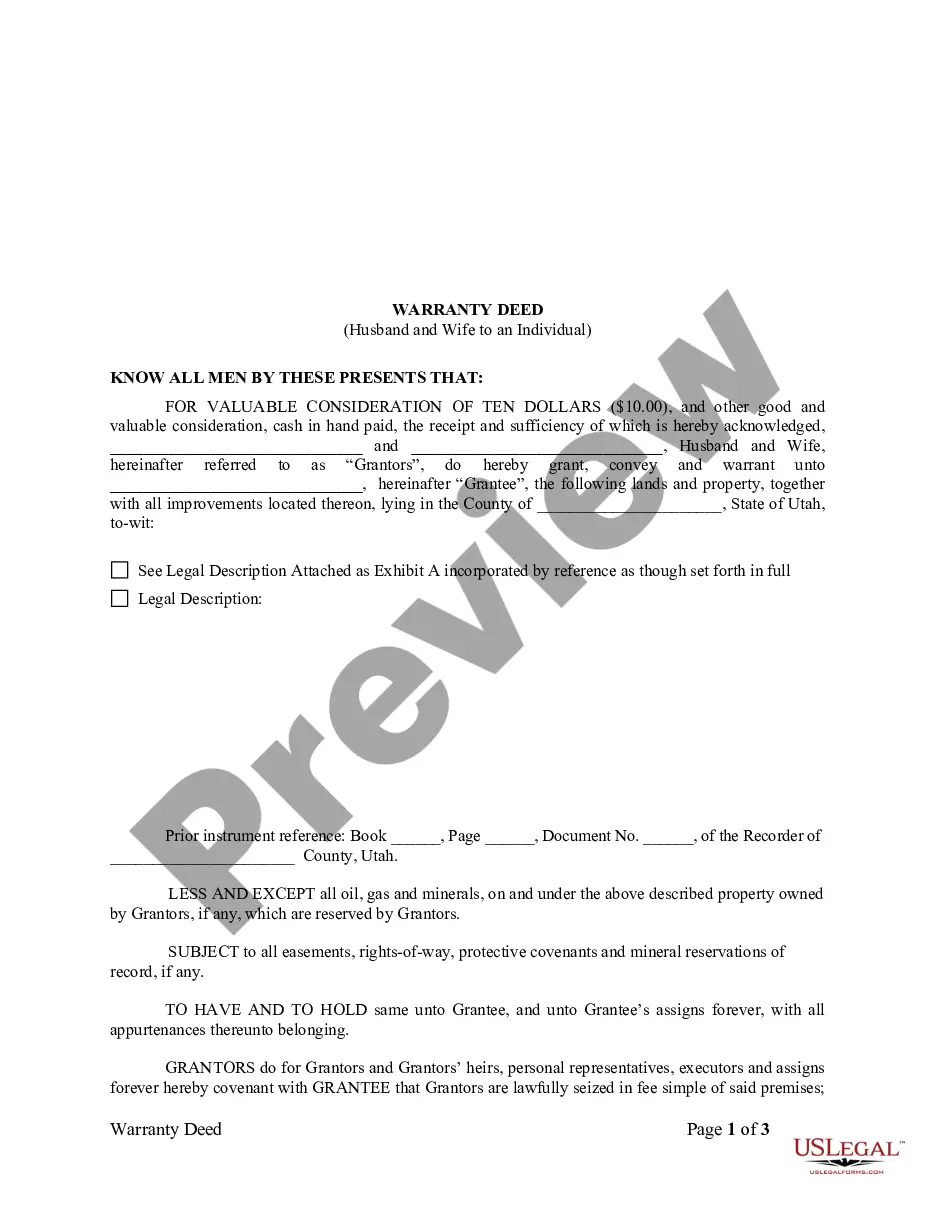
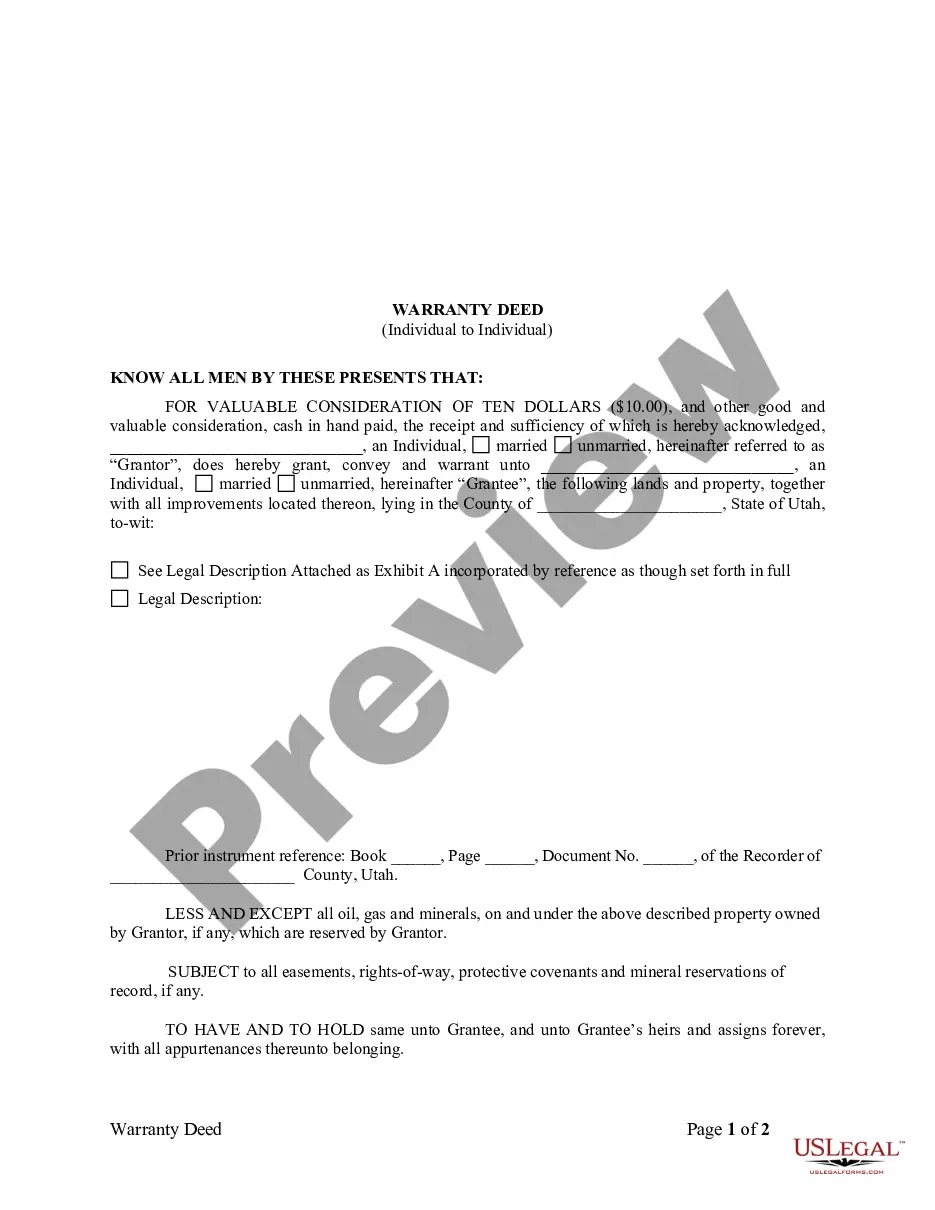
This Warranty Deed for Parents to Child with Reservation of Life Estate is a legal document that transfers ownership of property from parents to their child while allowing the parents to remain in the property for the rest of their lives. This form is distinct from other deeds, as it combines a transfer of ownership with a reservation that specifically protects the grantors' right to live in the property until their death.
Main sections of this form
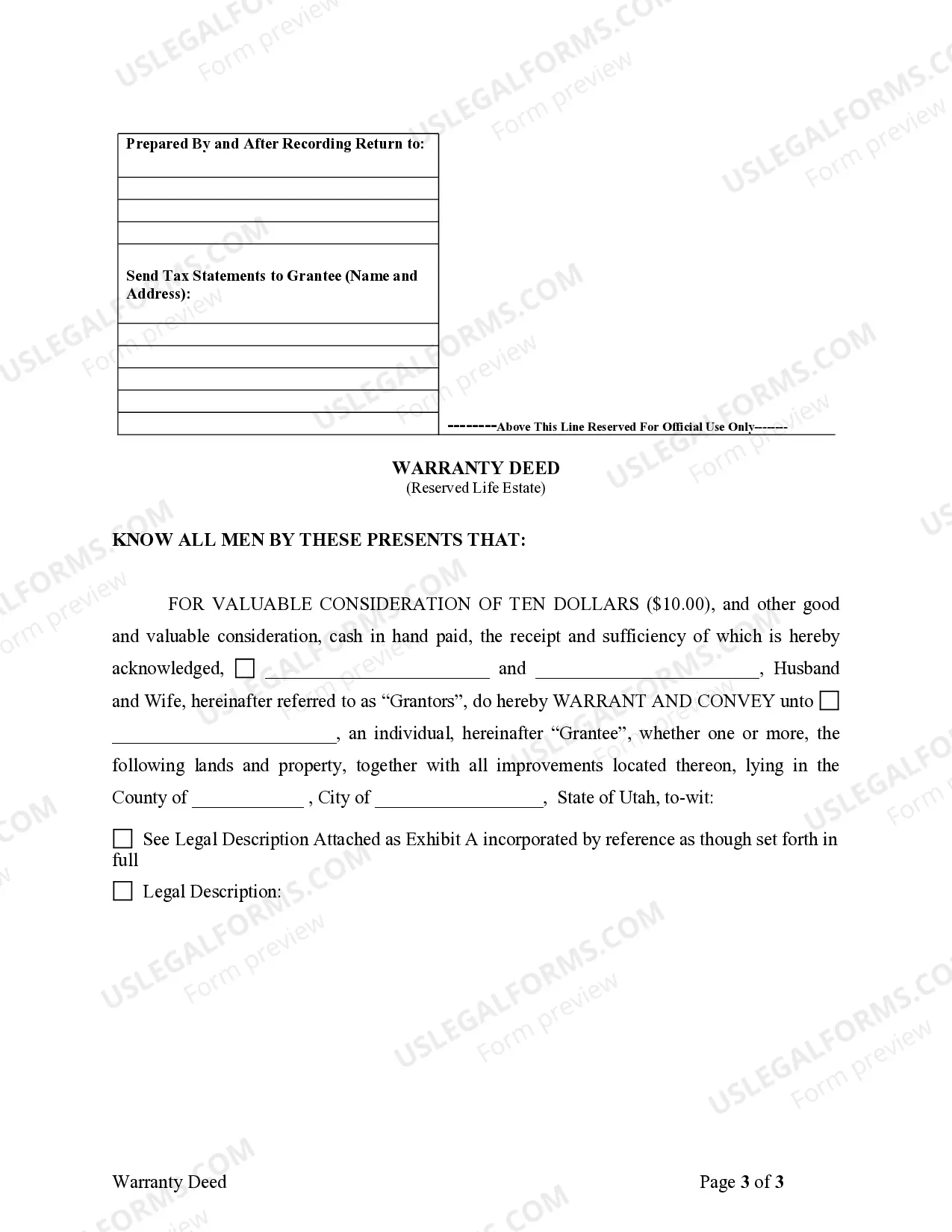
- Grantor(s): Names and details of the parent(s) transferring the property.
- Grantee: Name and details of the child receiving the property.
- Property description: Detailed legal description of the property being transferred.
- Reservation clause: Specifies the reservation of a life estate for the grantor(s).
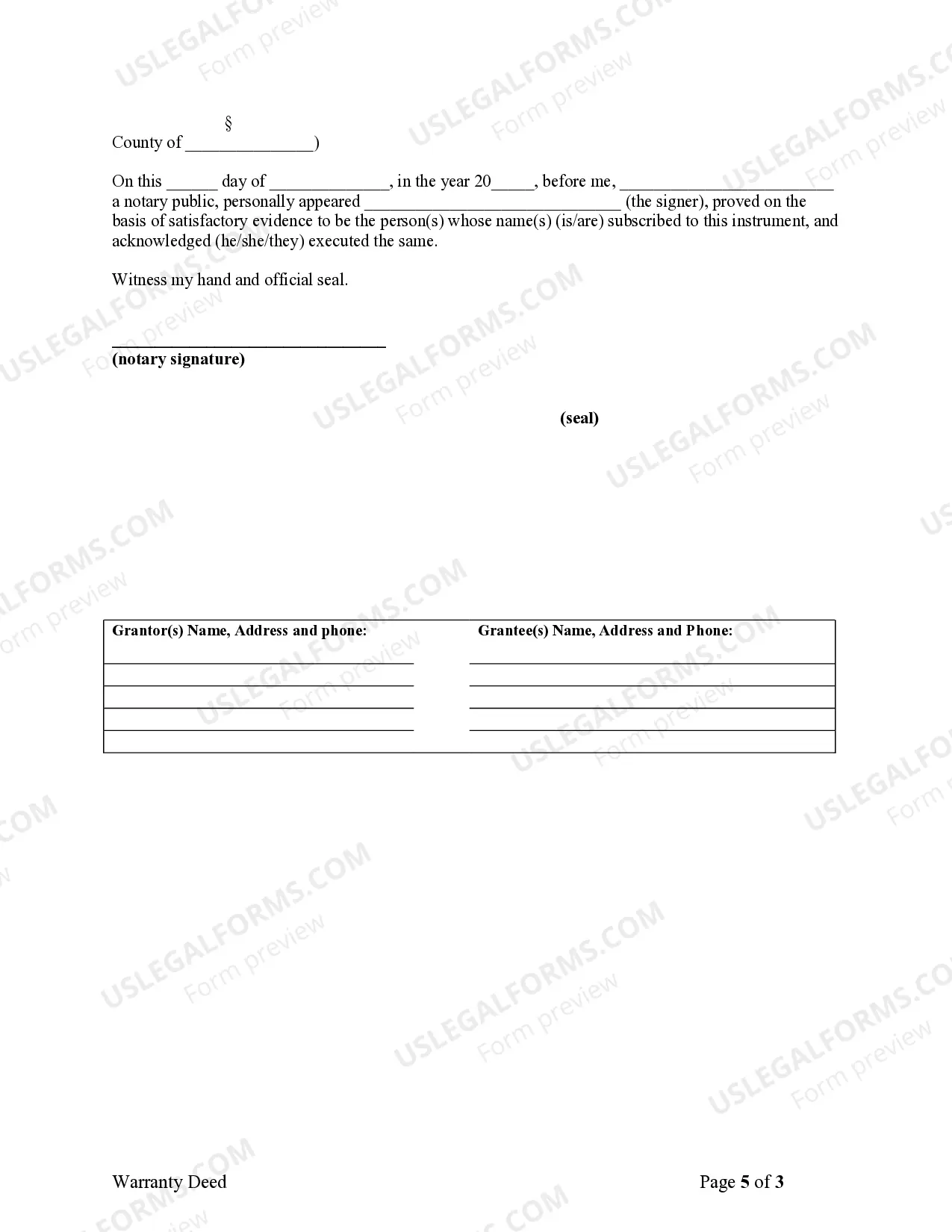
- Signatures: Areas for grantor(s) to sign and date the document.
When to use this form
This form is typically used when parents wish to transfer property ownership to their child while maintaining the right to live in the property for their lifetime. It is useful in estate planning to avoid probate issues and facilitate the transfer of family property without immediate tax implications.
Intended users of this form
- Parents who want to transfer property to their child while retaining the right to reside there.
- Families looking to simplify estate planning and avoid probate.
- Individuals seeking to clarify property ownership and rights within the family.
Completing this form step by step
- Identify the parties involved: Enter the names of the grantor(s) (parents) and grantee (child).
- Specify the property: Fill in the legal description of the property being transferred.
- Detail life estate reservation: Clearly indicate the reservation of life estate for the grantor(s).
- Enter the date: Fill in the date of execution of the deed.
- Sign the document: Ensure all grantor(s) sign the deed in the appropriate place.
Does this form need to be notarized?
This form does not typically require notarization unless specified by local law. However, having the document notarized can add an additional layer of legal assurance and is a good practice.
Get your form ready online
Our built-in tools help you complete, sign, share, and store your documents in one place.
Make edits, fill in missing information, and update formatting in US Legal Forms—just like you would in MS Word.
Download a copy, print it, send it by email, or mail it via USPS—whatever works best for your next step.
Sign and collect signatures with our SignNow integration. Send to multiple recipients, set reminders, and more. Go Premium to unlock E-Sign.
If this form requires notarization, complete it online through a secure video call—no need to meet a notary in person or wait for an appointment.
We protect your documents and personal data by following strict security and privacy standards.

Make edits, fill in missing information, and update formatting in US Legal Forms—just like you would in MS Word.

Download a copy, print it, send it by email, or mail it via USPS—whatever works best for your next step.

Sign and collect signatures with our SignNow integration. Send to multiple recipients, set reminders, and more. Go Premium to unlock E-Sign.

If this form requires notarization, complete it online through a secure video call—no need to meet a notary in person or wait for an appointment.

We protect your documents and personal data by following strict security and privacy standards.
Typical mistakes to avoid
- Failing to include a complete legal description of the property.
- Not signing the deed in the presence of witnesses, if required.
- Forgetting to explicitly reserve the life estate in the document.
Benefits of using this form online
- Convenient access to legally vetted forms that can be completed at home.
- Edit and customize the form for your specific needs before printing.
- Quick download allows for immediate use, saving time and effort.
Looking for another form?
Form popularity
FAQ
A Utah (UT) quitclaim deed is a legal document that allows a property owner to transfer real property to a buyer. It names the buyer and seller, the property, and any terms, interest, or conditions conveyed in the transfer of property.
A warranty deed, also known as a general warranty deed, is a legal real estate document between the seller (grantor) and the buyer (grantee). The deed protects the buyer by pledging that the seller holds clear title to the property and there are no encumbrances, outstanding liens, or mortgages against it.
The two types of life estates are the conventional and the legal life estate. the grantee, the life tenant. Following the termination of the estate, rights pass to a remainderman or revert to the previous owner.
When a person dies, beneficiaries might learn that the decedent made a deed that conflicts with the specific wording in his will. Generally, a deed will override the will. However, which legal document prevails also depends on state property laws and whether the state has adopted the Uniform Probate Code.
The drawback, quite simply, is that quitclaim deeds offer the grantee/recipient no protection or guarantees whatsoever about the property or their ownership of it. Maybe the grantor did not own the property at all, or maybe they only had partial ownership.
A life estate deed allows you to transfer property while reserving an interest during your lifetime or during the lifetime of someone else. Once the person who holds the life estate passes away, the Grantee fully owns the property.
This life estate deed is a document that transfers ownership of real property, while reserving access and use of the property for the duration of the grantor's life. It allows the original owner (grantor) to remain on the premises with full access to and benefits from the property.
Reservation of the present interest allows the owner to retain ownership for a period of time measured by the life of one or more individuals, by a term of years, or by a combination of the two.
A person owns property in a life estate only throughout their lifetime. Beneficiaries cannot sell property in a life estate before the beneficiary's death. One benefit of a life estate is that property can pass when the life tenant dies without being part of the tenant's estate.