Utah Bankruptcy Guide and Forms Package for Chapters 7 or 13
What is this form?
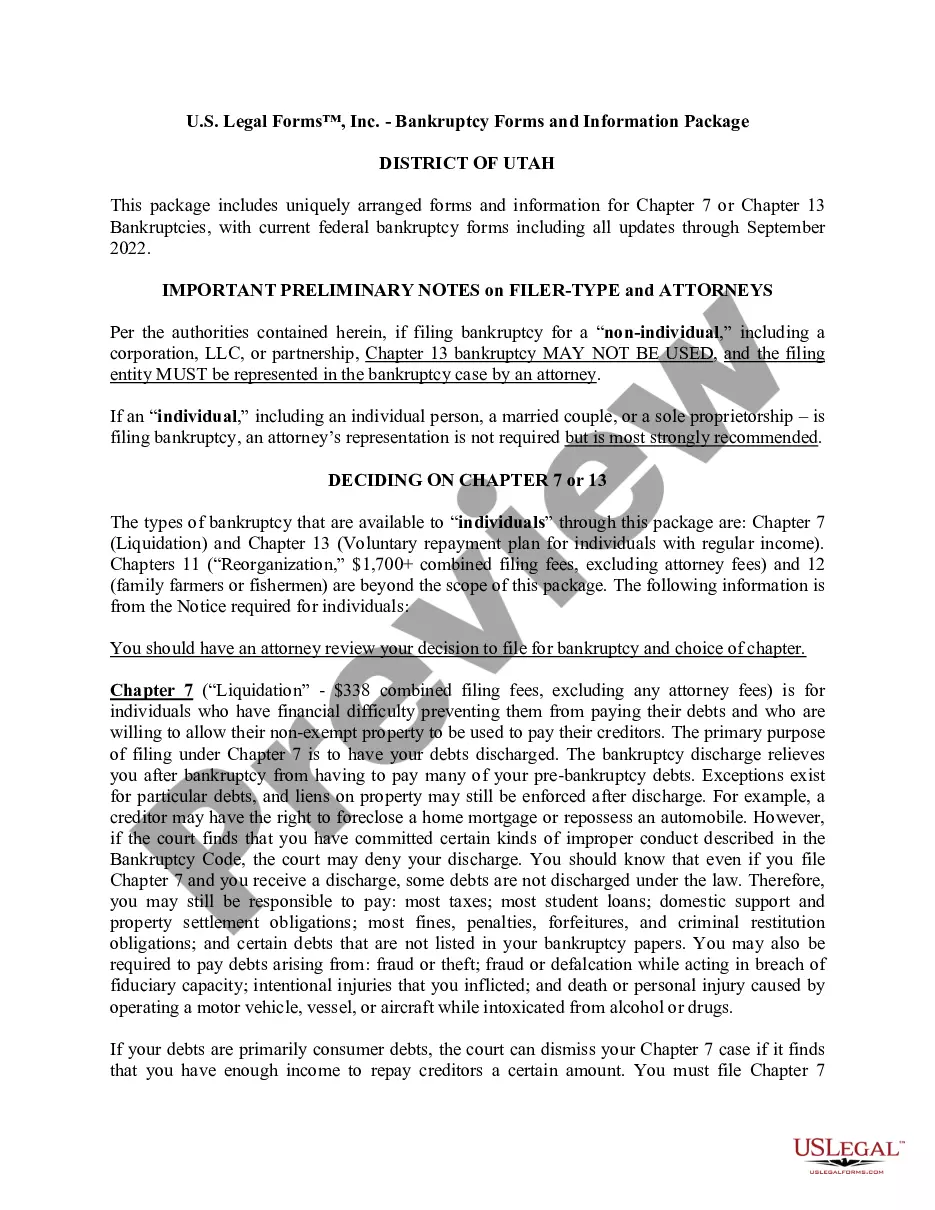
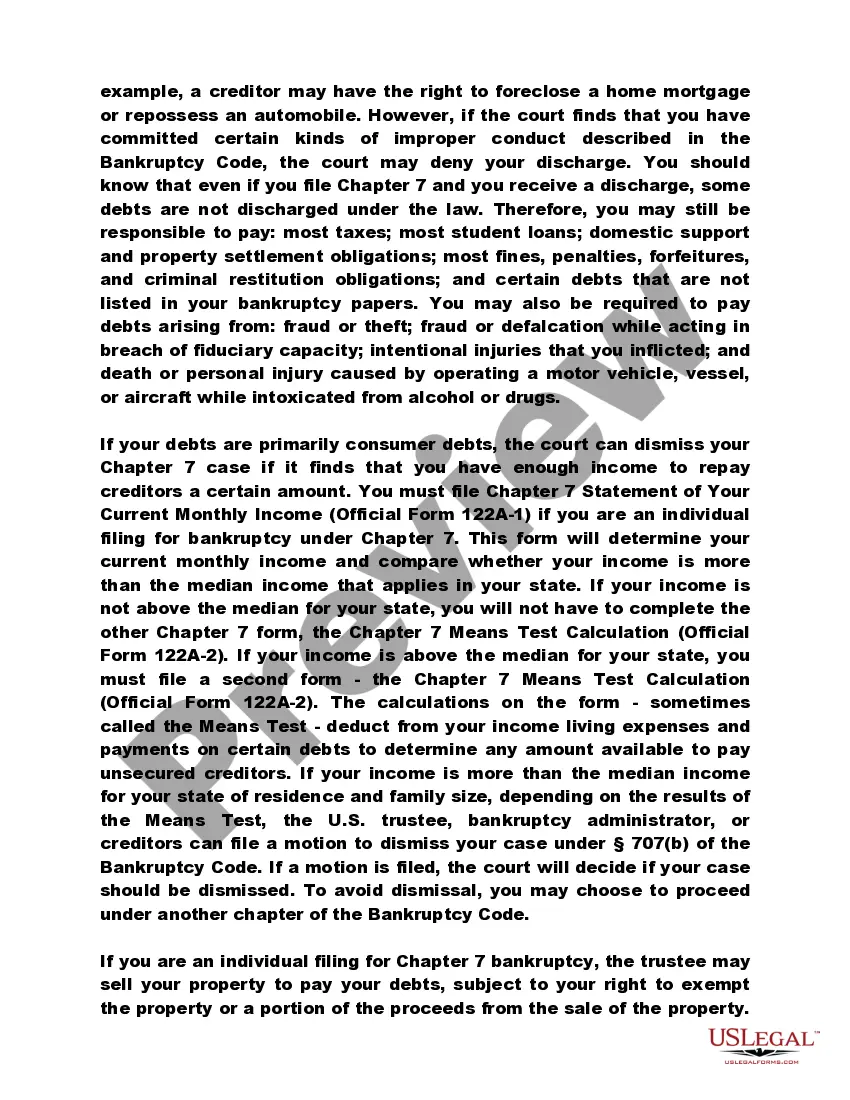
The Utah Bankruptcy Guide and Forms Package for Chapters 7 or 13 is a comprehensive set of resources designed for individuals considering filing for bankruptcy. This package provides detailed instructions and essential forms for both Chapter 7 and Chapter 13 bankruptcies in Utah, making it easier to navigate the filing process while ensuring compliance with state-specific legal requirements.
What’s included in this form
- Chapter 7 Statement of Your Current Monthly Income (Official Form 122A-1)
- Chapter 7 Means Test Calculation (Official Form 122A-2)
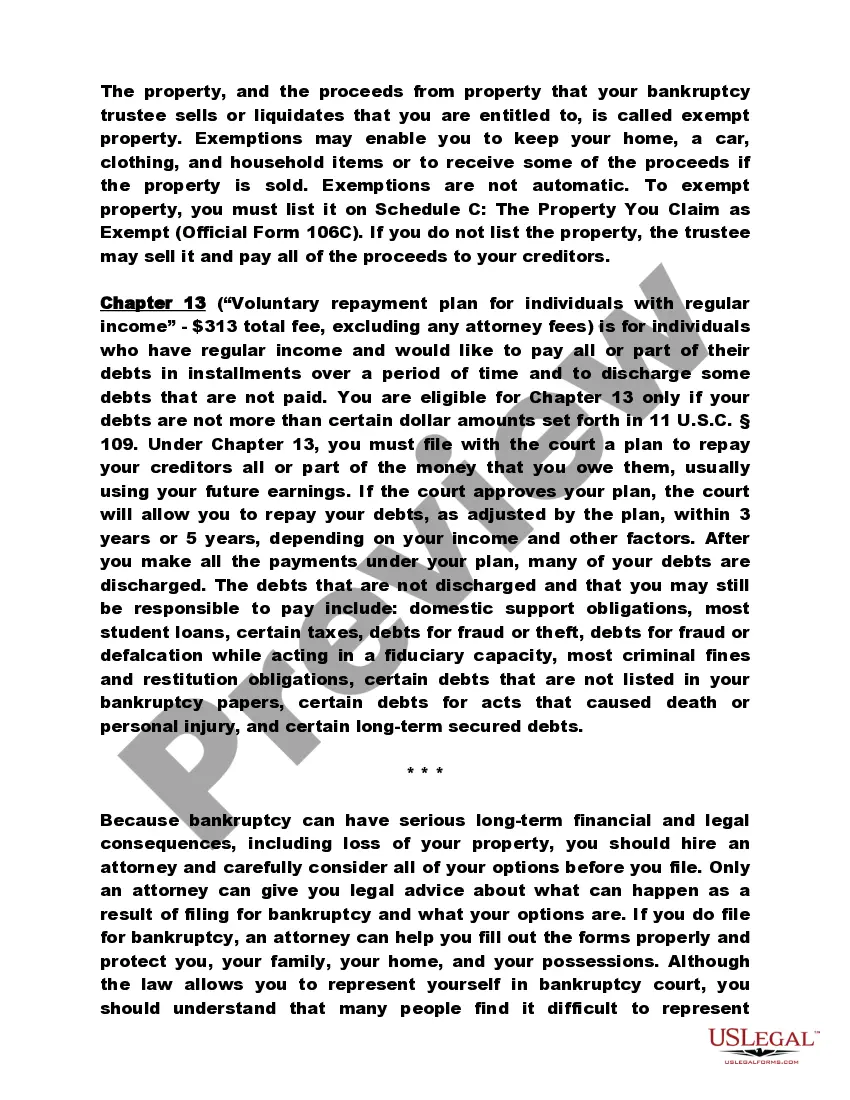
- Schedule C: The Property You Claim as Exempt (Official Form 106C)
- Chapter 13 Repayment Plan Template
- Detailed instructions for completing each form
When to use this form
This form package is used when an individual is facing financial hardship and is considering filing for bankruptcy under either Chapter 7 or Chapter 13. It is essential to consult with an attorney regarding the choice of chapter and to ensure all legal requirements are fulfilled based on personal circumstances.
Who this form is for
- Individuals looking to file for Chapter 7 bankruptcy due to overwhelming debt.
- Individuals with consistent income who prefer Chapter 13 to repay debts over time.
- Married couples filing jointly for bankruptcy relief.
- Sole proprietors seeking personal bankruptcy protection.
Steps to complete this form
- Determine your eligibility for Chapter 7 or Chapter 13 bankruptcy.
- Complete the Chapter 7 Statement of Your Current Monthly Income to assess your income level.
- If applicable, fill out the Chapter 7 Means Test Calculation to determine if you qualify for Chapter 7.
- Draft your Chapter 13 Repayment Plan, detailing how you intend to repay your debts.
- List any exempt property on Schedule C to protect your assets during the bankruptcy process.
Does this document require notarization?
Notarization is generally not required for this form. However, certain states or situations might demand it. You can complete notarization online through US Legal Forms, powered by Notarize, using a verified video call available anytime.
Get your form ready online
Our built-in tools help you complete, sign, share, and store your documents in one place.
Make edits, fill in missing information, and update formatting in US Legal Forms—just like you would in MS Word.
Download a copy, print it, send it by email, or mail it via USPS—whatever works best for your next step.
Sign and collect signatures with our SignNow integration. Send to multiple recipients, set reminders, and more. Go Premium to unlock E-Sign.
If this form requires notarization, complete it online through a secure video call—no need to meet a notary in person or wait for an appointment.
We protect your documents and personal data by following strict security and privacy standards.

Make edits, fill in missing information, and update formatting in US Legal Forms—just like you would in MS Word.

Download a copy, print it, send it by email, or mail it via USPS—whatever works best for your next step.

Sign and collect signatures with our SignNow integration. Send to multiple recipients, set reminders, and more. Go Premium to unlock E-Sign.

If this form requires notarization, complete it online through a secure video call—no need to meet a notary in person or wait for an appointment.

We protect your documents and personal data by following strict security and privacy standards.
Typical mistakes to avoid
- Failing to list all debts and assets accurately on bankruptcy forms.
- Not completing the Means Test Calculation when required.
- Forgetting to list exempt property on Schedule C.
- Missing filing deadlines and court appearances.
Why complete this form online
- Convenient access to detailed bankruptcy forms and instructions from anywhere.
- Ability to edit forms easily to reflect your specific situation.
- Reliable resources drafted by licensed attorneys to ensure legal validity.
Legal use & context
- Filing for bankruptcy can lead to a discharge of debts under Chapter 7 or create a structured repayment plan under Chapter 13.
- Legal consultations are advised to navigate the complexities of bankruptcy law.
- The forms included are designed to meet the statutory requirements under Utah law.
Quick recap
- Understand the differences between Chapter 7 and Chapter 13 filings.
- Prepare necessary documentation before starting your forms.
- Ensure compliance with Utah-specific legal requirements during the filing process.
Legal terms and meanings
- Bankruptcy Discharge: A court order that eliminates certain debts.
- Exempt Property: Property that you can keep even after filing for bankruptcy.
- Means Test: A calculation used to determine eligibility for Chapter 7 bankruptcy based on income.
Looking for another form?
Form popularity
FAQ
In many cases, Chapter 7 bankruptcy is a better fit than Chapter 13 bankruptcy. For instance, Chapter 7 is quicker, many filers can keep all or most of their property, and filers don't pay creditors through a three- to five-year Chapter 13 repayment plan.
A Chapter 13 bankruptcy involves repaying some or all of your debt over a three- to- five-year period, while a Chapter 7 bankruptcy involves wiping out most of your debts without paying them back.In that way, a Chapter 13 may be better for your credit than a Chapter 7.
Chapter 11 bankruptcy works well for businesses and individuals whose debt exceeds the Chapter 13 bankruptcy limits. In most cases, Chapter 13 is the better choice for qualifying individuals and sole proprietors.
Key Takeaways. Chapter 7 bankruptcy doesn't require a repayment plan but does require you to liquidate or sell nonexempt assets to pay back creditors.Chapter 13 bankruptcy eliminates qualified debt through a repayment plan over a three- or five-year period.
B 101 Voluntary Petition for Individuals Filing for Bankruptcy. B 101A Initial Statement About an Eviction Judgment Against You (only if you have eviction judgment against you)
Six months of paycheck stubs. six months of bank statements. tax returns (the last two years) current investment and retirement statements. current mortgage and car loan statements. home and car valuations (printouts from online sources work)
A chapter 13 bankruptcy is also called a wage earner's plan. It enables individuals with regular income to develop a plan to repay all or part of their debts. Under this chapter, debtors propose a repayment plan to make installments to creditors over three to five years.
Chapter 13 Is Likely to Worsen Your Finances When your Chapter 13 case is dismissed, you are often in a far worse financial position. That's because the interest on your unpaid debts has continued to mount as you've struggled to make payments. And once you're out of bankruptcy protection, you have more debt than ever.
How soon can you file for Chapter 13 after Chapter 7 bankruptcy?You can file for a Chapter 13 before four years if no debts were discharged in the Chapter 7 filing, but if you had debts discharged in Chapter 7 and want to have debts discharged in Chapter 13, you must wait four years.