Utah Letter from Tenant to Landlord containing Notice of failure to return security deposit and demand for return
What is this form?
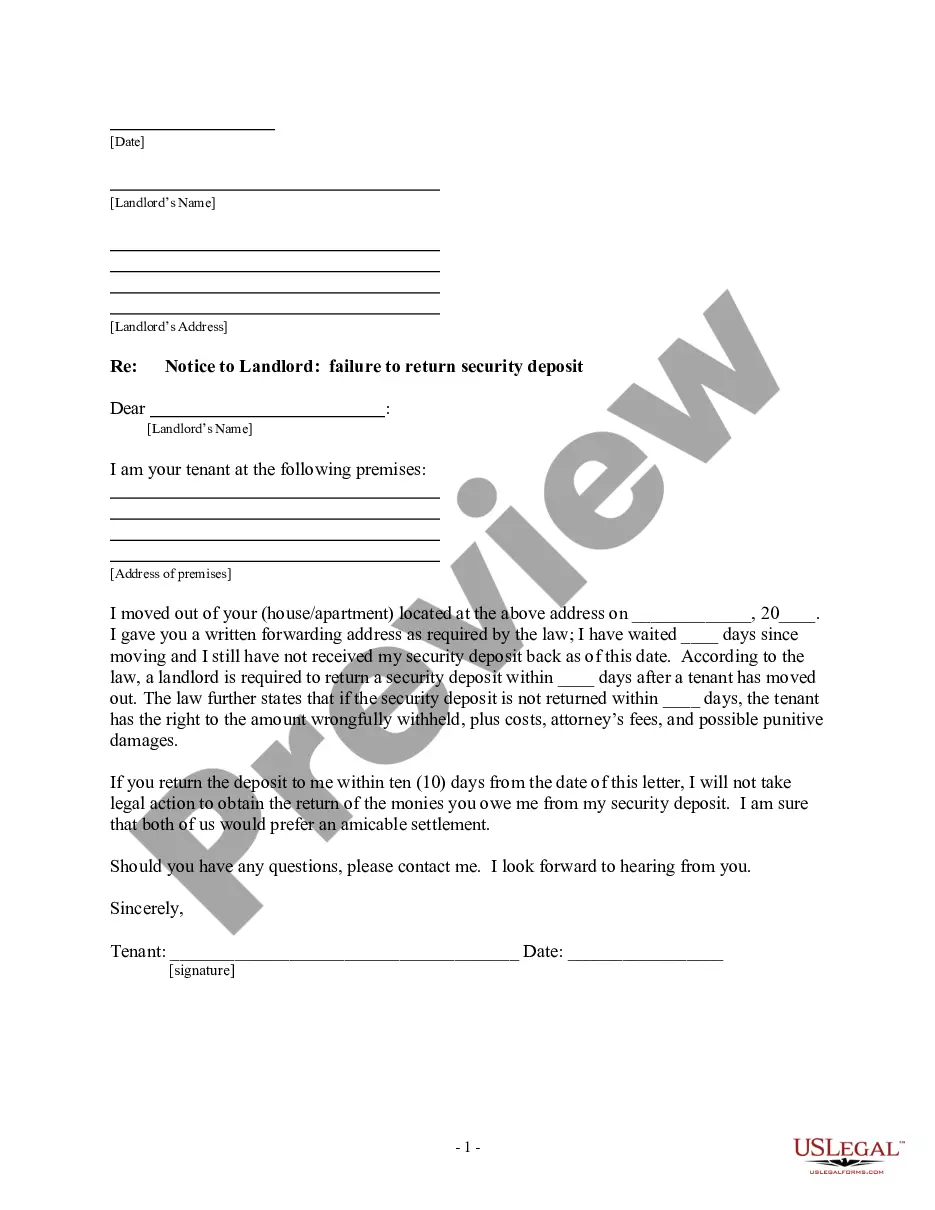
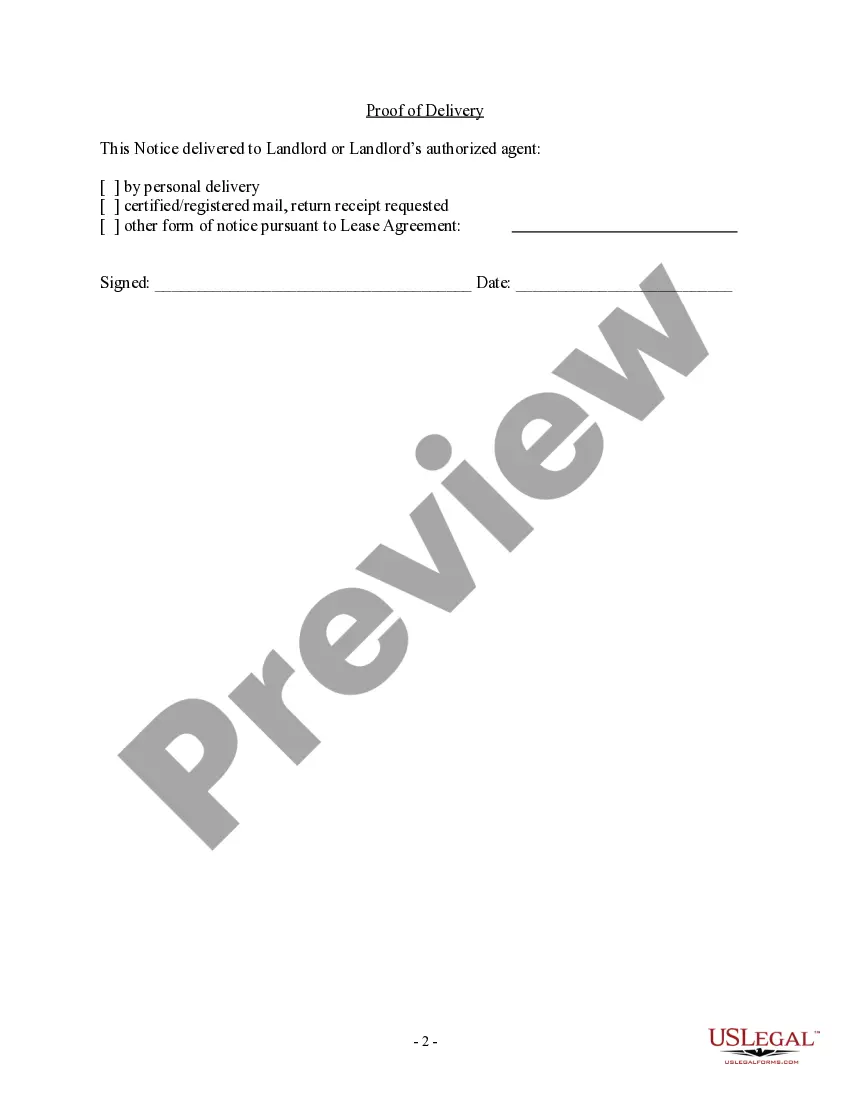
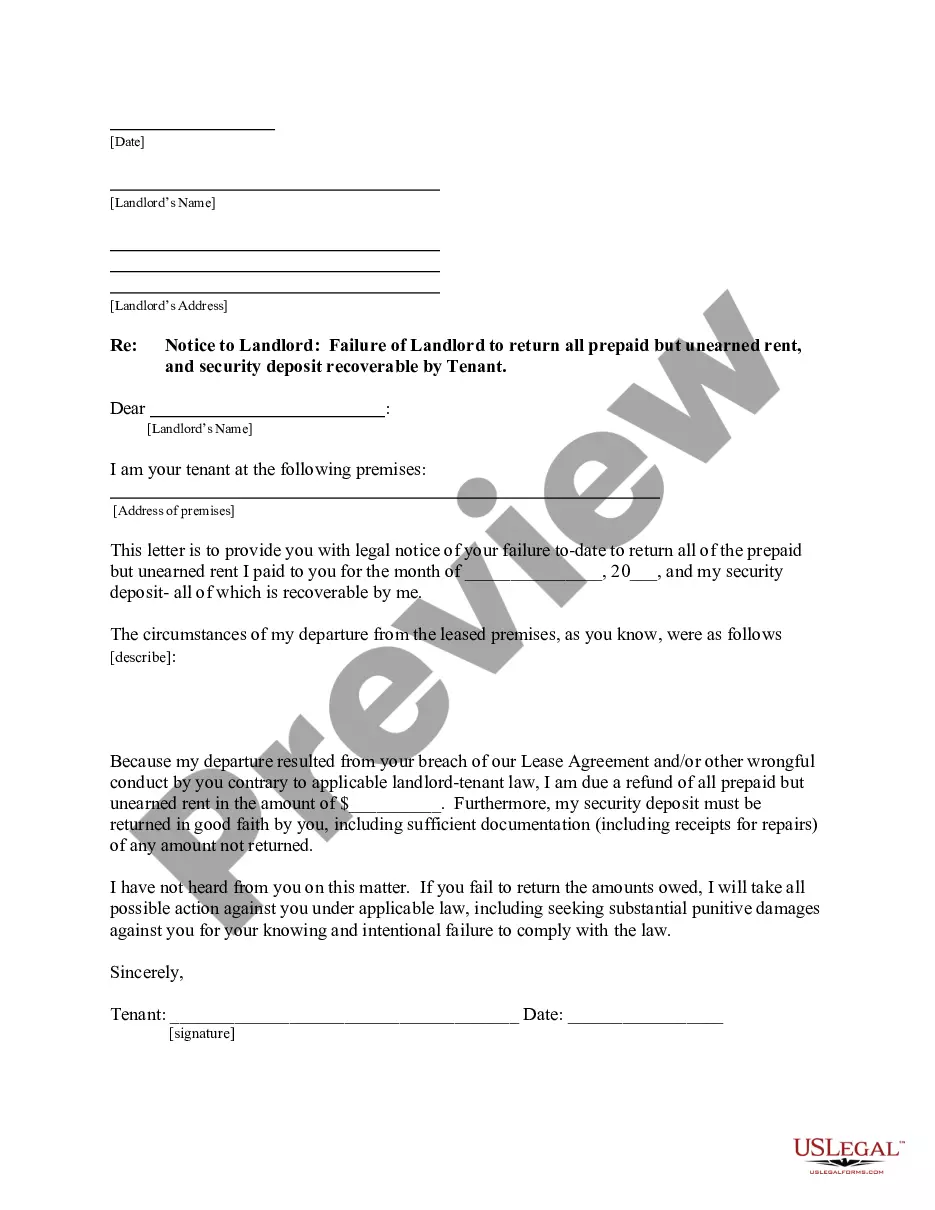
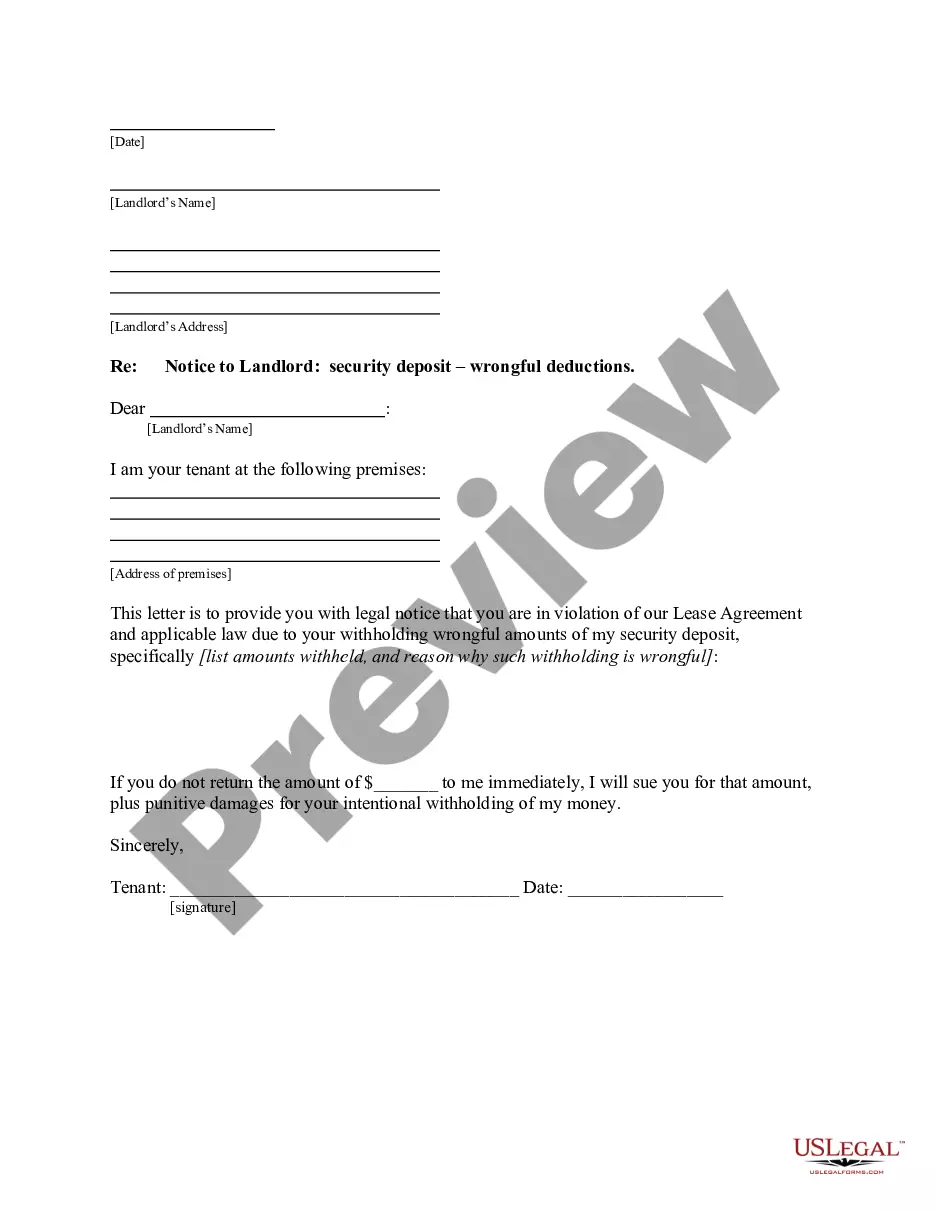
This letter from tenant to landlord serves as a formal demand for the return of a tenant's security deposit after moving out. This form explicitly notifies the landlord of their legal obligation to refund the deposit within a specified timeframe, according to state laws. Unlike other communication methods, this letter provides a documented request that can be referenced later if legal action is necessary.
Form components explained
- Identification of the tenant and landlord to establish the parties involved.
- Details of the security deposit amount claimed for clarity.
- A specific demand for the return of the deposit within ten days.
- A statement regarding the tenant's intention to seek legal action if the deposit is not returned.
- A closing section inviting communication for resolution and a space for date and signature.
When to use this form
This form is useful in situations where a tenant has moved out of a rental property and has not received their security deposit back from the landlord within the legally allowable timeframe. It is typically employed when the landlord fails to respond to previous informal requests for the return of the deposit, or when the tenant wants to formally document their request before considering legal action.
Who this form is for
- Tenants who have moved out of a rental property and are waiting for their security deposit.
- Individuals who have previously requested their deposit informally without a satisfactory response.
- Those who wish to document their demand for the return of the deposit to support potential legal claims.
How to complete this form
- Identify the parties by entering your name as the tenant and the landlord's name.
- Clearly state the amount of the security deposit you are requesting.
- Specify the date of the letter and the deadline for the return of the deposit.
- Include a note inviting the landlord to discuss any questions or issues.
- Provide your signature to enforce the demand formally.
Does this form need to be notarized?
This form does not typically require notarization to be legally valid. However, some jurisdictions or document types may still require it. US Legal Forms provides secure online notarization powered by Notarize, available 24/7 for added convenience.
Get your form ready online
Our built-in tools help you complete, sign, share, and store your documents in one place.
Make edits, fill in missing information, and update formatting in US Legal Forms—just like you would in MS Word.
Download a copy, print it, send it by email, or mail it via USPS—whatever works best for your next step.
Sign and collect signatures with our SignNow integration. Send to multiple recipients, set reminders, and more. Go Premium to unlock E-Sign.
If this form requires notarization, complete it online through a secure video call—no need to meet a notary in person or wait for an appointment.
We protect your documents and personal data by following strict security and privacy standards.

Make edits, fill in missing information, and update formatting in US Legal Forms—just like you would in MS Word.

Download a copy, print it, send it by email, or mail it via USPS—whatever works best for your next step.

Sign and collect signatures with our SignNow integration. Send to multiple recipients, set reminders, and more. Go Premium to unlock E-Sign.

If this form requires notarization, complete it online through a secure video call—no need to meet a notary in person or wait for an appointment.

We protect your documents and personal data by following strict security and privacy standards.
Typical mistakes to avoid
- Failing to specify the amount of the security deposit being requested.
- Not clearly stating the deadline for the deposit return.
- Omitting your contact information for follow-up queries.
- Neglecting to keep a copy of the letter for your records.
Benefits of using this form online
- Quick and easy download, making it convenient to access.
- Editable format allows you to fill in your details accurately.
- Drafted by licensed attorneys, ensuring legal reliability.
- Guidance on state-specific requirements simplifies compliance.
Legal use & context
- This form serves as documentation of the tenant's request for their security deposit.
- It can be used in potential legal disputes to show that the tenant attempted to resolve the issue amicably.
- Ensures compliance with state laws regarding security deposit refunds.
Key takeaways
- Utilize this form to formally request the return of your security deposit.
- Adhere to state-mandated timelines and procedures to ensure effective communication.
- Document all interactions related to the security deposit request for future reference.
Looking for another form?
Form popularity
FAQ
The landlord must refund the deposit within 30 days after the tenancy has ended. The refund must be delivered to the tenant's last-known address.
Tenant's name and new address, or address he gave for return of the security deposit. Commencement date of the lease and date it ended. Amount of the security deposit when the tenant moved in. Amount of interest accrued.
Fill out the Request for Return of Security Deposit form (not interactive; you must print, then fill out the form). Send the form to your former landlord. Keep a photo-copy of the form for yourself. Hold on to the Return Receipt when it comes back in the mail.
Alerting state or local health and building inspectors. Suing your landlord in small claims court.
The date of the letter and the landlord's full name and address. The address of the residence you rented and the date you moved in. A statement that you've been paying your rent timely and that you are current with your payments.
Type your letter. Concisely review the main facts. Be polite. Write with your goal in mind. Ask for exactly what you want. Set a deadline. End the letter by stating you will promptly pursue legal remedies if the other party does not meet your demand. Make and keep copies.
Before you go to court, a number of states require you to send a demand letter to your opposing party. An attorney is usually not necessary at this point and you can write a demand letter on your own. To write one, gather necessary documents, draft your letter, and send the letter to your opposing party.
You should usually get your deposit back within 10 days of agreeing on the amount with your landlord. It can take a lot longer if you and your landlord disagree on the amount that's being taken off.
If your deposit didn't need to be protected and your landlord refuses to give it back, you might have to take them to court. Going to court can be expensive and stressful. You'll have to pay court costs upfront but you might get them back if you win your case.