Utah Divorce Worksheet and Law Summary for Contested or Uncontested Case of over 25 pages - Ideal Client Interview Form
Overview of this form
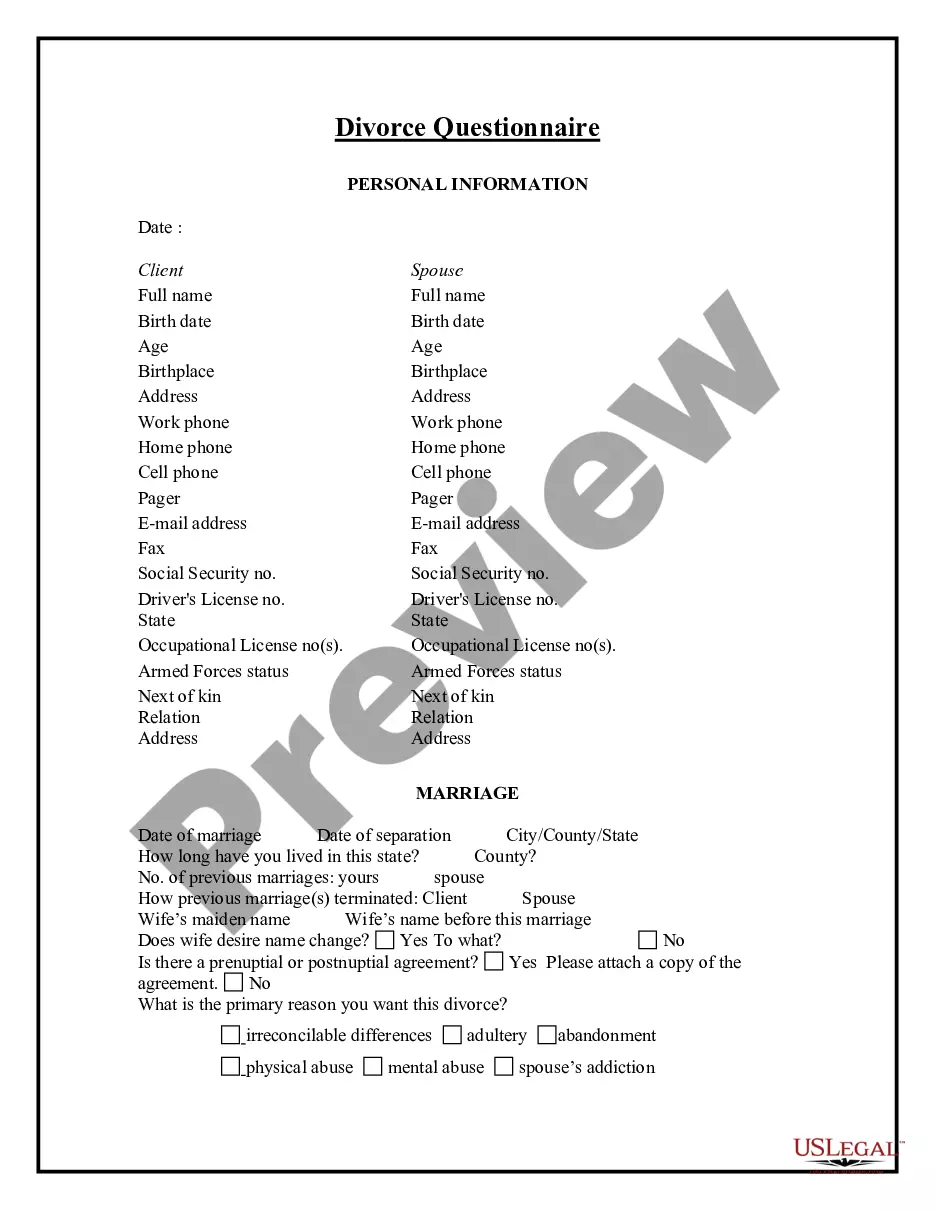
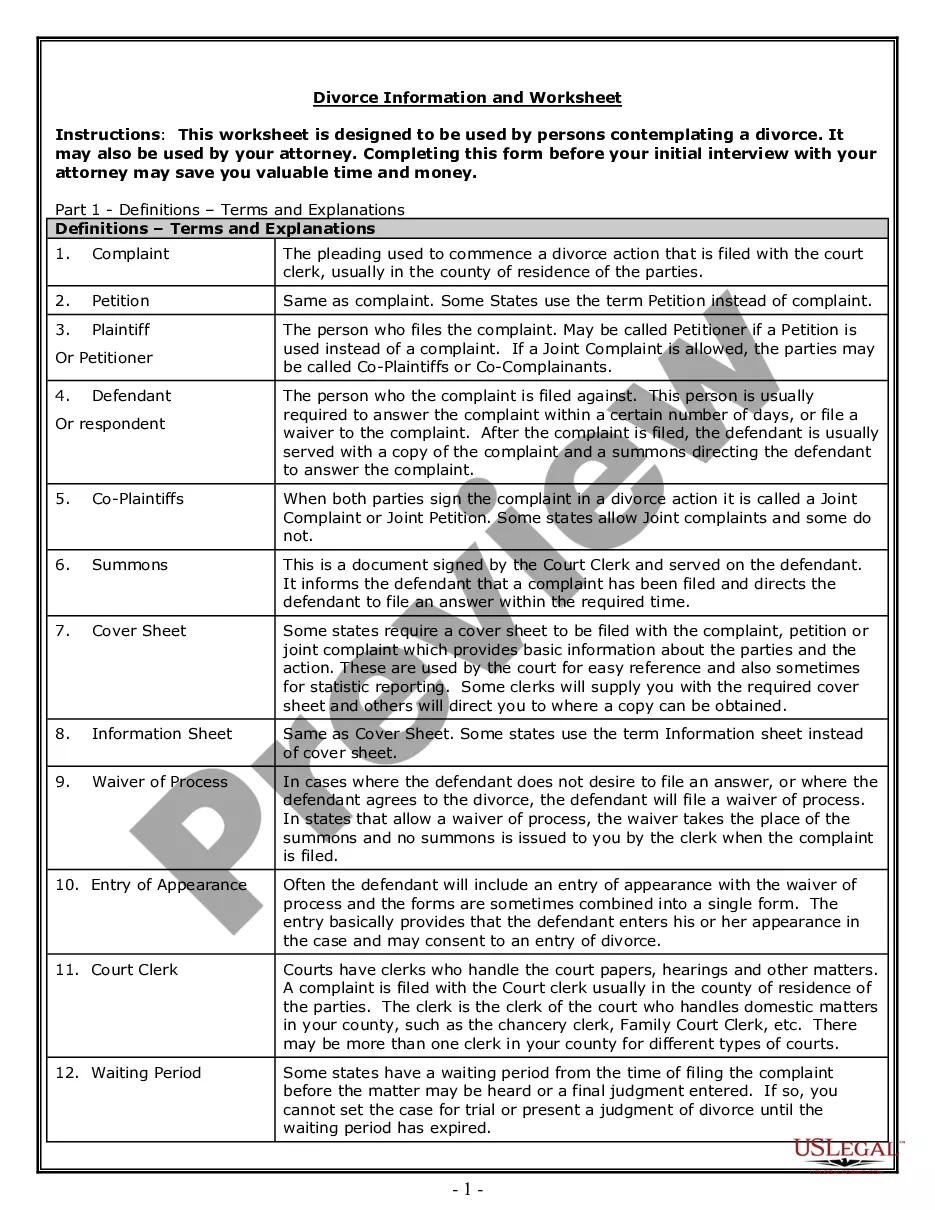
The Divorce Worksheet and Law Summary for Contested or Uncontested Cases is a comprehensive document designed to assist individuals considering divorce. This legal pack contains vital information on divorce basics, definitions, and worksheets covering visitation, child support, child custody, and financial information. Unlike other divorce forms, this worksheet facilitates the client interview process, helping individuals prepare for discussions with an attorney or for self-representation in divorce proceedings.
What’s included in this form
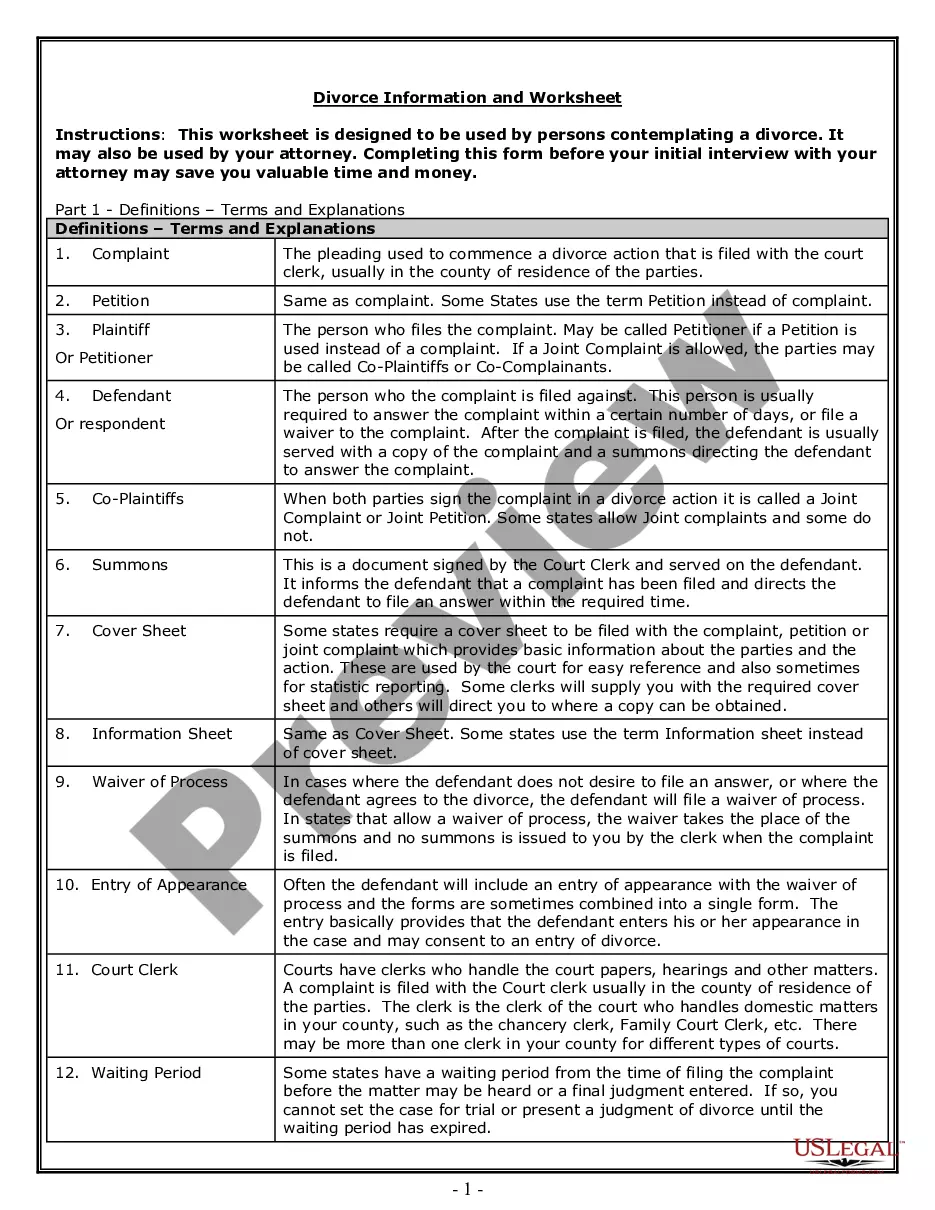
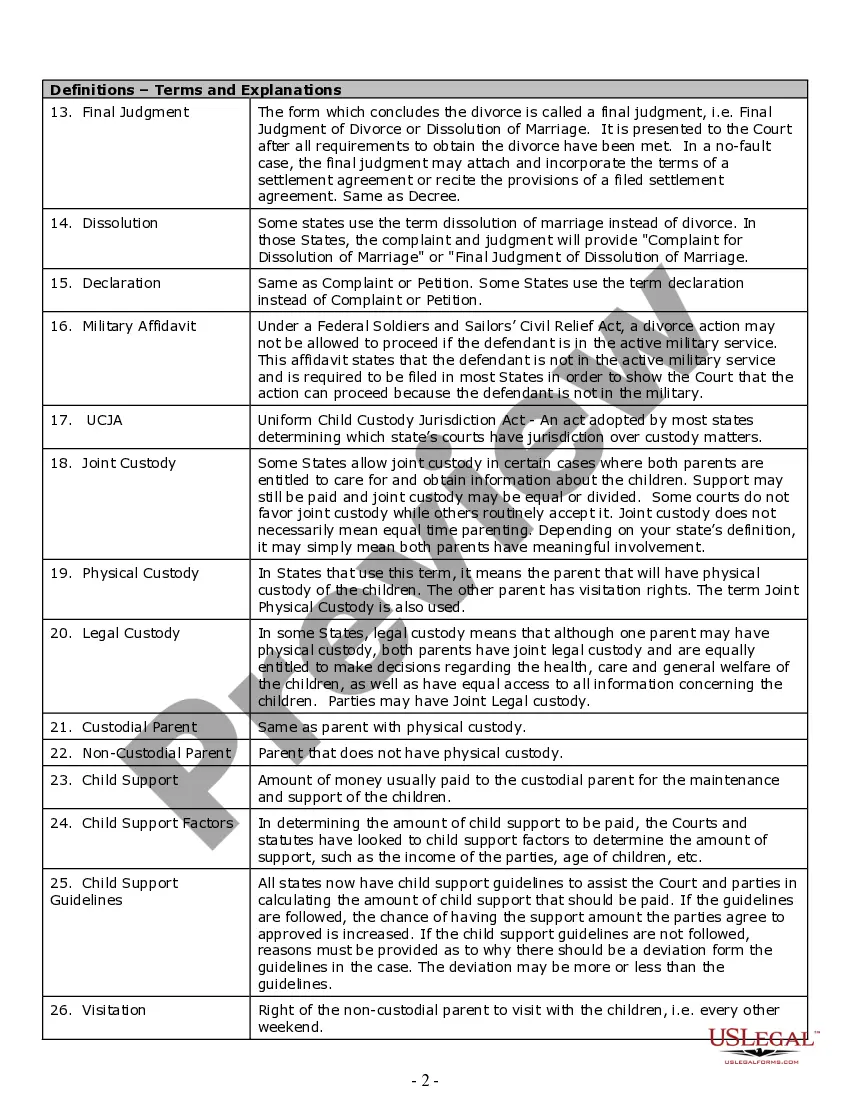
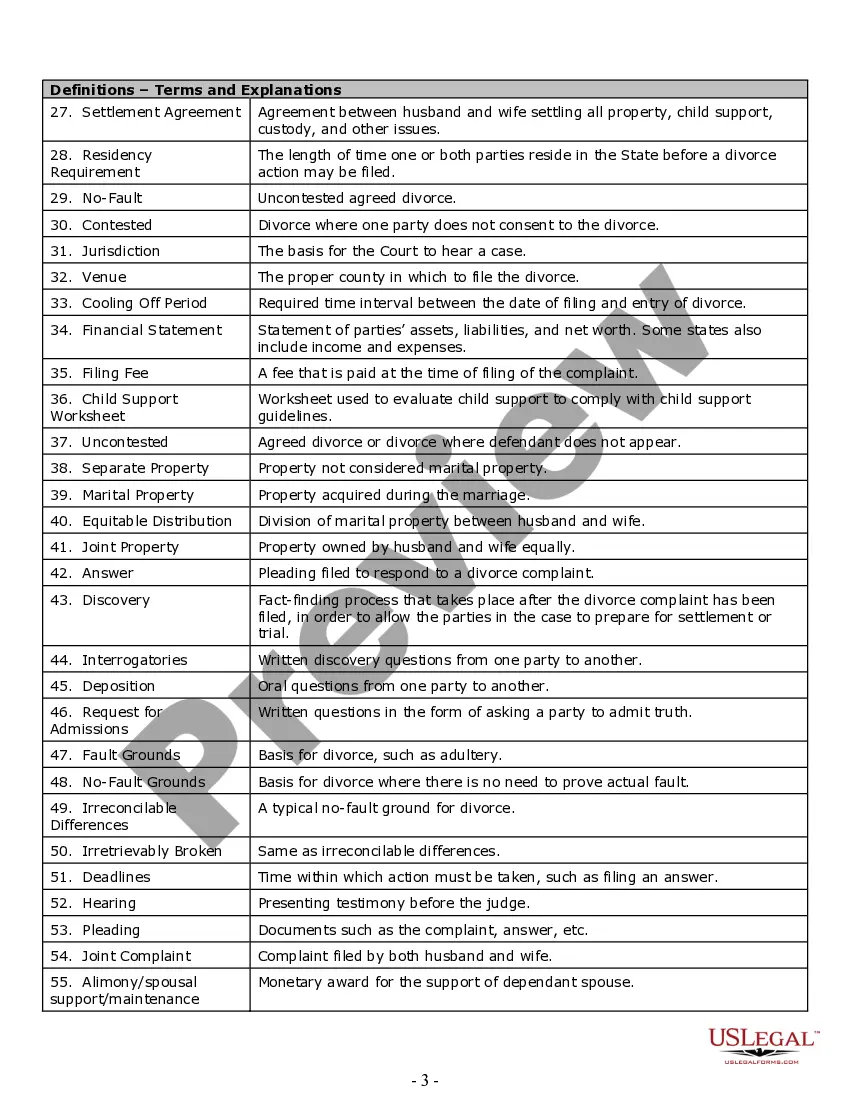
- Definitions section, outlining key legal terms related to divorce.
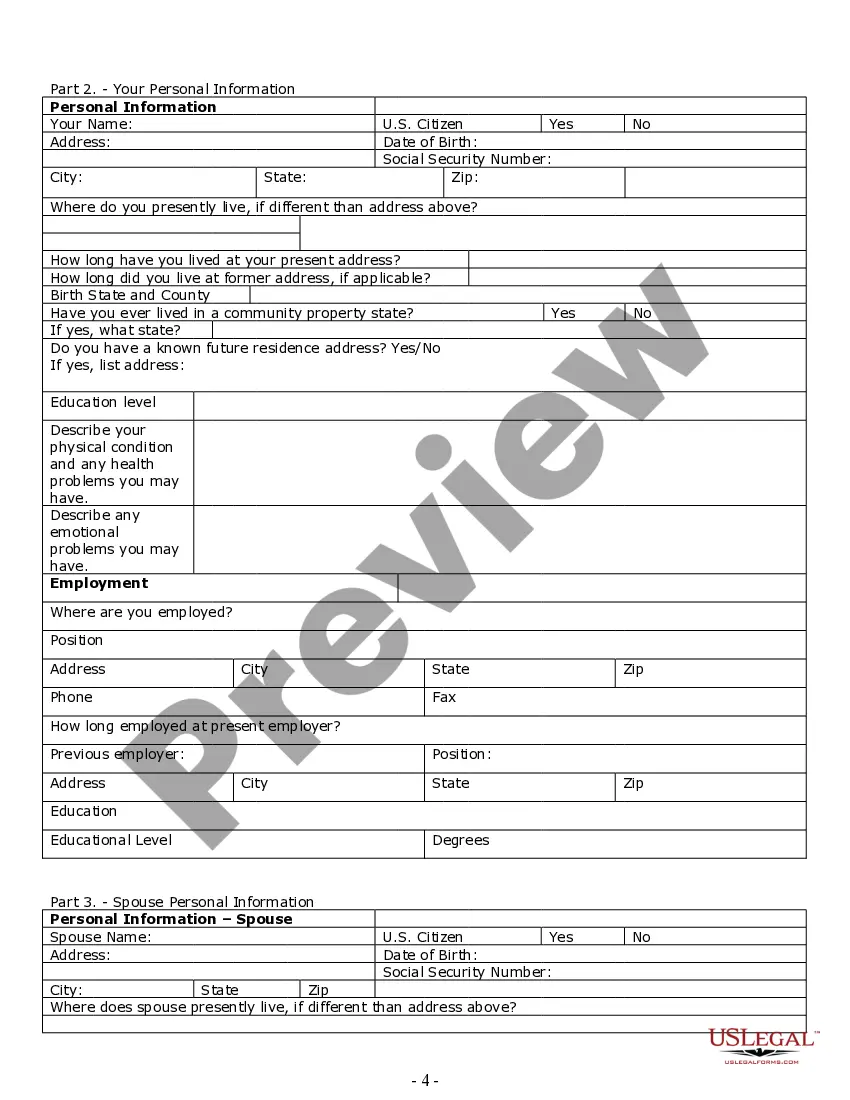
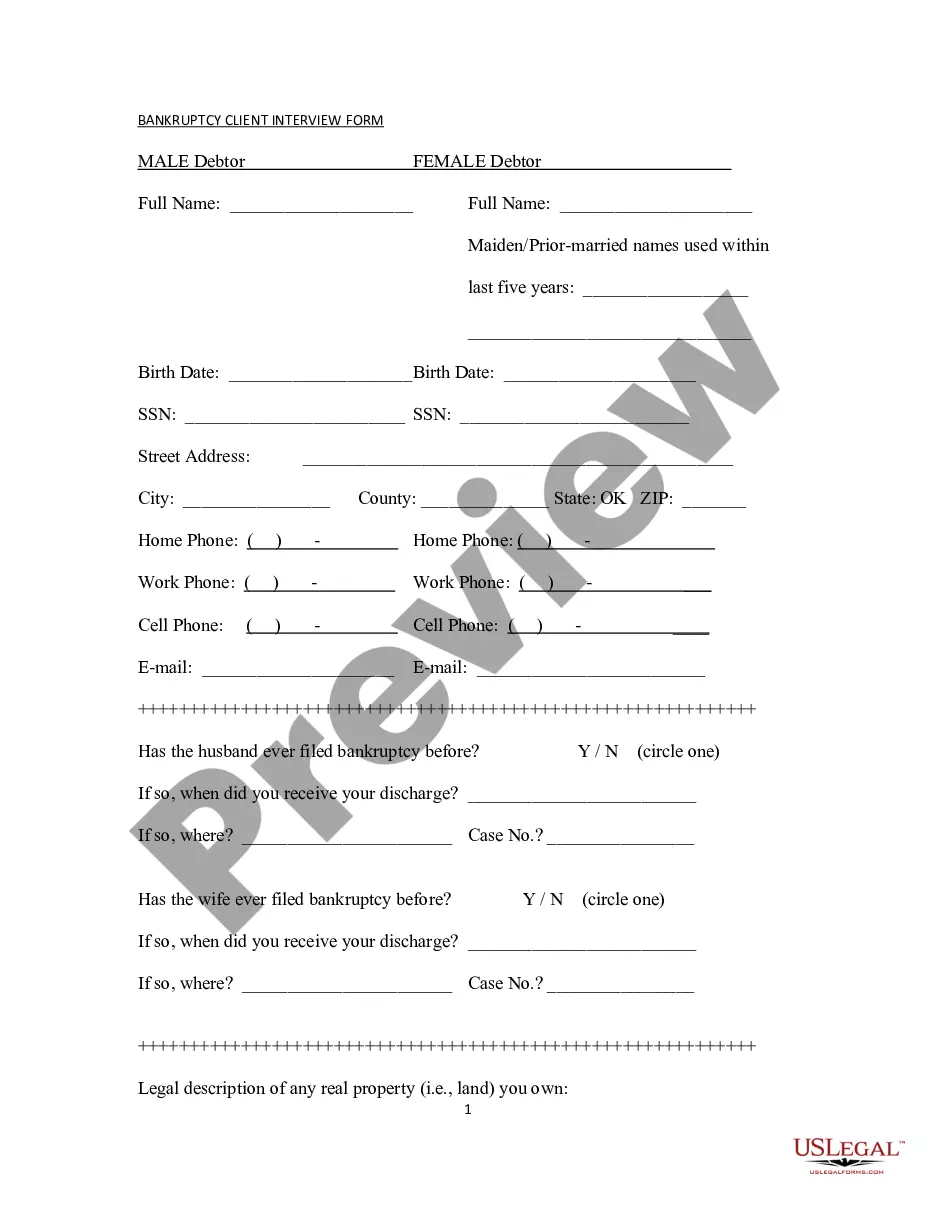
- Personal information fields for both parties involved in the divorce.
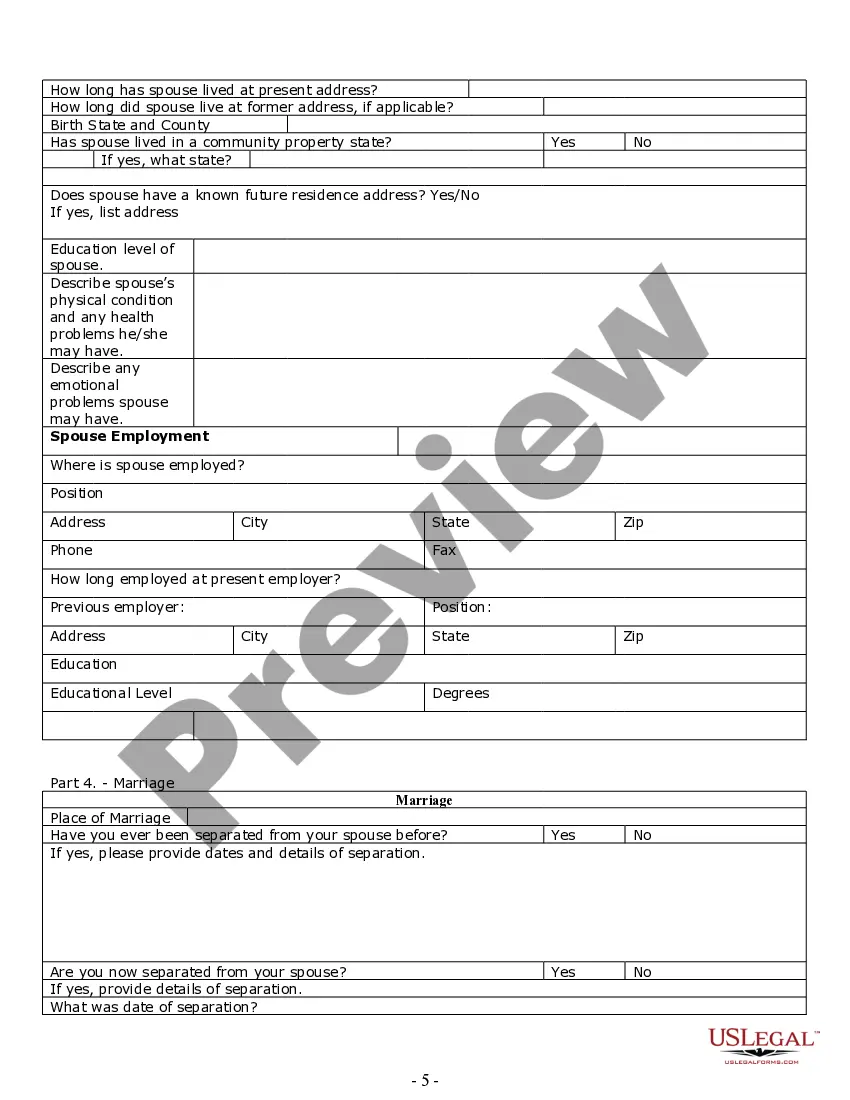
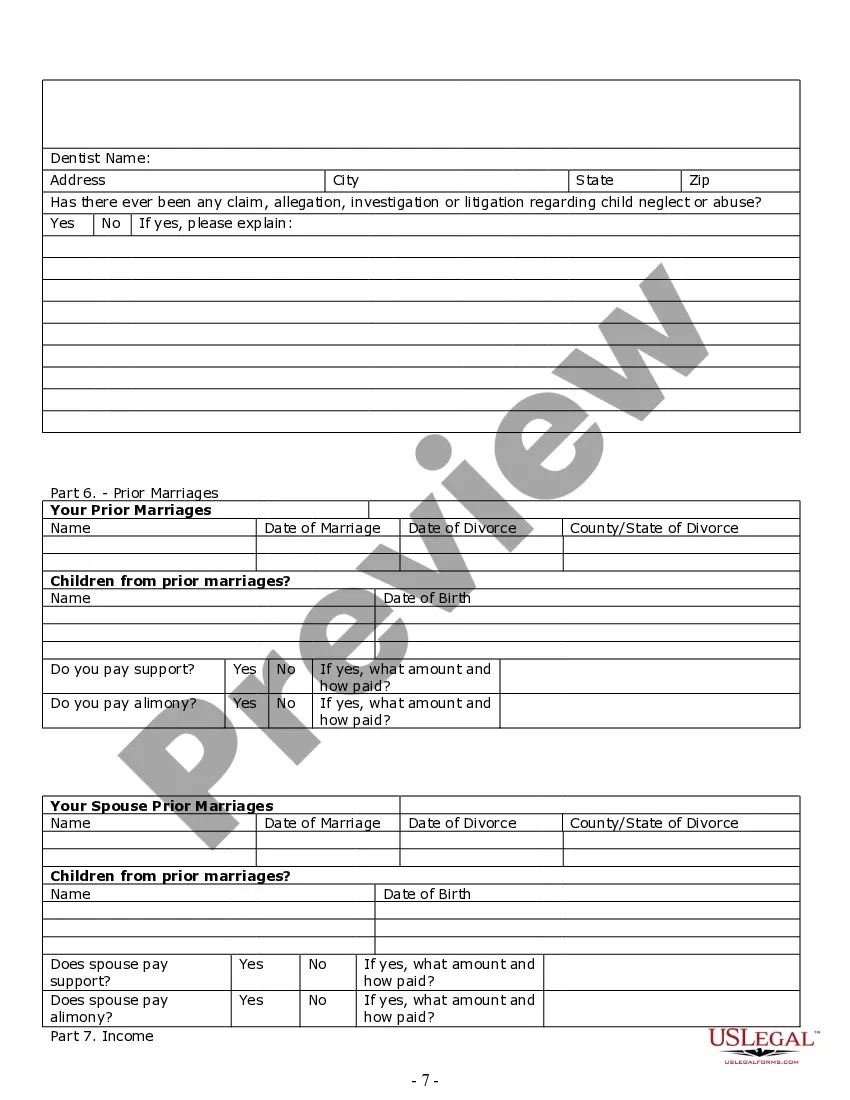
- Marriage history, including previous separations and prior marriages.
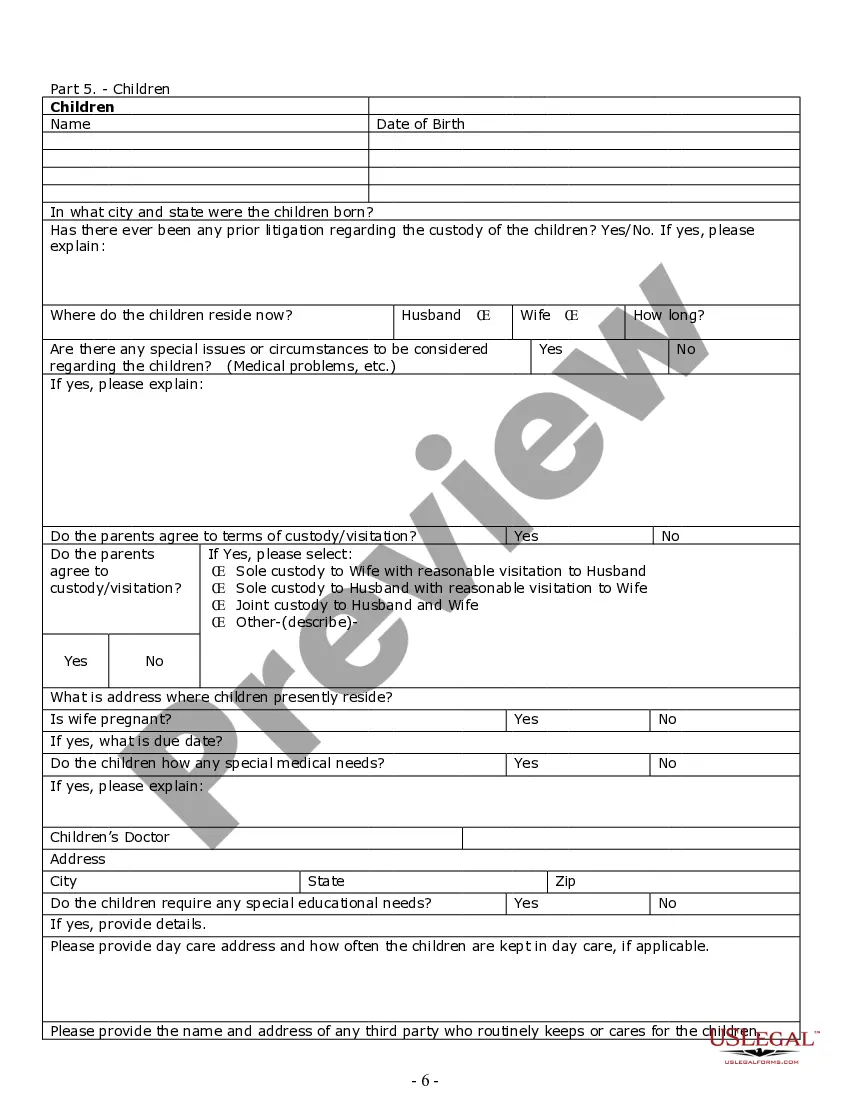
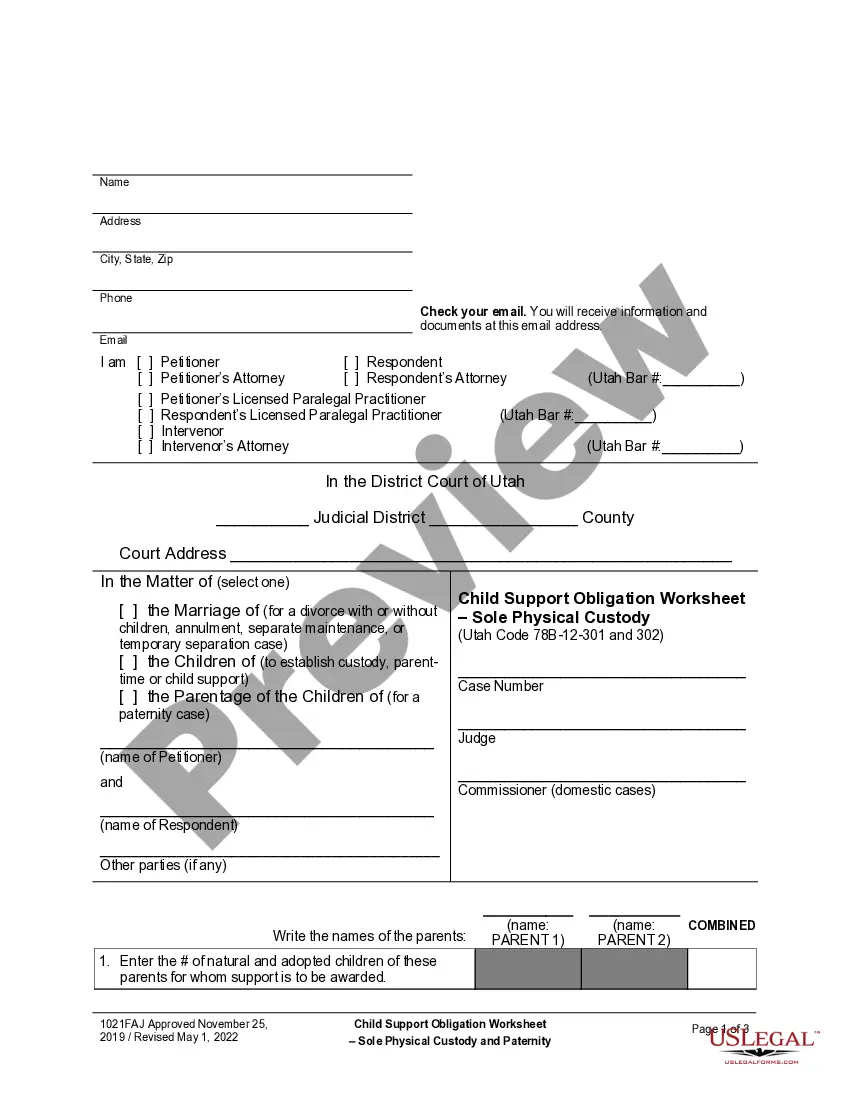
- Child-related information, addressing custody, support, and visitation details.
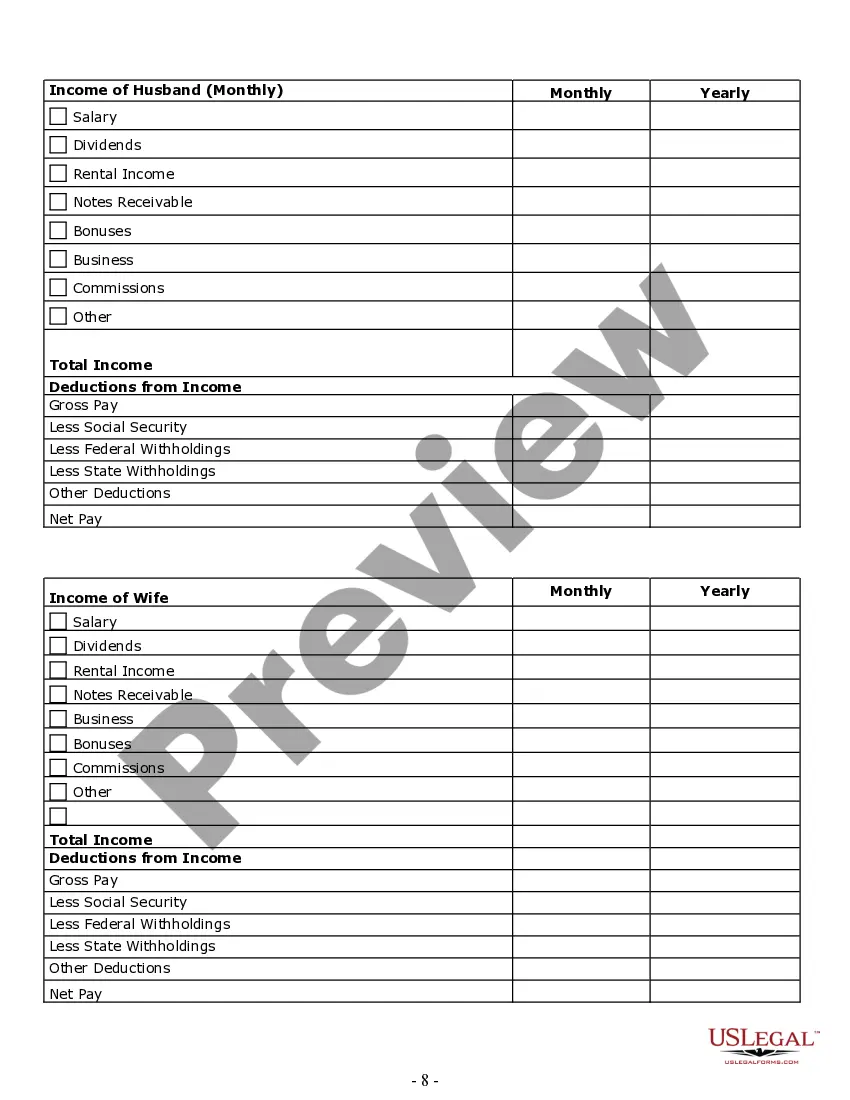
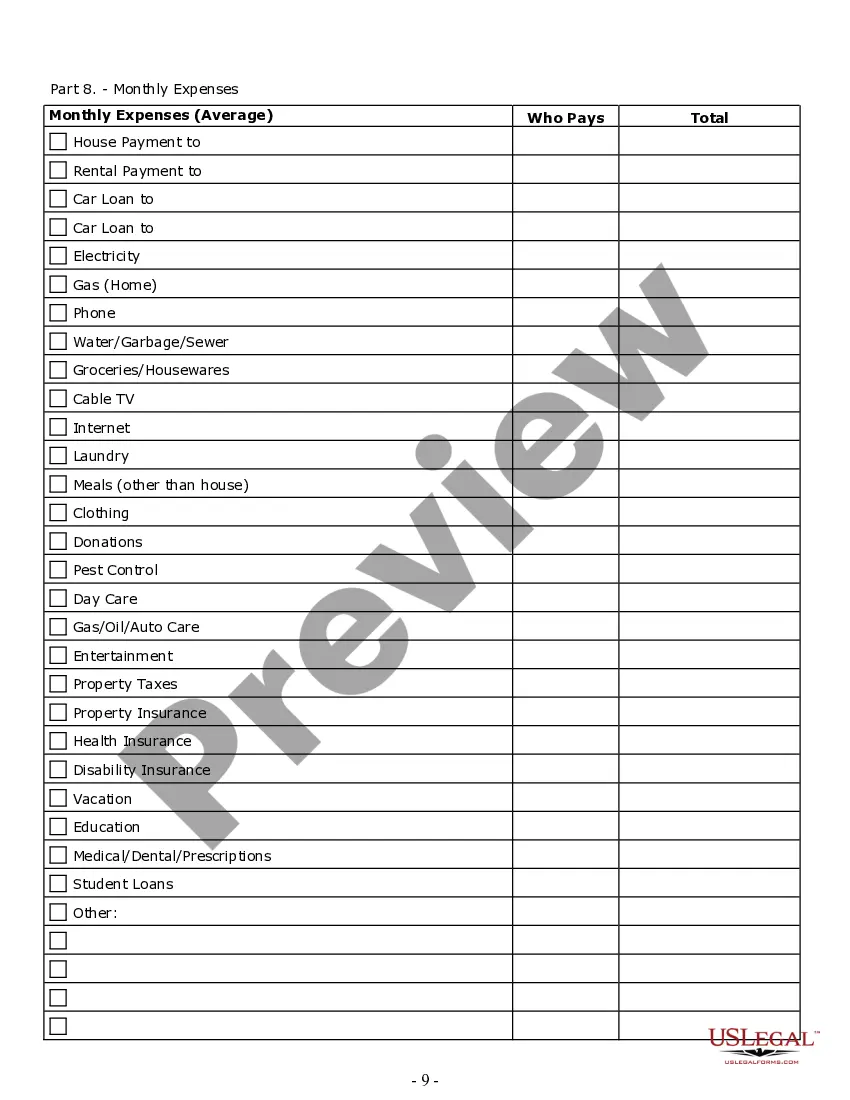
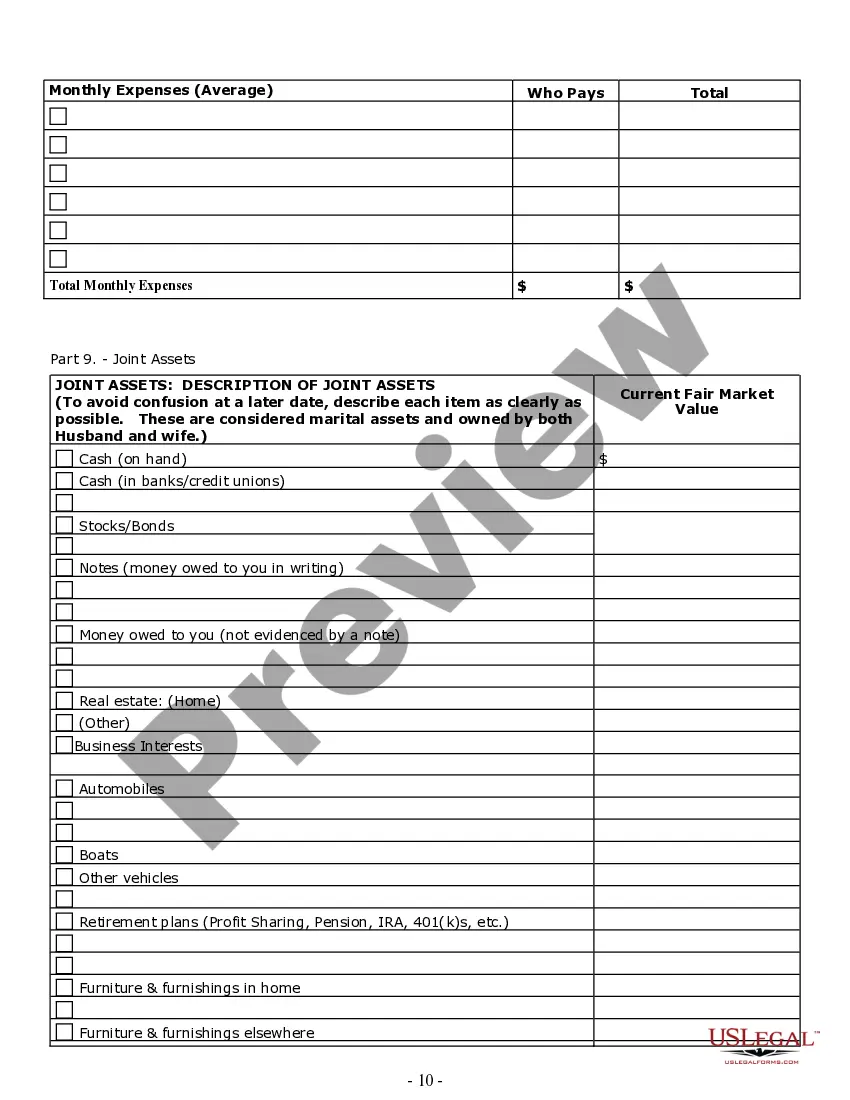
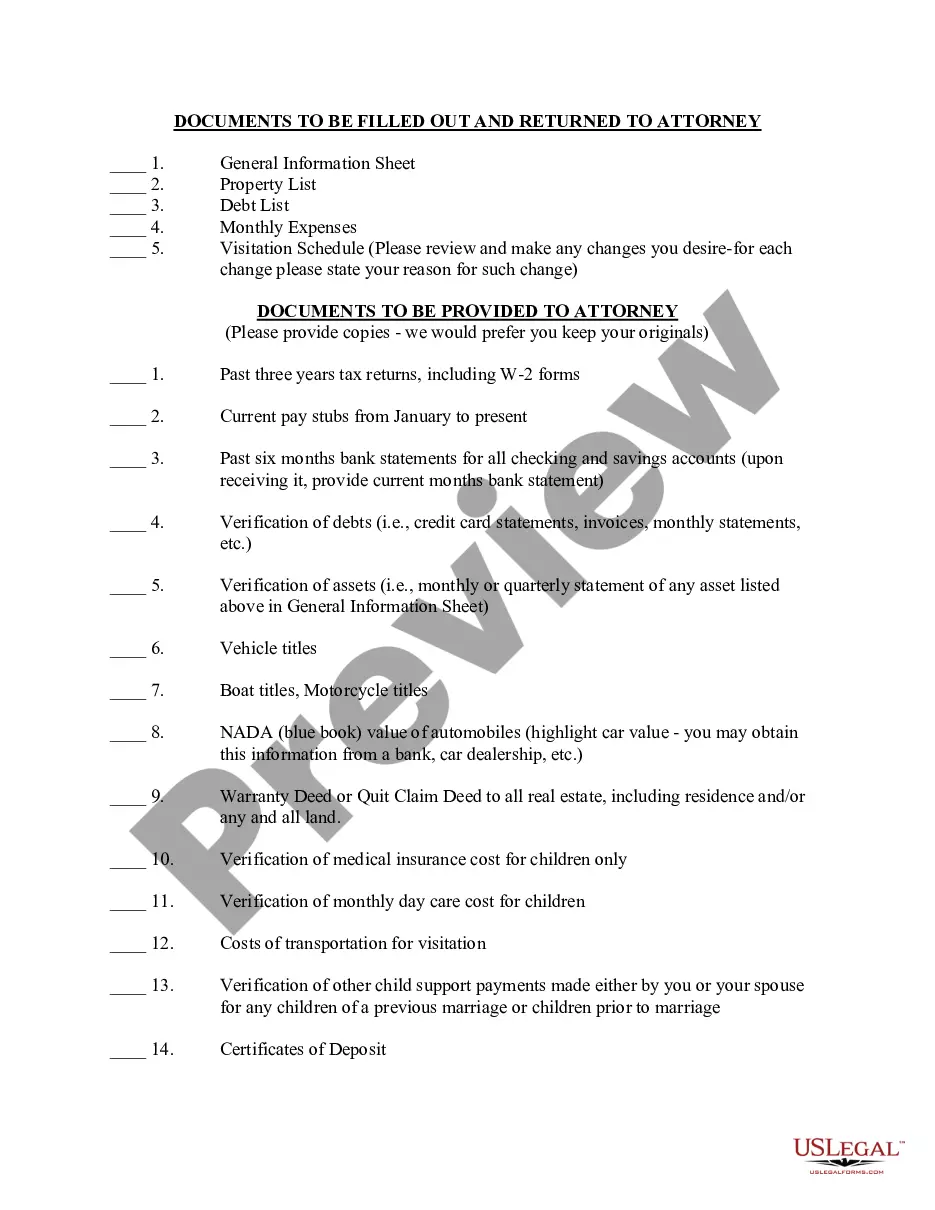
- Financial documentation, including income, assets, and monthly expenses.
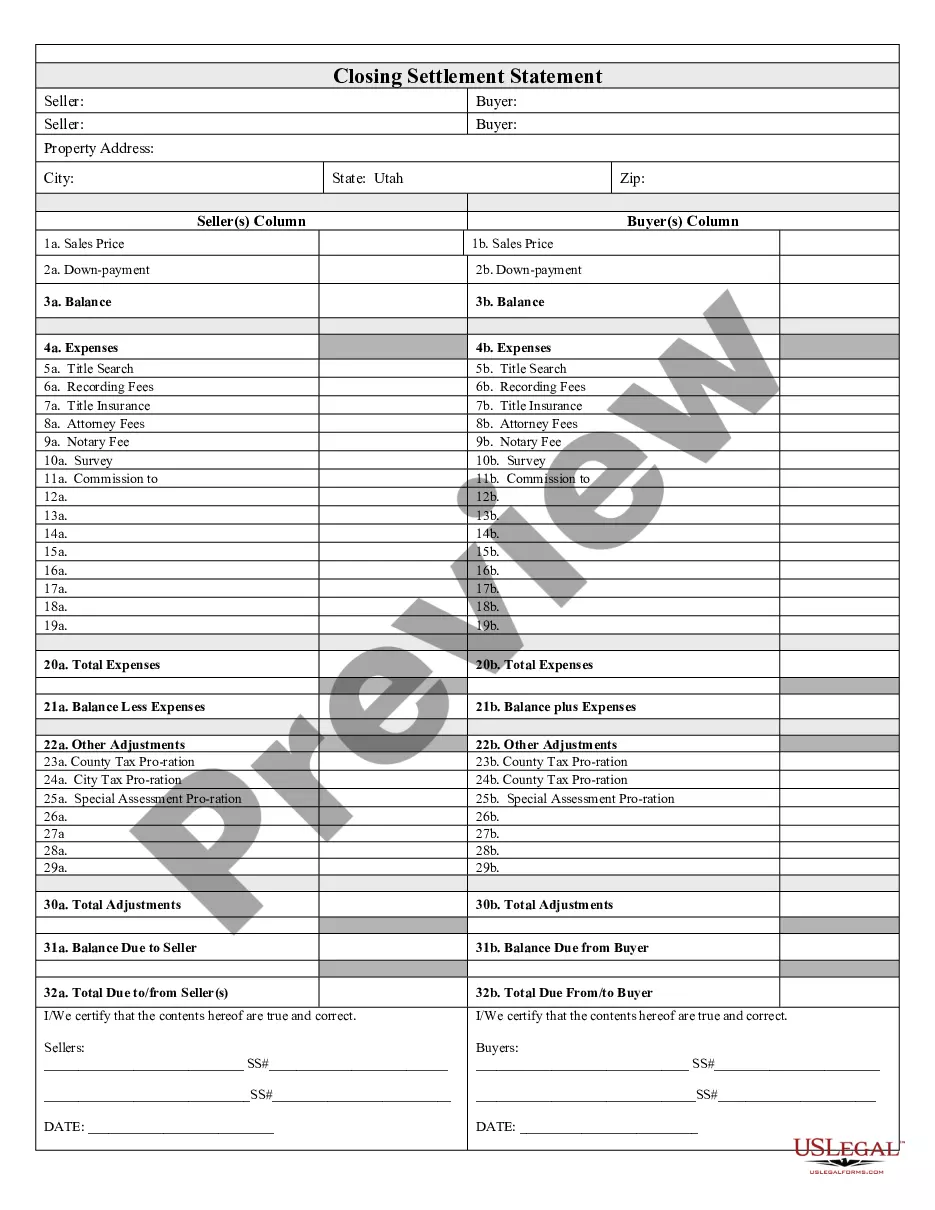
- Settlement worksheets to outline agreements on assets, liabilities, and child custody.


When to use this form
This form is essential for individuals contemplating a divorce, whether contested or uncontested. It's particularly useful for those who wish to gather detailed information before meeting with a lawyer or for those seeking to represent themselves. By completing this worksheet, users can save time and money by organizing their case details and understanding their rights and responsibilities.
Who this form is for
- Individuals considering a divorce who need a structured way to organize their situation.
- Clients preparing for their initial consultation with a family law attorney.
- People seeking to file for divorce without attorney representation.
- Those who require a comprehensive understanding of divorce processes, including custody and financial obligations.
Steps to complete this form
- Begin by filling out your personal information, including your name and address.
- Provide details about your spouse, including their name and current residence.
- Complete the marriage section, documenting dates and any previous separations.
- List childrenâs names, dates of birth, and any related custody concerns.
- Document detailed financial information, including monthly income and expenses.
- Review and finalize the settlement worksheet based on agreed terms regarding custody, support, and asset division.
Notarization guidance
This form does not typically require notarization unless specified by local law. However, check with your jurisdiction to confirm if notarization is necessary for your specific situation.
Get your form ready online
Our built-in tools help you complete, sign, share, and store your documents in one place.
Make edits, fill in missing information, and update formatting in US Legal Forms—just like you would in MS Word.
Download a copy, print it, send it by email, or mail it via USPS—whatever works best for your next step.
Sign and collect signatures with our SignNow integration. Send to multiple recipients, set reminders, and more. Go Premium to unlock E-Sign.
If this form requires notarization, complete it online through a secure video call—no need to meet a notary in person or wait for an appointment.
We protect your documents and personal data by following strict security and privacy standards.

Make edits, fill in missing information, and update formatting in US Legal Forms—just like you would in MS Word.

Download a copy, print it, send it by email, or mail it via USPS—whatever works best for your next step.

Sign and collect signatures with our SignNow integration. Send to multiple recipients, set reminders, and more. Go Premium to unlock E-Sign.

If this form requires notarization, complete it online through a secure video call—no need to meet a notary in person or wait for an appointment.

We protect your documents and personal data by following strict security and privacy standards.
Mistakes to watch out for
- Failing to include all required personal and financial information.
- Neglecting to clarify child custody arrangements and visitation specifics.
- Overlooking details about past marriages and their implications on the current divorce.
- Not updating the information before consultations with the attorney.
Benefits of completing this form online
- Accessibility: Download and complete the form at your convenience from anywhere.
- Editability: Easily modify the document to suit your specific situation.
- Guidance: The form provides a step-by-step approach to gathering necessary information before filing.
- Cost-effective: Save expenses associated with legal consultations by preparing detailed information upfront.
- This worksheet serves as a preliminary guide and does not replace formal legal advice or representation.
- Completion of this form creates no attorney-client relationship.
- Ensure compliance with your local laws, as legal standards vary by jurisdiction.
Quick recap
- The Divorce Worksheet and Law Summary is an essential tool for individuals facing divorce.
- It contains vital definitions and comprehensive sections covering personal and financial information.
- Understanding your rights and obligations is critical, especially regarding children and finances.
- Consulting legal advice after completing this form is highly recommended to ensure proper legal processes.
Looking for another form?
Form popularity
FAQ
Divorce waiting period Utah law requires that there be 30 days between the date the petition is filed and the date the decree is signed. A party can ask the court to waive the waiting period for extraordinary circumstances.
The filing fee for a divorce in Utah is $333. That fee is paid directly to the Court when you file your divorce papers. Our fee for the Do-It-Yourself Divorce without minor children (for an action not involving custody of minor children) is $375.00. That amount includes ~30 pages of typing necessary for the divorce.
In Utah, you can expect your divorce to take at least three months. Utah Code Ann. §30-3-18 provides that couples must wait 90 days after filing their divorce petition before a final order can be entered.
The filing fee for a divorce in Utah is $333. That fee is paid directly to the Court when you file your divorce papers. Our fee for the Do-It-Yourself Divorce without minor children (for an action not involving custody of minor children) is $375.00. That amount includes ~30 pages of typing necessary for the divorce.
Utah has a residency requirement for filing for divorce. You or your spouse have to live in the county you want to file in for at least three (3) months before you file. If you have children, you may need to live in the state with your children for at least six (6) months before filing.
From start to finish, the divorce process in the Golden State can take at least six months even if both parties agree to the dissolution immediately. This length of time is due to California's divorce requirements and mandatory six-month waiting period.
According to a recent survey, the cost of an average Utah divorce is $13,200. While this may shock you, many divorces that are initially thought to be a simple open and close case end up being highly contested, making the process longer and more expensive than anticipated.