Utah Business Incorporation Package to Incorporate Corporation
Understanding this form package
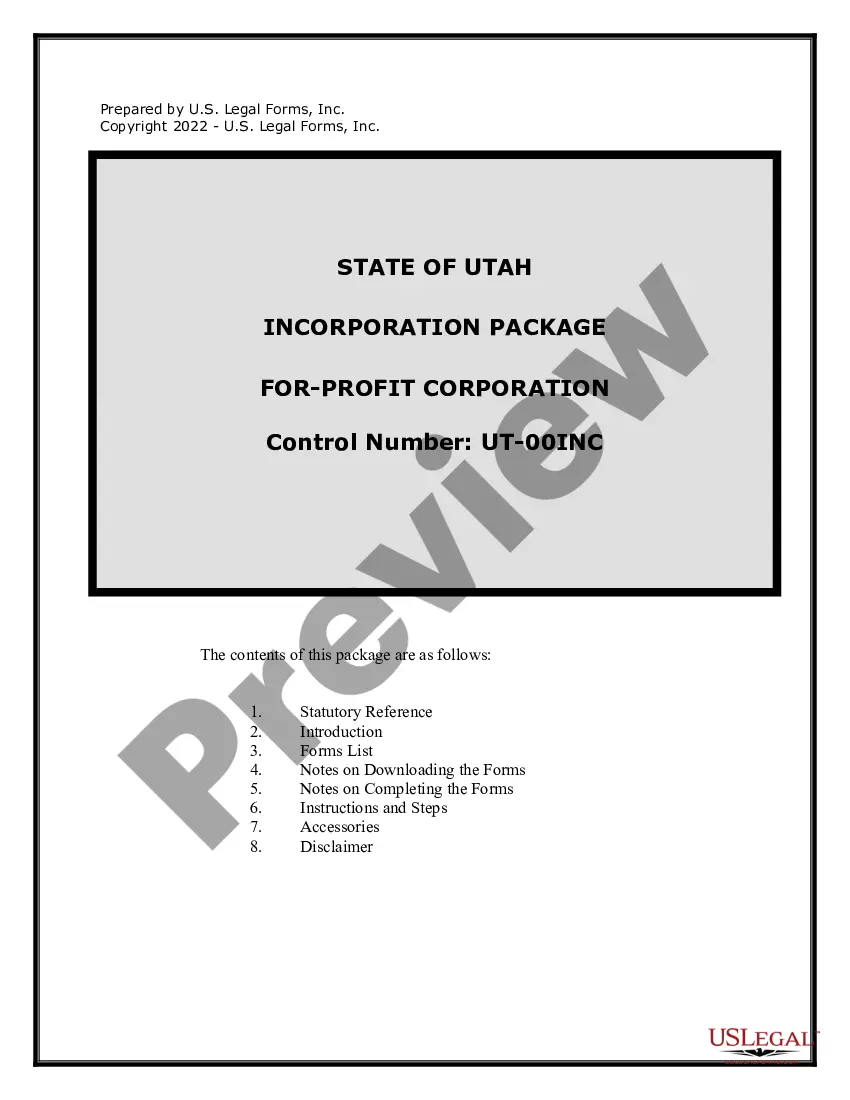
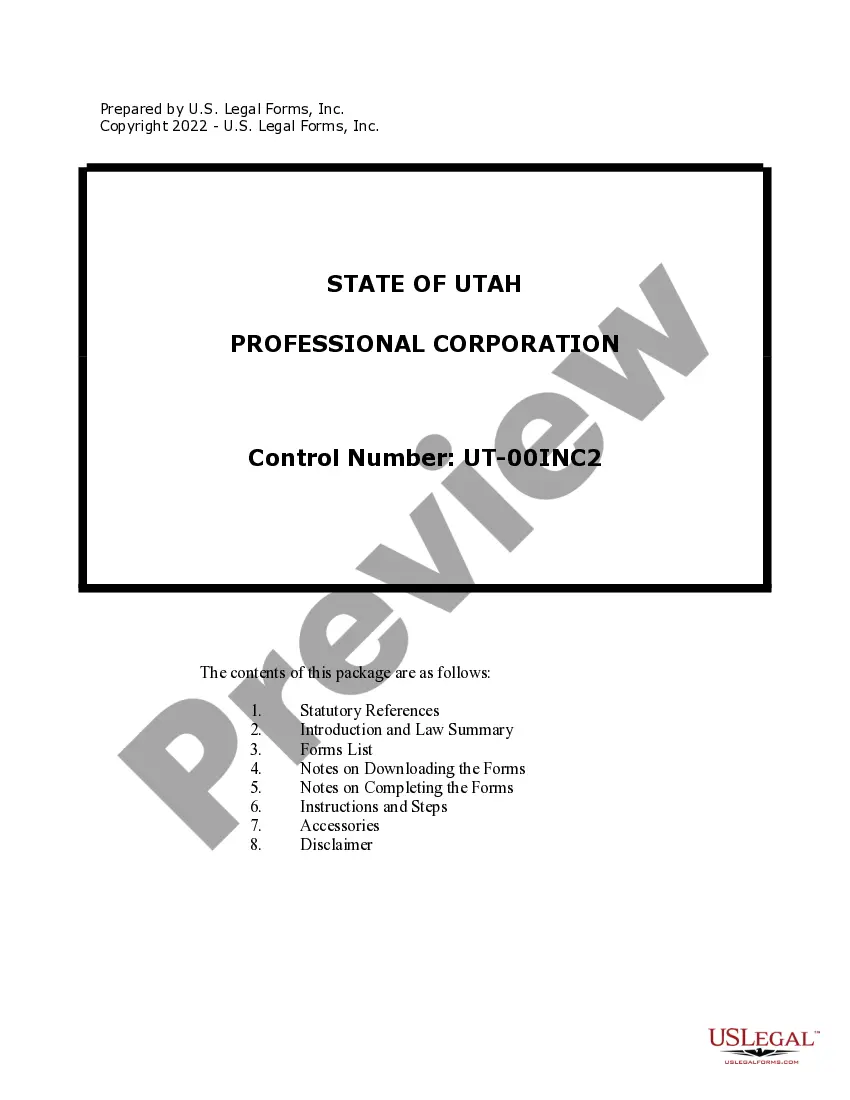
The Utah Business Incorporation Package is a comprehensive set of legal forms designed specifically for forming a corporation in Utah. This package offers everything you need to successfully incorporate your business, including initial formation documents and vital post-incorporation forms. Unlike generic packages, this one is tailored to meet the specific requirements and regulations of Utah's business laws, ensuring legal compliance and ease of use.
Forms you’ll find in this package
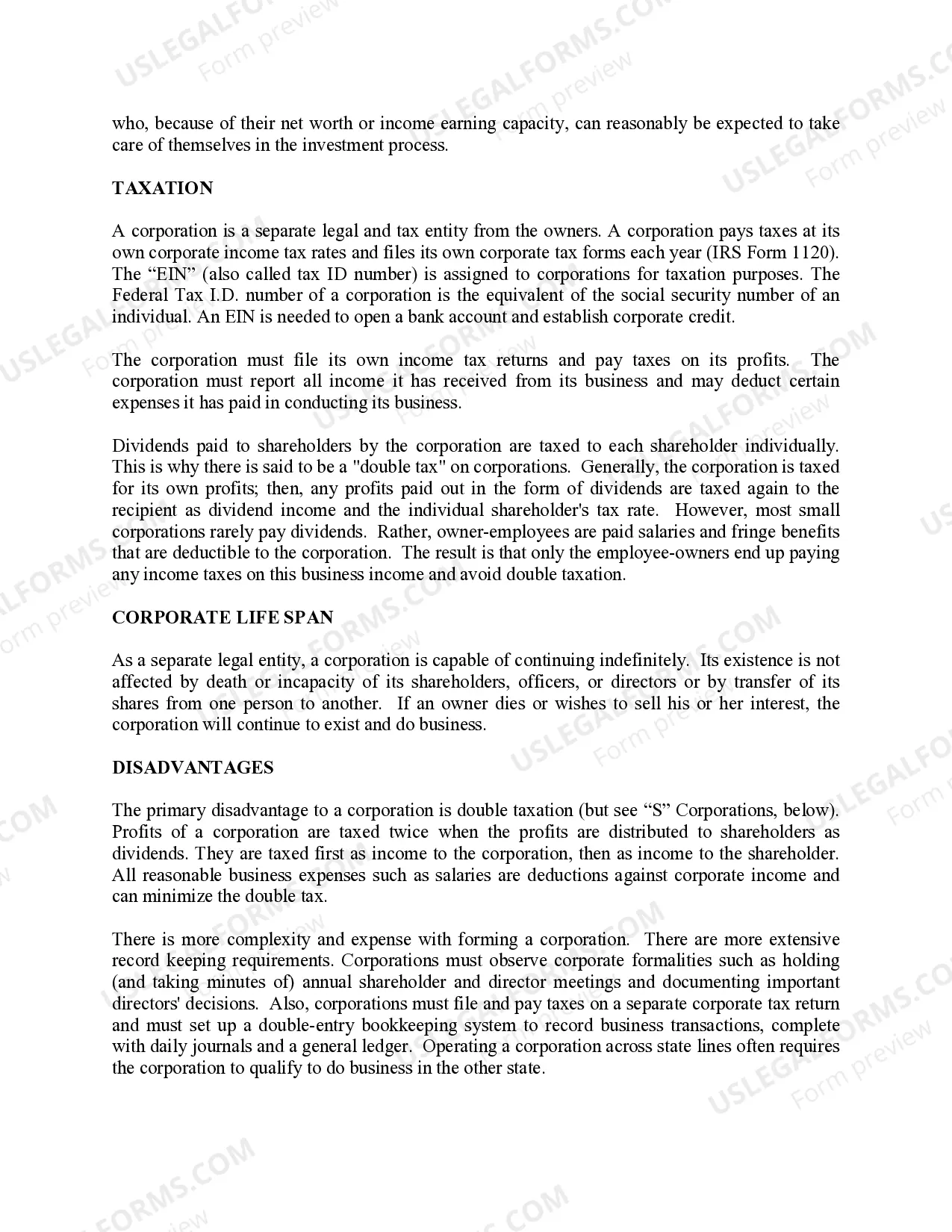
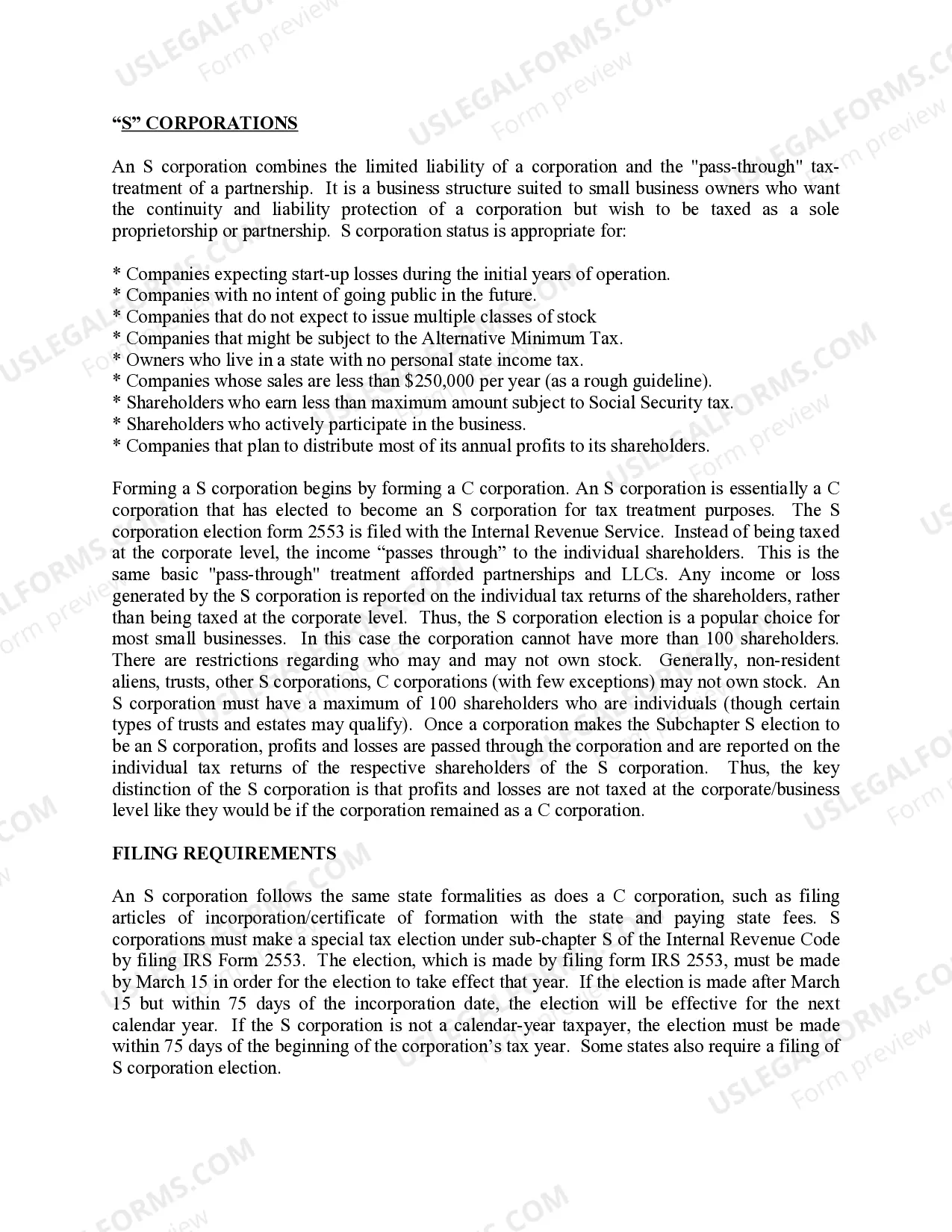
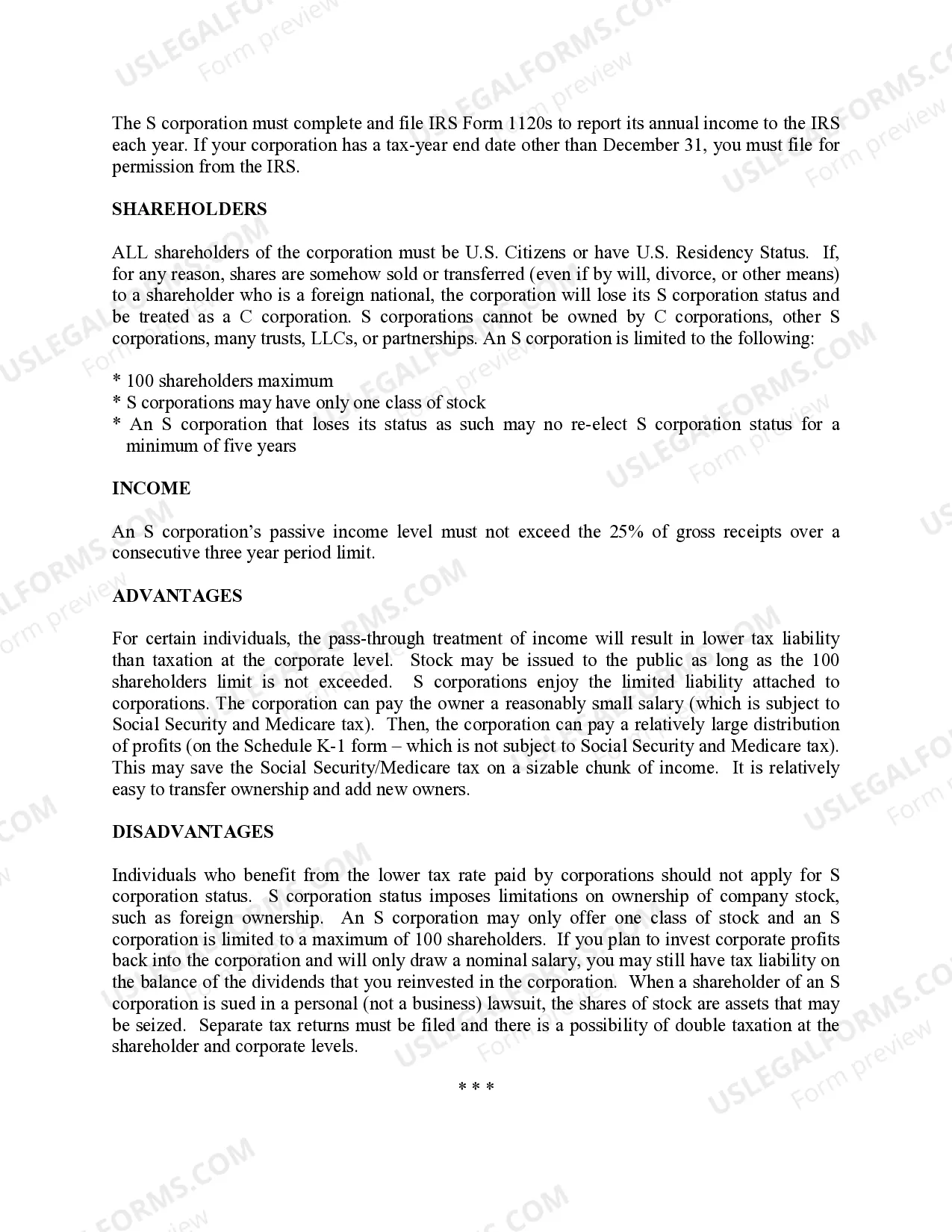
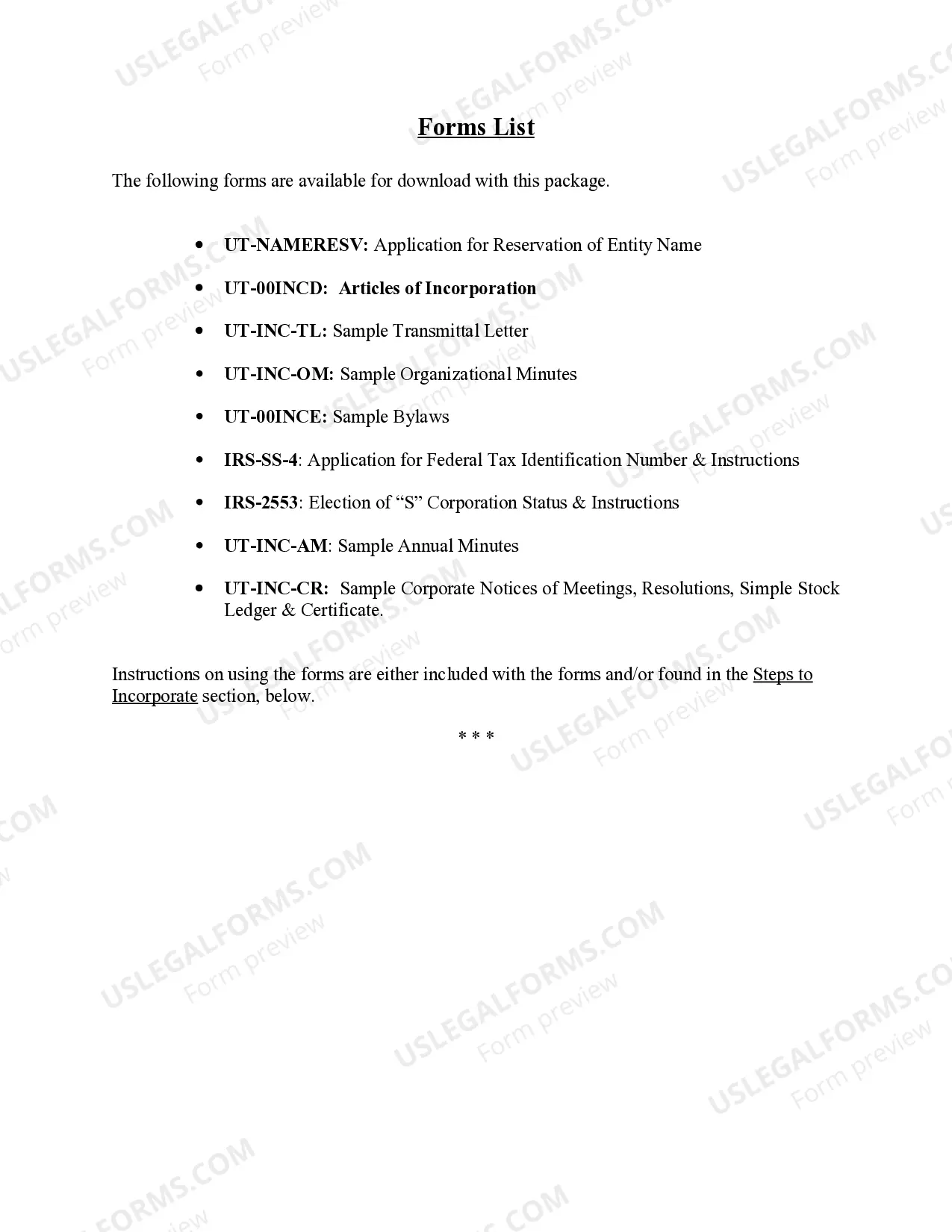
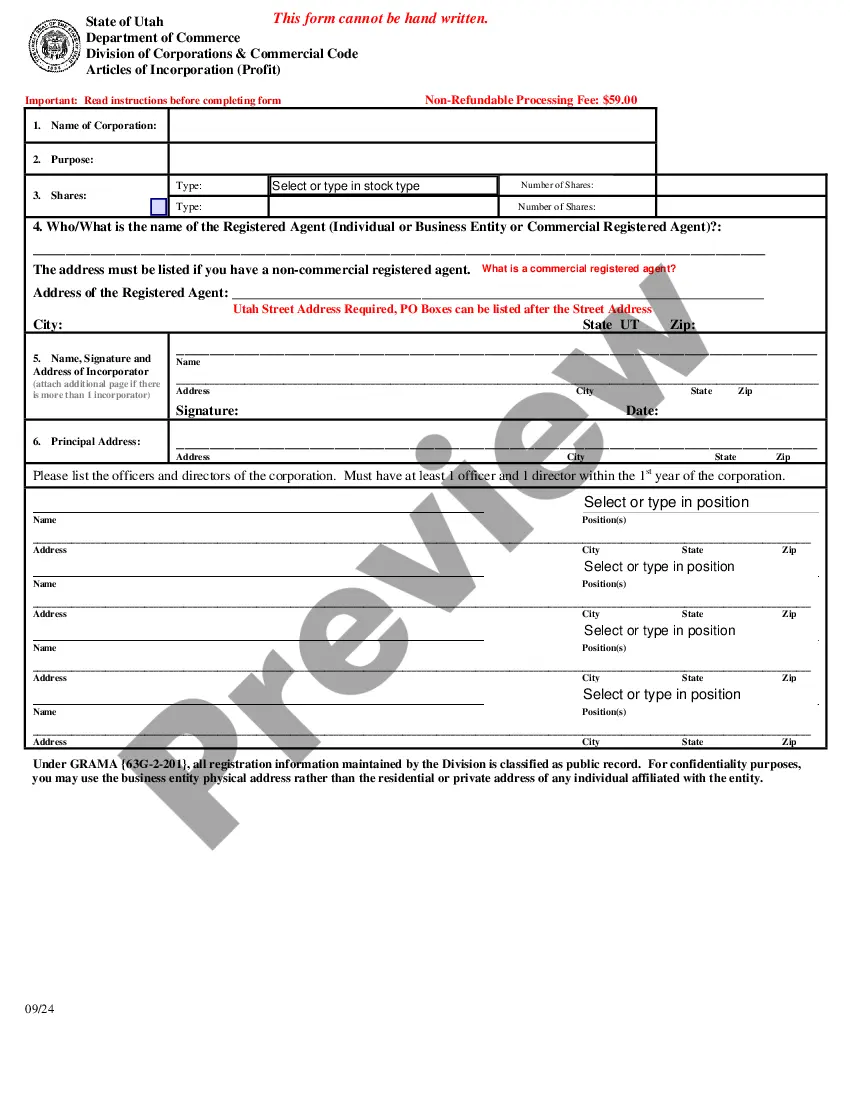
- Utah Articles of Incorporation for Domestic For-Profit Corporation
- Utah Bylaws for Corporation
- Annual Minutes
- Notices, Resolutions, Simple Stock Ledger and Certificate
- Minutes for Organizational Meeting
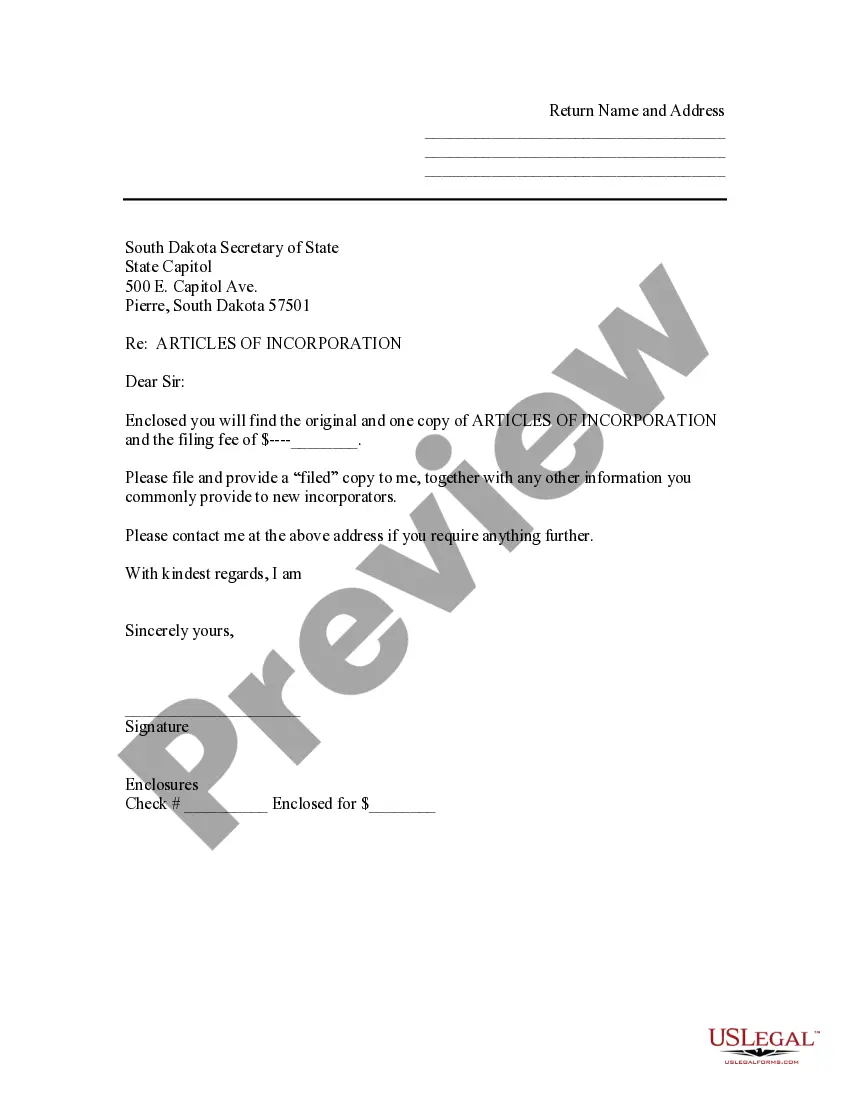
- Sample Transmittal Letter to Secretary of State's Office to File Articles of Incorporation
- Application for Name Reservation
- Election of 'S' Corporation Status and Instructions - IRS 2553
- I.R.S. Form SS-4 (to obtain your federal identification number)


When to use this document
This form package is essential when you plan to establish a corporation in Utah. It is ideal for entrepreneurs and business owners who wish to:
- Start a new business venture and need to legally form a corporation.
- Transition from a sole proprietorship or partnership to a corporate structure.
- Enhance liability protection for their business operations.
Who this form package is for
- Entrepreneurs looking to incorporate their startup business in Utah.
- Small business owners transitioning their business model from sole proprietorship or partnership to a corporation.
- Individuals seeking liability protection for personal assets while pursuing business activities.
How to complete these forms
- Review all included forms and instructions carefully.
- Decide on your corporation's name and ensure it complies with Utah naming rules.
- Complete the Articles of Incorporation and any additional required forms.
- File the completed Articles of Incorporation with the Utah Secretary of State and pay necessary fees.
- Hold an initial meeting with the board of directors to adopt bylaws and appoint officers.
- Obtain a Federal Tax Identification Number by completing IRS Form SS-4.
Do forms in this package need to be notarized?
Notarization is generally not required for forms in this package. However, specific circumstances or local laws may require it. You can complete notarization remotely through US Legal Forms, powered by Notarize, with 24/7 availability.
Get your form ready online
Our built-in tools help you complete, sign, share, and store your documents in one place.
Make edits, fill in missing information, and update formatting in US Legal Forms—just like you would in MS Word.
Download a copy, print it, send it by email, or mail it via USPS—whatever works best for your next step.
Sign and collect signatures with our SignNow integration. Send to multiple recipients, set reminders, and more. Go Premium to unlock E-Sign.
If this form requires notarization, complete it online through a secure video call—no need to meet a notary in person or wait for an appointment.
We protect your documents and personal data by following strict security and privacy standards.

Make edits, fill in missing information, and update formatting in US Legal Forms—just like you would in MS Word.

Download a copy, print it, send it by email, or mail it via USPS—whatever works best for your next step.

Sign and collect signatures with our SignNow integration. Send to multiple recipients, set reminders, and more. Go Premium to unlock E-Sign.

If this form requires notarization, complete it online through a secure video call—no need to meet a notary in person or wait for an appointment.

We protect your documents and personal data by following strict security and privacy standards.
Common mistakes
- Failing to properly check the availability of the proposed corporation name.
- Not filing the required forms in a timely manner with the Secretary of State.
- Neglecting to hold initial board meetings or document corporate formalities as required.
Advantages of online completion
- Convenient access to essential legal forms for forming a corporation at any time.
- Editable forms that allow customization to suit your business needs.
- Reliability from professionally drafted documents ensuring legal compliance in Utah.
Looking for another form?
Form popularity
FAQ
One of the main reasons to form a corporation or LLC for a small business is to avoid personal liability for the business' debts. As we mentioned earlier, corporations and LLCs have their own legal existence. It's the corporation or LLC that owns the business, its assets, debts, and liabilities.
Requirements for Incorporating in Utah A Utah corporation is formed by filing articles of incorporation with and paying a filing fee to the Division of Corporations and Commercial Code of the Department of Commerce. A corporation legally exists when the articles are filed, unless the articles specify a later date.
Business Name Reservation Form (Corps and LLCs) Articles of Incorporation (Corps only) Articles of Organization (LLCs only) Corporate Bylaws (Corps only) Operating Agreement (LLCs only)
Income tax rates are lower for corporations than for the personal income received by sole proprietors. Using tax planning, the tax burden can be reduced by earning income through your corporation as an incorporated contractors, due to the lower corporate tax rates.
Both types of entities have the significant legal advantage of helping to protect assets from creditors and providing an extra layer of protection against legal liability. In general, the creation and management of an LLC are much easier and more flexible than that of a corporation.
The Government fee for incorporation is $275.00 plus the cost of a NUANS search. Corporate Registry offices throughout the Province will also have an additional administrative fee that is approximately $225.00, making the total cost of incorporation over $500.00.
If you incorporate your small business, you can determine when and how you receive income from the business, which is a real tax advantage. Instead of taking a salary from the business when the business receives income, being incorporated allows you to take your income at a time when you'll pay less in tax.
If you want sole or primary control of the business and its activities, a sole proprietorship or an LLC might be the best choice for you. You can negotiate such control in a partnership agreement as well. A corporation is constructed to have a board of directors that makes the major decisions that guide the company.
If you form your LLC yourself, you will just pay the state filing fees (see below for a list of all 50 states' filing fees). If you hire a lawyer, it will cost you between $1,000 and $1,500.LLC state filing fees range between $40 and $500. As of 2020, the average filing fee for an LLC in the United States is $132.