Right of Way and Easement for Additional Pipeline
What this document covers
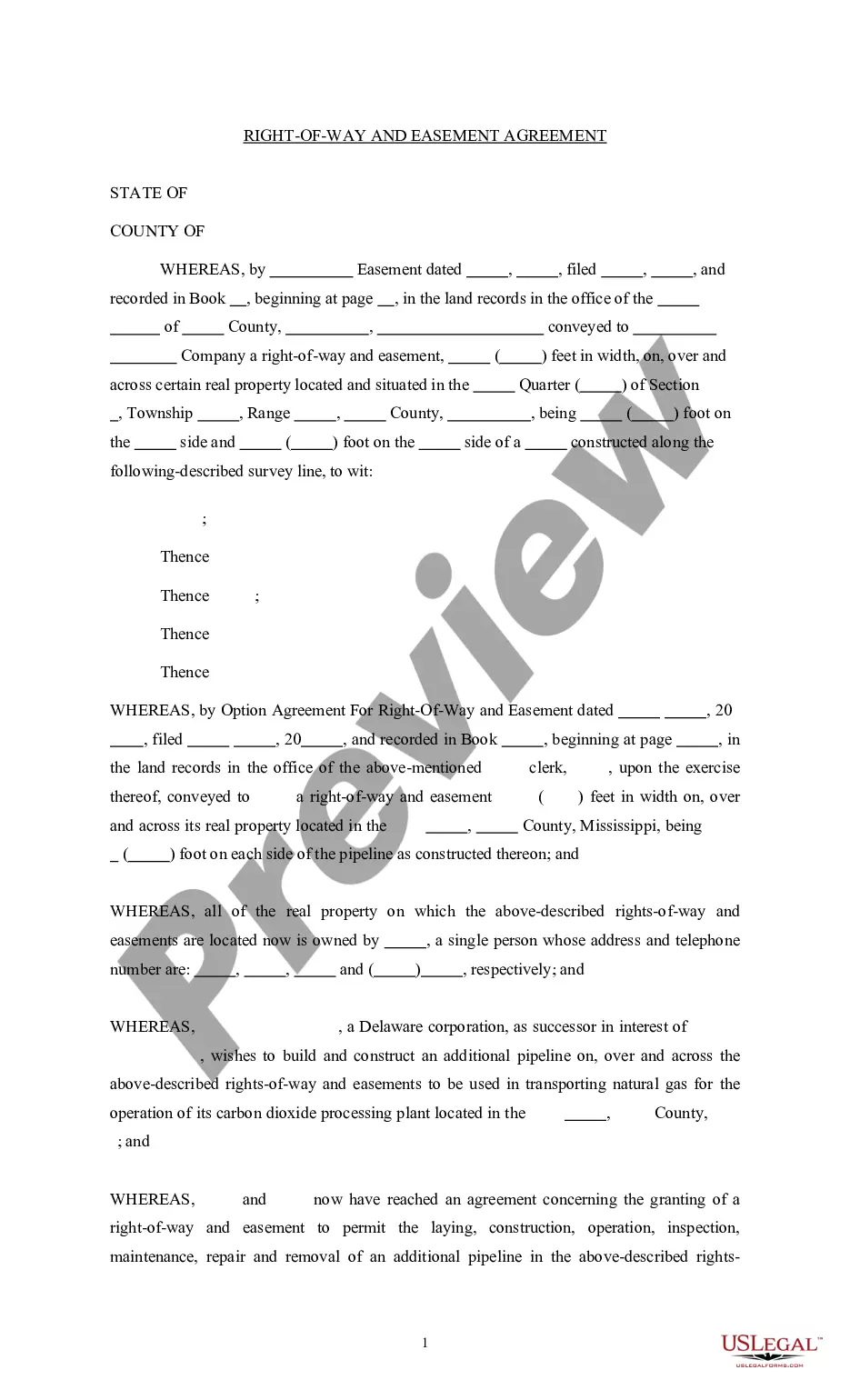
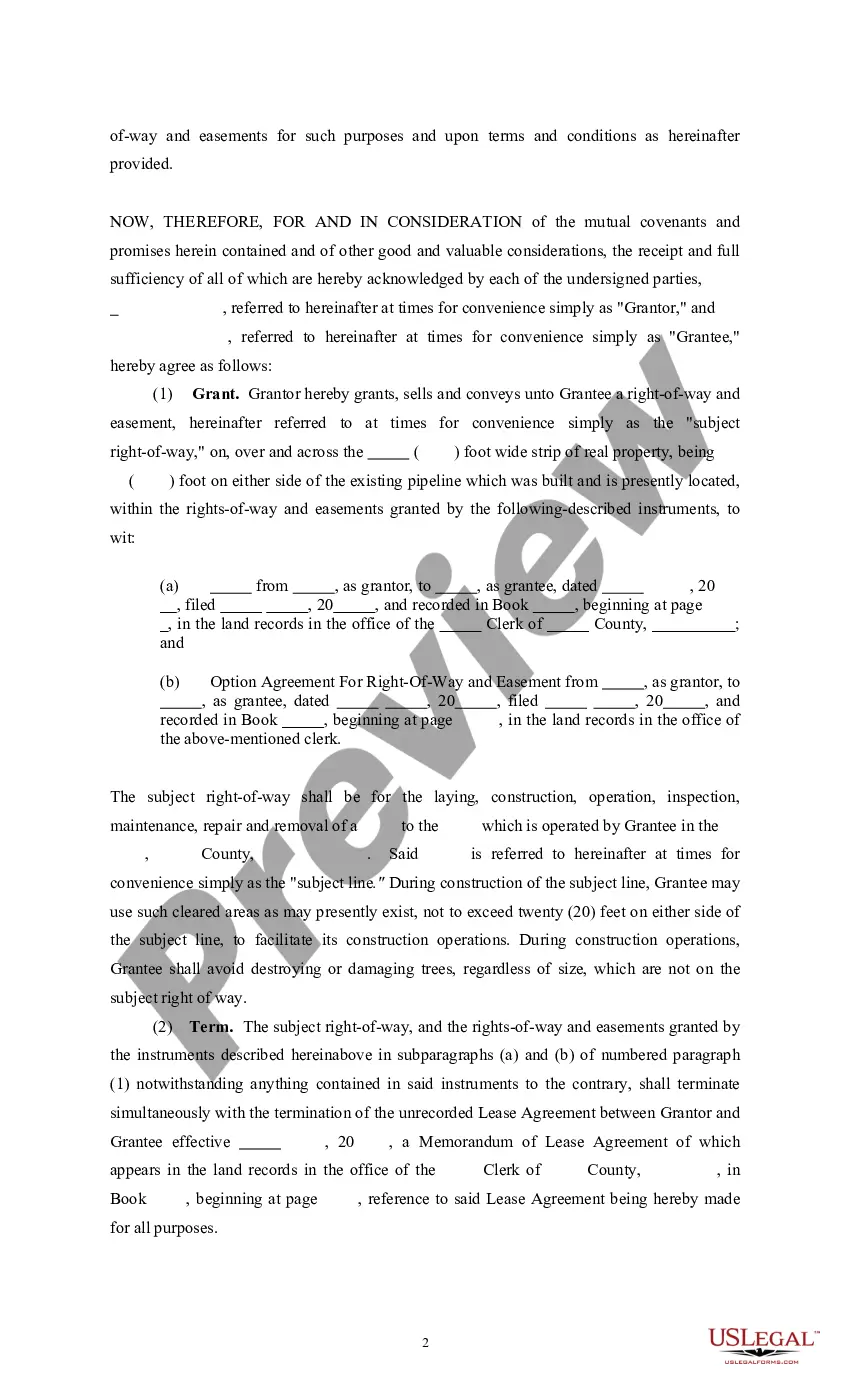
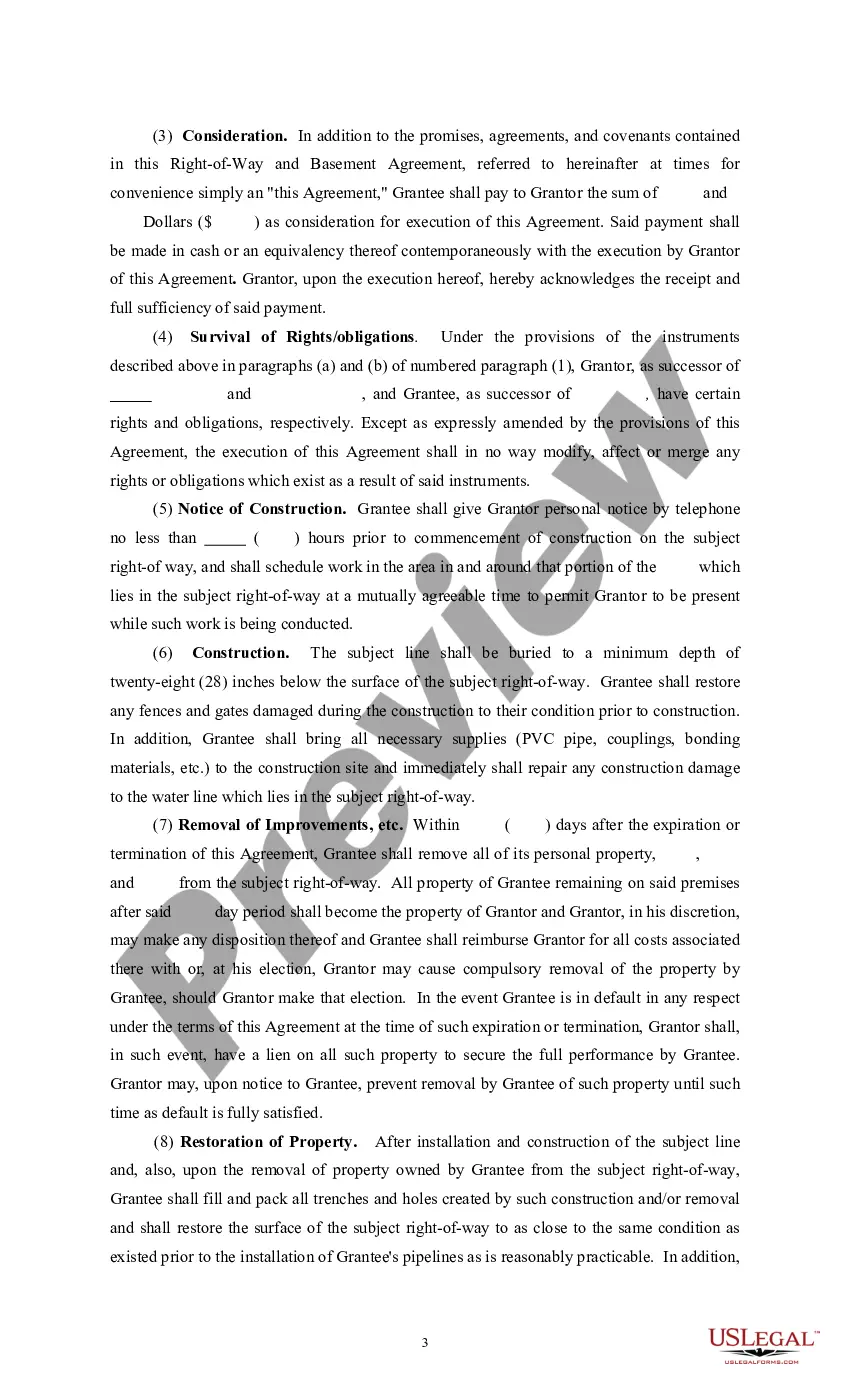
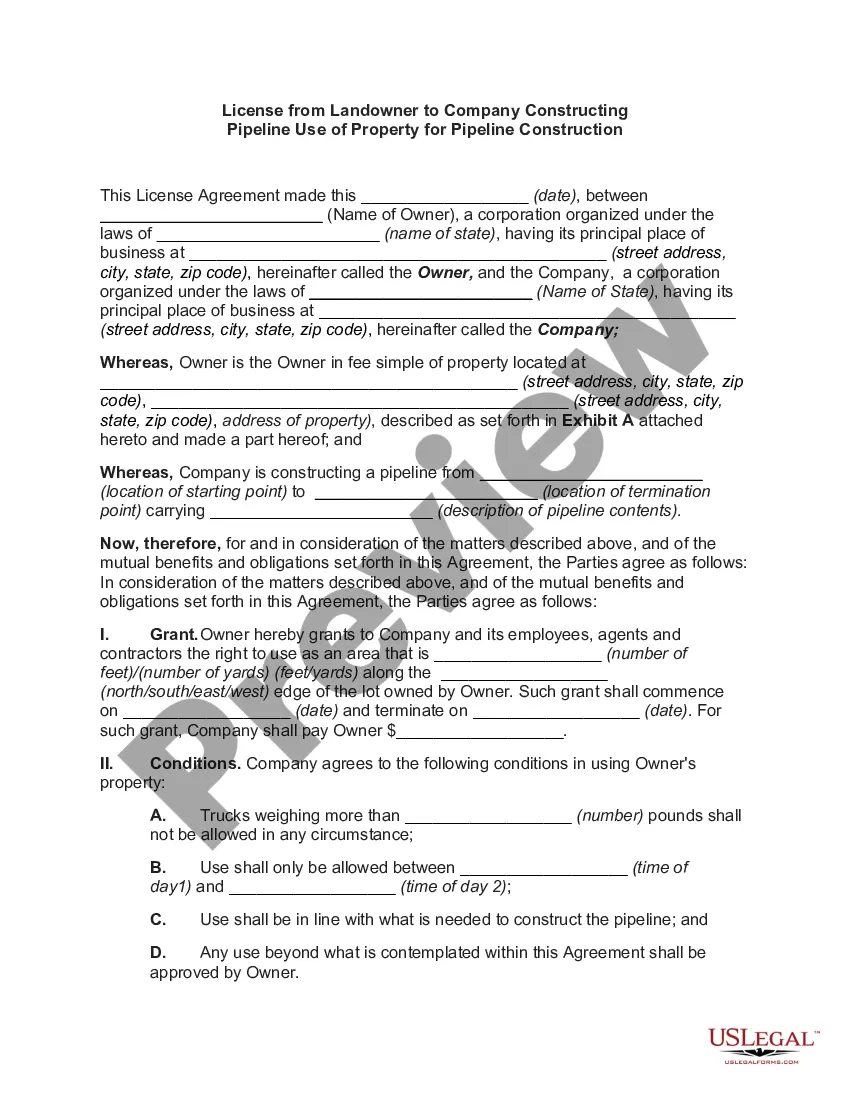
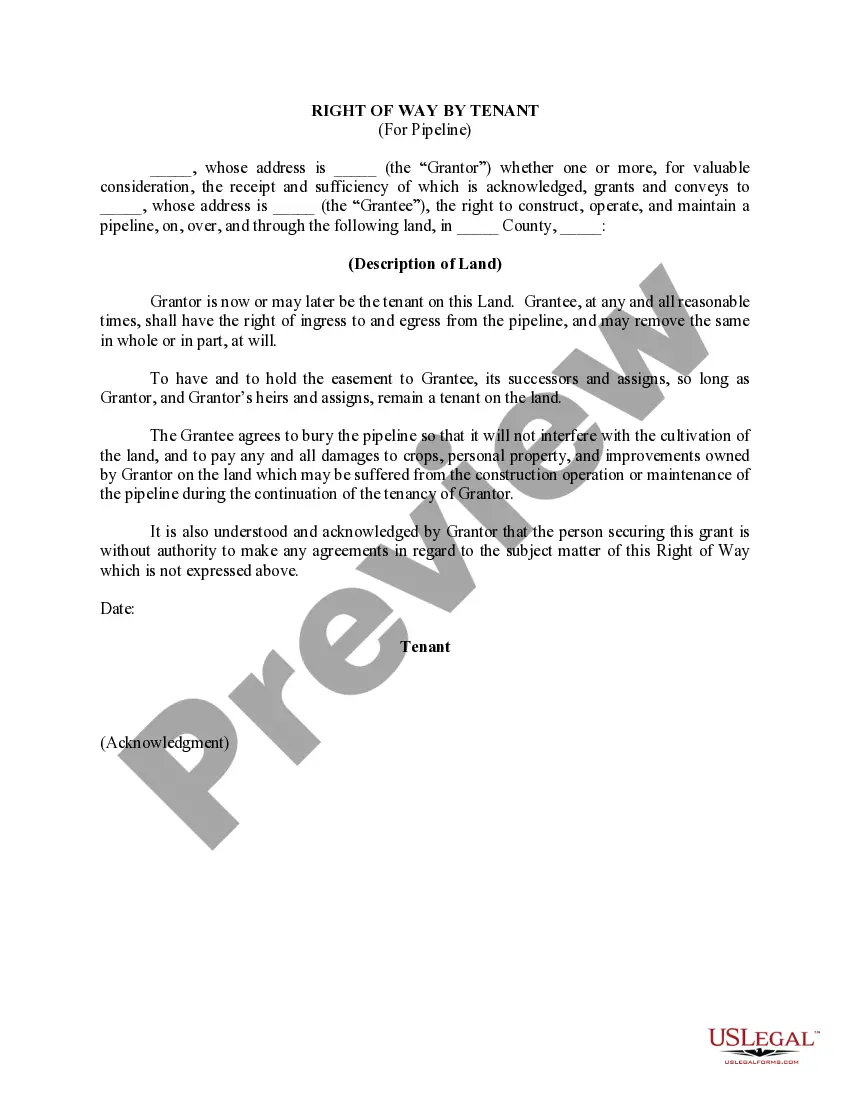
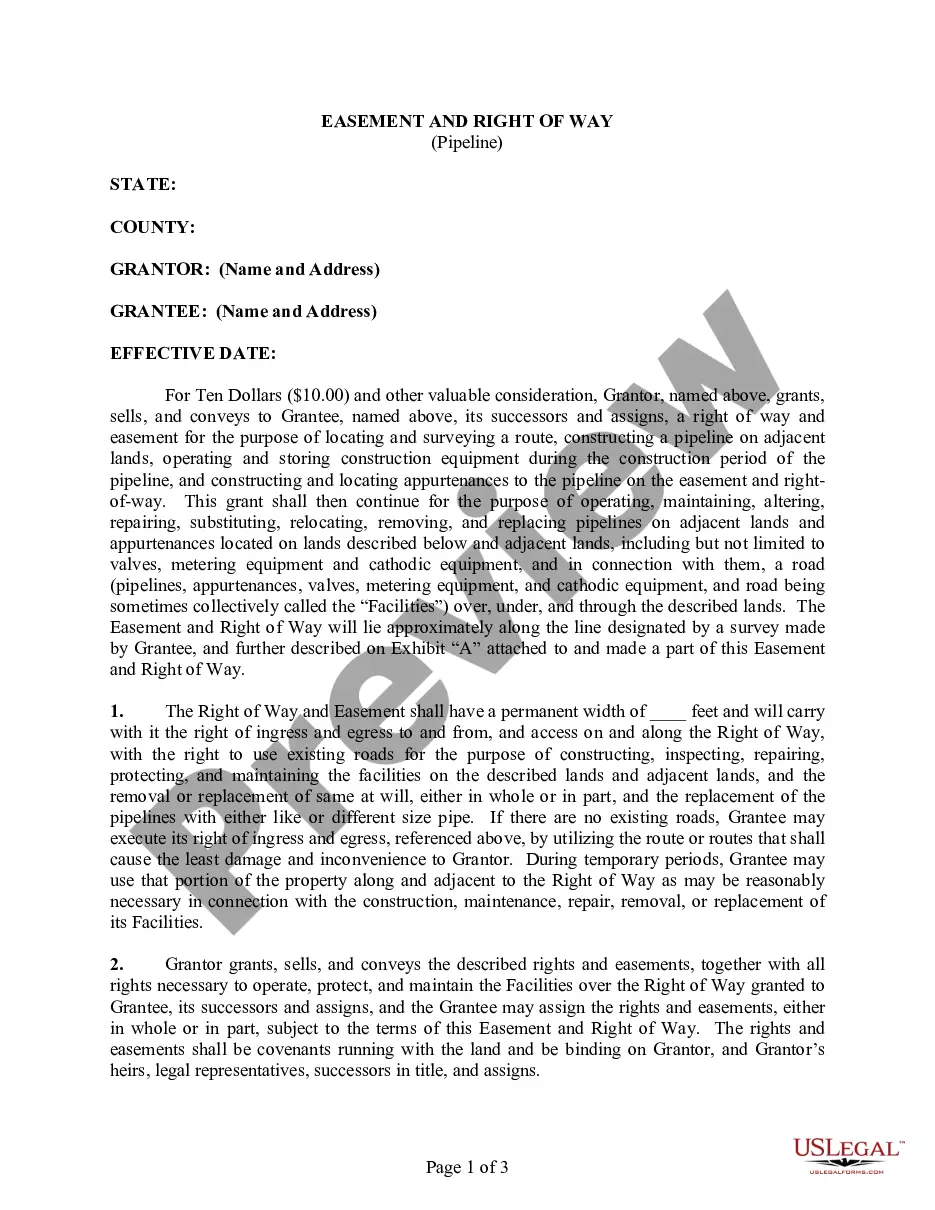
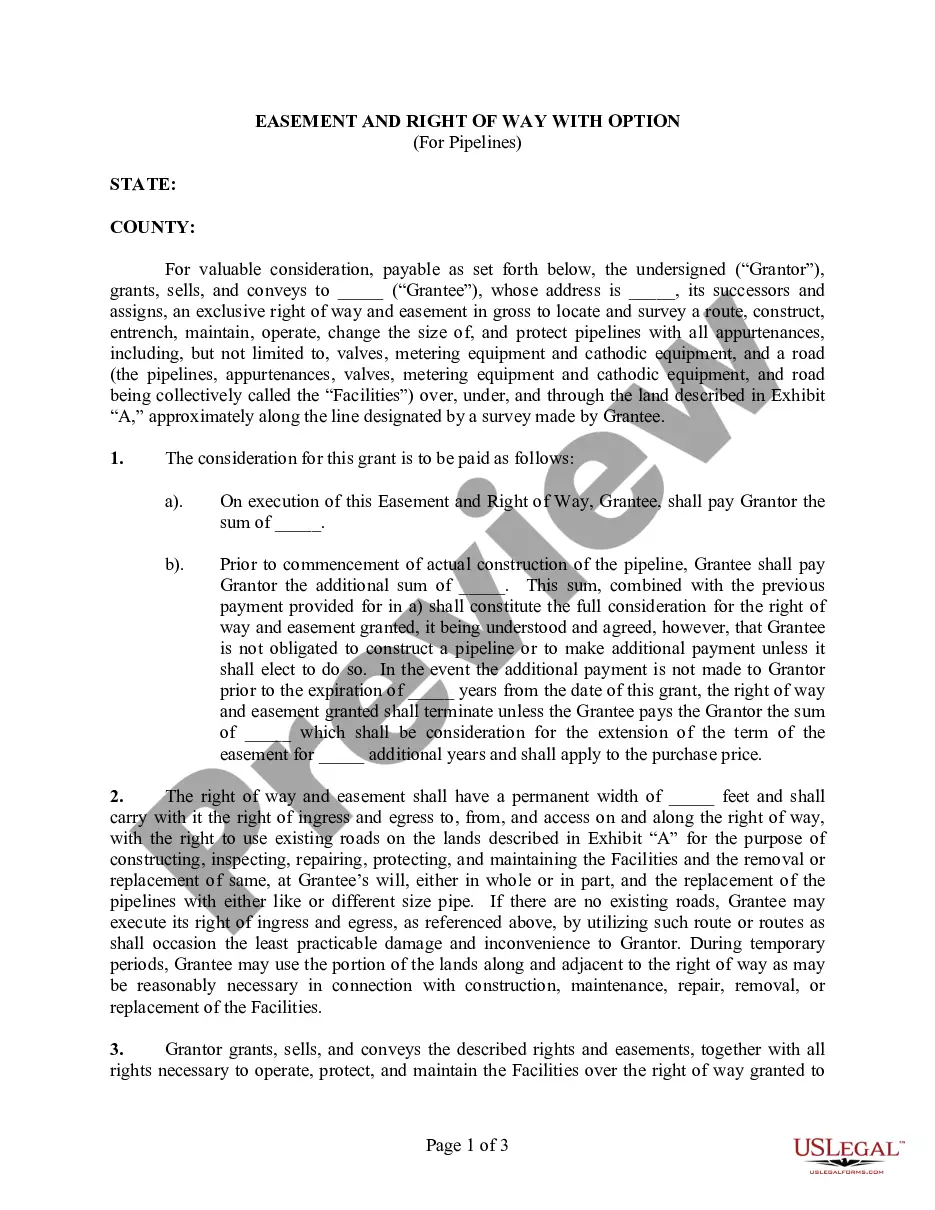
This Right of Way and Easement for Additional Pipeline form is a legal document that facilitates the construction of an additional pipeline across an existing easement. It grants one party the right to use another party's property for this specific purpose. Unlike standard easements, this form focuses specifically on the rights associated with adding pipelines and the obligations involved in such arrangements.
Key components of this form
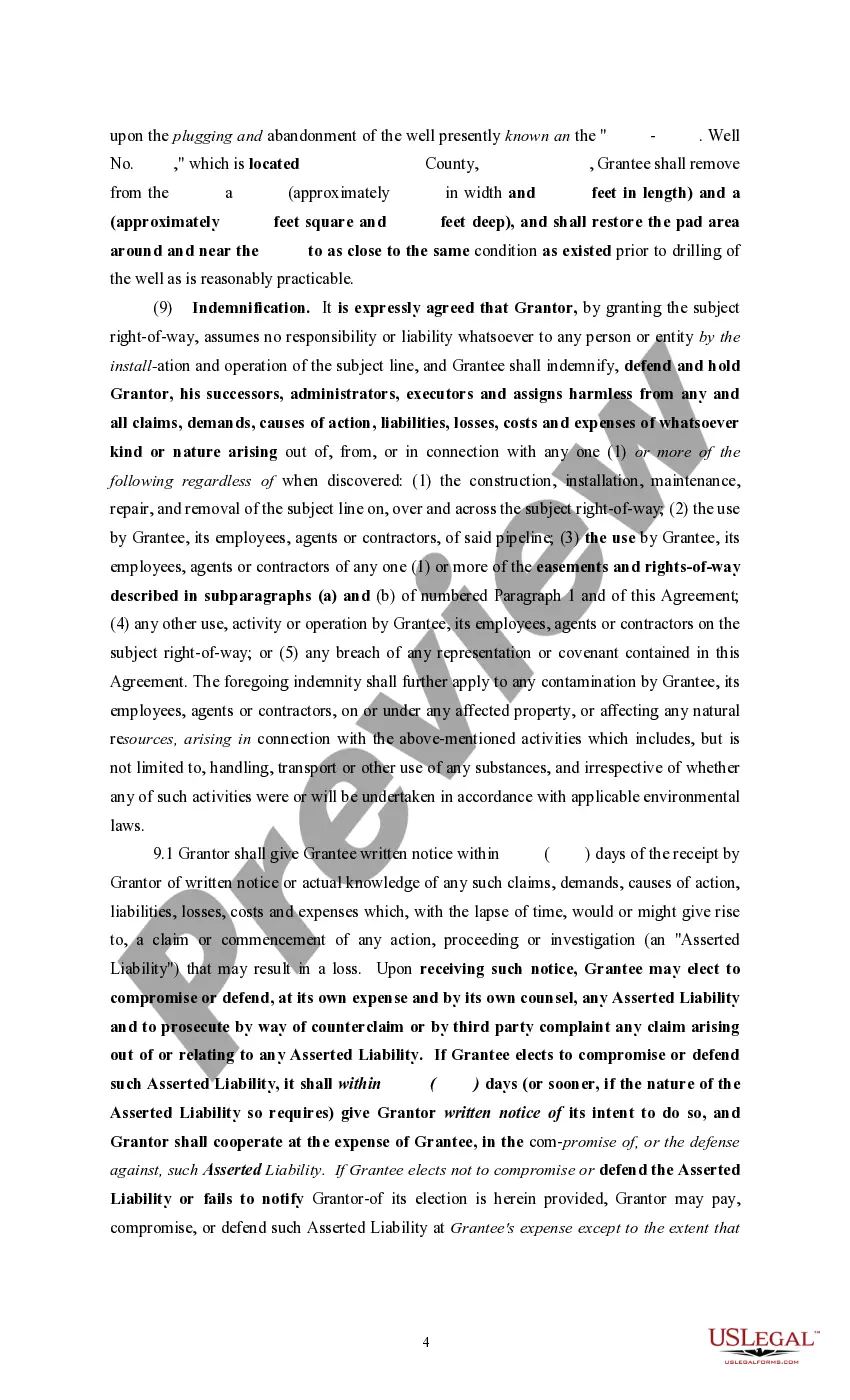
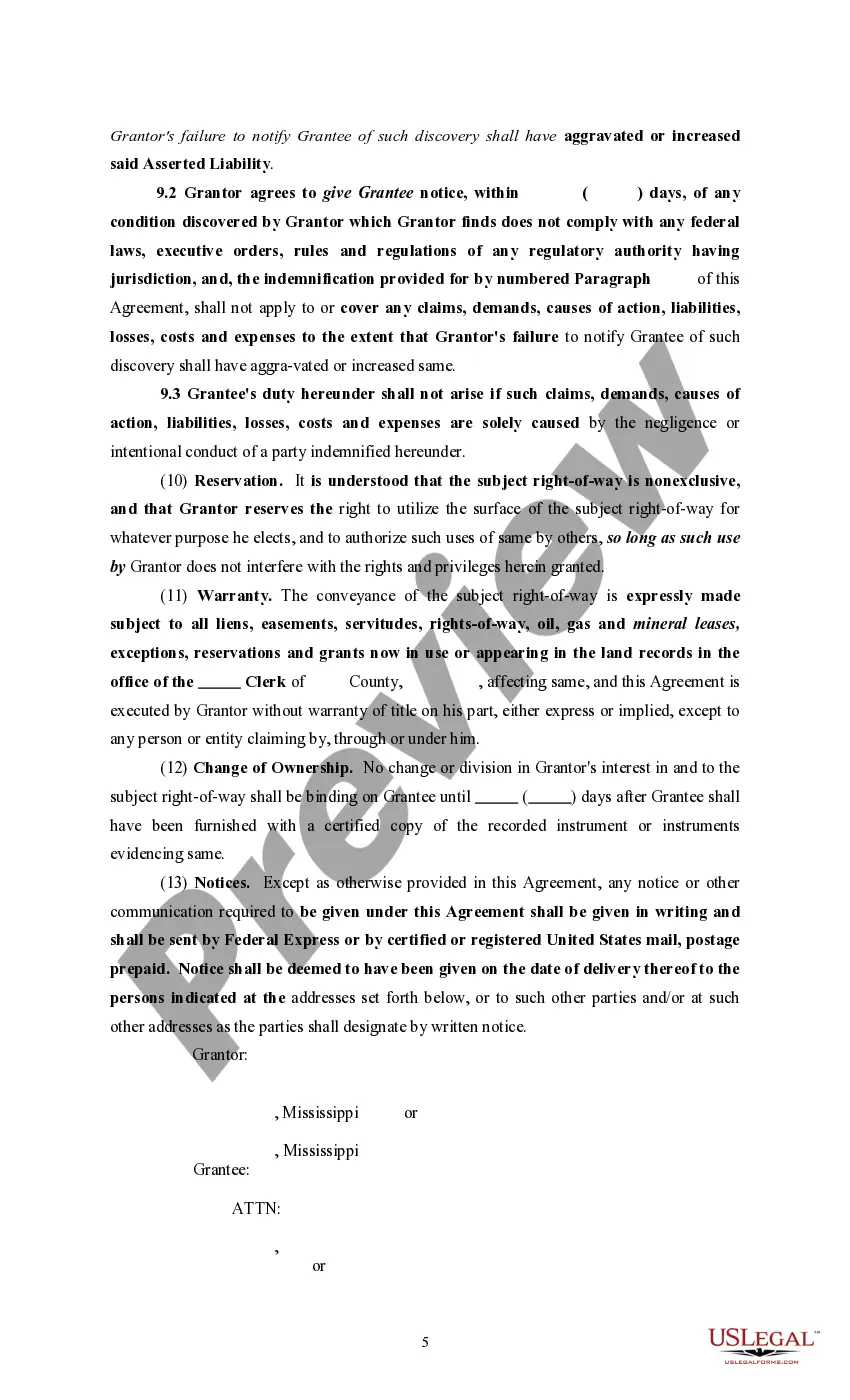
- Grantee's duty in cases of negligence or intentional conduct by the indemnified party.
- Reservation of the right for the Grantor to use the surface of the right of way for other purposes.
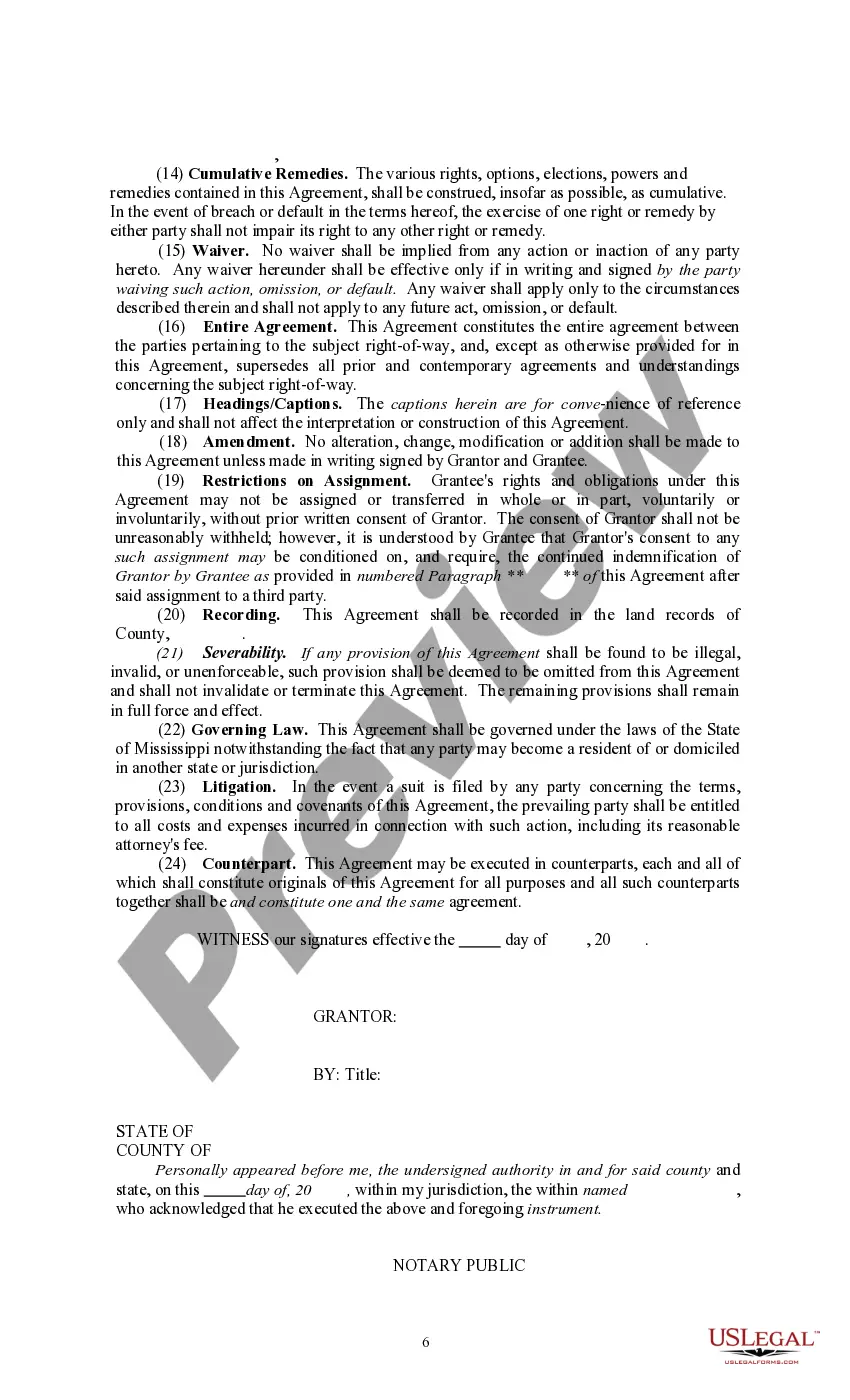
- Conditions under which waivers of the agreement are valid.
- Entire agreement clause, stating this document reflects all agreements pertaining to the easement.
- Governing law declaration specific to the State of Mississippi.

Common use cases
This form should be used when a property owner wants to allow utility companies or other parties to construct an additional pipeline on their property. It is particularly useful in situations where previous easements exist, and there is a need to formalize additional uses of the property for pipeline activities. Examples include expanding existing utility services or developing new infrastructure projects.
Who this form is for
- Property owners looking to grant additional easement rights.
- Utility companies needing permission for pipeline installation.
- Land lease holders managing easement agreements on behalf of landowners.
- Legal representatives drafting agreements for clients involved in property development.
Steps to complete this form
- Identify the parties involved by entering the names and addresses of the Grantor and Grantee.
- Clearly specify the property location that will be affected by the additional pipeline.
- Detail the specific rights being granted for the construction and maintenance of the pipeline.
- Include any reservations or restrictions the Grantor wants to maintain over the property.
- Sign and date the agreement, ensuring all parties receive a copy for their records.
Does this form need to be notarized?
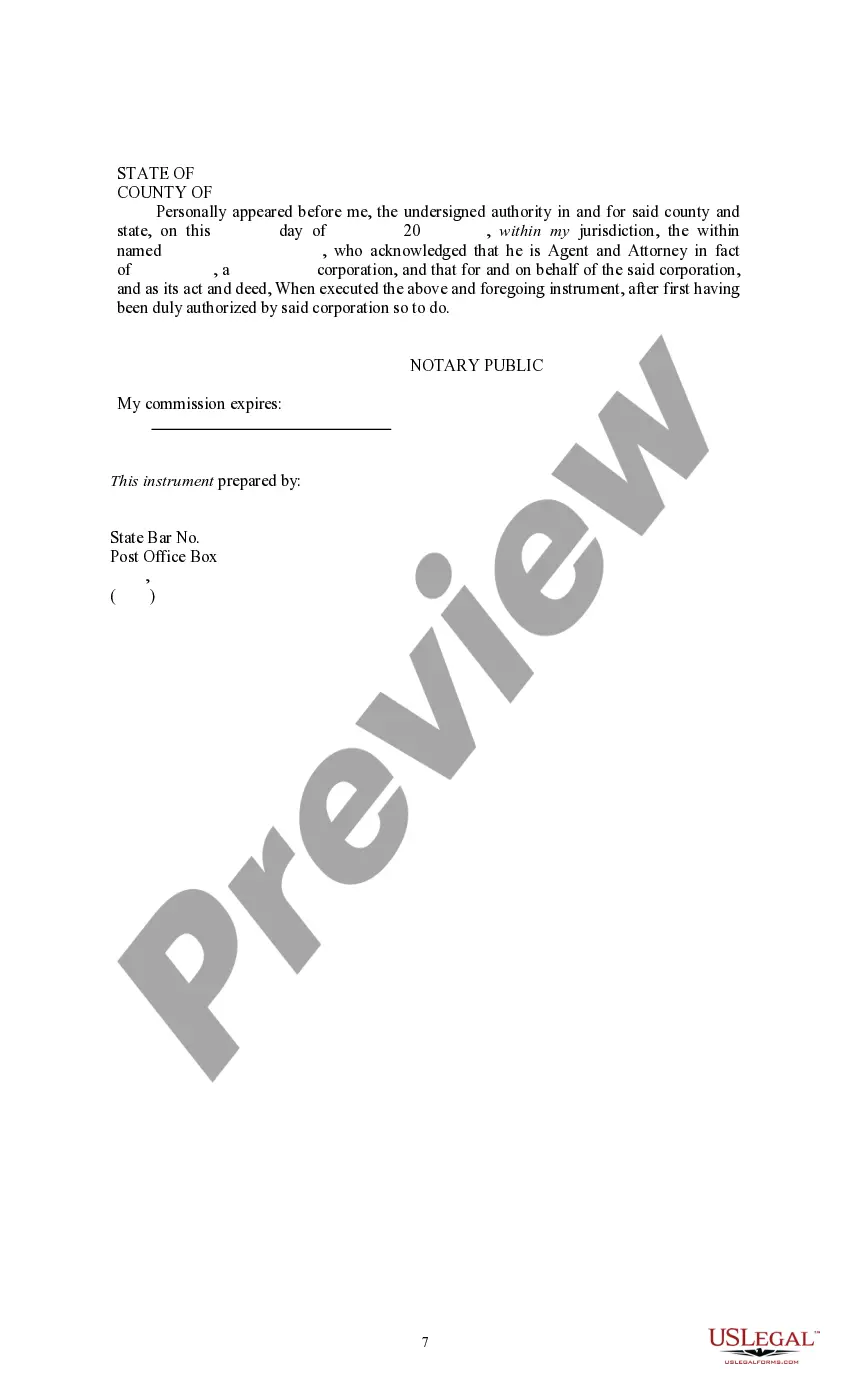
This form must be notarized to be legally valid. US Legal Forms provides secure online notarization powered by Notarize, allowing you to complete the process through a verified video call.
Get your form ready online
Our built-in tools help you complete, sign, share, and store your documents in one place.
Make edits, fill in missing information, and update formatting in US Legal Forms—just like you would in MS Word.
Download a copy, print it, send it by email, or mail it via USPS—whatever works best for your next step.
Sign and collect signatures with our SignNow integration. Send to multiple recipients, set reminders, and more. Go Premium to unlock E-Sign.
If this form requires notarization, complete it online through a secure video call—no need to meet a notary in person or wait for an appointment.
We protect your documents and personal data by following strict security and privacy standards.

Make edits, fill in missing information, and update formatting in US Legal Forms—just like you would in MS Word.

Download a copy, print it, send it by email, or mail it via USPS—whatever works best for your next step.

Sign and collect signatures with our SignNow integration. Send to multiple recipients, set reminders, and more. Go Premium to unlock E-Sign.

If this form requires notarization, complete it online through a secure video call—no need to meet a notary in person or wait for an appointment.

We protect your documents and personal data by following strict security and privacy standards.
Common mistakes
- Failing to include the specific legal description of the property.
- Not outlining the rights and responsibilities of both parties clearly.
- Leaving out the reservation of rights, if applicable.
- Not obtaining signatures from all required parties.
Advantages of online completion
- Convenience of accessing a ready-made template that can be downloaded and customized.
- Easy editability to fit specific needs and terms of the easement.
- Reliability of professionally drafted legal language prepared by licensed attorneys.
Legal use & context
- This form serves to formalize the arrangement between the property owner and the entity seeking easement rights, legally binding both parties to the terms.
- Proper use of this form can help protect the rights of both the Grantor and the Grantee concerning property usage and maintenance responsibilities.
Main things to remember
- The Right of Way and Easement for Additional Pipeline form is essential for allowing the construction of pipelines over existing easements.
- Understanding and completing this form accurately ensures clear communication of rights and responsibilities.
- State-specific regulations, especially in Mississippi, govern the use and creation of easements, so users should be aware of these when completing the form.
Looking for another form?



Form popularity
FAQ
How much money should landowners get when an oil or gas pipeline crosses their land? As it stands, landowners receive a one-time payment roughly based on the length of the pipeline, with rates varying from $5 to $50 per foot or more for a Marcellus or Utica shale pipeline right-of-way agreement.
A pipeline easement specifically gives the easement holder the right to build and maintain a pipeline on a landowner's property. It doesn't grant the easement holder actual ownership of the land, just a right to use the land for pipeline purposes.
A pipeline right-of-way is a strip of land over and around natural gas pipelines, with some of the property owner's legal rights have been granted to a pipeline operator.These easements can be both permanent and temporary, with temporary easements granting the pipeline company additional space during construction.
Easements are treated as a recovery of the basis of the property first, with any excess proceeds treated as capital gain, which is taxed at a lower rate than ordinary income. The basis of property that offsets an easement is limited to the basis of the affected acres or square footage.
If an easement is 50 rods long, that is almost an acre. In a recent case, a pipeline company paid some owners $180 per rod and others $767 per rod for the same project.
For example, the ordinance bans new buildings within 25 feet of a hazardous liquids pipeline and increases construction and building standards on most structures within 200 feet of a pipeline.
Pipelines can reduce property values by 5 to 40 percent by making them less attractive to potential buyers, according to local Realtors.
How much money should landowners get when an oil or gas pipeline crosses their land? As it stands, landowners receive a one-time payment roughly based on the length of the pipeline, with rates varying from $5 to $50 per foot or more for a Marcellus or Utica shale pipeline right-of-way agreement.
A right-of-way is a strip of land typically about 50 feet wide (depending on location) containing a pipeline or other utility. Many rights-of-way contain more than one underground pipeline or utility and can be wider depending on the number of infrastructure assets within.