Consent To Encroachment - Into Easement
What this document covers
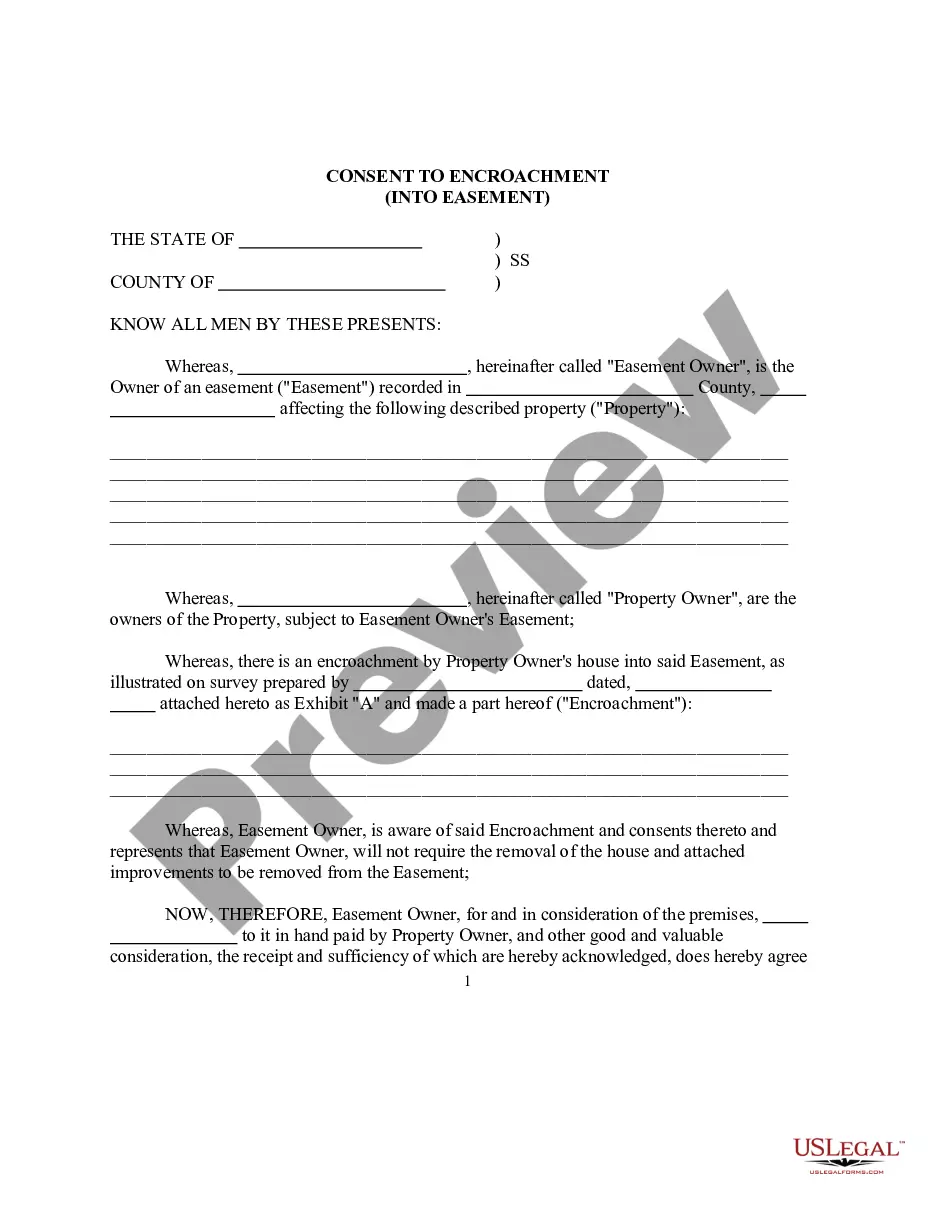
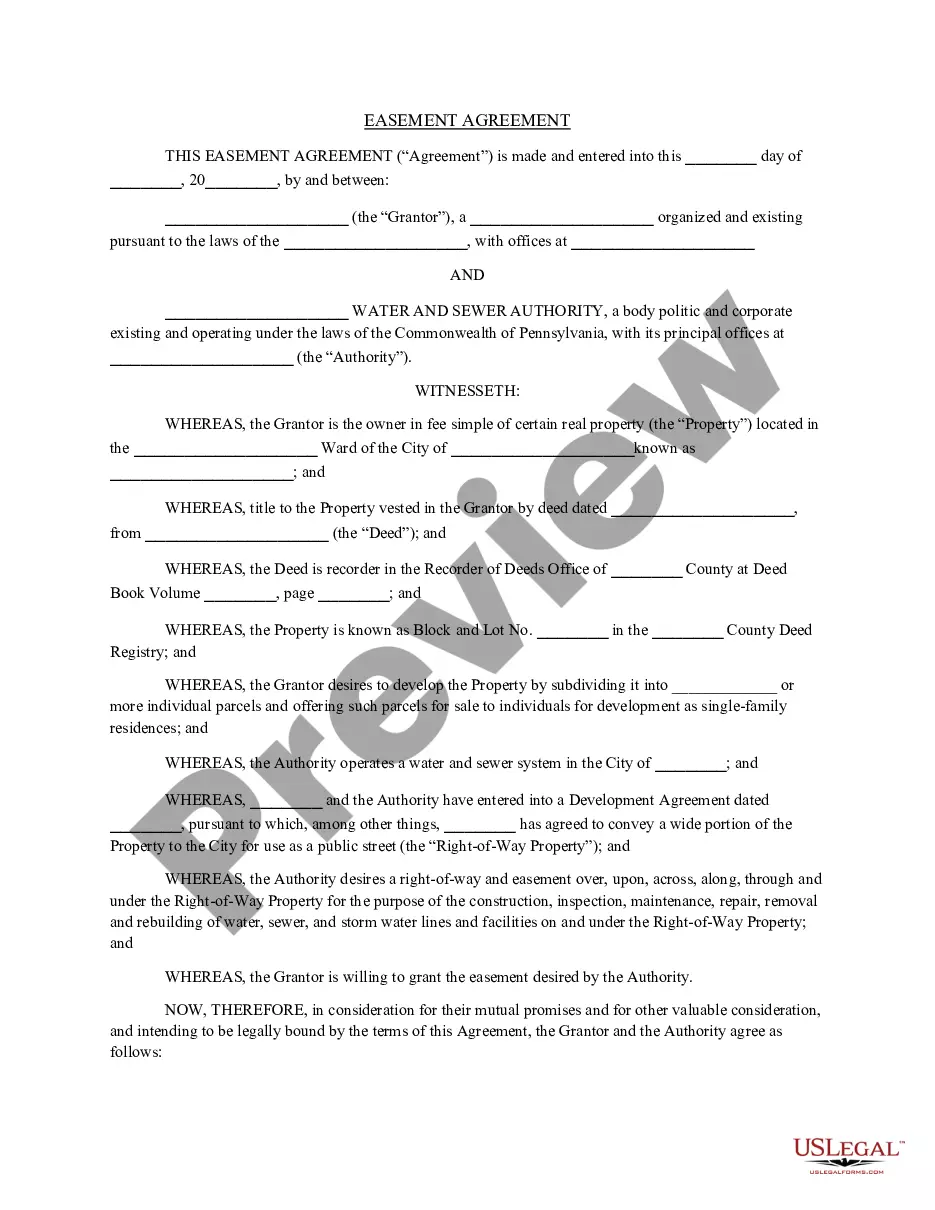
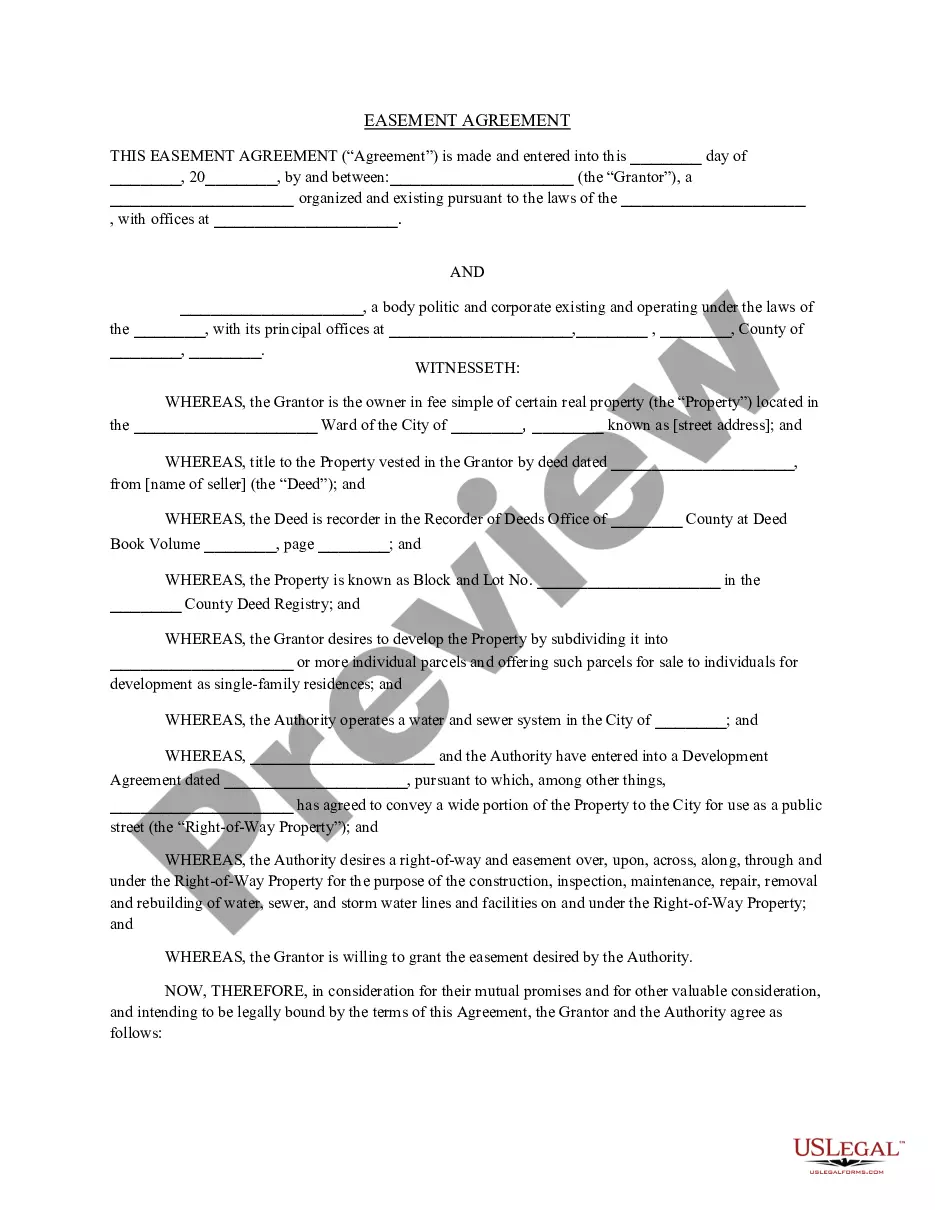
The Consent to Encroachment into Easement is a legal document used in real estate transactions to address situations where a property, such as a house, encroaches upon an established easement. This form allows the Easement Owner to acknowledge and consent to the encroachment, affirming that they will not demand the removal of the encroaching structure or its improvements. Unlike other property consent forms, this document specifically focuses on easements and encroachments, providing a clear resolution for property owners.
Key components of this form
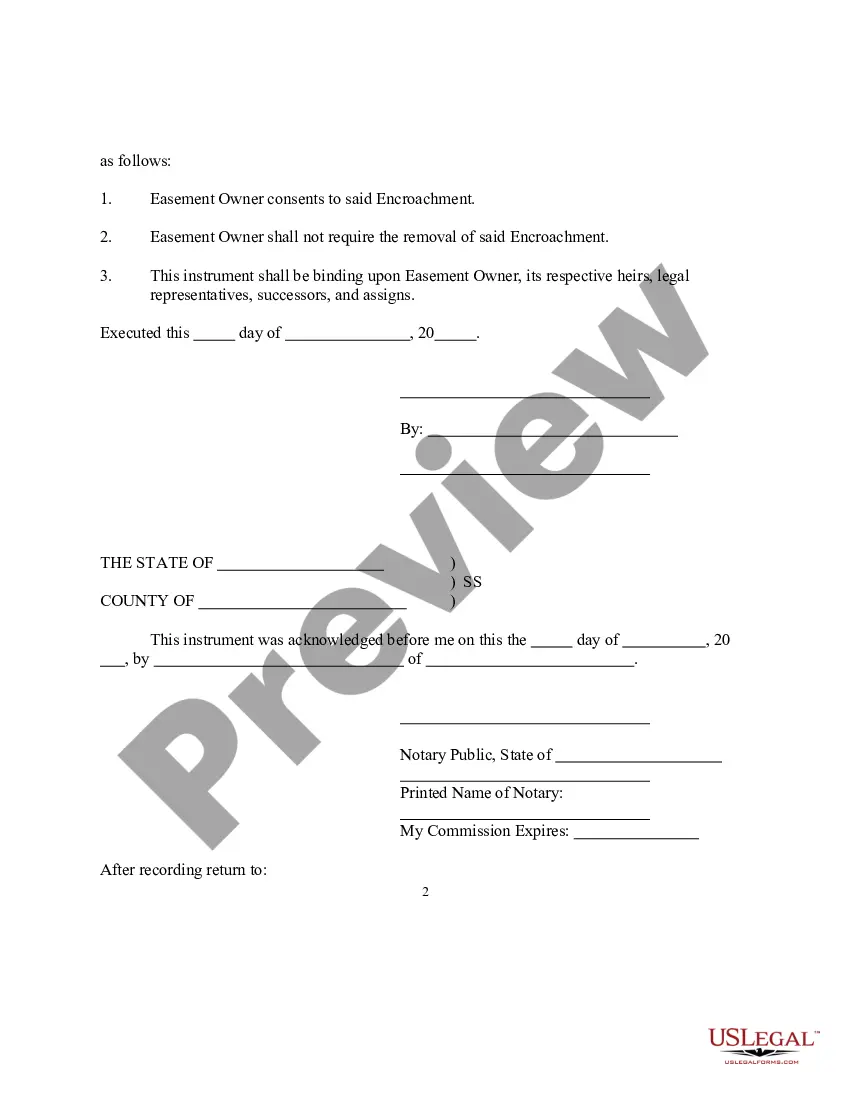
- Easement Owner's consent to the encroachment.
- A clause stating the Easement Owner will not require the removal of the encroachment.
- Binding effect on the Easement Owner and their legal representatives, heirs, successors, and assigns.
Common use cases
This form is necessary in scenarios where a property encroaches on an easement area, and the Easement Owner must formally acknowledge this situation. It is often used when property boundaries are not clearly defined, and mutual consent is needed to prevent disputes over the encroachment. For example, if a homeowner discovers that their fence or structure extends into an easement, they can use this form to secure consent from the Easement Owner.
Who this form is for
This form is ideal for:
- Homeowners who need to formalize an agreement regarding an encroachment on an easement.
- Property developers planning structures that may intersect with existing easements.
- Real estate attorneys assisting clients in resolving easement disputes.
- Anyone involved in a property transaction where easement encroachments are present.
Instructions for completing this form
- Identify the parties involved, including the Easement Owner and the property owner with the encroachment.
- Clearly specify the property and the nature of the encroachment.
- Include the date of execution and any additional necessary identifiers, such as property surveys.
- Have the Easement Owner review and sign the document to grant consent.
- Ensure copies are distributed to all parties involved for their records.
Is notarization required?
This form does not typically require notarization unless specified by local law. It is advisable to check with local regulations to confirm any notarization requirements for legal validity.
Get your form ready online
Our built-in tools help you complete, sign, share, and store your documents in one place.
Make edits, fill in missing information, and update formatting in US Legal Forms—just like you would in MS Word.
Download a copy, print it, send it by email, or mail it via USPS—whatever works best for your next step.
Sign and collect signatures with our SignNow integration. Send to multiple recipients, set reminders, and more. Go Premium to unlock E-Sign.
If this form requires notarization, complete it online through a secure video call—no need to meet a notary in person or wait for an appointment.
We protect your documents and personal data by following strict security and privacy standards.
Make edits, fill in missing information, and update formatting in US Legal Forms—just like you would in MS Word.
Download a copy, print it, send it by email, or mail it via USPS—whatever works best for your next step.
Sign and collect signatures with our SignNow integration. Send to multiple recipients, set reminders, and more. Go Premium to unlock E-Sign.

If this form requires notarization, complete it online through a secure video call—no need to meet a notary in person or wait for an appointment.
We protect your documents and personal data by following strict security and privacy standards.
Common mistakes
- Failing to clearly identify the encroaching structure or its location.
- Not securing the agreement from all relevant parties involved in the easement.
- Ignoring state-specific legal requirements or formatting.
- Not retaining copies of the signed consent for future reference.
Benefits of using this form online
- Convenience of downloading the form anytime, anywhere.
- Editable templates that allow for quick updates based on specific needs.
- Access to forms drafted by licensed attorneys, ensuring legal reliability.
Key takeaways
- The Consent to Encroachment into Easement is essential for resolving encroachments.
- Completing the form helps prevent future disputes over property boundaries.
- Consult legal expertise if unsure about local easement laws or requirements.
Looking for another form?
Form popularity
FAQ
What is the primary danger of allowing an encroachment? Over time, the encroachment may become an easement by prescription that damages the property's market value.
There is a term for this battle of land: encroachment. An encroachment happens when a fence or another piece of your neighbor's property crosses the property lines. Other examples of encroachments could involve trees, parts of a building, fencing or any other fixtures located on both pieces of property.
What is the primary danger of allowing an encroachment? Overtime, the encroachment may become an easement by prescription that damages the property's market value. What distinguishes a lien from other types of encumbrance? It involves a monetary claim against the value of a property.
An encroachment into the public right-of-way is defined as any intrusion, irrespective of height or size, into a sidewalk, street, or other public right-of-way and includes, but is not limited to, fill material, retaining walls, rockeries, plants either deliberately planted or growing from adjacent property, or any
Easements and encroachments both involve use of one person's land by another, but they're not the same.As FreeAdvice Legal explains, easements are usually in writing and documented, and they generally pass from owner to owner. An encroachment happens when someone uses another person's property without permission.
The term encroachment refers to a situation in real estate where a property owner violates the property rights of his neighbor by building on or extending a structure to the neighbor's land or property intentionally or otherwise.
The legal term easement refers to the legal right to use another person's real property, for a specific purpose and a specific amount of time. An easement gives a person the legal right to go through another person's land, as long as the usage is consistent with the specified easement restrictions.
Easements and encroachments both involve use of one person's land by another, but they're not the same.As FreeAdvice Legal explains, easements are usually in writing and documented, and they generally pass from owner to owner. An encroachment happens when someone uses another person's property without permission.
A Land Survey Works Wonders for Boundary Disputes. If you feel like your neighbor has or is developing on top of your land, you may want to get a professional land survey. Talk it Over and Offer Concessions. Bring on a Neutral Third Party. Hire a Qualified Estate Attorney.