Controlled Substances Offenses - Controlled Substance Defined
About this form
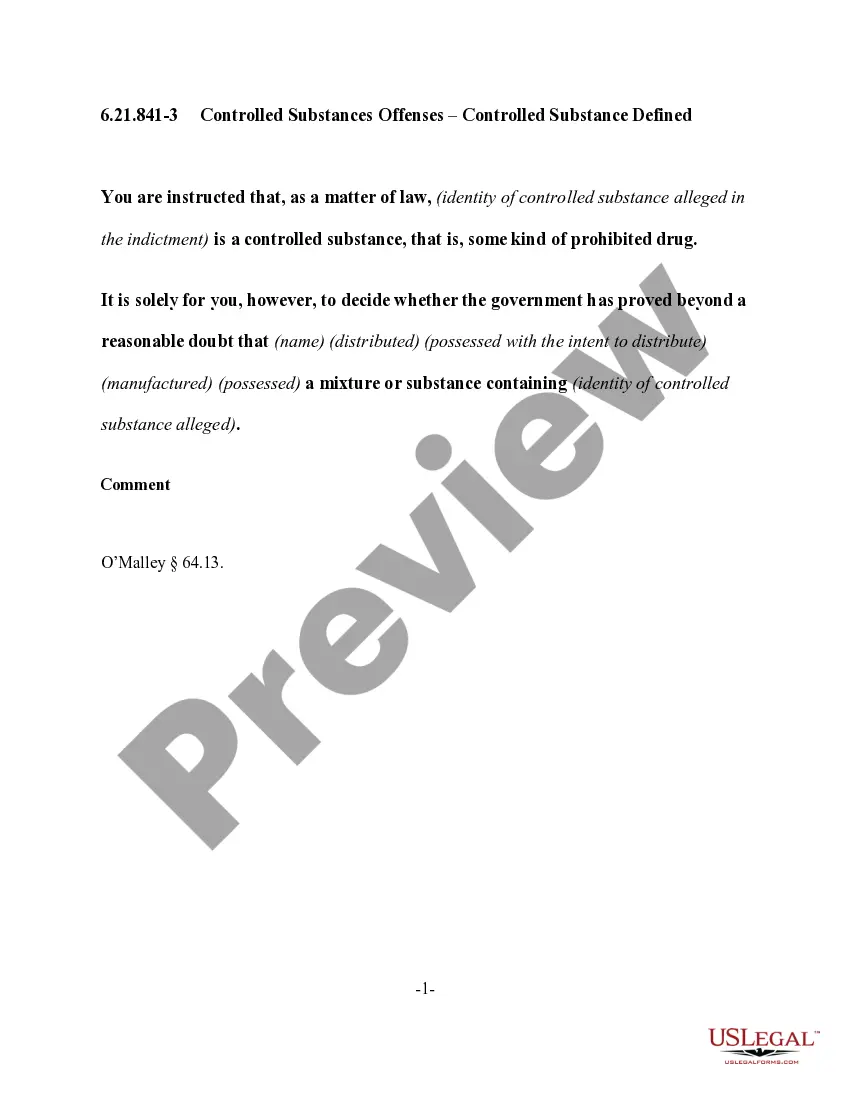
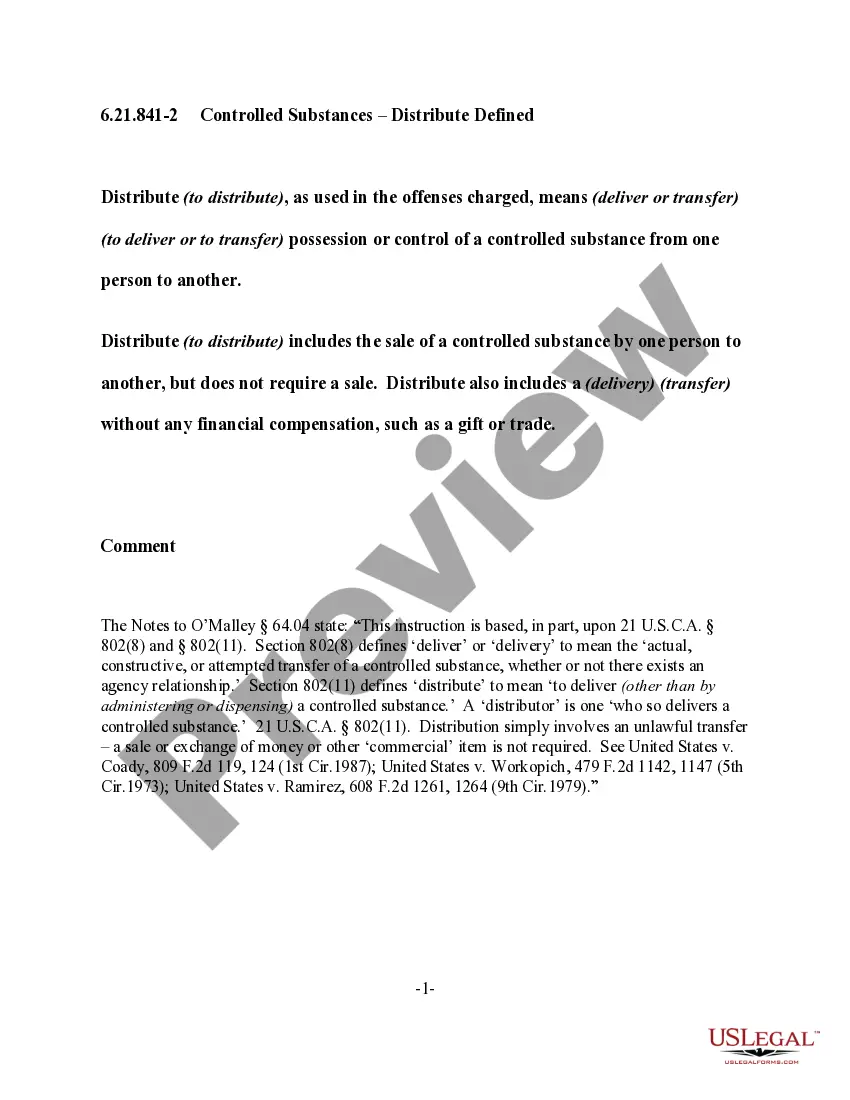
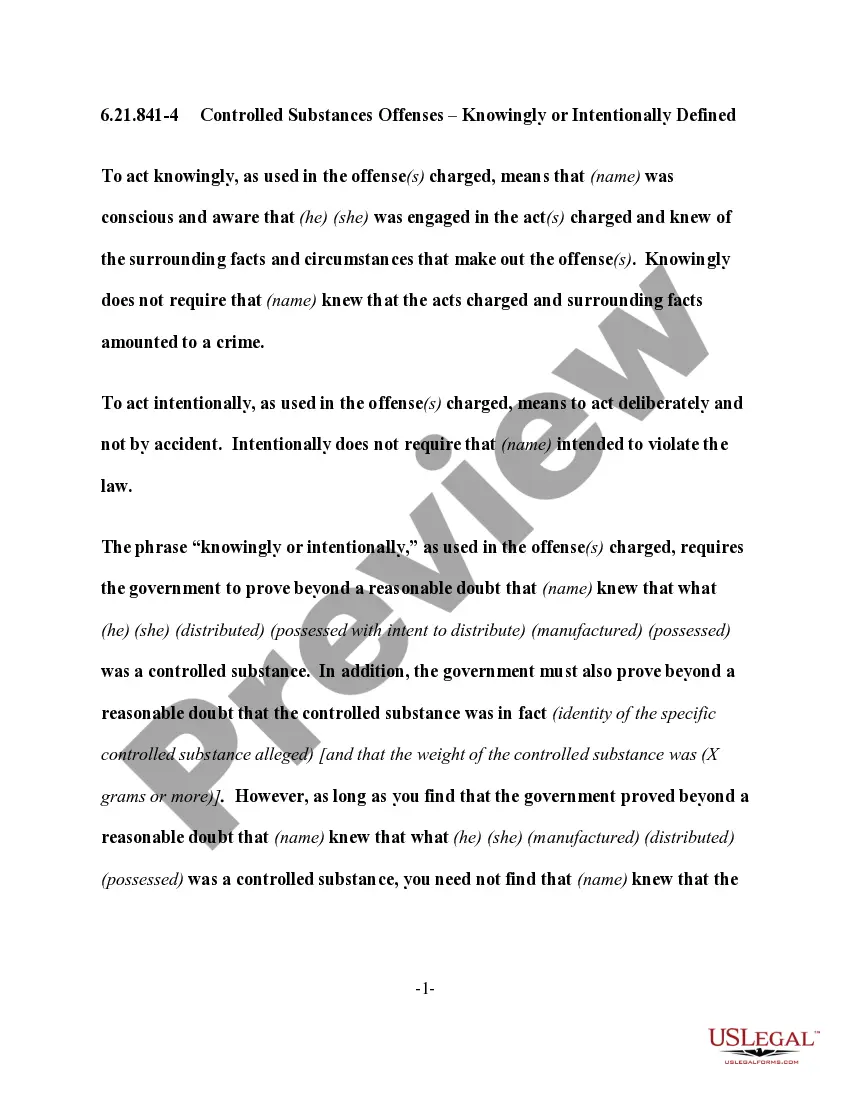
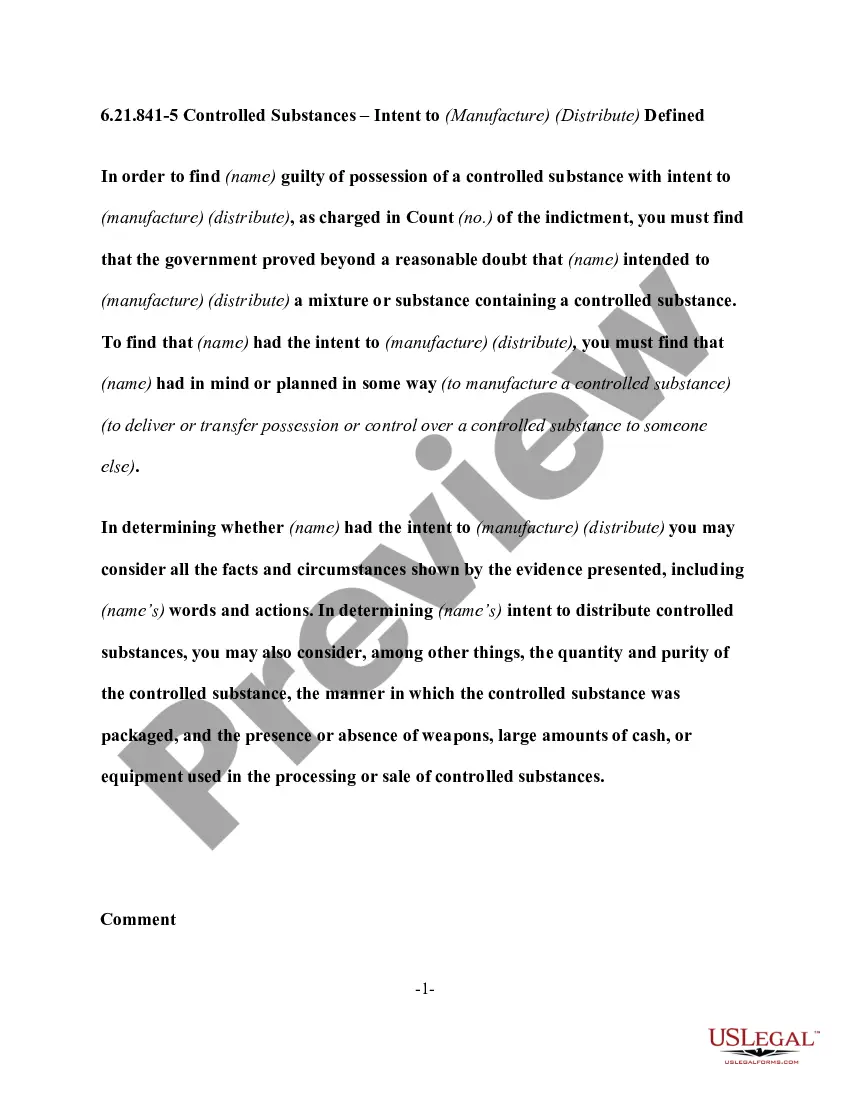
The Controlled Substances Offenses - Controlled Substance Defined form is a legal document used to classify specific drugs as controlled substances within criminal proceedings. This form is crucial in cases involving allegations of drug distribution, possession, or manufacturing. It provides a clear definition of what constitutes a controlled substance and sets the legal framework for assessing the government's burden of proof in related criminal cases. Unlike other legal forms related to drug offenses, this form specifically delineates the definition of the substance in question, allowing for precise legal interpretations.
Key parts of this document
- Legal instruction regarding the identification of the controlled substance alleged in the indictment.
- Clarification that the jury must decide if the evidence supports the charge based on reasonable doubt.
- Specifications regarding the actions taken concerning the controlled substance, such as distribution, possession, or manufacturing.

When this form is needed
This form should be used in criminal cases where an individual faces charges related to controlled substances. It is applicable when the prosecution needs to establish that a specific substance is classified as controlled and outlines the suspect's actions regarding that substance. This form is essential for ensuring that the legal definitions and standards are adhered to during a trial.
Who should use this form
- Defense attorneys representing individuals charged with drug-related offenses.
- Prosecutors outlining the nature of the charges in drug cases.
- Juries tasked with determining the validity of the evidence presented in drug cases.
Instructions for completing this form
- Identify and state the controlled substance alleged in the indictment.
- Clearly specify the actions attributed to the defendant, such as distribution or possession.
- Ensure the wording meets the standard for reasonable doubt as per legal instructions.
Notarization requirements for this form
This form usually doesn’t need to be notarized. However, local laws or specific transactions may require it. Our online notarization service, powered by Notarize, lets you complete it remotely through a secure video session, available 24/7.
Get your form ready online
Our built-in tools help you complete, sign, share, and store your documents in one place.
Make edits, fill in missing information, and update formatting in US Legal Forms—just like you would in MS Word.
Download a copy, print it, send it by email, or mail it via USPS—whatever works best for your next step.
Sign and collect signatures with our SignNow integration. Send to multiple recipients, set reminders, and more. Go Premium to unlock E-Sign.
If this form requires notarization, complete it online through a secure video call—no need to meet a notary in person or wait for an appointment.
We protect your documents and personal data by following strict security and privacy standards.

Make edits, fill in missing information, and update formatting in US Legal Forms—just like you would in MS Word.

Download a copy, print it, send it by email, or mail it via USPS—whatever works best for your next step.

Sign and collect signatures with our SignNow integration. Send to multiple recipients, set reminders, and more. Go Premium to unlock E-Sign.

If this form requires notarization, complete it online through a secure video call—no need to meet a notary in person or wait for an appointment.

We protect your documents and personal data by following strict security and privacy standards.
Mistakes to watch out for
- Failing to accurately identify the controlled substance, which can lead to legal challenges.
- Omitting critical details about the defendant's actions concerning the substance.
- Neglecting to align definitions with state-specific laws, resulting in potential inconsistencies.
Why complete this form online
- Convenience of downloading and filling out the form from anywhere.
- Editability allows for easy adjustments to match specific case needs.
- Reliability of templates drafted by licensed attorneys ensures legal accuracy.
Looking for another form?

Form popularity
FAQ
Controlled substances are drugs or chemicals that have the potential to be addictive or habit-forming. The United States Drug Enforcement Agency (DEA) divides controlled substances into 5 categories called Schedules based upon substances' potential for abuse and addictiveness and its' usefulness in medicine.
When considering only their chemical makeup, there are six main classifications of drugs: alcohol, opioids, benzodiazepines, cannabinoids, barbiturates, and hallucinogens. Out of all the thousands of drugs that are out there, both prescription and illegal, each one can be categorized under one of these six headings.
Controlled Drugs Schedule I ? drugs with a high abuse risk. These drugs have NO safe, accepted medical use in the United States.Schedule II ? drugs with a high abuse risk, but also have safe and accepted medical uses in the United States.Schedule III, IV, or V ? drugs with an abuse risk less than Schedule II.
The Controlled Substances Act (CSA) places all substances which were in some manner regulated under existing federal law into one of five schedules. This placement is based upon the substance's medical use, potential for abuse, and safety or dependence liability.
Controlled substances are grouped into seven categories: stimulants, depressants, cannabis, narcotics, hallucinogens, anabolic steroids, and inhalants.
The most commonly known schedule 6 substance is marijuana, though other unconventional recreational drugs are also included, such as toluene (in spray paint), amyl nitrite (poppers), and nitrous oxide (in many aerosols).
Controlled substances include opioids, stimulants, depressants, hallucinogens, and anabolic steroids. Controlled substances with known medical use, such as morphine, Valium, and Ritalin, are available only by prescription from a licensed medical professional.
Drugs, substances, and certain chemicals used to make drugs are classified into five (5) distinct categories or schedules depending upon the drug's acceptable medical use and the drug's abuse or dependency potential.