Controlled Substances Offenses - Distribute Defined
What is this form?
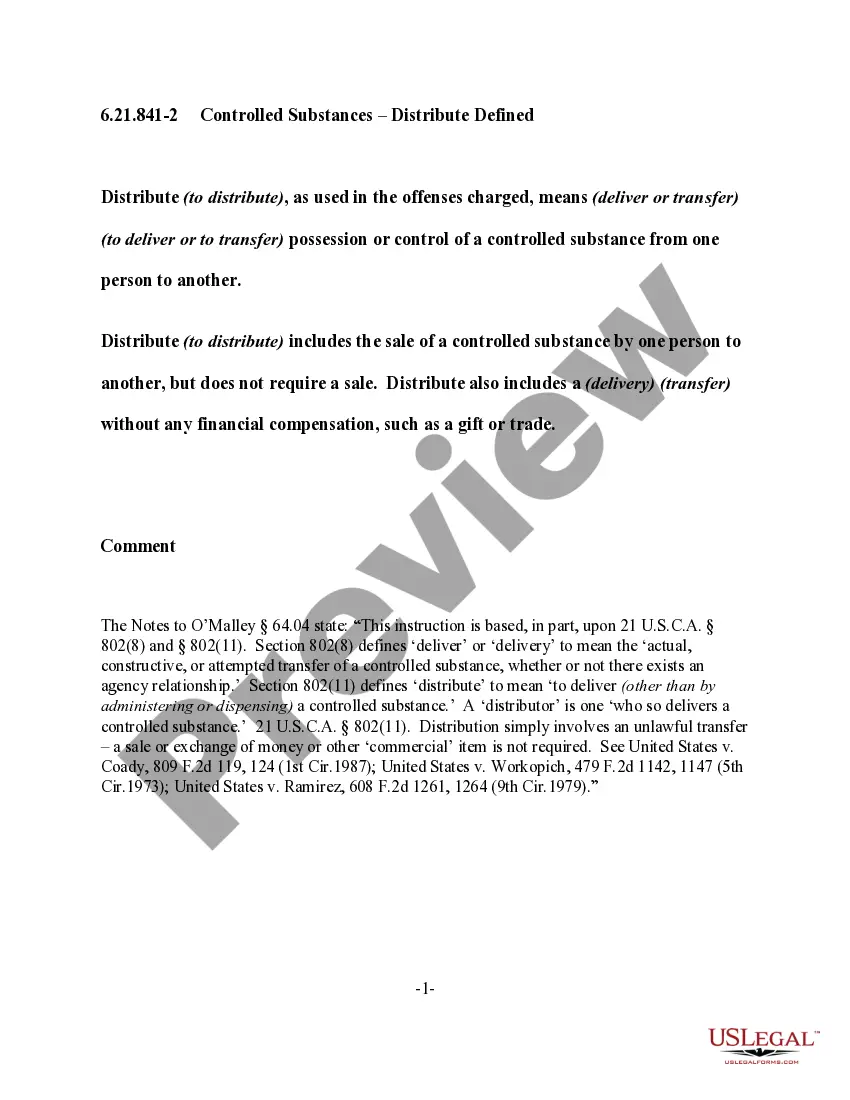
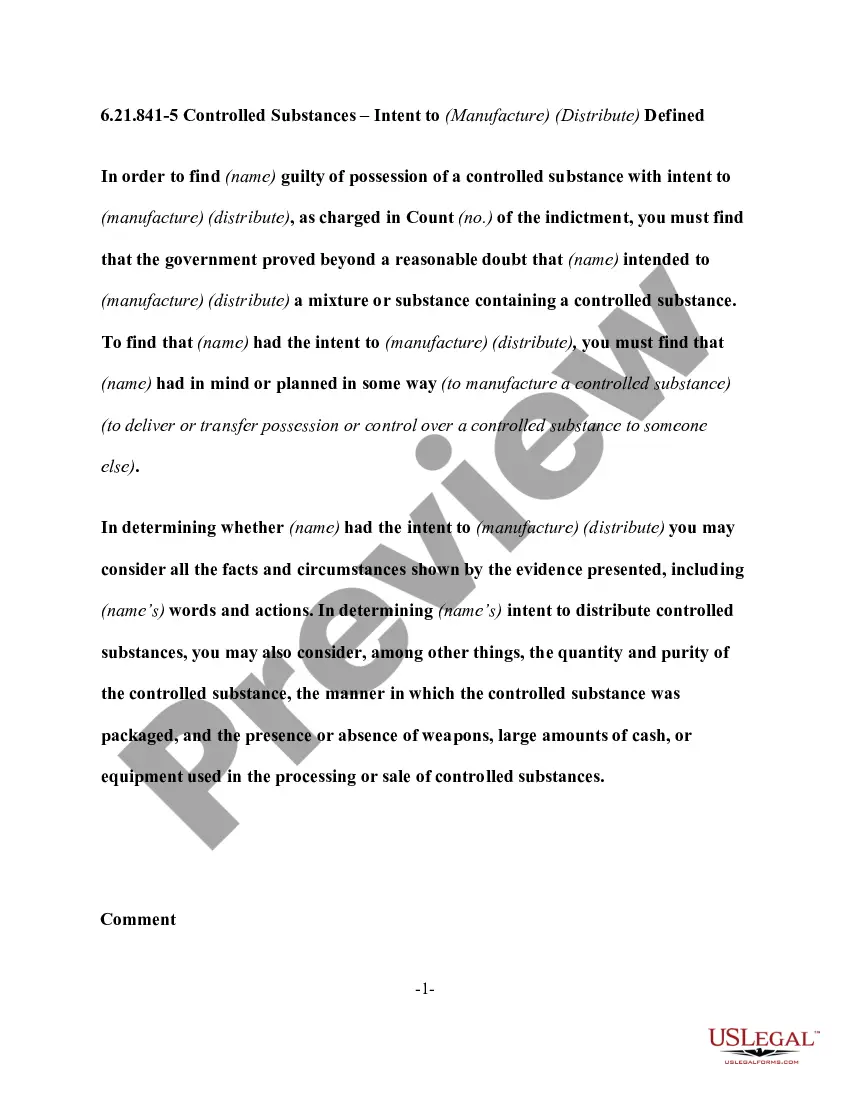
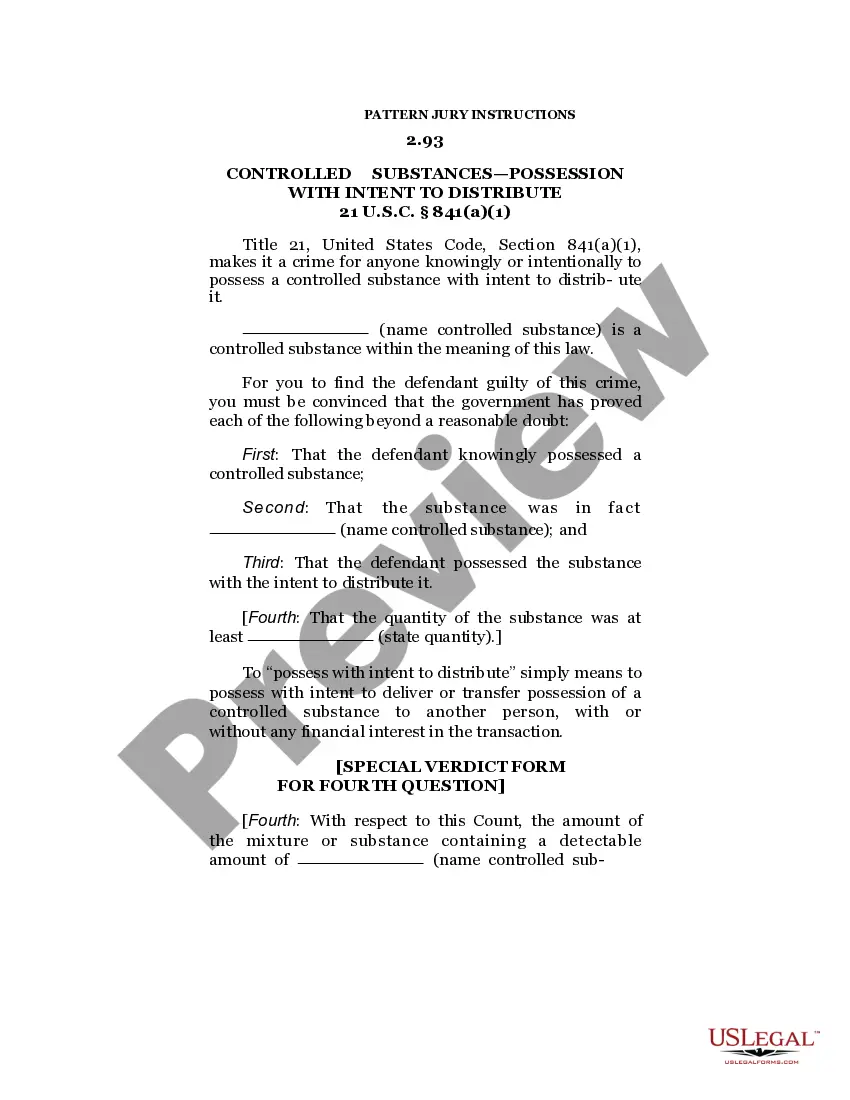
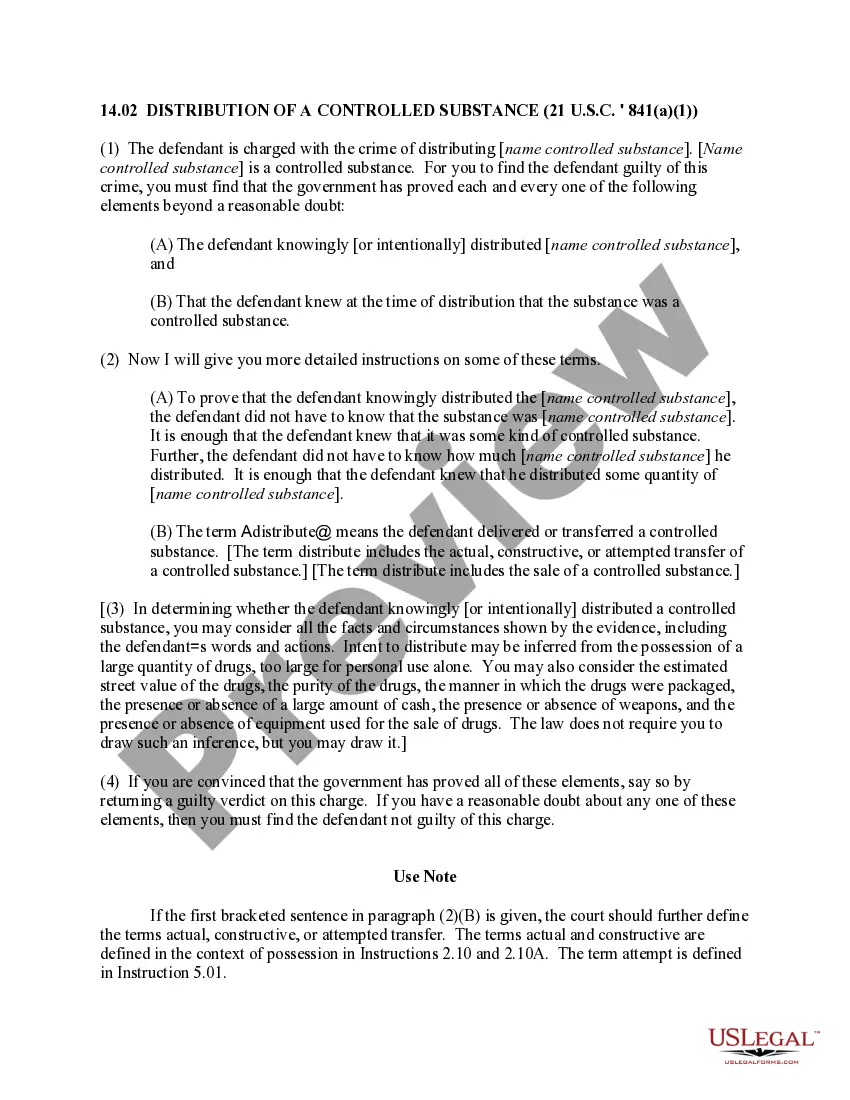
The Controlled Substances Offenses - Distribute Defined form outlines the legal definition of distributing controlled substances. It clarifies the meaning of "distribute" in legal terms, distinguishing between various types of transfers without the necessity of a sale. This form is essential for comprehending the nature of distribution offenses under U.S. law, providing clear guidance for individuals involved in legal proceedings related to drug distribution.
Key components of this form
- Definition of "distribute" which includes both sale and non-sale transactions.
- Clarification that distribution can occur without financial compensation.
- Legal basis cited, including references to specific sections of the U.S. Code.
- Key judicial interpretations to enhance understanding of distribution offenses.

Situations where this form applies
This form is used in legal contexts where the distribution of controlled substances is being evaluated or charged. It is applicable in cases involving drug offenses, particularly to clarify the legal implications of drug distribution for defendants, legal practitioners, or law enforcement officials involved in such cases.
Who should use this form
- Individuals facing charges related to drug distribution.
- Legal professionals representing clients in drug offense cases.
- Law enforcement officials needing a clear definition of controlled substance distribution.
- Students or researchers studying controlled substances and drug law enforcement.
Instructions for completing this form
- Review the definition of "distribute" as outlined in the form.
- Understand the context and implications of distribution offenses based on cited legal standards.
- Gather relevant information regarding the specific circumstances of the case.
- Complete any required documentation that aligns with the definition provided in the form.
- Consult a legal professional if needed, to ensure all aspects are correctly addressed.
Notarization requirements for this form
This form does not typically require notarization unless specified by local law. Users are encouraged to review applicable regulations within their jurisdiction to determine if notarization is necessary.
Get your form ready online
Our built-in tools help you complete, sign, share, and store your documents in one place.
Make edits, fill in missing information, and update formatting in US Legal Forms—just like you would in MS Word.
Download a copy, print it, send it by email, or mail it via USPS—whatever works best for your next step.
Sign and collect signatures with our SignNow integration. Send to multiple recipients, set reminders, and more. Go Premium to unlock E-Sign.
If this form requires notarization, complete it online through a secure video call—no need to meet a notary in person or wait for an appointment.
We protect your documents and personal data by following strict security and privacy standards.

Make edits, fill in missing information, and update formatting in US Legal Forms—just like you would in MS Word.

Download a copy, print it, send it by email, or mail it via USPS—whatever works best for your next step.

Sign and collect signatures with our SignNow integration. Send to multiple recipients, set reminders, and more. Go Premium to unlock E-Sign.

If this form requires notarization, complete it online through a secure video call—no need to meet a notary in person or wait for an appointment.

We protect your documents and personal data by following strict security and privacy standards.
Common mistakes
- Failing to recognize that a sale is not required for an act to be considered distribution.
- Overlooking the importance of non-compensated transfers in legal discussions.
- Confusing the terms "distributing" and "dispensing," which carry different legal definitions.
- Neglecting to consult current state laws that may affect the application of this form.
Benefits of completing this form online
- Easy access to accurate legal definitions and language.
- Convenience of downloading and printing the form at your convenience.
- Opportunity to edit and personalize content before usage.
- Reliability of forms drafted by licensed attorneys under legal guidelines.
Looking for another form?
Form popularity
FAQ
The term ?distribute? means to deliver (other than by administering or dispensing) a controlled substance or a listed chemical.
§801. Congressional findings and declarations: controlled substances. The Congress makes the following findings and declarations: (1) Many of the drugs included within this subchapter have a useful and legitimate medical purpose and are necessary to maintain the health and general welfare of the American people.
What is Drug Distribution? Drug distribution is the crime of selling, drug manufacturing, delivering or importing illegal drugs or unlawful controlled substances, such as marijuana, heroin, methamphetamine or cocaine. Under 21 U.S.C.
(6) The term "controlled substance" means a drug or other substance, or immediate precursor, included in schedule I, II, III, IV, or V of part B of this subchapter.
(10) The term "dispense" means to deliver a controlled substance to an ultimate user or research subject by, or pursuant to the lawful order of, a practitioner, including the prescribing and administering of a controlled substance and the packaging, labeling or compounding necessary to prepare the substance for such
The Controlled Substances Act (CSA) places all substances which were in some manner regulated under existing federal law into one of five schedules. This placement is based upon the substance's medical use, potential for abuse, and safety or dependence liability.
A drug or other substance that is tightly controlled by the government because it may be abused or cause addiction. The control applies to the way the substance is made, used, handled, stored, and distributed. Controlled substances include opioids, stimulants, depressants, hallucinogens, and anabolic steroids.
A controlled substance is a regulated drug that has been placed on a schedule of controlled substances by the State of California. Some of these are always illegal, such as cocaine, heroin, or meth. Others are prescription drugs, such as painkillers like morphine and oxycodone.