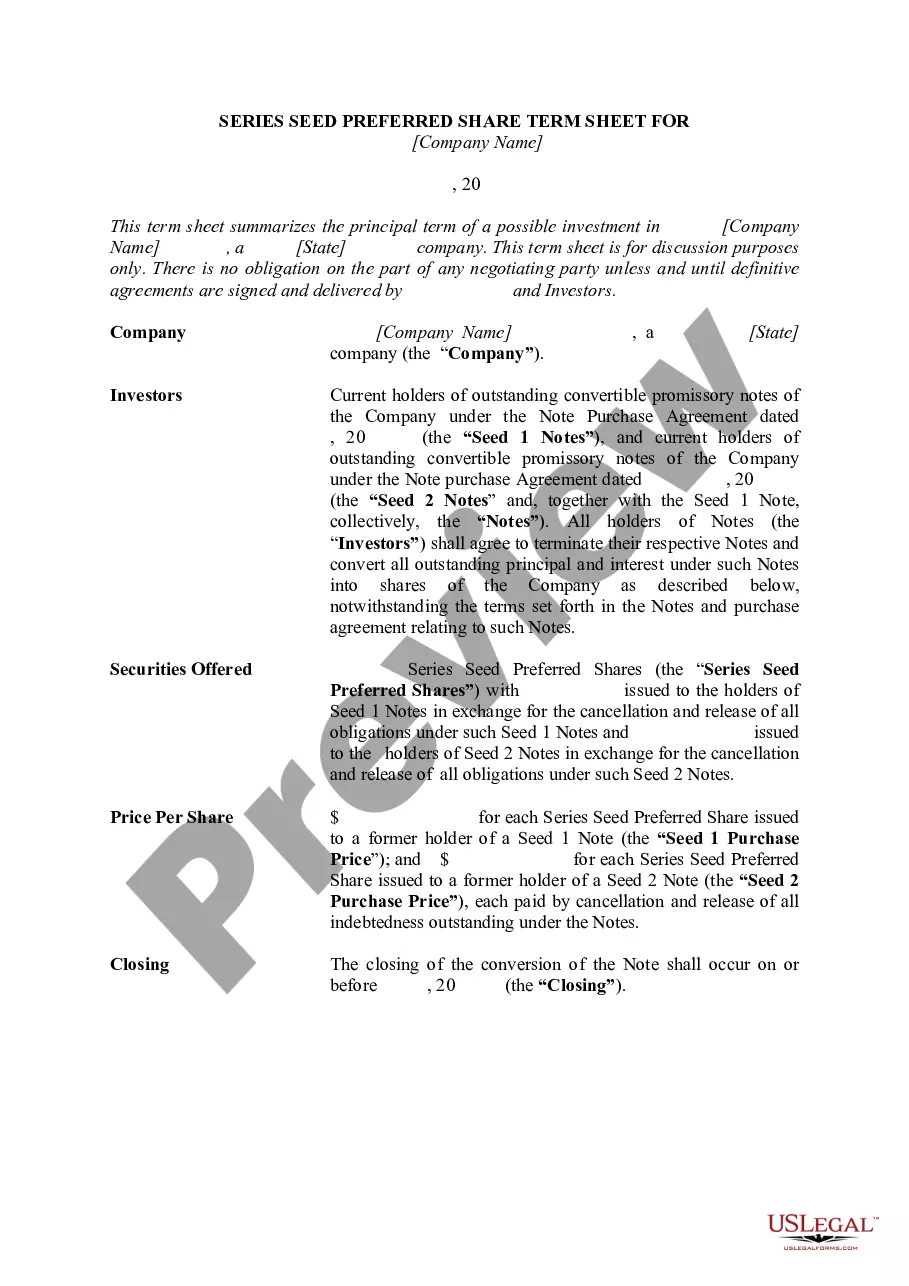
Texas Last Will for a Widow or Widower with no Children
Understanding this form
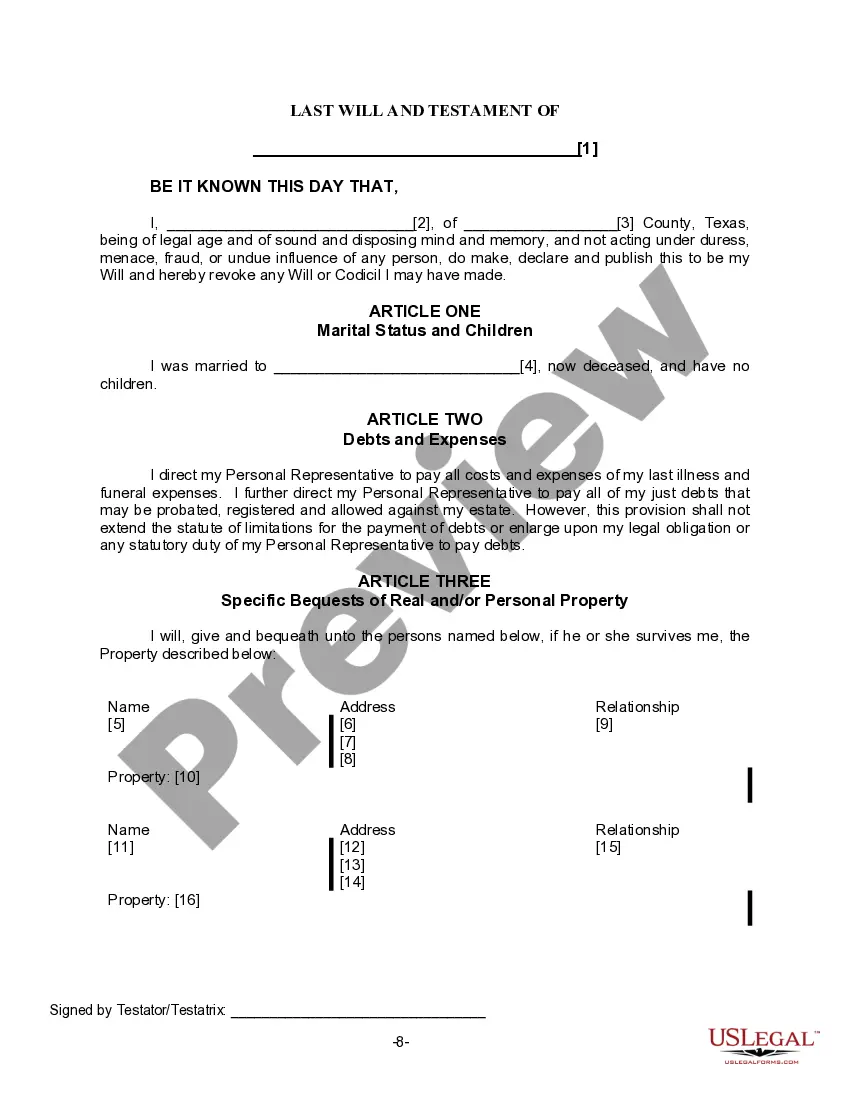
This Last Will for a Widow or Widower with no Children is a legal document that outlines how your assets will be distributed upon your death, specifically for individuals who have lost a spouse and do not have children. This form allows you to appoint a personal representative, designate beneficiaries, and make specific bequests. Unlike other wills, this form caters specifically to widows or widowers, simplifying the process of estate planning when minor children are not involved.
Main sections of this form
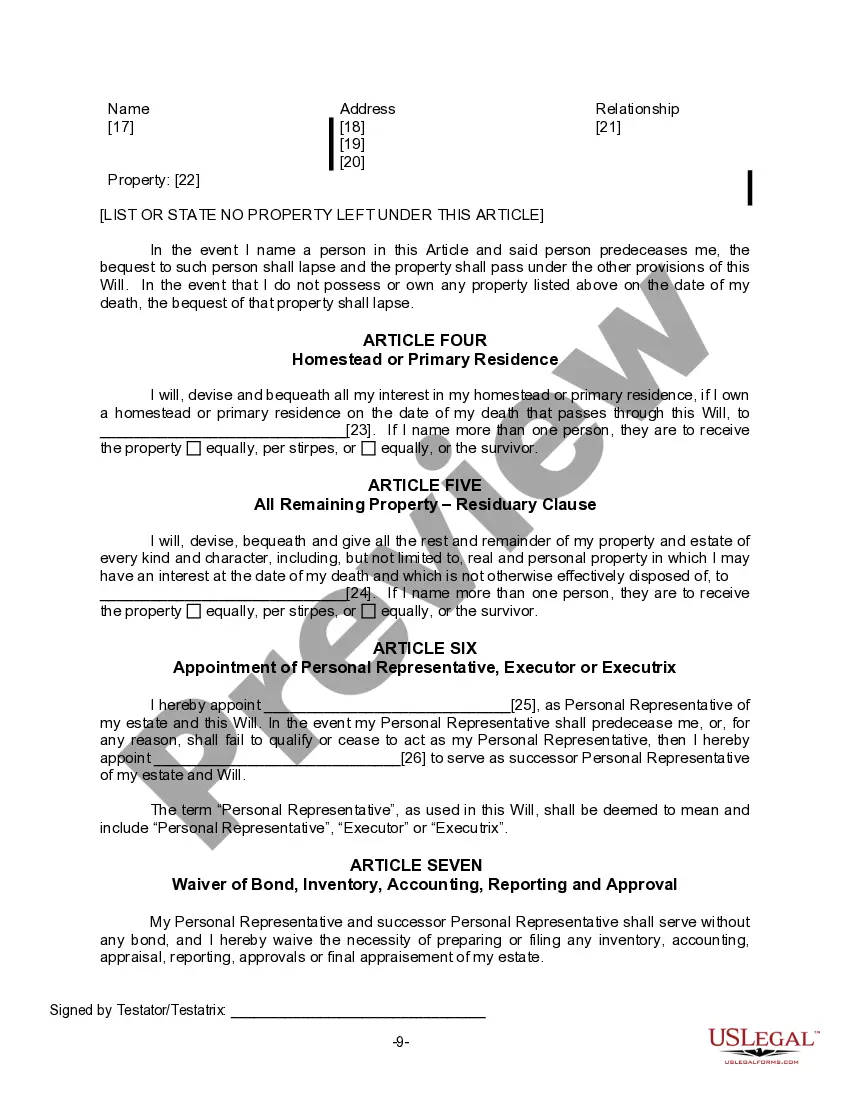
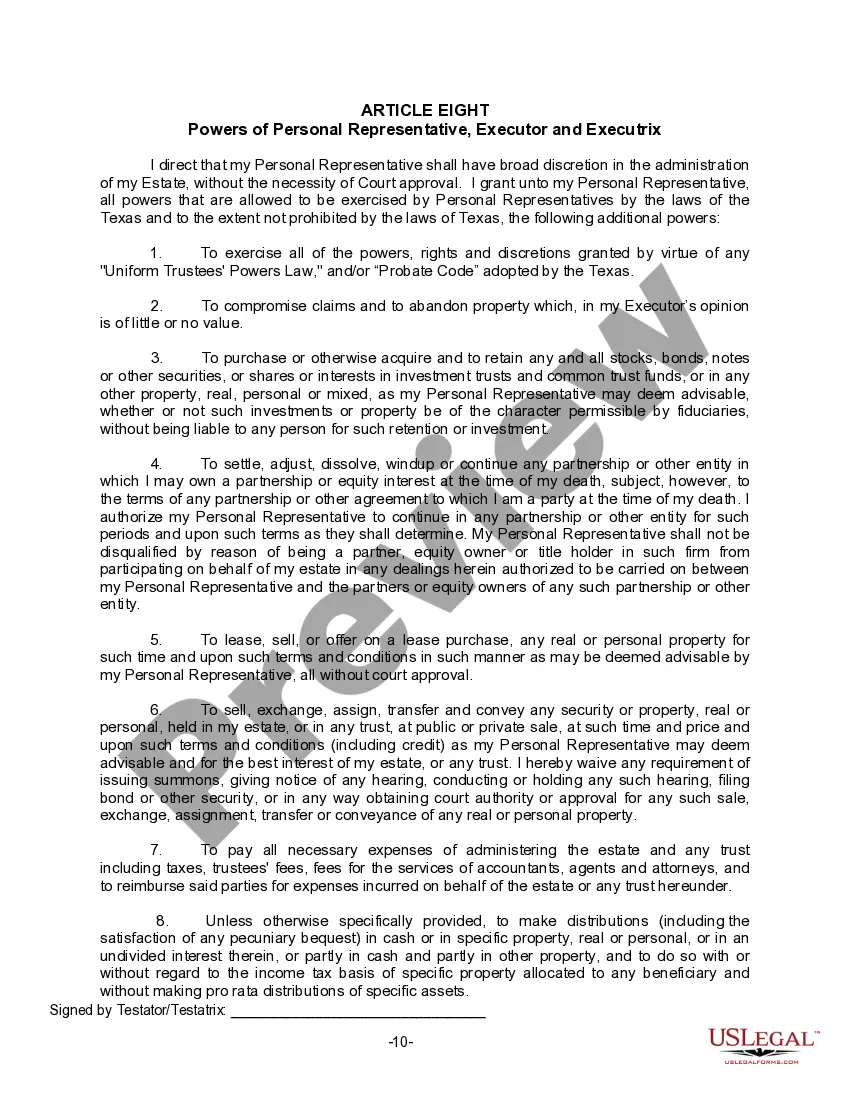
- Appointment of a personal representative to manage your estate.
- Designation of beneficiaries to receive your property.
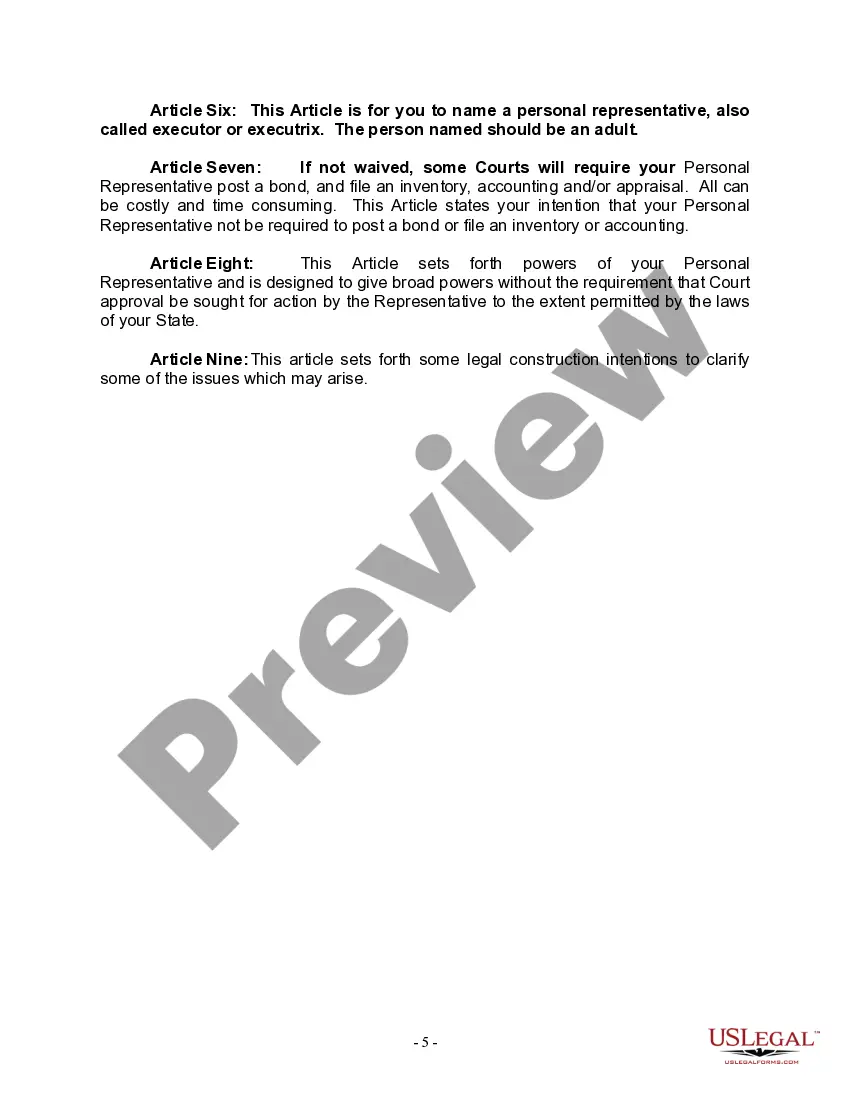
- Instructions for distributing specific property to named individuals.
- Provisions for your homestead or primary residence.
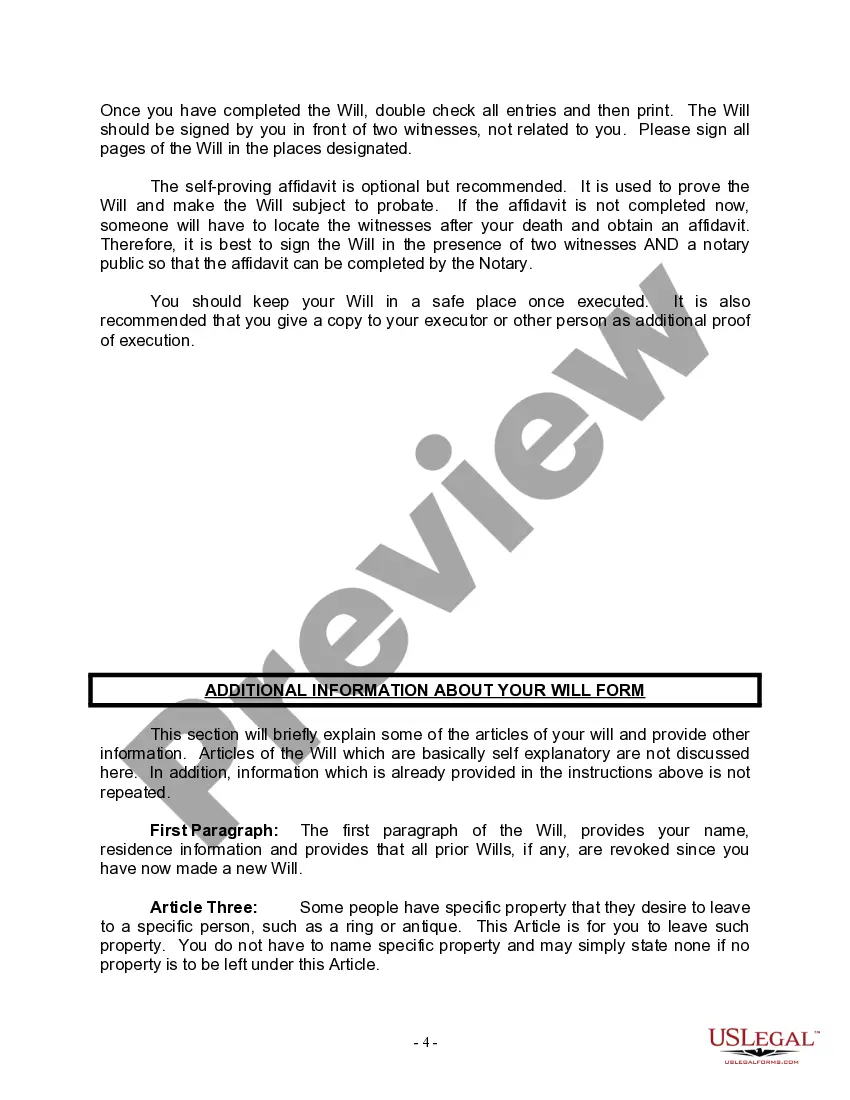
- Instructions on executing the will in the presence of witnesses and a notary.



Situations where this form applies
This form is essential for widows or widowers who wish to ensure their assets are distributed according to their wishes after death. It is particularly useful if you have specific items or property you wish to allocate to certain individuals. This will help avoid potential disputes amongst family or friends regarding your estate.
Who this form is for
- Widows or widowers without children seeking to create a clear estate plan.
- Individuals wanting to specify how their assets will be allocated after their death.
- Persons who wish to appoint someone to manage their estate.
Steps to complete this form
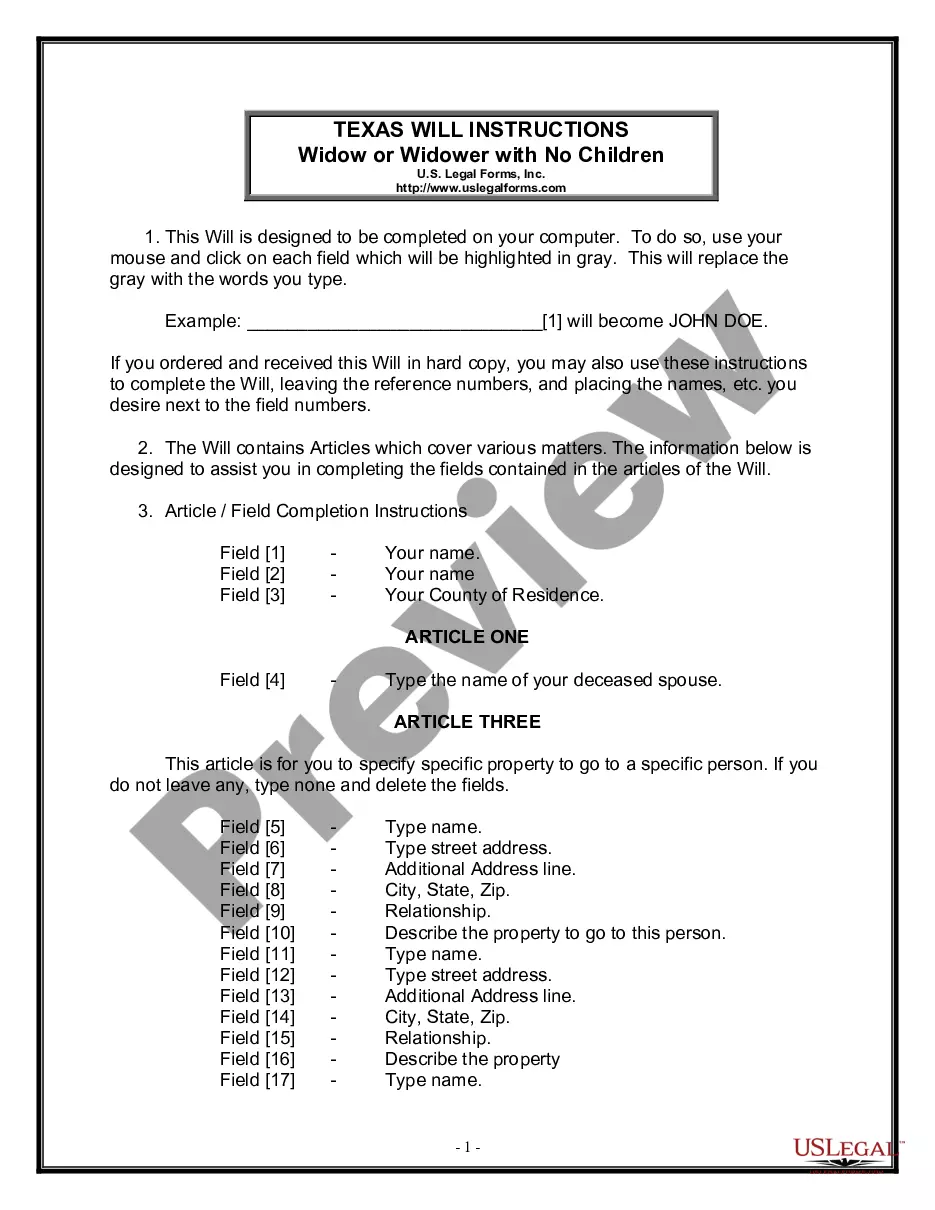
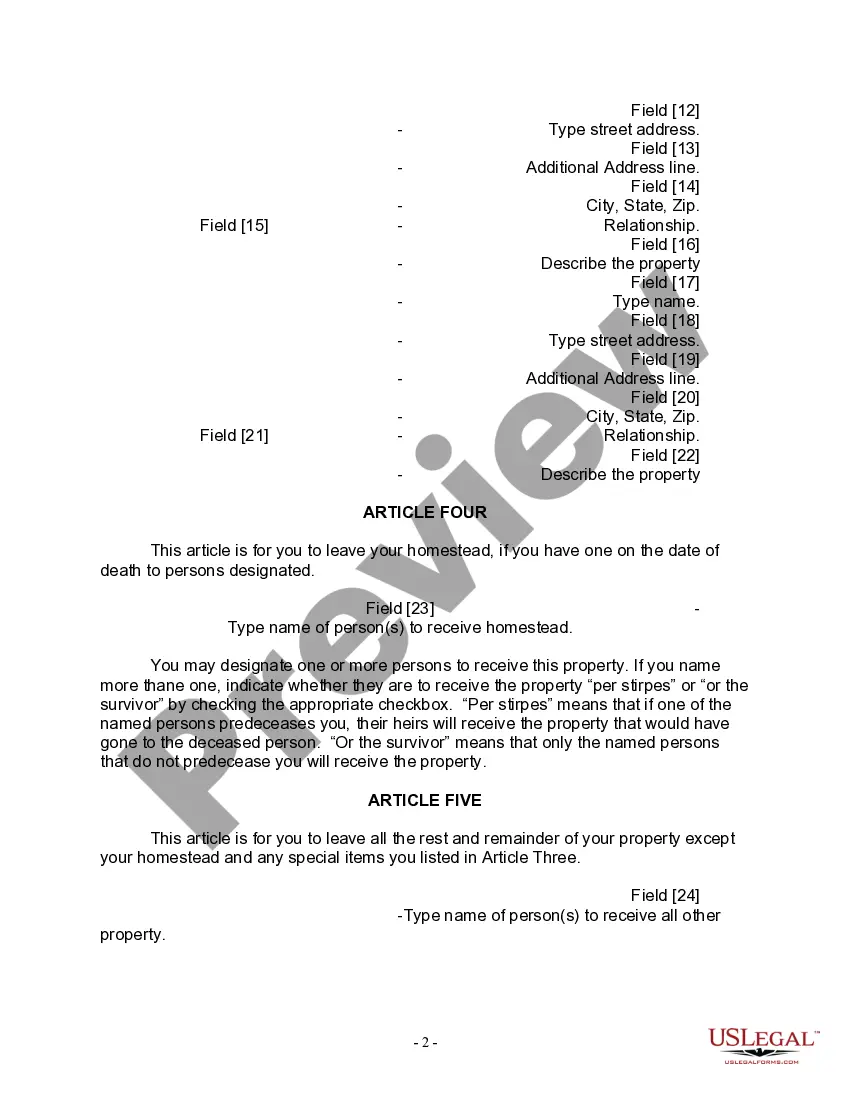
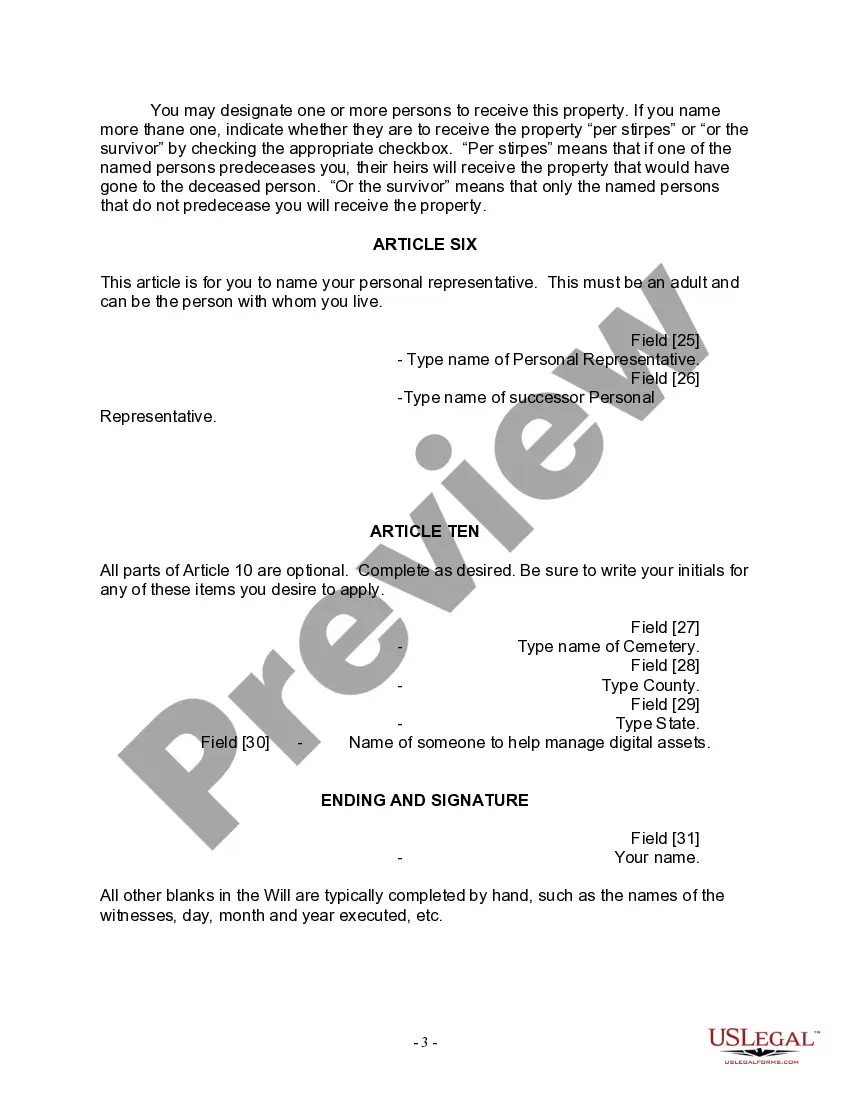
- Enter your name and place of residence at the top of the document.
- Name your deceased spouse in the appropriate section.
- Specify any specific property bequests you wish to make to individuals.
- Designate your personal representative and any successor representatives.
- Ensure the will is signed in the presence of two witnesses and a notary if applicable.
Does this form need to be notarized?
Yes, this form must be notarized to be legally valid if it includes a self-proving affidavit. Notarization confirms the authenticity of your signature and ensures the document can be accepted in probate without additional evidence.
Get your form ready online
Our built-in tools help you complete, sign, share, and store your documents in one place.
Make edits, fill in missing information, and update formatting in US Legal Forms—just like you would in MS Word.
Download a copy, print it, send it by email, or mail it via USPS—whatever works best for your next step.
Sign and collect signatures with our SignNow integration. Send to multiple recipients, set reminders, and more. Go Premium to unlock E-Sign.
If this form requires notarization, complete it online through a secure video call—no need to meet a notary in person or wait for an appointment.
We protect your documents and personal data by following strict security and privacy standards.

Make edits, fill in missing information, and update formatting in US Legal Forms—just like you would in MS Word.

Download a copy, print it, send it by email, or mail it via USPS—whatever works best for your next step.

Sign and collect signatures with our SignNow integration. Send to multiple recipients, set reminders, and more. Go Premium to unlock E-Sign.

If this form requires notarization, complete it online through a secure video call—no need to meet a notary in person or wait for an appointment.

We protect your documents and personal data by following strict security and privacy standards.
Avoid these common issues
- Failing to have the will signed by the required witnesses.
- Not specifying all property or beneficiaries desired.
- Leaving out critical identifying details such as addresses or relationships.
- Not keeping a copy of the executed will in a safe place.
Benefits of completing this form online
- Convenience: Complete the form from home at your pace.
- Editability: Easily make changes to your will as needed.
- Accessibility: Downloadable format allows for quick access and storage.
Legal use & context
- This will serves to distribute your assets according to your wishes.
- Validity is dependent on adherence to state-specific signing and witnessing laws.
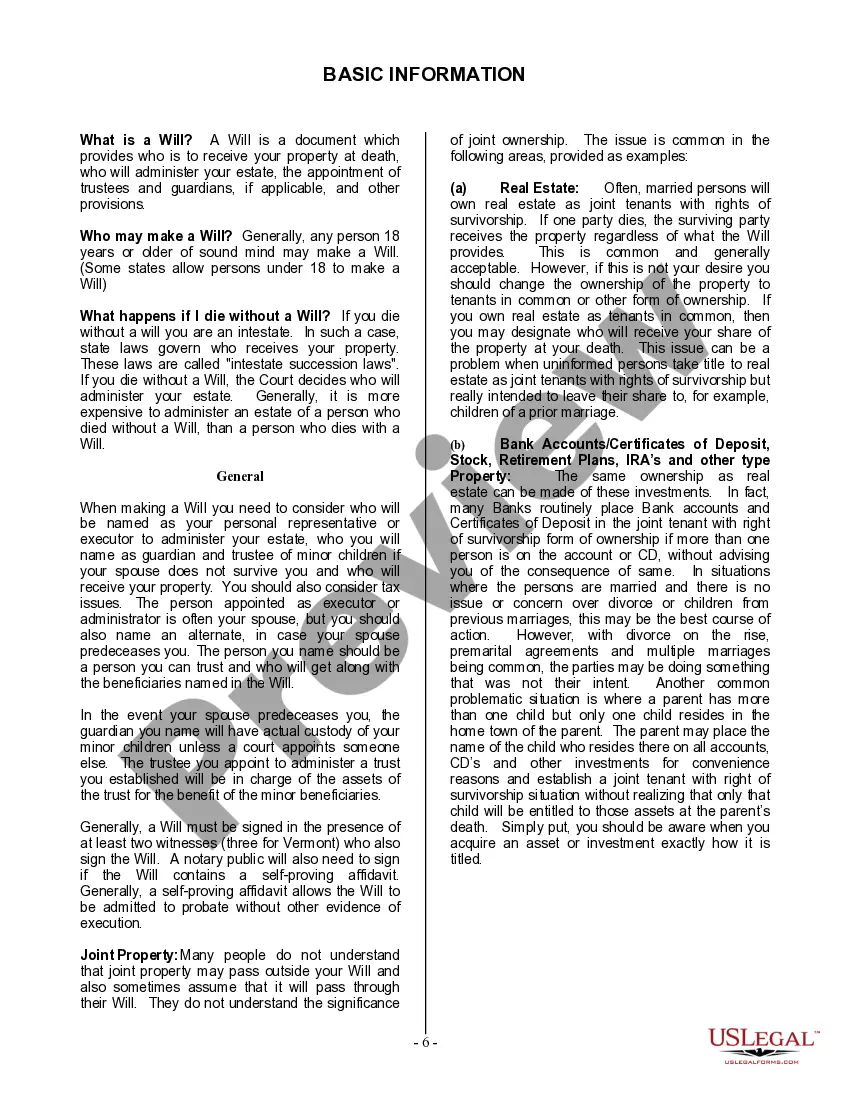
- Not having a will can lead to intestate succession, where the state decides how your assets will be distributed.
Quick recap
- A Last Will is crucial for managing how your estate is handled after your death.
- This form is specifically tailored for widowed individuals without children.
- Proper completion and execution are essential to ensure its validity.
Looking for another form?
Form popularity
FAQ
A holographic will is simply a will that is entirely in your own handwriting. If done correctly, it is valid and can be legally enforced. In order to make a valid handwritten will in Texas, the entire document must be in your own handwriting.
Are 18 years of age or older, have been lawfully married, or. are a member of the armed forces of the United States.
Texas law allows you to completely cut your spouse out of your will, but only with regard to those assets you control, considered yours to devise in your will.
In order to make a valid handwritten will in Texas, the entire document must be in your own handwriting. No one can write any part of it except for you and no part of it can be typed. You can write in cursive or print, but the entire will must be in your handwriting only.
An attested will is not handwritten the document is typically prepared by an attorney in typewritten form. To be valid in Texas, it must be signed by the testator and by two credible witnesses above the age of 14 who are present at the time the testator signs.
Are 18 years of age or older,have been lawfully married, or.are a member of the armed forces of the United States.
It must be in writing. Generally, of course, wills are composed on a computer and printed out. The person who made it must have signed and dated it. A will must be signed and dated by the person who made it. Two adult witnesses must have signed it. Witnesses are crucial.
Texas will forms are documents that will help guide a user through the process of both, division of their estate as well as preparation of a living will. A last will and testament is a document that a Testator would use to establish division of their estate, by an executor (representative) between their
No, in Texas, you do not need to notarize your will to make it legal. However, Texas allows you to make your will "self-proving" and you'll need to go to a notary if you want to do that. A self-proving will speeds up probate because the court can accept the will without contacting the witnesses who signed it.