Texas Warranty Deed for Limited Partnership or LLC is the Grantor, or Grantee
What this document covers
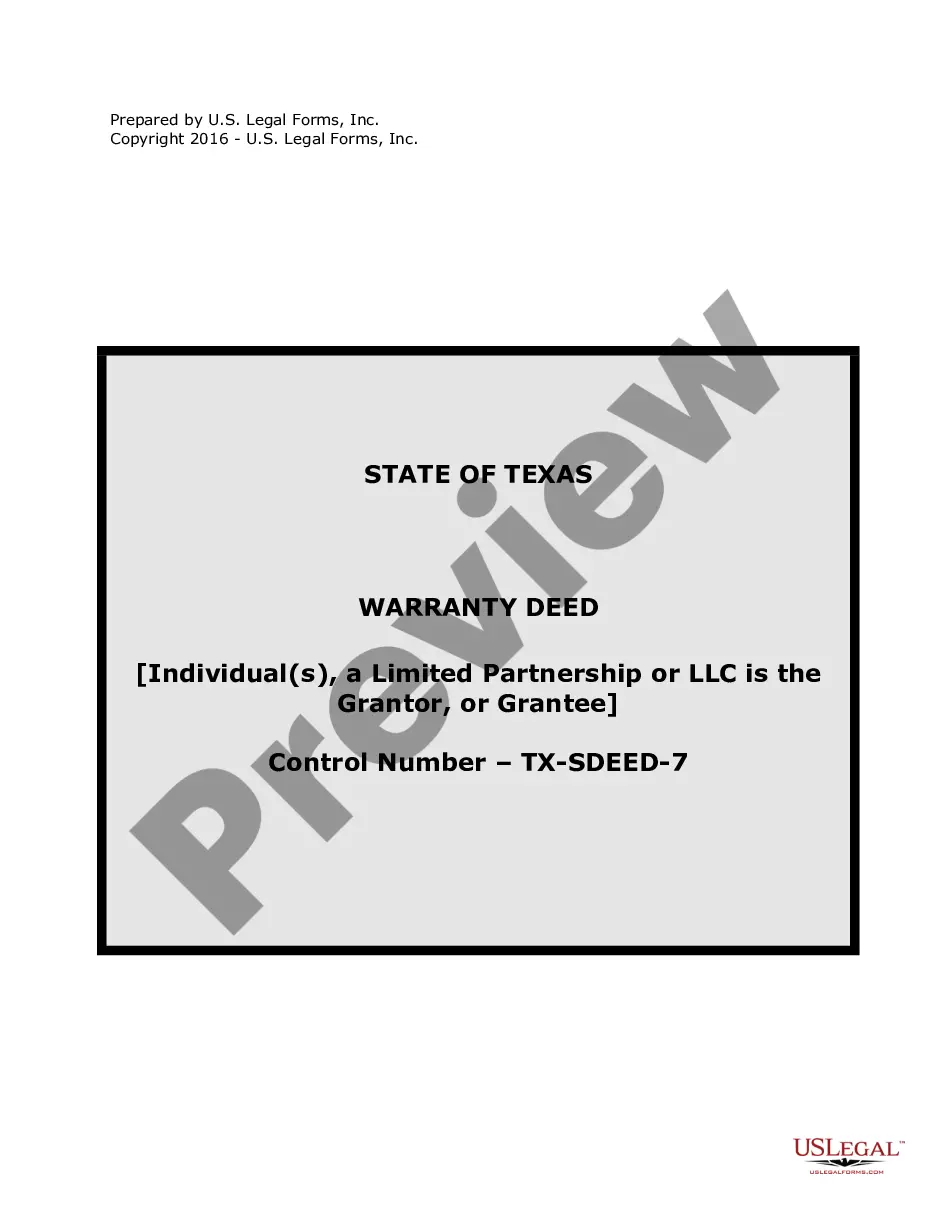
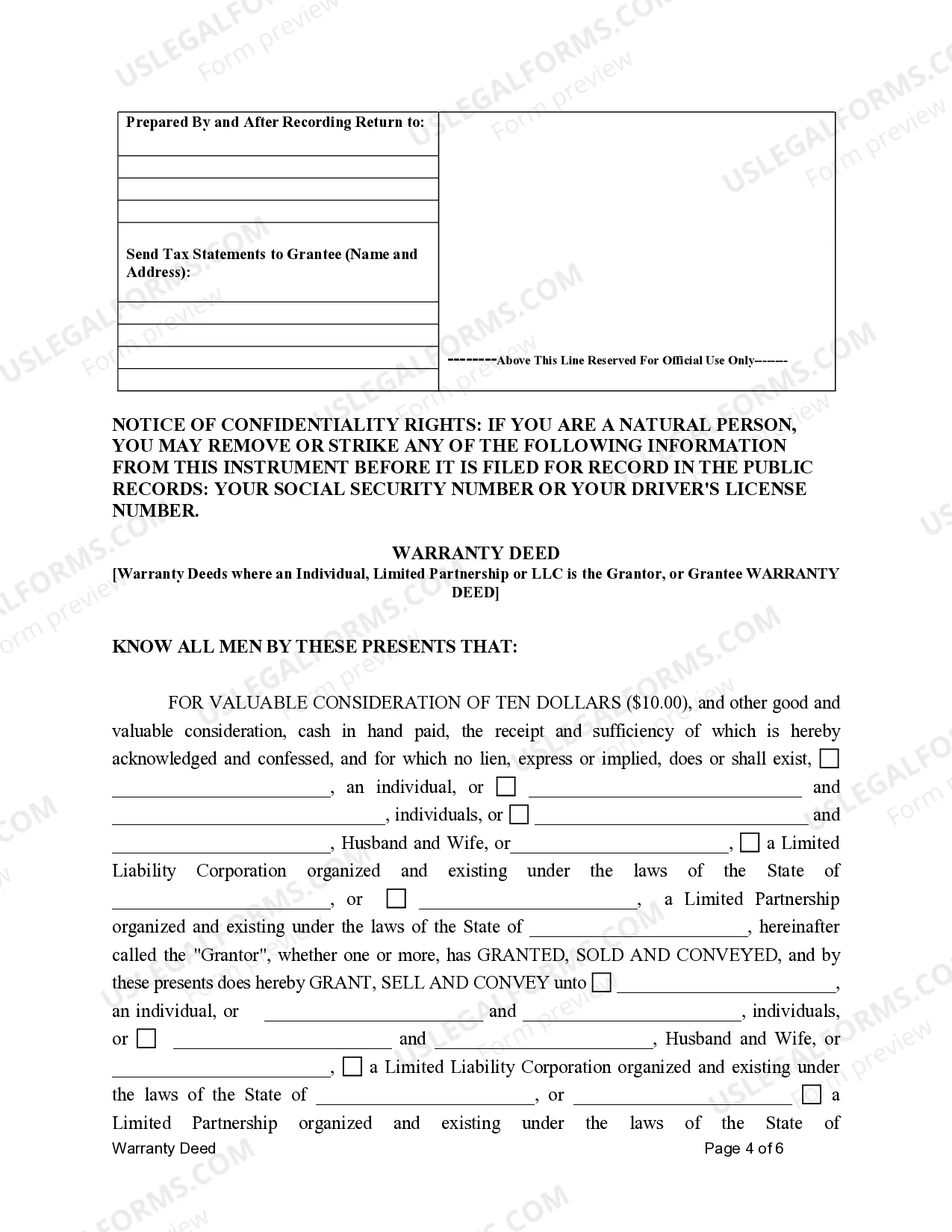
The Warranty Deed for Limited Partnership or LLC is a legal document that transfers ownership of real property from one party to another, specifically when the grantor or grantee is a limited partnership or limited liability company (LLC). This document differs from other types of deeds by accommodating entities such as partnerships and LLCs, which is essential for proper legal representation in property transactions involving these business structures.
Main sections of this form
- The names and addresses of the grantor (seller) and the grantee (buyer).
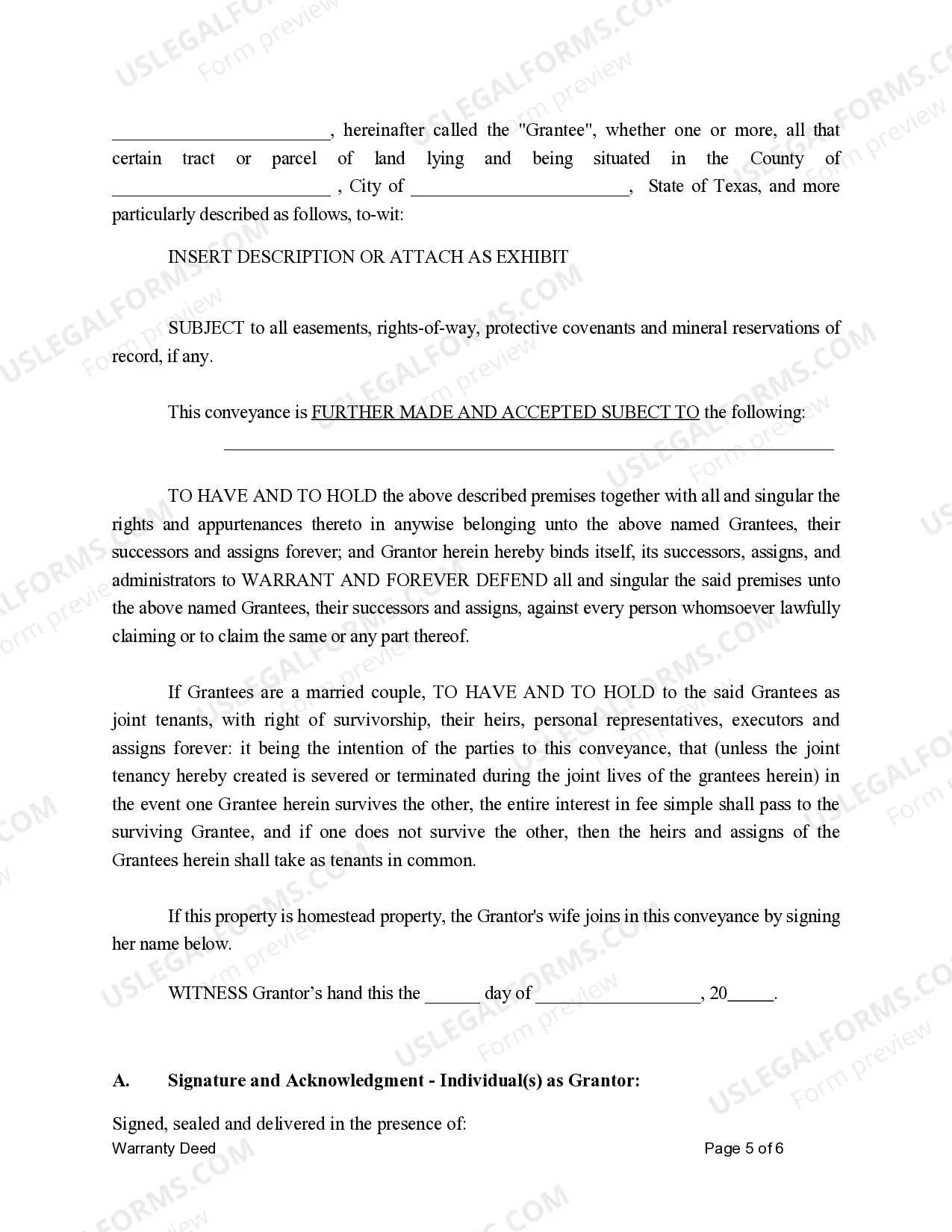
- A legal description of the property being transferred.
- Clauses affirming the grantor's authority to sell and the grantee's acceptance.
- Details on warranties provided by the grantor regarding the property.
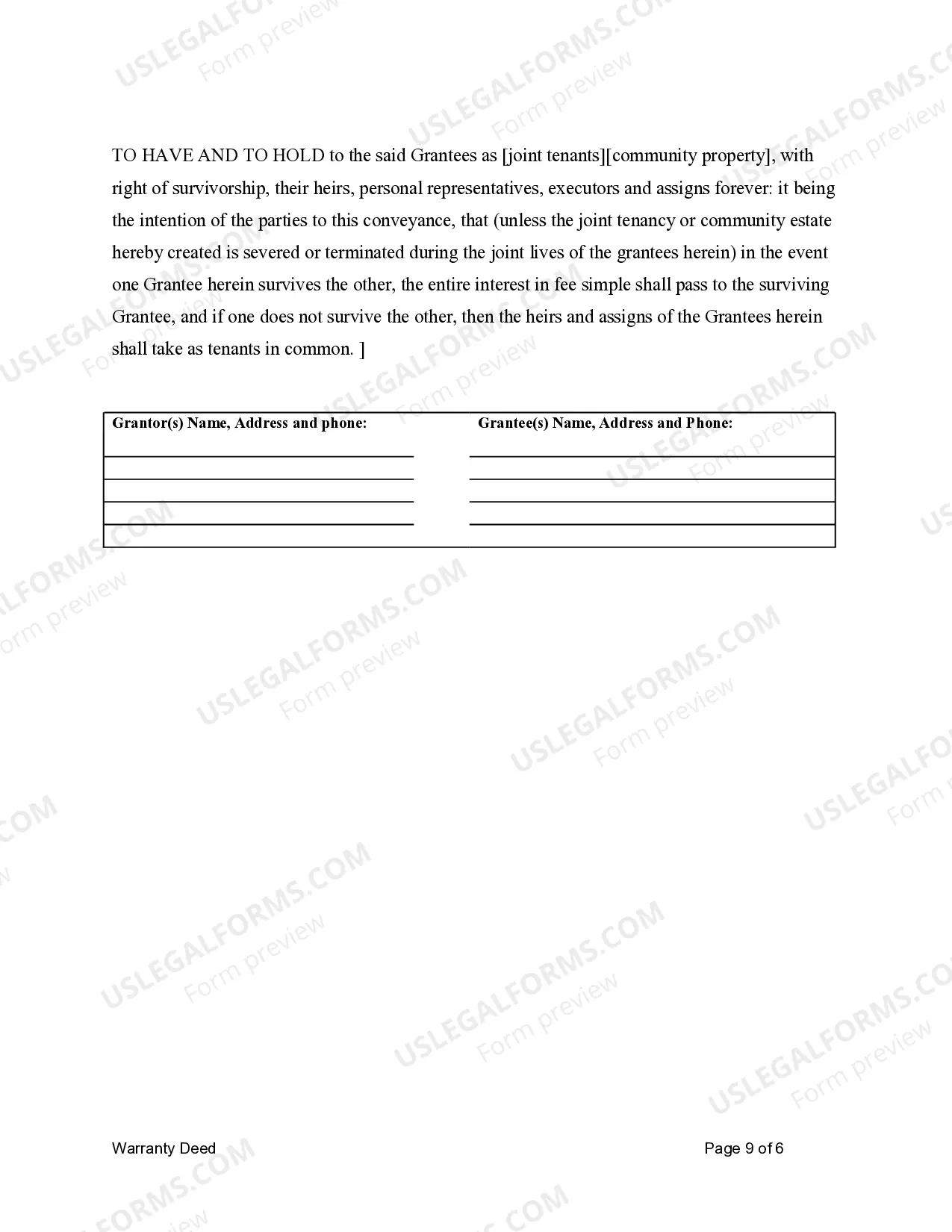
- Provisions for future rights of ownership and survivorship for grantees.
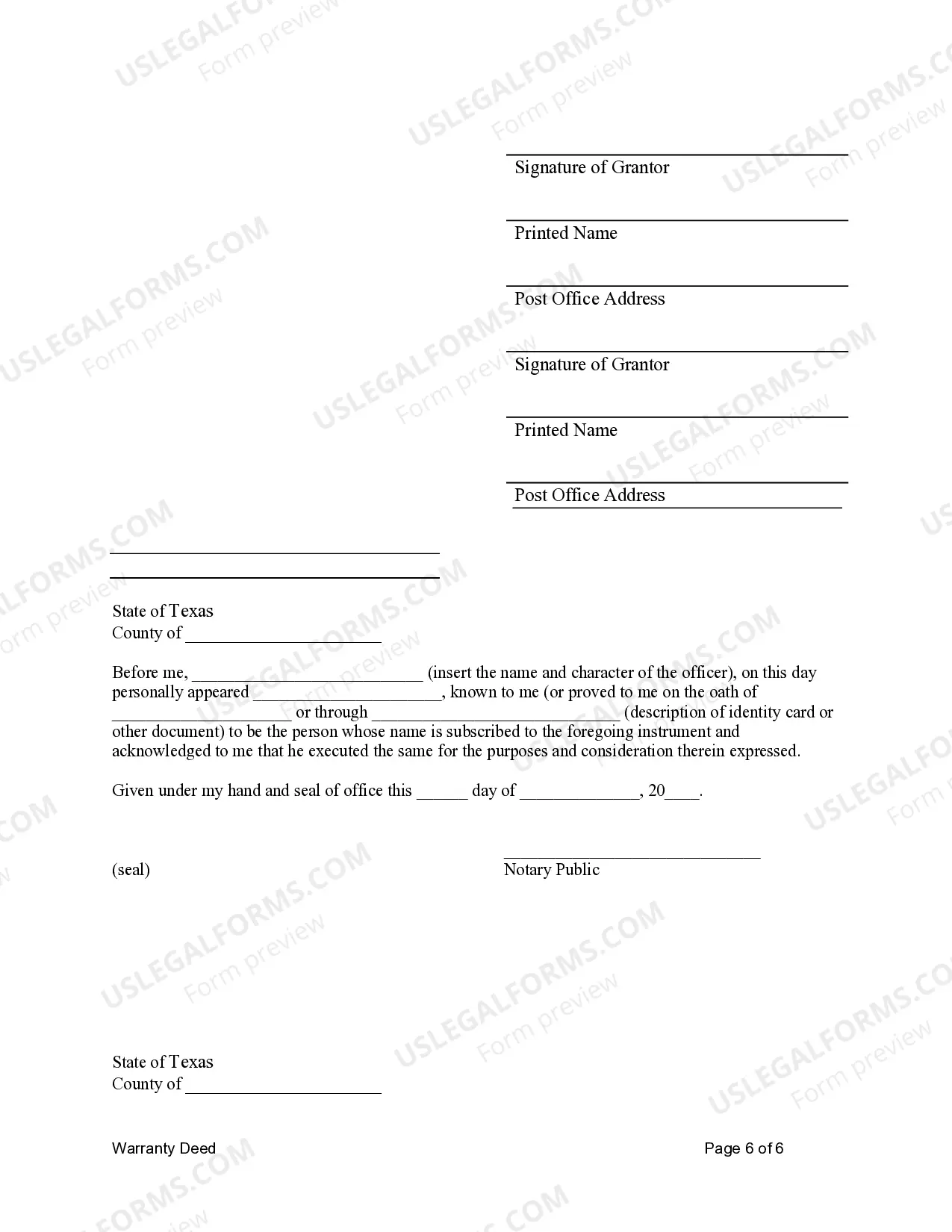
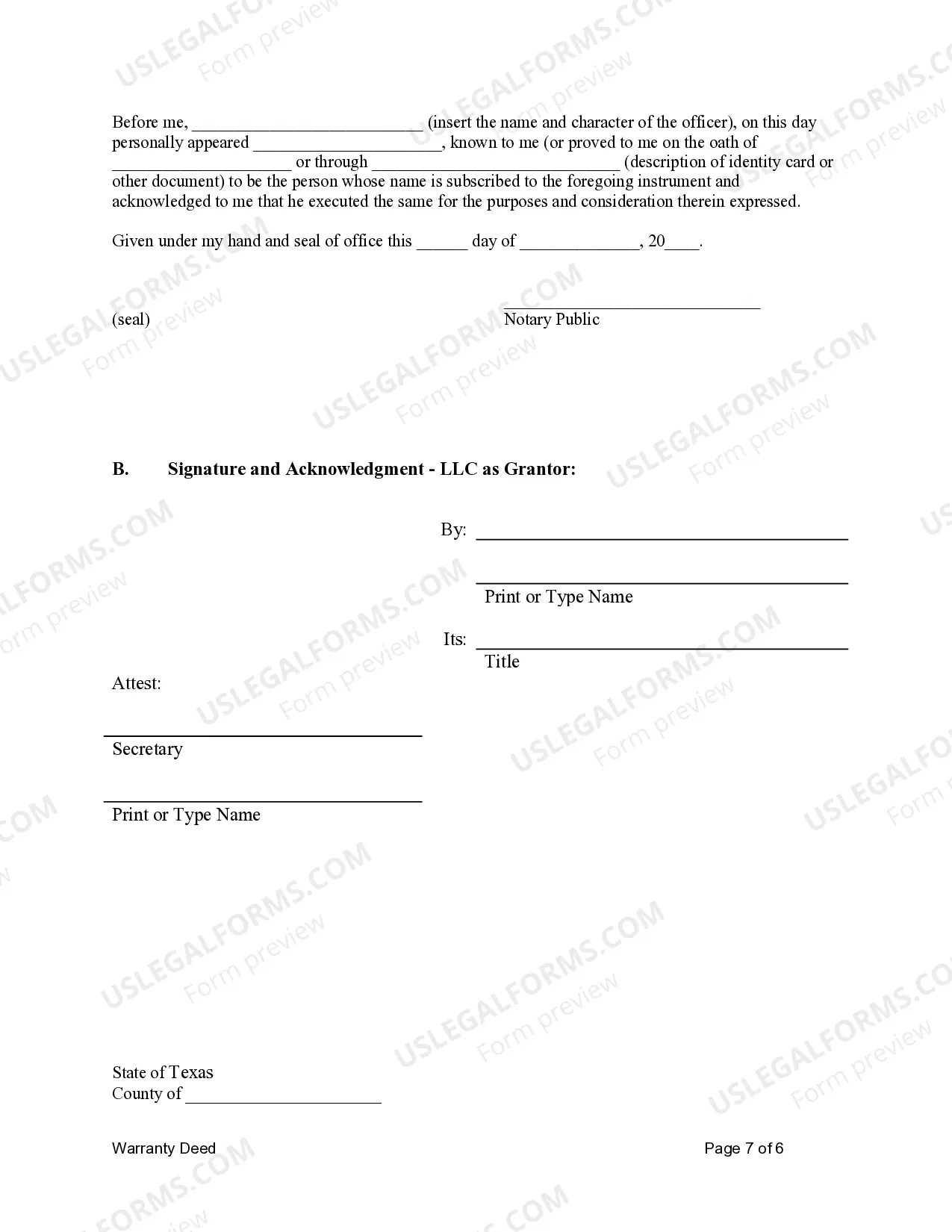
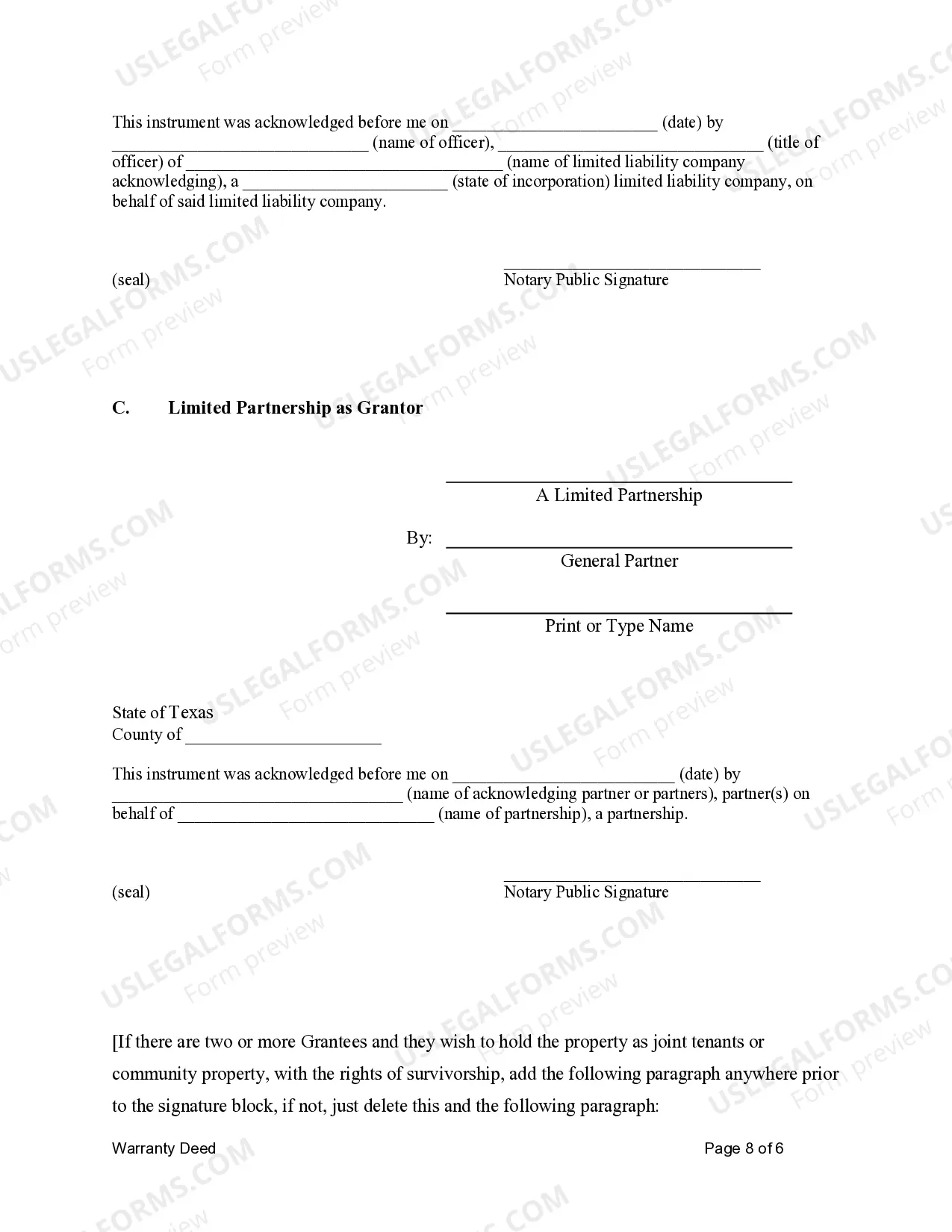
- Signature areas for the grantor and any required witnesses or notaries.




When to use this document
This form should be used when a limited partnership or LLC is involved in a real estate transaction as either the seller (grantor) or buyer (grantee). It is particularly useful for transferring maritime properties, land development sites, or any real estate where the ownership structure involves these types of business entities. Additionally, it is appropriate in situations where the current owner wishes to solidify the ownership transfer with a formal legal deed.
Who this form is for
This form is intended for:
- Limited partnerships and LLCs looking to buy or sell real estate.
- Attorneys representing partnerships or LLCs in property transactions.
- Business owners involved in real estate dealings requiring formal documentation.
- Individuals who are members or managers of an LLC or partners in a limited partnership engaging in property transfer.
How to complete this form
- Identify the parties involved by entering the names and addresses of the grantor and grantee.
- Specify the property details: enter the legal description and address of the property being conveyed.
- Include any necessary clauses regarding warranties and rights of survivorship, if applicable.
- Have the grantor and, if necessary, the grantee sign the document in the designated areas.
- Ensure the document is notarized if required and submit it to the appropriate county clerk's office for recording.
Notarization guidance
This form must be notarized to be legally valid. US Legal Forms provides secure online notarization powered by Notarize, allowing you to complete the process through a verified video call.
Get your form ready online
Our built-in tools help you complete, sign, share, and store your documents in one place.
Make edits, fill in missing information, and update formatting in US Legal Forms—just like you would in MS Word.
Download a copy, print it, send it by email, or mail it via USPS—whatever works best for your next step.
Sign and collect signatures with our SignNow integration. Send to multiple recipients, set reminders, and more. Go Premium to unlock E-Sign.
If this form requires notarization, complete it online through a secure video call—no need to meet a notary in person or wait for an appointment.
We protect your documents and personal data by following strict security and privacy standards.

Make edits, fill in missing information, and update formatting in US Legal Forms—just like you would in MS Word.

Download a copy, print it, send it by email, or mail it via USPS—whatever works best for your next step.

Sign and collect signatures with our SignNow integration. Send to multiple recipients, set reminders, and more. Go Premium to unlock E-Sign.

If this form requires notarization, complete it online through a secure video call—no need to meet a notary in person or wait for an appointment.

We protect your documents and personal data by following strict security and privacy standards.
Avoid these common issues
- Failing to provide a complete legal description of the property.
- Not having the document signed by all required parties.
- Omitting necessary clauses regarding warranties.
- Not notarizing the document when it is required.
- Incorrectly identifying the parties (individuals vs. entities).
Benefits of completing this form online
- Convenient access to legal forms from anywhere, at any time.
- Easy-to-complete fields that can save time compared to manual forms.
- Downloadable format that allows for quick printing and sharing.
- Ready-made templates drafted by licensed attorneys ensure legal compliance.
- Secure storage of completed forms for future reference.
Summary of main points
- This Warranty Deed is essential for transferring property ownership involving limited partnerships and LLCs.
- Ensure the legal description of the property is accurate to prevent future disputes.
- Signatures and notarization are crucial for the document's legality and enforceability.
- Using legal forms online increases efficiency and compliance with state laws.
Looking for another form?

Form popularity
FAQ
Grantor's signature: The grantor must sign the deed for it to be valid. Usually, if more than one person owns a property, all the owners must sign. In some states a husband or wife who own property by themselves may have to have the spouse also sign the deed even though the spouse does not have title to the property.
A warranty deed, also known as a general warranty deed, is a legal real estate document between the seller (grantor) and the buyer (grantee). The deed protects the buyer by pledging that the seller holds clear title to the property and there are no encumbrances, outstanding liens, or mortgages against it.
No, California does not require that the Grantee sign a warranty deed. However, some states and counties require that the deed be signed by the Grantee in addition to the Grantor.
In a Warranty Deed, the grantee is the person who the interest in a property is being transferred to. For example, if you are buying a property from someone else, you are the grantee, and the person selling it is the grantor.
Typically, the lender will provide you with a copy of the deed of trust after the closing. The original warranty deeds are often mailed to the grantee after they are recorded. These are your original copies and should be kept in a safe place, such as a fireproof lockbox or a safe deposit box at a financial institution.
It's important to note that a warranty deed does not actually prove the grantor has ownership (a title search is the best way to prove that), but it is a promise by the grantor that they are transferring ownership and if it turns out they don't actually own the property, the grantor will be responsible for compensating
The Texas warranty deed is a form of deed that provides an unlimited warranty of title.In Texas, warranty deeds are often used: When a buyer is purchasing residential property from a seller for full value; When the buyer does not intend to purchase title insurance; or.
In a Limited Warranty Deed, the seller usually gives two warranties. The seller only warrants to the buyer that:This is a very limited warranty in comparison to the broad warranty in a General Warranty Deed where the seller warrants that the seller not only owns the property, but also all rights in the property.
No, in most states, the Grantee is not required to sign the Quitclaim Deed. However, some counties do require that the Quitclaim Deed be signed by the Grantee in addition to the Grantor.