Texas Northern District Bankruptcy Guide and Forms Package for Chapters 7 or 13
About this form
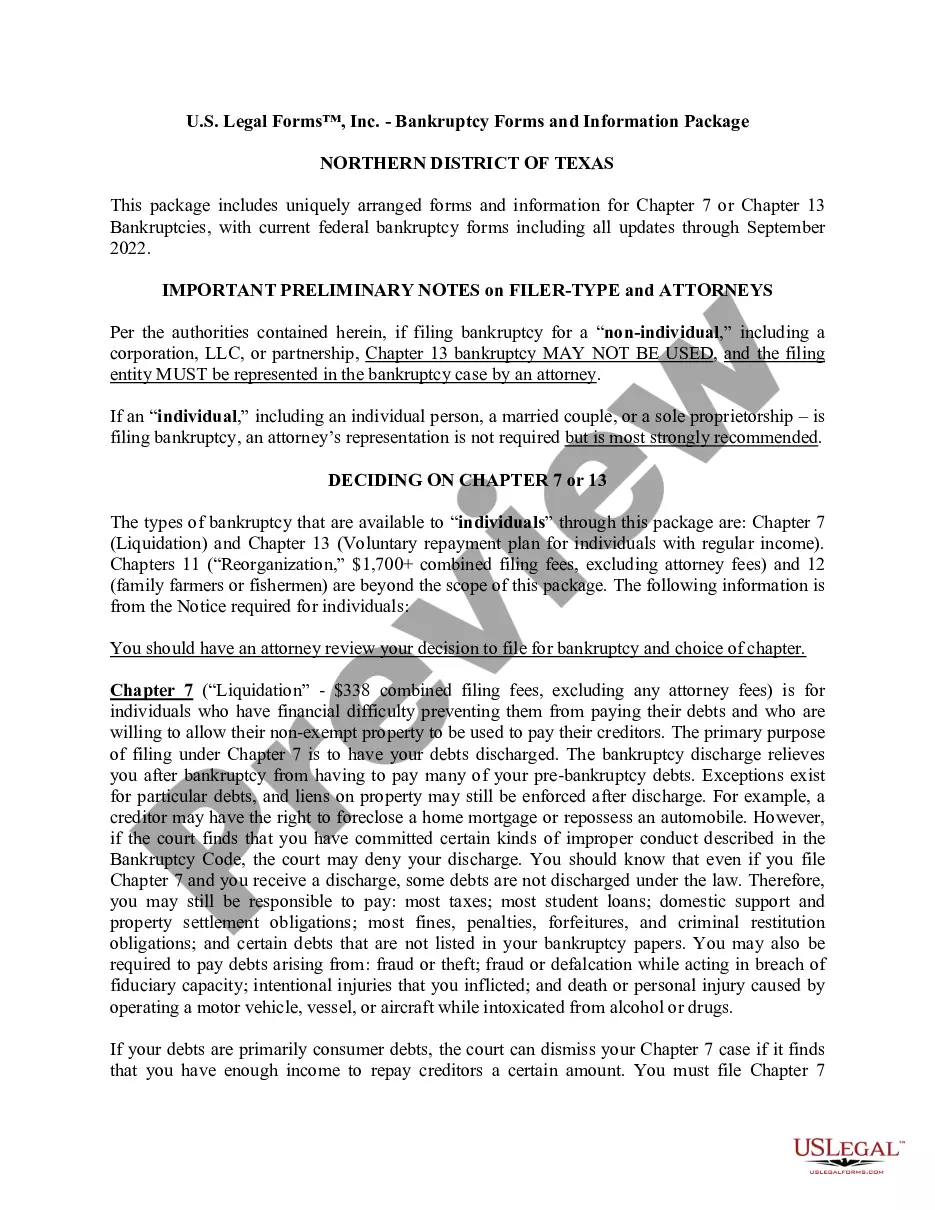
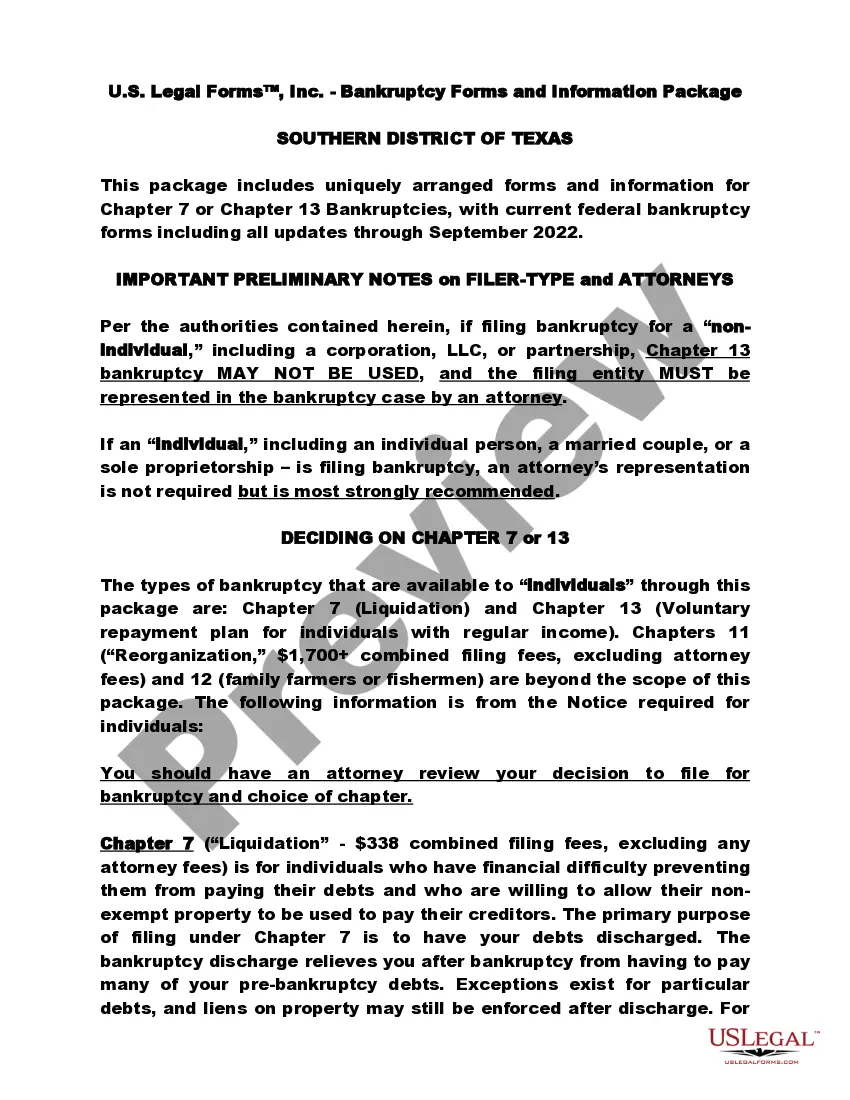
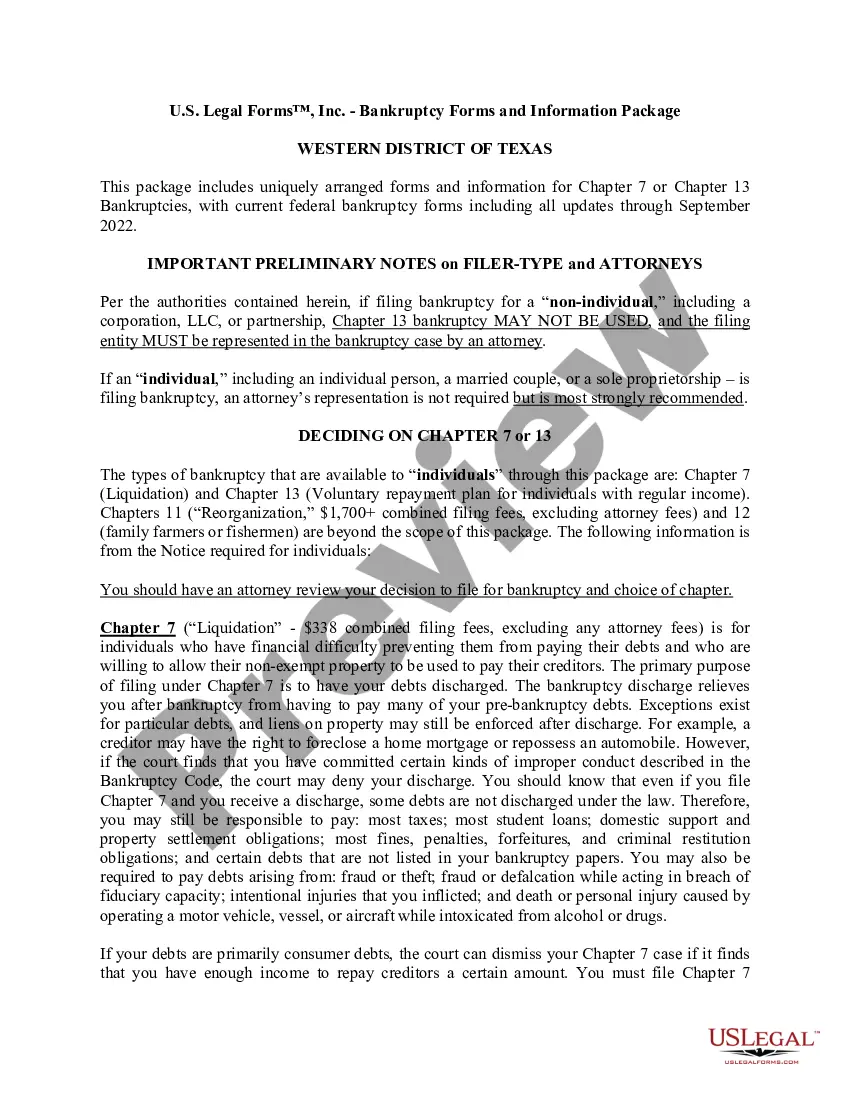
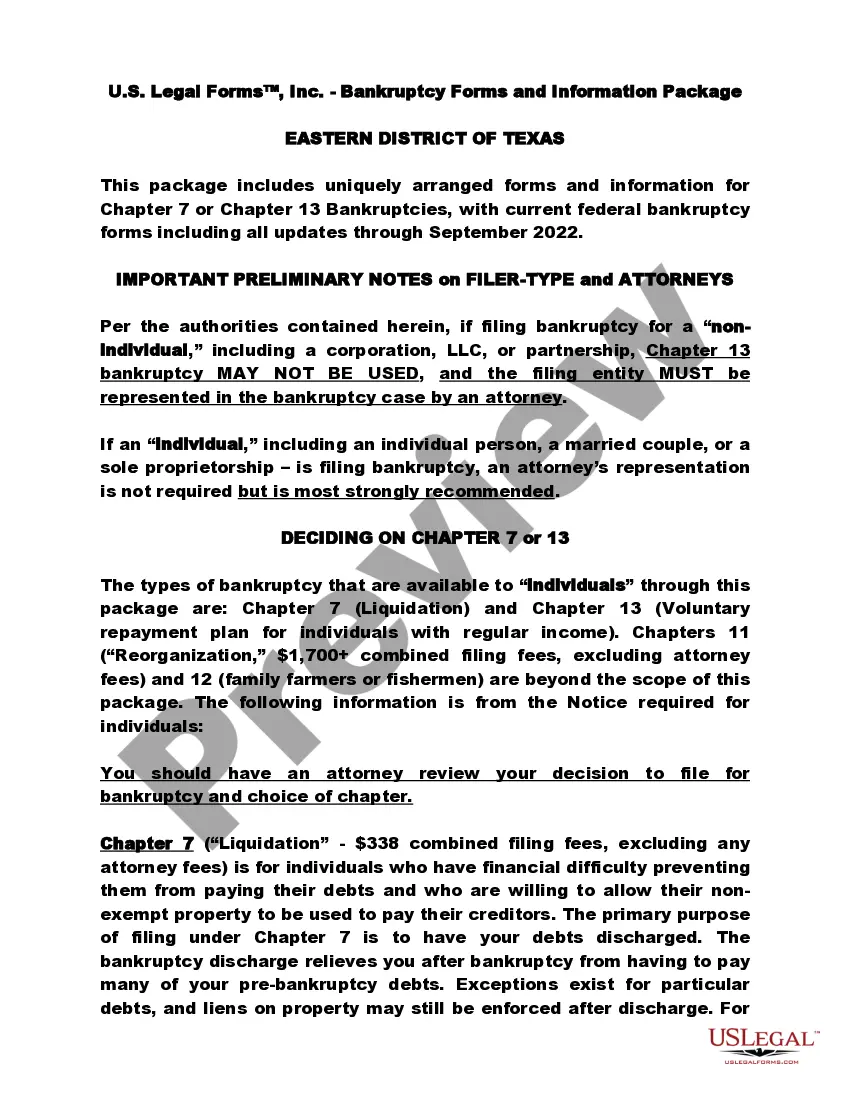
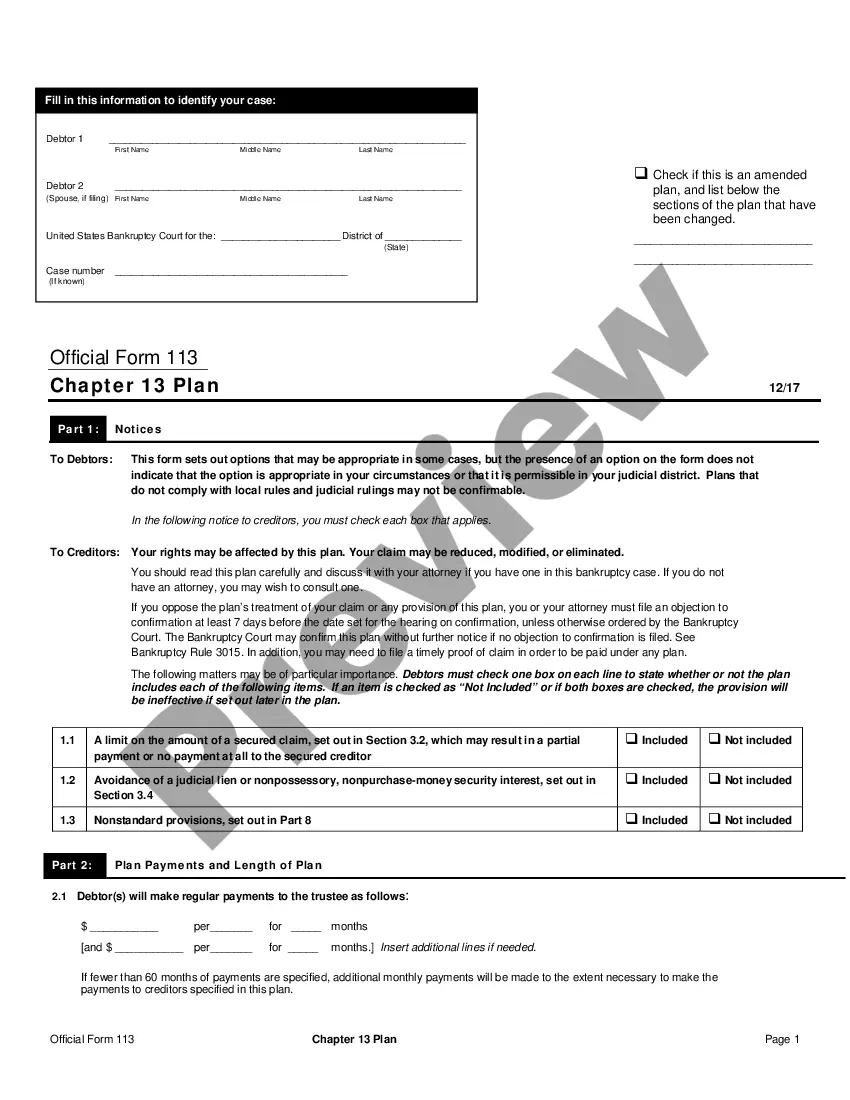
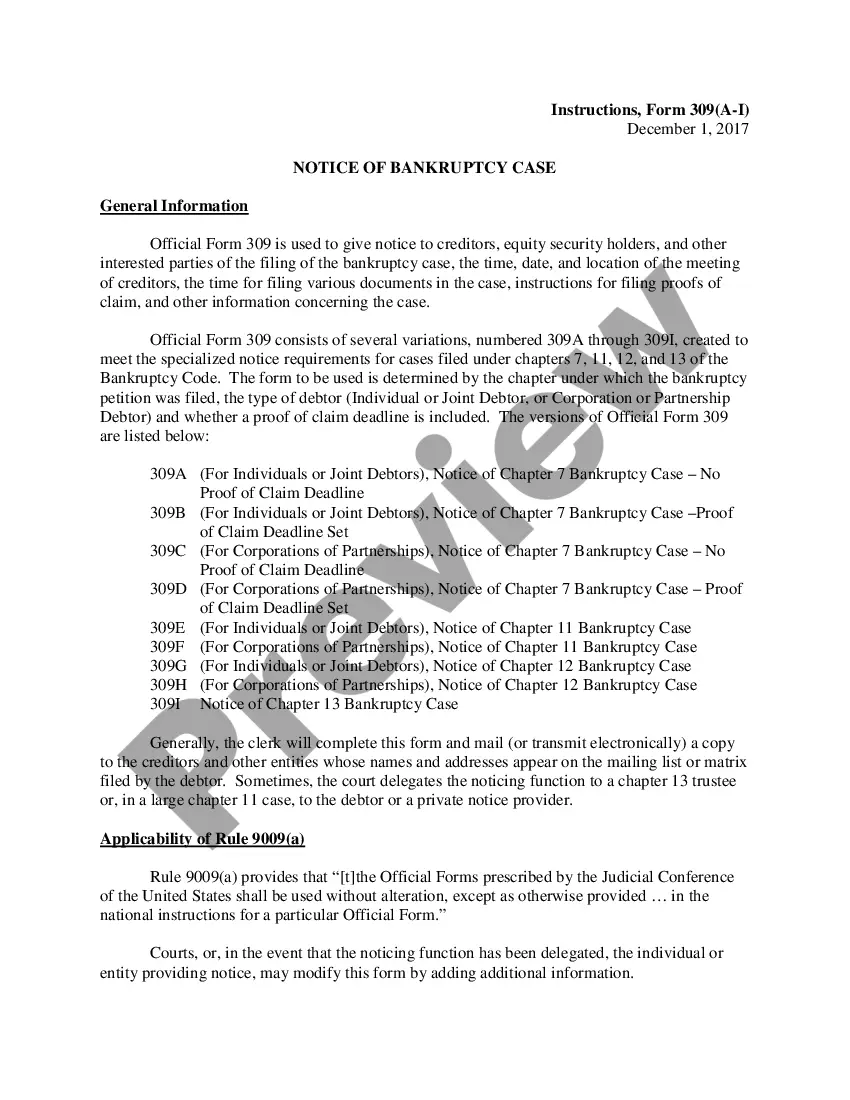
The Texas Northern District Bankruptcy Guide and Forms Package for Chapters 7 or 13 provides essential forms and instructions for individuals filing for bankruptcy in Texas. This package helps users understand the process and requirements involved in both Chapter 7 and Chapter 13 bankruptcies, distinguishing between the two options based on individual financial situations.
Key parts of this document
- Instructions for filing Chapter 7 and Chapter 13 bankruptcy.
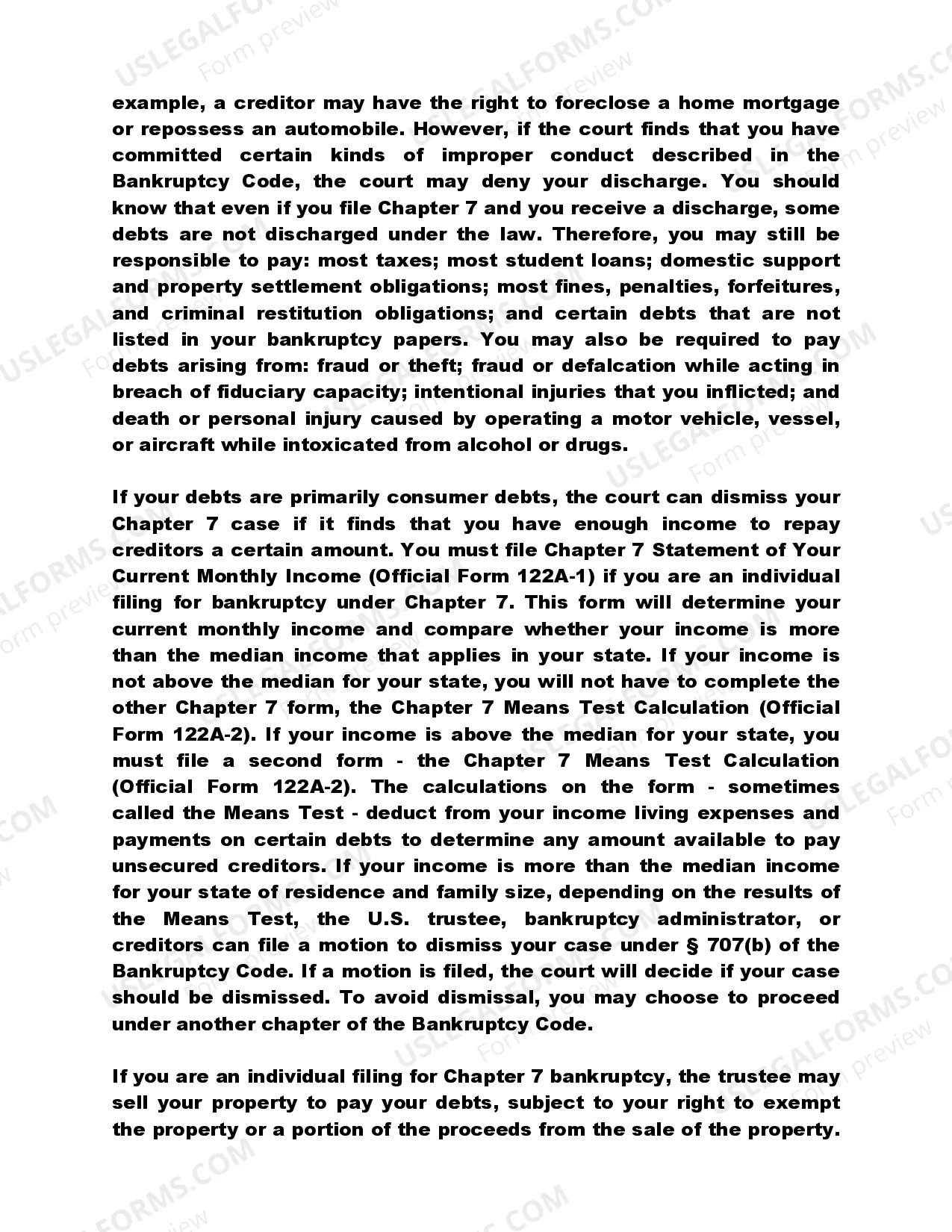
- Forms to calculate current monthly income and means testing.
- Schedules for listing debts, exemptions, and repayment plans.
- Important preliminary notes regarding attorney representation and eligibility.
- Login details for accessing and downloading forms.
Common use cases
This form is needed when an individual in Texas is considering filing for bankruptcy under Chapter 7 or Chapter 13. It is suitable for those experiencing financial hardship and looking to discharge debts or establish a repayment plan, respectively. Using this form helps ensure all necessary documents are accurately completed and filed with the court.
Who this form is for
- Individuals filing for Chapter 7 bankruptcy seeking to discharge their debts.
- Individuals with regular income interested in filing for Chapter 13 bankruptcy to create a repayment plan.
- Anyone requiring a comprehensive guide on bankruptcy forms and instructions in Texas.
Steps to complete this form
- Determine which chapter of bankruptcy to file based on your financial situation.
- Calculate your current monthly income using the Chapter 7 Statement of Your Current Monthly Income (Official Form 122A-1).
- If applicable, complete the Chapter 7 Means Test Calculation (Official Form 122A-2) to assess eligibility.
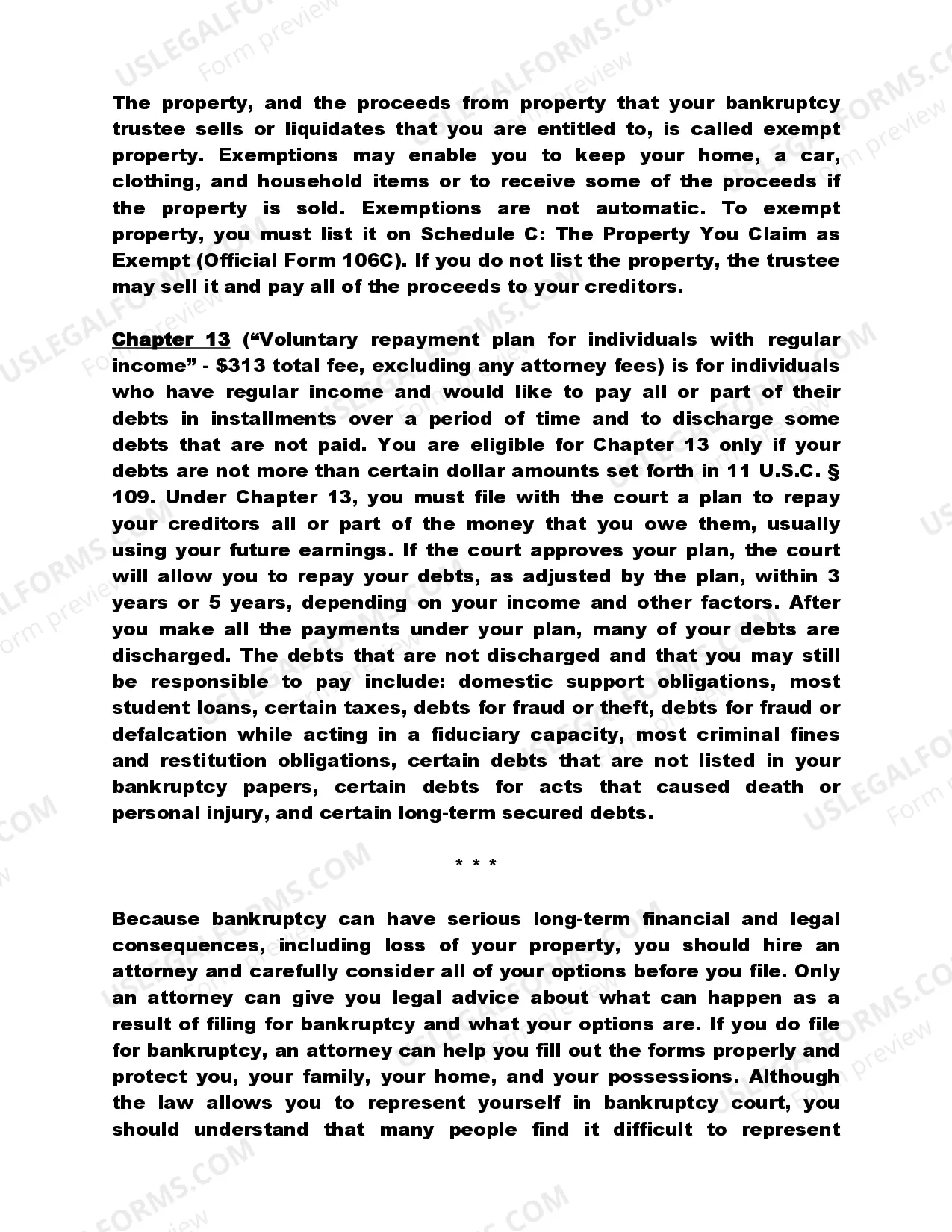
- Complete required schedules, including listing debts and claiming exemptions on Schedule C (Official Form 106C).
- File the completed forms with the bankruptcy court and retain copies for your records.
Is notarization required?
This form usually doesn’t need to be notarized. However, local laws or specific transactions may require it. Our online notarization service, powered by Notarize, lets you complete it remotely through a secure video session, available 24/7.
Get your form ready online
Our built-in tools help you complete, sign, share, and store your documents in one place.
Make edits, fill in missing information, and update formatting in US Legal Forms—just like you would in MS Word.
Download a copy, print it, send it by email, or mail it via USPS—whatever works best for your next step.
Sign and collect signatures with our SignNow integration. Send to multiple recipients, set reminders, and more. Go Premium to unlock E-Sign.
If this form requires notarization, complete it online through a secure video call—no need to meet a notary in person or wait for an appointment.
We protect your documents and personal data by following strict security and privacy standards.

Make edits, fill in missing information, and update formatting in US Legal Forms—just like you would in MS Word.

Download a copy, print it, send it by email, or mail it via USPS—whatever works best for your next step.

Sign and collect signatures with our SignNow integration. Send to multiple recipients, set reminders, and more. Go Premium to unlock E-Sign.

If this form requires notarization, complete it online through a secure video call—no need to meet a notary in person or wait for an appointment.

We protect your documents and personal data by following strict security and privacy standards.
Avoid these common issues
- Not consulting an attorney when advising on which chapter to file.
- Failing to list all debts or assets, leading to possible dismissal of the case.
- Ignoring deadlines for filings and responding to court notices promptly.
- Not completing the necessary means test calculations correctly.
Why use this form online
- Convenience of accessing and downloading forms from anywhere.
- Ease of editing digital forms to meet specific needs.
- Reliability of templates drafted by licensed attorneys.
Legal use & context
- Filing for Chapter 7 allows for a complete discharge of certain unsecured debts but may involve liquidation of non-exempt assets.
- Chapter 13 enables individuals to propose a repayment plan while retaining assets, but not all debts are dischargeable.
- Understanding the distinctions between chapters is critical for making an informed decision.
Quick recap
- The Texas Northern District Bankruptcy Guide and Forms Package is essential for navigating bankruptcy in Texas.
- Chapter 7 focuses on debt discharge, while Chapter 13 allows for repayment plans.
- Accurate completion of forms and adherence to specific state guidelines is crucial for a successful filing.
Looking for another form?

Form popularity
FAQ
Unlike the Chapter 7 bankruptcy process which liquidates significant portions of a debtor's assets and distributes the proceeds to creditors, Chapter 13 is best viewed as a financial reorganization of the individual's debts, allowing the debtor to repay creditors over an extended period of time in accordance with a
For many debtors, Chapter 7 bankruptcy is a better option than Chapter 13 bankruptcy.For instance, Chapter 7 is quicker, many filers can keep all or most of their property, and filers don't pay creditors through a three- to five-year Chapter 13 repayment plan.
Filing Chapter 13 BankruptcyChapter 13 allows debtors to repay all, or a significant portion, of their debts in 3-5 years under a court-ordered plan. The most common debts discharged in a Chapter 13 proceeding are medical bills, credit card debt and personal loans.
With Chapter 7, those types of debts are wiped out with your filing's court approval, which can take a few months. Under Chapter 13, you need to continue making payments on those balances throughout your court-instructed repayment plan; afterwards, the unsecured debts may be discharged.
Key Takeaways. Chapter 7 bankruptcy doesn't require a repayment plan but does require you to liquidate or sell nonexempt assets to pay back creditors.Chapter 13 bankruptcy eliminates qualified debt through a repayment plan over a three- or five-year period.
In many cases, Chapter 7 bankruptcy is a better fit than Chapter 13 bankruptcy. For instance, Chapter 7 is quicker, many filers can keep all or most of their property, and filers don't pay creditors through a three- to five-year Chapter 13 repayment plan.
Chapter 7 is a liquidation bankruptcy. In a Chapter 7 bankruptcy, the court makes an order saying that certain debts do not have to be paid back. Chapter 13 is a reorganization bankruptcy. It allows a person to make a plan to pay some debts over a period of time.
The filing fees in a Chapter 13 case are $310. This figure is accurate as of December 1, 2016. To stay on top of the latest fees, visit the web sites for the bankruptcy courts in Texas. United States Bankruptcy Court for the Eastern District of Texas, Fee Schedule.
How soon can you file for Chapter 13 after Chapter 7 bankruptcy? In order to get debts discharged through Chapter 13, you must wait four years after filing a Chapter 7 bankruptcy.