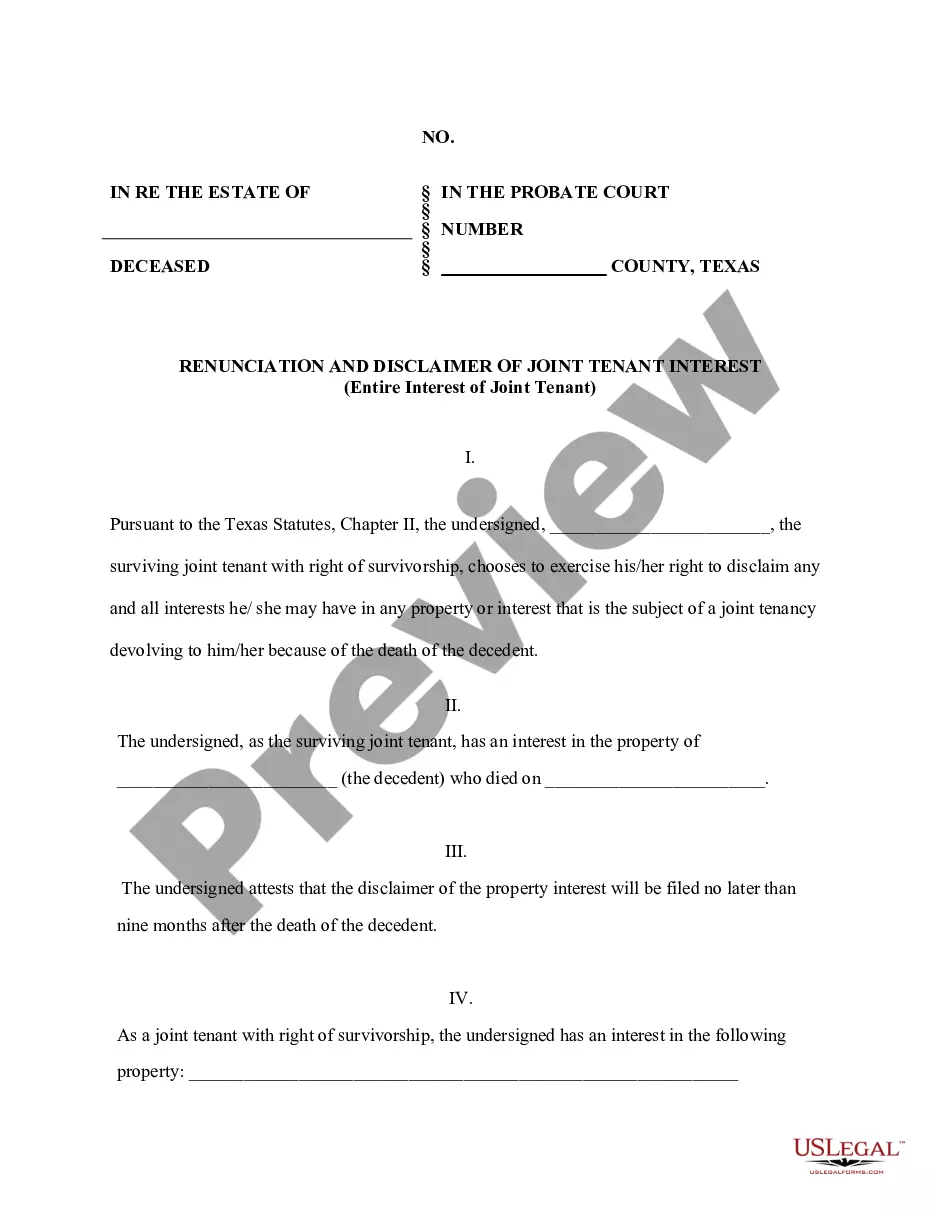
Texas Quitclaim Deed by Two Individuals to Husband and Wife
Overview of this form
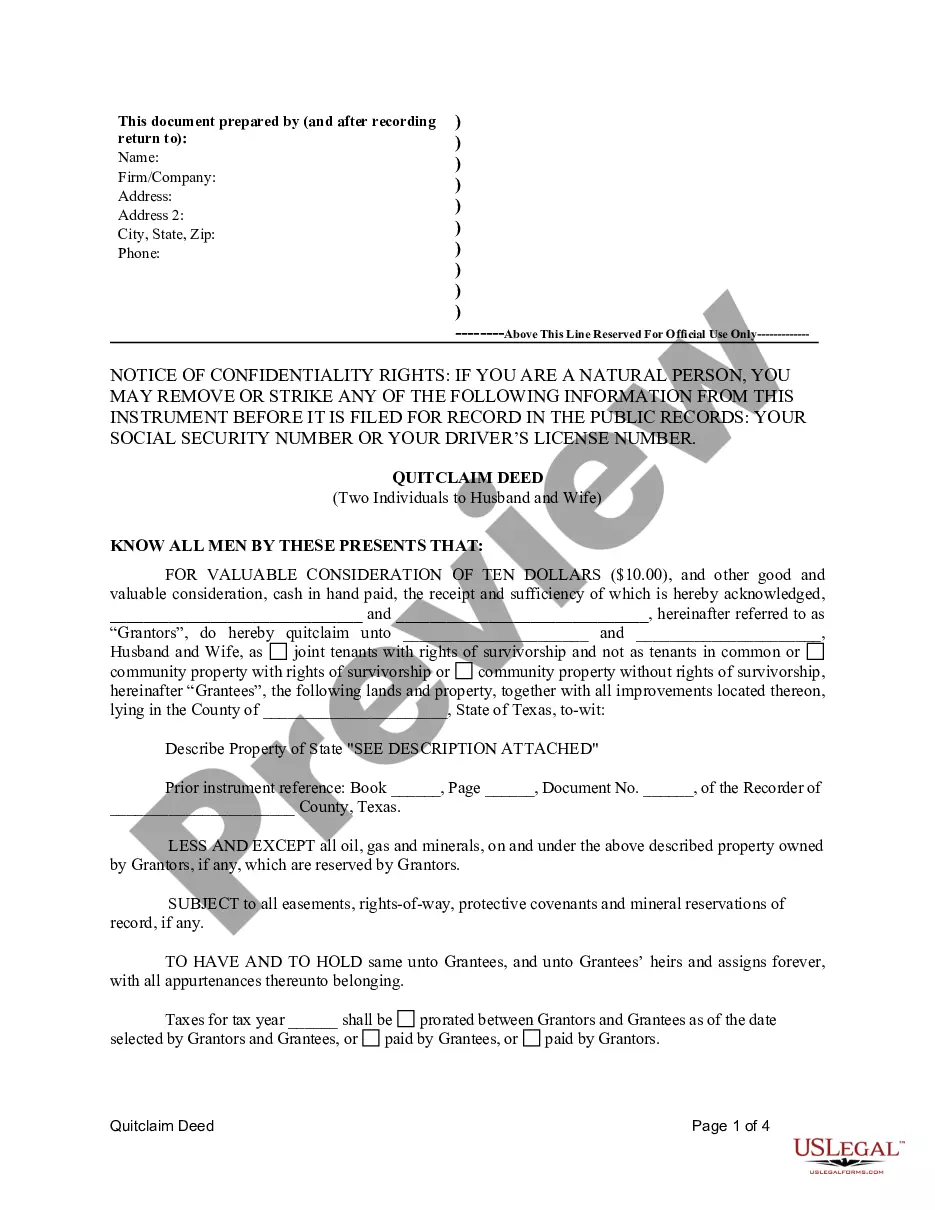
The Quitclaim Deed by Two Individuals to Husband and Wife is a legal document that allows two individuals (the Grantors) to transfer ownership of a piece of real estate to a married couple (the Grantees). Unlike a warranty deed, a quitclaim deed does not guarantee that the Grantors hold clear title to the property, which makes it a simpler option for conveying property rights. This form is particularly used when the Grantors wish to relinquish any claim to the property without providing additional assurances about its condition or title. It is particularly useful among family members or when property is given as a gift.
Main sections of this form
- Identification of the Grantors and Grantees.
- Legal description of the property being transferred.
- Statement of consideration, usually a nominal amount.
- Reservation of rights, specifically for oil, gas, and minerals under the property.
- Provisions for taxes and whether the property is part of a homestead.
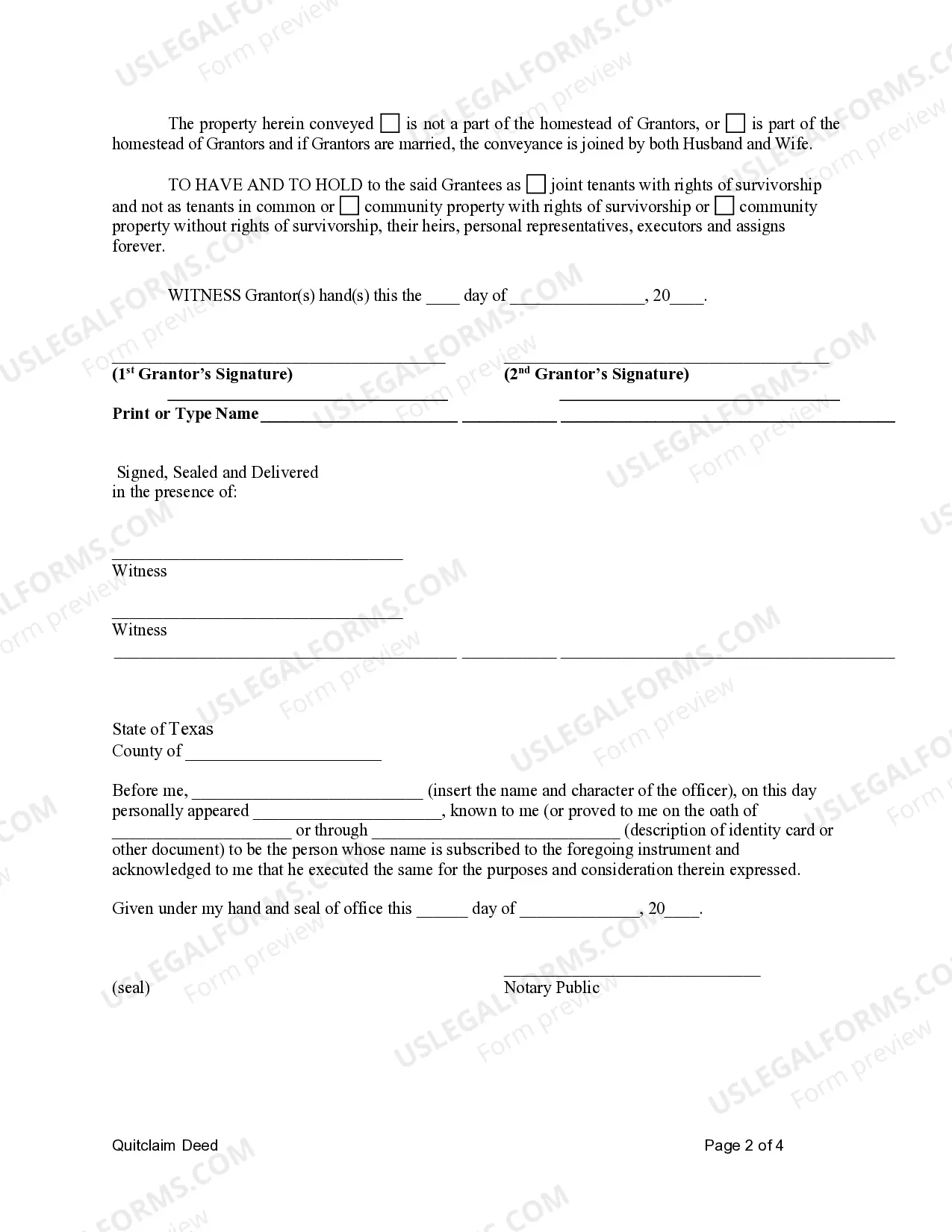
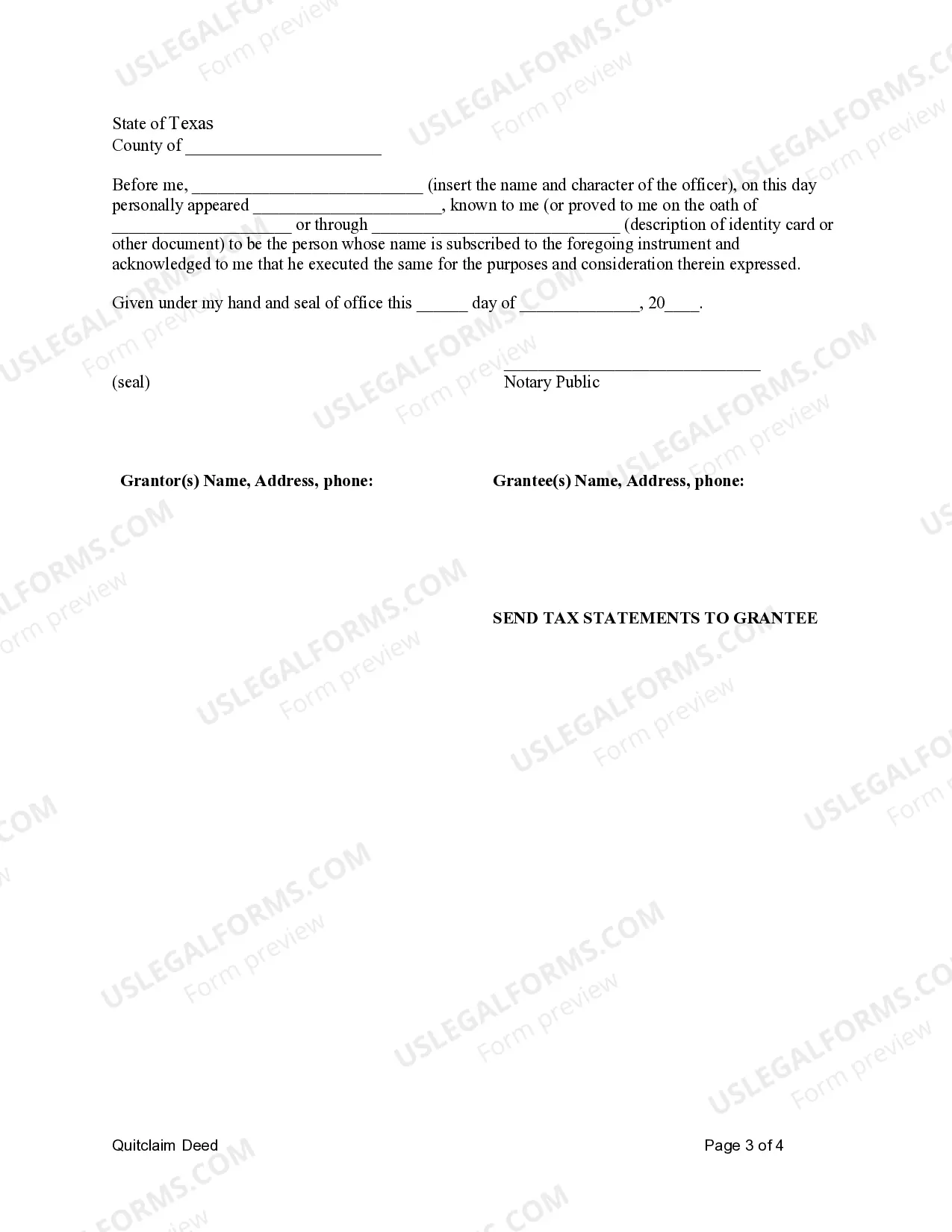
- Notary acknowledgment section to validate the deed.
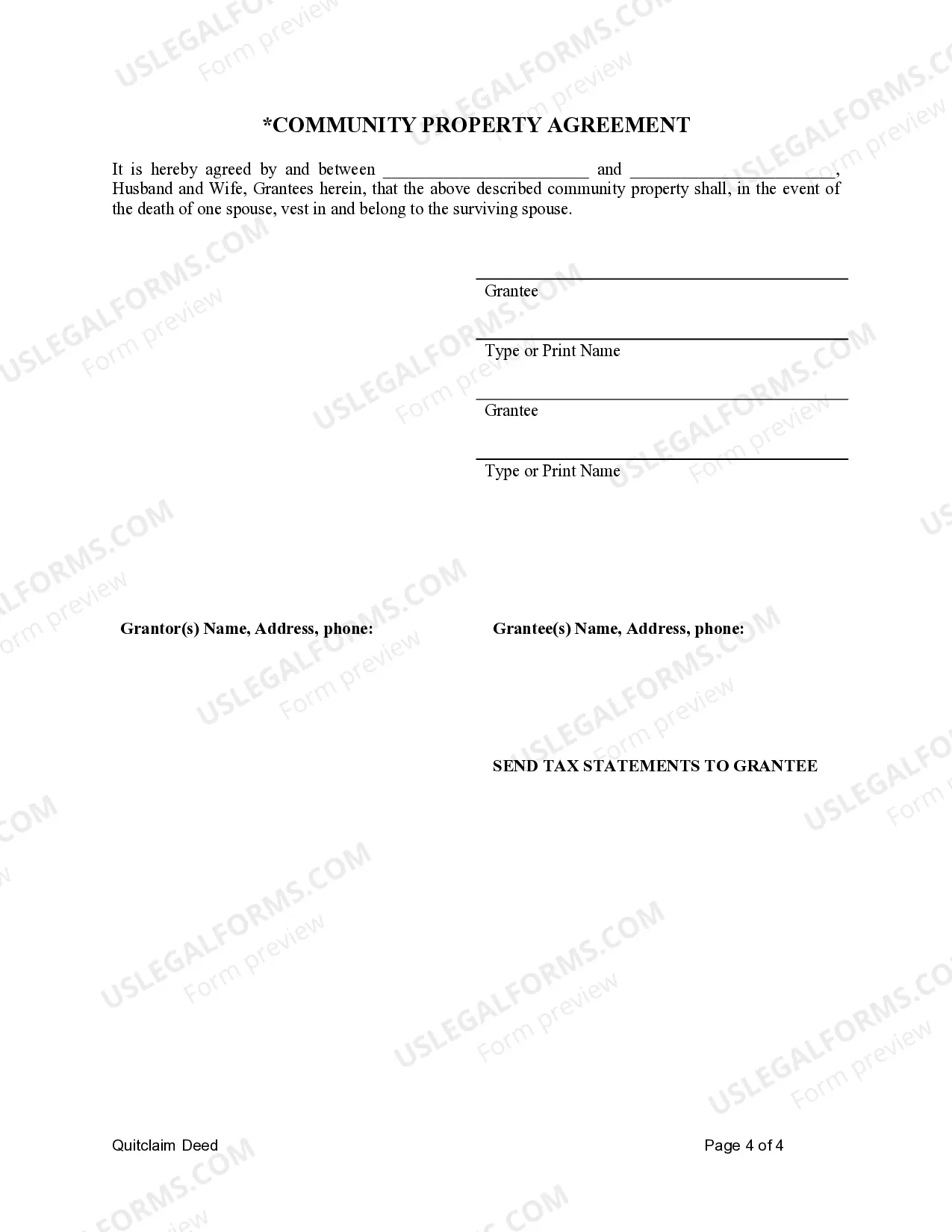





When to use this document
This quitclaim deed is typically used when the property is being transferred without a sale, such as in a divorce, between family members, or to eliminate ambiguity regarding the ownership among co-owners. It is also useful in situations where the Grantors want to add a spouse to the title, or transfer property as part of estate planning.
Intended users of this form
- Individuals looking to transfer property ownership to a spouse.
- Family members wishing to gift property to other relatives.
- Couples who want to clarify ownership following a separation of assets.
- Anyone involved in estate planning who wants to simplify property transfers.
How to complete this form
- Identify the Grantors and Grantees by entering their names in the appropriate fields.
- Provide a detailed legal description of the property being transferred.
- Enter the consideration amount (usually ten dollars) to establish valid transfer.
- Specify any reservations regarding oil, gas, and minerals under the property.
- Include a statement confirming if the property is part of the Grantors' homestead.
- Have the form notarized to ensure it is legally recognized.
Does this document require notarization?
Yes, this form must be notarized to be legally valid. Notarization ensures that the identities of the Grantors are verified and that they are signing the document voluntarily. US Legal Forms offers integrated online notarization services, allowing you to complete this process securely via video call without needing to travel.
Get your form ready online
Our built-in tools help you complete, sign, share, and store your documents in one place.
Make edits, fill in missing information, and update formatting in US Legal Forms—just like you would in MS Word.
Download a copy, print it, send it by email, or mail it via USPS—whatever works best for your next step.
Sign and collect signatures with our SignNow integration. Send to multiple recipients, set reminders, and more. Go Premium to unlock E-Sign.
If this form requires notarization, complete it online through a secure video call—no need to meet a notary in person or wait for an appointment.
We protect your documents and personal data by following strict security and privacy standards.

Make edits, fill in missing information, and update formatting in US Legal Forms—just like you would in MS Word.

Download a copy, print it, send it by email, or mail it via USPS—whatever works best for your next step.

Sign and collect signatures with our SignNow integration. Send to multiple recipients, set reminders, and more. Go Premium to unlock E-Sign.

If this form requires notarization, complete it online through a secure video call—no need to meet a notary in person or wait for an appointment.

We protect your documents and personal data by following strict security and privacy standards.
Mistakes to watch out for
- Failing to provide a complete legal description of the property.
- Not having the document notarized when required, leading to challenges in enforceability.
- Leaving out details about tax responsibility or property status (homestead or not).
Advantages of online completion
- Convenience of immediate access and downloading the form from anywhere.
- Easy editing options allow users to customize the document to their specific needs.
- Reliable templates drafted by licensed attorneys ensure compliance with legal standards.
Looking for another form?
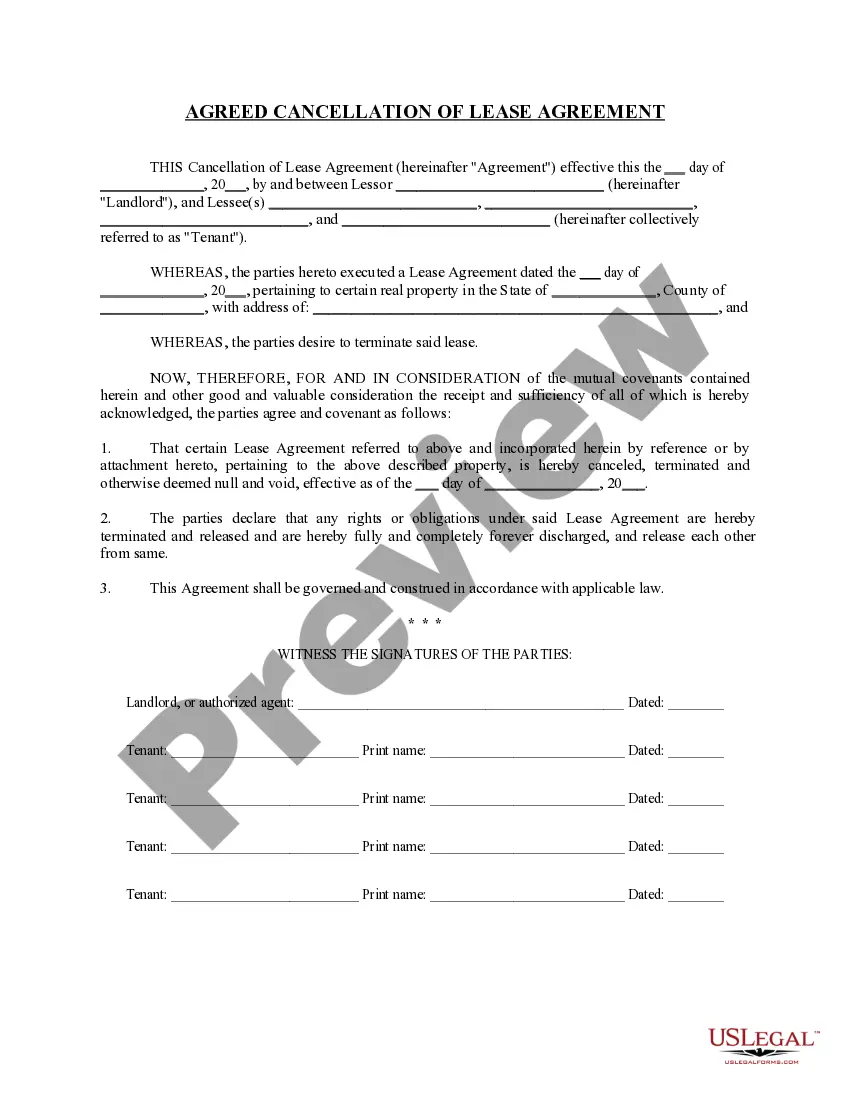
Form popularity
FAQ
In order to transfer ownership of the marital home pursuant to a divorce, one spouse is going to need to sign a quitclaim deed, interspousal transfer deed, or a grant deed, in order to convey the title to the property.
It is also crucial that a spouse know about the loan, even if he or she is not on the mortgage. In general, the spouse must sign a deed of trust, the Truth in Lending and Right to Cancel documents. By signing these documents, they are simply acknowledging the existence of the mortgage.
If you sign a quitclaim deed to release yourself from ownership of the property or a claim to the title, then that doesn't mean you are no longer held accountable for the mortgage payment.Otherwise, you may be held responsible for unpaid payments despite no longer having a claim to the title.
Misconceptions and Realities. It is a misconception that someone can be removed from the deed. Nor can a co-owner simply take away another party's interest in a property by executing a new deed without that other party. In short, no one can be passively removed from a title.
In states like California and Florida, the spouses may use a quitclaim deed to transfer the property without warranting title. Other stateslike Texasrecognize a similar type of deed called a deed without warranty.
Discuss property ownership interests. Access a copy of your title deed. Complete, review and sign the quitclaim or warranty form. Submit the quitclaim or warranty form. Request a certified copy of your quitclaim or warranty deed.
A quitclaim deed transfers title but makes no promises at all about the owner's title.A person who signs a quitclaim deed to transfer property they do not own results in no title at all being transferred since there is no actual ownership interest. The quitclaim deed only transfers the type of title you own.
How do I add my spouse to the deed? In Texas, you can't add your spouse's name to an existing deed, but you can create a new deed by transferring the property from yourself to you and your spouse jointly. You can do this by using either a deed without warranty or a quit claim deed.