Texas Prenuptial Premarital Agreement without Financial Statements
About this form
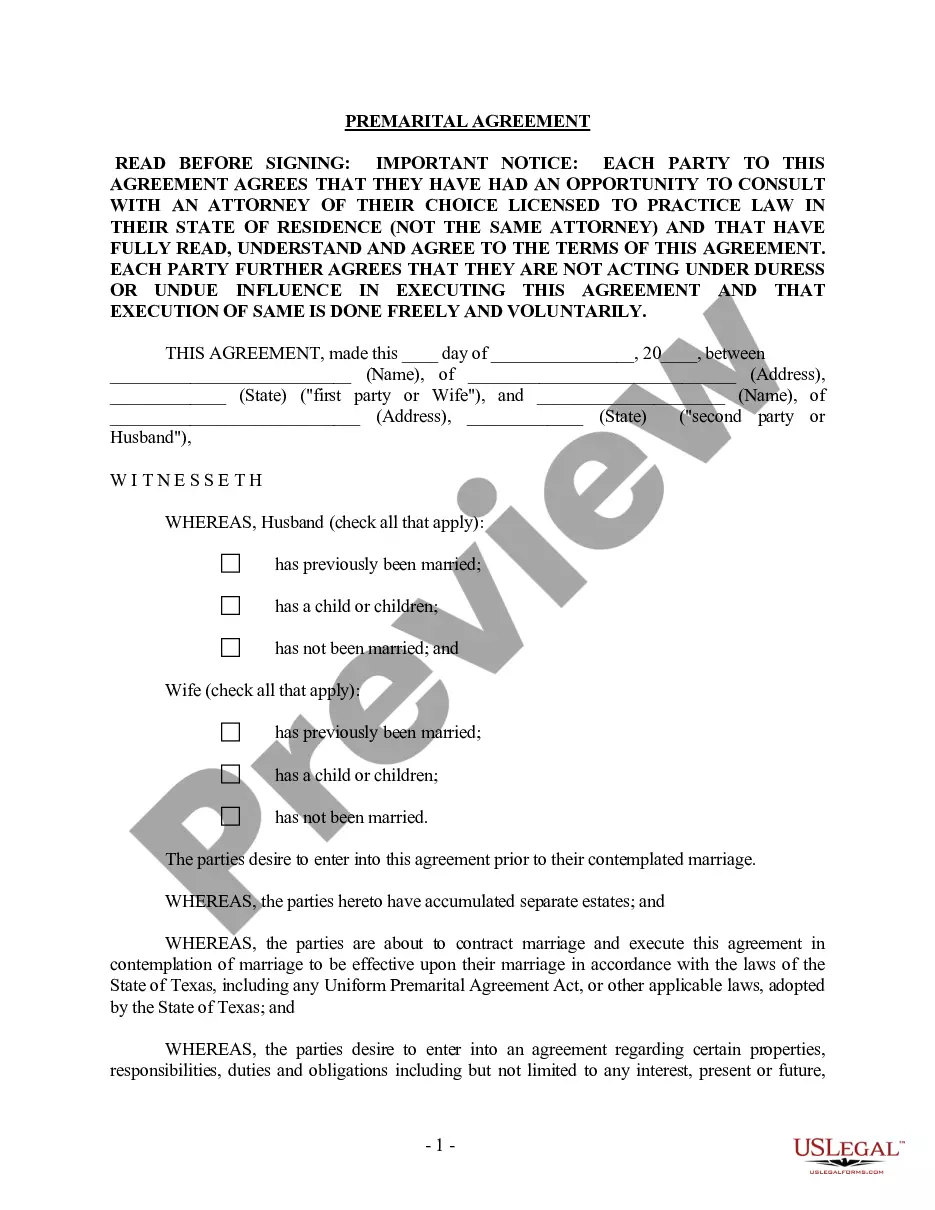
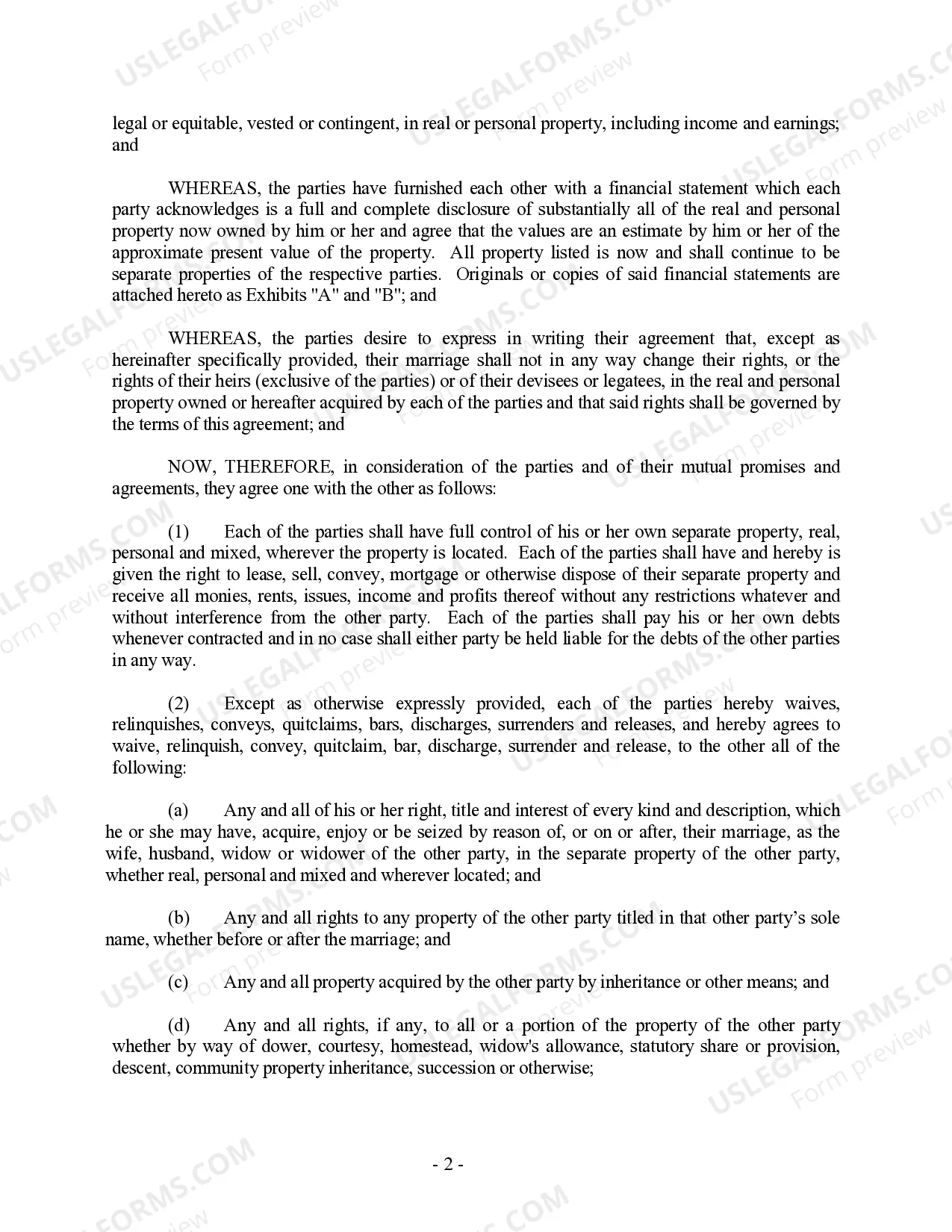
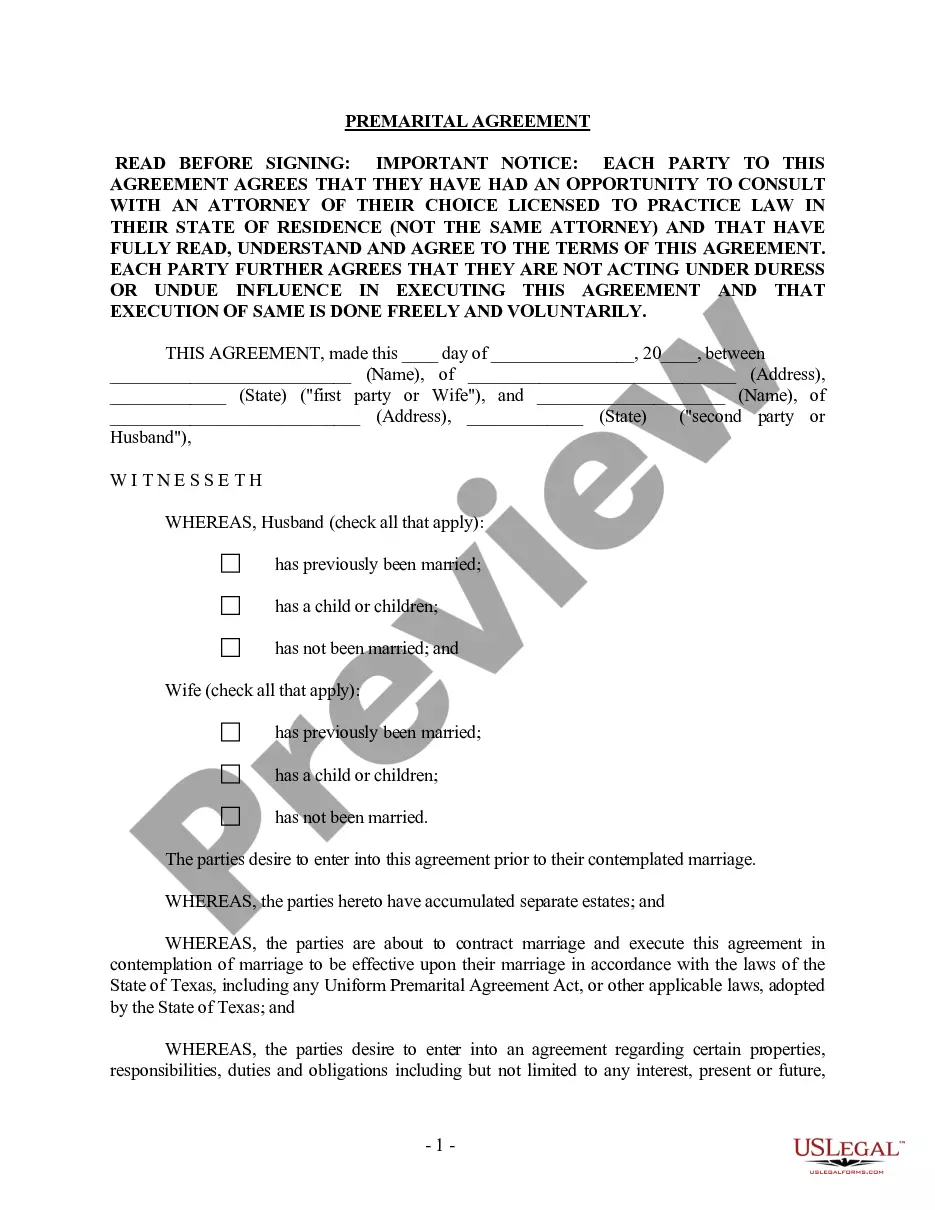
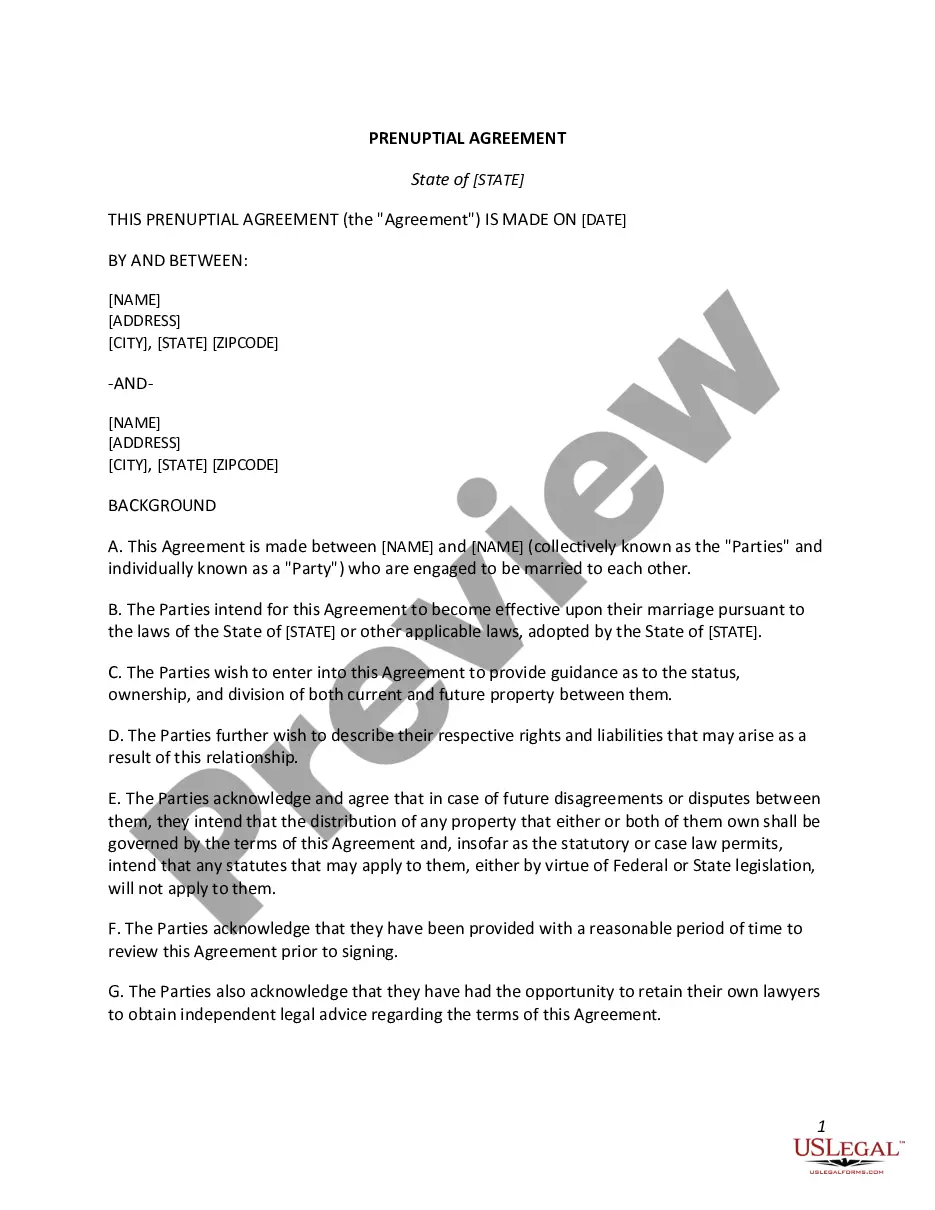
The Texas Prenuptial Premarital Agreement without Financial Statements is a legal contract designed for couples intending to marry. This agreement outlines the rights, responsibilities, and obligations of each party regarding property and debts before entering into marriage. Unlike other financial disclosure agreements, this form does not require a complete financial statement, simplifying the process for those who may wish to keep their finances private. It ensures that each party retains control over their separate property, helping to prevent disputes in the event of divorce or death.
Form components explained
- Identification of the parties involved, including their current marital status and any children.
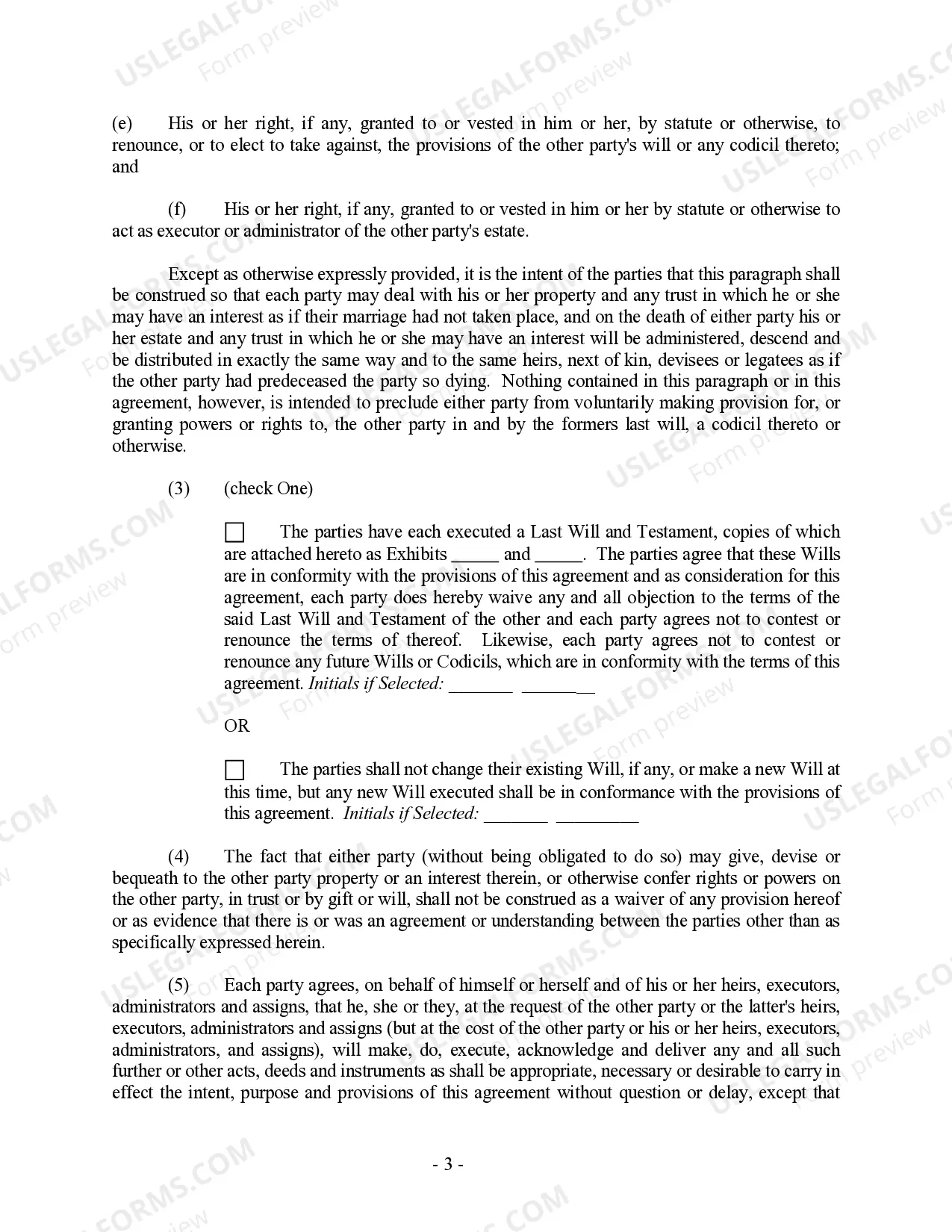
- Clear designation of separate property ownership rights for each party.
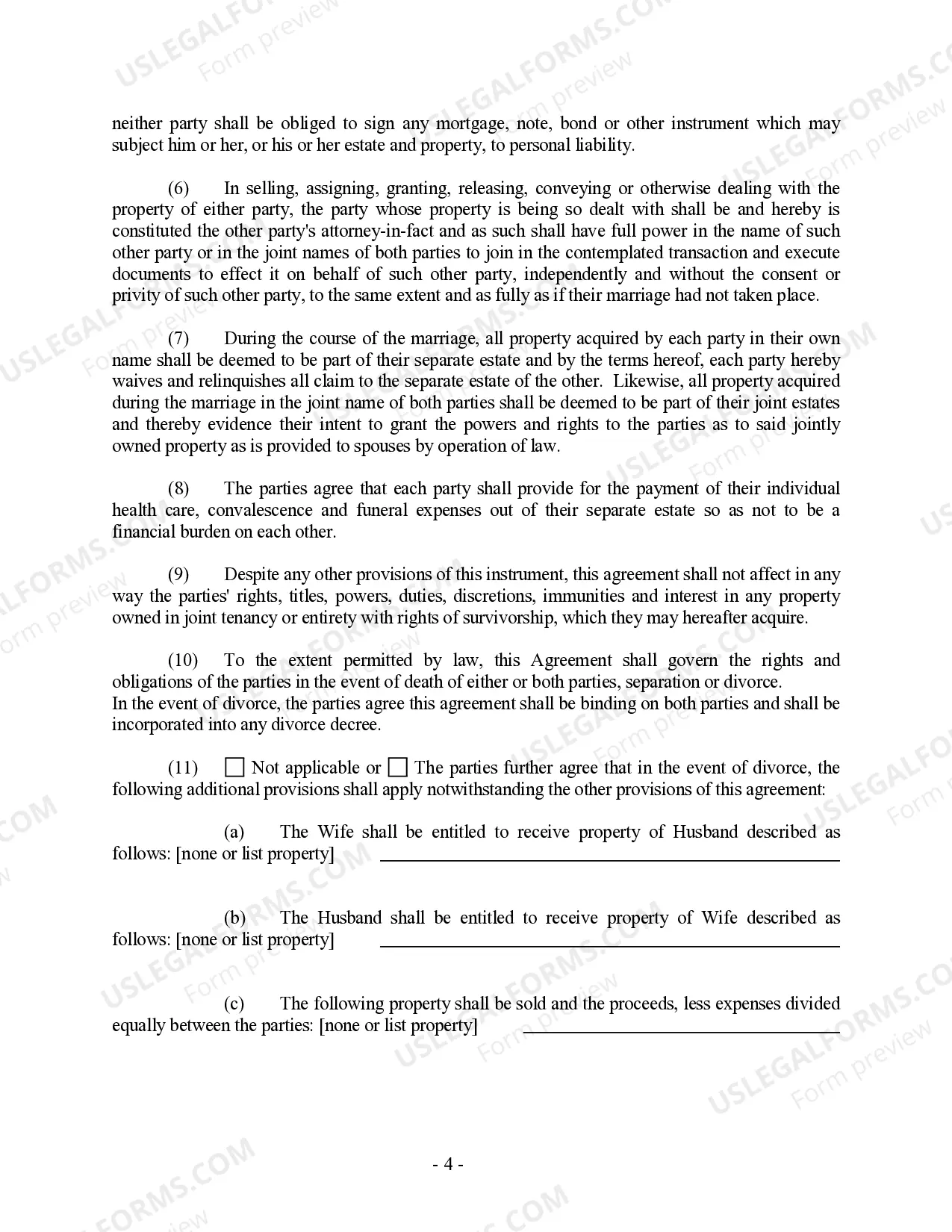
- Provisions detailing the parties' responsibilities regarding debts and financial obligations.
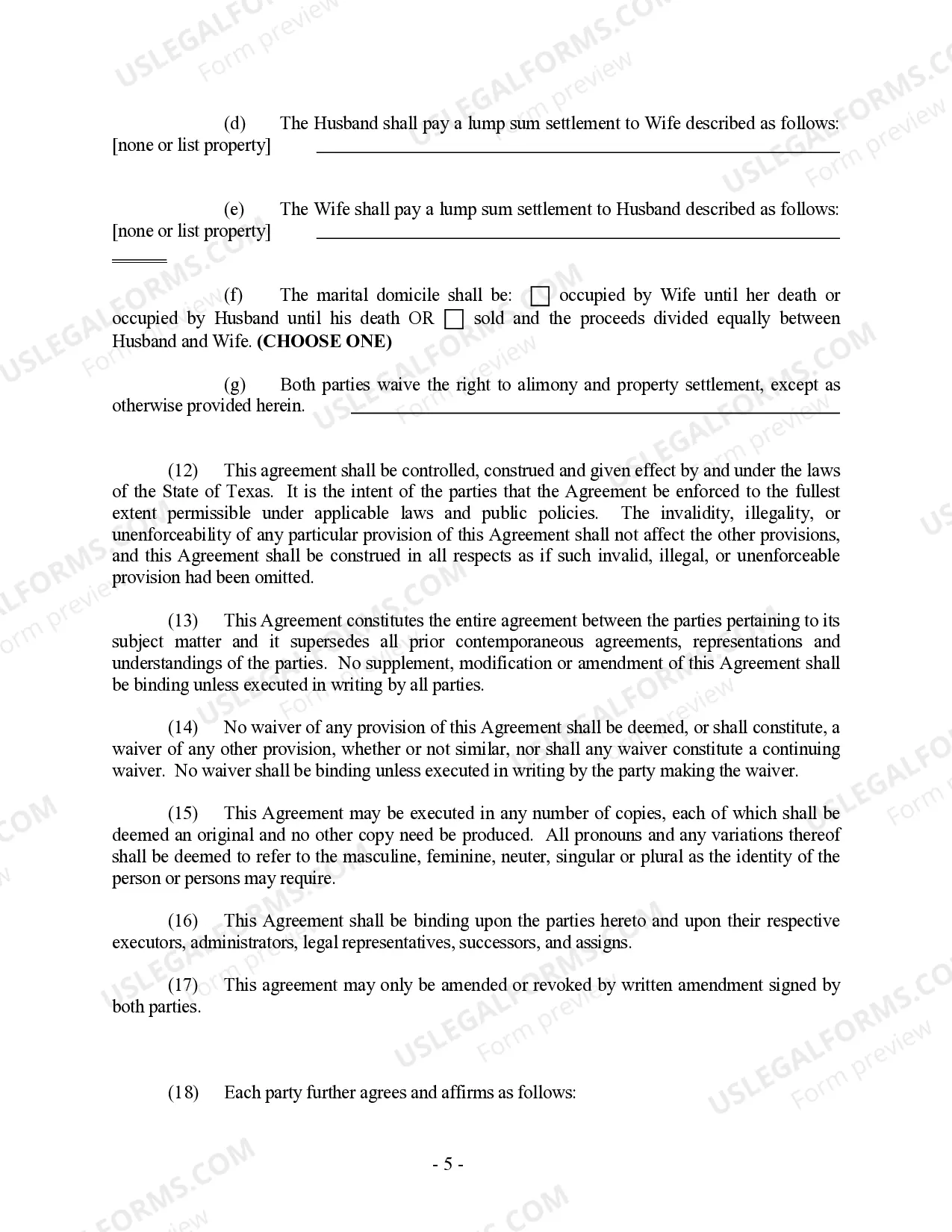
- Clauses regarding the impact of the agreement in case of divorce, including property division and alimony waivers.
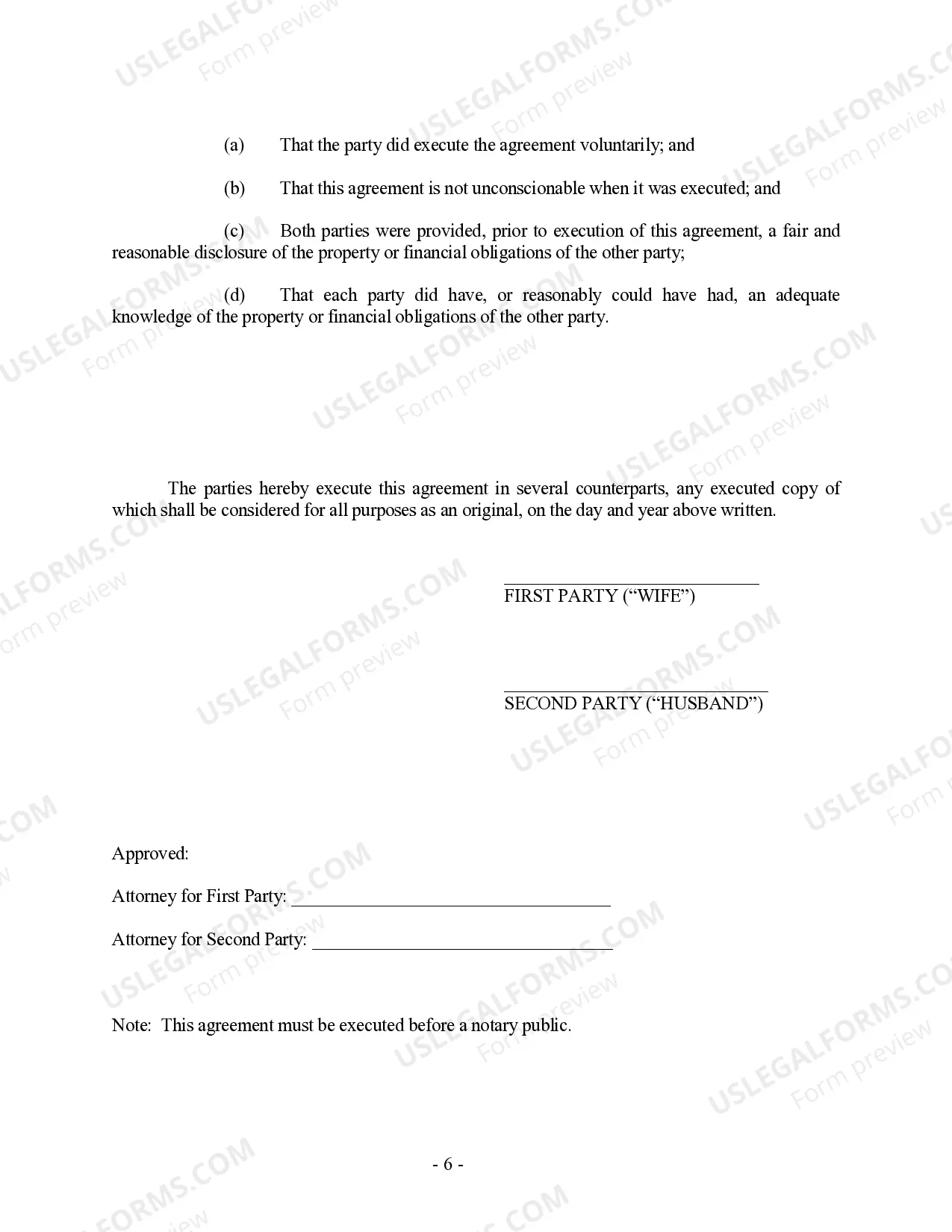
- Terms governing the execution and amendment of the agreement.
When to use this document
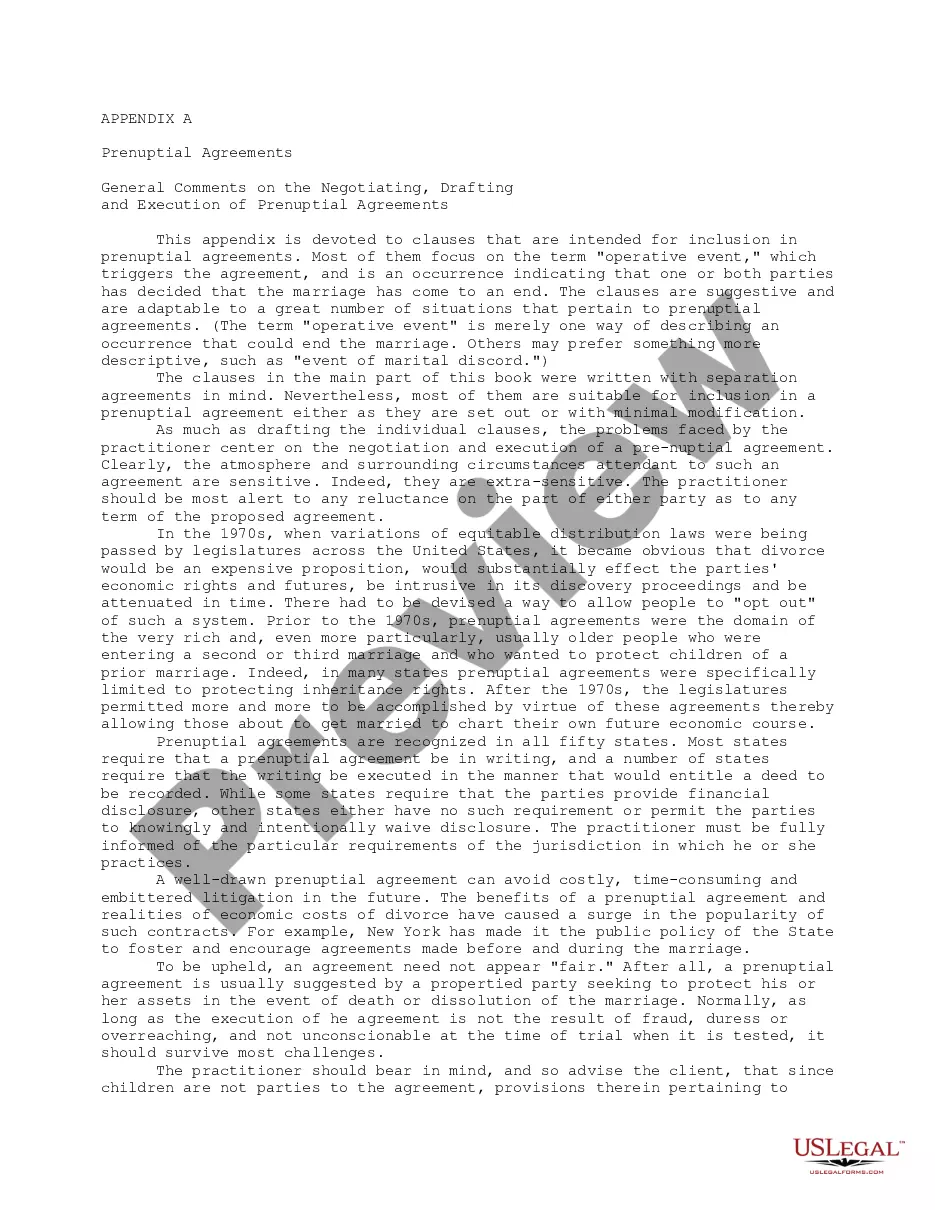
This form is ideal for couples about to marry who want to establish clear financial boundaries and rights regarding their individual assets. It is particularly useful for individuals who have been previously married, wish to protect existing assets, or want to avoid lengthy disputes in the case of divorce. Couples may also consider this agreement if either party has significant debts or properties to safeguard.
Who should use this form
- Individuals planning to marry who want to protect their separate assets.
- People who have been previously married and want to secure their financial interests.
- Couples who want to avoid future legal disputes regarding property and financial obligations.
- Those who prefer not to disclose detailed financial statements.
How to complete this form
- Identify and enter the names and addresses of both parties.
- Determine and indicate the marital status and number of children for both parties.
- Review and discuss each clause to ensure mutual understanding and consent.
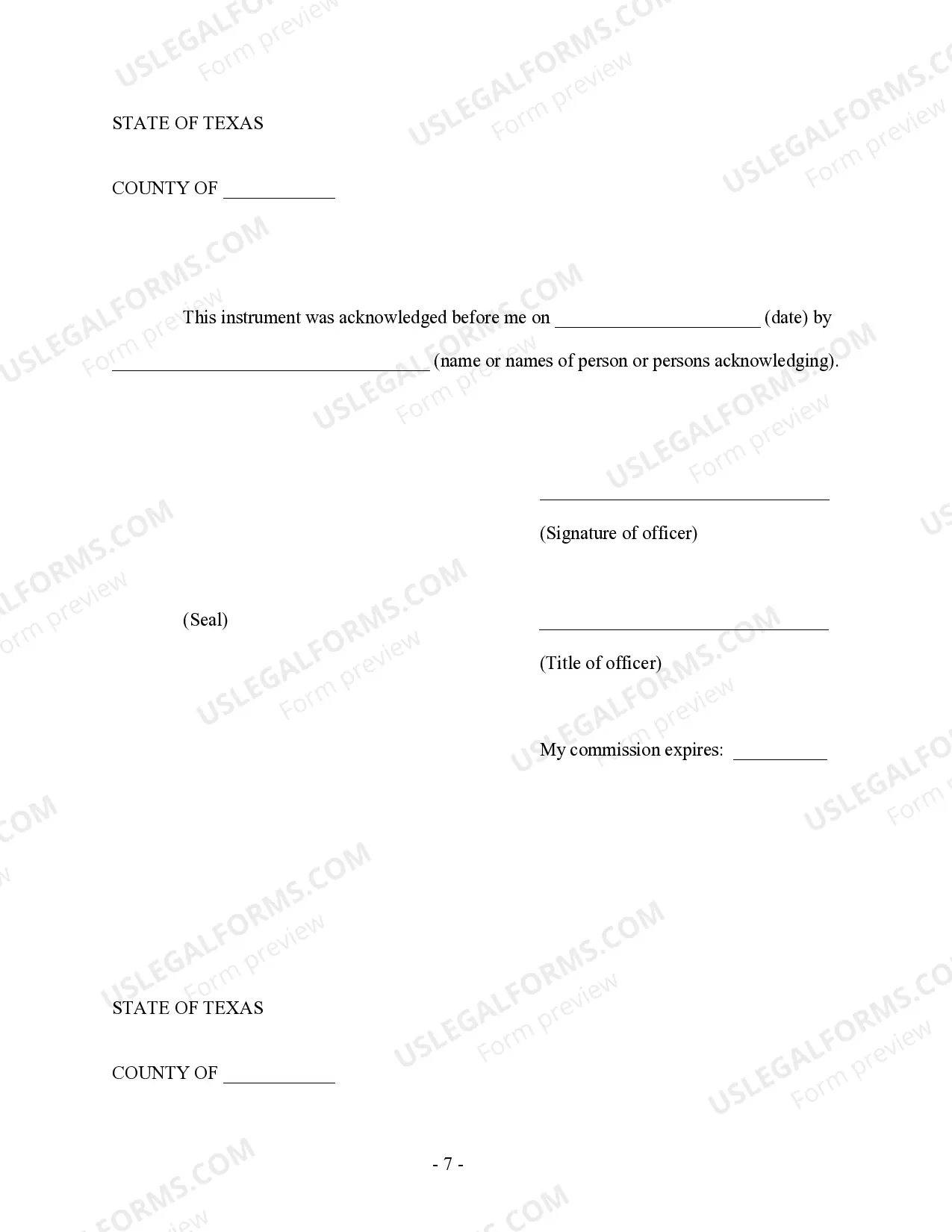
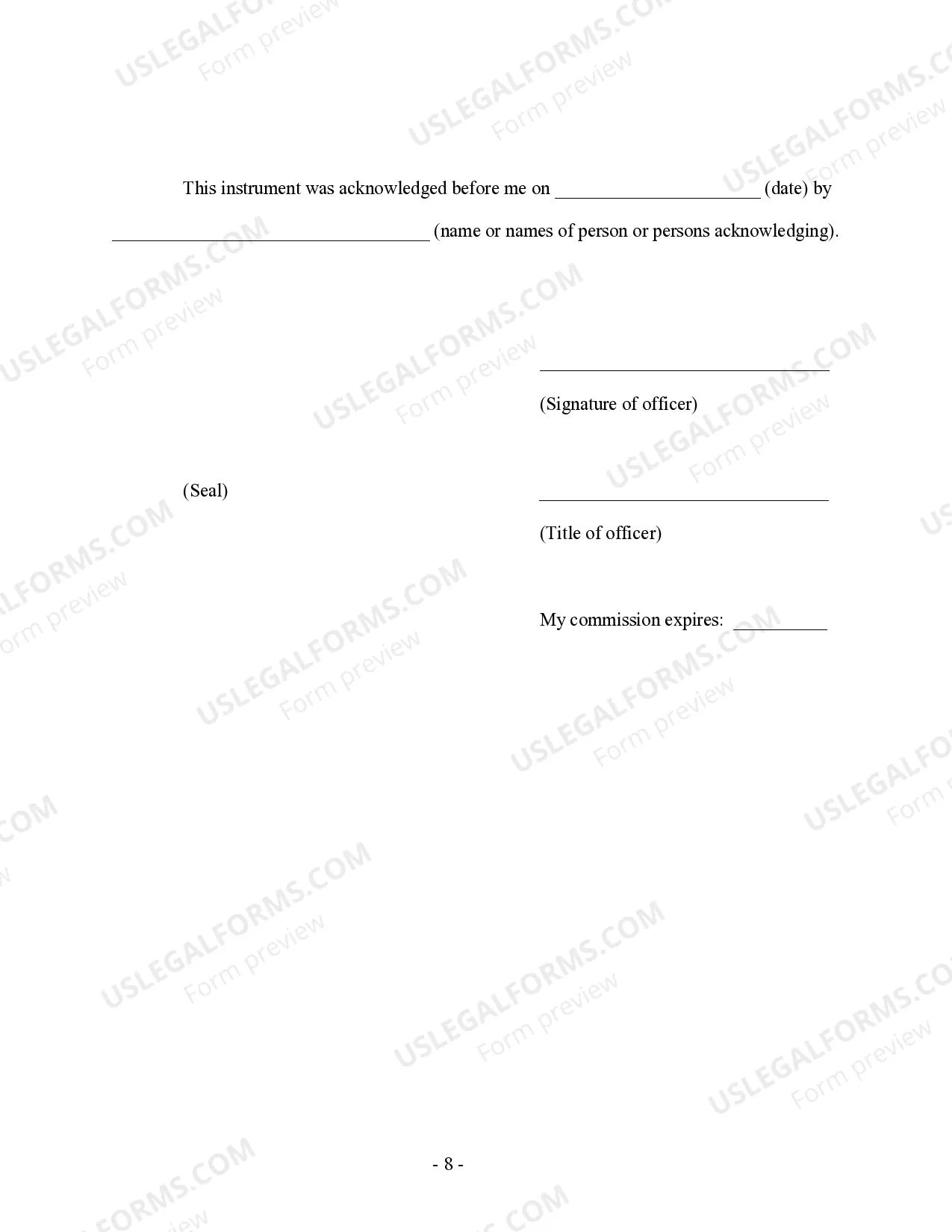
- Each party must sign the agreement before a notary public to validate it.
- Keep a copy of the signed agreement for personal records.
Is notarization required?
Notarization is required for this form to take effect. Our online notarization service, powered by Notarize, lets you verify and sign documents remotely through an encrypted video session, available 24/7.
Get your form ready online
Our built-in tools help you complete, sign, share, and store your documents in one place.
Make edits, fill in missing information, and update formatting in US Legal Forms—just like you would in MS Word.
Download a copy, print it, send it by email, or mail it via USPS—whatever works best for your next step.
Sign and collect signatures with our SignNow integration. Send to multiple recipients, set reminders, and more. Go Premium to unlock E-Sign.
If this form requires notarization, complete it online through a secure video call—no need to meet a notary in person or wait for an appointment.
We protect your documents and personal data by following strict security and privacy standards.

Make edits, fill in missing information, and update formatting in US Legal Forms—just like you would in MS Word.

Download a copy, print it, send it by email, or mail it via USPS—whatever works best for your next step.

Sign and collect signatures with our SignNow integration. Send to multiple recipients, set reminders, and more. Go Premium to unlock E-Sign.

If this form requires notarization, complete it online through a secure video call—no need to meet a notary in person or wait for an appointment.

We protect your documents and personal data by following strict security and privacy standards.
Typical mistakes to avoid
- Failing to fully understand the terms of the agreement before signing.
- Not having the document notarized, which is crucial for legal validity.
- Leaving important details, such as asset descriptions, vague or incomplete.
- Not consulting separate legal counsel before entering into the agreement.
Benefits of completing this form online
- Convenient access to legal templates drafted by licensed attorneys.
- Edit and customize the form easily to fit the couple's specific needs.
- Fast download and printing options for immediate use.
- Reliable resources that provide guidance on the completion and execution of the form.
Legal use & context
- This prenuptial agreement is enforceable under Texas law provided it meets all legislative requirements.
- It protects individual assets and defines the financial responsibilities of each spouse.
- In case of divorce, the agreement serves as a binding document that can simplify court proceedings.
Quick recap
- The Texas Prenuptial Premarital Agreement is essential for couples wanting to establish financial security before marriage.
- It protects individual property and assists in avoiding potential disputes.
- Notarization is required for legal validity, ensuring enforceability in the courts.
- Consulting with separate attorneys before signing is advisable to ensure clarity and understanding.
Looking for another form?



Form popularity
FAQ
Just as a future asset can be protected by a prenup if adequately described, future income can also be treated as belonging to one partner but not both.
Texas law provides that a marital partition agreement (postnup) can be recorded with the county records.Whether or not it is recorded will have no impact on its enforceability between the spouses.
A prenup cannot include child support or child custody issues.A court would never uphold a provision of a prenuptial agreement that dealt with child support, child custody, or visitation, because these are issues of public policy.
2. Prenups make you think less of your spouse. And at their root, prenups show a lack of commitment to the marriage and a lack of faith in the partnership.Ironically, the marriage becomes more concerned with money after a prenup than it would have been without the prenup.
Here are the top 10 reasons why a prenup could be invalid: There Isn't A Written Agreement: Premarital agreements are required to be in writing to be enforced. Not Correctly Executed: Each party is required to sign a premarital agreement prior to the wedding for the agreement to be deemed valid.
One formality that many do not realize the importance of is a full and fair disclosure of assets and debts prior to the prenuptial agreement being signed. In other words, both parties are supposed to disclosure all the assets and debts that they are bringing into the marriage.
In the event of divorce, a prenup can protect a spouse from being liable for any debt the other spouse brought into the marriage.A prenup can also protect any income or assets you earn during the marriage, as well as unearned income from a bequest or a trust distribution.