Tennessee Release - Satisfaction - Cancellation of Deed of Trust - Individual Lender or Holder
About this form
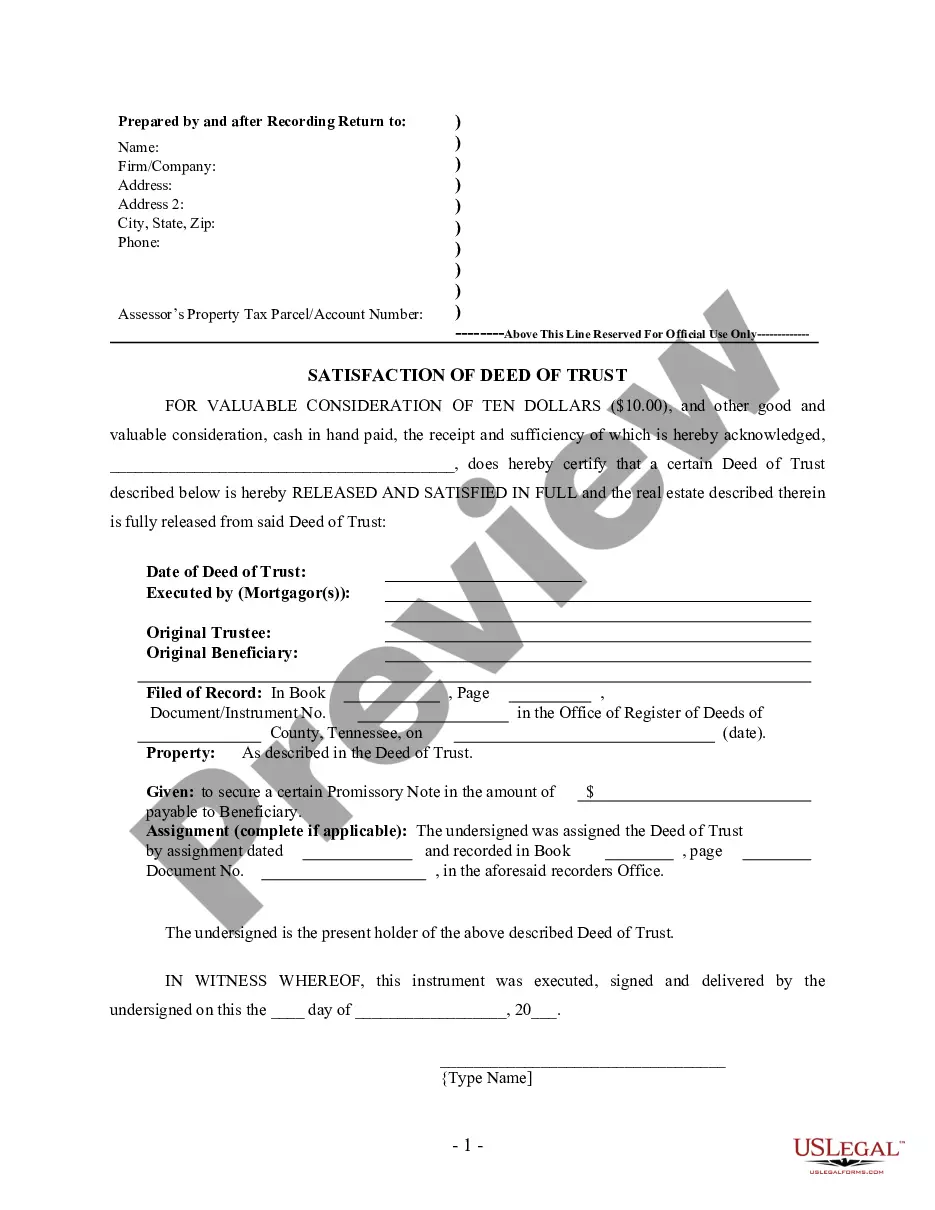
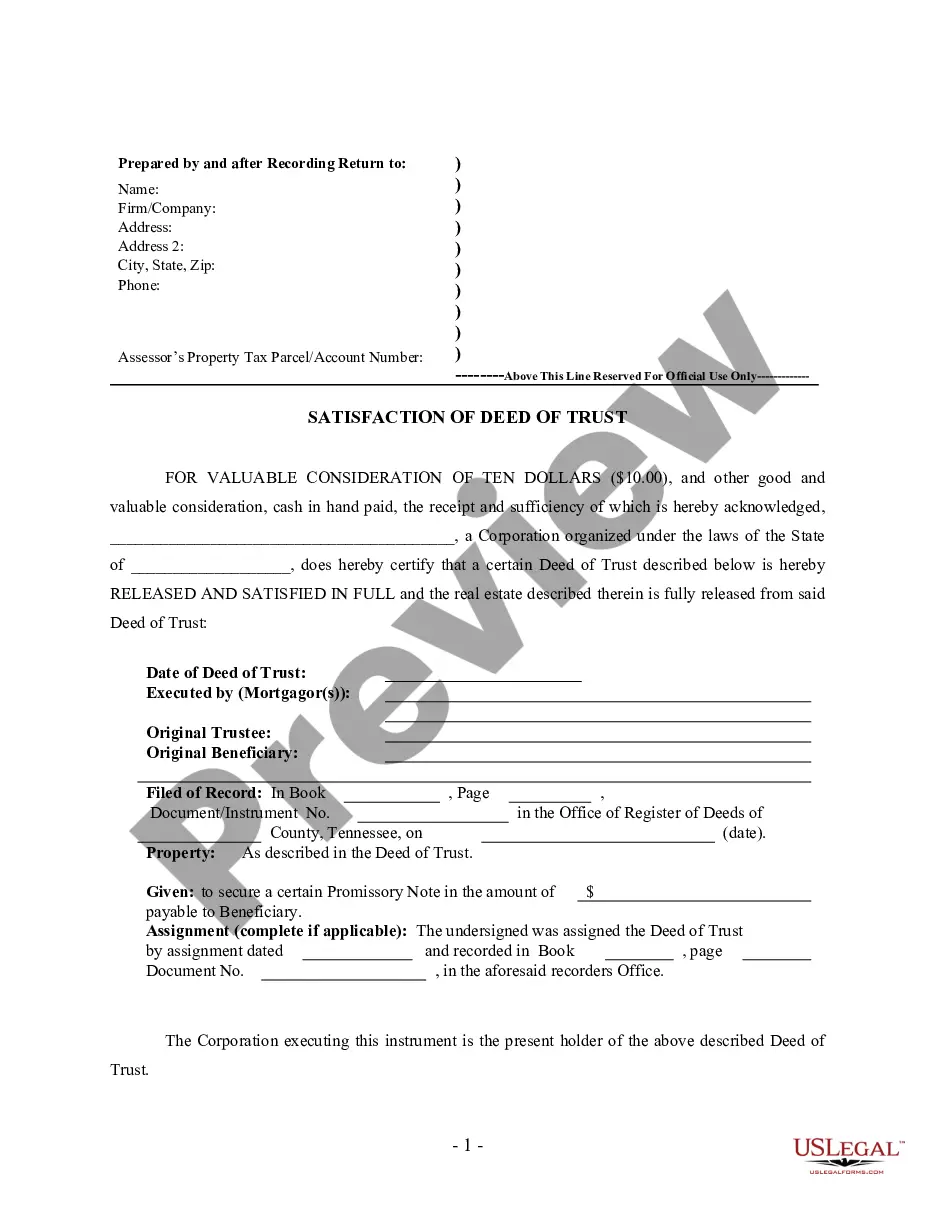
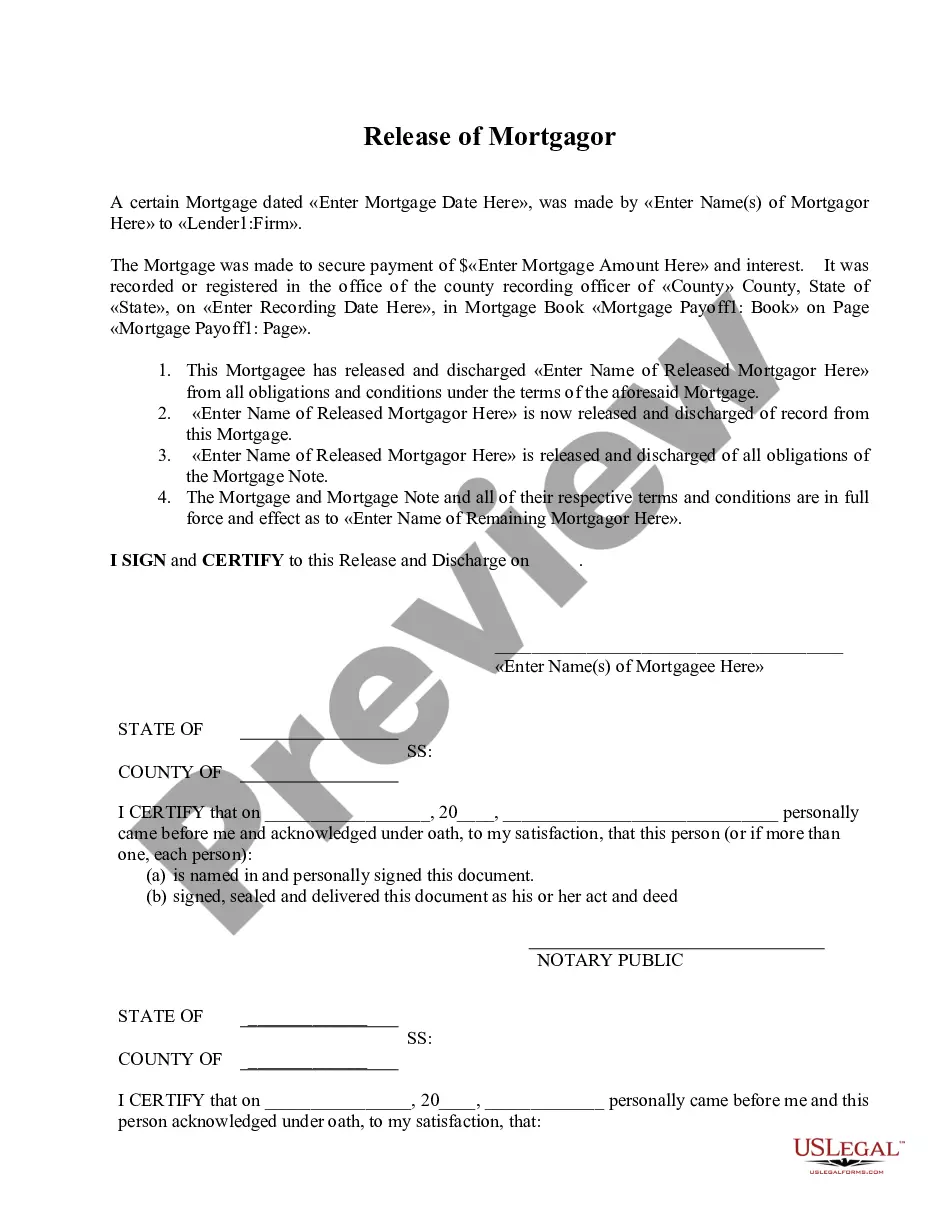
This form is a Release, Satisfaction, and Cancellation of Deed of Trust designed for individual lenders or holders in the state of Tennessee. Its main purpose is to formally release a property from the mortgage obligations stipulated in the deed of trust, ensuring that the borrower is no longer liable for the debt. This form is distinct from other legal documents such as mortgage agreements, as it specifically addresses the satisfaction or cancellation process once the loan is repaid.
Key parts of this document
- Date of the original deed of trust
- Names of mortgagor(s), original trustee, and original beneficiary
- Record filing details including book, page, and document number
- Description of the property secured by the deed of trust
- Statement of the satisfied promissory note
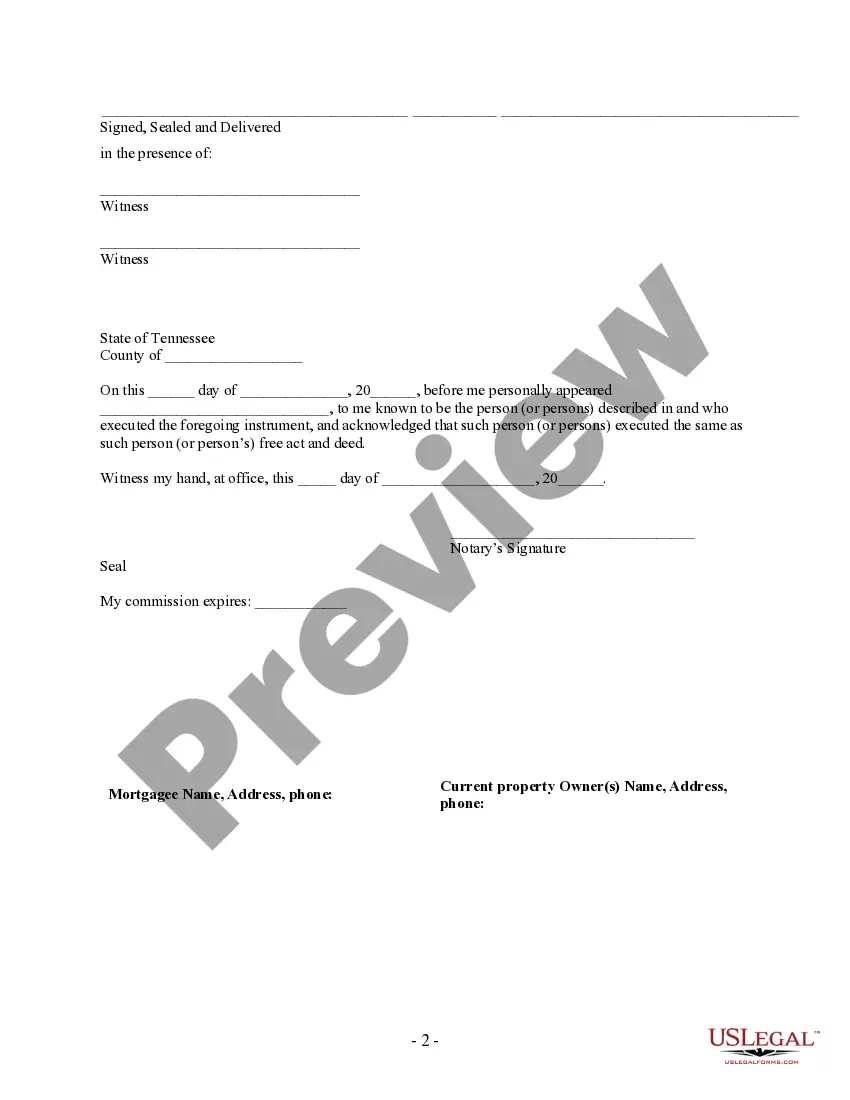
- Notarization section for signing in front of a notary public


Common use cases
Who can use this document
This form is intended for:
- Individual lenders who have provided loans secured by a deed of trust
- Holders of a deed of trust who need to formally release their interest in the property
- Mortgagors who have fully repaid their loan and seek to establish that their mortgage has been satisfied
Completing this form step by step
- Enter the date when the deed of trust was executed.
- Fill in the names of the mortgagor(s), original trustee, and original beneficiary.
- Provide the details of the record filing, including book, page, and document number.
- Describe the property as noted in the deed of trust.
- Sign the document in front of a notary public and complete the notarization section.
Does this document require notarization?
To make this form legally binding, it must be notarized. Our online notarization service, powered by Notarize, lets you verify and sign documents remotely through an encrypted video session.
Get your form ready online
Our built-in tools help you complete, sign, share, and store your documents in one place.
Make edits, fill in missing information, and update formatting in US Legal Forms—just like you would in MS Word.
Download a copy, print it, send it by email, or mail it via USPS—whatever works best for your next step.
Sign and collect signatures with our SignNow integration. Send to multiple recipients, set reminders, and more. Go Premium to unlock E-Sign.
If this form requires notarization, complete it online through a secure video call—no need to meet a notary in person or wait for an appointment.
We protect your documents and personal data by following strict security and privacy standards.
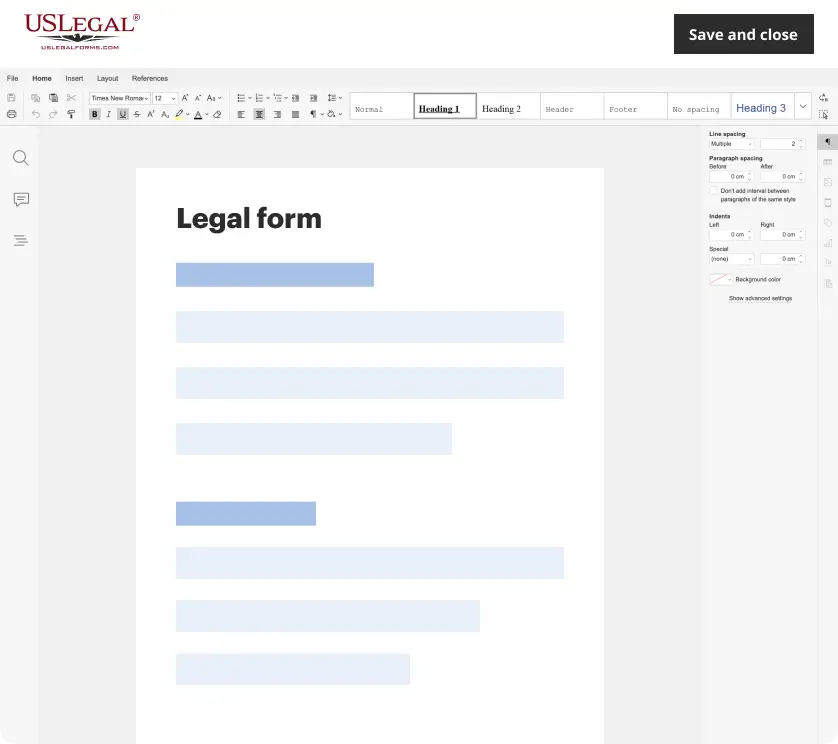
Make edits, fill in missing information, and update formatting in US Legal Forms—just like you would in MS Word.
Download a copy, print it, send it by email, or mail it via USPS—whatever works best for your next step.
Sign and collect signatures with our SignNow integration. Send to multiple recipients, set reminders, and more. Go Premium to unlock E-Sign.

If this form requires notarization, complete it online through a secure video call—no need to meet a notary in person or wait for an appointment.
We protect your documents and personal data by following strict security and privacy standards.
Common mistakes
- Failing to provide accurate property descriptions.
- Not entering all required names and details of the parties involved.
- Neglecting to have the document notarized, which is essential for validity.
- Incomplete record filing information, which can lead to legal disputes.
Why complete this form online
- Convenience of downloading and printing the form from home.
- Editability to customize entries before finalizing the document.
- Access to legally drafted templates that comply with state laws.
- Time-saving option that eliminates the need for in-person attorney visits.
Quick recap
- The form releases a deed of trust once a mortgage is satisfied.
- Specific to Tennessee and requires notarization.
- Used by individual lenders or homeowners needing to document the release.
Looking for another form?
Form popularity
FAQ
In most cases, the lien holder (the lender in this case) should send the release to be recorded within 30-90 days. If you aren't sure what the requirements are in your area, reach out to your real estate agent, title agent, or real estate attorney for guidance.
Pay off your debt. Fill out a release-of-lien form and have the lien holder sign it. Run out the statute of limitations. Get a court order. Make a claim with your title insurance company. Learn more:
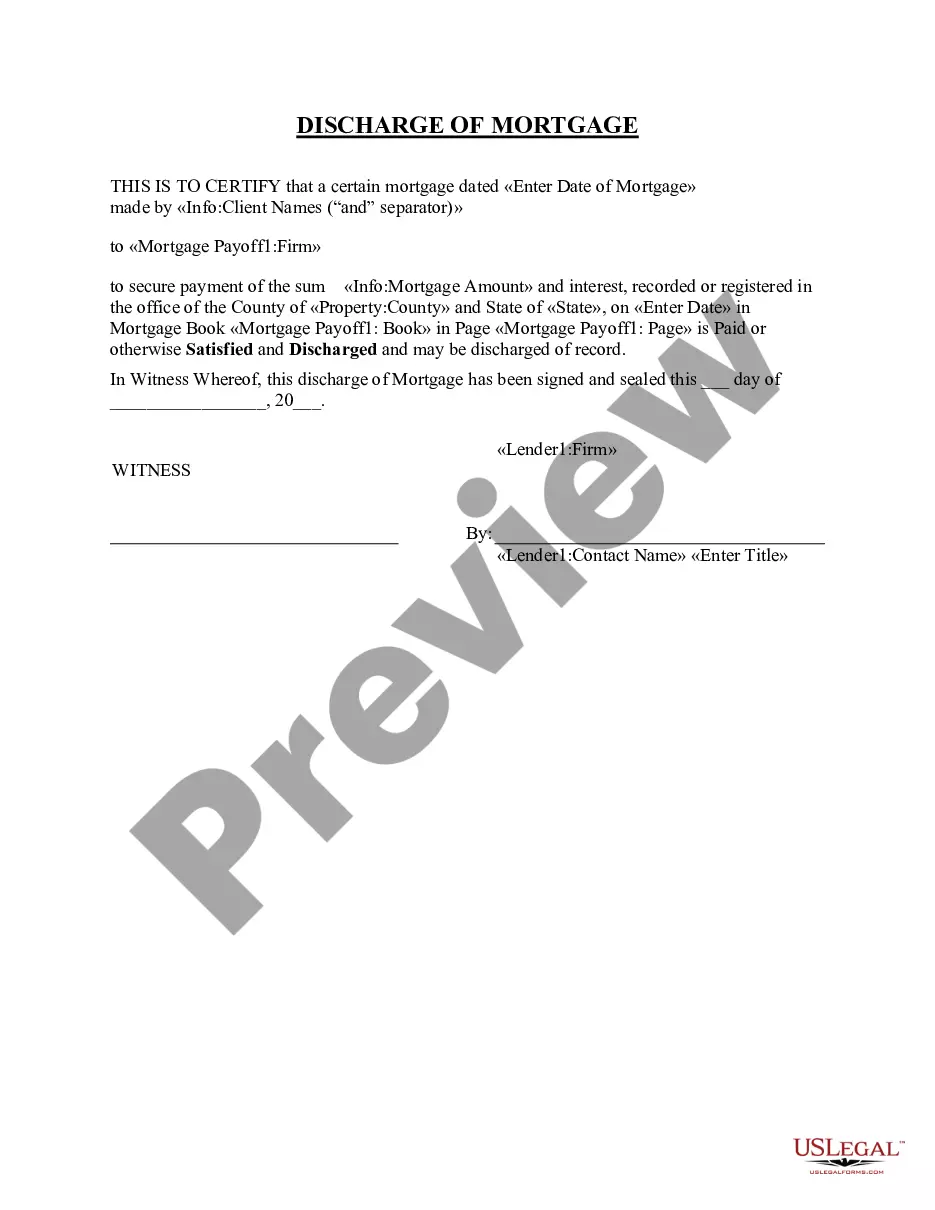
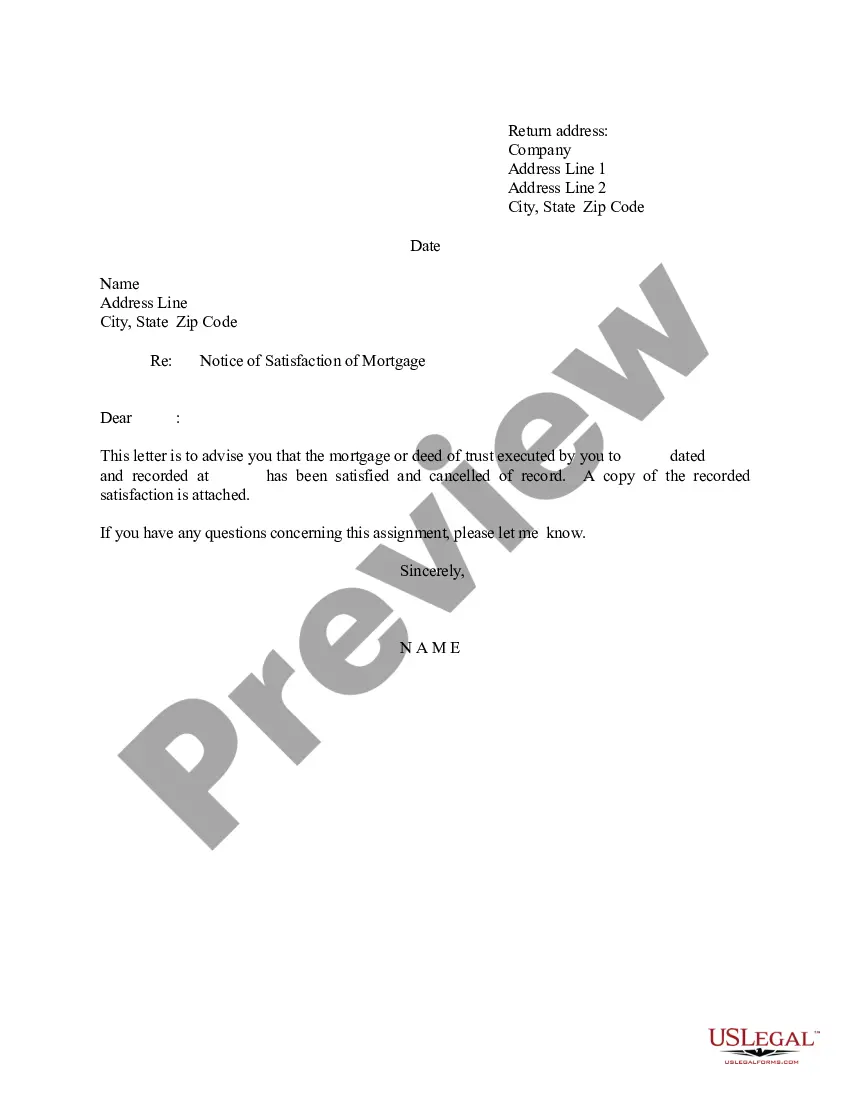
If you have cleared a debt, a mortgage satisfaction document will give you clear title to real property. In other words, mortgage satisfaction is a document that results in release or discharge of a mortgage lien, and indicates that a borrower has cleared his/her debt.
In order to reconvey a deed of trust, the full reconveyance must be recorded within 21 days of receipt of the documents from the Beneficiary. The deed of reconveyance must be recorded in the county where the property is located. Locate the name of the Trustee in the recorded Deed of Trust.
In order to clear the Deed of Trust from the title to the property, a Deed of Reconveyance must be recorded with the Country Recorder or Recorder of Deeds. If the Trustee/Beneficiary fails to record a satisfaction within the set time limits, the Trustee/Beneficiary may be responsible for damages as set out by statute.
In order to clear the title to the real property owned by the mortgagor, the Satisfaction of Mortgage document must be recorded with the County Recorder or Recorder of Deeds. If the mortgagee fails to record a satisfaction within the set time limits, the mortgagee may be responsible for damages set out by statute.
The lender will also notify the Department of Motor Vehicles (DMV) that the loan has been paid in full. If you don't receive the lien release, submit a request to your lender for proof that the loan has been satisfied. This request can be made through the DMV or directly to the lender.
Depending on state laws, paper titles are generally mailed and electronic titles and/or liens are released to the motor vehicle agency approximately 10 business days after the payoff is received. Allow 15-30 days for receipt of your title based on mail time and/or motor vehicle agency process.
If you can't find out which company took over, call the Federal Deposit Insurance Corporation's (FDIC) lien release number at (888) 206-4662 (toll free) or visit the Closed Banks and Asset Sales section on the FDIC's "Contact Us" page.