Tennessee Landlord Tenant Lease Co-Signer Agreement
Understanding this form
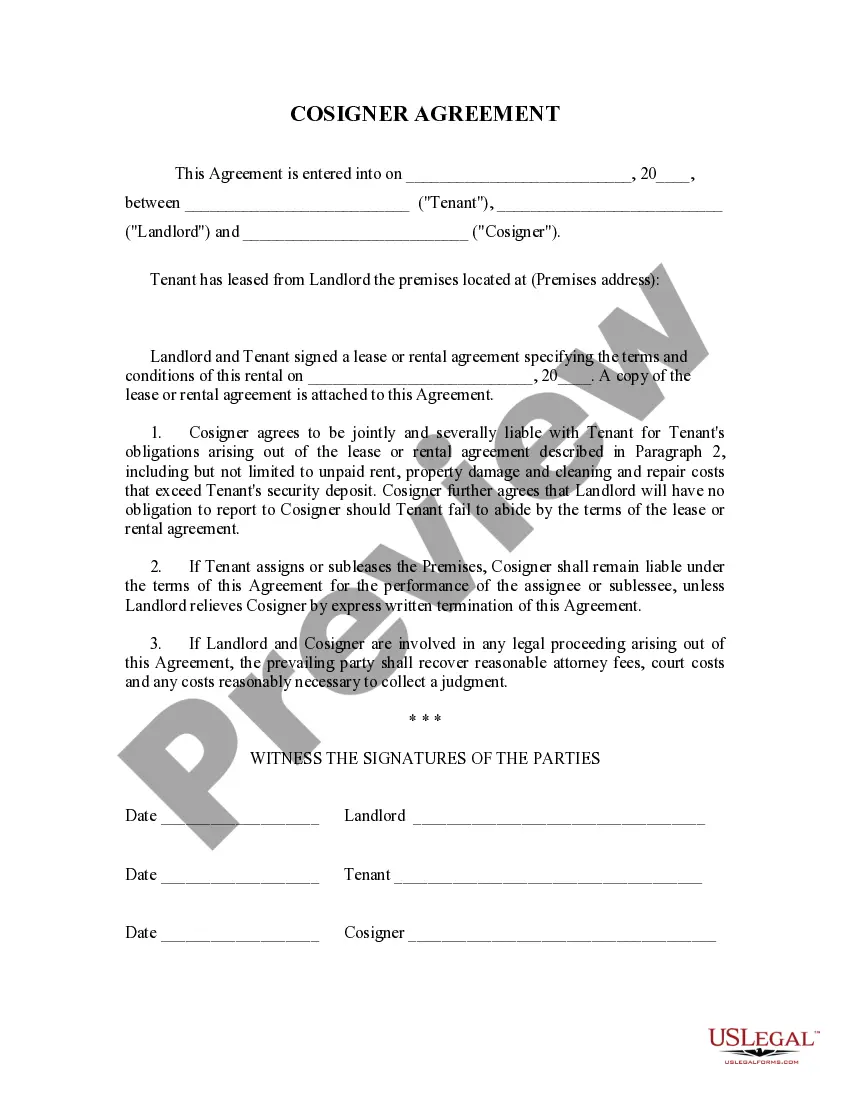
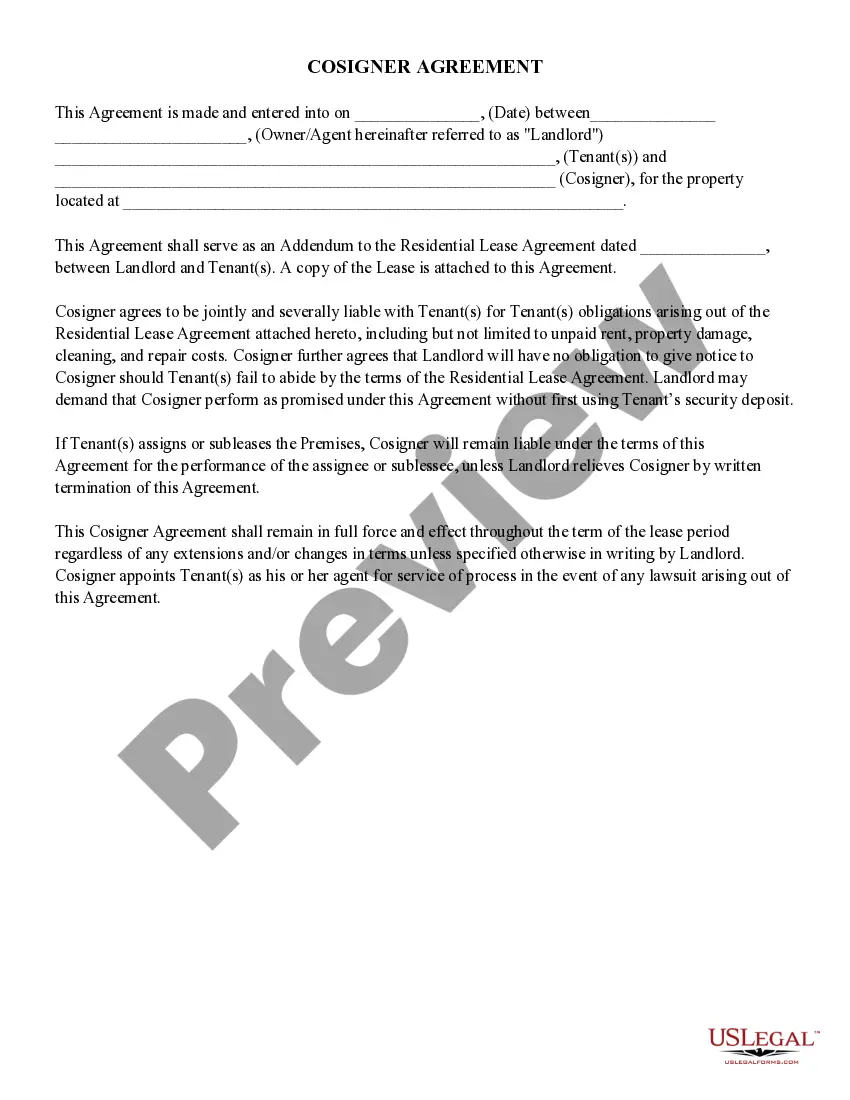
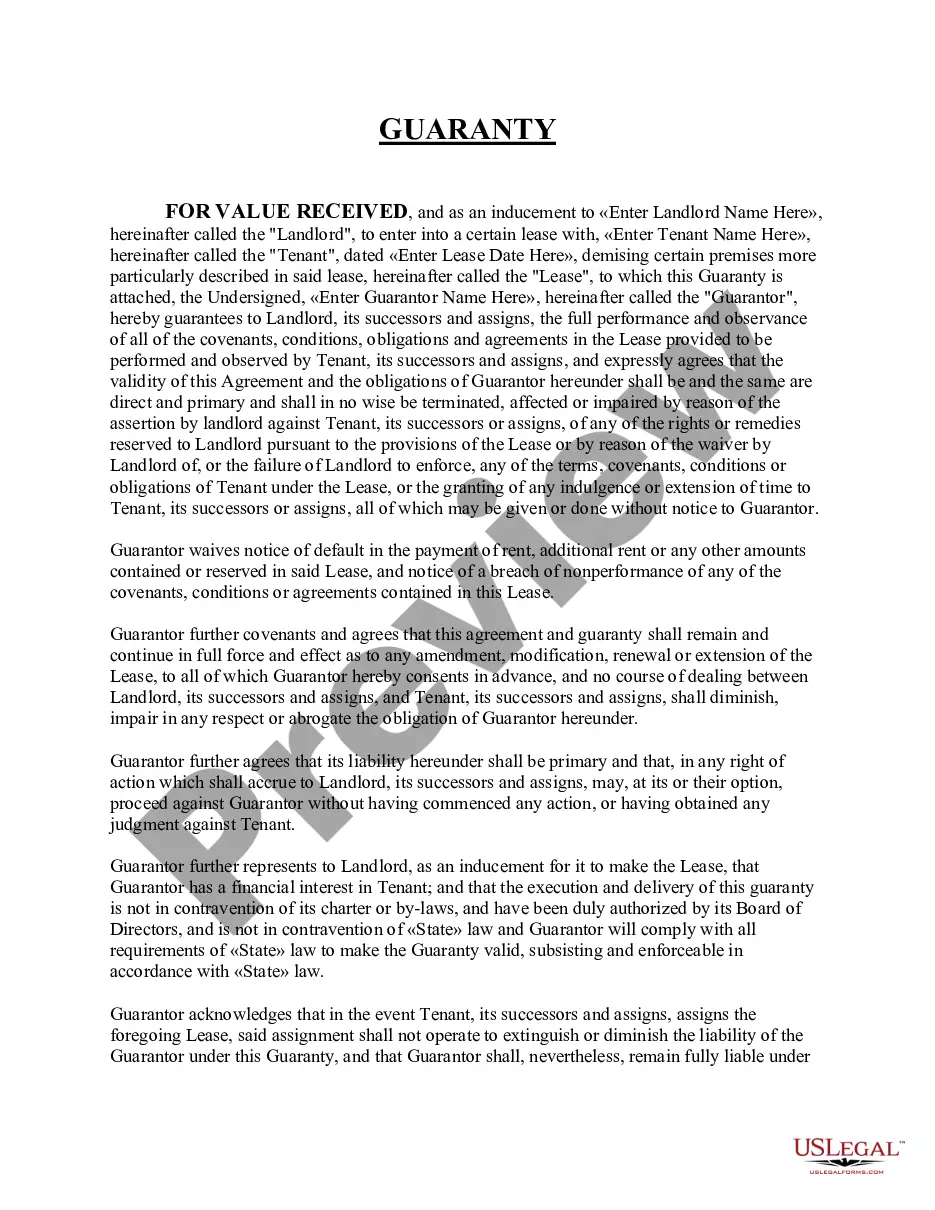
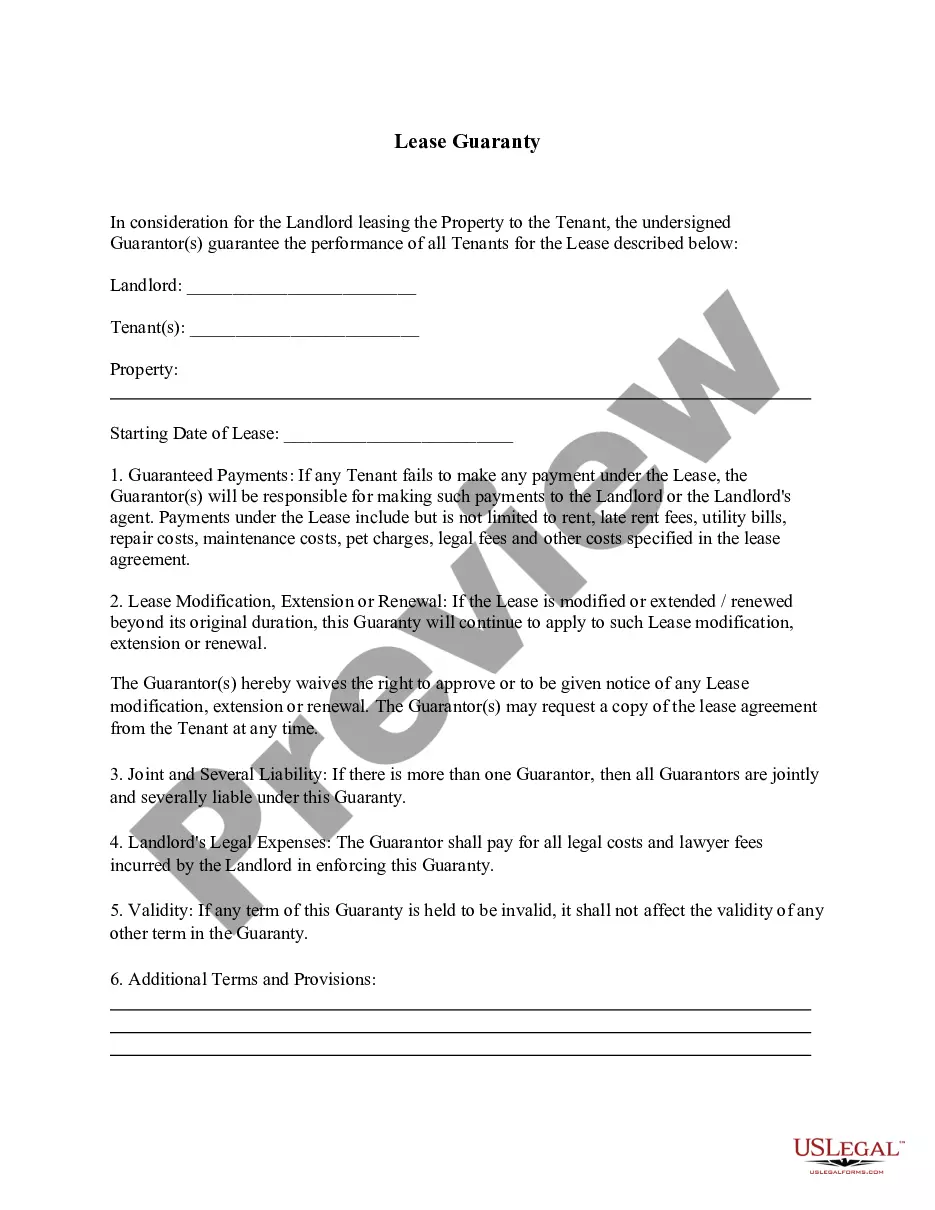
The Landlord Tenant Lease Co-Signer Agreement is a legal document that outlines the responsibilities of a cosigner alongside the tenant and landlord in a lease context. This agreement holds the cosigner financially accountable if the tenant defaults on rent payments or damages the property. Distinguishing itself from similar forms, it ensures that the landlord can seek compensation from the cosigner, known as the guarantor, if the tenant fails to meet their lease obligations.
What’s included in this form
- Date of agreement
- Names and addresses of tenant, landlord, and cosigner
- Property address being leased
- Terms regarding assignment or subleasing and cosigner's liability
- Legal proceedings and fee recovery provisions
- Signatures of landlord, tenant, and cosigner
Situations where this form applies
This form is necessary when a landlord requires a cosigner for a lease agreement, typically in situations where the tenant has insufficient credit, is a first-time renter, or is unable to provide a strong financial history. It protects the landlord from potential losses and ensures that the landlord has additional recourse in the event of non-payment by the tenant.
Who this form is for
- Landlords seeking financial security for their rental agreements
- Tenants who need a cosigner to qualify for a lease
- Co-signers agreeing to take responsible financial liability
How to complete this form
- Enter the date on which the agreement is made.
- Fill in the names and addresses of the tenant, landlord, and cosigner.
- Specify the complete address of the rental property.
- Review the terms regarding assignment and the cosigner's ongoing liability.
- Have all parties sign and date the agreement.
Does this form need to be notarized?
Notarization is generally not required for this form. However, certain states or situations might demand it. You can complete notarization online through US Legal Forms, powered by Notarize, using a verified video call available anytime.
Get your form ready online
Our built-in tools help you complete, sign, share, and store your documents in one place.
Make edits, fill in missing information, and update formatting in US Legal Forms—just like you would in MS Word.
Download a copy, print it, send it by email, or mail it via USPS—whatever works best for your next step.
Sign and collect signatures with our SignNow integration. Send to multiple recipients, set reminders, and more. Go Premium to unlock E-Sign.
If this form requires notarization, complete it online through a secure video call—no need to meet a notary in person or wait for an appointment.
We protect your documents and personal data by following strict security and privacy standards.

Make edits, fill in missing information, and update formatting in US Legal Forms—just like you would in MS Word.

Download a copy, print it, send it by email, or mail it via USPS—whatever works best for your next step.

Sign and collect signatures with our SignNow integration. Send to multiple recipients, set reminders, and more. Go Premium to unlock E-Sign.

If this form requires notarization, complete it online through a secure video call—no need to meet a notary in person or wait for an appointment.

We protect your documents and personal data by following strict security and privacy standards.
Typical mistakes to avoid
- Failing to clearly identify all parties involved.
- Not specifying the property address accurately.
- Omitting necessary signatures or dates.
- Neglecting to review local laws that may alter cosigner responsibilities.
Benefits of using this form online
- Convenience of immediate download and use.
- Editability allows for customization to fit specific lease terms.
- Reliability from templates drafted by licensed attorneys.
Looking for another form?
Form popularity
FAQ
To co-sign for you, he will have to complete the application process and demonstrate that he is creditworthy. If he passes the rental application and credit check, he will need to sign the lease agreement as your co-signer.
According to Nolo, a cosigner is a person designated to make the rental payments if the tenant does not pay. They sign their name to the lease agreement and are held fully responsible for rent if the tenant stops paying rent.
In that case, it's important to understand that the co-signer is only responsible for the length of the lease, which is usually one year. At that point, the lease will end and the co-signer is no longer responsible unless they sign a new lease.
As a cosigner on a lease, you're not only helping someone out, you're taking on a ton of risk. For instance, if the lease holder doesn't make their payments on time, it will negatively affect your credit report and credit score.
According to Nolo, a cosigner is a person designated to make the rental payments if the tenant does not pay.However, if a lease doesn't have this provision, then the only people who need to sign the lease are the people responsible for paying the rent.
The information a co-signer must provide on the application includes: address, Social Security number, marital status, employment, income, expenses and assets. The co-signer must also answer "yes" or "no" to a list of questions regarding financial obligations, residency and real estate owned.
Being a co-signer itself does not affect your credit score. Your score may, however, be negatively affected if the main account holder misses payments.You will owe more debt: Your debt could also increase since the consignee's debt will appear on your credit report.
Only the owner/landlord can evict. Tenants and co-signors do not have the authority. If you want your ex GF out, there must be a basis for the eviction and a cooperative landlord.
Co-signers have equal responsibility for payment of monthly rental costs, while a guarantor is generally sought for payment only when the primary signer is unable to make the rental payment.