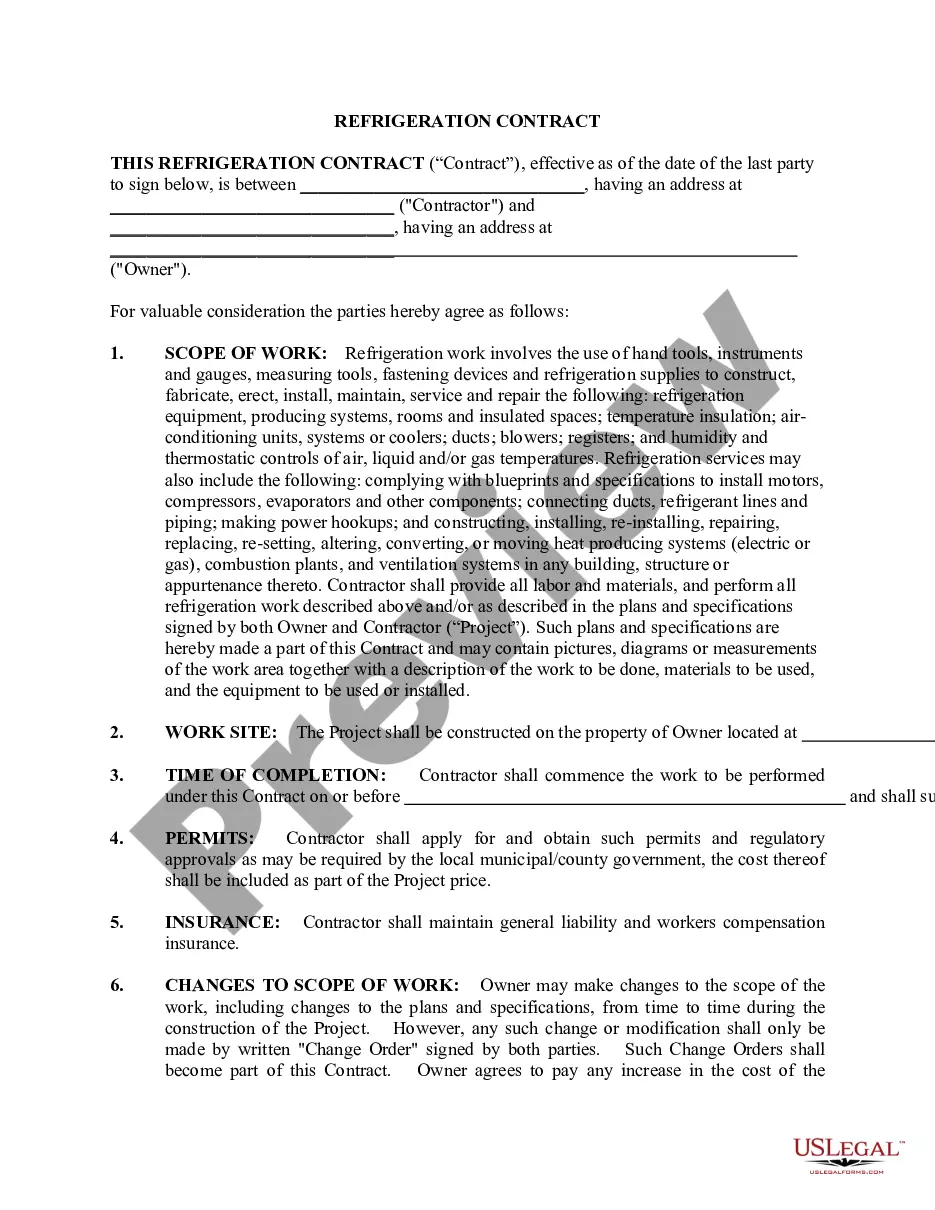
Oregon Separation and Property Agreement with Adult Children
What this document covers
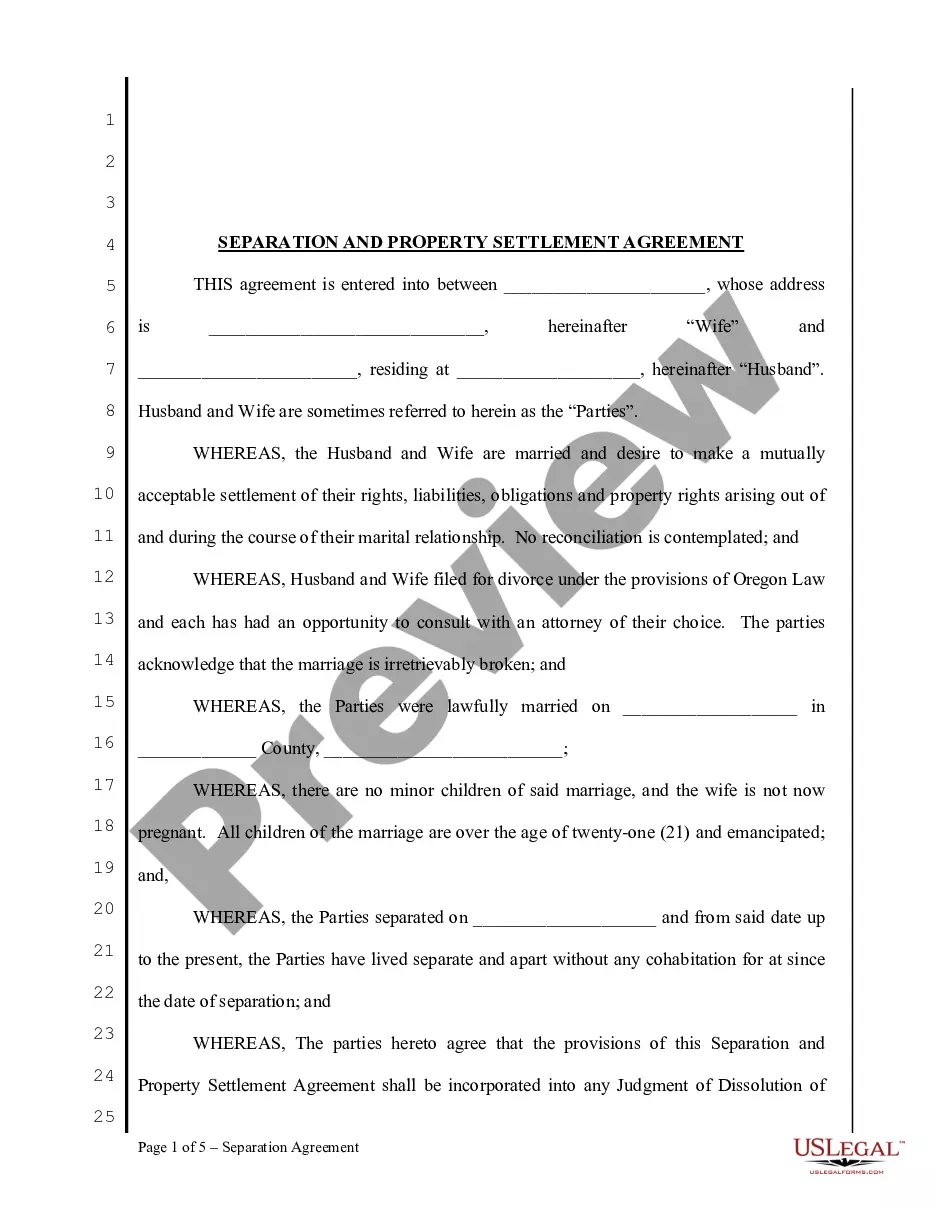
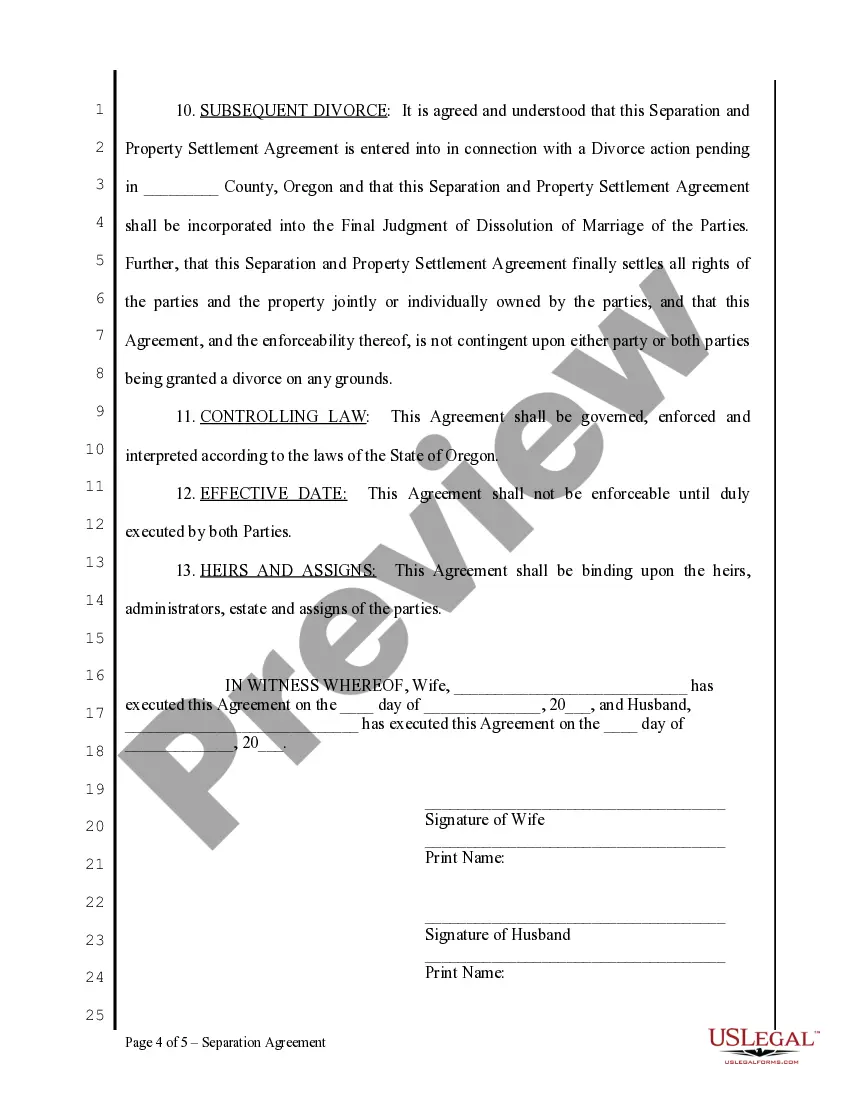
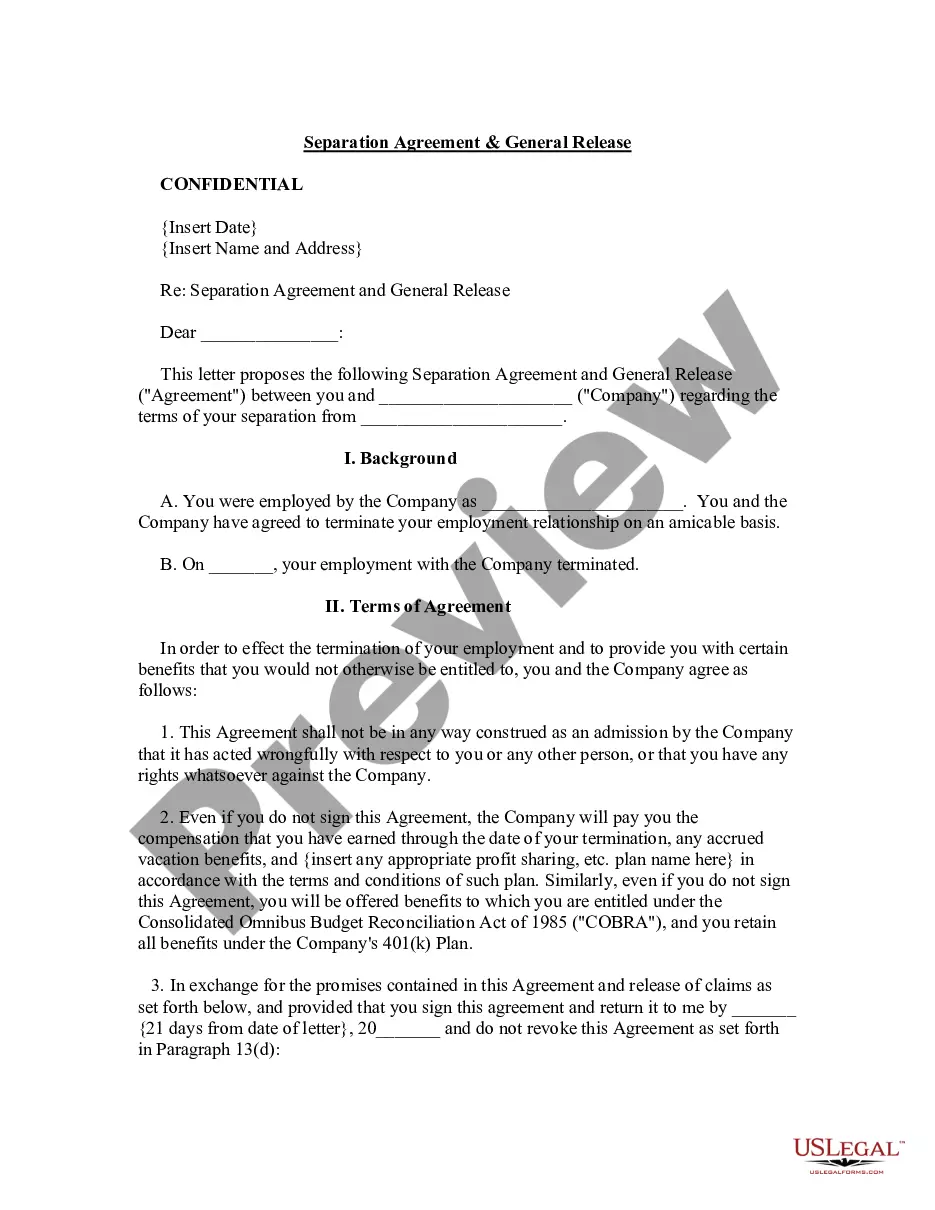
The Separation and Property Agreement with Adult Children is a legal document that outlines the terms of separation and property settlement between spouses who are divorcing and have adult children. This agreement provides clarity on property distribution, liability for debts, and confirms that all adult children are independent. Unlike other separation agreements, this form specifically addresses situations where both parties have no minor children, ensuring a focus on adult issues related to divorce and property settlement.
Key components of this form
- Identification of parties: Names and addresses of both spouses.
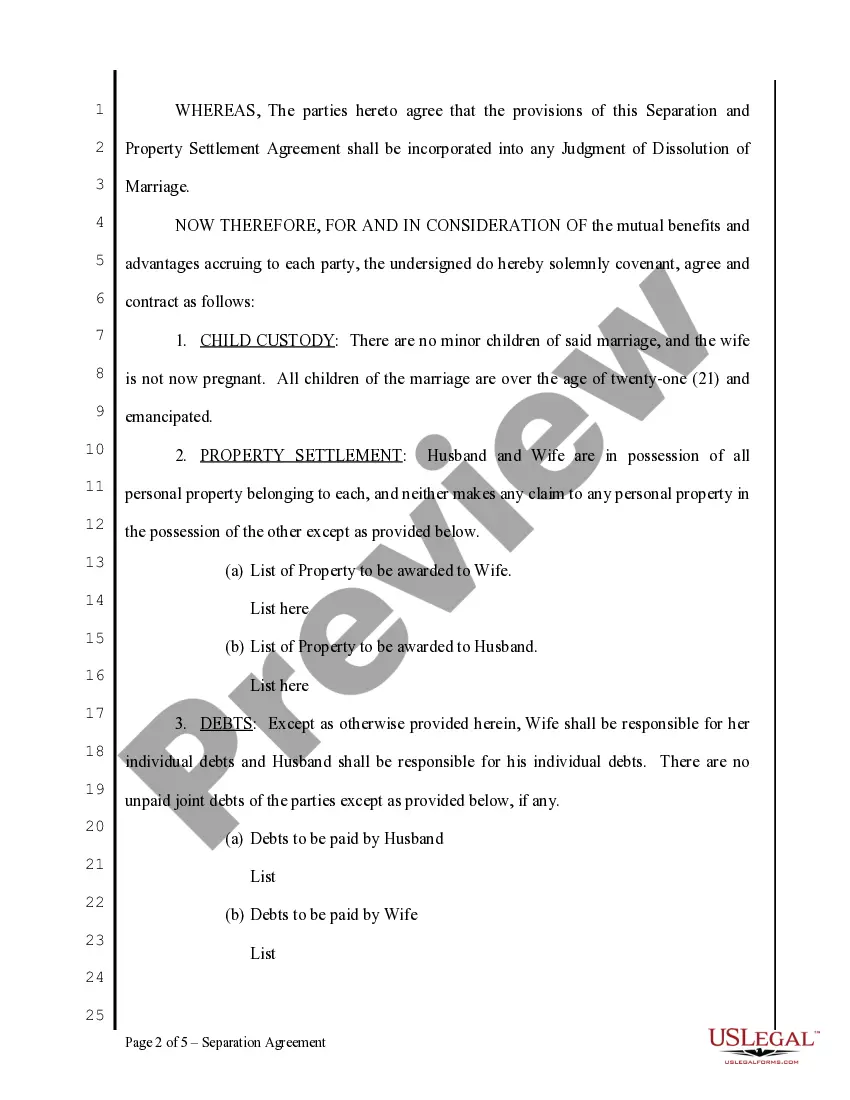
- Property settlement: Detailed lists of property awarded to each spouse.
- Debt responsibility: Clear outline of debts each spouse will manage.
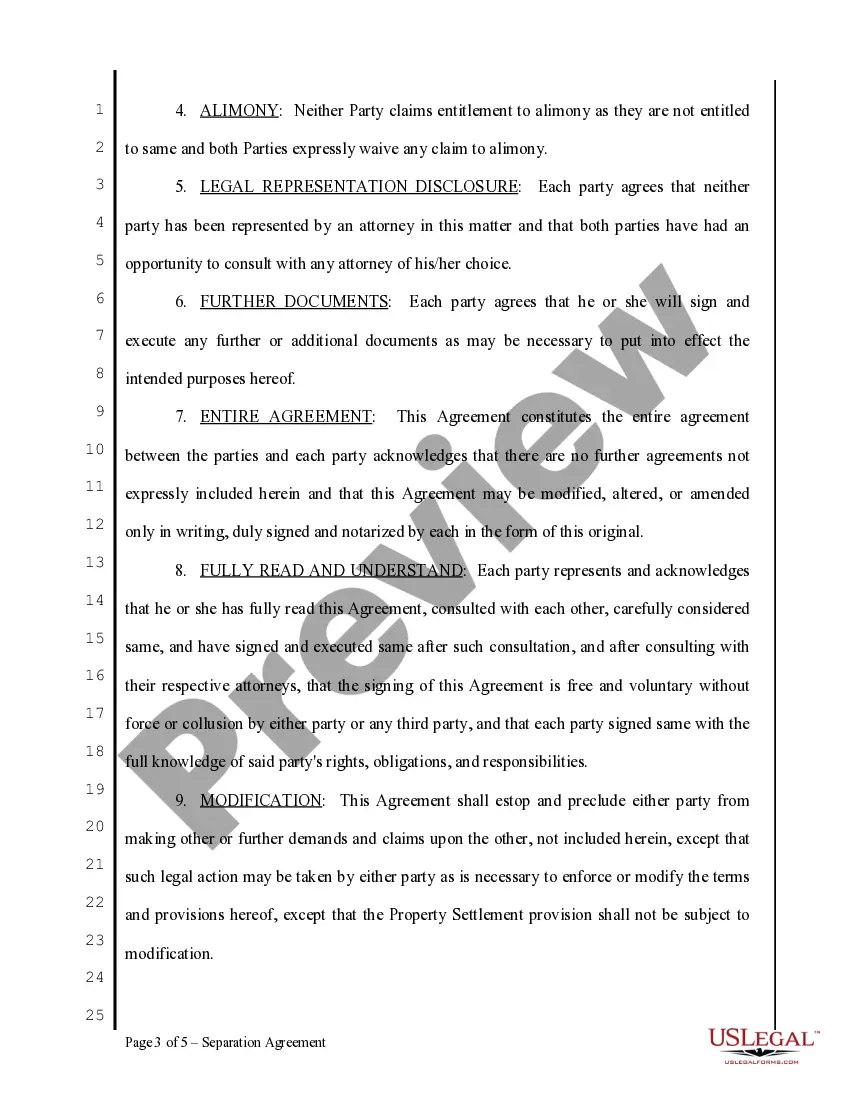
- Alimony waiver: An explicit statement that neither party claims alimony.
- Legal representation disclosure: Confirmation that both parties consulted legal counsel.
- Governing law: Specification that the agreement is governed by Oregon law.

When this form is needed
This form should be used when spouses are seeking a separation without any minor children involved. It is applicable in situations where both parties need to settle their property rights and obligations while confirming that all children are adults. The form is vital when preparing for a divorce proceedings where mutual agreement on financial divisions is expected.
Who should use this form
- Spouses who wish to formalize their separation and property arrangements.
- Couples without minor children who are seeking a divorce.
- Parties looking to ensure all property and debt responsibilities are clearly defined.
Completing this form step by step
- Identify the parties by entering the names and addresses of both spouses at the beginning of the form.
- List the properties awarded to each spouse in the designated sections, specifying details clearly.
- Outline existing debts and assign responsibility for payment to each spouse as appropriate.
- Include a statement regarding the waiver of alimony, confirming that both parties agree not to claim it.
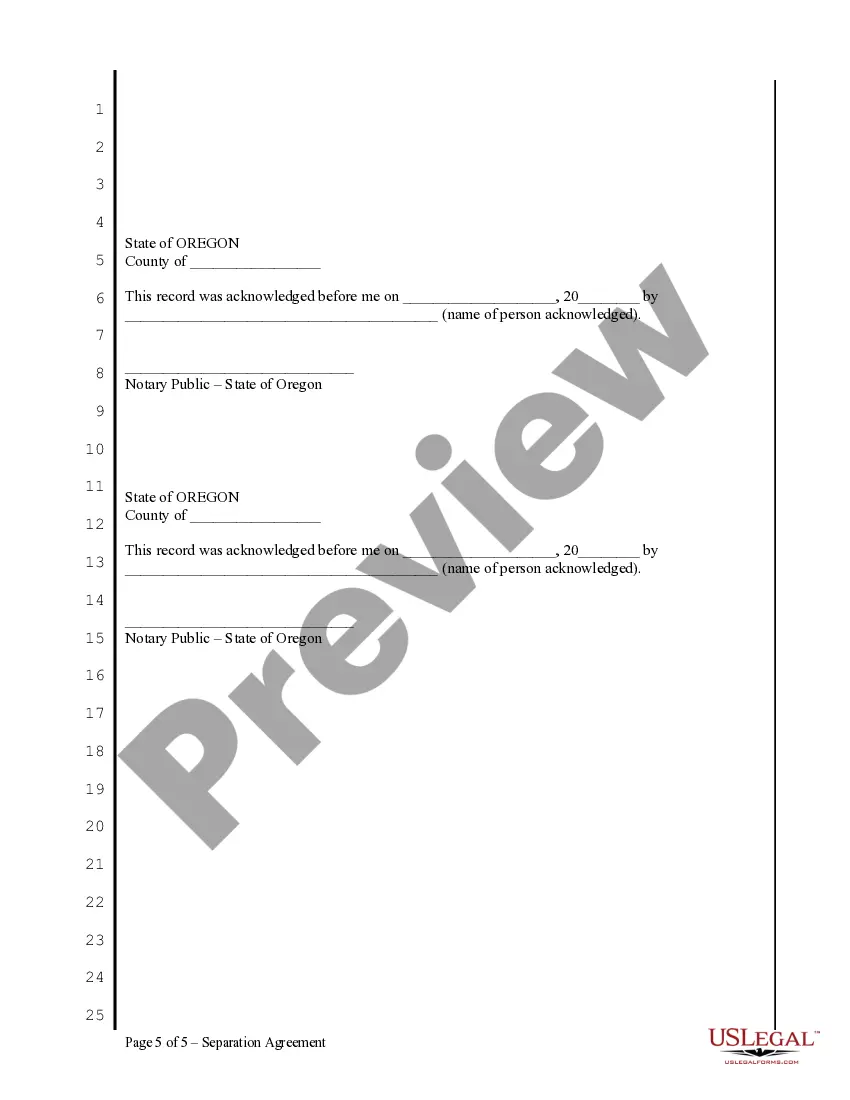
- Both parties should sign the agreement and have it notarized to ensure its legal validity.
Notarization requirements for this form
This form needs to be notarized to ensure legal validity. US Legal Forms provides secure online notarization powered by Notarize, allowing you to complete the process through a verified video call, available anytime.
Get your form ready online
Our built-in tools help you complete, sign, share, and store your documents in one place.
Make edits, fill in missing information, and update formatting in US Legal Forms—just like you would in MS Word.
Download a copy, print it, send it by email, or mail it via USPS—whatever works best for your next step.
Sign and collect signatures with our SignNow integration. Send to multiple recipients, set reminders, and more. Go Premium to unlock E-Sign.
If this form requires notarization, complete it online through a secure video call—no need to meet a notary in person or wait for an appointment.
We protect your documents and personal data by following strict security and privacy standards.

Make edits, fill in missing information, and update formatting in US Legal Forms—just like you would in MS Word.

Download a copy, print it, send it by email, or mail it via USPS—whatever works best for your next step.

Sign and collect signatures with our SignNow integration. Send to multiple recipients, set reminders, and more. Go Premium to unlock E-Sign.

If this form requires notarization, complete it online through a secure video call—no need to meet a notary in person or wait for an appointment.

We protect your documents and personal data by following strict security and privacy standards.
Typical mistakes to avoid
- Failing to accurately list all property that needs to be divided, leading to potential disputes later.
- Not specifying which debts belong to which party clearly, which can cause confusion post-divorce.
- Neglecting to consult with a legal professional, which may result in an unenforceable agreement.
- Forgetting to include the date of separation, an essential detail for legal purposes.
Why complete this form online
- Convenience of completing the forms from home without the need for physical appointments.
- Editable templates allow customization to fit specific needs and situations.
- Access to forms drafted by licensed attorneys, ensuring legal compliance and validity.
Looking for another form?


Form popularity
FAQ
Mothers automatically have parental responsibility for their children. Fathers also have this right if they were married to the mother when the child was born.You can also get a court order to get parental responsibility of the child, which does not in principle require the consent of the mother.
With a legal separation, you and your spouse can still opt to keep your marriage intact after some time apart.Legal separation protects your rights and financial interests while the two of you decide whether or not divorce is the right decision.
In the parent-child relationship, parents have some basic rights and responsibilities. However, a court can take these rights away from a parent if either one violates the law or if the father fails to claim paternity.A parent also may voluntarily terminate these rights.
Rights to Property after Separation: When You're Married and Getting a Divorce. The benefit of getting married is that, in the event of a divorce or separation, you are entitled to a share of the property.The right to stay in your home unless a court order excludes it.
In general, a child cannot legally decide which parent to live with unless they are emancipated or reach the age of majority. However, let us assume that parties in a divorce are dealing with a custody and parenting time dispute related to a 16-year old child.
Mistake #1: using your divorce proceedings to get back at your spouse. mistake #2: confusing material needs with emotional needs. mistake #3: letting other people define and prioritize your needs. mistake #4: embarking on an adversarial process without. mistake #5: not thinking about the family's finances as a whole.
Some people think joint custody means the child lives with each parent 50% of the time.A court cannot award joint custody in Oregon unless both parents agree to it. Sole custody in Oregon means that the parent who has custody makes all major decisions regarding the child.
Does legal separation protect your assets? Legal separation has an advantage over simply moving out and living apart. When legally separated, assets and debts are divided the same way it is done in a divorce.Property accumulated by one party after the date of legal separation is a person's sole and separate property.
Although many people assume that moms have more child custody rights than dads, the truth is, U.S. custody laws don't give mothers an edge in custody proceedings.However, the fact is that no custody laws in the U.S. give mothers a preference or additional rights to custody of their children.